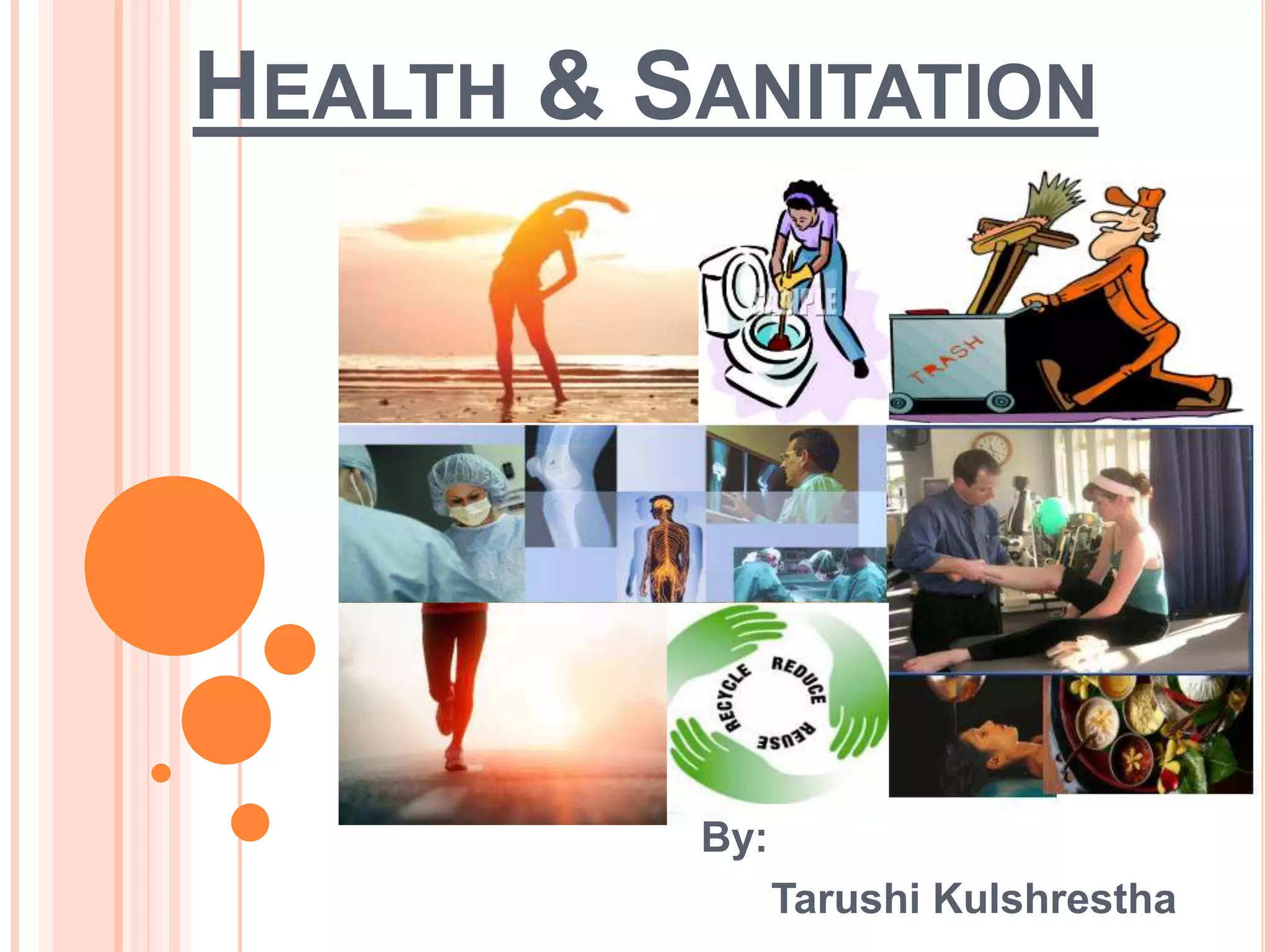
HEALTH & SANITATION
By:
Tarushi Kulshrestha
OUTLINE
 Objective of study
 methodology
 Health
 Health issues
 Sanitation
 Improper sanitation ;potential cause for illhealth
 Waste management
 conclusion
OBJECTIVE OF STUDY:
 To understand the
 concept of health & sanitation
 relation between health & sanitation
 To study Health and sanitation related issues in
India
HEALTH
 The general condition of a person's mind and body,
usually meaning to be free from illness, injury or pain
 The World Health Organization(WHO) defined health in its
broader sense in 1946 as
“ A state of complete physical, mental, and social well-
being and not merely the absence of disease or
infirmity”
 Although this definition has been subject to controversy, in
particular as lacking operational value and because of the
problem created by use of the word "complete," it remains
the most enduring.
DETERMINANTS
 Lifestyle: the aggregation of personal decisions (i.e., over
which the individual has control) that can be said to
contribute to, or cause, illness or death;
 Environmental: all matters related to health external to
the human body and over which the individual has little or
no control;
 Biomedical: all aspects of health, physical and mental,
developed within the human body as influenced by genetic
make-up.
HEALTH ISSUES IN INDIA
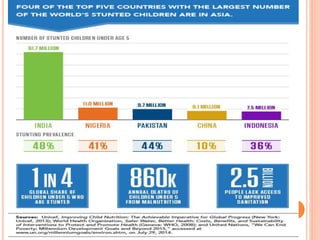
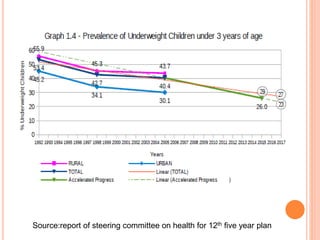
 Child malnutrition
 High infant mortality rate
 Disease
 Poor sanitation Safe drinking water
 Female health issue
 Rural health
 Rural health care services
•According to a 2005 report, 42% of India’s children below the
age of three were malnourished, which was greater than the
statistics of sub-Saharan African region of 28%.
• One in every three malnourished children in the world lives in
India.The estimates varies within the country.It is estimated
that,Madhya pradesh is having the highest rate of 55 % and
Kerala the lowest with 27 %.
•Although India’s economy grew 50% from 2001–2006, its child-
malnutrition rate only dropped 1%, lagging behind countries of
similar growth rate.
CHILD MALNUTRITION
 A well nourished child is one whose weight and height
measurements compare very well within the standard
normal distribution of heights and weights of healthy
children of same age and sex.
 Malnutrition impedes the social and cognitive development
of a child.These irreversible damages result in lower
productivity.
 hinder a child’s intellectual development.
 reduces the immune defence mechanism,which heightens
the risk of infections.[
 Inadequate care of these women already underdeveloped,
especially during pregnancy, leads them in turn to deliver
underweight babies who are vulnerable to further
malnutrition and disease.
DIFFERENT FORMS OF MALNUTRITION
 Protein-energy malnutrition (PEM), also known as
protein-calorie malnutrition
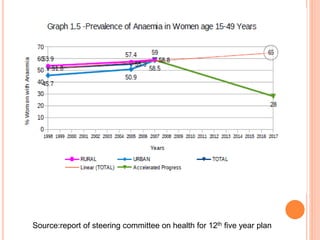
 Iron deficiency : nutritional anaemia which can lead
to lessened productivity, sometimes becoming
terminal
 Vitamin A deficiency, which can lead to blindness or
a weakened immune system
 Iodine deficiency, which can lead to serious mental
or physical complaints
 Foliate deficiency itself can lead to insufficient birth
weight or congenital anomalies such as spina
bifida.
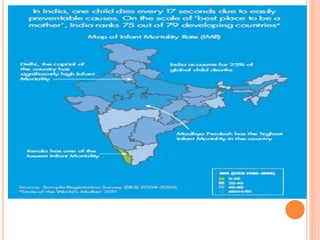
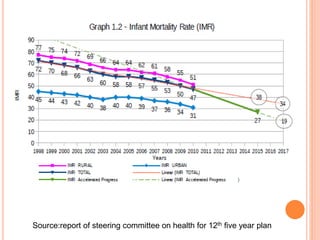
HIGH INFANT MORTALITY RATE
 Despite health improvements over the last thirty years, lives
continue to be lost to early childhood diseases, inadequate
newborn care and childbirth-related causes. More than two
million children die every year from preventable infections.
 Approximately 1.72 million children die each year before
turning one.
 The under five mortality and infant mortality rates have
been declining, from 202 and 190 deaths per thousand live
births respectively in 1970 to 64 and 50 deaths per
thousand live births in 2009. However, this decline is
slowing. Reduced funding for immunization leaves only
43.5% of the young fully immunized.
DISEASES
 Diseases such as dengue fever, hepatitis, tuberculosis, malaria and
pneumonia continue to plague India due to increased resistance to
drugs.[In 2011, India developed a totally drug-resistant form of
tuberculosis.HIV/AIDS in India is ranked 3rd highest among countries
with the amount of HIV-infected patients.National AIDS Control
Organisation, a Government of India 'Apex Body' is making efforts for
managing the HIV/AIDS epidemic in India.Diarrheal diseases are the
primary causes of early childhood mortality.These diseases can be
attributed to poor sanitation and inadequate safe drinking water in
India.India also has the world's highest incidence of Rabies.
 However in 2012 India was polio-free for the first time in its history.This
was achieved because of the Pulse PolioProgramme started in 1995-96
by the government of India.
 Indians are also at particularly high risk for atherosclerosis and
coronary artery disease. This may be attributed to a genetic
predisposition to metabolic syndrome and adverse changes in coronary
artery vasodilation. NGOs such as the Indian Heart Association and the
Medwin Foundation have been created to raise awareness of this public
health issue
POOR SANITATION & SAFE DRINKING WATER
 As more than 122 million households have no toilets, 33%
lack access to latrines, over 50% of the population (638
million) defecate in the open.(2008 estimate).This is
relatively higher than Bangladesh and Brazil (7%) and
China (4%).
 Although 211 million people gained access to improved
sanitation from 1990–2008, only 31% use the facilities
provided. Only 11% of Indian rural families dispose of stools
safely whereas 80% of the population leave their stools in
the open or throw them in the garbage. Open air defecation
leads to the spread of disease and malnutrition through
parasitic and bacterial infections.
POOR SANITATION & SAFE DRINKING WATER
 Several million more suffer from multiple episodes of diarrhoea
and still others fall ill on account of Hepatitis A, enteric fever,
intestinal worms and eye and skin infections caused by poor
hygiene and unsafe drinking water.
 Access to protected sources of drinking water has improved from
68% of the population in 1990 to 88% in 2008.
 However, only 26% of the slum population has access to safe
drinking water,and 25% of the total population has drinking water
on their premises.
 This problem is exacerbated by falling levels of groundwater
caused mainly by increasing extraction for irrigation.
 Insufficient maintenance of the environment around water
sources, groundwater pollution, excessive arsenic and fluoride in
drinking water pose a major threat to India's health.
FEMALE HEALTH ISSUES
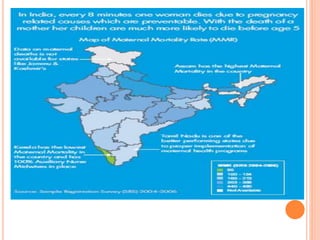
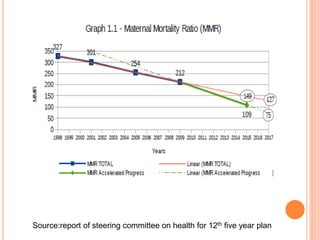
 Maternal deaths are similarly high. The reasons for this high
mortality are that few women have access to skilled birth
attendants and fewer still to quality emergency obstetric care. In
addition, only 15 per cent of mothers receive complete antenatal
care and only 58 per cent receive iron or folate tablets or syrup.
 Women's health in India involves numerous issues. Some of
them include the following:
 Malnutrition : The main cause of female malnutrition in India is
the tradition requiring women to eat last, even during pregnancy
and when they are lactating.
 Breast Cancer : One of the most severe and increasing problems
among women in India, resulting in higher mortality rates.
 Polycystic ovarian disease (PCOD): PCOD increases the
infertility rate in females. This condition causes many small cysts
to form in the ovaries, which can negatively affect a woman's
ability to conceive.
 Maternal Mortality : Indian maternal mortality rates in rural areas
are one of the highest in the world.
RURAL HEALTH CARE SERVICES
 The quality of Indian healthcare is varied. In major
urban areas, healthcare is of adequate quality,
approaching and occasionally meeting Western
standards. However, access to quality medical care
is limited or unavailable in most rural
areas, although rural medical practitioners are
highly sought after by residents of rural areas as
they are more financially affordable and
geographically accessible than practitioners
working in the formal public health care sector.
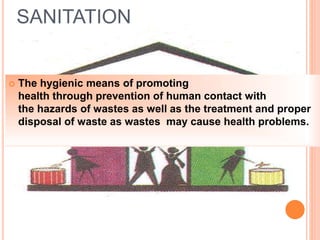
SANITATION
 The hygienic means of promoting
health through prevention of human contact with
the hazards of wastes as well as the treatment and proper
disposal of waste as wastes may cause health problems.
SANITATION
 Sanitation includes all four of these engineering
infrastructure items (even though often only the first
one is strongly associated with the term "sanitation"):
 Excreta management systems
 Wastewater management systems
 Solid waste management systems
 Drainage systems for rainwater, also called
stormwater drainage
SANITATION
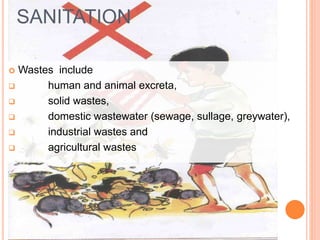
 Wastes include
 human and animal excreta,
 solid wastes,
 domestic wastewater (sewage, sullage, greywater),
 industrial wastes and
 agricultural wastes
SANITATION
 Hygienic means of prevention can be
 by using engineering solutions (e.g., sewerage, wastewater
treatment, storm water drainage, solid waste management,
excreta management),
 simple technologies (e.g., pit latrines, dry
toilets, UDDTs, septic tanks),
 simply by personal hygiene practices (e.g., hand
washing with soap, behavior change)
 Gasification Technology
 Refuse Derived Fuel (RFD) Plants
 Bioreactor Landfill
SANITATION A POTENTIAL CONTRIBUTOR TO
MALNUTRITION
 For our nation, the issue is not a lack of food, but rather a
lack of toilets for its population—one-half of India's
population, at least 620 million people, defecates outside.
 The interaction between diarrheal disease and malnutrition
is well established. Diarrhea is often caused by a lack of
clean water for proper hand-washing. A lack of toilets
further exacerbates the problem as feces on the ground
contribute to contaminated drinking water and water
resources in general.
 The World Health Organization estimates that 50 percent of
malnutrition is associated with repeated diarrhea or
intestinal worm infections from unsafe water or poor
sanitation or hygiene.
COMPOSTING
 long tradition particularly in rural India
 difficult process because the waste arrives in a mixed form
and contains a lot of non-organic material.
 When mixed waste is composted, the end product is of
poor quality. The presence of plastic objects in the waste
stream is especially problematic, since these materials do
not get recycled or have a secondary market.
 The first large-scale aerobic composting plant in the country
was set up in Mumbai in 1992 to handle 500 t/ day of MSW
by Excel Industries Ltd.
 Another plant with 150 t/day capacity has been operated in
the city of Vijaywada, and
 over the years a number of other plants have been
implemented in the principal cities of the country such as
Delhi, Bangalore, Ahmadabad, Hyderabad, Bhopal,
Lucknow and Gwalior.
INCINERATION
 In India the incineration is a poor option as the waste
consists mainly high organic material (40–60%) and
highinert content (30–50%) also low calorific value content
(800–1100 kcal/kg), high moisture content (40–60%) in
MSW and the high costs of setting up and running the
plants .
 The first large-scale MSW incineration plant was
constructed at Timarpur, New Delhi in 1987 with a capacity
of 300 t/day and a cost of Rs. 250 million (US$5.7 million)
by Miljotecknik volunteer, Denmark. The plant was out of
operation after 6 month and the Municipal Corporation of
Delhi was forced to shut down the plant due to its poor
performance.
 Small incinerators, in many cities in India, are being used
for burning hospital waste however
GASIFICATION TECHNOLOGY
 Gasification is the solid waste incineration under oxygen deficient
conditions, to produce fuel gas.
 In India,there are very few gasifiers in operation, but they are
mostly for burning of biomass such as agro-residues, sawmill
dust, and forest wastes.
 Gasification can also be used for MSW treatment after drying,
removing the inert and shredding for size reduction.
 Gasification unit installed at Gaul Pahari campus, New Delhi by
Tata Energy Research Institute (TERI) and other is installed at
Nohar, Hanungarh, Rajasthan by Narvreet Energy Research and
Information (NERI) for the burning of agro-wastes, sawmill dust,
and forest wastes.
 The waste-feeding rate is about 50–150 kg/h and its efficiency
about 70–80%. About 25% of the fuel gas produced may be
recycled back into the system to support the gasification process,
and the remaining is recovered and used for power generation
REFUSE DERIVED FUEL (RFD) PLANTS
 It produces an improved solid fuel or pellets from MSW.
The RDF plant reduces the pressure on landfills.
 Combustion of the RDF from MSW is technically sound and
is capable of generating power.
 RDF may be fired along with the conventional fuels like coal
without any ill effects for generating heat.
 Operation of the thermal treatment systems involves not
only higher cost, but also a relatively higher degree of
expertise.
 Many RDF plants are in operation in India, in Bangalore
RFD plant ,The RDF plant at Deonar, Mumbai ,The
Hyderabad RDF plant
 The RDF production is about 210 t/day as fluff and pellets,
and it is going to be used for producing power (about 6.6
MW)
LANDFILLING
 A landfill is an area of land onto or into which waste is deposited. The aim is to avoid
any contact between the waste and the surrounding environment, particularly the
groundwater.
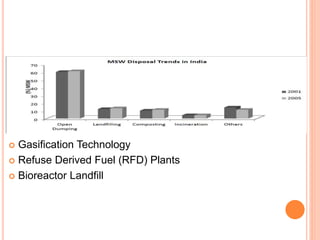
 In India open, uncontrolled and poorly managed dumping is commonly practiced,
giving rise to serious environmental degradation.
 60%- 90% of MSW in cities and towns are directly disposed of on land in an
unsatisfactory manner.
 Rainy season. Worsens the situation
 The pollution of groundwater, though largely unassessed, is definitely a threat posed
by the dumping of wastes. Such dumping activity in many coastal towns has led to
heavy metals rapidly leaching into the coastal waters. The
 daily cover techniques are poor, which makes leakage easier. This is mainly
because of a lack of knowledge and
 skill on the part of the local authorities. This forces local authorities to curtail the
implementation of even known
 precautions and practices. However, it appears that landfilling would continue to be
the most widely adopted
 practice in India in the coming few years, during which certain improvements will
have to be made to ensure the
 sanitary landfilling, even though the major cities like Delhi, Mumbai, Kolkata and
Chennai are facing the
 problem of the limited availability of land for waste disposal
BIOREACTOR LANDFILL
 constructed and operated to optimise moisture content and
increase the rate of anaerobic biodegradation.
 Theprincipal function that distinguishes bioreactor landfills
from conventional landfills is leachate recirculation.
 The goal is to increase the rate of bio-degradation to achieve
maximum gas generation rate and output so as to
 optimise recovery for energy production. This approach also
aims to minimise the landfill stabilisation time and
 reduce the period of monitoring and liability retention. The
bioreactor option is a direct result of engineering and
 building a new generation of environmentally sound landfills; it
provides environmental security while
 permitting and encouraging rapid stabilization of the readily
and moderately decomposable organic waste
 components
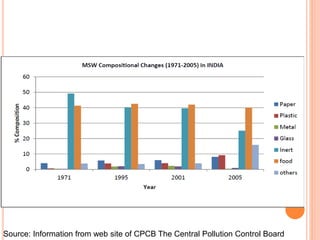
Source: Information from web site of CPCB The Central Pollution Control Board
 MSW is usually disposed as it is without any
treatment. Most of MSW is still disposed off in
dumps causing
 severe environmental and health risks. The
progress in moving towards sanitary landfills and/or
disposing
 through well designed and well operated
incinerators is rather slow.
Municipal Solid Waste Management in India-Current State and Future Challenges: A Review
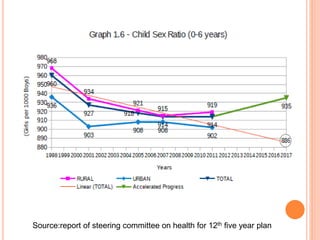
Source:report of steering committee on health for 12th five year plan
MORE THAN 50% OF MATERNAL & CHILD DEATHS
TAKE PLACE IN STATES LIKE BIHAR,
JHARKHAND,ASSAM,UTTAR PRADESH, MADHYA
PRADESH, CHATTISGARH,ORISSA & RAJASTHAN
Source:report of steering committee on health for 12th five year plan
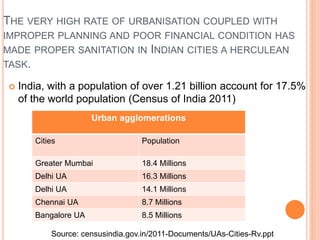
THE VERY HIGH RATE OF URBANISATION COUPLED WITH
IMPROPER PLANNING AND POOR FINANCIAL CONDITION HAS
MADE PROPER SANITATION IN INDIAN CITIES A HERCULEAN
TASK.
 India, with a population of over 1.21 billion account for 17.5%
of the world population (Census of India 2011)
Urban agglomerations
Cities Population
Greater Mumbai 18.4 Millions
Delhi UA 16.3 Millions
Delhi UA 14.1 Millions
Chennai UA 8.7 Millions
Bangalore UA 8.5 Millions
Source: censusindia.gov.in/2011-Documents/UAs-Cities-Rv.ppt
CONCLUSION:
 Awareness and education is the major tool to
overcome health and sanitation issues.
 Proper and improved sanitation will eradicate major
health concerns
 Healthy mind lives in healthy body and healthy
mind ensures happy living and progress.

Health & sanitation

  • 1.
  • 2.
    OUTLINE  Objective ofstudy  methodology  Health  Health issues  Sanitation  Improper sanitation ;potential cause for illhealth  Waste management  conclusion
  • 3.
    OBJECTIVE OF STUDY: To understand the  concept of health & sanitation  relation between health & sanitation  To study Health and sanitation related issues in India
  • 4.
    HEALTH  The generalcondition of a person's mind and body, usually meaning to be free from illness, injury or pain  The World Health Organization(WHO) defined health in its broader sense in 1946 as “ A state of complete physical, mental, and social well- being and not merely the absence of disease or infirmity”  Although this definition has been subject to controversy, in particular as lacking operational value and because of the problem created by use of the word "complete," it remains the most enduring.
  • 5.
    DETERMINANTS  Lifestyle: theaggregation of personal decisions (i.e., over which the individual has control) that can be said to contribute to, or cause, illness or death;  Environmental: all matters related to health external to the human body and over which the individual has little or no control;  Biomedical: all aspects of health, physical and mental, developed within the human body as influenced by genetic make-up.
  • 6.
    HEALTH ISSUES ININDIA  Child malnutrition  High infant mortality rate  Disease  Poor sanitation Safe drinking water  Female health issue  Rural health  Rural health care services •According to a 2005 report, 42% of India’s children below the age of three were malnourished, which was greater than the statistics of sub-Saharan African region of 28%. • One in every three malnourished children in the world lives in India.The estimates varies within the country.It is estimated that,Madhya pradesh is having the highest rate of 55 % and Kerala the lowest with 27 %. •Although India’s economy grew 50% from 2001–2006, its child- malnutrition rate only dropped 1%, lagging behind countries of similar growth rate.
  • 7.
    CHILD MALNUTRITION  Awell nourished child is one whose weight and height measurements compare very well within the standard normal distribution of heights and weights of healthy children of same age and sex.  Malnutrition impedes the social and cognitive development of a child.These irreversible damages result in lower productivity.  hinder a child’s intellectual development.  reduces the immune defence mechanism,which heightens the risk of infections.[  Inadequate care of these women already underdeveloped, especially during pregnancy, leads them in turn to deliver underweight babies who are vulnerable to further malnutrition and disease.
  • 8.
    DIFFERENT FORMS OFMALNUTRITION  Protein-energy malnutrition (PEM), also known as protein-calorie malnutrition  Iron deficiency : nutritional anaemia which can lead to lessened productivity, sometimes becoming terminal  Vitamin A deficiency, which can lead to blindness or a weakened immune system  Iodine deficiency, which can lead to serious mental or physical complaints  Foliate deficiency itself can lead to insufficient birth weight or congenital anomalies such as spina bifida.
  • 9.
    HIGH INFANT MORTALITYRATE  Despite health improvements over the last thirty years, lives continue to be lost to early childhood diseases, inadequate newborn care and childbirth-related causes. More than two million children die every year from preventable infections.  Approximately 1.72 million children die each year before turning one.  The under five mortality and infant mortality rates have been declining, from 202 and 190 deaths per thousand live births respectively in 1970 to 64 and 50 deaths per thousand live births in 2009. However, this decline is slowing. Reduced funding for immunization leaves only 43.5% of the young fully immunized.
  • 10.
    DISEASES  Diseases suchas dengue fever, hepatitis, tuberculosis, malaria and pneumonia continue to plague India due to increased resistance to drugs.[In 2011, India developed a totally drug-resistant form of tuberculosis.HIV/AIDS in India is ranked 3rd highest among countries with the amount of HIV-infected patients.National AIDS Control Organisation, a Government of India 'Apex Body' is making efforts for managing the HIV/AIDS epidemic in India.Diarrheal diseases are the primary causes of early childhood mortality.These diseases can be attributed to poor sanitation and inadequate safe drinking water in India.India also has the world's highest incidence of Rabies.  However in 2012 India was polio-free for the first time in its history.This was achieved because of the Pulse PolioProgramme started in 1995-96 by the government of India.  Indians are also at particularly high risk for atherosclerosis and coronary artery disease. This may be attributed to a genetic predisposition to metabolic syndrome and adverse changes in coronary artery vasodilation. NGOs such as the Indian Heart Association and the Medwin Foundation have been created to raise awareness of this public health issue
  • 11.
    POOR SANITATION &SAFE DRINKING WATER  As more than 122 million households have no toilets, 33% lack access to latrines, over 50% of the population (638 million) defecate in the open.(2008 estimate).This is relatively higher than Bangladesh and Brazil (7%) and China (4%).  Although 211 million people gained access to improved sanitation from 1990–2008, only 31% use the facilities provided. Only 11% of Indian rural families dispose of stools safely whereas 80% of the population leave their stools in the open or throw them in the garbage. Open air defecation leads to the spread of disease and malnutrition through parasitic and bacterial infections.
  • 12.
    POOR SANITATION &SAFE DRINKING WATER  Several million more suffer from multiple episodes of diarrhoea and still others fall ill on account of Hepatitis A, enteric fever, intestinal worms and eye and skin infections caused by poor hygiene and unsafe drinking water.  Access to protected sources of drinking water has improved from 68% of the population in 1990 to 88% in 2008.  However, only 26% of the slum population has access to safe drinking water,and 25% of the total population has drinking water on their premises.  This problem is exacerbated by falling levels of groundwater caused mainly by increasing extraction for irrigation.  Insufficient maintenance of the environment around water sources, groundwater pollution, excessive arsenic and fluoride in drinking water pose a major threat to India's health.
  • 13.
    FEMALE HEALTH ISSUES Maternal deaths are similarly high. The reasons for this high mortality are that few women have access to skilled birth attendants and fewer still to quality emergency obstetric care. In addition, only 15 per cent of mothers receive complete antenatal care and only 58 per cent receive iron or folate tablets or syrup.  Women's health in India involves numerous issues. Some of them include the following:  Malnutrition : The main cause of female malnutrition in India is the tradition requiring women to eat last, even during pregnancy and when they are lactating.  Breast Cancer : One of the most severe and increasing problems among women in India, resulting in higher mortality rates.  Polycystic ovarian disease (PCOD): PCOD increases the infertility rate in females. This condition causes many small cysts to form in the ovaries, which can negatively affect a woman's ability to conceive.  Maternal Mortality : Indian maternal mortality rates in rural areas are one of the highest in the world.
  • 14.
    RURAL HEALTH CARESERVICES  The quality of Indian healthcare is varied. In major urban areas, healthcare is of adequate quality, approaching and occasionally meeting Western standards. However, access to quality medical care is limited or unavailable in most rural areas, although rural medical practitioners are highly sought after by residents of rural areas as they are more financially affordable and geographically accessible than practitioners working in the formal public health care sector.
  • 16.
    SANITATION  The hygienicmeans of promoting health through prevention of human contact with the hazards of wastes as well as the treatment and proper disposal of waste as wastes may cause health problems.
  • 17.
    SANITATION  Sanitation includesall four of these engineering infrastructure items (even though often only the first one is strongly associated with the term "sanitation"):  Excreta management systems  Wastewater management systems  Solid waste management systems  Drainage systems for rainwater, also called stormwater drainage
  • 18.
    SANITATION  Wastes include human and animal excreta,  solid wastes,  domestic wastewater (sewage, sullage, greywater),  industrial wastes and  agricultural wastes
  • 19.
    SANITATION  Hygienic meansof prevention can be  by using engineering solutions (e.g., sewerage, wastewater treatment, storm water drainage, solid waste management, excreta management),  simple technologies (e.g., pit latrines, dry toilets, UDDTs, septic tanks),  simply by personal hygiene practices (e.g., hand washing with soap, behavior change)
  • 20.
     Gasification Technology Refuse Derived Fuel (RFD) Plants  Bioreactor Landfill
  • 21.
    SANITATION A POTENTIALCONTRIBUTOR TO MALNUTRITION  For our nation, the issue is not a lack of food, but rather a lack of toilets for its population—one-half of India's population, at least 620 million people, defecates outside.  The interaction between diarrheal disease and malnutrition is well established. Diarrhea is often caused by a lack of clean water for proper hand-washing. A lack of toilets further exacerbates the problem as feces on the ground contribute to contaminated drinking water and water resources in general.  The World Health Organization estimates that 50 percent of malnutrition is associated with repeated diarrhea or intestinal worm infections from unsafe water or poor sanitation or hygiene.
  • 22.
    COMPOSTING  long traditionparticularly in rural India  difficult process because the waste arrives in a mixed form and contains a lot of non-organic material.  When mixed waste is composted, the end product is of poor quality. The presence of plastic objects in the waste stream is especially problematic, since these materials do not get recycled or have a secondary market.  The first large-scale aerobic composting plant in the country was set up in Mumbai in 1992 to handle 500 t/ day of MSW by Excel Industries Ltd.  Another plant with 150 t/day capacity has been operated in the city of Vijaywada, and  over the years a number of other plants have been implemented in the principal cities of the country such as Delhi, Bangalore, Ahmadabad, Hyderabad, Bhopal, Lucknow and Gwalior.
  • 23.
    INCINERATION  In Indiathe incineration is a poor option as the waste consists mainly high organic material (40–60%) and highinert content (30–50%) also low calorific value content (800–1100 kcal/kg), high moisture content (40–60%) in MSW and the high costs of setting up and running the plants .  The first large-scale MSW incineration plant was constructed at Timarpur, New Delhi in 1987 with a capacity of 300 t/day and a cost of Rs. 250 million (US$5.7 million) by Miljotecknik volunteer, Denmark. The plant was out of operation after 6 month and the Municipal Corporation of Delhi was forced to shut down the plant due to its poor performance.  Small incinerators, in many cities in India, are being used for burning hospital waste however
  • 24.
    GASIFICATION TECHNOLOGY  Gasificationis the solid waste incineration under oxygen deficient conditions, to produce fuel gas.  In India,there are very few gasifiers in operation, but they are mostly for burning of biomass such as agro-residues, sawmill dust, and forest wastes.  Gasification can also be used for MSW treatment after drying, removing the inert and shredding for size reduction.  Gasification unit installed at Gaul Pahari campus, New Delhi by Tata Energy Research Institute (TERI) and other is installed at Nohar, Hanungarh, Rajasthan by Narvreet Energy Research and Information (NERI) for the burning of agro-wastes, sawmill dust, and forest wastes.  The waste-feeding rate is about 50–150 kg/h and its efficiency about 70–80%. About 25% of the fuel gas produced may be recycled back into the system to support the gasification process, and the remaining is recovered and used for power generation
  • 25.
    REFUSE DERIVED FUEL(RFD) PLANTS  It produces an improved solid fuel or pellets from MSW. The RDF plant reduces the pressure on landfills.  Combustion of the RDF from MSW is technically sound and is capable of generating power.  RDF may be fired along with the conventional fuels like coal without any ill effects for generating heat.  Operation of the thermal treatment systems involves not only higher cost, but also a relatively higher degree of expertise.  Many RDF plants are in operation in India, in Bangalore RFD plant ,The RDF plant at Deonar, Mumbai ,The Hyderabad RDF plant  The RDF production is about 210 t/day as fluff and pellets, and it is going to be used for producing power (about 6.6 MW)
  • 26.
    LANDFILLING  A landfillis an area of land onto or into which waste is deposited. The aim is to avoid any contact between the waste and the surrounding environment, particularly the groundwater.  In India open, uncontrolled and poorly managed dumping is commonly practiced, giving rise to serious environmental degradation.  60%- 90% of MSW in cities and towns are directly disposed of on land in an unsatisfactory manner.  Rainy season. Worsens the situation  The pollution of groundwater, though largely unassessed, is definitely a threat posed by the dumping of wastes. Such dumping activity in many coastal towns has led to heavy metals rapidly leaching into the coastal waters. The  daily cover techniques are poor, which makes leakage easier. This is mainly because of a lack of knowledge and  skill on the part of the local authorities. This forces local authorities to curtail the implementation of even known  precautions and practices. However, it appears that landfilling would continue to be the most widely adopted  practice in India in the coming few years, during which certain improvements will have to be made to ensure the  sanitary landfilling, even though the major cities like Delhi, Mumbai, Kolkata and Chennai are facing the  problem of the limited availability of land for waste disposal
  • 27.
    BIOREACTOR LANDFILL  constructedand operated to optimise moisture content and increase the rate of anaerobic biodegradation.  Theprincipal function that distinguishes bioreactor landfills from conventional landfills is leachate recirculation.  The goal is to increase the rate of bio-degradation to achieve maximum gas generation rate and output so as to  optimise recovery for energy production. This approach also aims to minimise the landfill stabilisation time and  reduce the period of monitoring and liability retention. The bioreactor option is a direct result of engineering and  building a new generation of environmentally sound landfills; it provides environmental security while  permitting and encouraging rapid stabilization of the readily and moderately decomposable organic waste  components
  • 28.
    Source: Information fromweb site of CPCB The Central Pollution Control Board
  • 29.
     MSW isusually disposed as it is without any treatment. Most of MSW is still disposed off in dumps causing  severe environmental and health risks. The progress in moving towards sanitary landfills and/or disposing  through well designed and well operated incinerators is rather slow. Municipal Solid Waste Management in India-Current State and Future Challenges: A Review
  • 32.
    Source:report of steeringcommittee on health for 12th five year plan
  • 33.
    Source:report of steeringcommittee on health for 12th five year plan
  • 34.
    Source:report of steeringcommittee on health for 12th five year plan
  • 35.
    Source:report of steeringcommittee on health for 12th five year plan
  • 36.
    Source:report of steeringcommittee on health for 12th five year plan
  • 37.
    MORE THAN 50%OF MATERNAL & CHILD DEATHS TAKE PLACE IN STATES LIKE BIHAR, JHARKHAND,ASSAM,UTTAR PRADESH, MADHYA PRADESH, CHATTISGARH,ORISSA & RAJASTHAN
  • 38.
    Source:report of steeringcommittee on health for 12th five year plan
  • 39.
    THE VERY HIGHRATE OF URBANISATION COUPLED WITH IMPROPER PLANNING AND POOR FINANCIAL CONDITION HAS MADE PROPER SANITATION IN INDIAN CITIES A HERCULEAN TASK.  India, with a population of over 1.21 billion account for 17.5% of the world population (Census of India 2011) Urban agglomerations Cities Population Greater Mumbai 18.4 Millions Delhi UA 16.3 Millions Delhi UA 14.1 Millions Chennai UA 8.7 Millions Bangalore UA 8.5 Millions Source: censusindia.gov.in/2011-Documents/UAs-Cities-Rv.ppt
  • 40.
    CONCLUSION:  Awareness andeducation is the major tool to overcome health and sanitation issues.  Proper and improved sanitation will eradicate major health concerns  Healthy mind lives in healthy body and healthy mind ensures happy living and progress.