Jessica Rinaldi 
Nutrition & Dietetics 
American Sign Language 
California State University, Fresno 
rinaldi8@mail.fresnostate.edu
 Fiber is the general name for material in vegetables, 
fruits, and grains that our bodies can't digest fully. 
 Soluble fiber breaks down into a gel in the intestines. 
As it passes through your GI tract, soluble fiber 
absorbs water and slows down digestion. 
 oatmeal, nuts, beans, apples, and blueberries. 
 Insoluble fiber passes through the body mostly intact 
while speeding up digestion "intestinal hurry." 
 seeds, grains, and the stringy parts or skins of fruits 
and vegetables.
 Diverticulitis (insoluble fiber) : when pockets in 
the intestines rupture and become infected. 
 reduce the risk of disease, ease symptoms and 
prevent future exacerbations. 
 Gastroesophageal reflux disorder (GERD) and 
ulcers. Some soluble fibers have been linked with 
lower levels of gastric acid. 
 Irritable bowel syndrome (IBS.) fibersupplements 
– such as those containing psyllium, guar gum, 
and methylcellulose -- could help with IBS. 
However, high-fiber wheat bran seems to worsen 
symptoms.
 Regularity. insoluble fiber, prevent constipation. It 
bulks up stools and keeps food moving through the 
digestive tract. 
 Healthy bacteria. probiotoics -that live in your 
intestines. Some types of soluble fiber are considered 
a prebiotic -- a fuel that feeds these healthy bacteria 
and increases their numbers, They boost digestive 
health. 
 lower cholesterol, promote healthy blood sugar levels, 
reduce the risk of cardiovascular disease, and help 
people lose weight or maintain a healthy weight.
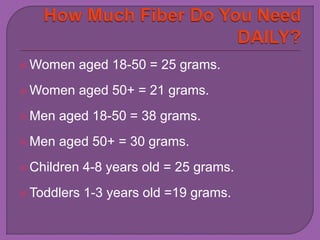
Women aged 18-50 = 25 grams. 
Women aged 50+ = 21 grams. 
 Men aged 18-50 = 38 grams. 
 Men aged 50+ = 30 grams. 
 Children 4-8 years old = 25 grams. 
Toddlers 1-3 years old =19 grams.
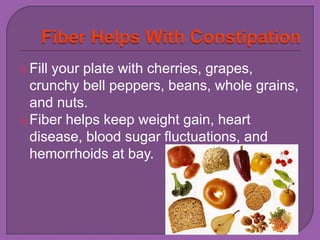
 Fill your plate with cherries, grapes, 
crunchy bell peppers, beans, whole grains, 
and nuts. 
Fiber helps keep weight gain, heart 
disease, blood sugar fluctuations, and 
hemorrhoids at bay.
Relieve reflux and heartburn by stimulating 
the production of acid-neutralizing saliva. 
Skip gum if it causes you to swallow air, 
which may lead to belching and bloating.
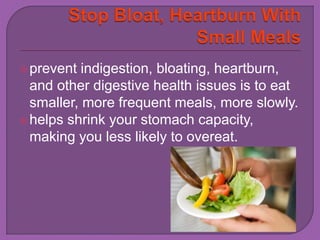
prevent indigestion, bloating, heartburn, 
and other digestive health issues is to eat 
smaller, more frequent meals, more slowly. 
helps shrink your stomach capacity, 
making you less likely to overeat.
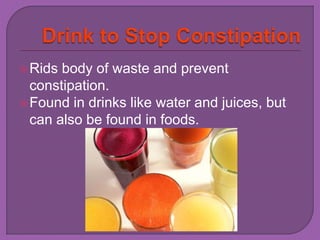
Rids body of waste and prevent 
constipation. 
Found in drinks like water and juices, but 
can also be found in foods.
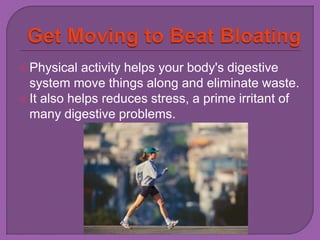
 Physical activity helps your body's digestive 
system move things along and eliminate waste. 
 It also helps reduces stress, a prime irritant of 
many digestive problems.
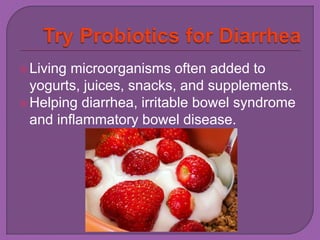
Living microorganisms often added to 
yogurts, juices, snacks, and supplements. 
Helping diarrhea, irritable bowel syndrome 
and inflammatory bowel disease.
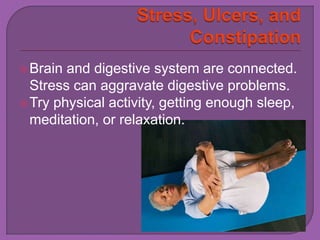
Brain and digestive system are connected. 
Stress can aggravate digestive problems. 
Try physical activity, getting enough sleep, 
meditation, or relaxation.
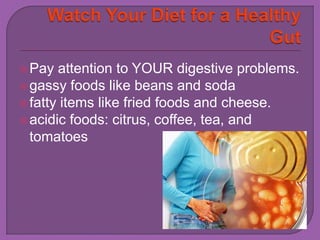
Pay attention to YOUR digestive problems. 
gassy foods like beans and soda 
 fatty items like fried foods and cheese. 
acidic foods: citrus, coffee, tea, and 
tomatoes
Smoking weakens the valve at the end of 
the esophagus (acid reflux and heartburn) 
higher risks of developing peptic ulcers 
and Crohn's disease than nonsmokers. 
increases the risk of various 
gastrointestinal cancers.
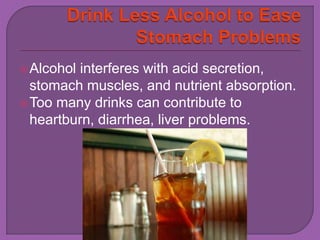
Alcohol interferes with acid secretion, 
stomach muscles, and nutrient absorption. 
Too many drinks can contribute to 
heartburn, diarrhea, liver problems.
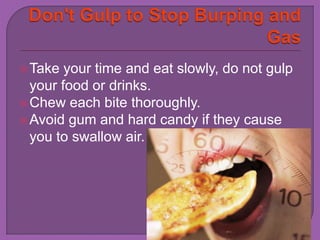
Take your time and eat slowly, do not gulp 
your food or drinks. 
Chew each bite thoroughly. 
Avoid gum and hard candy if they cause 
you to swallow air.
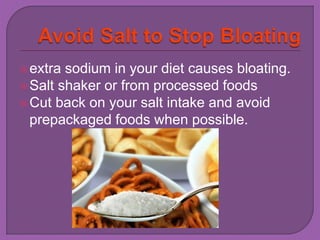
extra sodium in your diet causes bloating. 
Salt shaker or from processed foods 
Cut back on your salt intake and avoid 
prepackaged foods when possible.
Food-borne illnesses can mean diarrhea, 
nausea, and vomiting. 
Keep cold food cold and hot food hot. 
Use different utensils and cutting boards 
when preparing fruits and vegetables and 
raw meat, poultry, or seafood. 
Dairy products that have been pasteurized.
Can't digest lactose, sugar in milk. 
Lots of gas after eating dairy products. 
Try eliminating milk, cheese, ice cream, 
and other dairy foods 
Try substitutes, such as soy
 If digestive problems interfere with your 
daily life. 
Problems swallowing, choking, bloody or 
black vomit or stool, abdominal pain, or 
have lost a lot of weight. 
Digestive distress : food poisoning, 
gallstones, Crohn's disease, ulcers, IBS, or 
diverticulitis.
 Eat more fruits and vegetables:2 cups of fruit and 
2.5 cups of vegetables. 
 Eat more whole grains. Oatmeal, barley, and brown 
rice are all good options or add high-fiber bran. 
 Check the labels. choose items with five+ grams of 
fiber per serving. 
 Drink water. 
 Go slowly. add fiber gradually, over several weeks. 
 Consider a supplement. Get advice from a doctor on 
the different supplements and the different types of 
fiber.
 Apples 
Avocados 
Bananas 
Berries 
Canned fruits (canned 
in fruit juice or water) 
Cantaloupe 
Grapes 
 Honeydew melon 
Kiwi 
Mango 
Nectarines 
Papaya 
Peaches 
Pears 
Prunes 
Watermelon
 Asparagus 
Beans (green, kidney, lima, 
navy, soybeans, yellow) 
Beets 
Broccoli 
Brussels sprouts 
Cabbage 
Carrots 
Cauliflower 
Corn 
Cucumbers 
Kohlrabi 
Leeks 
Mushrooms 
Onions 
 Peas 
Peppers 
(green/red/yellow) 
Potatoes 
Radishes 
Rutabagas 
Sauerkraut 
Scallions 
Spinach 
Squash 
Tomatoes 
Turnips 
Vegetable juices 
Zucchini
Meat/protein 
 Eggs 
 Dried peas, beans, & 
lentils 
 Fish 
 Lean meats 
 Nuts 
 Peanut butter 
 Poultry 
 Seeds 
 Tofu 
Grain products 
 Multigrain breads 
 Cereals and crackers 
 Rice (brown or wild) 
 Whole wheat pasta
 http://www.webmd.com/diet/fiber-health-benefits- 
11/fiber-digestion?page=2 
 http://www.webmd.com/digestive-disorders/ 
ss/slideshow-digestion-tips 
 http://my.clevelandclinic.org/health/healthy 
_living/hic_What_We_Eat_Affects_How_W 
e_Feel/hic_Keeping_Your_Digestive_Tract 
_Healthy/hic_Healthy_Eating_for_the_Dig 
estive_System

Head to toe nutrition three

  • 1.
    Jessica Rinaldi Nutrition& Dietetics American Sign Language California State University, Fresno rinaldi8@mail.fresnostate.edu
  • 3.
     Fiber isthe general name for material in vegetables, fruits, and grains that our bodies can't digest fully.  Soluble fiber breaks down into a gel in the intestines. As it passes through your GI tract, soluble fiber absorbs water and slows down digestion.  oatmeal, nuts, beans, apples, and blueberries.  Insoluble fiber passes through the body mostly intact while speeding up digestion "intestinal hurry."  seeds, grains, and the stringy parts or skins of fruits and vegetables.
  • 4.
     Diverticulitis (insolublefiber) : when pockets in the intestines rupture and become infected.  reduce the risk of disease, ease symptoms and prevent future exacerbations.  Gastroesophageal reflux disorder (GERD) and ulcers. Some soluble fibers have been linked with lower levels of gastric acid.  Irritable bowel syndrome (IBS.) fibersupplements – such as those containing psyllium, guar gum, and methylcellulose -- could help with IBS. However, high-fiber wheat bran seems to worsen symptoms.
  • 5.
     Regularity. insolublefiber, prevent constipation. It bulks up stools and keeps food moving through the digestive tract.  Healthy bacteria. probiotoics -that live in your intestines. Some types of soluble fiber are considered a prebiotic -- a fuel that feeds these healthy bacteria and increases their numbers, They boost digestive health.  lower cholesterol, promote healthy blood sugar levels, reduce the risk of cardiovascular disease, and help people lose weight or maintain a healthy weight.
  • 6.
    Women aged 18-50= 25 grams. Women aged 50+ = 21 grams.  Men aged 18-50 = 38 grams.  Men aged 50+ = 30 grams.  Children 4-8 years old = 25 grams. Toddlers 1-3 years old =19 grams.
  • 7.
     Fill yourplate with cherries, grapes, crunchy bell peppers, beans, whole grains, and nuts. Fiber helps keep weight gain, heart disease, blood sugar fluctuations, and hemorrhoids at bay.
  • 8.
    Relieve reflux andheartburn by stimulating the production of acid-neutralizing saliva. Skip gum if it causes you to swallow air, which may lead to belching and bloating.
  • 10.
    prevent indigestion, bloating,heartburn, and other digestive health issues is to eat smaller, more frequent meals, more slowly. helps shrink your stomach capacity, making you less likely to overeat.
  • 11.
    Rids body ofwaste and prevent constipation. Found in drinks like water and juices, but can also be found in foods.
  • 12.
     Physical activityhelps your body's digestive system move things along and eliminate waste.  It also helps reduces stress, a prime irritant of many digestive problems.
  • 13.
    Living microorganisms oftenadded to yogurts, juices, snacks, and supplements. Helping diarrhea, irritable bowel syndrome and inflammatory bowel disease.
  • 14.
    Brain and digestivesystem are connected. Stress can aggravate digestive problems. Try physical activity, getting enough sleep, meditation, or relaxation.
  • 15.
    Pay attention toYOUR digestive problems. gassy foods like beans and soda  fatty items like fried foods and cheese. acidic foods: citrus, coffee, tea, and tomatoes
  • 16.
    Smoking weakens thevalve at the end of the esophagus (acid reflux and heartburn) higher risks of developing peptic ulcers and Crohn's disease than nonsmokers. increases the risk of various gastrointestinal cancers.
  • 17.
    Alcohol interferes withacid secretion, stomach muscles, and nutrient absorption. Too many drinks can contribute to heartburn, diarrhea, liver problems.
  • 18.
    Take your timeand eat slowly, do not gulp your food or drinks. Chew each bite thoroughly. Avoid gum and hard candy if they cause you to swallow air.
  • 19.
    extra sodium inyour diet causes bloating. Salt shaker or from processed foods Cut back on your salt intake and avoid prepackaged foods when possible.
  • 20.
    Food-borne illnesses canmean diarrhea, nausea, and vomiting. Keep cold food cold and hot food hot. Use different utensils and cutting boards when preparing fruits and vegetables and raw meat, poultry, or seafood. Dairy products that have been pasteurized.
  • 21.
    Can't digest lactose,sugar in milk. Lots of gas after eating dairy products. Try eliminating milk, cheese, ice cream, and other dairy foods Try substitutes, such as soy
  • 22.
     If digestiveproblems interfere with your daily life. Problems swallowing, choking, bloody or black vomit or stool, abdominal pain, or have lost a lot of weight. Digestive distress : food poisoning, gallstones, Crohn's disease, ulcers, IBS, or diverticulitis.
  • 23.
     Eat morefruits and vegetables:2 cups of fruit and 2.5 cups of vegetables.  Eat more whole grains. Oatmeal, barley, and brown rice are all good options or add high-fiber bran.  Check the labels. choose items with five+ grams of fiber per serving.  Drink water.  Go slowly. add fiber gradually, over several weeks.  Consider a supplement. Get advice from a doctor on the different supplements and the different types of fiber.
  • 24.
     Apples Avocados Bananas Berries Canned fruits (canned in fruit juice or water) Cantaloupe Grapes  Honeydew melon Kiwi Mango Nectarines Papaya Peaches Pears Prunes Watermelon
  • 25.
     Asparagus Beans(green, kidney, lima, navy, soybeans, yellow) Beets Broccoli Brussels sprouts Cabbage Carrots Cauliflower Corn Cucumbers Kohlrabi Leeks Mushrooms Onions  Peas Peppers (green/red/yellow) Potatoes Radishes Rutabagas Sauerkraut Scallions Spinach Squash Tomatoes Turnips Vegetable juices Zucchini
  • 26.
    Meat/protein  Eggs  Dried peas, beans, & lentils  Fish  Lean meats  Nuts  Peanut butter  Poultry  Seeds  Tofu Grain products  Multigrain breads  Cereals and crackers  Rice (brown or wild)  Whole wheat pasta
  • 27.
     http://www.webmd.com/diet/fiber-health-benefits- 11/fiber-digestion?page=2  http://www.webmd.com/digestive-disorders/ ss/slideshow-digestion-tips  http://my.clevelandclinic.org/health/healthy _living/hic_What_We_Eat_Affects_How_W e_Feel/hic_Keeping_Your_Digestive_Tract _Healthy/hic_Healthy_Eating_for_the_Dig estive_System