Great Expectations or Tales of the Unexpected? Students
             as co-creators of curriculum
             Gill Ferrell
             Paul Bartholomew
             Dawn Wood
30/07/2012                                                       slide 1
Definitions are important


             Co-creators of the curriculum

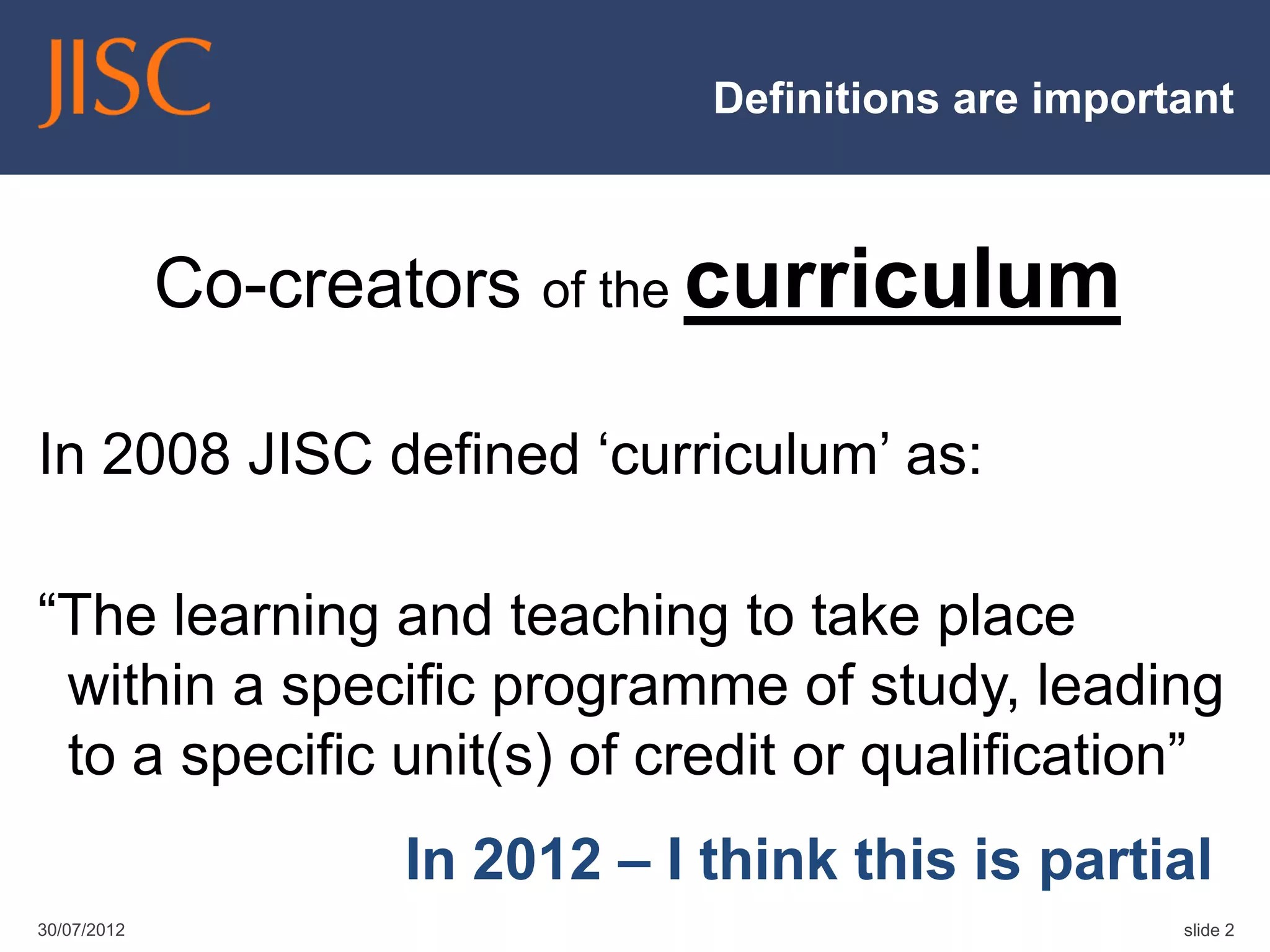
In 2008 JISC defined „curriculum‟ as:

“The learning and teaching to take place
 within a specific programme of study, leading
 to a specific unit(s) of credit or qualification”
                    In 2012 – I think this is partial
30/07/2012                                            slide 2
Definitions are important


             Co-creators of the curriculum

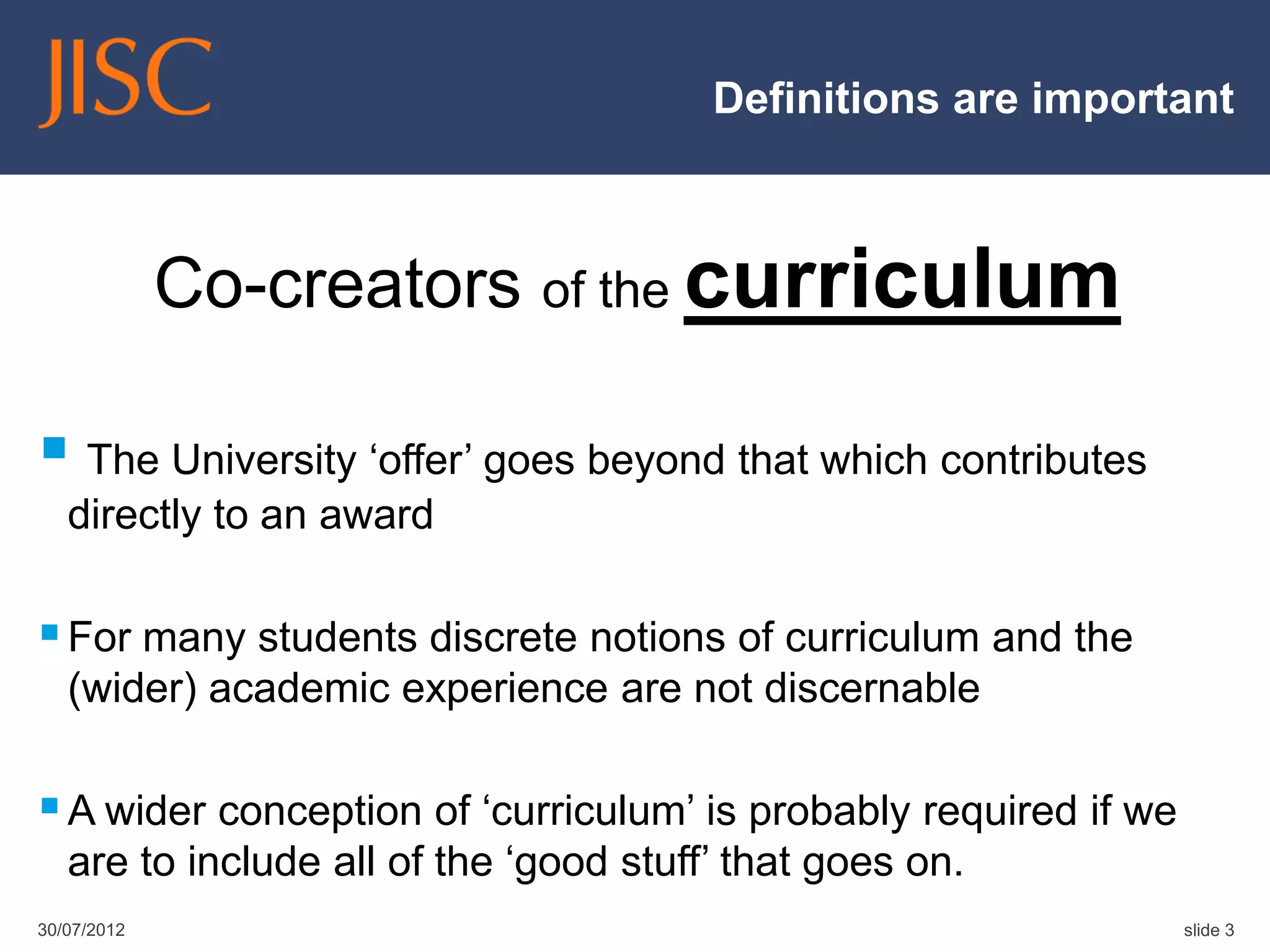
 The University „offer‟ goes beyond that which contributes
   directly to an award

 For many students discrete notions of curriculum and the
   (wider) academic experience are not discernable

 A wider conception of „curriculum‟ is probably required if we
   are to include all of the „good stuff‟ that goes on.
30/07/2012                                                        slide 3
Definitions are important


             Co-creators of the curriculum
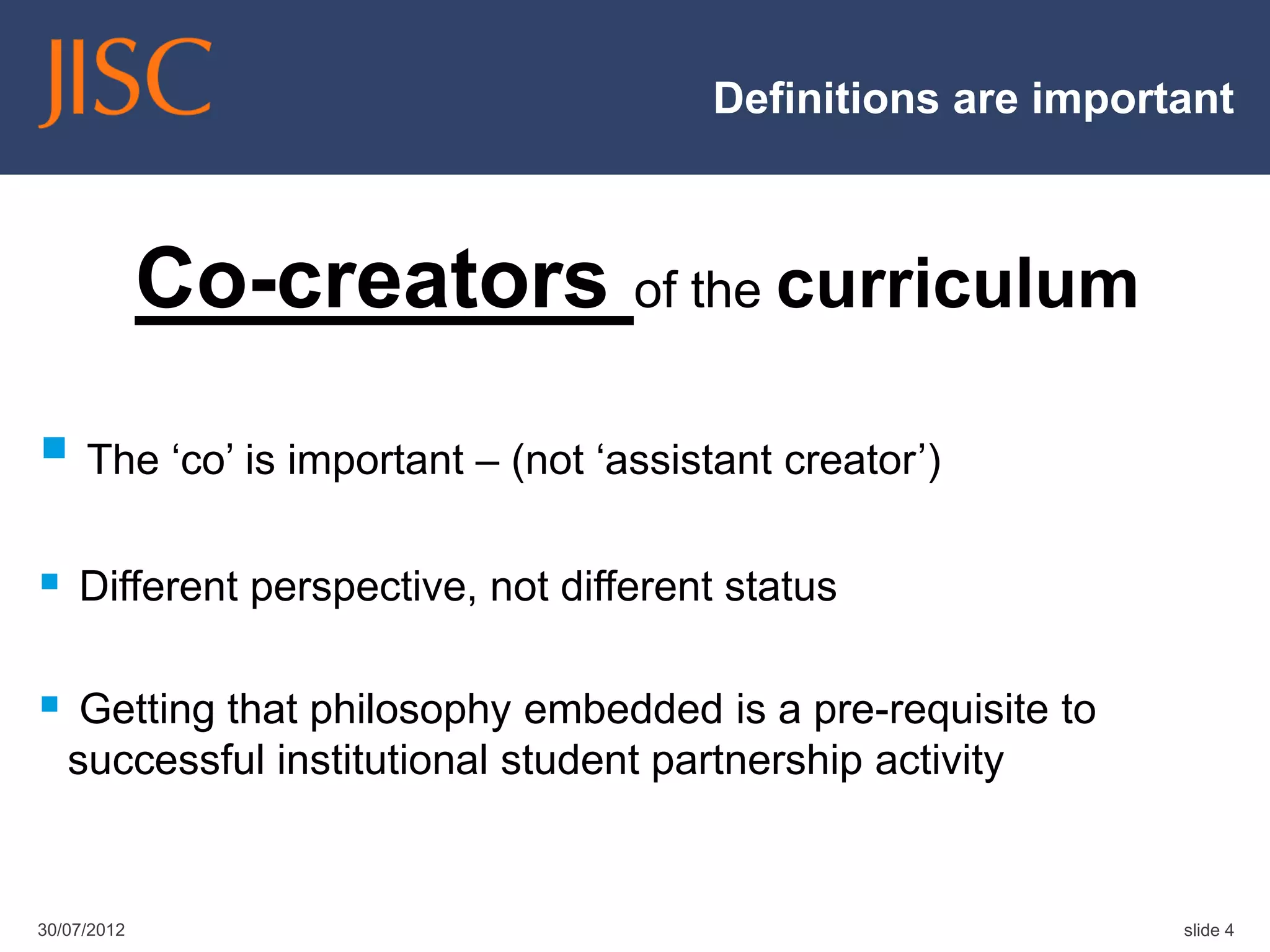
 The „co‟ is important – (not „assistant creator‟)
 Different perspective, not different status

 Getting that philosophy embedded is a pre-requisite to
   successful institutional student partnership activity


30/07/2012                                                   slide 4
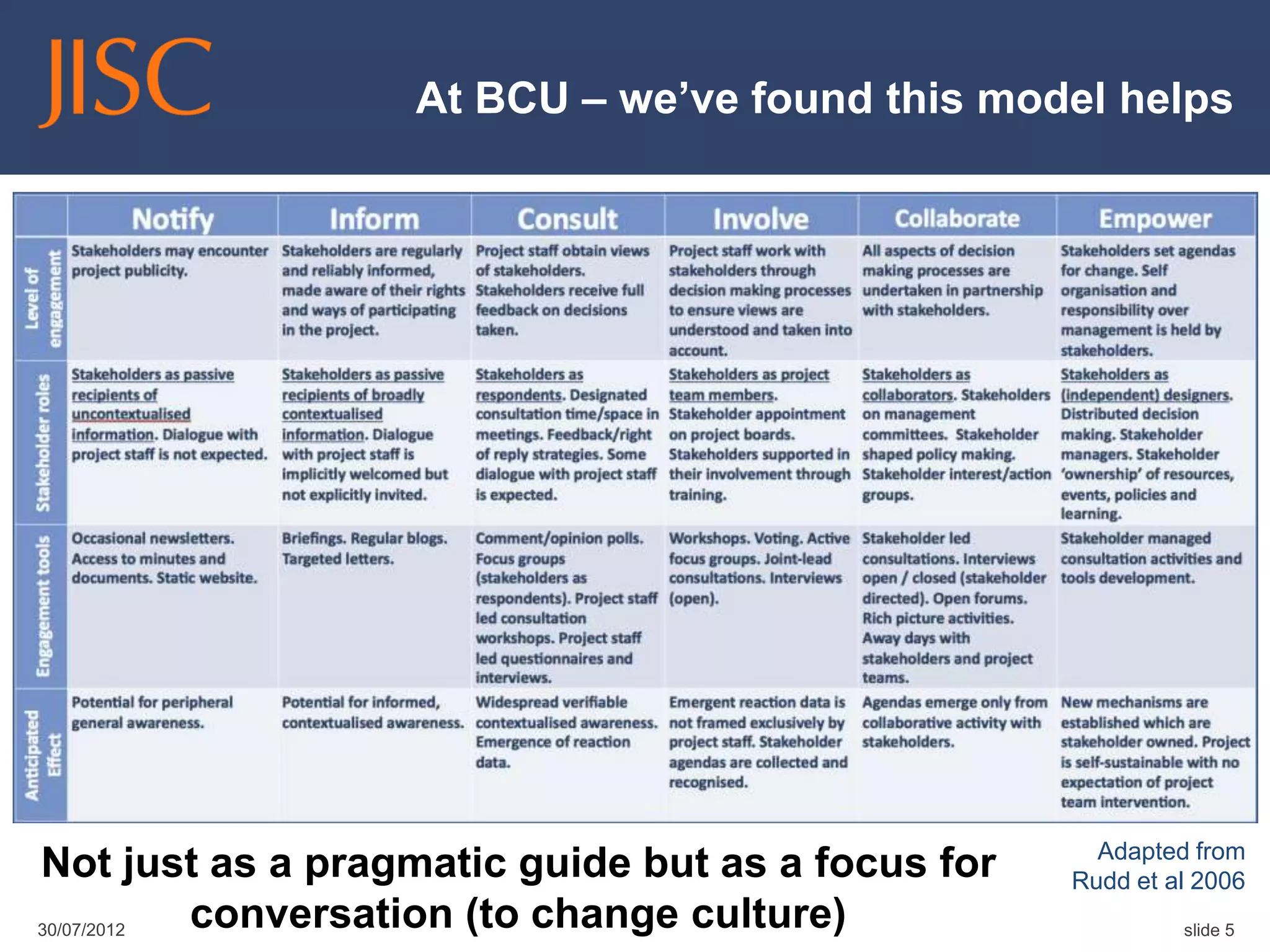
At BCU – we’ve found this model helps


                                                     Adapted from
Not just as a pragmatic guide but as a focus for   Rudd et al 2006
30/07/2012 conversation (to change culture)                 slide 5
How students co-create the
      curriculum at BCU


30/07/2012                         slide 6
A few examples


Student Academic Partners scheme

Student Academic Mentors scheme

Curriculum design and approval
   (T-SPARC project)


30/07/2012                             slide 7
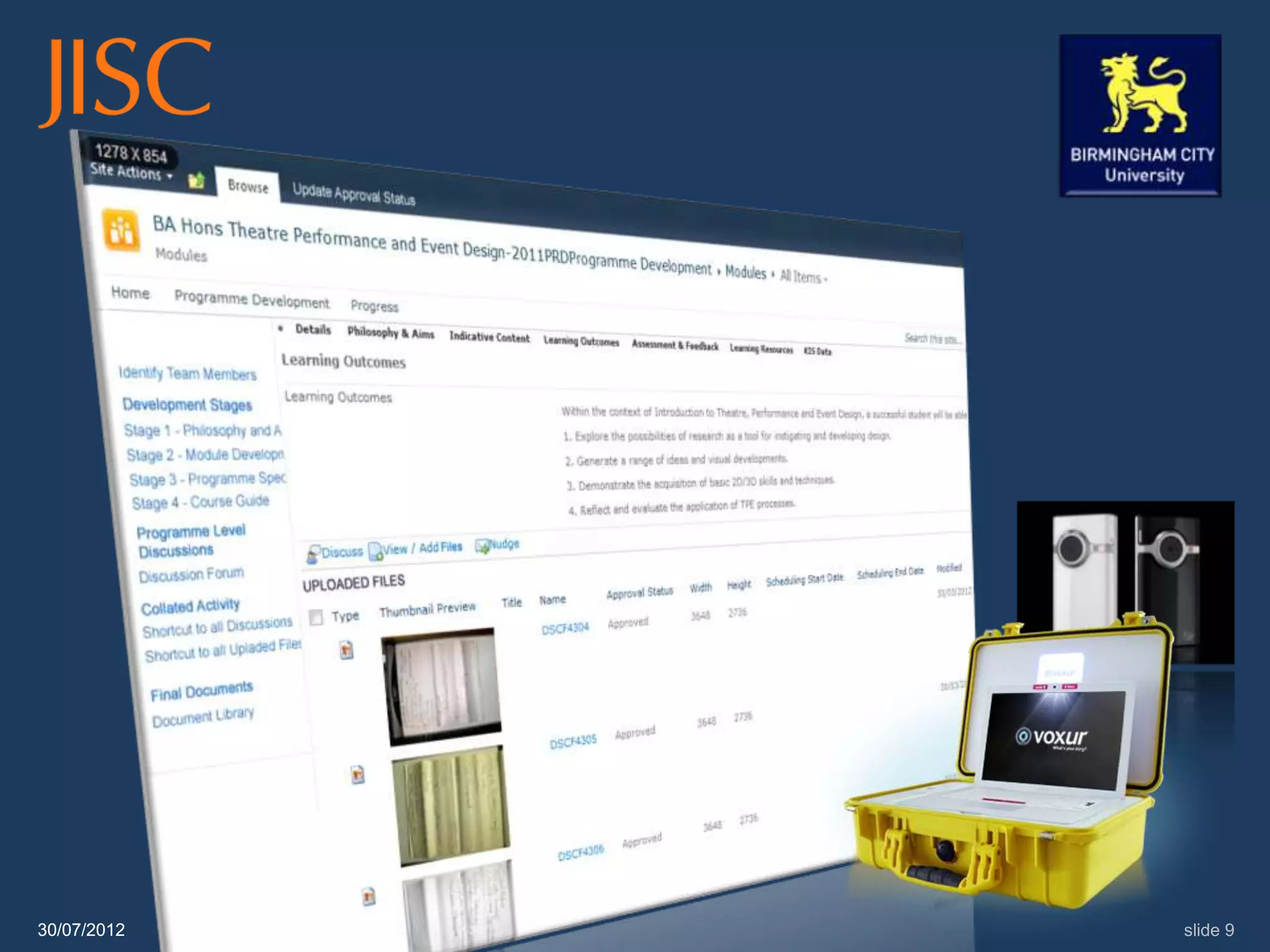
T-SPARC


New curriculum design and approval
   mechanism mandates student involvement

Evidence of engagement and influence is
   expected

Technology has broadened the interface for
   engagement

30/07/2012                                    slide 8
30/07/2012   slide 9
How students co-create the
      curriculum at Leeds Met


30/07/2012                         slide 10
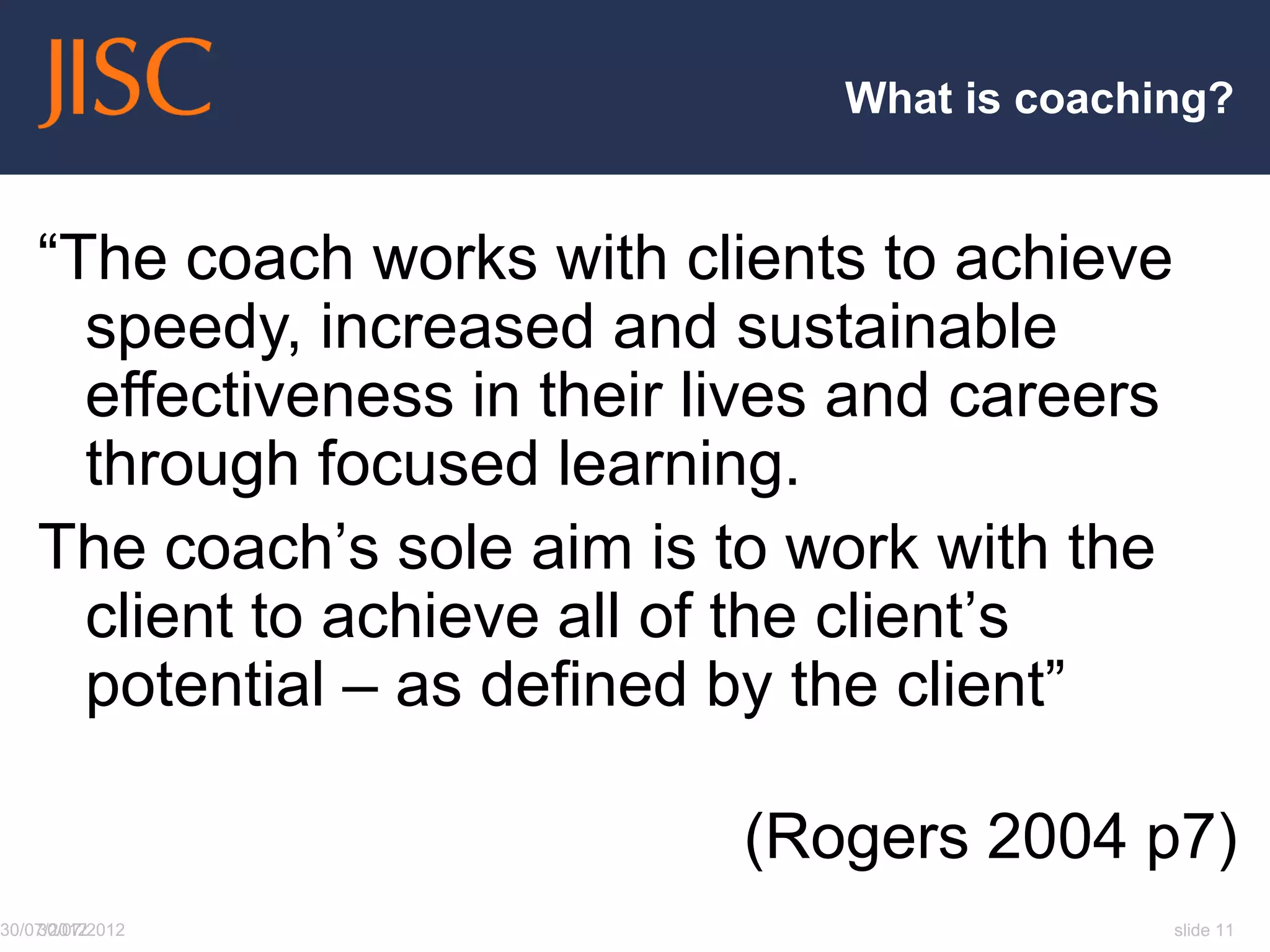
What is coaching?


    “The coach works with clients to achieve
      speedy, increased and sustainable
      effectiveness in their lives and careers
      through focused learning.
    The coach‟s sole aim is to work with the
      client to achieve all of the client‟s
      potential – as defined by the client”

                              (Rogers 2004 p7)
30/07/2012
    30/07/2012                                   slide 11
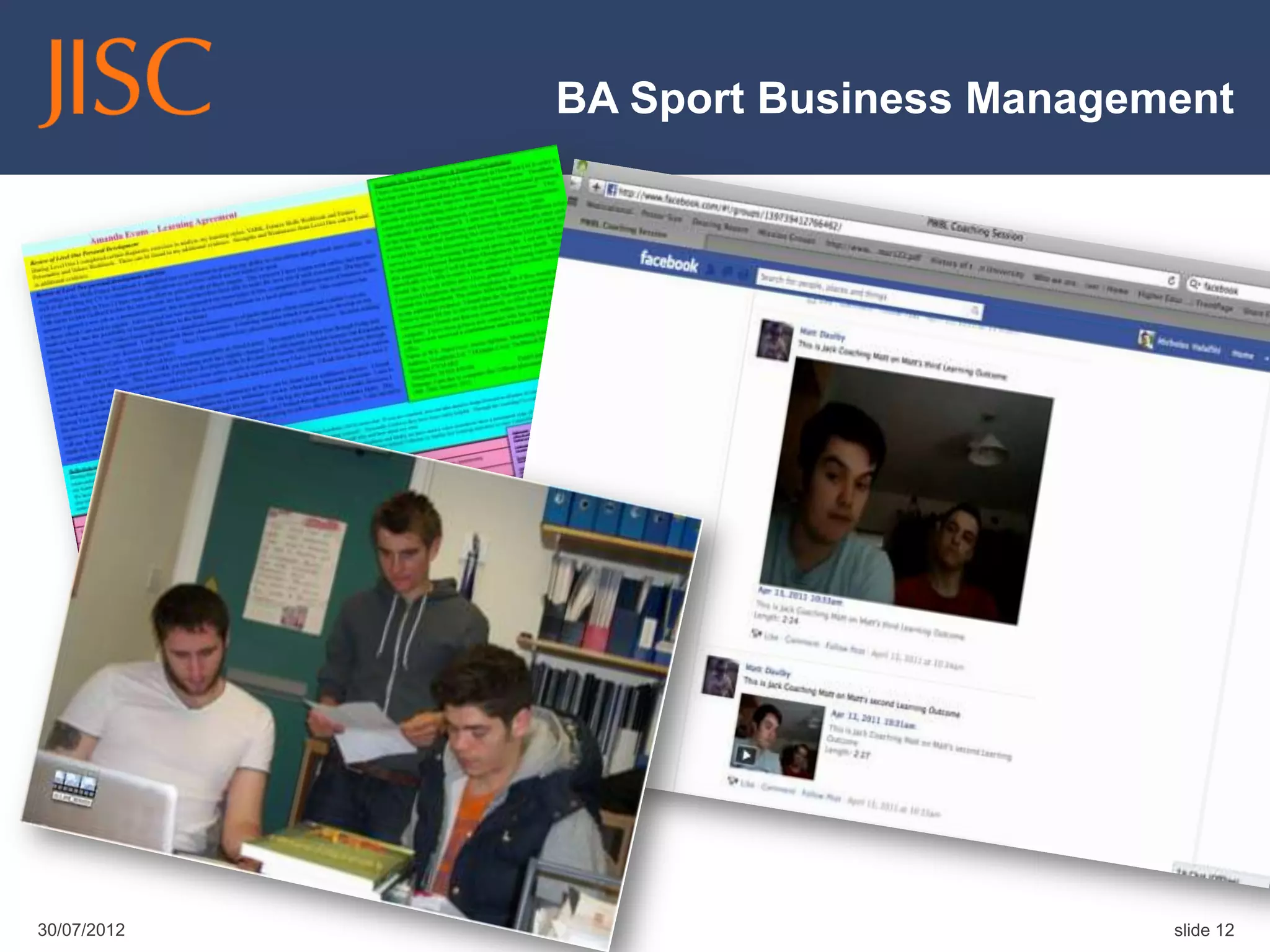
BA Sport Business Management


30/07/2012                            slide 12
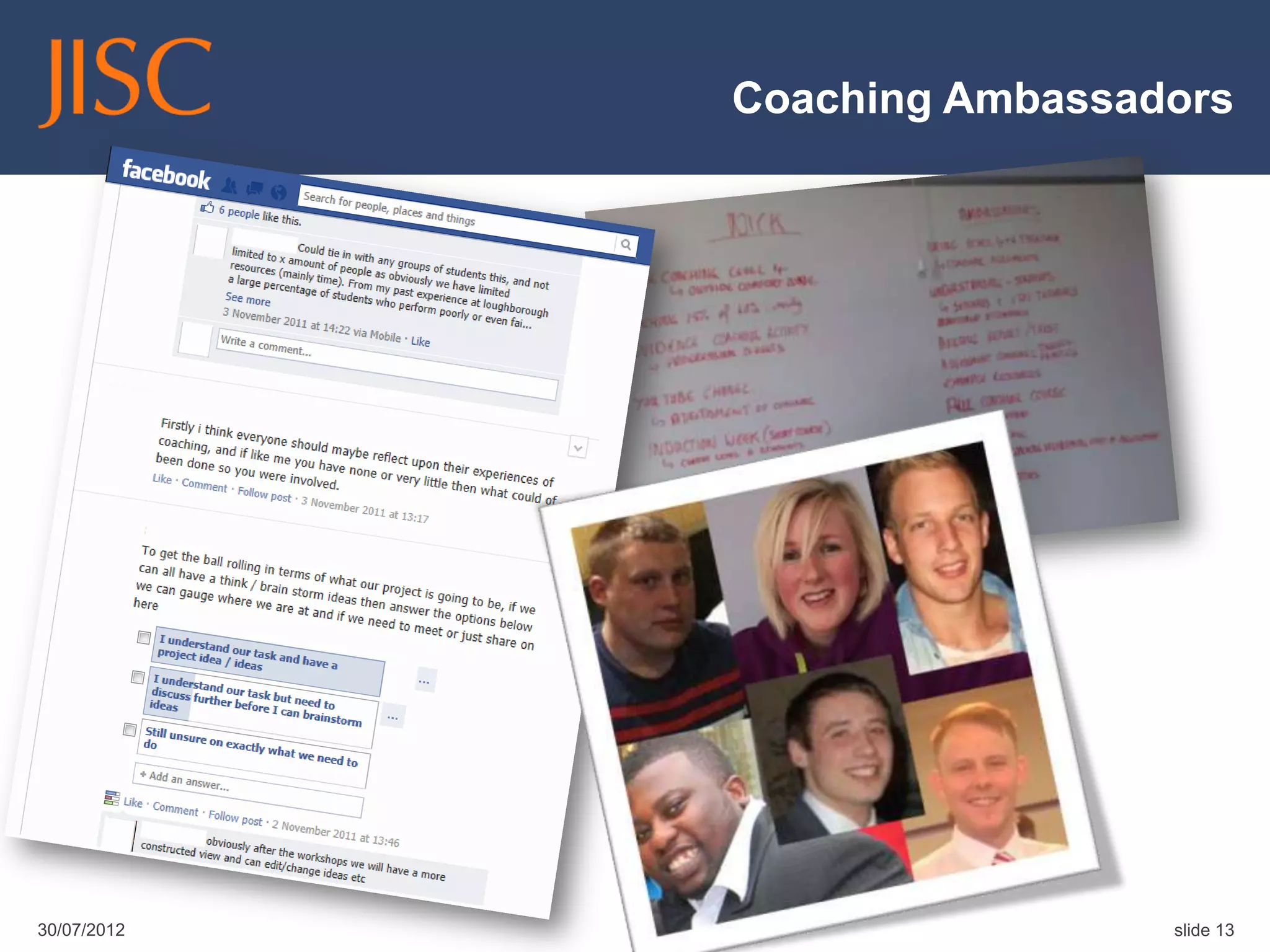
Coaching Ambassadors


30/07/2012                    slide 13
Ideas for engaging students in coaching


 1.  You Tube Resources
 2.  Resources for PDP staff
 3.  Seminar training for staff
 4.  A generic module embedded at the beginning of course
 5.  Feedback to current tutor
 6.  Interactive self-coaching tool
 7.  Review current modules/course and make
     recommendations
 8. Provided feedback to tutors after sessions
 9. Resources for skills for learning site
 10. Twitter stream as promotion (added later)
30/07/2012                                                  slide 14
Participant Contributions


30/07/2012                        slide 15
Structured discussion


Thinking about opportunities students have or could
 have for co-creating the curriculum at your institution:

   – What were/are the barriers to significant uptake?

   – What were/are the enablers to significant uptake?


30/07/2012                                            slide 16
Why bother?


              What do we (all) think are the benefits for
             institutions, students, employers, the sector
              that may cascade from this sort of activity?


30/07/2012                                                   slide 17
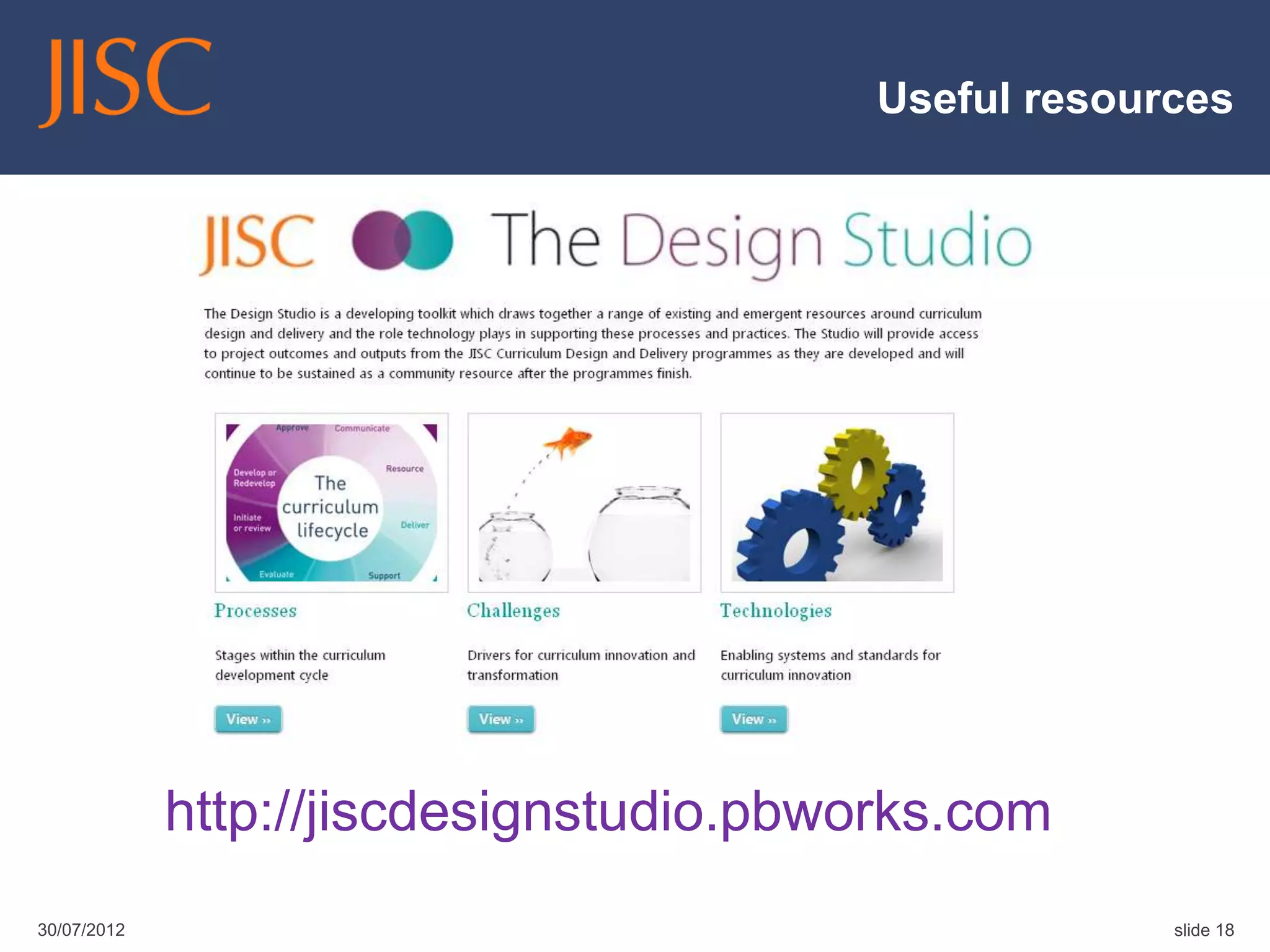
Useful resources


             http://jiscdesignstudio.pbworks.com
30/07/2012                                            slide 18
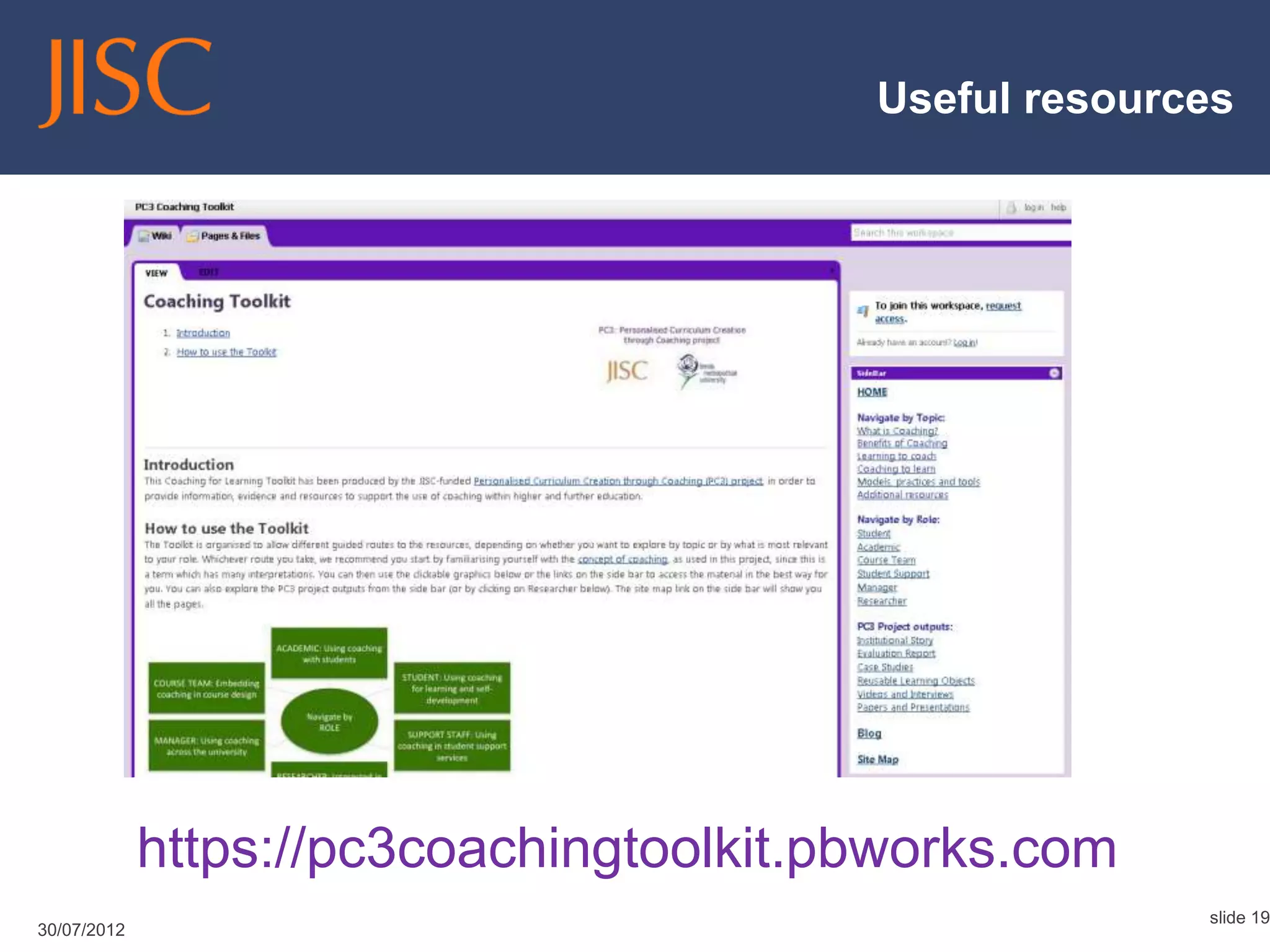
Useful resources


             https://pc3coachingtoolkit.pbworks.com
                                                       slide 19
30/07/2012
© HEFCE 2012
The Higher Education Funding Council for England,
on behalf of JISC, permits reuse of this presentation
and its contents under the terms of the Creative Commons
Attribution-Non-Commercial-No Derivative Works 2.0 UK
England & Wales Licence.


http://creativecommons.org/licenses/by-nc-nd/2.0/uk


30/07/2012                                                 slide 20

HEA Conference 2012- Joint presentation

  • 1.
    Great Expectations orTales of the Unexpected? Students as co-creators of curriculum Gill Ferrell Paul Bartholomew Dawn Wood 30/07/2012 slide 1
  • 2.
    Definitions are important Co-creators of the curriculum In 2008 JISC defined „curriculum‟ as: “The learning and teaching to take place within a specific programme of study, leading to a specific unit(s) of credit or qualification” In 2012 – I think this is partial 30/07/2012 slide 2
  • 3.
    Definitions are important Co-creators of the curriculum  The University „offer‟ goes beyond that which contributes directly to an award  For many students discrete notions of curriculum and the (wider) academic experience are not discernable  A wider conception of „curriculum‟ is probably required if we are to include all of the „good stuff‟ that goes on. 30/07/2012 slide 3
  • 4.
    Definitions are important Co-creators of the curriculum  The „co‟ is important – (not „assistant creator‟)  Different perspective, not different status  Getting that philosophy embedded is a pre-requisite to successful institutional student partnership activity 30/07/2012 slide 4
  • 5.
    At BCU –we’ve found this model helps Adapted from Not just as a pragmatic guide but as a focus for Rudd et al 2006 30/07/2012 conversation (to change culture) slide 5
  • 6.
    How students co-createthe curriculum at BCU 30/07/2012 slide 6
  • 7.
    A few examples StudentAcademic Partners scheme Student Academic Mentors scheme Curriculum design and approval (T-SPARC project) 30/07/2012 slide 7
  • 8.
    T-SPARC New curriculum designand approval mechanism mandates student involvement Evidence of engagement and influence is expected Technology has broadened the interface for engagement 30/07/2012 slide 8
  • 9.
    30/07/2012 slide 9
  • 10.
    How students co-createthe curriculum at Leeds Met 30/07/2012 slide 10
  • 11.
    What is coaching? “The coach works with clients to achieve speedy, increased and sustainable effectiveness in their lives and careers through focused learning. The coach‟s sole aim is to work with the client to achieve all of the client‟s potential – as defined by the client” (Rogers 2004 p7) 30/07/2012 30/07/2012 slide 11
  • 12.
    BA Sport BusinessManagement 30/07/2012 slide 12
  • 13.
  • 14.
    Ideas for engagingstudents in coaching 1. You Tube Resources 2. Resources for PDP staff 3. Seminar training for staff 4. A generic module embedded at the beginning of course 5. Feedback to current tutor 6. Interactive self-coaching tool 7. Review current modules/course and make recommendations 8. Provided feedback to tutors after sessions 9. Resources for skills for learning site 10. Twitter stream as promotion (added later) 30/07/2012 slide 14
  • 15.
  • 16.
    Structured discussion Thinking aboutopportunities students have or could have for co-creating the curriculum at your institution: – What were/are the barriers to significant uptake? – What were/are the enablers to significant uptake? 30/07/2012 slide 16
  • 17.
    Why bother? What do we (all) think are the benefits for institutions, students, employers, the sector that may cascade from this sort of activity? 30/07/2012 slide 17
  • 18.
    Useful resources http://jiscdesignstudio.pbworks.com 30/07/2012 slide 18
  • 19.
    Useful resources https://pc3coachingtoolkit.pbworks.com slide 19 30/07/2012
  • 20.
    © HEFCE 2012 TheHigher Education Funding Council for England, on behalf of JISC, permits reuse of this presentation and its contents under the terms of the Creative Commons Attribution-Non-Commercial-No Derivative Works 2.0 UK England & Wales Licence. http://creativecommons.org/licenses/by-nc-nd/2.0/uk 30/07/2012 slide 20

Editor's Notes

  • #21 Go to ‘View’ menu > ‘Header and Footer…’ to edit the footers on this slide (click ‘Apply’ to change only the currently selected slide, or ‘Apply to All’ to change the footers on all slides.