HBV Therapeutic Advances
Direct antiviral drugs
Dr.Mohammed A. Aboelmagd MD
Endemic and Infectious diseases department
Introduction
• Chronic hepatitis B infection remains a major
disease burden globally, and leads to high risk
of hepatocellular carcinoma development.
• Although effective vaccines have been
available for more than three decades,
hepatitis B virus (HBV) infection remains a
global public health issue. It is estimated
around 248 million people are chronically
infected by HBV, and most of them are
residing in the Asia-Pacific region
Clinical relevance of chronic hepatitis B
and the need for therapeutic advances
• About 4 % of the global population, are
chronically infected with hepatitis B virus
(HBV).
• is the dominant risk factor for development
of hepatocellular carcinoma (HCC) in Asia
and sub-Saharan Africa
Clinical relevance of chronic hepatitis B
and the need for therapeutic advances
• Vaccination coverage remains low in many
countries and a low percentage of individuals
have no or low development of antibody
response upon vaccination
• HBV infection occurs during birth or during
adolescence, the likelihood of
development into chronic hepatitis B is
estimated at 90 % and 20–30 %
respectively.
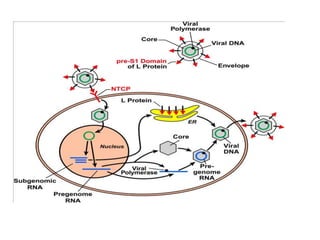
Overview of hepatitis B viral life cycle
• HBV is a DNA virus that belongs to the
family of Hepadnaviridae, and has a 3.2 kD
double stranded genome surrounded by
nucleocapsid and envelope proteins.
• All four of the open reading frames (ORFs)
overlap and are present on the minus
strand, encoding for the viral polymerase
and reverse transcriptase, envelope,
precore and X proteins.
Overview of hepatitis B viral life cycle
• HBV is highly hepatotrophic and species-
specific, which means that HBV replicates
exclusively within human hepatocytes.
• The viral replication cycle can be divided
into early and intermediate events (reverse
transcriptase-independent) and late events
(reverse transcriptase-dependent).
Overview of hepatitis B viral life cycle
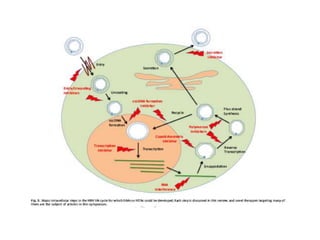
• Early events:
- Attachment
- Penetration
- Uncoating
• Intermediate events:
- Replication ( cccDNA)
• Late events:
- Assembly
- Release
Overview of the immune response to acute
and chronic hepatitis B
• It remains strongly debated whether the
lack of innate response within the infected
hepatocytes is due to active suppression
by HBV or defective immune sensing
mechanisms.
• Even though HBV lacks the ability to
trigger a strong innate immune response, it
remains susceptible to the effects of innate
antiviral cytokines.
Overview of the immune response to acute
and chronic hepatitis B
• CD4 T cells produce cytokines that help in
the CD8 T cell response, and the CD8 T
cell response clears HBV infected
hepatocytes through cytolytic and non-
cytolytic mechanisms.
• Functional HBV specific CD4 and CD8 T
cell responses are required for HBV
control in both chimpanzees and humans
Overview of the immune response to acute
and chronic hepatitis B
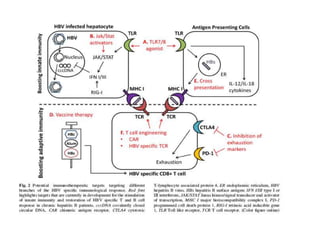
• Importantly, the immunological profiles
between acute and chronic hepatitis B
patients are different. During chronic HBV
infection, unlike acute HBV infection, the T
cell response is characterized by exhaustion,
where HBV specific T cells upregulate
expression of inhibitory molecules ,and T
cells are physically deleted through
apoptosis
Overview of the immune response to acute
and chronic hepatitis B
• The importance of adaptive immunity in
effective control of HBV infection stems from
observations that transplantation of bone
marrow from HBV immunized individuals,
which contain HBV-specific memory T and B
cells, into chronic hepatitis B patients
achieves control of chronic HBV infection
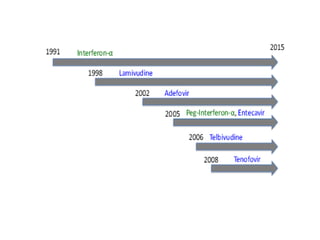
Current treatments against chronic hepatitis B
and development into HCC
• Current treatments for chronic hepatitis B
have developed in two main directions.
1- Nucleot(s)ide analogues that target reverse
transcription during the HBV life cycle and
prevent infectious virion release.
However, because nucleot(s)ide analogues do
not directly target cccDNA,the chance of relapse
after drug withdrawal is high and lifelong
nucleot(s)ide treatment is costly.
Resistance.
Current treatments against chronic hepatitis B
and development into HCC
2- conventional or pegylated IFNa, which
stimulates the antiviral immune response in
patients.(finite therapy,loss of HbsAg for long
duration, side effects,contraindicated in
advanced cirrohosis)
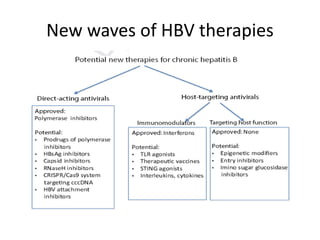
New waves of HBV therapies
Direct-acting antivirals
A.New investigational agents now in clinical trials
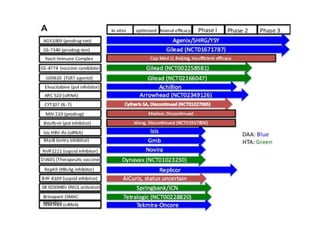
1. Prodrugs of HBV polymerase inhibitors:
chemical or molecular precursors of active
drugs Typically, a prodrug is designed to
improve the performance of the active drug
substance, usually by decreasing toxicity,
improving solubility, enhancing tissue
absorption and/or increasing the half-life, so
that the agent can be dosed no more
frequently than once daily.
Prodrugs of tenofovir are in the most advanced stages of development
Tenofovir disproxil fumarate,,tenofovir alafenamide
Direct-acting antivirals
• AGX1009 and TAF. AGX1009 (Agenix) and TAF
(Gilead), are prodrugs of tenofovir in Phase 3
clinical trials.
2- small interfering RNA :In principle, siRNA-acting
drugs, which target HBV transcripts,should be able to
shut down all HBV gene product production. This
approach has had great promise, but has been
frustrated by the inefficiency in delivery of the nucleic
acid oligomers to human hepatocytes, despite
extremely compelling results in experimental animal
(ARC-520 Inhibit HBsAg, HBeAg and HBV DNA
levels).
Direct-acting antivirals
3- HBsAg-reducing agents:
RepA9, from Replicor, is a nucleic acid-based
polymer(NAP) ,comprised of phosphorothioated
nucleic acids The mechanism of action is
unclear, but the sponsor reports it acts on
HBsAg. As stated, compounds that act on
HBsAg are particularly interesting because they
also have the potential for direct activity against
hepatitis delta virus (HDV)
Direct-acting antivirals
4- Inhibitors of capsid formation:
Capsid formation is an essential viral process that
does not occur in the uninfected cell, and thus
would be expected to provide a virus-selective
target. Moreover,capsid proteins are readily
detected in the nucleus of infected cells, far from
the site of nucleocapsid formation in the cytoplasm.
This is consistent with evidence that capsid proteins
play a role in regulating HBV cccDNA expression and
stability.
Three capsid inhibitors have reached clinical phase development:
BAY4109 (AiCuris), NV1221 (Novira) and GLS 4 (Sunshine).
Direct-acting antivirals
B-New investigational agents now in clinical trials
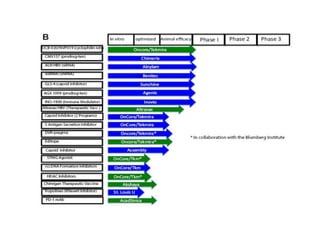
1-Inhibitors of capsid morphogenesis:
All these capsid inhibitors are small molecules that
interfere with HBV capsid morphogenesis, but not
necessarily at the same step. CpAMs are HBV core
protein allosteric modulators that accelerate a
dysfunctional capsid protein dimerization.
DVRs prevent the association of HBV pregenomic RNA
with the capsid
Direct-acting antivirals
2- Inhibitors of HBsAg secretion:
is a small molecule that has been shown to
prevent the secretion of HBsAg and viral DNA in
vitro,possibly by interfering with the ability of
HBsAg to associate with the LDL secretion
machinery .
Direct-acting antivirals
3-RNase H inhibitors
Unlike other DNA viruses HBV replication depends
upon the RNAseH activity of HBV polymerase to
degrade pregenomic RNA. RNAseH enzymatic
activity should, in principle, be a viable antiviral
target as is the reverse transcriptase/DNA
polymerase activity of HBV polymerase.
Direct-acting antivirals
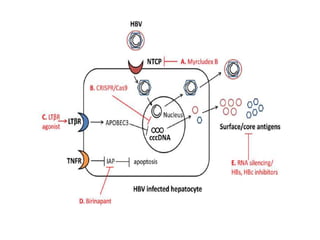
4-CRISPR/Cas9 system:
The bacterial clustered regularly interspaced short
palindromic repeats associated systems
(CRISP/Cas9) loci encode RNA guided
endonucleases, derived from bacterial immune
response against foreign genetic elements such as
bacteriophages. they can be used to target
destruction of specific DNA sequences, and thus
hold a great potential for specific degradation of
HBV cccDNA.
Host-targeting antivirals
A-Products in clinical development:
1-Viral entry inhibitors(Myrcludex B)
2- Immune enhancers
3- Therapeutic vaccines
4-Birinapant (small molecule that is believed to mimic
second mitochondrial activator of caspases (SMAC). SMAC
normally binds to IAP (inhibitor of apoptosis), pushing the cell
towards apoptosis
5-Zadaxin:natural polypeptide from the thymus
Host-targeting antivirals
B-HTAs in the preclinical stage:
1- Immune checkpoint inhibitors
2-Epigenetic modifiers
3- interferon gene stimulator
4- Cyclophilin inhibitors
Hbv therapeutic advances

Hbv therapeutic advances

  • 1.
    HBV Therapeutic Advances Directantiviral drugs Dr.Mohammed A. Aboelmagd MD Endemic and Infectious diseases department
  • 2.
    Introduction • Chronic hepatitisB infection remains a major disease burden globally, and leads to high risk of hepatocellular carcinoma development. • Although effective vaccines have been available for more than three decades, hepatitis B virus (HBV) infection remains a global public health issue. It is estimated around 248 million people are chronically infected by HBV, and most of them are residing in the Asia-Pacific region
  • 3.
    Clinical relevance ofchronic hepatitis B and the need for therapeutic advances • About 4 % of the global population, are chronically infected with hepatitis B virus (HBV). • is the dominant risk factor for development of hepatocellular carcinoma (HCC) in Asia and sub-Saharan Africa
  • 4.
    Clinical relevance ofchronic hepatitis B and the need for therapeutic advances • Vaccination coverage remains low in many countries and a low percentage of individuals have no or low development of antibody response upon vaccination • HBV infection occurs during birth or during adolescence, the likelihood of development into chronic hepatitis B is estimated at 90 % and 20–30 % respectively.
  • 5.
    Overview of hepatitisB viral life cycle • HBV is a DNA virus that belongs to the family of Hepadnaviridae, and has a 3.2 kD double stranded genome surrounded by nucleocapsid and envelope proteins. • All four of the open reading frames (ORFs) overlap and are present on the minus strand, encoding for the viral polymerase and reverse transcriptase, envelope, precore and X proteins.
  • 6.
    Overview of hepatitisB viral life cycle • HBV is highly hepatotrophic and species- specific, which means that HBV replicates exclusively within human hepatocytes. • The viral replication cycle can be divided into early and intermediate events (reverse transcriptase-independent) and late events (reverse transcriptase-dependent).
  • 7.
    Overview of hepatitisB viral life cycle • Early events: - Attachment - Penetration - Uncoating • Intermediate events: - Replication ( cccDNA) • Late events: - Assembly - Release
  • 9.
    Overview of theimmune response to acute and chronic hepatitis B • It remains strongly debated whether the lack of innate response within the infected hepatocytes is due to active suppression by HBV or defective immune sensing mechanisms. • Even though HBV lacks the ability to trigger a strong innate immune response, it remains susceptible to the effects of innate antiviral cytokines.
  • 10.
    Overview of theimmune response to acute and chronic hepatitis B • CD4 T cells produce cytokines that help in the CD8 T cell response, and the CD8 T cell response clears HBV infected hepatocytes through cytolytic and non- cytolytic mechanisms. • Functional HBV specific CD4 and CD8 T cell responses are required for HBV control in both chimpanzees and humans
  • 12.
    Overview of theimmune response to acute and chronic hepatitis B • Importantly, the immunological profiles between acute and chronic hepatitis B patients are different. During chronic HBV infection, unlike acute HBV infection, the T cell response is characterized by exhaustion, where HBV specific T cells upregulate expression of inhibitory molecules ,and T cells are physically deleted through apoptosis
  • 13.
    Overview of theimmune response to acute and chronic hepatitis B • The importance of adaptive immunity in effective control of HBV infection stems from observations that transplantation of bone marrow from HBV immunized individuals, which contain HBV-specific memory T and B cells, into chronic hepatitis B patients achieves control of chronic HBV infection
  • 14.
    Current treatments againstchronic hepatitis B and development into HCC • Current treatments for chronic hepatitis B have developed in two main directions. 1- Nucleot(s)ide analogues that target reverse transcription during the HBV life cycle and prevent infectious virion release. However, because nucleot(s)ide analogues do not directly target cccDNA,the chance of relapse after drug withdrawal is high and lifelong nucleot(s)ide treatment is costly. Resistance.
  • 15.
    Current treatments againstchronic hepatitis B and development into HCC 2- conventional or pegylated IFNa, which stimulates the antiviral immune response in patients.(finite therapy,loss of HbsAg for long duration, side effects,contraindicated in advanced cirrohosis)
  • 17.
    New waves ofHBV therapies
  • 19.
    Direct-acting antivirals A.New investigationalagents now in clinical trials 1. Prodrugs of HBV polymerase inhibitors: chemical or molecular precursors of active drugs Typically, a prodrug is designed to improve the performance of the active drug substance, usually by decreasing toxicity, improving solubility, enhancing tissue absorption and/or increasing the half-life, so that the agent can be dosed no more frequently than once daily. Prodrugs of tenofovir are in the most advanced stages of development Tenofovir disproxil fumarate,,tenofovir alafenamide
  • 20.
    Direct-acting antivirals • AGX1009and TAF. AGX1009 (Agenix) and TAF (Gilead), are prodrugs of tenofovir in Phase 3 clinical trials. 2- small interfering RNA :In principle, siRNA-acting drugs, which target HBV transcripts,should be able to shut down all HBV gene product production. This approach has had great promise, but has been frustrated by the inefficiency in delivery of the nucleic acid oligomers to human hepatocytes, despite extremely compelling results in experimental animal (ARC-520 Inhibit HBsAg, HBeAg and HBV DNA levels).
  • 21.
    Direct-acting antivirals 3- HBsAg-reducingagents: RepA9, from Replicor, is a nucleic acid-based polymer(NAP) ,comprised of phosphorothioated nucleic acids The mechanism of action is unclear, but the sponsor reports it acts on HBsAg. As stated, compounds that act on HBsAg are particularly interesting because they also have the potential for direct activity against hepatitis delta virus (HDV)
  • 22.
    Direct-acting antivirals 4- Inhibitorsof capsid formation: Capsid formation is an essential viral process that does not occur in the uninfected cell, and thus would be expected to provide a virus-selective target. Moreover,capsid proteins are readily detected in the nucleus of infected cells, far from the site of nucleocapsid formation in the cytoplasm. This is consistent with evidence that capsid proteins play a role in regulating HBV cccDNA expression and stability. Three capsid inhibitors have reached clinical phase development: BAY4109 (AiCuris), NV1221 (Novira) and GLS 4 (Sunshine).
  • 23.
    Direct-acting antivirals B-New investigationalagents now in clinical trials 1-Inhibitors of capsid morphogenesis: All these capsid inhibitors are small molecules that interfere with HBV capsid morphogenesis, but not necessarily at the same step. CpAMs are HBV core protein allosteric modulators that accelerate a dysfunctional capsid protein dimerization. DVRs prevent the association of HBV pregenomic RNA with the capsid
  • 24.
    Direct-acting antivirals 2- Inhibitorsof HBsAg secretion: is a small molecule that has been shown to prevent the secretion of HBsAg and viral DNA in vitro,possibly by interfering with the ability of HBsAg to associate with the LDL secretion machinery .
  • 25.
    Direct-acting antivirals 3-RNase Hinhibitors Unlike other DNA viruses HBV replication depends upon the RNAseH activity of HBV polymerase to degrade pregenomic RNA. RNAseH enzymatic activity should, in principle, be a viable antiviral target as is the reverse transcriptase/DNA polymerase activity of HBV polymerase.
  • 26.
    Direct-acting antivirals 4-CRISPR/Cas9 system: Thebacterial clustered regularly interspaced short palindromic repeats associated systems (CRISP/Cas9) loci encode RNA guided endonucleases, derived from bacterial immune response against foreign genetic elements such as bacteriophages. they can be used to target destruction of specific DNA sequences, and thus hold a great potential for specific degradation of HBV cccDNA.
  • 27.
    Host-targeting antivirals A-Products inclinical development: 1-Viral entry inhibitors(Myrcludex B) 2- Immune enhancers 3- Therapeutic vaccines 4-Birinapant (small molecule that is believed to mimic second mitochondrial activator of caspases (SMAC). SMAC normally binds to IAP (inhibitor of apoptosis), pushing the cell towards apoptosis 5-Zadaxin:natural polypeptide from the thymus
  • 28.
    Host-targeting antivirals B-HTAs inthe preclinical stage: 1- Immune checkpoint inhibitors 2-Epigenetic modifiers 3- interferon gene stimulator 4- Cyclophilin inhibitors

Editor's Notes

  • #4 Most risk factos for transmission perinatal route
  • #5 Effective vaccination program 1980
  • #8 sodium taurocholate cotransporter polypeptide (NTCP),
  • #9 Intermediate events then begin with nuclear import of the HBV genome, followed by HBV genome conversion into covalently closed circular DNA form (cccDNA) [12]. Importantly, cccDNA is responsible for the longterm persistence of HBV in the liver, even when serum HBV DNA levels remain undetected [13]. Transcription from cccDNA into pre-genomic RNA (pgRNA) and sub genomic RNA species is required for translation into viral proteins such as core antigen (HBcAg), e antigen (HBeAg), polymerase/reverse transcriptase, viral envelope protein (HBsAg) and X protein (HBx). In addition, translation from pgRNA produces HBV core-related antigen (p22cr). This p22cr protein is required for the formation of DNA negative Dane particles, which are found at high levels in chronic hepatitis patients [14]. Late events begin with core proteins encapsidating pgRNA and viral polymerase to form nucleocapsids/core particles. This is followed by reverse transcription of pgRNA into mature genomic DNA within the core particles. The mature nucleocapsids then assemble with viral envelope proteins at the endoplasmic reticulum to form new infectious virions [15]. These infectious virions are then released through constitutive secretion to enable infection of neighboring cells
  • #10 It is vital to understand the immunological response in acute and chronic hepatitis B patients, as new therapeutic strategies aim to target the host immune response to control and clear HBV. CD4? T cells produce cytokines that help in the CD8? T cell response, and the CD8? T cell response clears HBV infected hepatocytes through cytolytic and non-cytolytic mechanisms [22]. Functional HBV specific CD4? and CD8? T cell responses are required for HBV control in both chimpanzees and humans
  • #26 Ribonuclease H (RNase H) is a family of non-sequence-specific endonucleases that catalyze the cleavage of RNA via a hydrolytic mechanism. Members of the RNase H family can be found in nearly all organisms, from bacteria to archaea to eukaryotes.