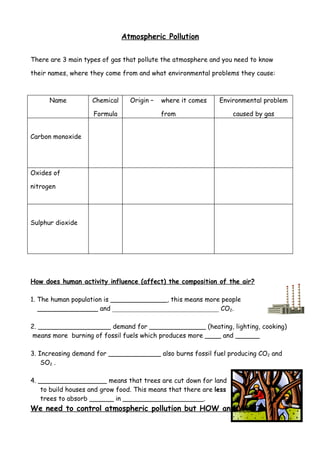
The atmosphere is mainly composed of nitrogen, oxygen, and carbon dioxide. The carbon cycle involves photosynthesis, respiration, and combustion and works to maintain stable levels of oxygen and carbon dioxide. Early in Earth's formation, volcanoes released gases like carbon dioxide, water vapor, and ammonia into the atmosphere. Over time, the formation of oceans and evolution of plants increased oxygen levels while decreasing carbon dioxide. Human activities like increased population, fossil fuel combustion, deforestation, and transportation have led to higher atmospheric pollution levels and their associated health and environmental impacts. Strategies to control pollution include emissions standards, catalytic converters, and reducing carbon dioxide emissions.