




1
2
1. Pemberton: Introduction & Challenges
2. Market Analysis
3. Krispy Natural market strategy
4. Result and Conclusion
3
4
INTRODUCTION
5
 Pemberton was the snack food division of Candler
Enterprises, a multinational beverage and snack
food manufacturer
 Pemberton was a market leader in the U.S. Cookie
and bakery snacks segment of the sweet segment
market
 It has experienced a compound annual growth rate
(CAGR) of14% for revenue over the past 5 years
6
 Key Strategic Priorities:
• Building a collection of attractive, durable brands
• Leveraging leading marketing, sales and DSD
system to increase revenue and profits
• Building capabilities to have strong brand values in
salty snack categories
7
Pemberton’s income statement(% of revenue):
Sales 100.0%
COGS 78.8%
Brand advertising & Marketing 7.7%
Pretax Contribution 13.5%
Profit After Tax 7.7%
8
9
CHALLENGES
10
How to launch and sustain the growthof Krispy
Natural in the Salty Snack Market?
11
MARKET ANALYSIS
 US Cracker industry overview
 Product purchasing intent
 Competitors Analysis
12
13
U.S. CRACKER
INDUSTRY OVERVIEW
 Retail cracker sales in the United States
reached an estimated $6.9 billion in 2011
 The growth rate for the overall cracker
industry from 2008 to 2010 was approx.
2.2% CAGR
 A Mintel study of salty snacks repoted that
74% of respondents consumed crackers on
the regular basis and 34% ate them as a part
of regular weekly diet
14
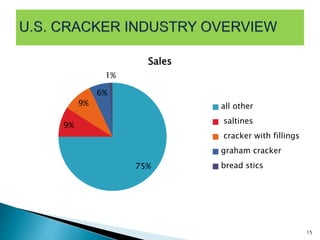
75%
9%
9%
6%
1%
Sales
all other
saltines
cracker with fillings
graham cracker
bread stics
15
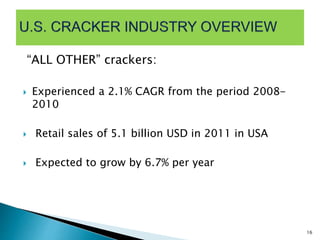
“ALL OTHER” crackers:
 Experienced a 2.1% CAGR from the period 2008-
2010
 Retail sales of 5.1 billion USD in 2011 in USA
 Expected to grow by 6.7% per year
16
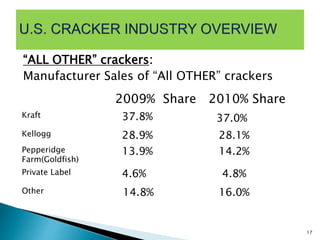
“ALL OTHER” crackers:
Manufacturer Sales of “All OTHER” crackers
17
2009% Share 2010% Share
Kraft 37.8% 37.0%
Kellogg 28.9% 28.1%
Pepperidge
Farm(Goldfish)
13.9% 14.2%
Private Label 4.6% 4.8%
Other 14.8% 16.0%
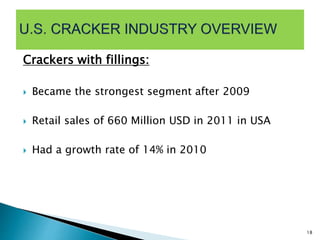
Crackers with fillings:
 Became the strongest segment after 2009
 Retail sales of 660 Million USD in 2011 in USA
 Had a growth rate of 14% in 2010
18
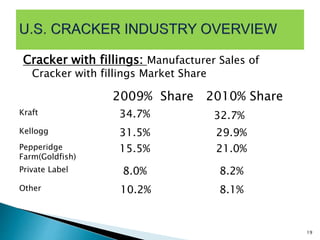
Cracker with fillings: Manufacturer Sales of
Cracker with fillings Market Share
19
2009% Share 2010% Share
Kraft 34.7% 32.7%
Kellogg 31.5% 29.9%
Pepperidge
Farm(Goldfish)
15.5% 21.0%
Private Label 8.0% 8.2%
Other 10.2% 8.1%
20
PRODUCT PURCHASE INTENT
21
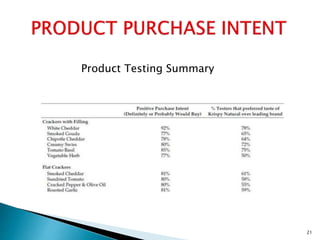
Product Testing Summary
22
COMPETITOR ANALYSIS
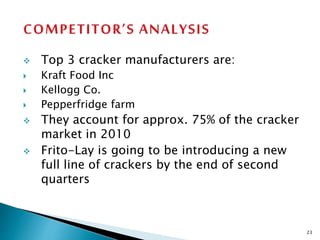
 Top 3 cracker manufacturers are:
 Kraft Food Inc
 Kellogg Co.
 Pepperfridge farm
 They account for approx. 75% of the cracker
market in 2010
 Frito-Lay is going to be introducing a new
full line of crackers by the end of second
quarters
23
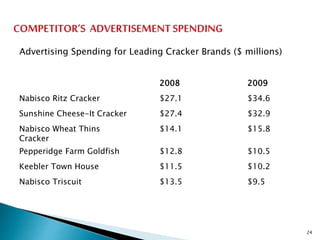
2008 2009
Nabisco Ritz Cracker $27.1 $34.6
Sunshine Cheese-It Cracker $27.4 $32.9
Nabisco Wheat Thins
Cracker
$14.1 $15.8
Pepperidge Farm Goldfish $12.8 $10.5
Keebler Town House $11.5 $10.2
Nabisco Triscuit $13.5 $9.5
24
Advertising Spending for Leading Cracker Brands ($ millions)
25
MARKETING STRATEGY
26
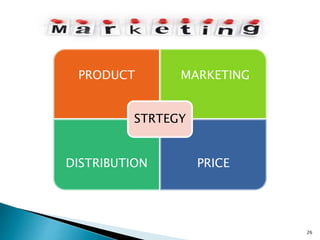
PRODUCT MARKETING
DISTRIBUTION PRICE
STRTEGY
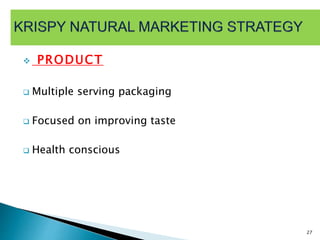
 PRODUCT
 Multiple serving packaging
 Focused on improving taste
 Health conscious
27
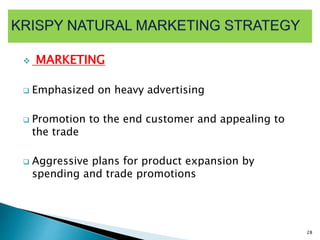
 MARKETING
 Emphasized on heavy advertising
 Promotion to the end customer and appealing to
the trade
 Aggressive plans for product expansion by
spending and trade promotions
28
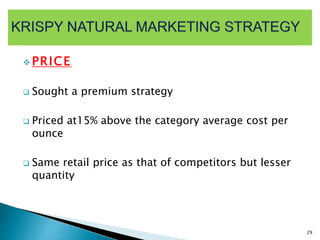
 PRICE
 Sought a premium strategy
 Priced at15% above the category average cost per
ounce
 Same retail price as that of competitors but lesser
quantity
29
30
PROMOTIONALPLAN
31
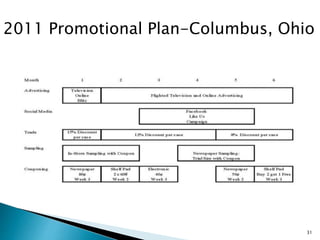
2011 Promotional Plan-Columbus, Ohio
Advertising $ 33
Merchandising $ 37
$ 70
($ in million) Year 1 Year 2 Year 3
Dollar Sales $500 $580 $700
Growth $16% 21%
Dollar Share 9% $10% 11%
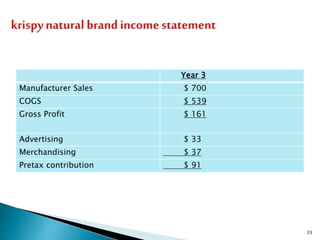
Estimates ( $ in Million )
Year 3
Manufacturer Sales $ 700
COGS $ 539
Gross Profit $ 161
Advertising $ 33
Merchandising $ 37
Pretax contribution $ 91
33
34
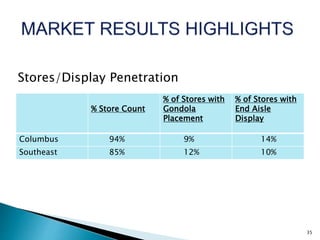
% Store Count
% of Stores with
Gondola
Placement
% of Stores with
End Aisle
Display
Columbus 94% 9% 14%
Southeast 85% 12% 10%
35
Stores/Display Penetration
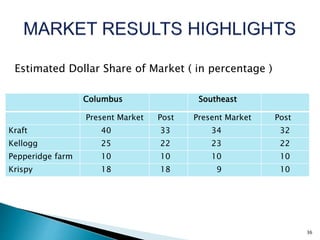
Columbus Southeast
Present Market Post Present Market Post
Kraft 40 33 34 32
Kellogg 25 22 23 22
Pepperidge farm 10 10 10 10
Krispy 18 18 9 10
36
Estimated Dollar Share of Market ( in percentage )
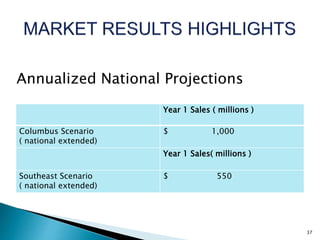
Year 1 Sales ( millions )
Columbus Scenario
( national extended)
$ 1,000
Year 1 Sales( millions )
Southeast Scenario
( national extended)
$ 550
37
Annualized National Projections
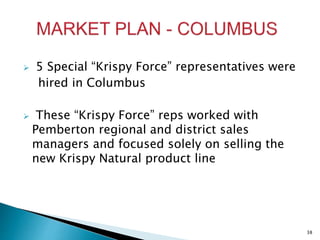
 5 Special “Krispy Force” representatives were
hired in Columbus
 These “Krispy Force” reps worked with
Pemberton regional and district sales
managers and focused solely on selling the
new Krispy Natural product line
38
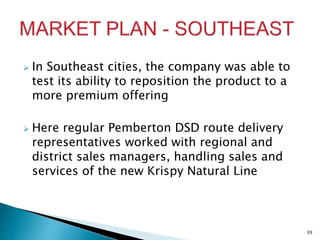
 In Southeast cities, the company was able to
test its ability to reposition the product to a
more premium offering
 Here regular Pemberton DSD route delivery
representatives worked with regional and
district sales managers, handling sales and
services of the new Krispy Natural Line
39
40
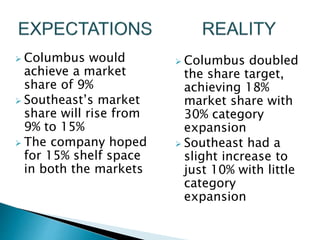
 Columbus would
achieve a market
share of 9%
 Southeast’s market
share will rise from
9% to 15%
 The company hoped
for 15% shelf space
in both the markets
 Columbus doubled
the share target,
achieving 18%
market share with
30% category
expansion
 Southeast had a
slight increase to
just 10% with little
category
expansionC
41
42
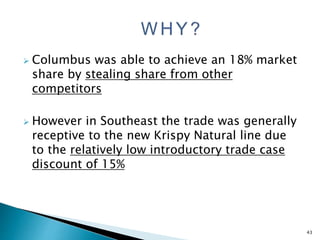
 Columbus was able to achieve an 18% market
share by stealing share from other
competitors
 However in Southeast the trade was generally
receptive to the new Krispy Natural line due
to the relatively low introductory trade case
discount of 15%
43
44
CONCLUSION
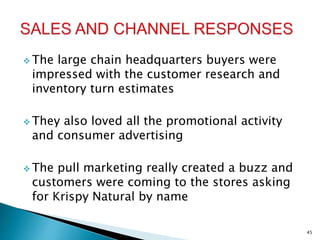
 The large chain headquarters buyers were
impressed with the customer research and
inventory turn estimates
 They also loved all the promotional activity
and consumer advertising
 The pull marketing really created a buzz and
customers were coming to the stores asking
for Krispy Natural by name
45
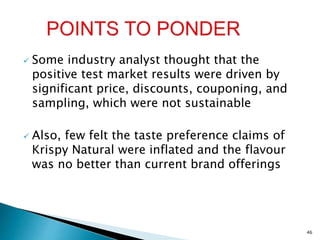
 Some industry analyst thought that the
positive test market results were driven by
significant price, discounts, couponing, and
sampling, which were not sustainable
 Also, few felt the taste preference claims of
Krispy Natural were inflated and the flavour
was no better than current brand offerings
46
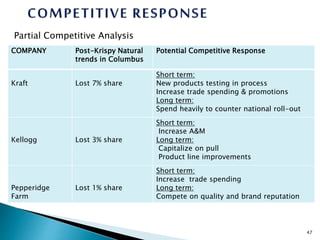
COMPANY Post-Krispy Natural
trends in Columbus
Potential Competitive Response
Kraft Lost 7% share
Short term:
New products testing in process
Increase trade spending & promotions
Long term:
Spend heavily to counter national roll-out
Kellogg Lost 3% share
Short term:
Increase A&M
Long term:
Capitalize on pull
Product line improvements
Pepperidge
Farm
Lost 1% share
Short term:
Increase trade spending
Long term:
Compete on quality and brand reputation
47
Partial Competitive Analysis
48
RECOMMENDATIONS
 Tailor the Krispy Natural to different need
states
 Extensive marketing in Southeast cities
 Contemporize brand engagement
49
50
CREATEDBY KAJOL PANDEY,CCET,DURING A MARKETING
INTTERNSHIPBY
PROF. SAMEER MATHUR,IIM LUCKNOW.
51

HBR- Launching Krispy Natural: Cracking the product management code

  • 1.
  • 2.
  • 3.
    1. Pemberton: Introduction& Challenges 2. Market Analysis 3. Krispy Natural market strategy 4. Result and Conclusion 3
  • 4.
  • 5.
  • 6.
     Pemberton wasthe snack food division of Candler Enterprises, a multinational beverage and snack food manufacturer  Pemberton was a market leader in the U.S. Cookie and bakery snacks segment of the sweet segment market  It has experienced a compound annual growth rate (CAGR) of14% for revenue over the past 5 years 6
  • 7.
     Key StrategicPriorities: • Building a collection of attractive, durable brands • Leveraging leading marketing, sales and DSD system to increase revenue and profits • Building capabilities to have strong brand values in salty snack categories 7
  • 8.
    Pemberton’s income statement(%of revenue): Sales 100.0% COGS 78.8% Brand advertising & Marketing 7.7% Pretax Contribution 13.5% Profit After Tax 7.7% 8
  • 9.
  • 10.
    10 How to launchand sustain the growthof Krispy Natural in the Salty Snack Market?
  • 11.
  • 12.
     US Crackerindustry overview  Product purchasing intent  Competitors Analysis 12
  • 13.
  • 14.
     Retail crackersales in the United States reached an estimated $6.9 billion in 2011  The growth rate for the overall cracker industry from 2008 to 2010 was approx. 2.2% CAGR  A Mintel study of salty snacks repoted that 74% of respondents consumed crackers on the regular basis and 34% ate them as a part of regular weekly diet 14
  • 15.
    75% 9% 9% 6% 1% Sales all other saltines cracker withfillings graham cracker bread stics 15
  • 16.
    “ALL OTHER” crackers: Experienced a 2.1% CAGR from the period 2008- 2010  Retail sales of 5.1 billion USD in 2011 in USA  Expected to grow by 6.7% per year 16
  • 17.
    “ALL OTHER” crackers: ManufacturerSales of “All OTHER” crackers 17 2009% Share 2010% Share Kraft 37.8% 37.0% Kellogg 28.9% 28.1% Pepperidge Farm(Goldfish) 13.9% 14.2% Private Label 4.6% 4.8% Other 14.8% 16.0%
  • 18.
    Crackers with fillings: Became the strongest segment after 2009  Retail sales of 660 Million USD in 2011 in USA  Had a growth rate of 14% in 2010 18
  • 19.
    Cracker with fillings:Manufacturer Sales of Cracker with fillings Market Share 19 2009% Share 2010% Share Kraft 34.7% 32.7% Kellogg 31.5% 29.9% Pepperidge Farm(Goldfish) 15.5% 21.0% Private Label 8.0% 8.2% Other 10.2% 8.1%
  • 20.
  • 21.
  • 22.
  • 23.
     Top 3cracker manufacturers are:  Kraft Food Inc  Kellogg Co.  Pepperfridge farm  They account for approx. 75% of the cracker market in 2010  Frito-Lay is going to be introducing a new full line of crackers by the end of second quarters 23
  • 24.
    2008 2009 Nabisco RitzCracker $27.1 $34.6 Sunshine Cheese-It Cracker $27.4 $32.9 Nabisco Wheat Thins Cracker $14.1 $15.8 Pepperidge Farm Goldfish $12.8 $10.5 Keebler Town House $11.5 $10.2 Nabisco Triscuit $13.5 $9.5 24 Advertising Spending for Leading Cracker Brands ($ millions)
  • 25.
  • 26.
  • 27.
     PRODUCT  Multipleserving packaging  Focused on improving taste  Health conscious 27
  • 28.
     MARKETING  Emphasizedon heavy advertising  Promotion to the end customer and appealing to the trade  Aggressive plans for product expansion by spending and trade promotions 28
  • 29.
     PRICE  Soughta premium strategy  Priced at15% above the category average cost per ounce  Same retail price as that of competitors but lesser quantity 29
  • 30.
  • 31.
  • 32.
    Advertising $ 33 Merchandising$ 37 $ 70 ($ in million) Year 1 Year 2 Year 3 Dollar Sales $500 $580 $700 Growth $16% 21% Dollar Share 9% $10% 11% Estimates ( $ in Million )
  • 33.
    Year 3 Manufacturer Sales$ 700 COGS $ 539 Gross Profit $ 161 Advertising $ 33 Merchandising $ 37 Pretax contribution $ 91 33
  • 34.
  • 35.
    % Store Count %of Stores with Gondola Placement % of Stores with End Aisle Display Columbus 94% 9% 14% Southeast 85% 12% 10% 35 Stores/Display Penetration
  • 36.
    Columbus Southeast Present MarketPost Present Market Post Kraft 40 33 34 32 Kellogg 25 22 23 22 Pepperidge farm 10 10 10 10 Krispy 18 18 9 10 36 Estimated Dollar Share of Market ( in percentage )
  • 37.
    Year 1 Sales( millions ) Columbus Scenario ( national extended) $ 1,000 Year 1 Sales( millions ) Southeast Scenario ( national extended) $ 550 37 Annualized National Projections
  • 38.
     5 Special“Krispy Force” representatives were hired in Columbus  These “Krispy Force” reps worked with Pemberton regional and district sales managers and focused solely on selling the new Krispy Natural product line 38
  • 39.
     In Southeastcities, the company was able to test its ability to reposition the product to a more premium offering  Here regular Pemberton DSD route delivery representatives worked with regional and district sales managers, handling sales and services of the new Krispy Natural Line 39
  • 40.
  • 41.
     Columbus would achievea market share of 9%  Southeast’s market share will rise from 9% to 15%  The company hoped for 15% shelf space in both the markets  Columbus doubled the share target, achieving 18% market share with 30% category expansion  Southeast had a slight increase to just 10% with little category expansionC 41
  • 42.
  • 43.
     Columbus wasable to achieve an 18% market share by stealing share from other competitors  However in Southeast the trade was generally receptive to the new Krispy Natural line due to the relatively low introductory trade case discount of 15% 43
  • 44.
  • 45.
     The largechain headquarters buyers were impressed with the customer research and inventory turn estimates  They also loved all the promotional activity and consumer advertising  The pull marketing really created a buzz and customers were coming to the stores asking for Krispy Natural by name 45
  • 46.
     Some industryanalyst thought that the positive test market results were driven by significant price, discounts, couponing, and sampling, which were not sustainable  Also, few felt the taste preference claims of Krispy Natural were inflated and the flavour was no better than current brand offerings 46
  • 47.
    COMPANY Post-Krispy Natural trendsin Columbus Potential Competitive Response Kraft Lost 7% share Short term: New products testing in process Increase trade spending & promotions Long term: Spend heavily to counter national roll-out Kellogg Lost 3% share Short term: Increase A&M Long term: Capitalize on pull Product line improvements Pepperidge Farm Lost 1% share Short term: Increase trade spending Long term: Compete on quality and brand reputation 47 Partial Competitive Analysis
  • 48.
  • 49.
     Tailor theKrispy Natural to different need states  Extensive marketing in Southeast cities  Contemporize brand engagement 49
  • 50.
  • 51.
    CREATEDBY KAJOL PANDEY,CCET,DURINGA MARKETING INTTERNSHIPBY PROF. SAMEER MATHUR,IIM LUCKNOW. 51