Launching Krispy
Natural: Cracking
the Product
Management Code
HARVARD BUSINESS SCHOOL CASE STUDY
Pemberton Products
• Snack food division of Candler Enterprises
• 2011 revenue was $5 billion with 7.7% PAT
• Driving force - culture of innovation
• CAGR of 14% over past 5 years
Pemberton Products – Speciality
Wholly owned Direct Store Delivery (DSD) distribution system
Products delivered directly from distribution centres to retail
stores
Pemberton – Strategic Priorities
• Building a collection of attractive, durable brands
• Leveraging leading marketing, sales and DSD systems to
increase revenue and profits
• Acquiring capabilities in salty snack categories
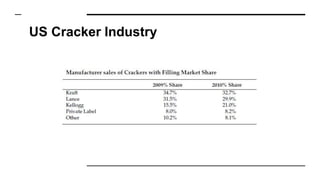
US Cracker Industry
• Retail sales over $6.9 billion in 2011
• CAGR of 2.2% over past 3 years
• Salty crackers: 74% of consumers consumed crackers on a
regular basis and 34% as regular weekly diet
US Cracker Industry
‘All other’ crackers:
• CAGR 2.1%
• Retail sales over $5.1 billion in 2011
• Growth forecast at 6%-7% per year
US Cracker Industry
US Cracker Industry
Crackers with fillings:
• Retail sales of over $660 million in 2011
• CAGR of 14%
• Flat sales from 2005 to 2009, but picked up afterwards
US Cracker Industry
Krispy Single-Serve
• Pemberton acquires Krispy Inc.
• Regional brand, single-serve packages
• 3 flavours
• Pemberton hoped to increase volume through wider
distribution
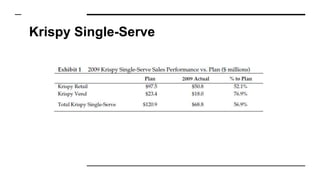
• Disappointing results due to limited product line
Krispy Single-Serve
Krispy Relaunch
• Large market, expected to grow 10%-14% per year
• Internal market research showed consumer dissatisfaction
• Pemberton gives Krispy another try
• Rebranded as ‘Krispy Natural’
Product Strategy
• Multiple servings and increased package size
• Improving taste
• Newer flavours
• 100% whole wheat and natural ingredients
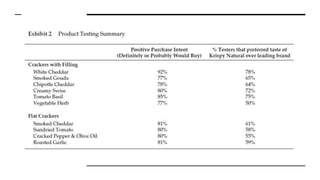
Results
• 77%-92% positive purchase intent (for new flavors)
• Four-to-one preference over leading competitor
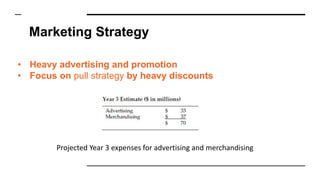
Marketing Strategy
• Heavy advertising and promotion
• Focus on pull strategy by heavy discounts
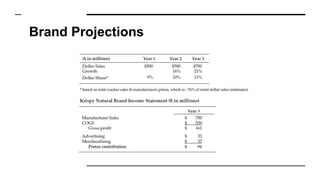
Projected Year 3 expenses for advertising and merchandising
Distribution Strategy
• Effective DSD distribution critical
• To work upon optimization of system to account for longer
shelf life of crackers
• ‘Krispy Force’ representatives in Test Run
Pricing Strategy
• Premium pricing strategy
• Superior product compared to competitors
• Similar ‘visual price’ – less quantity in Krispy Natural
package offered for the same price
Brand Projections
Test Run
• Columbus, Ohio
• Southeastern United States
• Aim: To secure 15% of shelf space in each supermarket’s
cracker section
Test Run - Columbus
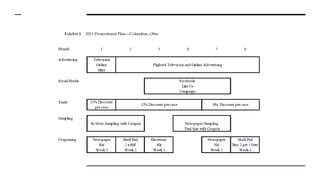
• No Krispy presence in region
• Five special ‘Krispy Force’ representatives
• Worked in conjunction with Pemberton regional and district
sales managers with sole focus on selling Krispy Natural
Test Run - Southeast
• Focus on repositioning of the product to premium offering
• Exploit existing Pemberton DSD route delivery channels
• Existing reps worked with managers, handling sales and
service of the new Krispy Natural line

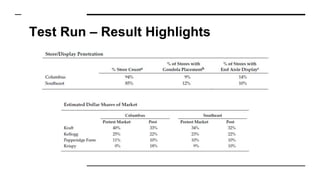
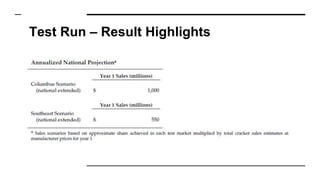
Test Run – Result Highlights
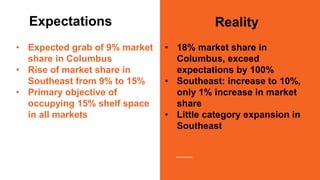
Expectations
• Expected grab of 9% market
share in Columbus
• Rise of market share in
Southeast from 9% to 15%
• Primary objective of
occupying 15% shelf space
in all markets
• 18% market share in
Columbus, exceed
expectations by 100%
• Southeast: increase to 10%,
only 1% increase in market
share
• Little category expansion in
Southeast
Reality
Reasons for deviations
• Columbus: stealing share from competitors
• Southeast: as the product was priced as a premium offering,
15% discount was considered low for consumers to switch
from competitors
Sales and channel responses
• Pemberton sales managers pleased with the new product
• Buyers loved promotions and advertising
• Pull strategy created a buzz among consumers
Criticism
• Positive results were a result of discounts, couponing and
sampling - which was not sustainable in the long run
• Taste preference claims of Krispy Natural were inflated
• Product tasted no better than competitor brands
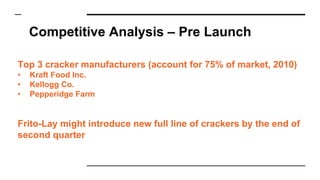
Competitive Analysis – Pre Launch
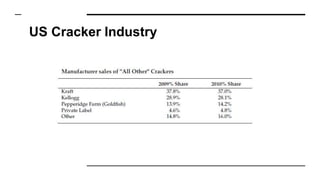
Top 3 cracker manufacturers (account for 75% of market, 2010)
• Kraft Food Inc.
• Kellogg Co.
• Pepperidge Farm
Frito-Lay might introduce new full line of crackers by the end of
second quarter
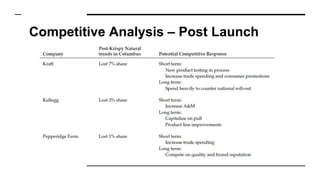
Competitive Analysis – Post Launch
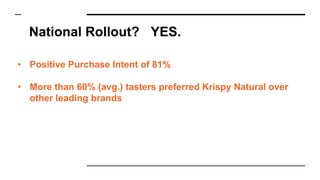
National Rollout? YES.
• Positive Purchase Intent of 81%
• More than 60% (avg.) tasters preferred Krispy Natural over
other leading brands
Recommendations
• As product pricing was not included in taste test and dismal
results in Southeast, the company must focus on creating
products in the lower price range
• Exploit existing DSD distribution channels as much as
possible so as to gain market share
THANK YOU!
Disclaimer
Created by Sakansh Mittal, BITS Pilani,
during a Marketing Internship under
Prof. Sameer Mathur, IIM Lucknow

Launching Krispy Natural: Cracking the Product Management Code

  • 1.
    Launching Krispy Natural: Cracking theProduct Management Code HARVARD BUSINESS SCHOOL CASE STUDY
  • 3.
    Pemberton Products • Snackfood division of Candler Enterprises • 2011 revenue was $5 billion with 7.7% PAT • Driving force - culture of innovation • CAGR of 14% over past 5 years
  • 4.
    Pemberton Products –Speciality Wholly owned Direct Store Delivery (DSD) distribution system Products delivered directly from distribution centres to retail stores
  • 5.
    Pemberton – StrategicPriorities • Building a collection of attractive, durable brands • Leveraging leading marketing, sales and DSD systems to increase revenue and profits • Acquiring capabilities in salty snack categories
  • 6.
    US Cracker Industry •Retail sales over $6.9 billion in 2011 • CAGR of 2.2% over past 3 years • Salty crackers: 74% of consumers consumed crackers on a regular basis and 34% as regular weekly diet
  • 7.
    US Cracker Industry ‘Allother’ crackers: • CAGR 2.1% • Retail sales over $5.1 billion in 2011 • Growth forecast at 6%-7% per year
  • 8.
  • 9.
    US Cracker Industry Crackerswith fillings: • Retail sales of over $660 million in 2011 • CAGR of 14% • Flat sales from 2005 to 2009, but picked up afterwards
  • 10.
  • 11.
    Krispy Single-Serve • Pembertonacquires Krispy Inc. • Regional brand, single-serve packages • 3 flavours • Pemberton hoped to increase volume through wider distribution • Disappointing results due to limited product line
  • 12.
  • 13.
    Krispy Relaunch • Largemarket, expected to grow 10%-14% per year • Internal market research showed consumer dissatisfaction • Pemberton gives Krispy another try • Rebranded as ‘Krispy Natural’
  • 15.
    Product Strategy • Multipleservings and increased package size • Improving taste • Newer flavours • 100% whole wheat and natural ingredients
  • 17.
    Results • 77%-92% positivepurchase intent (for new flavors) • Four-to-one preference over leading competitor
  • 18.
    Marketing Strategy • Heavyadvertising and promotion • Focus on pull strategy by heavy discounts Projected Year 3 expenses for advertising and merchandising
  • 19.
    Distribution Strategy • EffectiveDSD distribution critical • To work upon optimization of system to account for longer shelf life of crackers • ‘Krispy Force’ representatives in Test Run
  • 20.
    Pricing Strategy • Premiumpricing strategy • Superior product compared to competitors • Similar ‘visual price’ – less quantity in Krispy Natural package offered for the same price
  • 21.
  • 22.
    Test Run • Columbus,Ohio • Southeastern United States • Aim: To secure 15% of shelf space in each supermarket’s cracker section
  • 23.
    Test Run -Columbus • No Krispy presence in region • Five special ‘Krispy Force’ representatives • Worked in conjunction with Pemberton regional and district sales managers with sole focus on selling Krispy Natural
  • 25.
    Test Run -Southeast • Focus on repositioning of the product to premium offering • Exploit existing Pemberton DSD route delivery channels • Existing reps worked with managers, handling sales and service of the new Krispy Natural line
  • 26.
    Test Run –Result Highlights
  • 27.
    Test Run –Result Highlights
  • 28.
    Expectations • Expected grabof 9% market share in Columbus • Rise of market share in Southeast from 9% to 15% • Primary objective of occupying 15% shelf space in all markets • 18% market share in Columbus, exceed expectations by 100% • Southeast: increase to 10%, only 1% increase in market share • Little category expansion in Southeast Reality
  • 29.
    Reasons for deviations •Columbus: stealing share from competitors • Southeast: as the product was priced as a premium offering, 15% discount was considered low for consumers to switch from competitors
  • 30.
    Sales and channelresponses • Pemberton sales managers pleased with the new product • Buyers loved promotions and advertising • Pull strategy created a buzz among consumers
  • 31.
    Criticism • Positive resultswere a result of discounts, couponing and sampling - which was not sustainable in the long run • Taste preference claims of Krispy Natural were inflated • Product tasted no better than competitor brands
  • 32.
    Competitive Analysis –Pre Launch Top 3 cracker manufacturers (account for 75% of market, 2010) • Kraft Food Inc. • Kellogg Co. • Pepperidge Farm Frito-Lay might introduce new full line of crackers by the end of second quarter
  • 33.
  • 34.
    National Rollout? YES. •Positive Purchase Intent of 81% • More than 60% (avg.) tasters preferred Krispy Natural over other leading brands
  • 35.
    Recommendations • As productpricing was not included in taste test and dismal results in Southeast, the company must focus on creating products in the lower price range • Exploit existing DSD distribution channels as much as possible so as to gain market share
  • 36.
  • 37.
    Disclaimer Created by SakanshMittal, BITS Pilani, during a Marketing Internship under Prof. Sameer Mathur, IIM Lucknow