Launching Krispy Natural : Cracking
The Product Management Code
HARVARD CASE STUDY
PEMBERTON WAS THE SNACK FOOD DIVISION OF
CANDLER ENTERPRISES , A MULTINATIONAL
BEVERAGE AND SNACKS FOOD MANUFACTURER.
ELITE MEMBERS
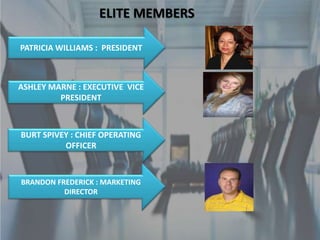
PATRICIA WILLIAMS : PRESIDENT
ASHLEY MARNE : EXECUTIVE VICE
PRESIDENT
BURT SPIVEY : CHIEF OPERATING
OFFICER
BRANDON FREDERICK : MARKETING
DIRECTOR
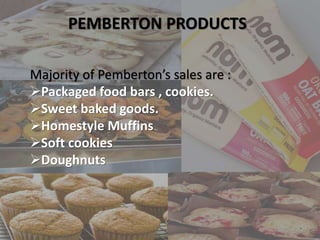
PEMBERTON PRODUCTS
Majority of Pemberton’s sales are :
Packaged food bars , cookies.
Sweet baked goods.
Homestyle Muffins
Soft cookies
Doughnuts
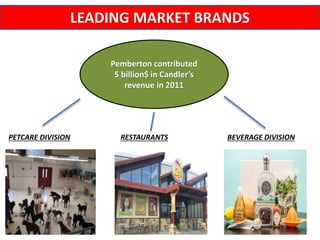
Pemberton contributed
5 billion$ in Candler’s
revenue in 2011
LEADING MARKET BRANDS
PETCARE DIVISION RESTAURANTS BEVERAGE DIVISION
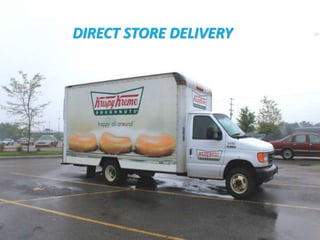
DIRECT STORE DELIVERY
 This distribution system helped in delivering products directly to retail outlets,
by Passing Retailer’s warehouses and distribution centers.
 It is mainly used to transport low shelf life products like baked goods , high
Velocity products Like soft drinks or products that could be easily damaged that
are handled too many times Like chips.
 This system maximized sales and profit growth , reduced stock- outs and quick
turnover of Products.
THREE KEY STRATEGIES FOR THE COMPANY BY PATRICIA WILLIAMS
1. Building a collection of attractive , durable brands.
2. Leveraging leading marketing sales and DSD systems to
increase revenue and profits.
3. Building or acquiring capabilities in salty snack categories.
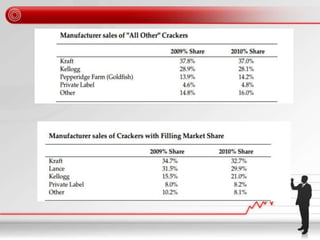
U.S. CRACKER INDUSTRY
 Retailer crack sales in US reached an estimated
6.9 billion$ in 2011.
 Retail crackers with filling had an approximately
9% market share.
 The growth rate of overall cracker industry was
approximately 2.2% CAGR From 2008-2010.
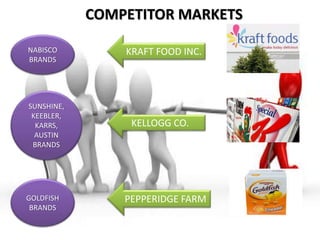
COMPETITOR MARKETS
NABISCO
BRANDS
KRAFT FOOD INC.
SUNSHINE,
KEEBLER,
KARRS,
AUSTIN
BRANDS
KELLOGG CO.
GOLDFISH
BRANDS
PEPPERIDGE FARM
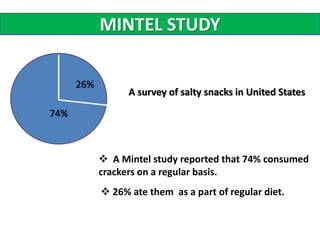
MINTEL STUDY
74%
26%
 A Mintel study reported that 74% consumed
crackers on a regular basis.
 26% ate them as a part of regular diet.
A survey of salty snacks in United States
PRODUCT LINES
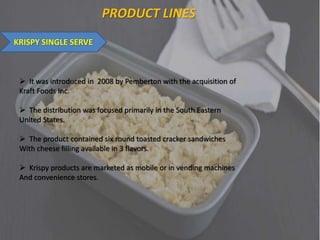
KRISPY SINGLE SERVE
 It was introduced in 2008 by Pemberton with the acquisition of
Kraft Foods Inc.
 The distribution was focused primarily in the South Eastern
United States.
 The product contained six round toasted cracker sandwiches
With cheese filling available in 3 flavors.
 Krispy products are marketed as mobile or in vending machines
And convenience stores.
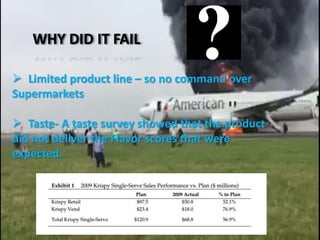
WHY DID IT FAIL
 Limited product line – so no command over
Supermarkets
 Taste- A taste survey showed that the product
did not deliver the Flavor scores that were
expected.
 It targeted health conscious customers.
 Extending product line beyond single serve and introducing more
Flavors.
 Pemberton R&D labs were engaged to improve the taste and quality.
 Rebranding as ‘ KRISPY NATURAL’.
KRISPY NATURAL
PRODUCT MARKETING
DISTRIBUTION PRICING
PRODUCT
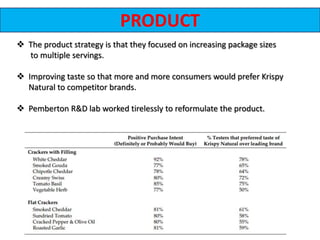
 The product strategy is that they focused on increasing package sizes
to multiple servings.
 Improving taste so that more and more consumers would prefer Krispy
Natural to competitor brands.
 Pemberton R&D lab worked tirelessly to reformulate the product.
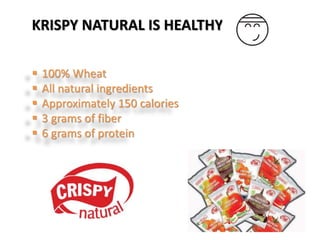
KRISPY NATURAL IS HEALTHY
 100% Wheat
 All natural ingredients
 Approximately 150 calories
 3 grams of fiber
 6 grams of protein
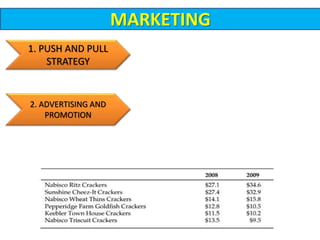
MARKETING
1. PUSH AND PULL
STRATEGY
2. ADVERTISING AND
PROMOTION
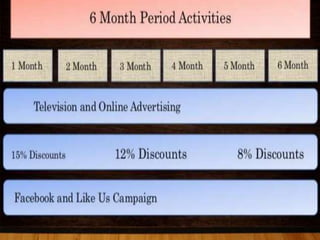
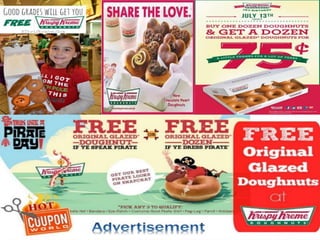
Promotional Funny Advertisements Through
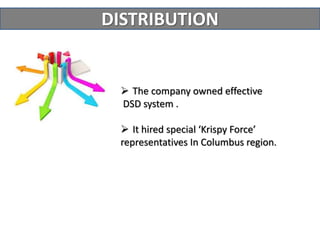
DISTRIBUTION
 The company owned effective
DSD system .
 It hired special ‘Krispy Force’
representatives In Columbus region.
DIRECT STORE DELIVERY
PRICING
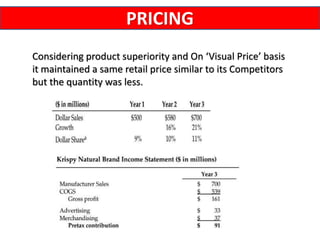
Considering product superiority and On ‘Visual Price’ basis
it maintained a same retail price similar to its Competitors
but the quantity was less.
MARKET RESULTS
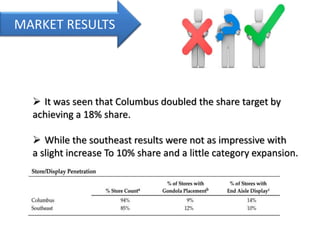
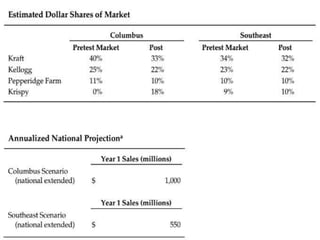
 It was seen that Columbus doubled the share target by
achieving a 18% share.
 While the southeast results were not as impressive with
a slight increase To 10% share and a little category expansion.
How should the company respond
to “Frito- Lay” ?
 Launching more product mix as per customer
taste and keeping health as a Priority concern.
 Optimization of DSD system for Krispy natural
Product for cost reductions.
CONCLUSION
 Grabbed 18% market share in Columbus as a new entrant
in salt snacks business.
 Forecasted National roll out sales figures in Columbus and
Southeast scenario for the 3rd year depicts PBT more than
13% and sales more than $500million.
 Kraft, Kellogg and Pepperidge in total lost 10% of market share
despite of higher demands Cracker products since 2010.
CONCLUSION
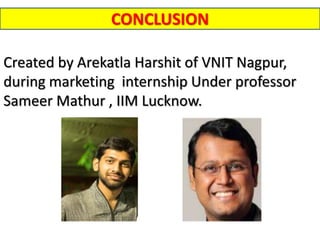
Created by Arekatla Harshit of VNIT Nagpur,
during marketing internship Under professor
Sameer Mathur , IIM Lucknow.

Krispy natural

  • 1.
    Launching Krispy Natural: Cracking The Product Management Code HARVARD CASE STUDY
  • 3.
    PEMBERTON WAS THESNACK FOOD DIVISION OF CANDLER ENTERPRISES , A MULTINATIONAL BEVERAGE AND SNACKS FOOD MANUFACTURER.
  • 4.
    ELITE MEMBERS PATRICIA WILLIAMS: PRESIDENT ASHLEY MARNE : EXECUTIVE VICE PRESIDENT BURT SPIVEY : CHIEF OPERATING OFFICER BRANDON FREDERICK : MARKETING DIRECTOR
  • 5.
    PEMBERTON PRODUCTS Majority ofPemberton’s sales are : Packaged food bars , cookies. Sweet baked goods. Homestyle Muffins Soft cookies Doughnuts
  • 6.
    Pemberton contributed 5 billion$in Candler’s revenue in 2011 LEADING MARKET BRANDS PETCARE DIVISION RESTAURANTS BEVERAGE DIVISION
  • 7.
    DIRECT STORE DELIVERY This distribution system helped in delivering products directly to retail outlets, by Passing Retailer’s warehouses and distribution centers.  It is mainly used to transport low shelf life products like baked goods , high Velocity products Like soft drinks or products that could be easily damaged that are handled too many times Like chips.  This system maximized sales and profit growth , reduced stock- outs and quick turnover of Products.
  • 8.
    THREE KEY STRATEGIESFOR THE COMPANY BY PATRICIA WILLIAMS 1. Building a collection of attractive , durable brands. 2. Leveraging leading marketing sales and DSD systems to increase revenue and profits. 3. Building or acquiring capabilities in salty snack categories.
  • 9.
    U.S. CRACKER INDUSTRY Retailer crack sales in US reached an estimated 6.9 billion$ in 2011.  Retail crackers with filling had an approximately 9% market share.  The growth rate of overall cracker industry was approximately 2.2% CAGR From 2008-2010.
  • 11.
    COMPETITOR MARKETS NABISCO BRANDS KRAFT FOODINC. SUNSHINE, KEEBLER, KARRS, AUSTIN BRANDS KELLOGG CO. GOLDFISH BRANDS PEPPERIDGE FARM
  • 12.
    MINTEL STUDY 74% 26%  AMintel study reported that 74% consumed crackers on a regular basis.  26% ate them as a part of regular diet. A survey of salty snacks in United States
  • 13.
    PRODUCT LINES KRISPY SINGLESERVE  It was introduced in 2008 by Pemberton with the acquisition of Kraft Foods Inc.  The distribution was focused primarily in the South Eastern United States.  The product contained six round toasted cracker sandwiches With cheese filling available in 3 flavors.  Krispy products are marketed as mobile or in vending machines And convenience stores.
  • 14.
    WHY DID ITFAIL  Limited product line – so no command over Supermarkets  Taste- A taste survey showed that the product did not deliver the Flavor scores that were expected.
  • 15.
     It targetedhealth conscious customers.  Extending product line beyond single serve and introducing more Flavors.  Pemberton R&D labs were engaged to improve the taste and quality.  Rebranding as ‘ KRISPY NATURAL’.
  • 16.
  • 17.
  • 18.
    PRODUCT  The productstrategy is that they focused on increasing package sizes to multiple servings.  Improving taste so that more and more consumers would prefer Krispy Natural to competitor brands.  Pemberton R&D lab worked tirelessly to reformulate the product.
  • 19.
    KRISPY NATURAL ISHEALTHY  100% Wheat  All natural ingredients  Approximately 150 calories  3 grams of fiber  6 grams of protein
  • 21.
    MARKETING 1. PUSH ANDPULL STRATEGY 2. ADVERTISING AND PROMOTION
  • 25.
  • 26.
    DISTRIBUTION  The companyowned effective DSD system .  It hired special ‘Krispy Force’ representatives In Columbus region.
  • 27.
  • 29.
    PRICING Considering product superiorityand On ‘Visual Price’ basis it maintained a same retail price similar to its Competitors but the quantity was less.
  • 30.
    MARKET RESULTS  Itwas seen that Columbus doubled the share target by achieving a 18% share.  While the southeast results were not as impressive with a slight increase To 10% share and a little category expansion.
  • 32.
    How should thecompany respond to “Frito- Lay” ?  Launching more product mix as per customer taste and keeping health as a Priority concern.  Optimization of DSD system for Krispy natural Product for cost reductions.
  • 33.
    CONCLUSION  Grabbed 18%market share in Columbus as a new entrant in salt snacks business.  Forecasted National roll out sales figures in Columbus and Southeast scenario for the 3rd year depicts PBT more than 13% and sales more than $500million.  Kraft, Kellogg and Pepperidge in total lost 10% of market share despite of higher demands Cracker products since 2010.
  • 34.
    CONCLUSION Created by ArekatlaHarshit of VNIT Nagpur, during marketing internship Under professor Sameer Mathur , IIM Lucknow.