LAUNCHING KRISPY NATURAL
-Dhwani Kothari
INDEX
➤ About the company
➤ How to launch and sustain the growth of Krispy Natural in
the market
➤ Marketing strategy
➤ Results
➤ Marketing plans for each area
➤ Expectations vs Reality
➤ Conclusion
➤ Competitive response
2
Pemberton:
Introduction
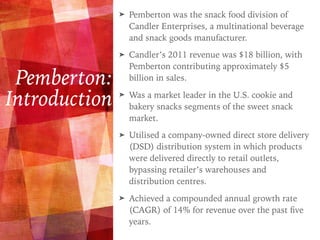
➤ Pemberton was the snack food division of
Candler Enterprises, a multinational beverage
and snack goods manufacturer.
➤ Candler’s 2011 revenue was $18 billion, with
Pemberton contributing approximately $5
billion in sales.
➤ Was a market leader in the U.S. cookie and
bakery snacks segments of the sweet snack
market.
➤ Utilised a company-owned direct store delivery
(DSD) distribution system in which products
were delivered directly to retail outlets,
bypassing retailer’s warehouses and
distribution centres.
➤ Achieved a compounded annual growth rate
(CAGR) of 14% for revenue over the past five
years.
DIRECT STORE DELIVERY
➤ Pemberton DSD representatives delivered products from company
distribution centres to the retail stores and performed critical
merchandising function.
➤ DSD maximised sales and profit growth through greater control of
shelf space, more accurate forecasting, reduced stock-outs, and quicker
turnover of products.
➤ Pemberton had a superior DSD system and the benefits of DSD far
outweighed the added costs.
➤ DSD system cost Pemberton approximately 20 cents of every sales
dollar.
THREE KEY STRATEGIC PRIORITIES FOR THE COMPANY
➤ Building a collection of attractive, durable brands.
➤ Leveraging leading marketing, sales and DSD systems to
increase revenue and profits
➤ Building or acquiring capabilities in salty snack categories.
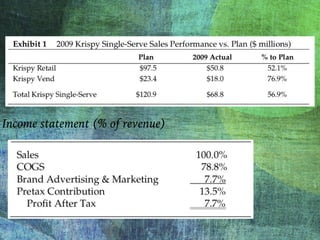
Income statement (% of revenue)
How to launch and sustain the growth of Krispy
Naturals in the snack market?
➤ Industry overview
➤ Willingness to buy
the product
➤ Competitors
analysis
INDUSTRY OVERVIEW
➤ Retail cracker sales in the United States reached an estimated
$6.9 billion in 2011.
➤ A Mintel study of salty snacks in the United States reported
that 74% of respondents consumed crackers on a regular basis
and 34% ate them as part of regular weekly diet
➤ The growth rate for the overall cracker industry from 2008 to
2010 was approximately 2.2% CAGR.
➤ Volume sales rose in 2010, and represented the first volume
increase since 2006.
ALL OTHER CRACKERS
➤ segment experienced a 2.1% CAGR for the period from 2008
to 2010.
➤ Retail sales of “all other” crackers in the United States were
estimated at ~$5.1 billion in 2011, a 6.2% increase over
2010.
➤ The segment was forecasted to grow modestly (6–7% per
year), with growth driven by healthier, premium-priced
product introductions.
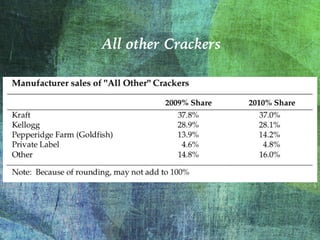
All other Crackers
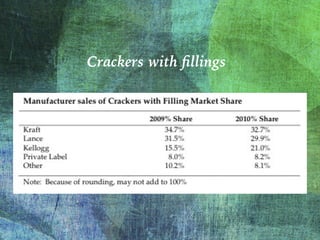
CRACKERS WITH FILLINGS
➤ crackers-with-filling segment experienced the strongest
segment growth of approximately 14% in 2010.
➤ Annual growth was forecasted between 10–14% for the
segment over the next several years.
➤ Retail sales of crackers with filling in the United States were
estimated at ~$660 million in 2011, an 11% increase over
2010.
Crackers with fillings
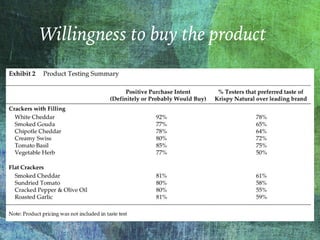
Willingness to buy the product
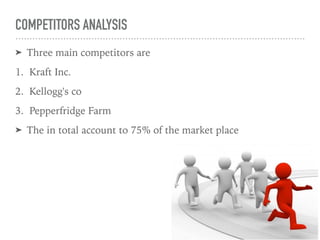
COMPETITORS ANALYSIS
➤ Three main competitors are
1. Kraft Inc.
2. Kellogg's co
3. Pepperfridge Farm
➤ The in total account to 75% of the market place
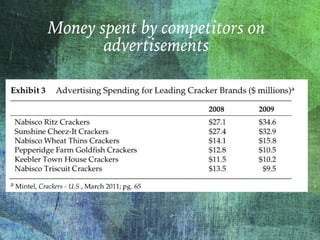
Money spent by competitors on
advertisements
PRODUCT
➤ Increasing to multiple servings
➤ Improve the taste
➤ Health conscious
MARKETING
➤ Emphasized heavy advertising and
promotion to the end consumer as well as
appealing to the trade.
➤ Main focus on pull efforts would help
quickly establish the Krispy Natural brand.
DISTRIBUTION
➤ Effective DSD distribution
➤ optimizing the system to account for the
longer shelf life of crackers versus baked
goods and cookies.
➤ Premium pricing strategy
➤ Pricing of approximately 155% the category
average cost per ounce was reasonable
considering the product’s superiority.
➤ Retail price for each package would be similar to
competitors in the category, but there would be
less quantity or weight in the Krispy Natural
package.
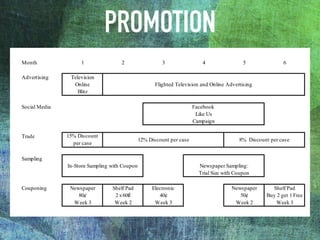
PROMOTION
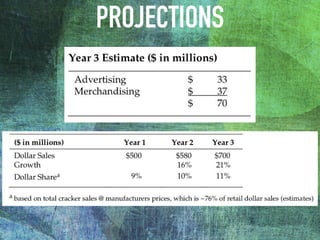
PROJECTIONS
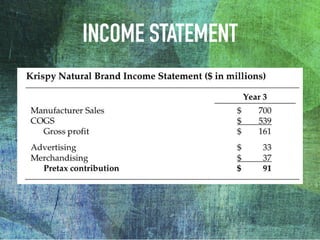
INCOME STATEMENT
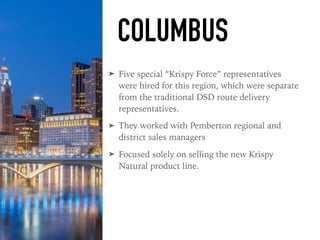
COLUMBUS
➤ Five special “Krispy Force” representatives
were hired for this region, which were separate
from the traditional DSD route delivery
representatives.
➤ They worked with Pemberton regional and
district sales managers
➤ Focused solely on selling the new Krispy
Natural product line.
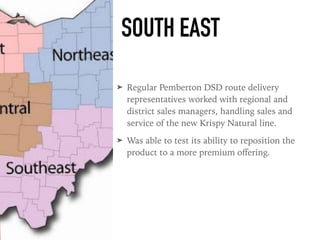
SOUTH EAST
➤ Regular Pemberton DSD route delivery
representatives worked with regional and
district sales managers, handling sales and
service of the new Krispy Natural line.
➤ Was able to test its ability to reposition the
product to a more premium offering.
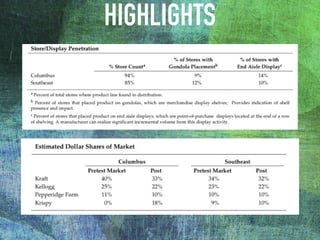
HIGHLIGHTS
EXPECTATIONS
VS
REALITY
➤ Expectations
1. Columbus would achieve a market share
of 9%
2. South East’s market share will rise from
9 to 15%
3. Hoped 15% shelf life in both the
markets
➤ Reality
1 Columbus doubled the share target
achieving 18% share market with 30%
category expansion
2. Southeast had a slight increase to just
10% with little category expansion
3. Actual shelf space and display activity
was below what the team expected.
➤ The large chain headquarter buyers were particularly
impressed with the consumer research results and inventory
turn estimates for Krispy Natural.
➤ They also loved all the promotional activity and consumer
advertising.
➤ The pull marketing really created a buzz and customers were
coming to the stores asking for Krispy Natural by name.
➤ However, one industry analyst that
Fredrick had spoken with offered a less
encouraging view. According to the
analyst, the positive test market results
were driven by significant price
discounts, couponing, and sampling,
which were not sustainable on a
national level.
➤ Also, there were those in the industry
who felt the taste preference claims of
Krispy Natural were inflated and the
flavor was no better than current brand
offerings.
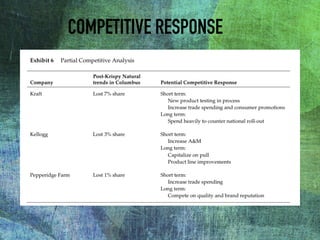
COMPETITIVE RESPONSE
DISCLAIMER
Created by Dhwani Kothari, J. D. Birla Institute ( Dpartment
of Management) during a marketing internship under Prof.
Sameer Mathur, IIM Lucknow
Dhwani Kothari

Launching Krispy Natural: Cracking the Product Management Code

  • 1.
  • 2.
    INDEX ➤ About thecompany ➤ How to launch and sustain the growth of Krispy Natural in the market ➤ Marketing strategy ➤ Results ➤ Marketing plans for each area ➤ Expectations vs Reality ➤ Conclusion ➤ Competitive response 2
  • 3.
    Pemberton: Introduction ➤ Pemberton wasthe snack food division of Candler Enterprises, a multinational beverage and snack goods manufacturer. ➤ Candler’s 2011 revenue was $18 billion, with Pemberton contributing approximately $5 billion in sales. ➤ Was a market leader in the U.S. cookie and bakery snacks segments of the sweet snack market. ➤ Utilised a company-owned direct store delivery (DSD) distribution system in which products were delivered directly to retail outlets, bypassing retailer’s warehouses and distribution centres. ➤ Achieved a compounded annual growth rate (CAGR) of 14% for revenue over the past five years.
  • 4.
    DIRECT STORE DELIVERY ➤Pemberton DSD representatives delivered products from company distribution centres to the retail stores and performed critical merchandising function. ➤ DSD maximised sales and profit growth through greater control of shelf space, more accurate forecasting, reduced stock-outs, and quicker turnover of products. ➤ Pemberton had a superior DSD system and the benefits of DSD far outweighed the added costs. ➤ DSD system cost Pemberton approximately 20 cents of every sales dollar.
  • 5.
    THREE KEY STRATEGICPRIORITIES FOR THE COMPANY ➤ Building a collection of attractive, durable brands. ➤ Leveraging leading marketing, sales and DSD systems to increase revenue and profits ➤ Building or acquiring capabilities in salty snack categories.
  • 6.
  • 7.
    How to launchand sustain the growth of Krispy Naturals in the snack market?
  • 8.
    ➤ Industry overview ➤Willingness to buy the product ➤ Competitors analysis
  • 9.
    INDUSTRY OVERVIEW ➤ Retailcracker sales in the United States reached an estimated $6.9 billion in 2011. ➤ A Mintel study of salty snacks in the United States reported that 74% of respondents consumed crackers on a regular basis and 34% ate them as part of regular weekly diet ➤ The growth rate for the overall cracker industry from 2008 to 2010 was approximately 2.2% CAGR. ➤ Volume sales rose in 2010, and represented the first volume increase since 2006.
  • 10.
    ALL OTHER CRACKERS ➤segment experienced a 2.1% CAGR for the period from 2008 to 2010. ➤ Retail sales of “all other” crackers in the United States were estimated at ~$5.1 billion in 2011, a 6.2% increase over 2010. ➤ The segment was forecasted to grow modestly (6–7% per year), with growth driven by healthier, premium-priced product introductions.
  • 11.
  • 12.
    CRACKERS WITH FILLINGS ➤crackers-with-filling segment experienced the strongest segment growth of approximately 14% in 2010. ➤ Annual growth was forecasted between 10–14% for the segment over the next several years. ➤ Retail sales of crackers with filling in the United States were estimated at ~$660 million in 2011, an 11% increase over 2010.
  • 13.
  • 14.
    Willingness to buythe product
  • 15.
    COMPETITORS ANALYSIS ➤ Threemain competitors are 1. Kraft Inc. 2. Kellogg's co 3. Pepperfridge Farm ➤ The in total account to 75% of the market place
  • 16.
    Money spent bycompetitors on advertisements
  • 18.
    PRODUCT ➤ Increasing tomultiple servings ➤ Improve the taste ➤ Health conscious
  • 19.
    MARKETING ➤ Emphasized heavyadvertising and promotion to the end consumer as well as appealing to the trade. ➤ Main focus on pull efforts would help quickly establish the Krispy Natural brand.
  • 20.
    DISTRIBUTION ➤ Effective DSDdistribution ➤ optimizing the system to account for the longer shelf life of crackers versus baked goods and cookies.
  • 21.
    ➤ Premium pricingstrategy ➤ Pricing of approximately 155% the category average cost per ounce was reasonable considering the product’s superiority. ➤ Retail price for each package would be similar to competitors in the category, but there would be less quantity or weight in the Krispy Natural package.
  • 22.
  • 23.
  • 24.
  • 26.
    COLUMBUS ➤ Five special“Krispy Force” representatives were hired for this region, which were separate from the traditional DSD route delivery representatives. ➤ They worked with Pemberton regional and district sales managers ➤ Focused solely on selling the new Krispy Natural product line.
  • 27.
    SOUTH EAST ➤ RegularPemberton DSD route delivery representatives worked with regional and district sales managers, handling sales and service of the new Krispy Natural line. ➤ Was able to test its ability to reposition the product to a more premium offering.
  • 29.
  • 31.
    EXPECTATIONS VS REALITY ➤ Expectations 1. Columbuswould achieve a market share of 9% 2. South East’s market share will rise from 9 to 15% 3. Hoped 15% shelf life in both the markets ➤ Reality 1 Columbus doubled the share target achieving 18% share market with 30% category expansion 2. Southeast had a slight increase to just 10% with little category expansion 3. Actual shelf space and display activity was below what the team expected.
  • 33.
    ➤ The largechain headquarter buyers were particularly impressed with the consumer research results and inventory turn estimates for Krispy Natural. ➤ They also loved all the promotional activity and consumer advertising. ➤ The pull marketing really created a buzz and customers were coming to the stores asking for Krispy Natural by name.
  • 34.
    ➤ However, oneindustry analyst that Fredrick had spoken with offered a less encouraging view. According to the analyst, the positive test market results were driven by significant price discounts, couponing, and sampling, which were not sustainable on a national level. ➤ Also, there were those in the industry who felt the taste preference claims of Krispy Natural were inflated and the flavor was no better than current brand offerings.
  • 35.
  • 36.
    DISCLAIMER Created by DhwaniKothari, J. D. Birla Institute ( Dpartment of Management) during a marketing internship under Prof. Sameer Mathur, IIM Lucknow Dhwani Kothari