LAUNCHING KRISPY
NATURAL:
Cracking the Product
Management Code
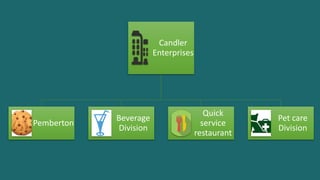
Candler
Enterprises
Pemberton
Beverage
Division
Quick
service
restaurant
Pet care
Division
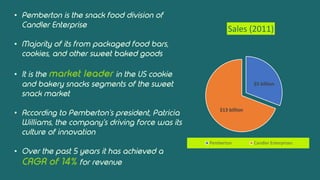
$5 billion
$13 billion
Sales (2011)
Pemberton Candler Enterprises
•
•
•
•
•
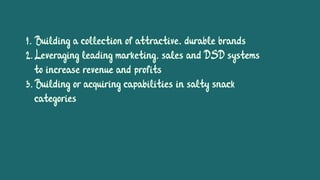
1. Building a collection of attractive, durable brands

2.Leveraging leading marketing, sales and DSD systems
to increase revenue and profits
3.Building or acquiring capabilities in salty snack
categories
Market Analysis
US cracker Industry
Product Purchasing Intent
Competitor Analysis
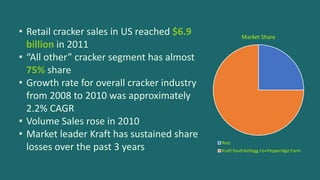
• Retail cracker sales in US reached $6.9
billion in 2011
• “All other” cracker segment has almost
75% share
• Growth rate for overall cracker industry
from 2008 to 2010 was approximately
2.2% CAGR
• Volume Sales rose in 2010
• Market leader Kraft has sustained share
losses over the past 3 years
Market Share
Rest
Kraft food+Kellogg Co+Pepperidge Farm
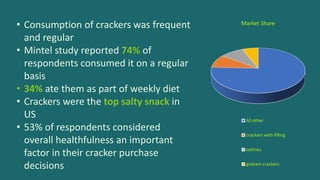
• Consumption of crackers was frequent
and regular
• Mintel study reported 74% of
respondents consumed it on a regular
basis
• 34% ate them as part of weekly diet
• Crackers were the top salty snack in
US
• 53% of respondents considered
overall healthfulness an important
factor in their cracker purchase
decisions
Market Share
All other
crackers with filling
saltines
graham crackers
“All other” Crackers
• 2.1% CAGR for the period from 2008 to 2010
• Retail sales estimated at $5.1 billion in 2011
• 6.2% increase in sales over 2010
• Forecasted to grow at the rate of 6-7% annually
• Growth would be driven by healthier, premium
priced products
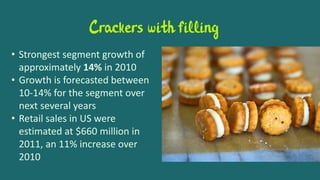
Crackers with filling
• Strongest segment growth of
approximately 14% in 2010
• Growth is forecasted between
10-14% for the segment over
next several years
• Retail sales in US were
estimated at $660 million in
2011, an 11% increase over
2010
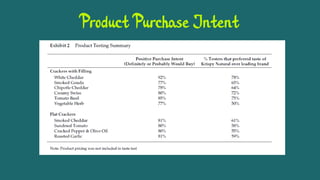
Product Purchase Intent
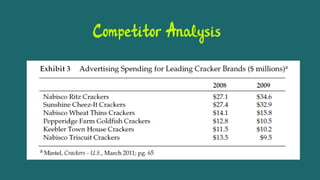
Competitor Analysis
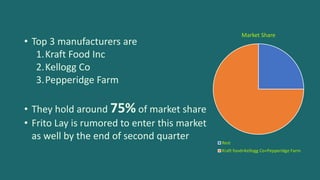
• Top 3 manufacturers are
1.Kraft Food Inc
2.Kellogg Co
3.Pepperidge Farm
• They hold around 75% of market share
• Frito Lay is rumored to enter this market
as well by the end of second quarter
Market Share
Rest
Kraft food+Kellogg Co+Pepperidge Farm
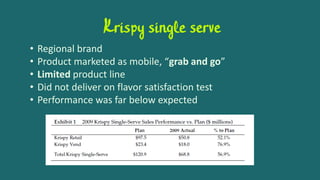
Krispy single serve
• Regional brand
• Product marketed as mobile, “grab and go”
• Limited product line
• Did not deliver on flavor satisfaction test
• Performance was far below expected
Krispy Relaunch
• Rebranded to Krispy
Natural
• Product taste and
quality was improved
• Multiple serving
package sizes and more
flavor options were
introduced
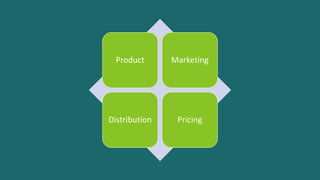
Product Marketing
Distribution Pricing
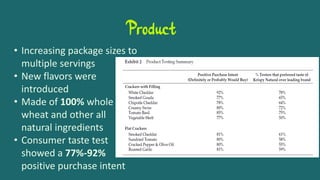
Product
• Increasing package sizes to
multiple servings
• New flavors were
introduced
• Made of 100% whole
wheat and other all
natural ingredients
• Consumer taste test
showed a 77%-92%
positive purchase intent
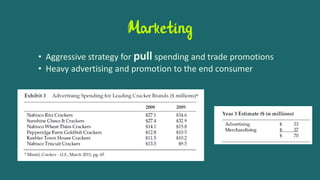
Marketing
• Aggressive strategy for pull spending and trade promotions
• Heavy advertising and promotion to the end consumer
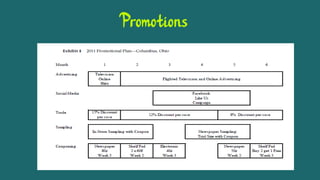
Promotions
Distribution
• Effective DSD (direct store delivery) distribution
system
• Proper management of shelf inventory and in-
store merchandising
• Optimizing the system to account for longer shelf
life of crackers
Pricing
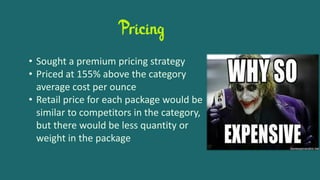
• Sought a premium pricing strategy
• Priced at 155% above the category
average cost per ounce
• Retail price for each package would be
similar to competitors in the category,
but there would be less quantity or
weight in the package
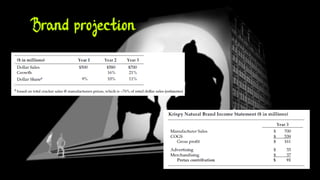
Brand projection
• Launched in 2 test market regions
• Columbus, Ohio had no earlier presence of krispy. So the
company was able to test its ability to sell a completely new line
of cracker products
• Krispy force representatives were hired in Columbus. Focused
solely on selling the new line
• Other region was a trio of southeastern cities. Company already
had a presence there. Was able to test its ability to reposition
itself as a more premium offering
• Advertising and promotion was same in both regions
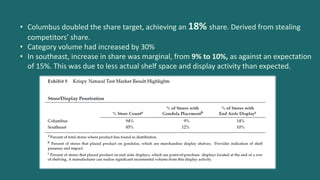
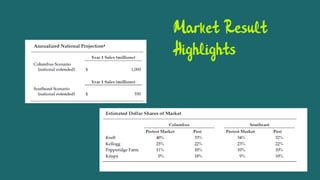
• Columbus doubled the share target, achieving an 18% share. Derived from stealing
competitors’ share.
• Category volume had increased by 30%
• In southeast, increase in share was marginal, from 9% to 10%, as against an expectation
of 15%. This was due to less actual shelf space and display activity than expected.
Market Result
Highlights
Sales and Channel Response
• Pemberton sales managers were pleased
• Large chain headquarter buyers were particularly impressed
• The pull marketing created a buzz
However,
• One analyst thought this was because of significant price
discounts, couponing and sampling, which were not sustainable
on national level
• Others thought flavor was no better than current brand offerings
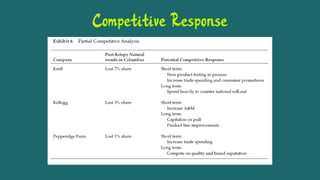
Competitive Response
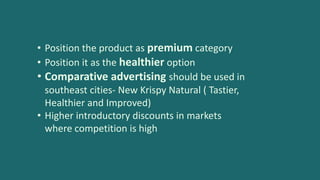
• Position the product as premium category
• Position it as the healthier option
• Comparative advertising should be used in
southeast cities- New Krispy Natural ( Tastier,
Healthier and Improved)
• Higher introductory discounts in markets
where competition is high
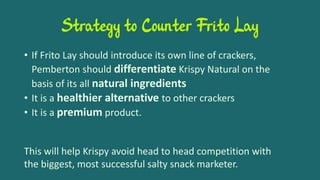
Strategy to Counter Frito Lay
• If Frito Lay should introduce its own line of crackers,
Pemberton should differentiate Krispy Natural on the
basis of its all natural ingredients
• It is a healthier alternative to other crackers
• It is a premium product.
This will help Krispy avoid head to head competition with
the biggest, most successful salty snack marketer.
Thank
You
Disclaimer

Krispy Natural: A Case Study

  • 1.
  • 2.
  • 4.
    $5 billion $13 billion Sales(2011) Pemberton Candler Enterprises • • • • •
  • 6.
    1. Building acollection of attractive, durable brands 2.Leveraging leading marketing, sales and DSD systems to increase revenue and profits 3.Building or acquiring capabilities in salty snack categories
  • 7.
    Market Analysis US crackerIndustry Product Purchasing Intent Competitor Analysis
  • 9.
    • Retail crackersales in US reached $6.9 billion in 2011 • “All other” cracker segment has almost 75% share • Growth rate for overall cracker industry from 2008 to 2010 was approximately 2.2% CAGR • Volume Sales rose in 2010 • Market leader Kraft has sustained share losses over the past 3 years Market Share Rest Kraft food+Kellogg Co+Pepperidge Farm
  • 10.
    • Consumption ofcrackers was frequent and regular • Mintel study reported 74% of respondents consumed it on a regular basis • 34% ate them as part of weekly diet • Crackers were the top salty snack in US • 53% of respondents considered overall healthfulness an important factor in their cracker purchase decisions Market Share All other crackers with filling saltines graham crackers
  • 11.
    “All other” Crackers •2.1% CAGR for the period from 2008 to 2010 • Retail sales estimated at $5.1 billion in 2011 • 6.2% increase in sales over 2010 • Forecasted to grow at the rate of 6-7% annually • Growth would be driven by healthier, premium priced products
  • 12.
    Crackers with filling •Strongest segment growth of approximately 14% in 2010 • Growth is forecasted between 10-14% for the segment over next several years • Retail sales in US were estimated at $660 million in 2011, an 11% increase over 2010
  • 13.
  • 14.
  • 15.
    • Top 3manufacturers are 1.Kraft Food Inc 2.Kellogg Co 3.Pepperidge Farm • They hold around 75% of market share • Frito Lay is rumored to enter this market as well by the end of second quarter Market Share Rest Kraft food+Kellogg Co+Pepperidge Farm
  • 17.
    Krispy single serve •Regional brand • Product marketed as mobile, “grab and go” • Limited product line • Did not deliver on flavor satisfaction test • Performance was far below expected
  • 18.
    Krispy Relaunch • Rebrandedto Krispy Natural • Product taste and quality was improved • Multiple serving package sizes and more flavor options were introduced
  • 20.
  • 21.
    Product • Increasing packagesizes to multiple servings • New flavors were introduced • Made of 100% whole wheat and other all natural ingredients • Consumer taste test showed a 77%-92% positive purchase intent
  • 22.
    Marketing • Aggressive strategyfor pull spending and trade promotions • Heavy advertising and promotion to the end consumer
  • 23.
  • 24.
    Distribution • Effective DSD(direct store delivery) distribution system • Proper management of shelf inventory and in- store merchandising • Optimizing the system to account for longer shelf life of crackers
  • 25.
    Pricing • Sought apremium pricing strategy • Priced at 155% above the category average cost per ounce • Retail price for each package would be similar to competitors in the category, but there would be less quantity or weight in the package
  • 26.
  • 28.
    • Launched in2 test market regions • Columbus, Ohio had no earlier presence of krispy. So the company was able to test its ability to sell a completely new line of cracker products • Krispy force representatives were hired in Columbus. Focused solely on selling the new line • Other region was a trio of southeastern cities. Company already had a presence there. Was able to test its ability to reposition itself as a more premium offering • Advertising and promotion was same in both regions
  • 30.
    • Columbus doubledthe share target, achieving an 18% share. Derived from stealing competitors’ share. • Category volume had increased by 30% • In southeast, increase in share was marginal, from 9% to 10%, as against an expectation of 15%. This was due to less actual shelf space and display activity than expected.
  • 31.
  • 32.
    Sales and ChannelResponse • Pemberton sales managers were pleased • Large chain headquarter buyers were particularly impressed • The pull marketing created a buzz However, • One analyst thought this was because of significant price discounts, couponing and sampling, which were not sustainable on national level • Others thought flavor was no better than current brand offerings
  • 33.
  • 35.
    • Position theproduct as premium category • Position it as the healthier option • Comparative advertising should be used in southeast cities- New Krispy Natural ( Tastier, Healthier and Improved) • Higher introductory discounts in markets where competition is high
  • 36.
    Strategy to CounterFrito Lay • If Frito Lay should introduce its own line of crackers, Pemberton should differentiate Krispy Natural on the basis of its all natural ingredients • It is a healthier alternative to other crackers • It is a premium product. This will help Krispy avoid head to head competition with the biggest, most successful salty snack marketer.
  • 38.
  • 39.