07/18/19 1
Appraising and
Rewarding
Performance
user
07/18/19 2
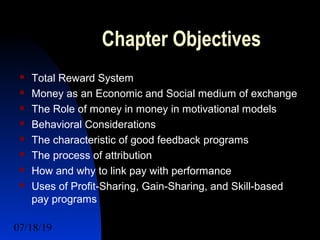
Chapter Objectives
 Total Reward System
 Money as an Economic and Social medium of exchange
 The Role of money in money in motivational models
 Behavioral Considerations
 The characteristic of good feedback programs
 The process of attribution
 How and why to link pay with performance
 Uses of Profit-Sharing, Gain-Sharing, and Skill-based
pay programs
07/18/19 3
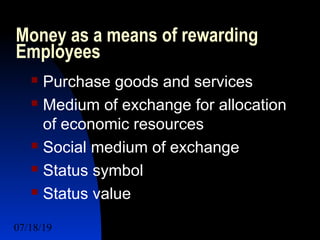
Money as a means of rewarding
Employees
 Purchase goods and services
 Medium of exchange for allocation
of economic resources
 Social medium of exchange
 Status symbol
 Status value
07/18/19 4
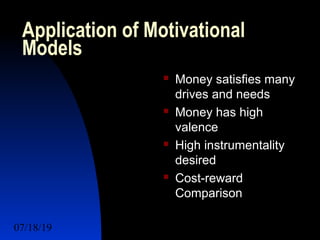
Application of Motivational
Models
 Money satisfies many
drives and needs
 Money has high
valence
 High instrumentality
desired
 Cost-reward
Comparison
07/18/19 5
Additional
Considerations
in the use of
money
 Extrinsic and Intrinsic
 Compliance with the
Law
 Equal pay act of 1963
 Comparable worth
 Equality (other factor)
07/18/19 6
Organizational behavior and performance appraisal
 Objective setting
 Action planning
 Periodic reviews
 Annual evluation
Performance Appraisal
1.allocate resources in a dynamic environment
2.motivate and reward employees
3.give employees feedback about their work
4.maintain fair relationship within the group
5.coach and develop employees
6.comply with regulations
07/18/19 7
Appraisal Philosophy
 Performance orientation
 Focus on goals or objective
 Mutual goal setting between supervisor and employee
 Clarification of behavioral expectations
 Extensive feedback systems
Appraisal Problems
 confrontational
Emotional
Judgmental
Complex task for managers
07/18/19 8
Nature of Attribution
Attribution – the process by which people interpret and
assign causes for their own and other’s behavior
Attribution Process
 Observes
 Describes
 Understand and diagnose
 Predict and control
Three Basic Factors are asserted as attributions
Consistency
Distinctiveness
Consensus
07/18/19 9
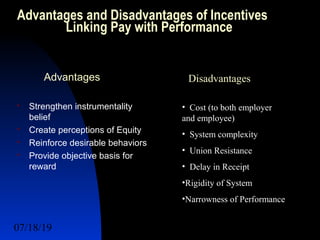
Advantages and Disadvantages of Incentives
Linking Pay with Performance
Advantages
 Strengthen instrumentality
belief
 Create perceptions of Equity
 Reinforce desirable behaviors
 Provide objective basis for
reward
Disadvantages
• Cost (to both employer
and employee)
• System complexity
• Union Resistance
• Delay in Receipt
•Rigidity of System
•Narrowness of Performance
07/18/19 9
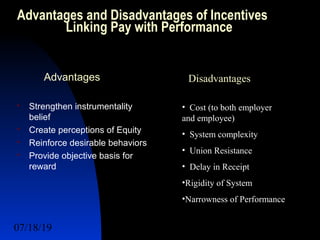
Advantages and Disadvantages of Incentives
Linking Pay with Performance
Advantages
 Strengthen instrumentality
belief
 Create perceptions of Equity
 Reinforce desirable behaviors
 Provide objective basis for
reward
Disadvantages
• Cost (to both employer
and employee)
• System complexity
• Union Resistance
• Delay in Receipt
•Rigidity of System
•Narrowness of Performance

Appraising and rewarding performance

  • 1.
  • 2.
    07/18/19 2 Chapter Objectives Total Reward System  Money as an Economic and Social medium of exchange  The Role of money in money in motivational models  Behavioral Considerations  The characteristic of good feedback programs  The process of attribution  How and why to link pay with performance  Uses of Profit-Sharing, Gain-Sharing, and Skill-based pay programs
  • 3.
    07/18/19 3 Money asa means of rewarding Employees  Purchase goods and services  Medium of exchange for allocation of economic resources  Social medium of exchange  Status symbol  Status value
  • 4.
    07/18/19 4 Application ofMotivational Models  Money satisfies many drives and needs  Money has high valence  High instrumentality desired  Cost-reward Comparison
  • 5.
    07/18/19 5 Additional Considerations in theuse of money  Extrinsic and Intrinsic  Compliance with the Law  Equal pay act of 1963  Comparable worth  Equality (other factor)
  • 6.
    07/18/19 6 Organizational behaviorand performance appraisal  Objective setting  Action planning  Periodic reviews  Annual evluation Performance Appraisal 1.allocate resources in a dynamic environment 2.motivate and reward employees 3.give employees feedback about their work 4.maintain fair relationship within the group 5.coach and develop employees 6.comply with regulations
  • 7.
    07/18/19 7 Appraisal Philosophy Performance orientation  Focus on goals or objective  Mutual goal setting between supervisor and employee  Clarification of behavioral expectations  Extensive feedback systems Appraisal Problems  confrontational Emotional Judgmental Complex task for managers
  • 8.
    07/18/19 8 Nature ofAttribution Attribution – the process by which people interpret and assign causes for their own and other’s behavior Attribution Process  Observes  Describes  Understand and diagnose  Predict and control Three Basic Factors are asserted as attributions Consistency Distinctiveness Consensus
  • 9.
    07/18/19 9 Advantages andDisadvantages of Incentives Linking Pay with Performance Advantages  Strengthen instrumentality belief  Create perceptions of Equity  Reinforce desirable behaviors  Provide objective basis for reward Disadvantages • Cost (to both employer and employee) • System complexity • Union Resistance • Delay in Receipt •Rigidity of System •Narrowness of Performance
  • 10.
    07/18/19 9 Advantages andDisadvantages of Incentives Linking Pay with Performance Advantages  Strengthen instrumentality belief  Create perceptions of Equity  Reinforce desirable behaviors  Provide objective basis for reward Disadvantages • Cost (to both employer and employee) • System complexity • Union Resistance • Delay in Receipt •Rigidity of System •Narrowness of Performance