HAZARDS OF DRUG ABUSE
WHAT IS DRUG ABUSE?
� People take drugs to change
the way they feel, think, or behave.
� These kinds of substances are called psychoactive and cover
alcohol and tobacco as well as natural and manufactured
drugs.
� In the past, most of the drugs that were used were made from
plants, such as the coca bush for cocaine, opium poppies for
heroin and cannabis for hashish or marijuana.
PROBLEM AT OUR DOORSTEP
�According to the report, around 284 million people aged
15-64 used drugs worldwide in 2020, a 26 % increase over
the previous decade. Young people are using more drugs,
with use levels today in many countries higher than with
the previous generation. In Africa and Latin America,
people under 35 represent the majority of people being
treated for drug use disorders.
WHAT KIND OF DRUGS ARE BEING ABUSED?
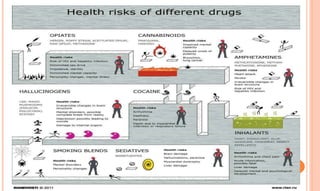
� Drugs of abuse fall into three categories:
⚫Depressants (Heroin, barbiturates),
⚫Stimulants ( Cocaine, crack, amphetamines)
⚫Hallucinogens ( Marijuana, ecstasy, LSD1), and
are either ingested, inhaled, smoked, injected or
snorted.
WHAT ARE THE EFFECTS?
� Drugs can be harmful in a number of ways, through both immediate
effects and damage to health over time.
� Even occasional use of marijuana affects cognitive development
and short- term memory.
� The effects of marijuana on perception, reaction and
coordination of movements can result in accidents.
� Hallucinogens (such as LSD) distort perceptions, alter heart-rate and
blood pressure and, in the long term, cause neurological
disorders, depressions, anxiety, visual hallucinations and
flashbacks.
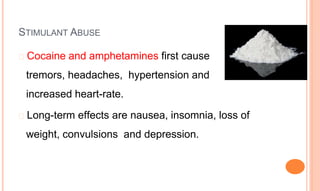
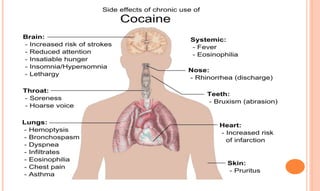
STIMULANT ABUSE
� Cocaine and amphetamines first cause
tremors, headaches, hypertension and
increased heart-rate.
� Long-term effects are nausea, insomnia, loss of
weight, convulsions and depression.
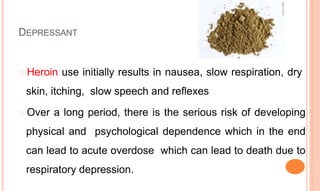
DEPRESSANT
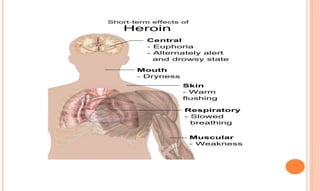
� Heroin use initially results in nausea, slow respiration, dry
skin, itching, slow speech and reflexes
� Over a long period, there is the serious risk of developing
physical and psychological dependence which in the end
can lead to acute overdose which can lead to death due to
respiratory depression.
HAZARDS OF DEPRESSANTS
� Depressants, like Ativan, Xanax and Klonopin, slow brain function,
which often causes people to lose concentration easily and
become dizzy and fatigued.
� Long-term effects of depressants use include sexual problems,
sleep problems, breathing difficulties, chronic fatigue and
depression.
� These drugs also increase your risk of developing high blood sugar
and diabetes.
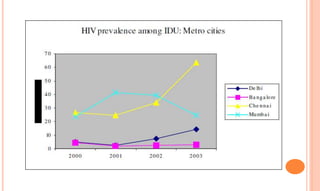
DRUG ABUSE & HIV RISK
� Most evident problem caused by drug abuse is the role
of drug injecting in the spread of HIV/AIDS.
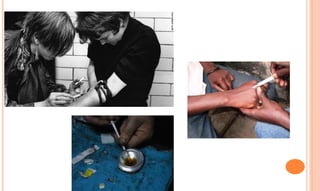
� Sharing injecting equipment, whether the injection
method be intravenous, intramuscular or beneath the
skin, carries a very high risk of transmission of HIV as
well as other blood-borne infectious diseases such as
hepatitis B and C
HIV/ AIDS
� Globally, the report estimates that 11.2 million
people worldwide were injecting drugs. Around
half of this number were living with hepatitis C, 1.4
million were living with HIV, and 1.2 million were
living with both.
ALCOHOL
� Alcohol is usually the first drug adolescents try even before they
reach high school.
� Because of its very widespread social use, alcohol is not
often seen as a drug.
� Many people think alcohol provides a “high”, but it actually
depresses the central nervous system.
� Its effect on the nervous system is to relieve inhibitions,
making a person feel more spontaneous and socially at ease
ALCOHOL
� The use of alcohol has the potential to cause death at its
greatest levels of concentration in the body it suppresses
breathing.
� The combination of alcohol and drugs, especially
barbiturates, is also highly lethal.
� Drinking and driving prominent causes of serious
and fatal road accidents is the greatest danger
surrounding the use of alcohol.
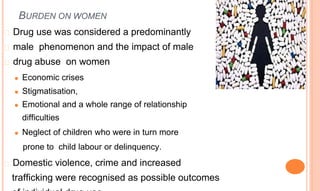
BURDEN ON WOMEN
� Drug use was considered a predominantly
� male phenomenon and the impact of male
� drug abuse on women
⚫ Economic crises
⚫ Stigmatisation,
⚫ Emotional and a whole range of relationship
difficulties
⚫ Neglect of children who were in turn more
prone to child labour or delinquency.
� Domestic violence, crime and increased
trafficking were recognised as possible outcomes
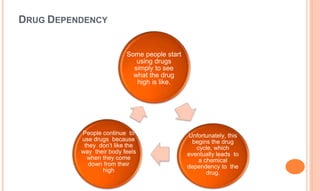
DRUG DEPENDENCY
Some people start
using drugs
simply to see
what the drug
high is like.
Unfortunately, this
begins the drug
cycle, which
eventually leads to
a chemical
dependency to the
drug.
People continue to
use drugs because
they don’t like the
way their body feels
when they come
down from their
high
HEALTH
RISKS
� Physical and mental dependence
� Memory loss
� Violent behavior, aggressive acts, and
angry feelings
� Headaches
� Nausea and/or vomiting
� Muscle weakness
� A drug tolerance
� Liver, lung, and kidney problems
� Brain damage
HEALTH
RISKS
� Hallucinations, tremors, and
convulsions
� Hyperactivity or Sluggish behavior
� Poor academic performance
� Unwanted sexual activity (i.e. date rape)
� Sexually transmitted diseases, including
HIV/AIDS
� Unwanted pregnancy
� Impact on future career prospects
� Adverse effects from withdrawal
IMPACT ON SOCIETY
� Drug abuse has led to a detrimental impact on the
society.
� It has led to increase in the crime rate.
� Addicts resort to crime to pay for their drugs.
� Drugs remove inhibition and impair judgment
egging one on to commit offences.
� Incidences of teasing, group clashes, assault and
impulsive murders increase with drug abuse.
� Apart from affecting the financial stability, addiction increases
conflicts and causes untold emotional pain for every member
of the family.
� With most drug users being in the productive age group of
18-35 years, the loss in terms of human potential is
incalculable.
� The damage to the physical, psychological, moral
and intellectual growth of the youth is very high.
IMPACT ON SOCIETY
hazards_of_drug_abuse.pptx

hazards_of_drug_abuse.pptx

  • 1.
  • 2.
    WHAT IS DRUGABUSE? � People take drugs to change the way they feel, think, or behave. � These kinds of substances are called psychoactive and cover alcohol and tobacco as well as natural and manufactured drugs. � In the past, most of the drugs that were used were made from plants, such as the coca bush for cocaine, opium poppies for heroin and cannabis for hashish or marijuana.
  • 3.
    PROBLEM AT OURDOORSTEP �According to the report, around 284 million people aged 15-64 used drugs worldwide in 2020, a 26 % increase over the previous decade. Young people are using more drugs, with use levels today in many countries higher than with the previous generation. In Africa and Latin America, people under 35 represent the majority of people being treated for drug use disorders.
  • 4.
    WHAT KIND OFDRUGS ARE BEING ABUSED? � Drugs of abuse fall into three categories: ⚫Depressants (Heroin, barbiturates), ⚫Stimulants ( Cocaine, crack, amphetamines) ⚫Hallucinogens ( Marijuana, ecstasy, LSD1), and are either ingested, inhaled, smoked, injected or snorted.
  • 5.
    WHAT ARE THEEFFECTS? � Drugs can be harmful in a number of ways, through both immediate effects and damage to health over time. � Even occasional use of marijuana affects cognitive development and short- term memory. � The effects of marijuana on perception, reaction and coordination of movements can result in accidents. � Hallucinogens (such as LSD) distort perceptions, alter heart-rate and blood pressure and, in the long term, cause neurological disorders, depressions, anxiety, visual hallucinations and flashbacks.
  • 6.
    STIMULANT ABUSE � Cocaineand amphetamines first cause tremors, headaches, hypertension and increased heart-rate. � Long-term effects are nausea, insomnia, loss of weight, convulsions and depression.
  • 8.
    DEPRESSANT � Heroin useinitially results in nausea, slow respiration, dry skin, itching, slow speech and reflexes � Over a long period, there is the serious risk of developing physical and psychological dependence which in the end can lead to acute overdose which can lead to death due to respiratory depression.
  • 10.
    HAZARDS OF DEPRESSANTS �Depressants, like Ativan, Xanax and Klonopin, slow brain function, which often causes people to lose concentration easily and become dizzy and fatigued. � Long-term effects of depressants use include sexual problems, sleep problems, breathing difficulties, chronic fatigue and depression. � These drugs also increase your risk of developing high blood sugar and diabetes.
  • 11.
    DRUG ABUSE &HIV RISK � Most evident problem caused by drug abuse is the role of drug injecting in the spread of HIV/AIDS. � Sharing injecting equipment, whether the injection method be intravenous, intramuscular or beneath the skin, carries a very high risk of transmission of HIV as well as other blood-borne infectious diseases such as hepatitis B and C
  • 13.
    HIV/ AIDS � Globally,the report estimates that 11.2 million people worldwide were injecting drugs. Around half of this number were living with hepatitis C, 1.4 million were living with HIV, and 1.2 million were living with both.
  • 15.
    ALCOHOL � Alcohol isusually the first drug adolescents try even before they reach high school. � Because of its very widespread social use, alcohol is not often seen as a drug. � Many people think alcohol provides a “high”, but it actually depresses the central nervous system. � Its effect on the nervous system is to relieve inhibitions, making a person feel more spontaneous and socially at ease
  • 16.
    ALCOHOL � The useof alcohol has the potential to cause death at its greatest levels of concentration in the body it suppresses breathing. � The combination of alcohol and drugs, especially barbiturates, is also highly lethal. � Drinking and driving prominent causes of serious and fatal road accidents is the greatest danger surrounding the use of alcohol.
  • 17.
    BURDEN ON WOMEN �Drug use was considered a predominantly � male phenomenon and the impact of male � drug abuse on women ⚫ Economic crises ⚫ Stigmatisation, ⚫ Emotional and a whole range of relationship difficulties ⚫ Neglect of children who were in turn more prone to child labour or delinquency. � Domestic violence, crime and increased trafficking were recognised as possible outcomes
  • 18.
    DRUG DEPENDENCY Some peoplestart using drugs simply to see what the drug high is like. Unfortunately, this begins the drug cycle, which eventually leads to a chemical dependency to the drug. People continue to use drugs because they don’t like the way their body feels when they come down from their high
  • 19.
    HEALTH RISKS � Physical andmental dependence � Memory loss � Violent behavior, aggressive acts, and angry feelings � Headaches � Nausea and/or vomiting � Muscle weakness � A drug tolerance � Liver, lung, and kidney problems � Brain damage
  • 20.
    HEALTH RISKS � Hallucinations, tremors,and convulsions � Hyperactivity or Sluggish behavior � Poor academic performance � Unwanted sexual activity (i.e. date rape) � Sexually transmitted diseases, including HIV/AIDS � Unwanted pregnancy � Impact on future career prospects � Adverse effects from withdrawal
  • 21.
    IMPACT ON SOCIETY �Drug abuse has led to a detrimental impact on the society. � It has led to increase in the crime rate. � Addicts resort to crime to pay for their drugs. � Drugs remove inhibition and impair judgment egging one on to commit offences. � Incidences of teasing, group clashes, assault and impulsive murders increase with drug abuse.
  • 22.
    � Apart fromaffecting the financial stability, addiction increases conflicts and causes untold emotional pain for every member of the family. � With most drug users being in the productive age group of 18-35 years, the loss in terms of human potential is incalculable. � The damage to the physical, psychological, moral and intellectual growth of the youth is very high. IMPACT ON SOCIETY