HawkPartners Perspective on
Payer Research
Discussion Document
Fall 2012
For more information contact:
Scott Wilkerson
Scott.wilkerson@hawkpartners.com
301 951-7046
2
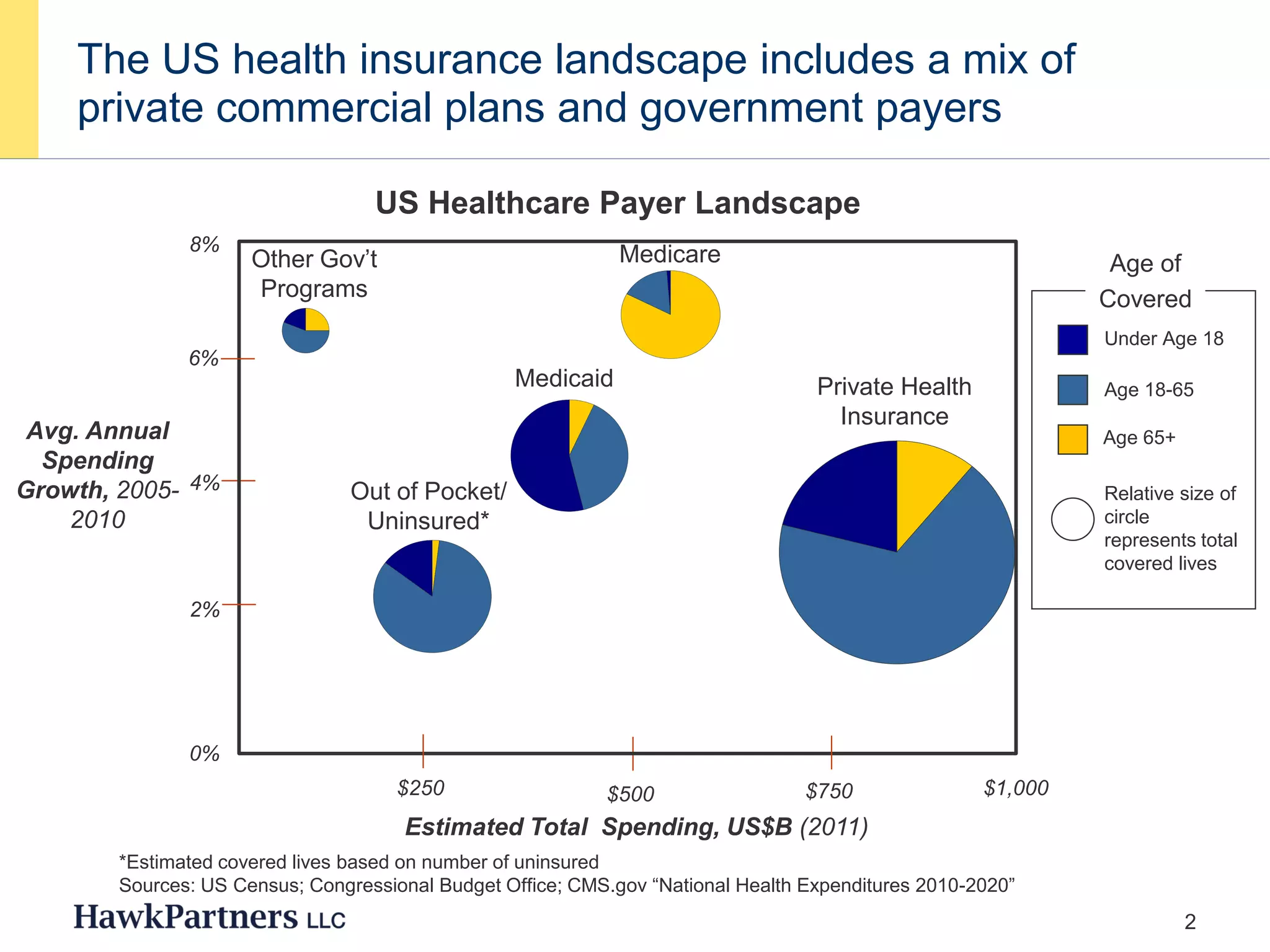
The US health insurance landscape includes a mix of
private commercial plans and government payers
Avg. Annual
Spending
Growth, 2005-
2010
Estimated Total Spending, US$B (2011)
2%
Relative size of
circle
represents total
covered lives
Medicare
Medicaid Private Health
Insurance
Age of
Covered
Under Age 18
Age 65+
Age 18-65
$500
Other Gov’t
Programs
4%
0%
8%
Out of Pocket/
Uninsured*
*Estimated covered lives based on number of uninsured
Sources: US Census; Congressional Budget Office; CMS.gov “National Health Expenditures 2010-2020”
US Healthcare Payer Landscape
6%
$750$250 $1,000
3
16%
10%
8%
6%
5%
4%
3%
50%
13%
13%
10%
9%
8%
6%
5%
4%
32%
US Pharmacy Benefit Managers
Share of Members (2010)
Express Scripts Inc.
CVS/Caremark Rx, Inc
Medco Health Solutions, Inc.*
ICORE Healthcare, Inc.
Health Information Designs, Inc.
NovoLogix
MedImpact Healthcare Systems
Argus Health Systems, Inc.
All Others
UnitedHealth Group
WellPoint
Kaiser Permanente
Humana Inc.
Aetna Inc.
Health Care Services
All Others
Highmark Inc.
Largest US Private Health Insurers
Share of Total Premiums Written (2010)
Sources: AM Mindpower Solutions; Pharmacy Benefit Manager Institute
*Acquired by Express Scripts in April 2012
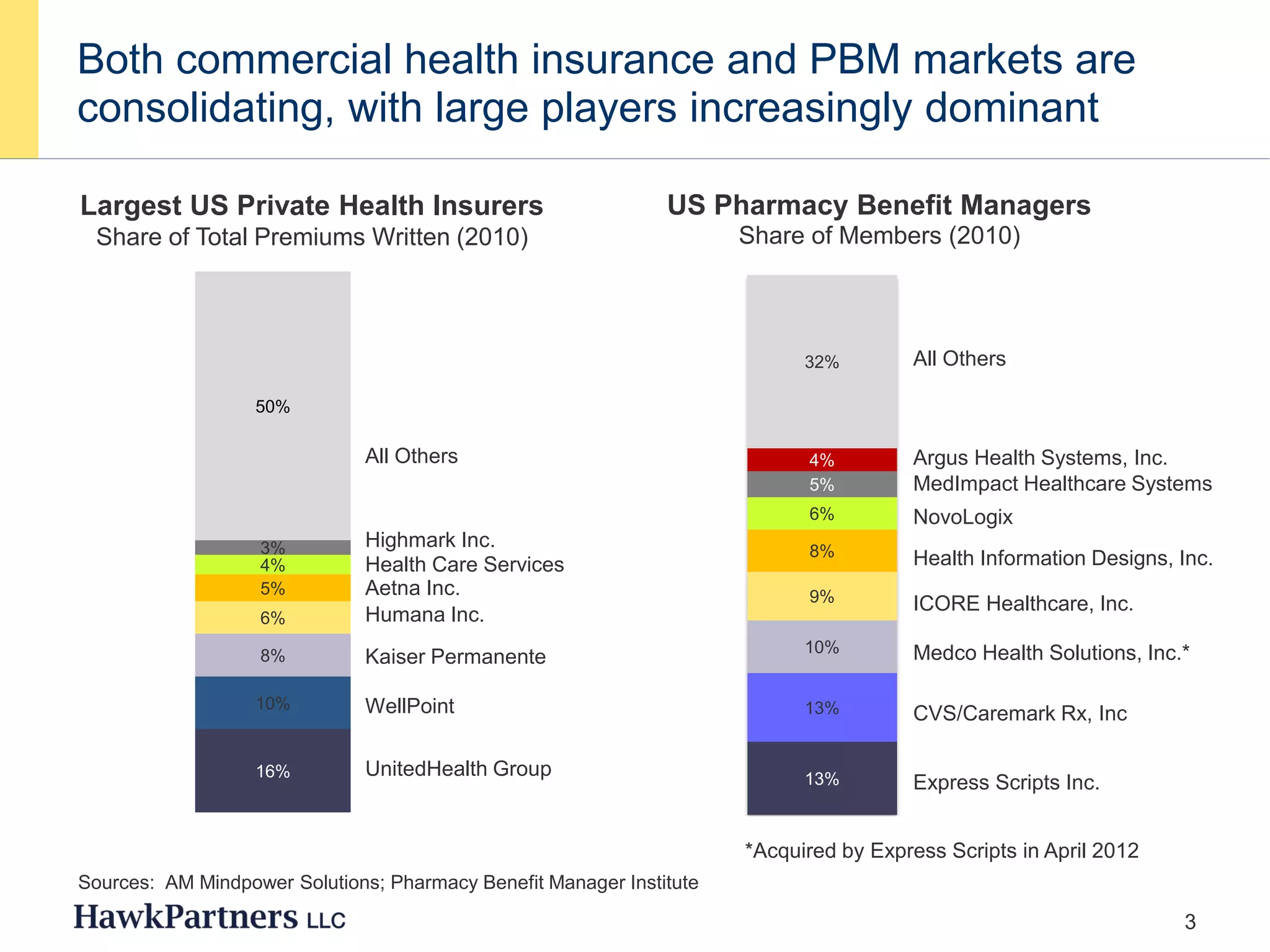
Both commercial health insurance and PBM markets are
consolidating, with large players increasingly dominant
4
Payer influence in the pharmaceutical marketplace has
risen dramatically
14%
33%
10%
17%
26%
34%
32%
18%
14%
2%
Payers Specialists Key Opinion
Leaders
Others General
Practitioners
2001-2006
2007-2011
Which pharmaceutical stakeholder is the most
influential?
Source: Monitor survey of 256 executives from large and mid-sized pharmaceutical companies
 As health care costs continue to rise, therapeutic categories become more
crowded, and products become less differentiated, payers will gain even more
influence
5
As they gain influence, payers are looking for a more
strategic relationship with pharma companies
More information about the
total cost of care vs.
alternative therapies
Greater flexibility and
transparency with
pricing/contracts
Providing information about
their products and pipeline
Value-added programs to assist
patients, pharmacists and clinicians
Payers
Payers are looking for pharma companies to partner with them to
achieve better, more cost-effective patient outcomes
 Private Insurers
 Medicare
 Medicaid
 Other gov’t
programs
 PBMs
6
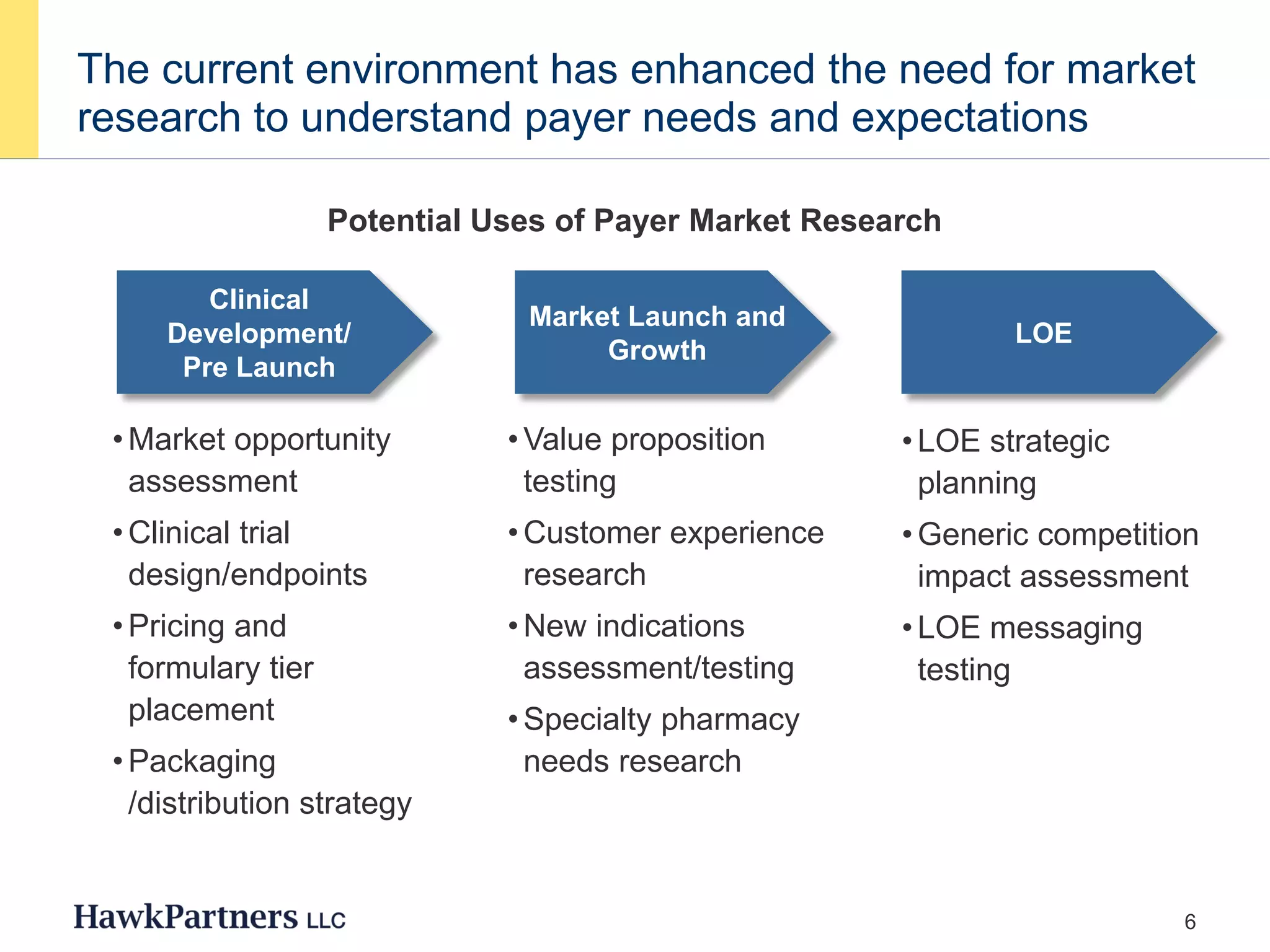
The current environment has enhanced the need for market
research to understand payer needs and expectations
Potential Uses of Payer Market Research
Clinical
Development/
Pre Launch
Market Launch and
Growth
LOE
•Value proposition
testing
•Customer experience
research
•New indications
assessment/testing
•Specialty pharmacy
needs research
• Market opportunity
assessment
• Clinical trial
design/endpoints
• Pricing and
formulary tier
placement
• Packaging
/distribution strategy
•LOE strategic
planning
•Generic competition
impact assessment
•LOE messaging
testing
7
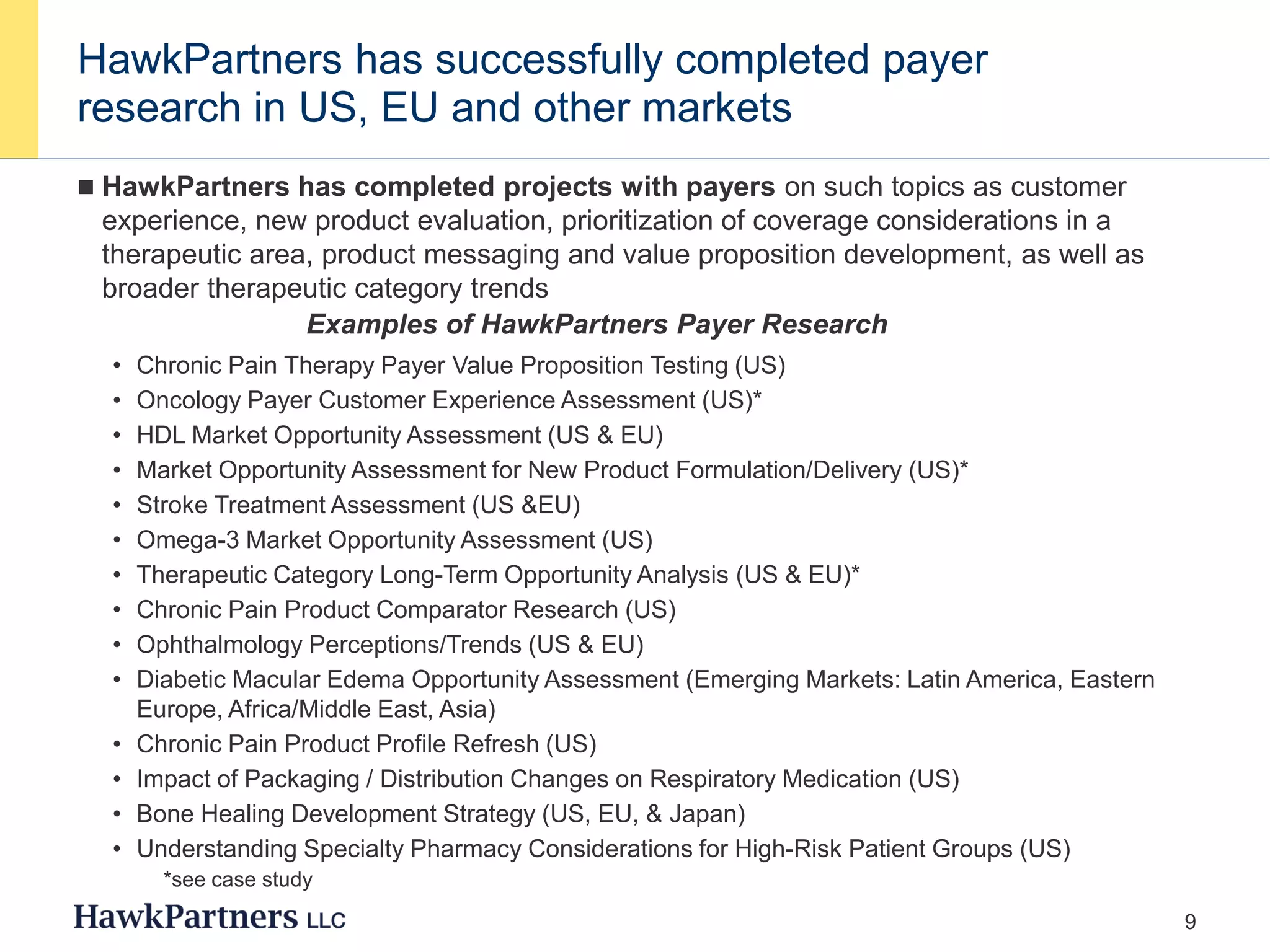
If done right, payer research provides significant insights
1. Reaching the RIGHT respondents
• Recruiting influential respondents from the leading national plans requires
a strong network and database of MCO contacts, as well as utilizing senior
recruiters with payer experience
2. Mining maximum insights
• Maximizing insights from payer research requires using skilled moderators
with deep category knowledge, an understanding of payer dynamics, and
appropriate sensitivity to payer time constraints and confidentiality issues
3. Integrating the results
• Significant value can be added by integrating payer insights with data from
different areas, including physician and patient research, market
forecasting, customer experience tracking, and competitive intelligence
Pharmaceutical Payer Research – Key Success Factors:
1
2
3
8
HawkPartners has extensive experience with both private
payers and other large scale health organizations
 We have experience interviewing and surveying MCOs, PBMs, Specialty
Pharmacies, and other payer organizations
– We also have experience with other large scale health organizations, including key
stakeholders from both Integrated Delivery Networks and large medical groups
 Working with our field partners, HawkPartners utilizes databases of specifically
targeted Medical and Pharmacy Directors in managed care organizations
– We recruit using phone, fax and email information, and conduct additional desk research as
needed, especially to reach larger national plans and PBMs
– Telephone recruitment is conducted by trained executive interviewers with prior experience
recruiting these types of respondents
 HawkPartners and our field partners have recruited respondents from the
largest US commercial plans and PBMs
– We have also successfully recruited a wide range of payers in Europe and Asia Pacific
9
HawkPartners has successfully completed payer
research in US, EU and other markets
 HawkPartners has completed projects with payers on such topics as customer
experience, new product evaluation, prioritization of coverage considerations in a
therapeutic area, product messaging and value proposition development, as well as
broader therapeutic category trends
• Chronic Pain Therapy Payer Value Proposition Testing (US)
• Oncology Payer Customer Experience Assessment (US)*
• HDL Market Opportunity Assessment (US & EU)
• Market Opportunity Assessment for New Product Formulation/Delivery (US)*
• Stroke Treatment Assessment (US &EU)
• Omega-3 Market Opportunity Assessment (US)
• Therapeutic Category Long-Term Opportunity Analysis (US & EU)*
• Chronic Pain Product Comparator Research (US)
• Ophthalmology Perceptions/Trends (US & EU)
• Diabetic Macular Edema Opportunity Assessment (Emerging Markets: Latin America, Eastern
Europe, Africa/Middle East, Asia)
• Chronic Pain Product Profile Refresh (US)
• Impact of Packaging / Distribution Changes on Respiratory Medication (US)
• Bone Healing Development Strategy (US, EU, & Japan)
• Understanding Specialty Pharmacy Considerations for High-Risk Patient Groups (US)
Examples of HawkPartners Payer Research
*see case study
10
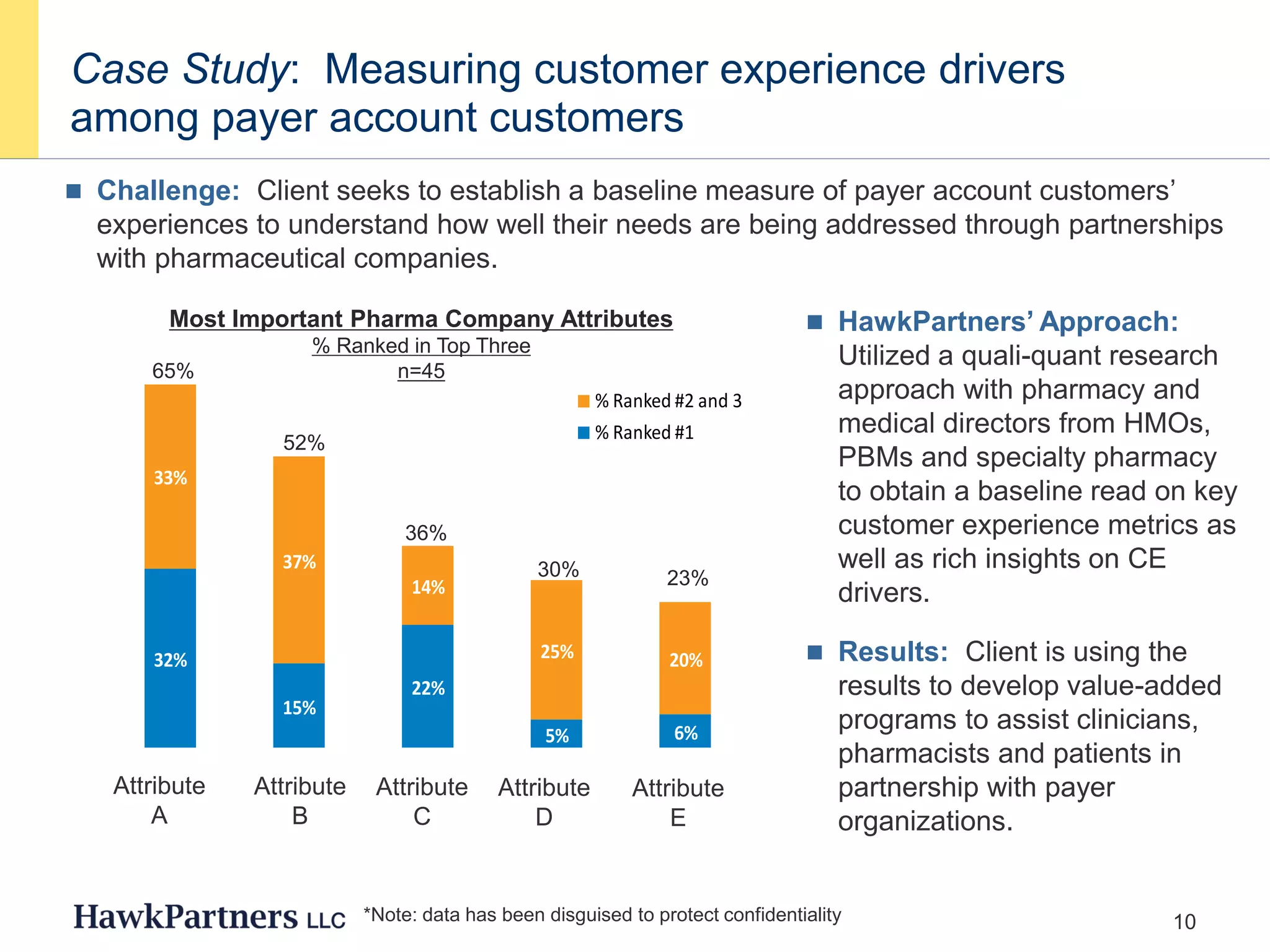
Case Study: Measuring customer experience drivers
among payer account customers
 HawkPartners’ Approach:
Utilized a quali-quant research
approach with pharmacy and
medical directors from HMOs,
PBMs and specialty pharmacy
to obtain a baseline read on key
customer experience metrics as
well as rich insights on CE
drivers.
 Results: Client is using the
results to develop value-added
programs to assist clinicians,
pharmacists and patients in
partnership with payer
organizations.
 Challenge: Client seeks to establish a baseline measure of payer account customers’
experiences to understand how well their needs are being addressed through partnerships
with pharmaceutical companies.
32%
15%
22%
5% 6%
33%
37%
14%
25% 20%
% Ranked #2 and 3
% Ranked #1
36%
23%
65%
52%
30%
Most Important Pharma Company Attributes
% Ranked in Top Three
n=45
Fair pricing Listens to
needs of
managed
care
Resources
to assist
patients
Info for
health
economic
analysis
Resources
to assist
physicians/
pharmacists
*Note: data has been disguised to protect confidentiality
Attribute
A
Attribute
B
Attribute
C
Attribute
D
Attribute
E
11
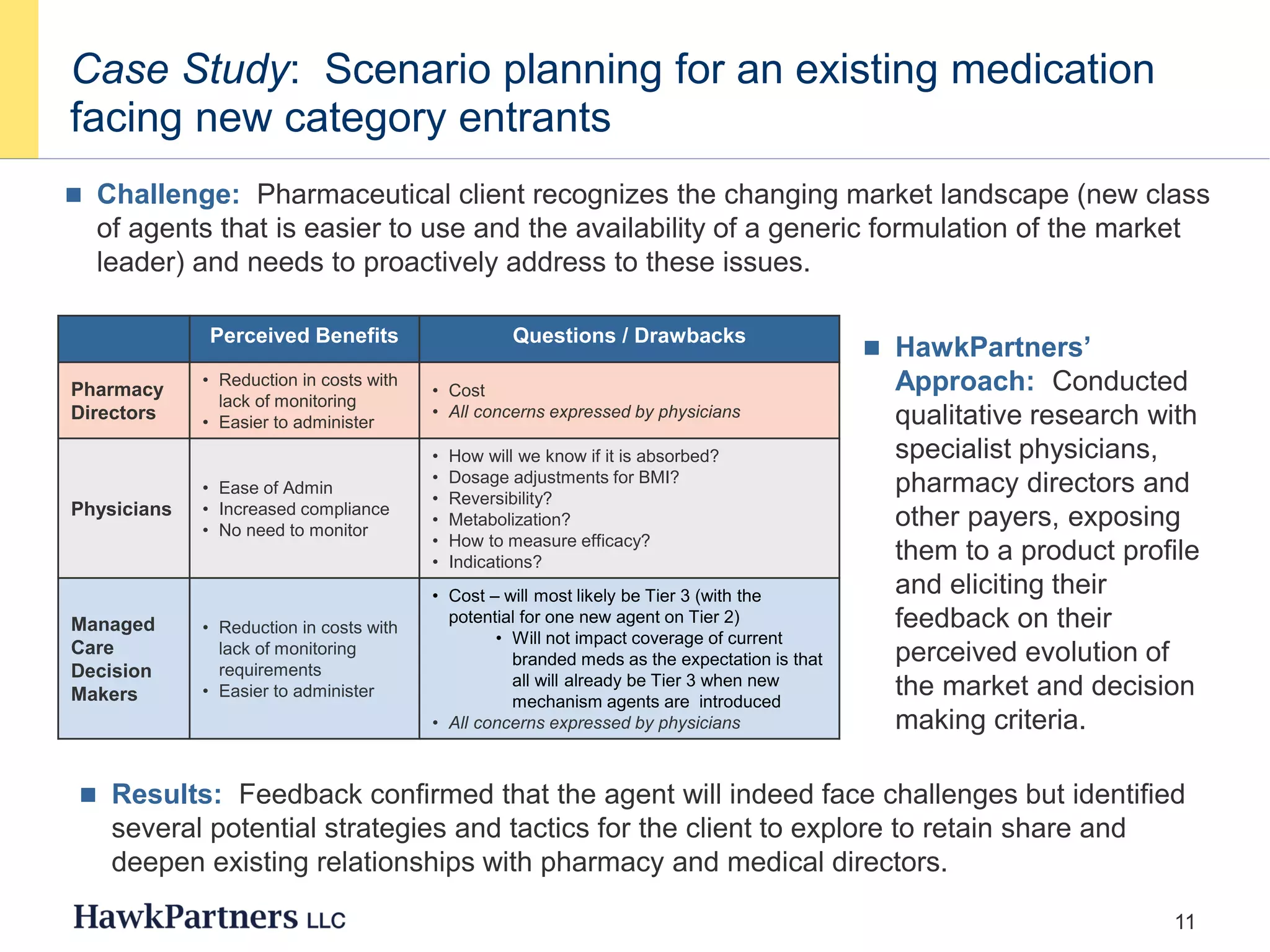
Case Study: Scenario planning for an existing medication
facing new category entrants
 HawkPartners’
Approach: Conducted
qualitative research with
specialist physicians,
pharmacy directors and
other payers, exposing
them to a product profile
and eliciting their
feedback on their
perceived evolution of
the market and decision
making criteria.
 Challenge: Pharmaceutical client recognizes the changing market landscape (new class
of agents that is easier to use and the availability of a generic formulation of the market
leader) and needs to proactively address to these issues.
 Results: Feedback confirmed that the agent will indeed face challenges but identified
several potential strategies and tactics for the client to explore to retain share and
deepen existing relationships with pharmacy and medical directors.
Perceived Benefits Questions / Drawbacks
Pharmacy
Directors
• Reduction in costs with
lack of monitoring
• Easier to administer
• Cost
• All concerns expressed by physicians
Physicians
• Ease of Admin
• Increased compliance
• No need to monitor
• How will we know if it is absorbed?
• Dosage adjustments for BMI?
• Reversibility?
• Metabolization?
• How to measure efficacy?
• Indications?
Managed
Care
Decision
Makers
• Reduction in costs with
lack of monitoring
requirements
• Easier to administer
• Cost – will most likely be Tier 3 (with the
potential for one new agent on Tier 2)
• Will not impact coverage of current
branded meds as the expectation is that
all will already be Tier 3 when new
mechanism agents are introduced
• All concerns expressed by physicians
12
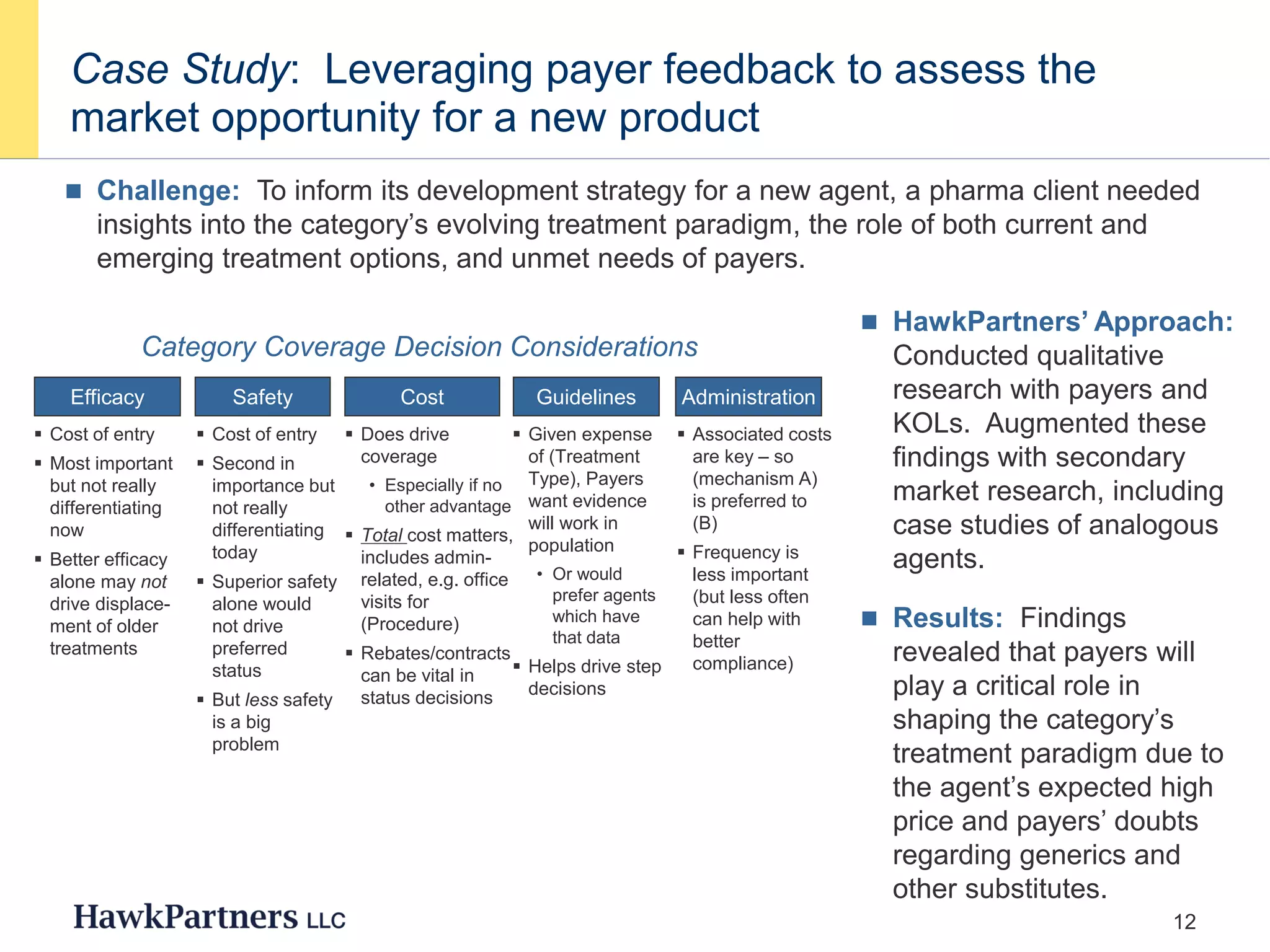
Case Study: Leveraging payer feedback to assess the
market opportunity for a new product
 HawkPartners’ Approach:
Conducted qualitative
research with payers and
KOLs. Augmented these
findings with secondary
market research, including
case studies of analogous
agents.
 Results: Findings
revealed that payers will
play a critical role in
shaping the category’s
treatment paradigm due to
the agent’s expected high
price and payers’ doubts
regarding generics and
other substitutes.
 Challenge: To inform its development strategy for a new agent, a pharma client needed
insights into the category’s evolving treatment paradigm, the role of both current and
emerging treatment options, and unmet needs of payers.
Category Coverage Decision Considerations
GuidelinesCostEfficacy Safety Administration
 Cost of entry
 Most important
but not really
differentiating
now
 Better efficacy
alone may not
drive displace-
ment of older
treatments
 Does drive
coverage
• Especially if no
other advantage
 Total cost matters,
includes admin-
related, e.g. office
visits for
(Procedure)
 Rebates/contracts
can be vital in
status decisions
 Given expense
of (Treatment
Type), Payers
want evidence
will work in
population
• Or would
prefer agents
which have
that data
 Helps drive step
decisions
 Associated costs
are key – so
(mechanism A)
is preferred to
(B)
 Frequency is
less important
(but less often
can help with
better
compliance)
 Cost of entry
 Second in
importance but
not really
differentiating
today
 Superior safety
alone would
not drive
preferred
status
 But less safety
is a big
problem

HawkPartners Perspective on Payer Research

  • 1.
    HawkPartners Perspective on PayerResearch Discussion Document Fall 2012 For more information contact: Scott Wilkerson Scott.wilkerson@hawkpartners.com 301 951-7046
  • 2.
    2 The US healthinsurance landscape includes a mix of private commercial plans and government payers Avg. Annual Spending Growth, 2005- 2010 Estimated Total Spending, US$B (2011) 2% Relative size of circle represents total covered lives Medicare Medicaid Private Health Insurance Age of Covered Under Age 18 Age 65+ Age 18-65 $500 Other Gov’t Programs 4% 0% 8% Out of Pocket/ Uninsured* *Estimated covered lives based on number of uninsured Sources: US Census; Congressional Budget Office; CMS.gov “National Health Expenditures 2010-2020” US Healthcare Payer Landscape 6% $750$250 $1,000
  • 3.
    3 16% 10% 8% 6% 5% 4% 3% 50% 13% 13% 10% 9% 8% 6% 5% 4% 32% US Pharmacy BenefitManagers Share of Members (2010) Express Scripts Inc. CVS/Caremark Rx, Inc Medco Health Solutions, Inc.* ICORE Healthcare, Inc. Health Information Designs, Inc. NovoLogix MedImpact Healthcare Systems Argus Health Systems, Inc. All Others UnitedHealth Group WellPoint Kaiser Permanente Humana Inc. Aetna Inc. Health Care Services All Others Highmark Inc. Largest US Private Health Insurers Share of Total Premiums Written (2010) Sources: AM Mindpower Solutions; Pharmacy Benefit Manager Institute *Acquired by Express Scripts in April 2012 Both commercial health insurance and PBM markets are consolidating, with large players increasingly dominant
  • 4.
    4 Payer influence inthe pharmaceutical marketplace has risen dramatically 14% 33% 10% 17% 26% 34% 32% 18% 14% 2% Payers Specialists Key Opinion Leaders Others General Practitioners 2001-2006 2007-2011 Which pharmaceutical stakeholder is the most influential? Source: Monitor survey of 256 executives from large and mid-sized pharmaceutical companies  As health care costs continue to rise, therapeutic categories become more crowded, and products become less differentiated, payers will gain even more influence
  • 5.
    5 As they gaininfluence, payers are looking for a more strategic relationship with pharma companies More information about the total cost of care vs. alternative therapies Greater flexibility and transparency with pricing/contracts Providing information about their products and pipeline Value-added programs to assist patients, pharmacists and clinicians Payers Payers are looking for pharma companies to partner with them to achieve better, more cost-effective patient outcomes  Private Insurers  Medicare  Medicaid  Other gov’t programs  PBMs
  • 6.
    6 The current environmenthas enhanced the need for market research to understand payer needs and expectations Potential Uses of Payer Market Research Clinical Development/ Pre Launch Market Launch and Growth LOE •Value proposition testing •Customer experience research •New indications assessment/testing •Specialty pharmacy needs research • Market opportunity assessment • Clinical trial design/endpoints • Pricing and formulary tier placement • Packaging /distribution strategy •LOE strategic planning •Generic competition impact assessment •LOE messaging testing
  • 7.
    7 If done right,payer research provides significant insights 1. Reaching the RIGHT respondents • Recruiting influential respondents from the leading national plans requires a strong network and database of MCO contacts, as well as utilizing senior recruiters with payer experience 2. Mining maximum insights • Maximizing insights from payer research requires using skilled moderators with deep category knowledge, an understanding of payer dynamics, and appropriate sensitivity to payer time constraints and confidentiality issues 3. Integrating the results • Significant value can be added by integrating payer insights with data from different areas, including physician and patient research, market forecasting, customer experience tracking, and competitive intelligence Pharmaceutical Payer Research – Key Success Factors: 1 2 3
  • 8.
    8 HawkPartners has extensiveexperience with both private payers and other large scale health organizations  We have experience interviewing and surveying MCOs, PBMs, Specialty Pharmacies, and other payer organizations – We also have experience with other large scale health organizations, including key stakeholders from both Integrated Delivery Networks and large medical groups  Working with our field partners, HawkPartners utilizes databases of specifically targeted Medical and Pharmacy Directors in managed care organizations – We recruit using phone, fax and email information, and conduct additional desk research as needed, especially to reach larger national plans and PBMs – Telephone recruitment is conducted by trained executive interviewers with prior experience recruiting these types of respondents  HawkPartners and our field partners have recruited respondents from the largest US commercial plans and PBMs – We have also successfully recruited a wide range of payers in Europe and Asia Pacific
  • 9.
    9 HawkPartners has successfullycompleted payer research in US, EU and other markets  HawkPartners has completed projects with payers on such topics as customer experience, new product evaluation, prioritization of coverage considerations in a therapeutic area, product messaging and value proposition development, as well as broader therapeutic category trends • Chronic Pain Therapy Payer Value Proposition Testing (US) • Oncology Payer Customer Experience Assessment (US)* • HDL Market Opportunity Assessment (US & EU) • Market Opportunity Assessment for New Product Formulation/Delivery (US)* • Stroke Treatment Assessment (US &EU) • Omega-3 Market Opportunity Assessment (US) • Therapeutic Category Long-Term Opportunity Analysis (US & EU)* • Chronic Pain Product Comparator Research (US) • Ophthalmology Perceptions/Trends (US & EU) • Diabetic Macular Edema Opportunity Assessment (Emerging Markets: Latin America, Eastern Europe, Africa/Middle East, Asia) • Chronic Pain Product Profile Refresh (US) • Impact of Packaging / Distribution Changes on Respiratory Medication (US) • Bone Healing Development Strategy (US, EU, & Japan) • Understanding Specialty Pharmacy Considerations for High-Risk Patient Groups (US) Examples of HawkPartners Payer Research *see case study
  • 10.
    10 Case Study: Measuringcustomer experience drivers among payer account customers  HawkPartners’ Approach: Utilized a quali-quant research approach with pharmacy and medical directors from HMOs, PBMs and specialty pharmacy to obtain a baseline read on key customer experience metrics as well as rich insights on CE drivers.  Results: Client is using the results to develop value-added programs to assist clinicians, pharmacists and patients in partnership with payer organizations.  Challenge: Client seeks to establish a baseline measure of payer account customers’ experiences to understand how well their needs are being addressed through partnerships with pharmaceutical companies. 32% 15% 22% 5% 6% 33% 37% 14% 25% 20% % Ranked #2 and 3 % Ranked #1 36% 23% 65% 52% 30% Most Important Pharma Company Attributes % Ranked in Top Three n=45 Fair pricing Listens to needs of managed care Resources to assist patients Info for health economic analysis Resources to assist physicians/ pharmacists *Note: data has been disguised to protect confidentiality Attribute A Attribute B Attribute C Attribute D Attribute E
  • 11.
    11 Case Study: Scenarioplanning for an existing medication facing new category entrants  HawkPartners’ Approach: Conducted qualitative research with specialist physicians, pharmacy directors and other payers, exposing them to a product profile and eliciting their feedback on their perceived evolution of the market and decision making criteria.  Challenge: Pharmaceutical client recognizes the changing market landscape (new class of agents that is easier to use and the availability of a generic formulation of the market leader) and needs to proactively address to these issues.  Results: Feedback confirmed that the agent will indeed face challenges but identified several potential strategies and tactics for the client to explore to retain share and deepen existing relationships with pharmacy and medical directors. Perceived Benefits Questions / Drawbacks Pharmacy Directors • Reduction in costs with lack of monitoring • Easier to administer • Cost • All concerns expressed by physicians Physicians • Ease of Admin • Increased compliance • No need to monitor • How will we know if it is absorbed? • Dosage adjustments for BMI? • Reversibility? • Metabolization? • How to measure efficacy? • Indications? Managed Care Decision Makers • Reduction in costs with lack of monitoring requirements • Easier to administer • Cost – will most likely be Tier 3 (with the potential for one new agent on Tier 2) • Will not impact coverage of current branded meds as the expectation is that all will already be Tier 3 when new mechanism agents are introduced • All concerns expressed by physicians
  • 12.
    12 Case Study: Leveragingpayer feedback to assess the market opportunity for a new product  HawkPartners’ Approach: Conducted qualitative research with payers and KOLs. Augmented these findings with secondary market research, including case studies of analogous agents.  Results: Findings revealed that payers will play a critical role in shaping the category’s treatment paradigm due to the agent’s expected high price and payers’ doubts regarding generics and other substitutes.  Challenge: To inform its development strategy for a new agent, a pharma client needed insights into the category’s evolving treatment paradigm, the role of both current and emerging treatment options, and unmet needs of payers. Category Coverage Decision Considerations GuidelinesCostEfficacy Safety Administration  Cost of entry  Most important but not really differentiating now  Better efficacy alone may not drive displace- ment of older treatments  Does drive coverage • Especially if no other advantage  Total cost matters, includes admin- related, e.g. office visits for (Procedure)  Rebates/contracts can be vital in status decisions  Given expense of (Treatment Type), Payers want evidence will work in population • Or would prefer agents which have that data  Helps drive step decisions  Associated costs are key – so (mechanism A) is preferred to (B)  Frequency is less important (but less often can help with better compliance)  Cost of entry  Second in importance but not really differentiating today  Superior safety alone would not drive preferred status  But less safety is a big problem