John W. Hanna, MBA
VP Marketing
Veracyte, Inc.
john@veracyte.com
650.243.6362
Advanced Diagnostics in a Post-PAMA Era
/ 2 /
Veracyte is a Recognized Industry Leader
/ 3 /
About Veracyte, Inc.
• Founded in 2008 to address diagnostic ambiguity
• HQ and CLIA Molecular Lab in South San Francisco, CA
• Over 200 employees
• Three commercial products
/ 4 /
Overtreatment is a Global Epidemic
/ 5 // 5 /
Commercial Payer Trends
/ 6 /
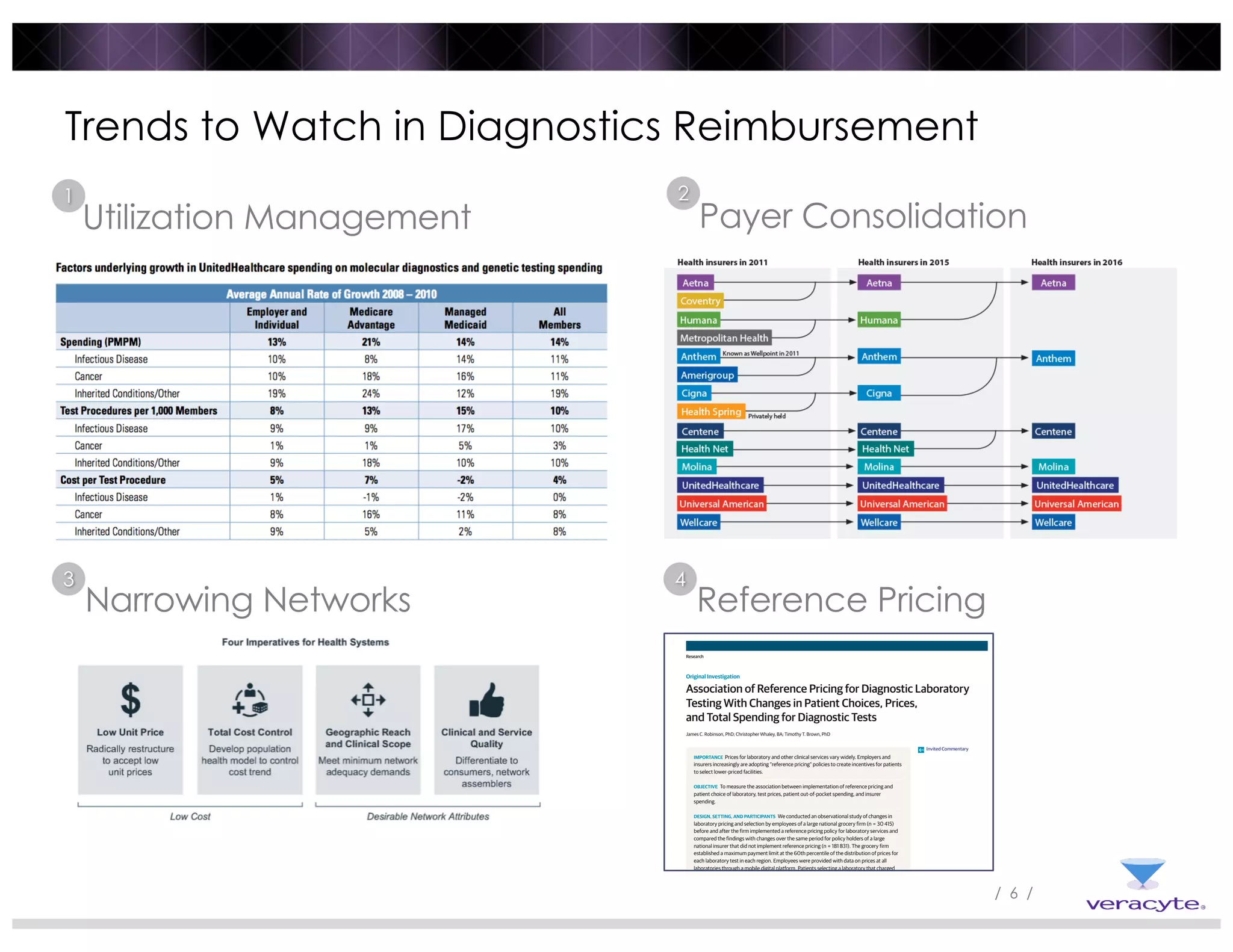
Trends to Watch in Diagnostics Reimbursement
Utilization Management Payer Consolidation
Narrowing Networks Reference Pricing
Association of Reference Pricing for Diagnostic Laboratory
Testing With Changes in Patient Choices, Prices,
and Total Spending for Diagnostic Tests
James C. Robinson, PhD; Christopher Whaley, BA; Timothy T. Brown, PhD
IMPORTANCE Prices for laboratory and other clinical services vary widely. Employers and
insurers increasingly are adopting “reference pricing” policies to create incentives for patients
to select lower-priced facilities.
OBJECTIVE To measure the association between implementation of reference pricing and
patient choice of laboratory, test prices, patient out-of-pocket spending, and insurer
spending.
DESIGN, SETTING, AND PARTICIPANTS We conducted an observational study of changes in
laboratory pricing and selection by employees of a large national grocery firm (n = 30 415)
before and after the firm implemented a reference pricing policy for laboratory services and
compared the findings with changes over the same period for policy holders of a large
national insurer that did not implement reference pricing (n = 181 831). The grocery firm
established a maximum payment limit at the 60th percentile of the distribution of prices for
each laboratory test in each region. Employees were provided with data on prices at all
laboratories through a mobile digital platform. Patients selecting a laboratory that charged
more than the payment limit were required to pay the full difference themselves. A total of
2.13 million claims were analyzed for 285 types of in vitro diagnostic tests between 2010 and
2013.
MAIN OUTCOMES AND MEASURES Patient choice of laboratory, price paid per test, patient
out-of-pocket costs, and employer spending.
RESULTS Compared with trends in prices paid by insurance policy holders not subject to
reference pricing, and after adjusting for characteristics of tests and patients, implementation
of reference pricing was associated with a 31.9% reduction (95% CI, 20.6%-41.6%) in average
price paid per test by the third year of the program. In these 3 years, total spending on
Invited Commentary
Research
Original Investigation
1 2
3 4
/ 7 /
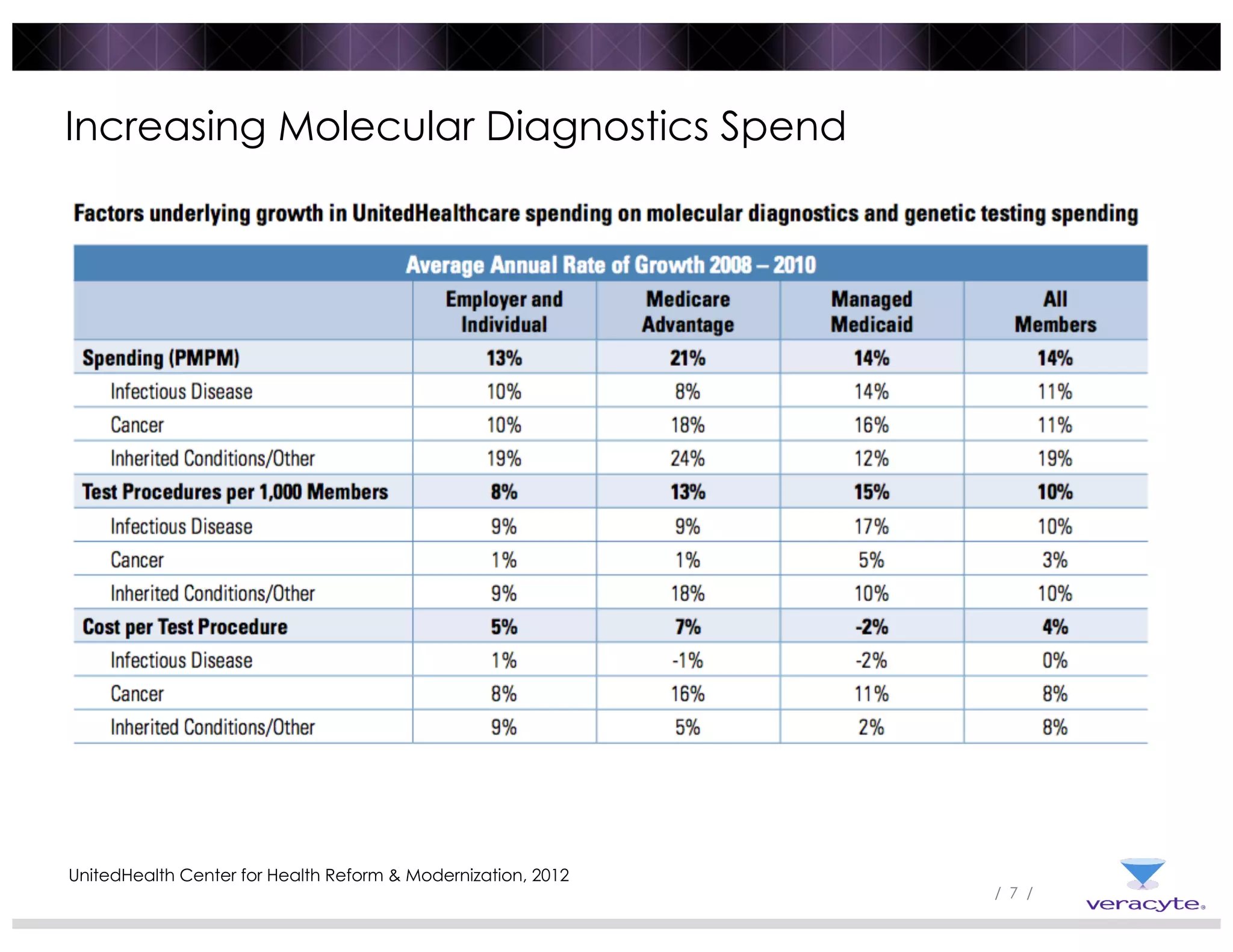
Increasing Molecular Diagnostics Spend
UnitedHealth Center for Health Reform & Modernization, 2012
/ 8 /
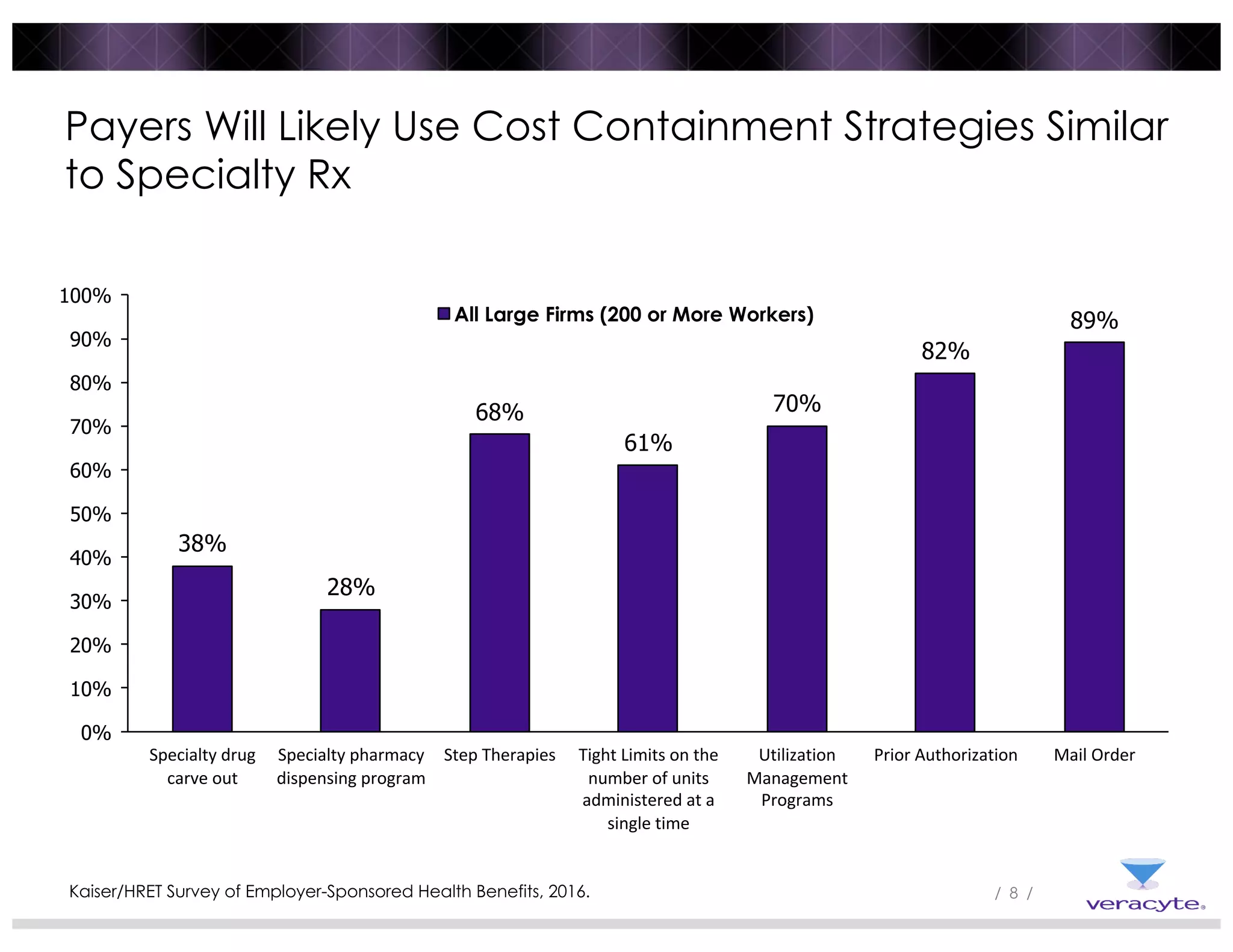
Payers Will Likely Use Cost Containment Strategies Similar
to Specialty Rx
38%
28%
68%
61%
70%
82%
89%
0%
10%
20%
30%
40%
50%
60%
70%
80%
90%
100%
Specialty	drug	
carve	out
Specialty	pharmacy	
dispensing	program
Step	Therapies Tight	Limits	on	the	
number	of	units	
administered	at	a	
single	time
Utilization	
Management	
Programs
Prior	Authorization Mail	Order
All Large Firms (200 or More Workers)
Kaiser/HRET Survey of Employer-Sponsored Health Benefits, 2016.
/ 9 /
DOJ Moves to Block Big Insurer Mergers
/ 10 /
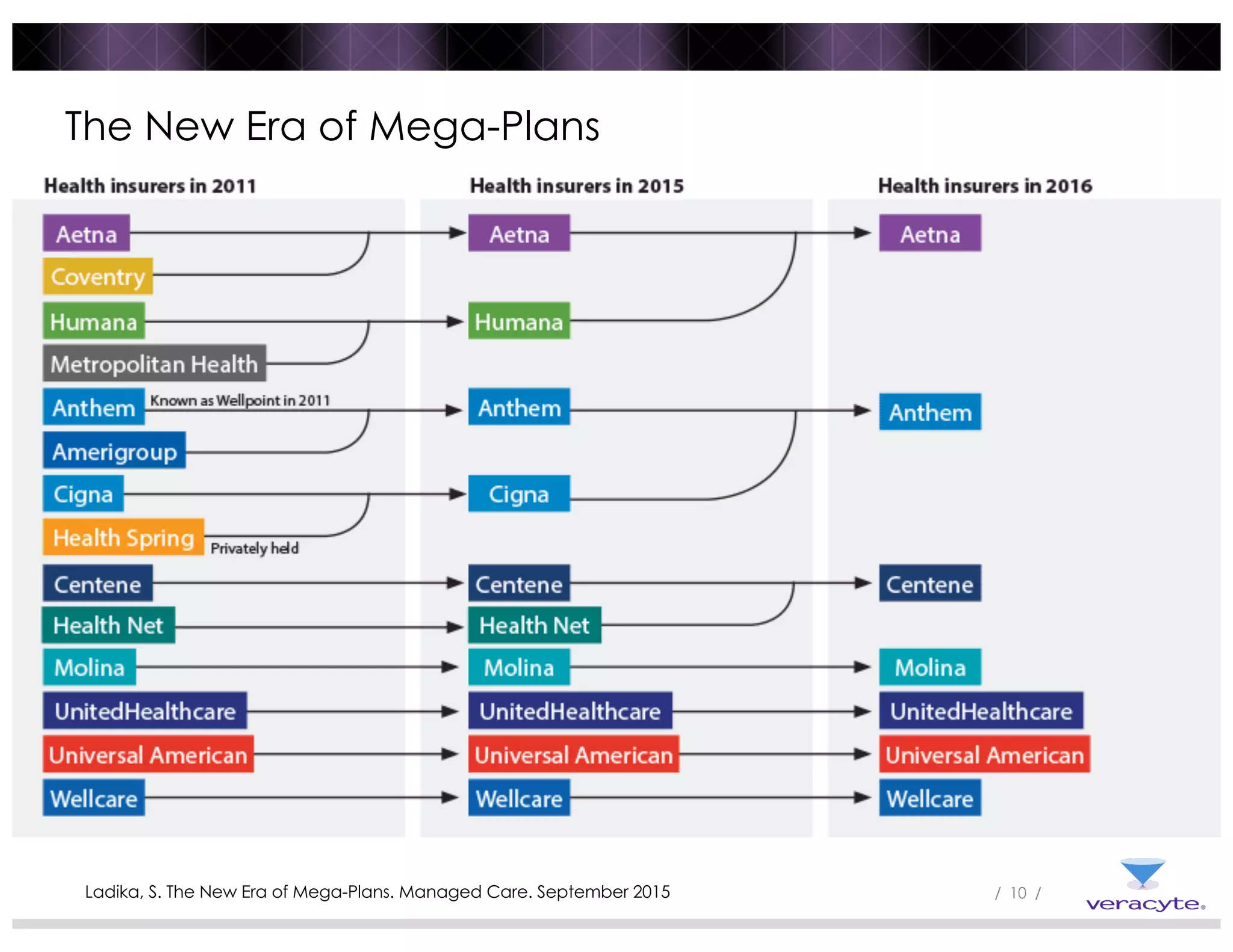
The New Era of Mega-Plans
Ladika, S. The New Era of Mega-Plans. Managed Care. September 2015
/ 11 /
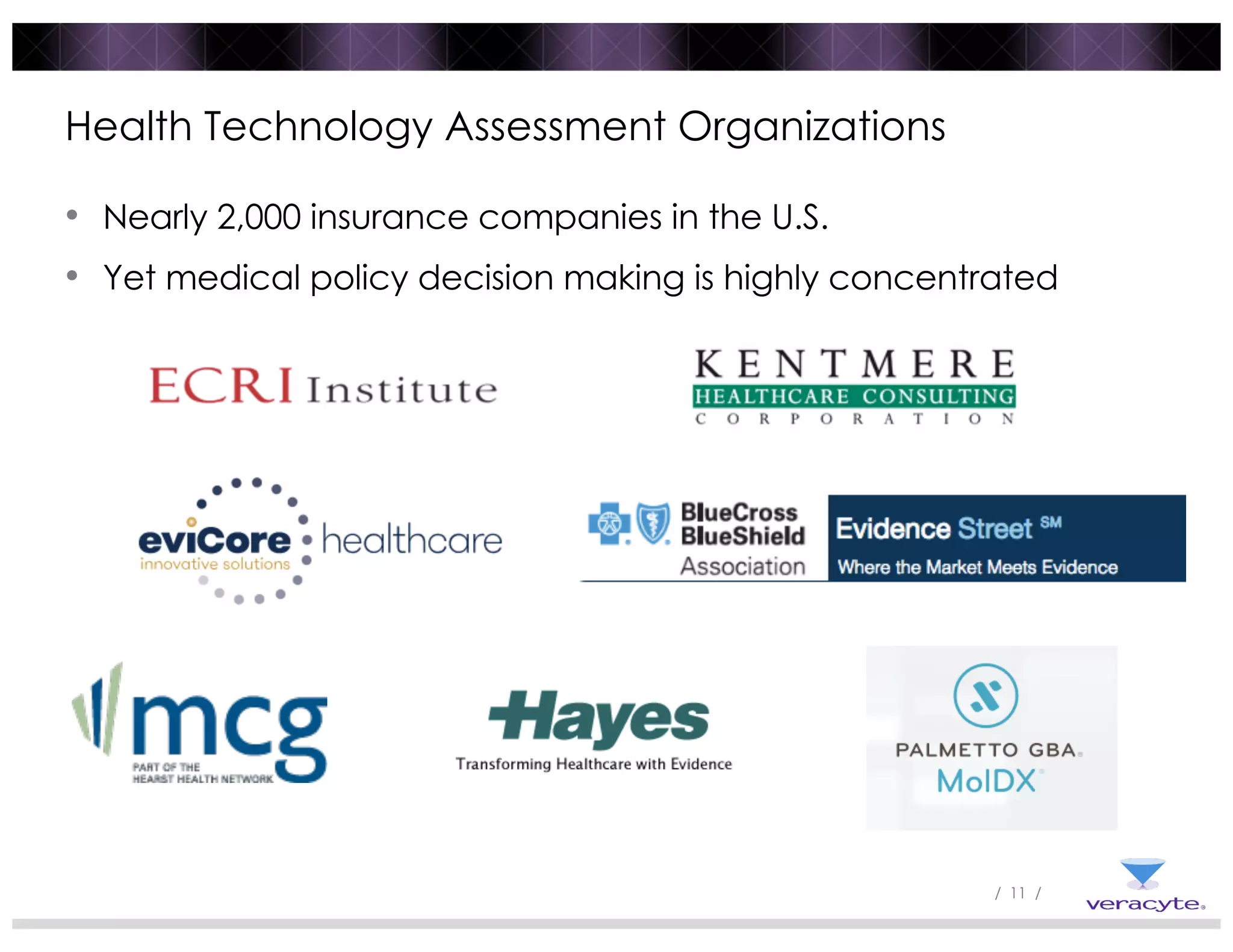
• Nearly 2,000 insurance companies in the U.S.
• Yet medical policy decision making is highly concentrated
Health Technology Assessment Organizations
/ 12 /
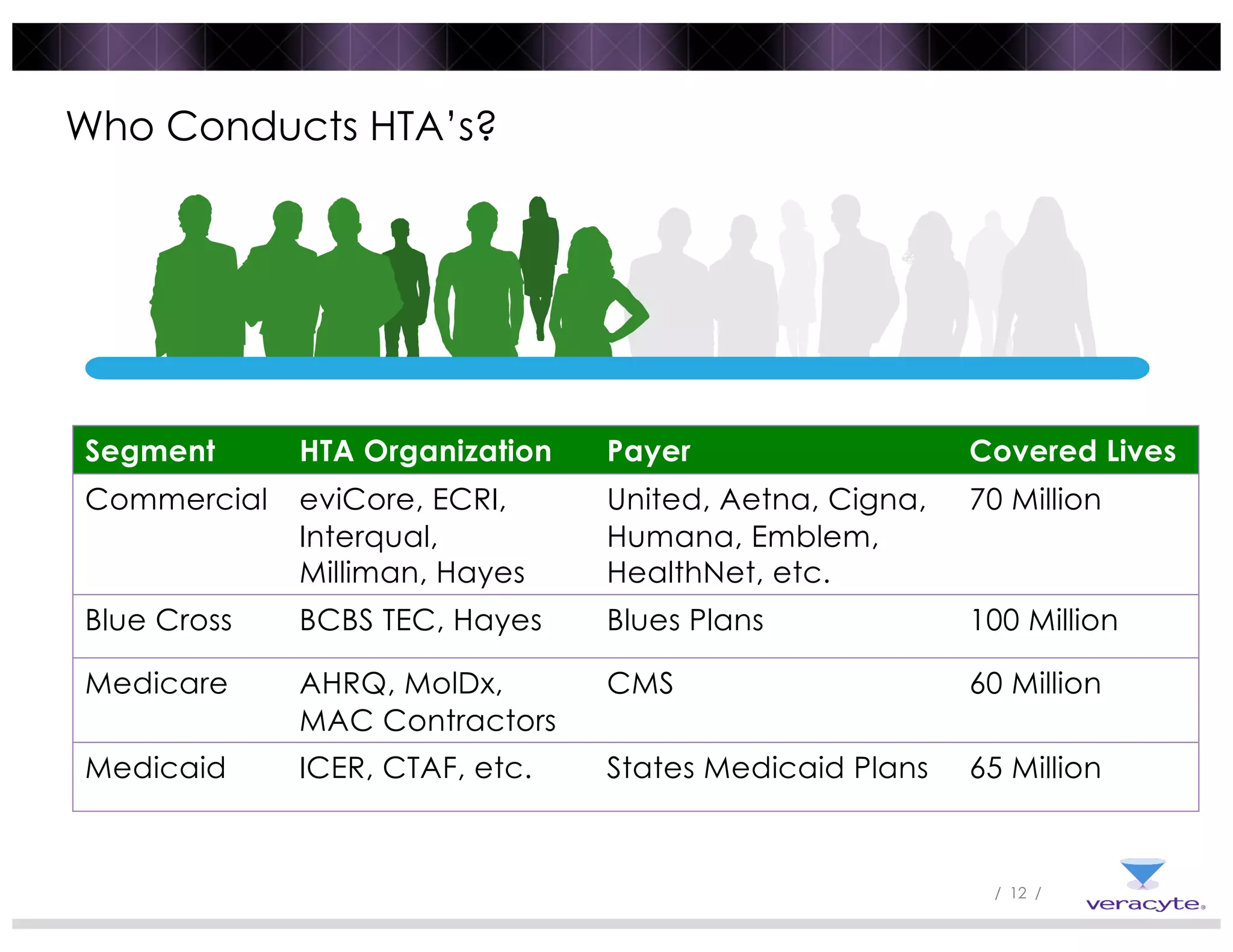
Who Conducts HTA’s?
Segment HTA Organization Payer Covered Lives
Commercial eviCore, ECRI,
Interqual,
Milliman, Hayes
United, Aetna, Cigna,
Humana, Emblem,
HealthNet, etc.
70 Million
Blue Cross BCBS TEC, Hayes Blues Plans 100 Million
Medicare AHRQ, MolDx,
MAC Contractors
CMS 60 Million
Medicaid ICER, CTAF, etc. States Medicaid Plans 65 Million
/ 13 /
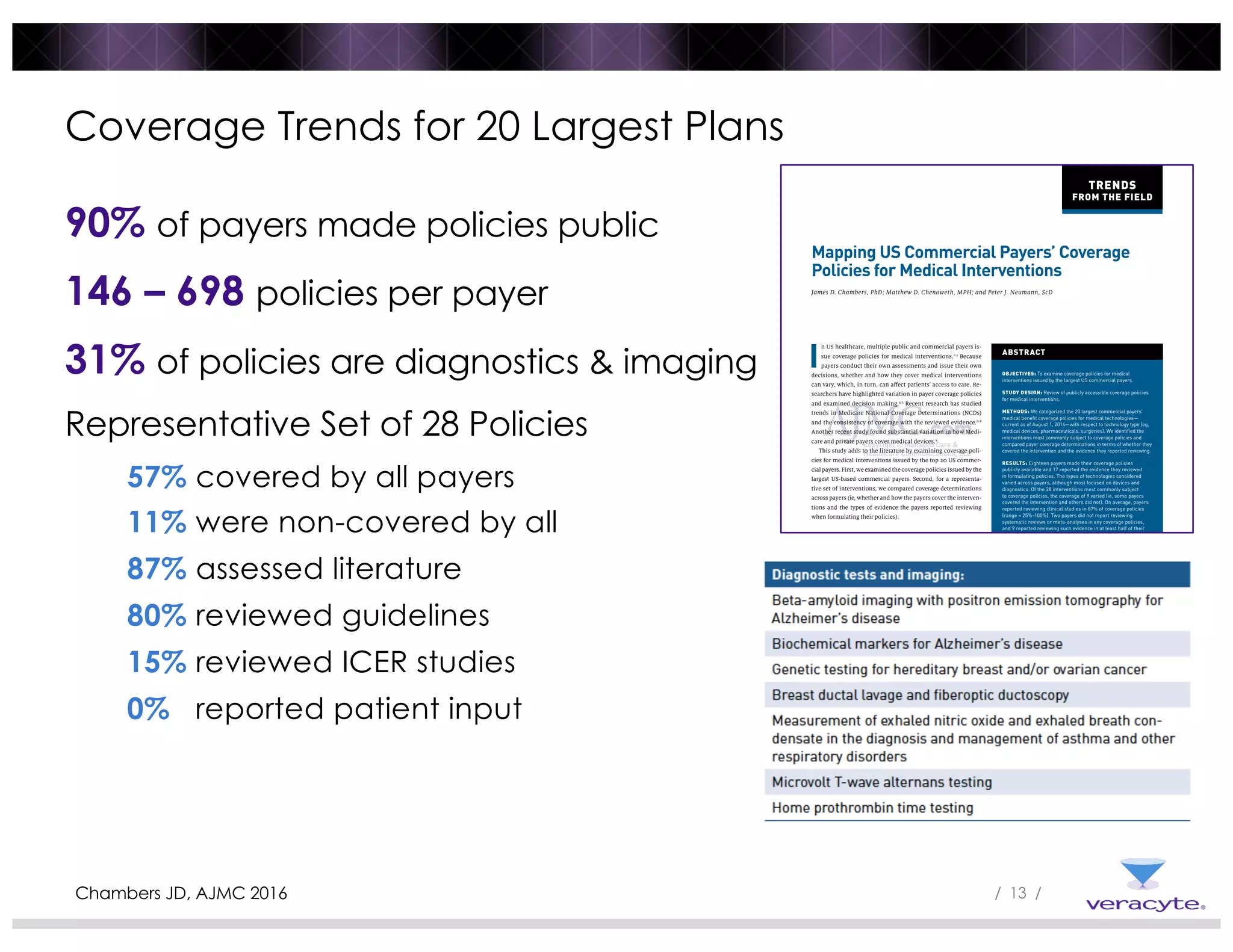
90% of payers made policies public
146 – 698 policies per payer
31% of policies are diagnostics & imaging
Representative Set of 28 Policies
57% covered by all payers
11% were non-covered by all
87% assessed literature
80% reviewed guidelines
15% reviewed ICER studies
0% reported patient input
Coverage Trends for 20 Largest Plans
Chambers JD, AJMC 2016
THE AMERICAN JOURNAL OF MANAGED CARE VOL. 22, NO. 9 e323
TRENDS
FROM THE FIELD
I
n US healthcare, multiple public and commercial payers is-
sue coverage policies for medical interventions.1-3
Because
payers conduct their own assessments and issue their own
decisions, whether and how they cover medical interventions
can vary, which, in turn, can affect patients’ access to care. Re-
searchers have highlighted variation in payer coverage policies
and examined decision making.4,5
Recent research has studied
trends in Medicare National Coverage Determinations (NCDs)
and the consistency of coverage with the reviewed evidence.6-8
Another recent study found substantial variation in how Medi-
care and private payers cover medical devices.9
This study adds to the literature by examining coverage poli-
cies for medical interventions issued by the top 20 US commer-
cial payers. First, we examined the coverage policies issued by the
largest US-based commercial payers. Second, for a representa-
tive set of interventions, we compared coverage determinations
across payers (ie, whether and how the payers cover the interven-
tions and the types of evidence the payers reported reviewing
when formulating their policies).
METHODS
Weidentifiedthe20largestUS-basedcommercialpayersintermsof
number of covered lives.10
We searched each payer’s website to de-
termine the availability of their medical benefit coverage policies. In
many cases, payers provide memoranda, which describe the target
patient population, any conditions on patient access to an interven-
tion,and,frequently,theclinicaltrials,clinicalguidelines,andother
evidence the payer reports reviewing when formulating the cover-
age policy. We focused on coverage policies pertaining to the payers’
commercial line of business by excluding coverage policies pertain-
ing to their Medicaid managed care or Medicare Advantage lines of
business.Whenwewereunabletolocatememoranda,wecontacted
the payer to confirm their unavailability.
We identified all coverage policies issued by each of the 20 pay-
ers (n = 7372). Included policies were current as of August 1, 2014.
Mapping US Commercial Payers’ Coverage
Policies for Medical Interventions
James D. Chambers, PhD; Matthew D. Chenoweth, MPH; and Peter J. Neumann, ScD
ABSTRACT
OBJECTIVES: To examine coverage policies for medical
interventions issued by the largest US commercial payers.
STUDY DESIGN: Review of publicly accessible coverage policies
for medical interventions.
METHODS: We categorized the 20 largest commercial payers’
medical benefit coverage policies for medical technologies—
current as of August 1, 2014—with respect to technology type (eg,
medical devices, pharmaceuticals, surgeries). We identified the
interventions most commonly subject to coverage policies and
compared payer coverage determinations in terms of whether they
covered the intervention and the evidence they reported reviewing.
RESULTS: Eighteen payers made their coverage policies
publicly available and 17 reported the evidence they reviewed
in formulating policies. The types of technologies considered
varied across payers, although most focused on devices and
diagnostics. Of the 28 interventions most commonly subject
to coverage policies, the coverage of 9 varied (ie, some payers
covered the intervention and others did not). On average, payers
reported reviewing clinical studies in 87% of coverage policies
(range = 25%-100%). Two payers did not report reviewing
systematic reviews or meta-analyses in any coverage policies,
and 9 reported reviewing such evidence in at least half of their
policies. Fourteen payers reported reviewing cost-effectiveness
analyses at least some of the time, with frequency ranging from
8% to 43%. Commercial payers’ coverage decisions did not
appear to reflect direct input from patients or patient advocates,
at least as stated in published coverage policies.
CONCLUSIONS: Coverage of medical interventions varies
across US private payers. Payers often report reviewing different
evidence when formulating coverage policies, but do not report
considering input directly from patients in evidence assessments.
Am J Manag Care. 2016;22(9):e323-e328
/ 14 /
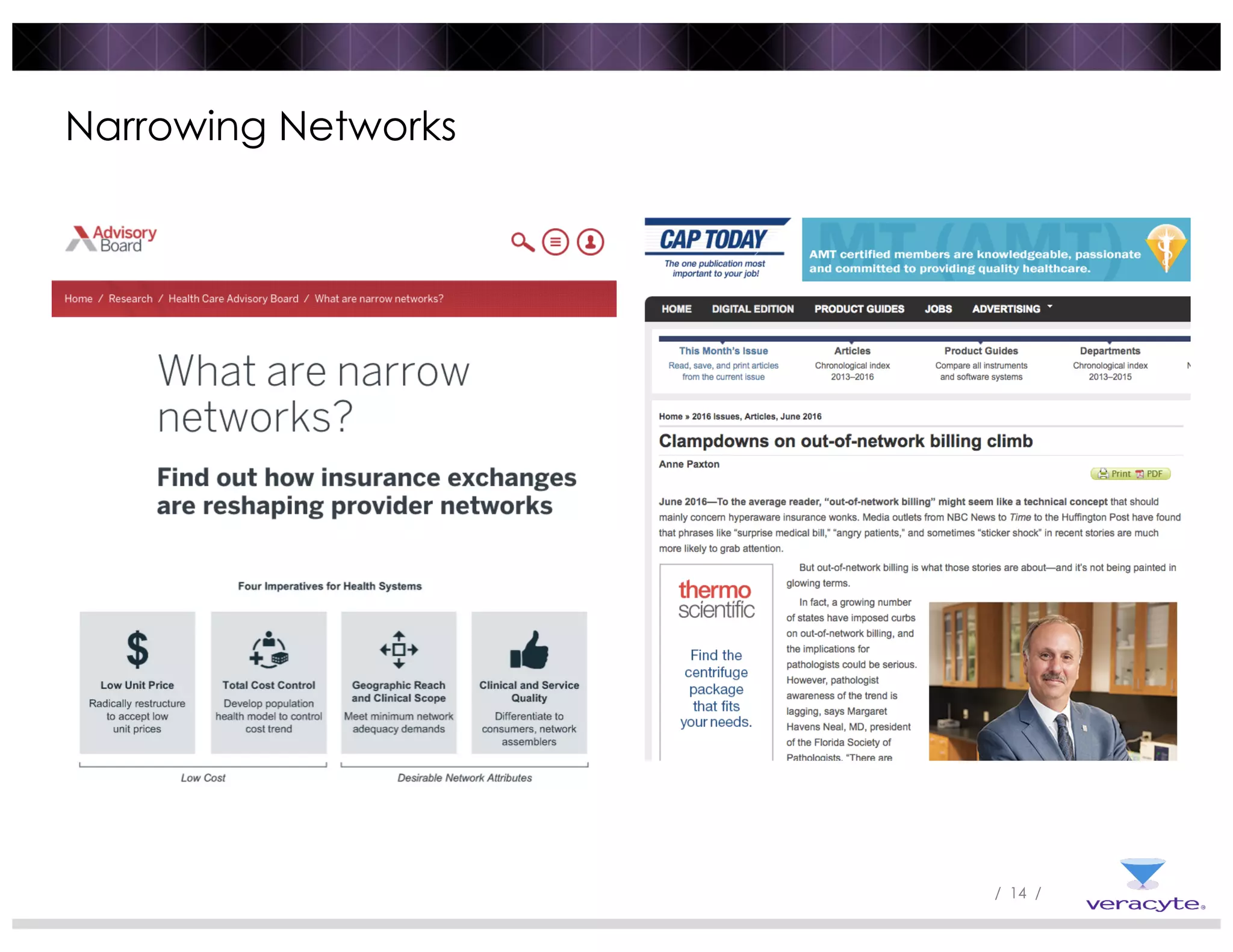
Narrowing Networks
/ 15 /
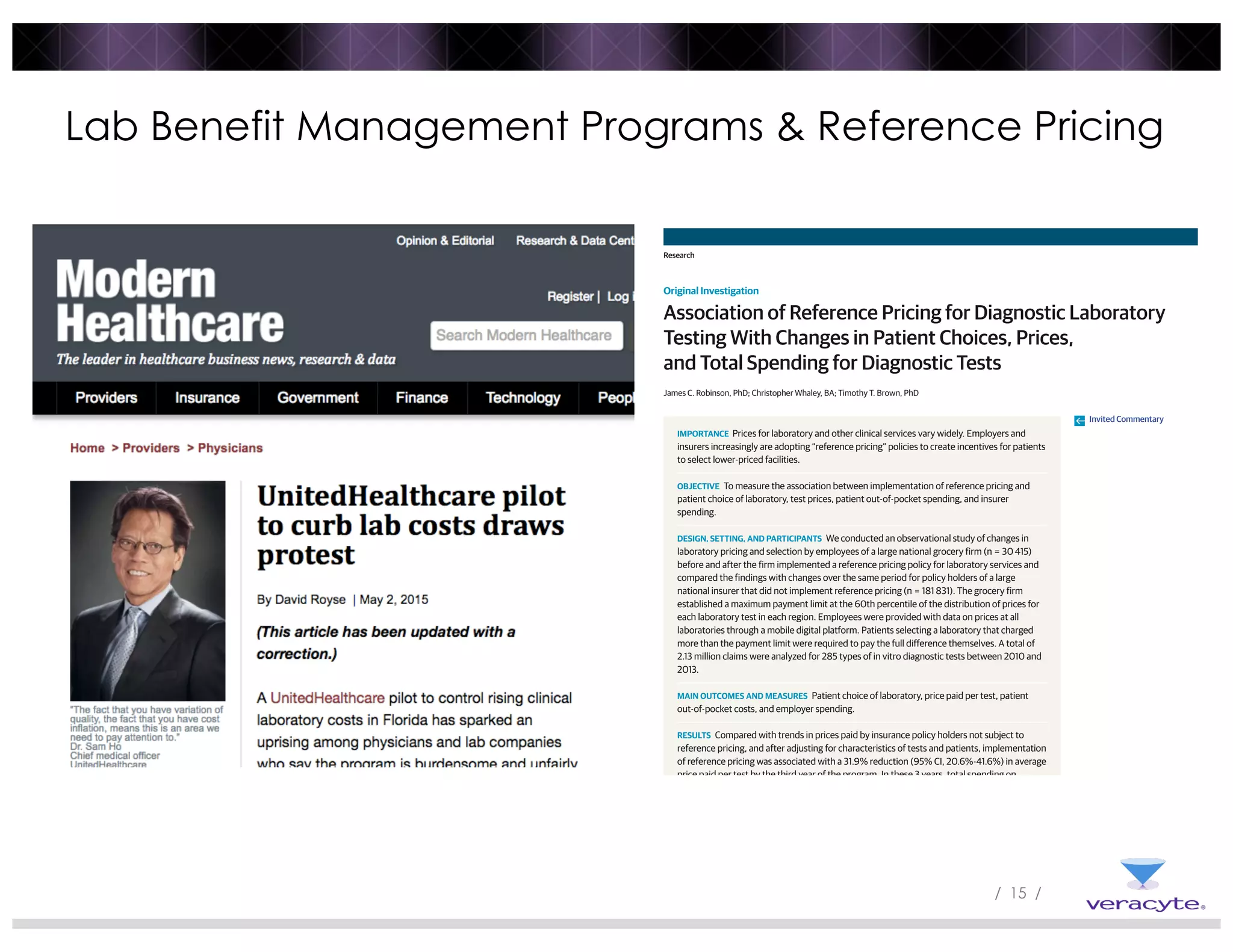
Lab Benefit Management Programs & Reference Pricing
Association of Reference Pricing for Diagnostic Laboratory
Testing With Changes in Patient Choices, Prices,
and Total Spending for Diagnostic Tests
James C. Robinson, PhD; Christopher Whaley, BA; Timothy T. Brown, PhD
IMPORTANCE Prices for laboratory and other clinical services vary widely. Employers and
insurers increasingly are adopting “reference pricing” policies to create incentives for patients
to select lower-priced facilities.
OBJECTIVE To measure the association between implementation of reference pricing and
patient choice of laboratory, test prices, patient out-of-pocket spending, and insurer
spending.
DESIGN, SETTING, AND PARTICIPANTS We conducted an observational study of changes in
laboratory pricing and selection by employees of a large national grocery firm (n = 30 415)
before and after the firm implemented a reference pricing policy for laboratory services and
compared the findings with changes over the same period for policy holders of a large
national insurer that did not implement reference pricing (n = 181 831). The grocery firm
established a maximum payment limit at the 60th percentile of the distribution of prices for
each laboratory test in each region. Employees were provided with data on prices at all
laboratories through a mobile digital platform. Patients selecting a laboratory that charged
more than the payment limit were required to pay the full difference themselves. A total of
2.13 million claims were analyzed for 285 types of in vitro diagnostic tests between 2010 and
2013.
MAIN OUTCOMES AND MEASURES Patient choice of laboratory, price paid per test, patient
out-of-pocket costs, and employer spending.
RESULTS Compared with trends in prices paid by insurance policy holders not subject to
reference pricing, and after adjusting for characteristics of tests and patients, implementation
of reference pricing was associated with a 31.9% reduction (95% CI, 20.6%-41.6%) in average
price paid per test by the third year of the program. In these 3 years, total spending on
laboratory tests declined by $2.57 million (95% CI, $1.59-$3.35 million). Out-of-pocket costs
by patients declined by $1.05 million (95% CI, $0.73-$1.37 million). Spending by the employer
declined by $1.70 million (95% CI, $0.92-$2.48 million).
CONCLUSIONS AND RELEVANCE When combined with access to price information, reference
pricing was associated with patient choice of lower-cost laboratories and reductions in prices
and payments by both employer and employees.
Invited Commentary
Research
Original Investigation
/ 16 // 16 /
PAMA & Clinical Lab Fee
Schedule Reform
/ 17 /
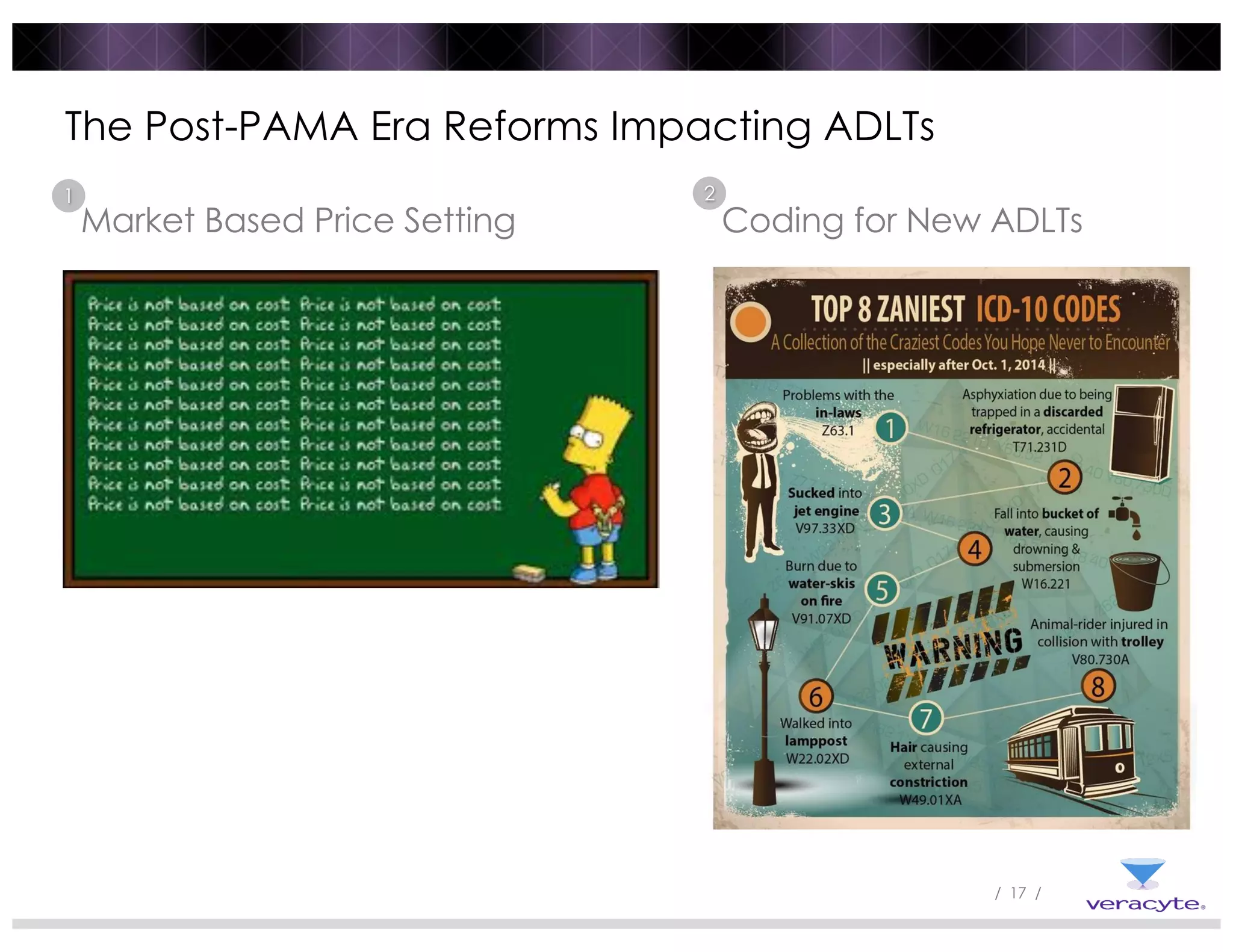
The Post-PAMA Era Reforms Impacting ADLTs
Market Based Price Setting Coding for New ADLTs
1 2
/ 18 /
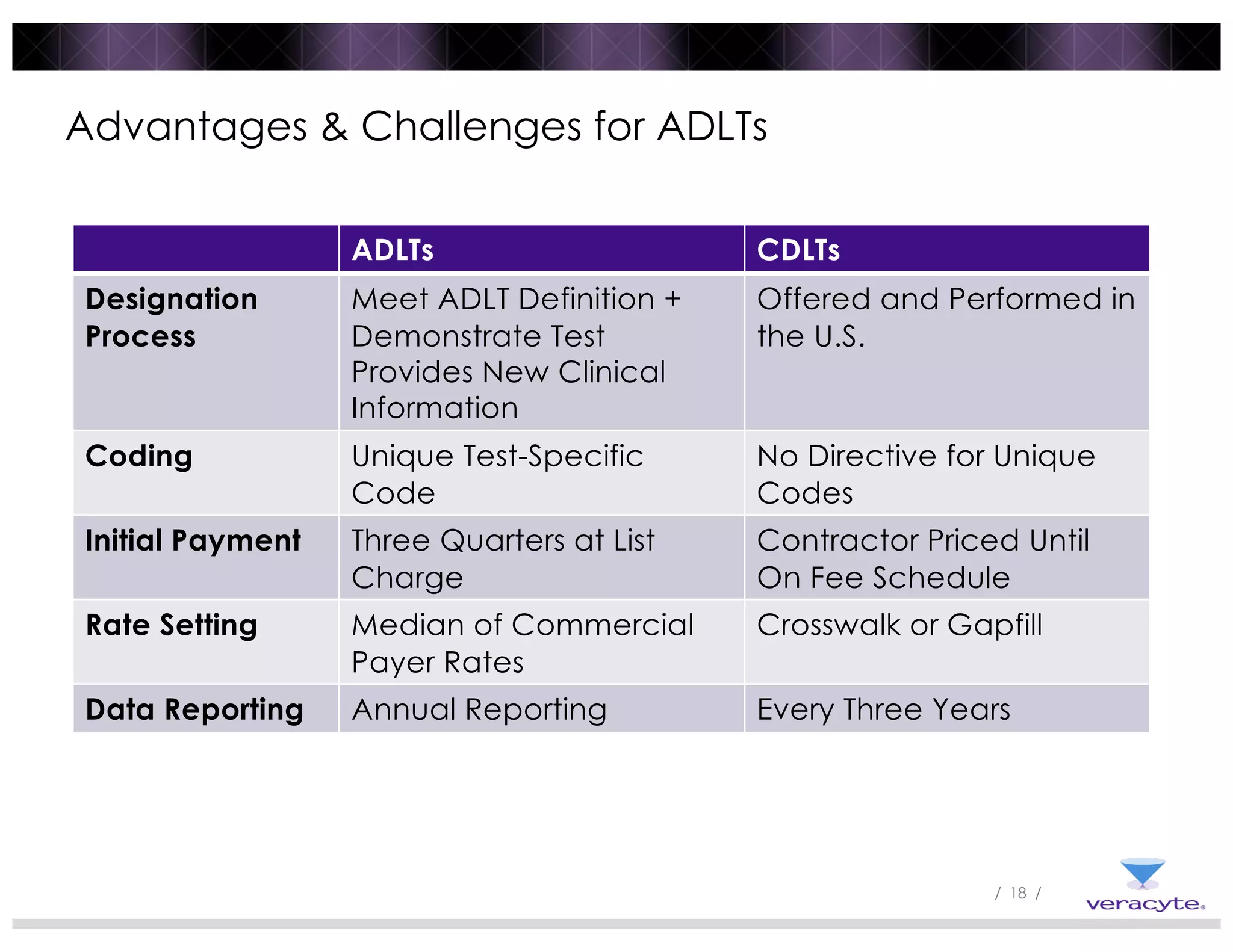
Advantages & Challenges for ADLTs
ADLTs CDLTs
Designation
Process
Meet ADLT Definition +
Demonstrate Test
Provides New Clinical
Information
Offered and Performed in
the U.S.
Coding Unique Test-Specific
Code
No Directive for Unique
Codes
Initial Payment Three Quarters at List
Charge
Contractor Priced Until
On Fee Schedule
Rate Setting Median of Commercial
Payer Rates
Crosswalk or Gapfill
Data Reporting Annual Reporting Every Three Years
/ 19 /
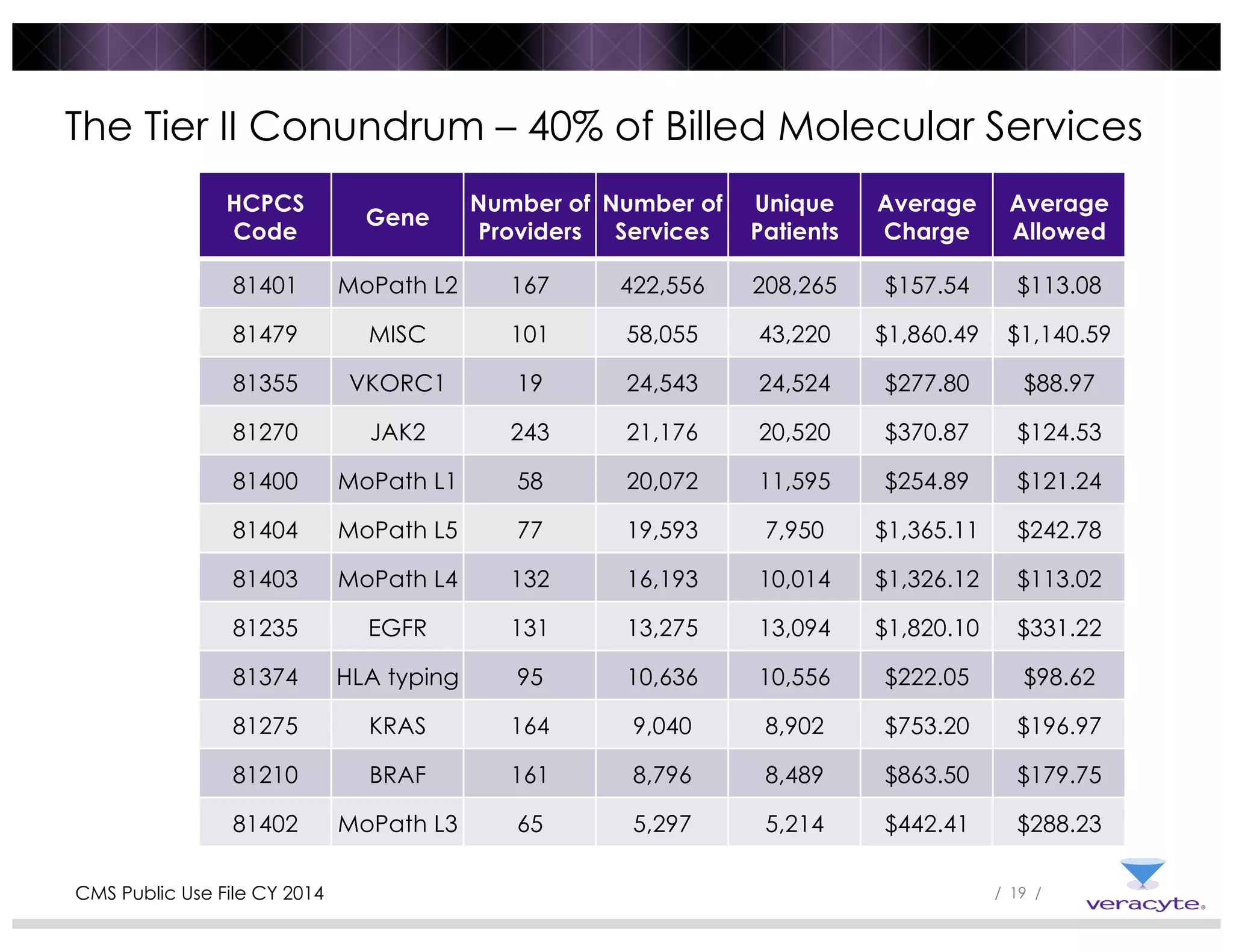
The Tier II Conundrum – 40% of Billed Molecular Services
CMS Public Use File CY 2014
HCPCS
Code
Gene
Number of
Providers
Number of
Services
Unique
Patients
Average
Charge
Average
Allowed
81401 MoPath L2 167 422,556 208,265 $157.54 $113.08
81479 MISC 101 58,055 43,220 $1,860.49 $1,140.59
81355 VKORC1 19 24,543 24,524 $277.80 $88.97
81270 JAK2 243 21,176 20,520 $370.87 $124.53
81400 MoPath L1 58 20,072 11,595 $254.89 $121.24
81404 MoPath L5 77 19,593 7,950 $1,365.11 $242.78
81403 MoPath L4 132 16,193 10,014 $1,326.12 $113.02
81235 EGFR 131 13,275 13,094 $1,820.10 $331.22
81374 HLA typing 95 10,636 10,556 $222.05 $98.62
81275 KRAS 164 9,040 8,902 $753.20 $196.97
81210 BRAF 161 8,796 8,489 $863.50 $179.75
81402 MoPath L3 65 5,297 5,214 $442.41 $288.23
/ 20 /
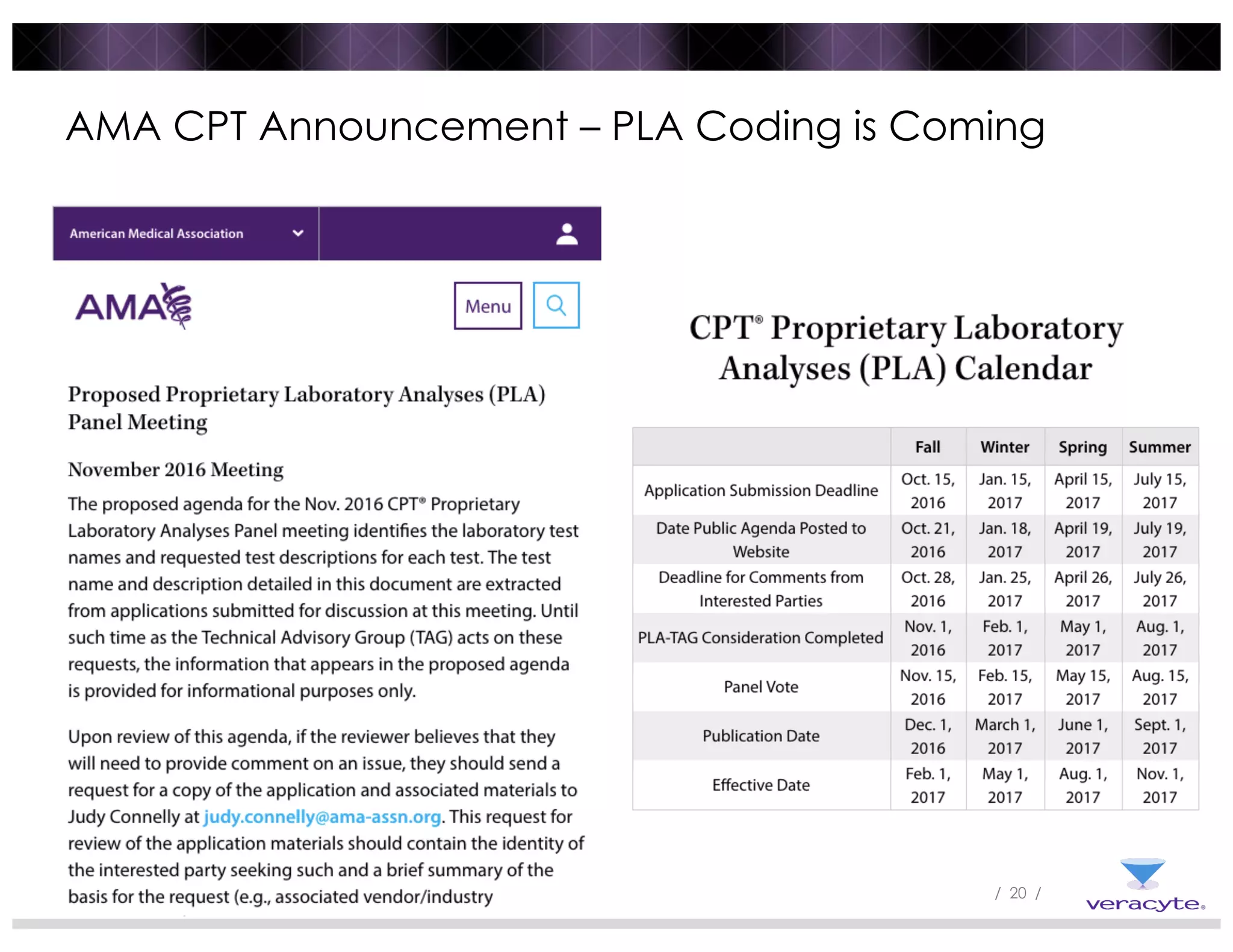
AMA CPT Announcement – PLA Coding is Coming
May 13, 2015
/ 21 /
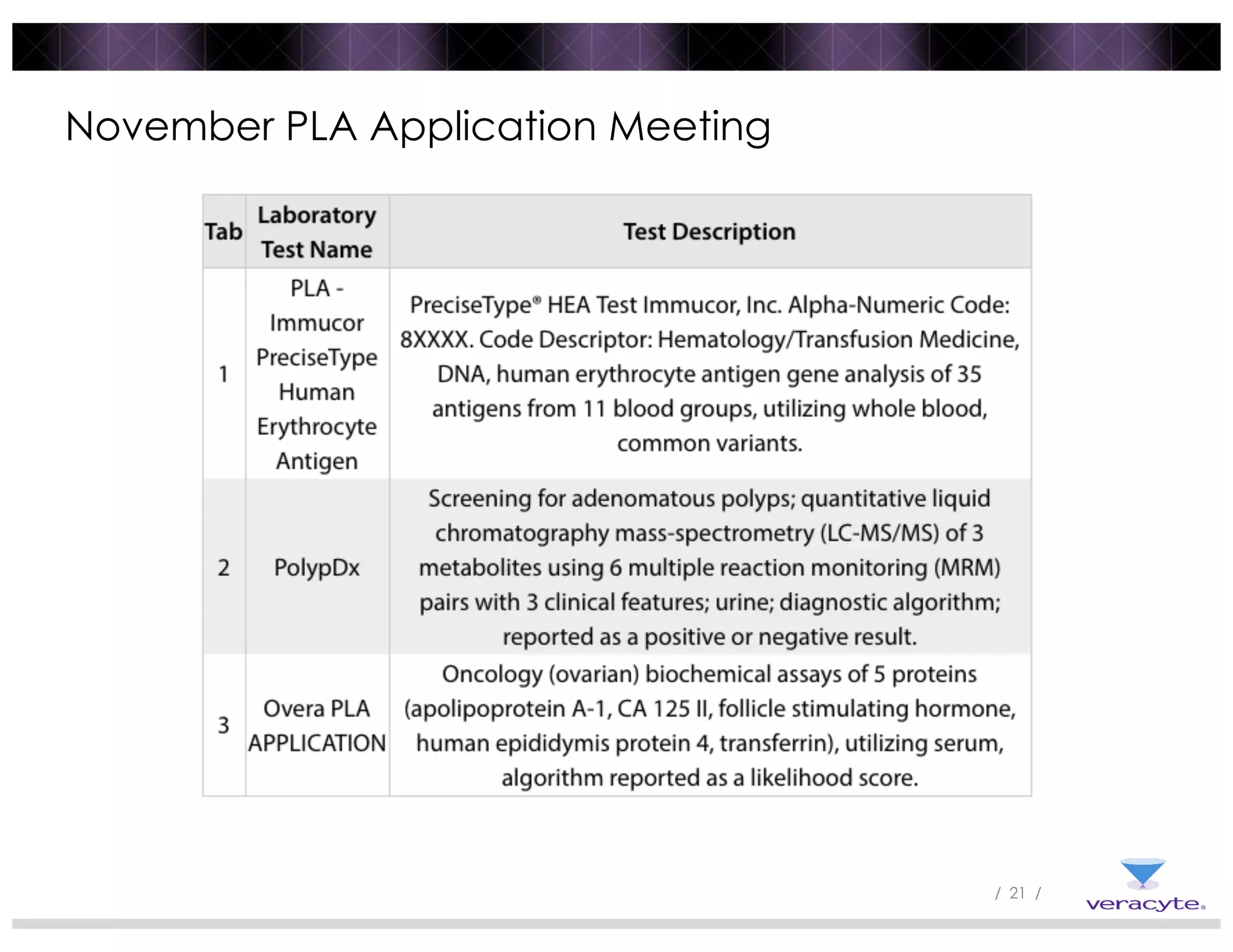
November PLA Application Meeting
/ 22 /
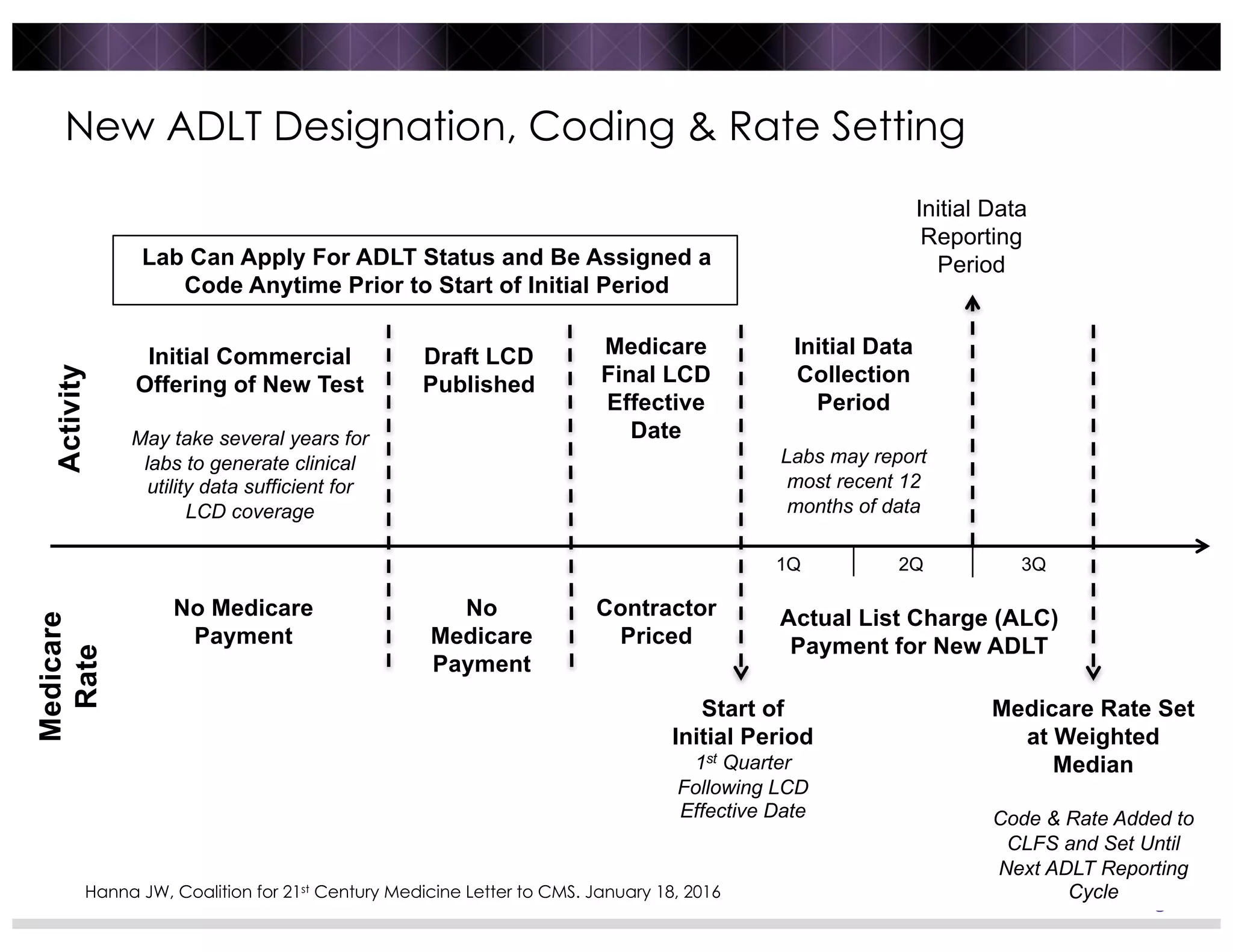
1Q 3Q2Q
Start of
Initial Period
1st Quarter
Following LCD
Effective Date
Initial Data
Reporting
Period
Medicare
Final LCD
Effective
Date
Initial Commercial
Offering of New Test
May take several years for
labs to generate clinical
utility data sufficient for
LCD coverage
Draft LCD
Published
Activity
Medicare
Rate
No Medicare
Payment
No
Medicare
Payment
Contractor
Priced
Initial Data
Collection
Period
Labs may report
most recent 12
months of data
Actual List Charge (ALC)
Payment for New ADLT
Medicare Rate Set
at Weighted
Median
Code & Rate Added to
CLFS and Set Until
Next ADLT Reporting
Cycle
Lab Can Apply For ADLT Status and Be Assigned a
Code Anytime Prior to Start of Initial Period
Hanna JW, Coalition for 21st Century Medicine Letter to CMS. January 18, 2016
New ADLT Designation, Coding & Rate Setting
/ 23 /
The Gapfill Challenge
Code
Test/
Laboratory
2015
Contractor
Allowable
Preliminary
Gapfill NLA
Final Gapfill
NLA
Change
81538
VeriStrat
Biodesix
$2,112.00 $283.00 $1,341.87 -36.46%
81525
OncotypeDx
Colon
Genomic
Health
$3,104.00 $848.86 $2,062.10 -33.57%
81595
Allomap
CareDx
$2,821.00 $732.12 $1,920.93 -31.91%
81540
CancerTypeID
Biotheranostics
$2,900.00 $1,522.17 $2,355.46 -18.78%
81545
Afirma
Veractye
$3,200.00 $2,240.16 $2,864.45 -10.49%
/ 24 /
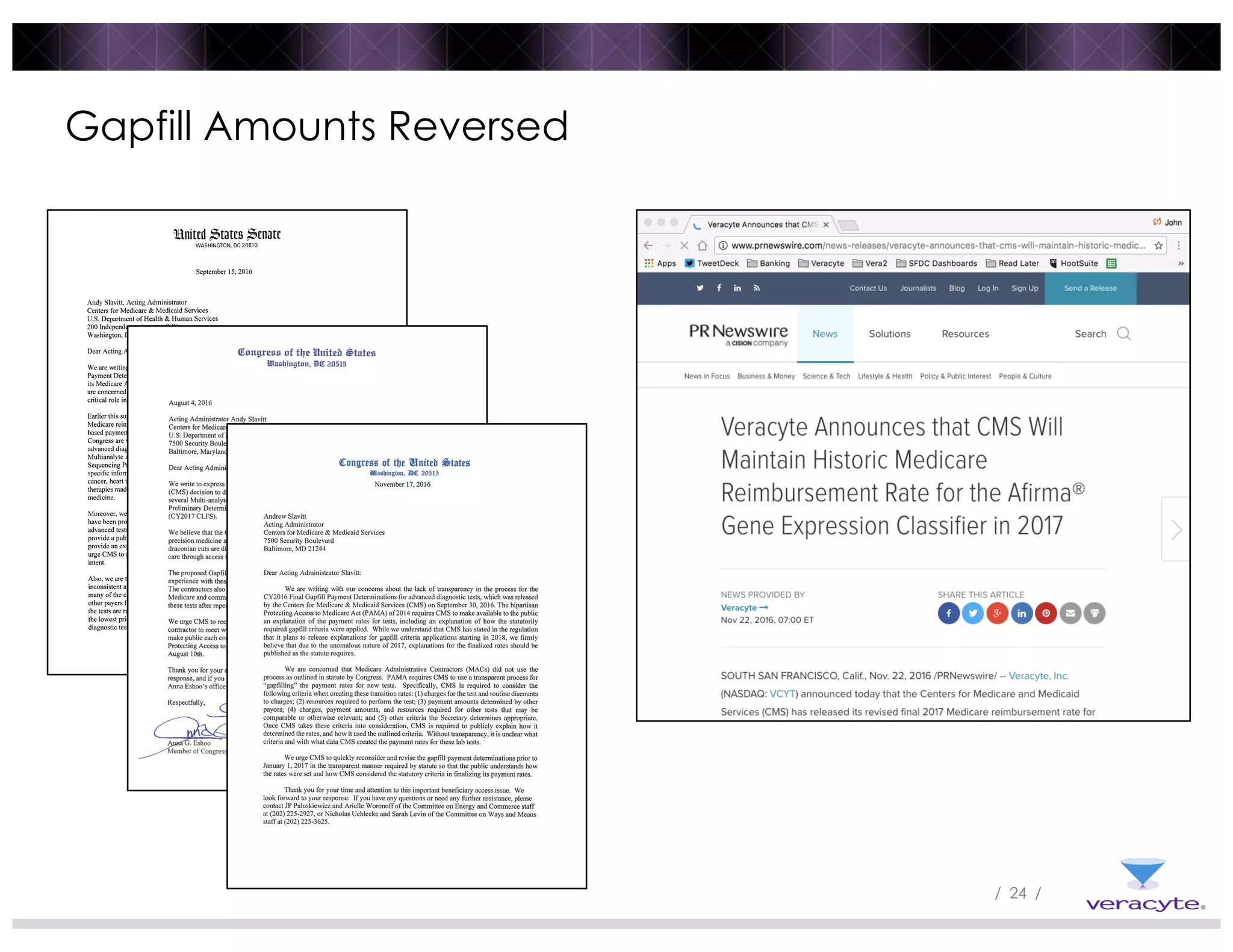
Gapfill Amounts Reversed
/ 25 /
New Clinical Information – The Curse of Rule Making
“The test must provide new clinical diagnostic information
that cannot be obtained from any other existing test on the
market or combination of tests.”
“Based on our view that ADLTs that meet the criterion are
innovative tests that are new and different from any prior
test already on the market and provide the individual
patient with valuable genetic information to predict the
trajectory of the patient’s disease process or response to
treatment of the patient’s disease that could not be gained
form another test or [combination of] tests on the market.”
CMS PAMA Final Rule 42 CFR 414 [CMS-1621-F]
/ 26 /
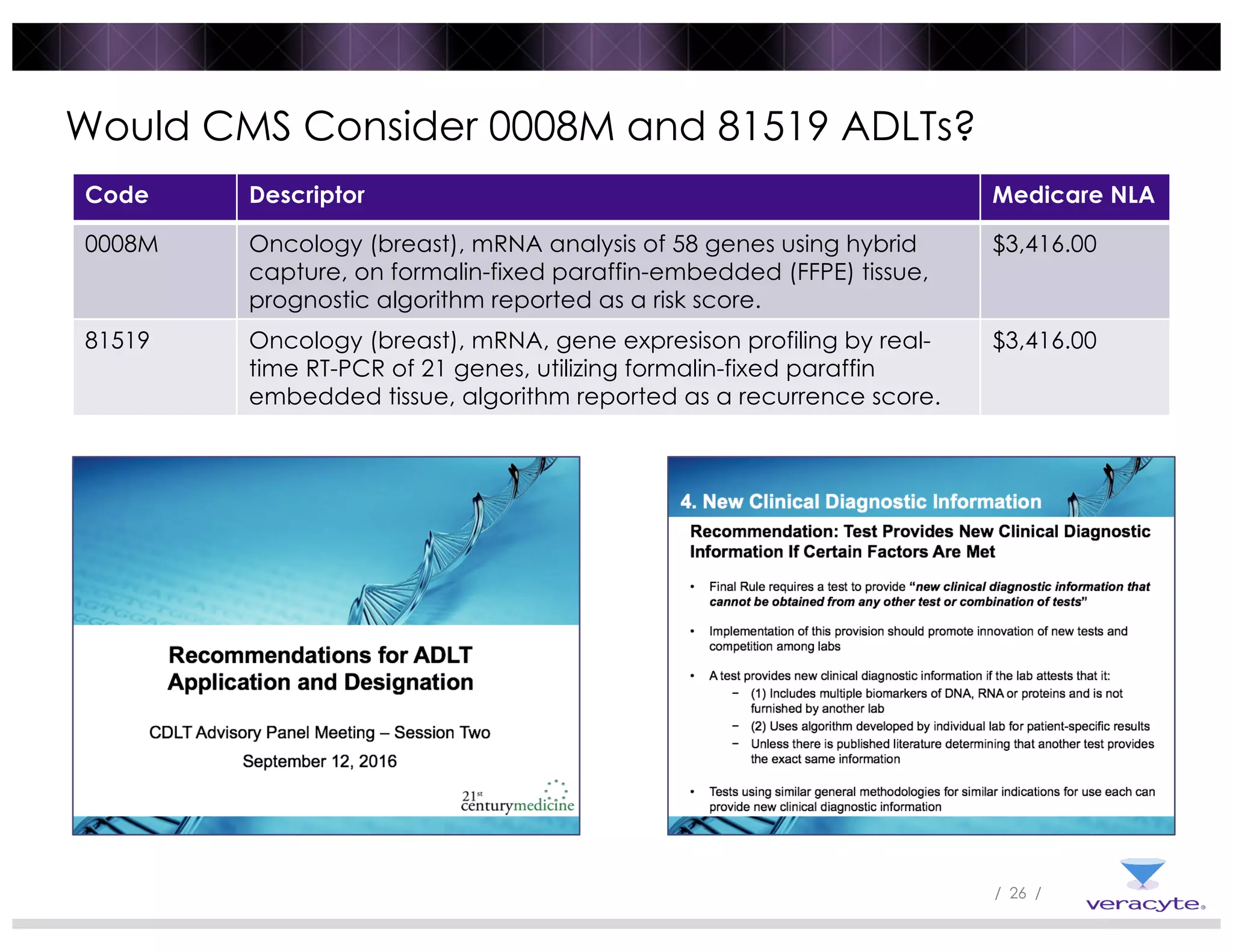
Would CMS Consider 0008M and 81519 ADLTs?
Code Descriptor Medicare NLA
0008M Oncology (breast), mRNA analysis of 58 genes using hybrid
capture, on formalin-fixed paraffin-embedded (FFPE) tissue,
prognostic algorithm reported as a risk score.
$3,416.00
81519 Oncology (breast), mRNA, gene expresison profiling by real-
time RT-PCR of 21 genes, utilizing formalin-fixed paraffin
embedded tissue, algorithm reported as a recurrence score.
$3,416.00
/ 27 /
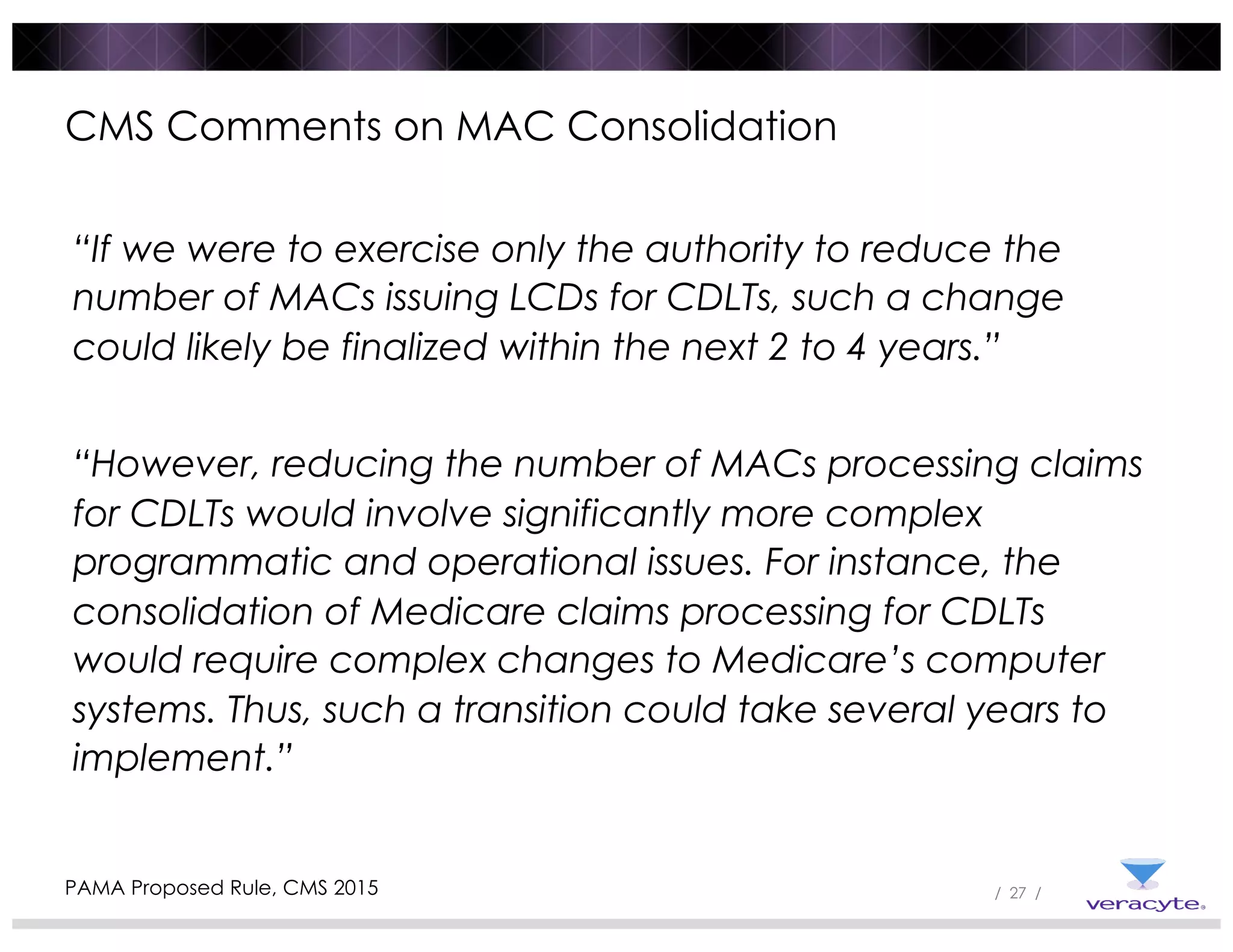
CMS Comments on MAC Consolidation
“If we were to exercise only the authority to reduce the
number of MACs issuing LCDs for CDLTs, such a change
could likely be finalized within the next 2 to 4 years.”
“However, reducing the number of MACs processing claims
for CDLTs would involve significantly more complex
programmatic and operational issues. For instance, the
consolidation of Medicare claims processing for CDLTs
would require complex changes to Medicare’s computer
systems. Thus, such a transition could take several years to
implement.”
PAMA Proposed Rule, CMS 2015
/ 28 /
Type of Service Percent of Codes
Subject to LCD 2011
Medical Procedures 71%
E&M Services 52%
Imaging 47%
Drugs 42%
Diagnostic Tests 31%
Other (<10% of Services) 74%
In 2003 MMA Called for Greater Consistency
Levinson DR. OEI-01-11-00500 January 2014
/ 29 /
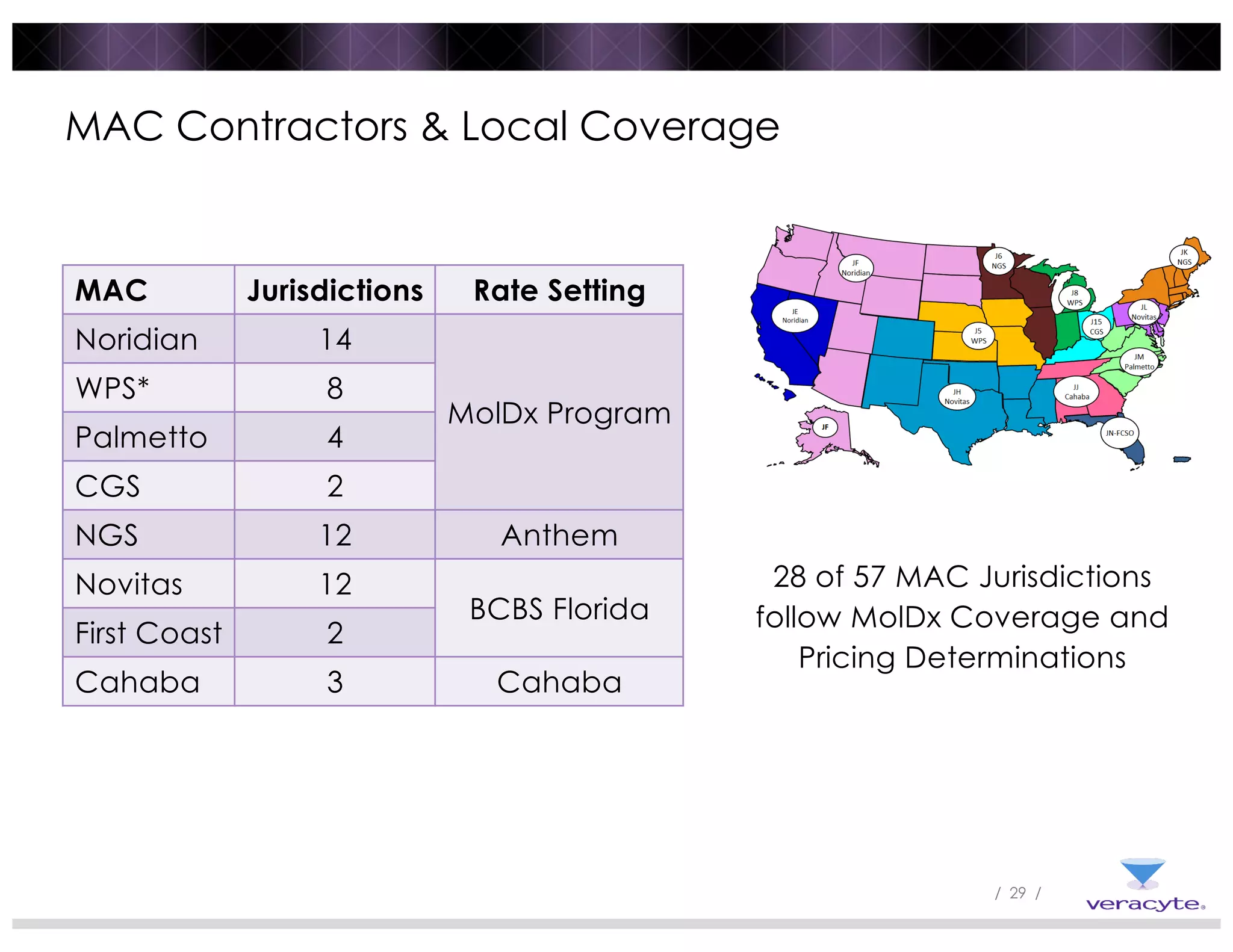
28 of 57 MAC Jurisdictions
follow MolDx Coverage and
Pricing Determinations
MAC Contractors & Local Coverage
MAC Jurisdictions Rate Setting
Noridian 14
MolDx Program
WPS* 8
Palmetto 4
CGS 2
NGS 12 Anthem
Novitas 12
BCBS Florida
First Coast 2
Cahaba 3 Cahaba
/ 30 /
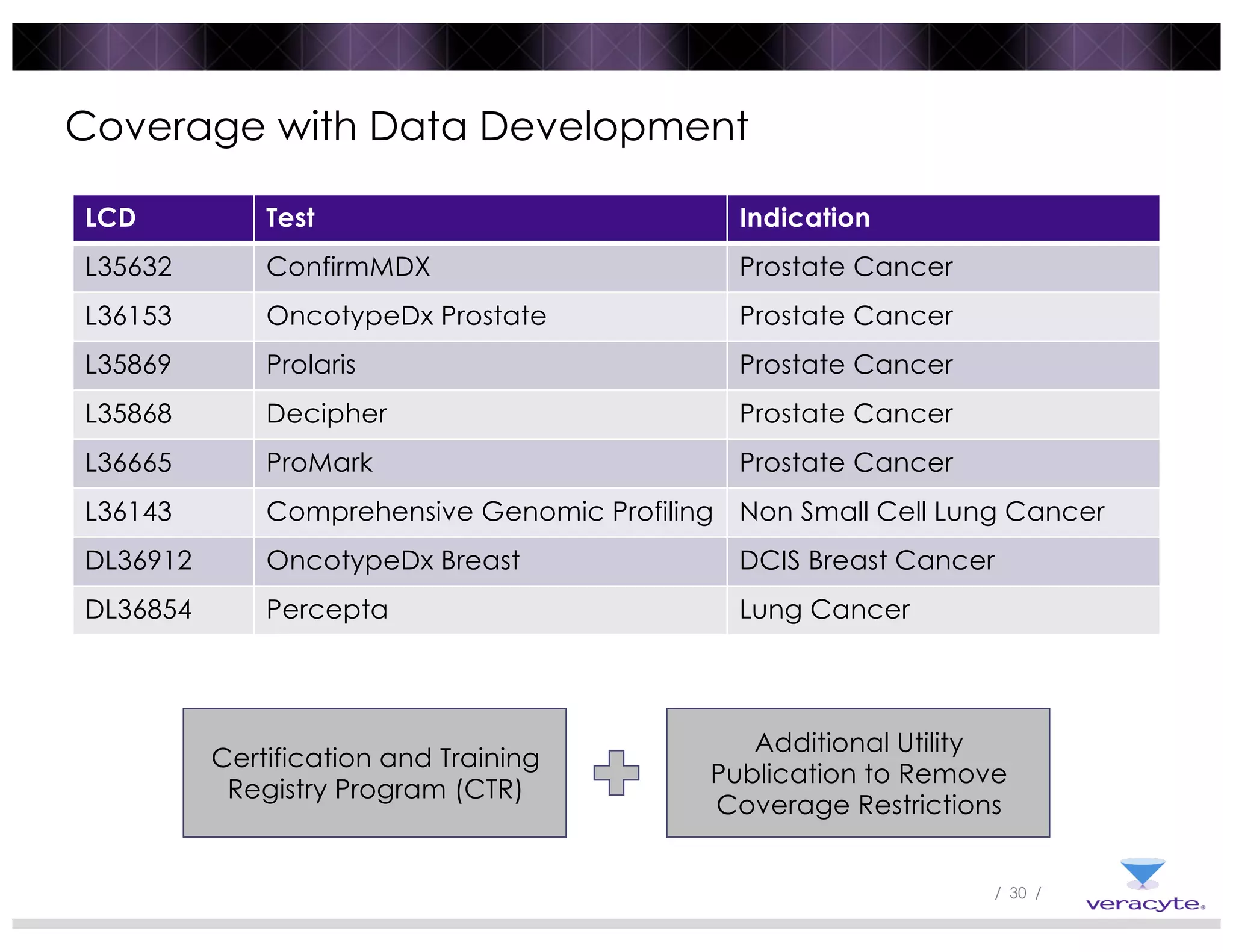
Coverage with Data Development
LCD Test Indication
L35632 ConfirmMDX Prostate Cancer
L36153 OncotypeDx Prostate Prostate Cancer
L35869 Prolaris Prostate Cancer
L35868 Decipher Prostate Cancer
L36665 ProMark Prostate Cancer
L36143 Comprehensive Genomic Profiling Non Small Cell Lung Cancer
DL36912 OncotypeDx Breast DCIS Breast Cancer
DL36854 Percepta Lung Cancer
Certification and Training
Registry Program (CTR)
Additional Utility
Publication to Remove
Coverage Restrictions
/ 31 /
FDA & CMS Parallel Review
/ 32 /
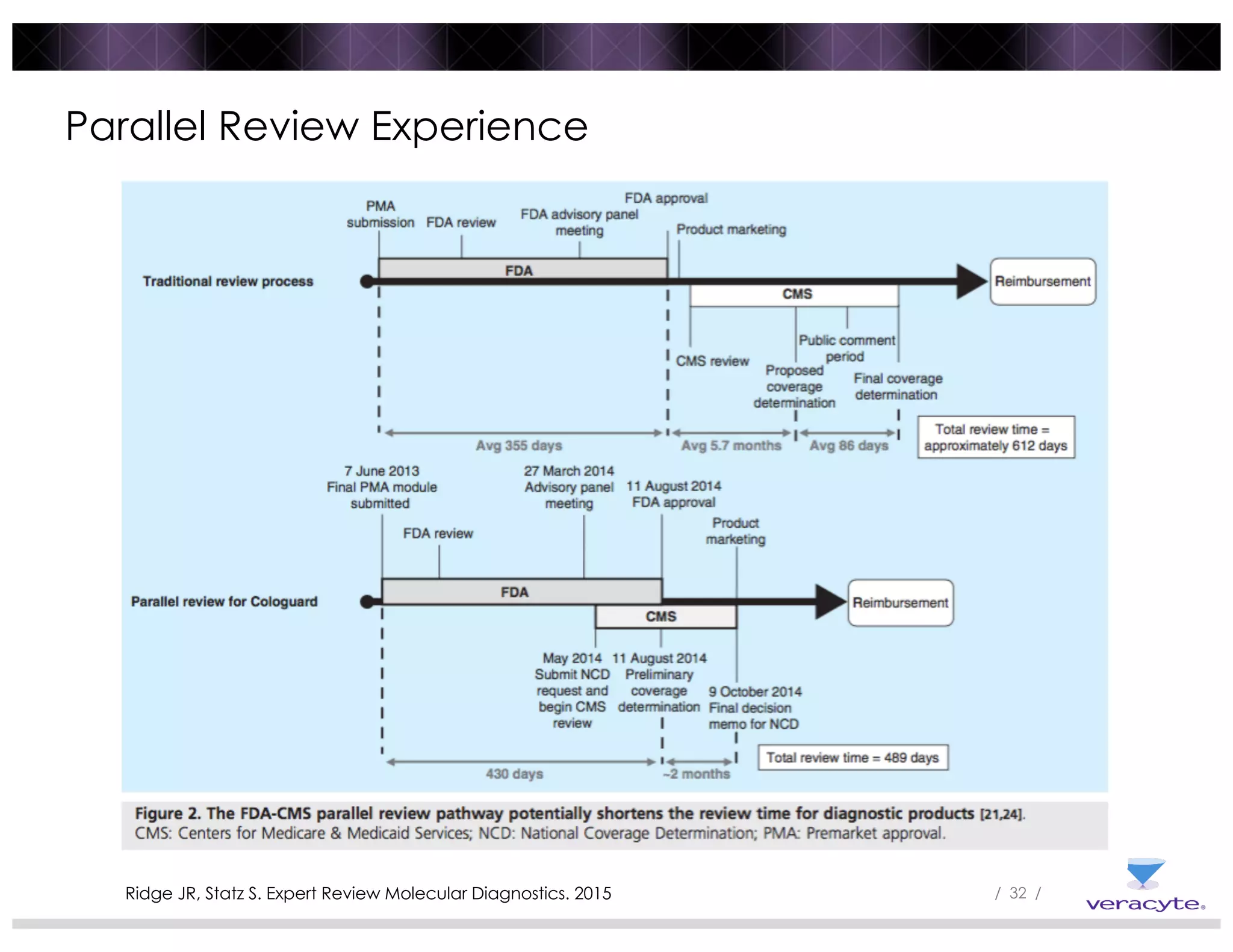
Parallel Review Experience
Ridge JR, Statz S. Expert Review Molecular Diagnostics. 2015
/ 33 /
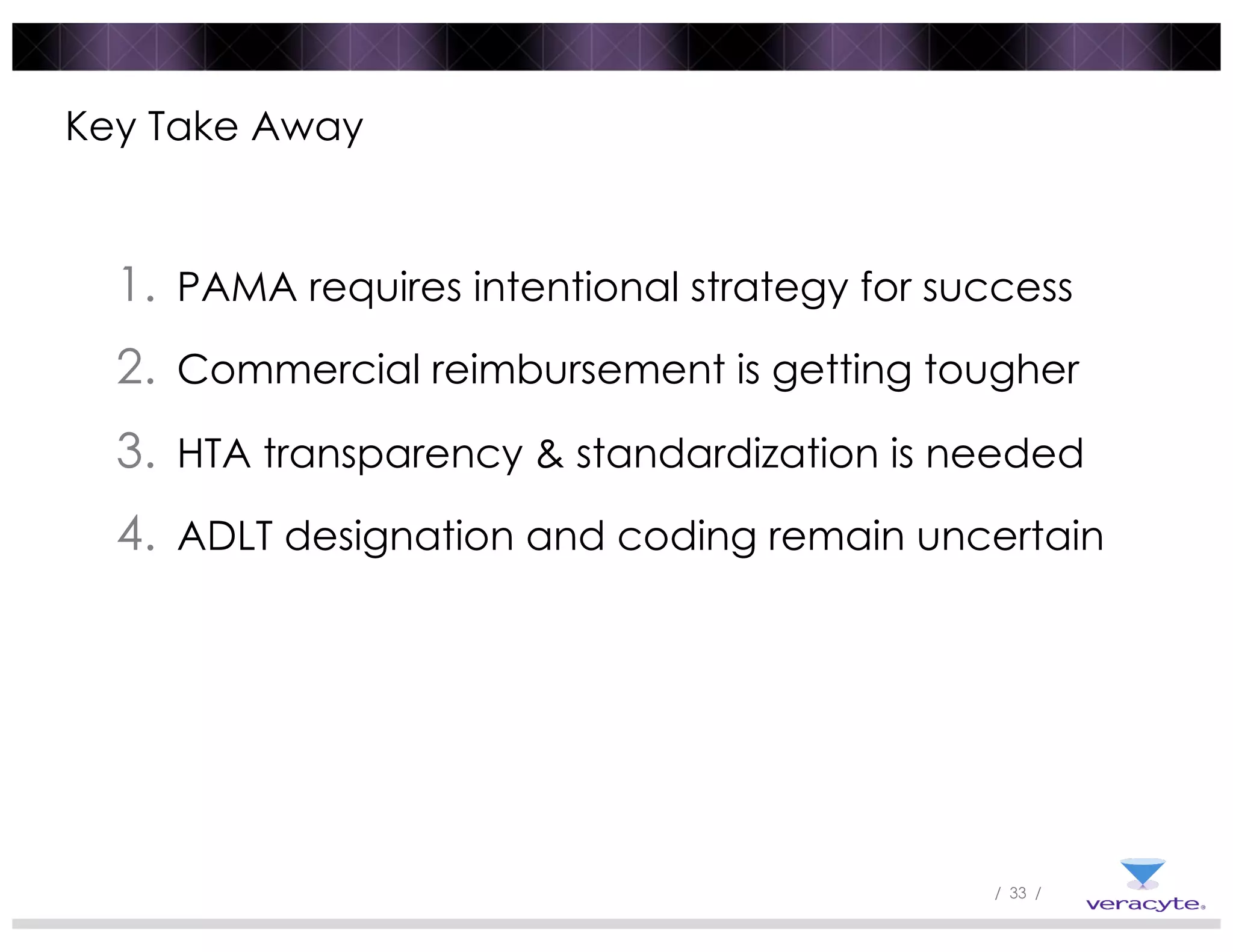
1. PAMA requires intentional strategy for success
2. Commercial reimbursement is getting tougher
3. HTA transparency & standardization is needed
4. ADLT designation and coding remain uncertain
Key Take Away
/ 34 // 34 /
Thank you!

Advanced Diagnostics in the Post-PAMA Era

  • 1.
    John W. Hanna,MBA VP Marketing Veracyte, Inc. john@veracyte.com 650.243.6362 Advanced Diagnostics in a Post-PAMA Era
  • 2.
    / 2 / Veracyteis a Recognized Industry Leader
  • 3.
    / 3 / AboutVeracyte, Inc. • Founded in 2008 to address diagnostic ambiguity • HQ and CLIA Molecular Lab in South San Francisco, CA • Over 200 employees • Three commercial products
  • 4.
    / 4 / Overtreatmentis a Global Epidemic
  • 5.
    / 5 //5 / Commercial Payer Trends
  • 6.
    / 6 / Trendsto Watch in Diagnostics Reimbursement Utilization Management Payer Consolidation Narrowing Networks Reference Pricing Association of Reference Pricing for Diagnostic Laboratory Testing With Changes in Patient Choices, Prices, and Total Spending for Diagnostic Tests James C. Robinson, PhD; Christopher Whaley, BA; Timothy T. Brown, PhD IMPORTANCE Prices for laboratory and other clinical services vary widely. Employers and insurers increasingly are adopting “reference pricing” policies to create incentives for patients to select lower-priced facilities. OBJECTIVE To measure the association between implementation of reference pricing and patient choice of laboratory, test prices, patient out-of-pocket spending, and insurer spending. DESIGN, SETTING, AND PARTICIPANTS We conducted an observational study of changes in laboratory pricing and selection by employees of a large national grocery firm (n = 30 415) before and after the firm implemented a reference pricing policy for laboratory services and compared the findings with changes over the same period for policy holders of a large national insurer that did not implement reference pricing (n = 181 831). The grocery firm established a maximum payment limit at the 60th percentile of the distribution of prices for each laboratory test in each region. Employees were provided with data on prices at all laboratories through a mobile digital platform. Patients selecting a laboratory that charged more than the payment limit were required to pay the full difference themselves. A total of 2.13 million claims were analyzed for 285 types of in vitro diagnostic tests between 2010 and 2013. MAIN OUTCOMES AND MEASURES Patient choice of laboratory, price paid per test, patient out-of-pocket costs, and employer spending. RESULTS Compared with trends in prices paid by insurance policy holders not subject to reference pricing, and after adjusting for characteristics of tests and patients, implementation of reference pricing was associated with a 31.9% reduction (95% CI, 20.6%-41.6%) in average price paid per test by the third year of the program. In these 3 years, total spending on Invited Commentary Research Original Investigation 1 2 3 4
  • 7.
    / 7 / IncreasingMolecular Diagnostics Spend UnitedHealth Center for Health Reform & Modernization, 2012
  • 8.
    / 8 / PayersWill Likely Use Cost Containment Strategies Similar to Specialty Rx 38% 28% 68% 61% 70% 82% 89% 0% 10% 20% 30% 40% 50% 60% 70% 80% 90% 100% Specialty drug carve out Specialty pharmacy dispensing program Step Therapies Tight Limits on the number of units administered at a single time Utilization Management Programs Prior Authorization Mail Order All Large Firms (200 or More Workers) Kaiser/HRET Survey of Employer-Sponsored Health Benefits, 2016.
  • 9.
    / 9 / DOJMoves to Block Big Insurer Mergers
  • 10.
    / 10 / TheNew Era of Mega-Plans Ladika, S. The New Era of Mega-Plans. Managed Care. September 2015
  • 11.
    / 11 / •Nearly 2,000 insurance companies in the U.S. • Yet medical policy decision making is highly concentrated Health Technology Assessment Organizations
  • 12.
    / 12 / WhoConducts HTA’s? Segment HTA Organization Payer Covered Lives Commercial eviCore, ECRI, Interqual, Milliman, Hayes United, Aetna, Cigna, Humana, Emblem, HealthNet, etc. 70 Million Blue Cross BCBS TEC, Hayes Blues Plans 100 Million Medicare AHRQ, MolDx, MAC Contractors CMS 60 Million Medicaid ICER, CTAF, etc. States Medicaid Plans 65 Million
  • 13.
    / 13 / 90%of payers made policies public 146 – 698 policies per payer 31% of policies are diagnostics & imaging Representative Set of 28 Policies 57% covered by all payers 11% were non-covered by all 87% assessed literature 80% reviewed guidelines 15% reviewed ICER studies 0% reported patient input Coverage Trends for 20 Largest Plans Chambers JD, AJMC 2016 THE AMERICAN JOURNAL OF MANAGED CARE VOL. 22, NO. 9 e323 TRENDS FROM THE FIELD I n US healthcare, multiple public and commercial payers is- sue coverage policies for medical interventions.1-3 Because payers conduct their own assessments and issue their own decisions, whether and how they cover medical interventions can vary, which, in turn, can affect patients’ access to care. Re- searchers have highlighted variation in payer coverage policies and examined decision making.4,5 Recent research has studied trends in Medicare National Coverage Determinations (NCDs) and the consistency of coverage with the reviewed evidence.6-8 Another recent study found substantial variation in how Medi- care and private payers cover medical devices.9 This study adds to the literature by examining coverage poli- cies for medical interventions issued by the top 20 US commer- cial payers. First, we examined the coverage policies issued by the largest US-based commercial payers. Second, for a representa- tive set of interventions, we compared coverage determinations across payers (ie, whether and how the payers cover the interven- tions and the types of evidence the payers reported reviewing when formulating their policies). METHODS Weidentifiedthe20largestUS-basedcommercialpayersintermsof number of covered lives.10 We searched each payer’s website to de- termine the availability of their medical benefit coverage policies. In many cases, payers provide memoranda, which describe the target patient population, any conditions on patient access to an interven- tion,and,frequently,theclinicaltrials,clinicalguidelines,andother evidence the payer reports reviewing when formulating the cover- age policy. We focused on coverage policies pertaining to the payers’ commercial line of business by excluding coverage policies pertain- ing to their Medicaid managed care or Medicare Advantage lines of business.Whenwewereunabletolocatememoranda,wecontacted the payer to confirm their unavailability. We identified all coverage policies issued by each of the 20 pay- ers (n = 7372). Included policies were current as of August 1, 2014. Mapping US Commercial Payers’ Coverage Policies for Medical Interventions James D. Chambers, PhD; Matthew D. Chenoweth, MPH; and Peter J. Neumann, ScD ABSTRACT OBJECTIVES: To examine coverage policies for medical interventions issued by the largest US commercial payers. STUDY DESIGN: Review of publicly accessible coverage policies for medical interventions. METHODS: We categorized the 20 largest commercial payers’ medical benefit coverage policies for medical technologies— current as of August 1, 2014—with respect to technology type (eg, medical devices, pharmaceuticals, surgeries). We identified the interventions most commonly subject to coverage policies and compared payer coverage determinations in terms of whether they covered the intervention and the evidence they reported reviewing. RESULTS: Eighteen payers made their coverage policies publicly available and 17 reported the evidence they reviewed in formulating policies. The types of technologies considered varied across payers, although most focused on devices and diagnostics. Of the 28 interventions most commonly subject to coverage policies, the coverage of 9 varied (ie, some payers covered the intervention and others did not). On average, payers reported reviewing clinical studies in 87% of coverage policies (range = 25%-100%). Two payers did not report reviewing systematic reviews or meta-analyses in any coverage policies, and 9 reported reviewing such evidence in at least half of their policies. Fourteen payers reported reviewing cost-effectiveness analyses at least some of the time, with frequency ranging from 8% to 43%. Commercial payers’ coverage decisions did not appear to reflect direct input from patients or patient advocates, at least as stated in published coverage policies. CONCLUSIONS: Coverage of medical interventions varies across US private payers. Payers often report reviewing different evidence when formulating coverage policies, but do not report considering input directly from patients in evidence assessments. Am J Manag Care. 2016;22(9):e323-e328
  • 14.
  • 15.
    / 15 / LabBenefit Management Programs & Reference Pricing Association of Reference Pricing for Diagnostic Laboratory Testing With Changes in Patient Choices, Prices, and Total Spending for Diagnostic Tests James C. Robinson, PhD; Christopher Whaley, BA; Timothy T. Brown, PhD IMPORTANCE Prices for laboratory and other clinical services vary widely. Employers and insurers increasingly are adopting “reference pricing” policies to create incentives for patients to select lower-priced facilities. OBJECTIVE To measure the association between implementation of reference pricing and patient choice of laboratory, test prices, patient out-of-pocket spending, and insurer spending. DESIGN, SETTING, AND PARTICIPANTS We conducted an observational study of changes in laboratory pricing and selection by employees of a large national grocery firm (n = 30 415) before and after the firm implemented a reference pricing policy for laboratory services and compared the findings with changes over the same period for policy holders of a large national insurer that did not implement reference pricing (n = 181 831). The grocery firm established a maximum payment limit at the 60th percentile of the distribution of prices for each laboratory test in each region. Employees were provided with data on prices at all laboratories through a mobile digital platform. Patients selecting a laboratory that charged more than the payment limit were required to pay the full difference themselves. A total of 2.13 million claims were analyzed for 285 types of in vitro diagnostic tests between 2010 and 2013. MAIN OUTCOMES AND MEASURES Patient choice of laboratory, price paid per test, patient out-of-pocket costs, and employer spending. RESULTS Compared with trends in prices paid by insurance policy holders not subject to reference pricing, and after adjusting for characteristics of tests and patients, implementation of reference pricing was associated with a 31.9% reduction (95% CI, 20.6%-41.6%) in average price paid per test by the third year of the program. In these 3 years, total spending on laboratory tests declined by $2.57 million (95% CI, $1.59-$3.35 million). Out-of-pocket costs by patients declined by $1.05 million (95% CI, $0.73-$1.37 million). Spending by the employer declined by $1.70 million (95% CI, $0.92-$2.48 million). CONCLUSIONS AND RELEVANCE When combined with access to price information, reference pricing was associated with patient choice of lower-cost laboratories and reductions in prices and payments by both employer and employees. Invited Commentary Research Original Investigation
  • 16.
    / 16 //16 / PAMA & Clinical Lab Fee Schedule Reform
  • 17.
    / 17 / ThePost-PAMA Era Reforms Impacting ADLTs Market Based Price Setting Coding for New ADLTs 1 2
  • 18.
    / 18 / Advantages& Challenges for ADLTs ADLTs CDLTs Designation Process Meet ADLT Definition + Demonstrate Test Provides New Clinical Information Offered and Performed in the U.S. Coding Unique Test-Specific Code No Directive for Unique Codes Initial Payment Three Quarters at List Charge Contractor Priced Until On Fee Schedule Rate Setting Median of Commercial Payer Rates Crosswalk or Gapfill Data Reporting Annual Reporting Every Three Years
  • 19.
    / 19 / TheTier II Conundrum – 40% of Billed Molecular Services CMS Public Use File CY 2014 HCPCS Code Gene Number of Providers Number of Services Unique Patients Average Charge Average Allowed 81401 MoPath L2 167 422,556 208,265 $157.54 $113.08 81479 MISC 101 58,055 43,220 $1,860.49 $1,140.59 81355 VKORC1 19 24,543 24,524 $277.80 $88.97 81270 JAK2 243 21,176 20,520 $370.87 $124.53 81400 MoPath L1 58 20,072 11,595 $254.89 $121.24 81404 MoPath L5 77 19,593 7,950 $1,365.11 $242.78 81403 MoPath L4 132 16,193 10,014 $1,326.12 $113.02 81235 EGFR 131 13,275 13,094 $1,820.10 $331.22 81374 HLA typing 95 10,636 10,556 $222.05 $98.62 81275 KRAS 164 9,040 8,902 $753.20 $196.97 81210 BRAF 161 8,796 8,489 $863.50 $179.75 81402 MoPath L3 65 5,297 5,214 $442.41 $288.23
  • 20.
    / 20 / AMACPT Announcement – PLA Coding is Coming May 13, 2015
  • 21.
    / 21 / NovemberPLA Application Meeting
  • 22.
    / 22 / 1Q3Q2Q Start of Initial Period 1st Quarter Following LCD Effective Date Initial Data Reporting Period Medicare Final LCD Effective Date Initial Commercial Offering of New Test May take several years for labs to generate clinical utility data sufficient for LCD coverage Draft LCD Published Activity Medicare Rate No Medicare Payment No Medicare Payment Contractor Priced Initial Data Collection Period Labs may report most recent 12 months of data Actual List Charge (ALC) Payment for New ADLT Medicare Rate Set at Weighted Median Code & Rate Added to CLFS and Set Until Next ADLT Reporting Cycle Lab Can Apply For ADLT Status and Be Assigned a Code Anytime Prior to Start of Initial Period Hanna JW, Coalition for 21st Century Medicine Letter to CMS. January 18, 2016 New ADLT Designation, Coding & Rate Setting
  • 23.
    / 23 / TheGapfill Challenge Code Test/ Laboratory 2015 Contractor Allowable Preliminary Gapfill NLA Final Gapfill NLA Change 81538 VeriStrat Biodesix $2,112.00 $283.00 $1,341.87 -36.46% 81525 OncotypeDx Colon Genomic Health $3,104.00 $848.86 $2,062.10 -33.57% 81595 Allomap CareDx $2,821.00 $732.12 $1,920.93 -31.91% 81540 CancerTypeID Biotheranostics $2,900.00 $1,522.17 $2,355.46 -18.78% 81545 Afirma Veractye $3,200.00 $2,240.16 $2,864.45 -10.49%
  • 24.
    / 24 / GapfillAmounts Reversed
  • 25.
    / 25 / NewClinical Information – The Curse of Rule Making “The test must provide new clinical diagnostic information that cannot be obtained from any other existing test on the market or combination of tests.” “Based on our view that ADLTs that meet the criterion are innovative tests that are new and different from any prior test already on the market and provide the individual patient with valuable genetic information to predict the trajectory of the patient’s disease process or response to treatment of the patient’s disease that could not be gained form another test or [combination of] tests on the market.” CMS PAMA Final Rule 42 CFR 414 [CMS-1621-F]
  • 26.
    / 26 / WouldCMS Consider 0008M and 81519 ADLTs? Code Descriptor Medicare NLA 0008M Oncology (breast), mRNA analysis of 58 genes using hybrid capture, on formalin-fixed paraffin-embedded (FFPE) tissue, prognostic algorithm reported as a risk score. $3,416.00 81519 Oncology (breast), mRNA, gene expresison profiling by real- time RT-PCR of 21 genes, utilizing formalin-fixed paraffin embedded tissue, algorithm reported as a recurrence score. $3,416.00
  • 27.
    / 27 / CMSComments on MAC Consolidation “If we were to exercise only the authority to reduce the number of MACs issuing LCDs for CDLTs, such a change could likely be finalized within the next 2 to 4 years.” “However, reducing the number of MACs processing claims for CDLTs would involve significantly more complex programmatic and operational issues. For instance, the consolidation of Medicare claims processing for CDLTs would require complex changes to Medicare’s computer systems. Thus, such a transition could take several years to implement.” PAMA Proposed Rule, CMS 2015
  • 28.
    / 28 / Typeof Service Percent of Codes Subject to LCD 2011 Medical Procedures 71% E&M Services 52% Imaging 47% Drugs 42% Diagnostic Tests 31% Other (<10% of Services) 74% In 2003 MMA Called for Greater Consistency Levinson DR. OEI-01-11-00500 January 2014
  • 29.
    / 29 / 28of 57 MAC Jurisdictions follow MolDx Coverage and Pricing Determinations MAC Contractors & Local Coverage MAC Jurisdictions Rate Setting Noridian 14 MolDx Program WPS* 8 Palmetto 4 CGS 2 NGS 12 Anthem Novitas 12 BCBS Florida First Coast 2 Cahaba 3 Cahaba
  • 30.
    / 30 / Coveragewith Data Development LCD Test Indication L35632 ConfirmMDX Prostate Cancer L36153 OncotypeDx Prostate Prostate Cancer L35869 Prolaris Prostate Cancer L35868 Decipher Prostate Cancer L36665 ProMark Prostate Cancer L36143 Comprehensive Genomic Profiling Non Small Cell Lung Cancer DL36912 OncotypeDx Breast DCIS Breast Cancer DL36854 Percepta Lung Cancer Certification and Training Registry Program (CTR) Additional Utility Publication to Remove Coverage Restrictions
  • 31.
    / 31 / FDA& CMS Parallel Review
  • 32.
    / 32 / ParallelReview Experience Ridge JR, Statz S. Expert Review Molecular Diagnostics. 2015
  • 33.
    / 33 / 1.PAMA requires intentional strategy for success 2. Commercial reimbursement is getting tougher 3. HTA transparency & standardization is needed 4. ADLT designation and coding remain uncertain Key Take Away
  • 34.
    / 34 //34 / Thank you!