Having Fun Hiking
By Practicing Safe Hiking
Presentation to Guides and Pathfinders
Cathy Walker
Ridge Meadows Outdoors Club
2014
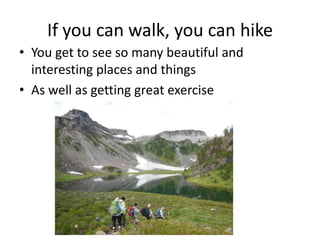
If you can walk, you can hike
• You get to see so many beautiful and
interesting places and things
• As well as getting great exercise
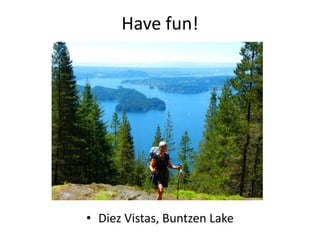
Have fun!

• Diez Vistas, Buntzen Lake
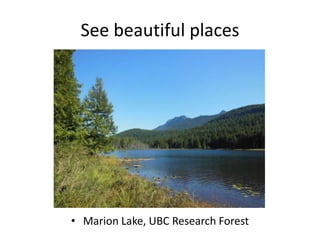
See beautiful places

• Marion Lake, UBC Research Forest
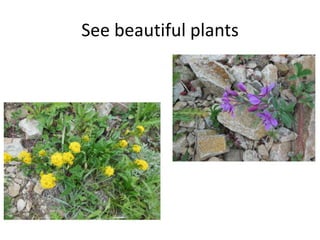
See beautiful plants
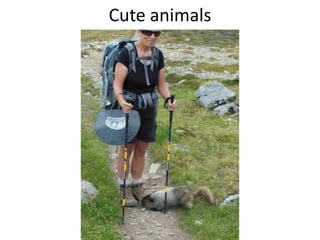
Cute animals
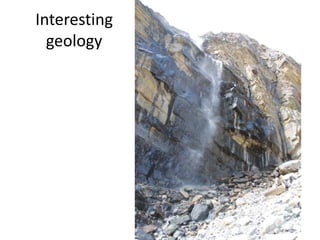
Interesting
geology
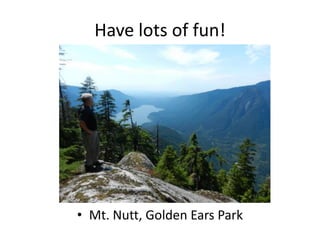
Have lots of fun!

• Mt. Nutt, Golden Ears Park
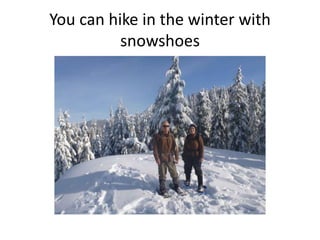
You can hike in the winter with
snowshoes
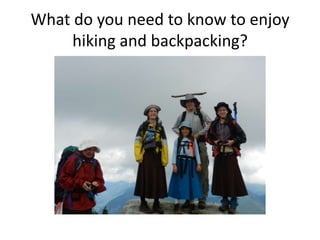
What do you need to know to enjoy
hiking and backpacking?
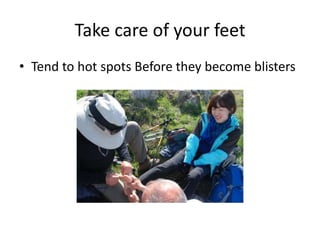
Take care of your feet
• Tend to hot spots Before they become blisters
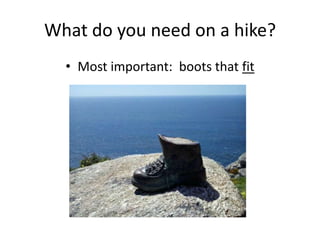
What do you need on a hike?
• Most important: boots that fit
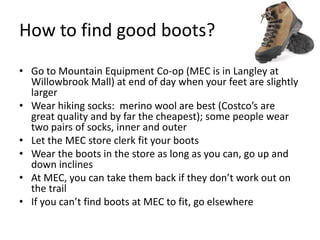
How to find good boots?
• Go to Mountain Equipment Co-op (MEC is in Langley at
Willowbrook Mall) at end of day when your feet are slightly
larger
• Wear hiking socks: merino wool are best (Costco’s are
great quality and by far the cheapest); some people wear
two pairs of socks, inner and outer
• Let the MEC store clerk fit your boots
• Wear the boots in the store as long as you can, go up and
down inclines
• At MEC, you can take them back if they don’t work out on
the trail
• If you can’t find boots at MEC to fit, go elsewhere
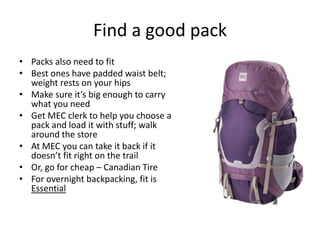
Find a good pack
• Packs also need to fit
• Best ones have padded waist belt;
weight rests on your hips
• Make sure it’s big enough to carry
what you need
• Get MEC clerk to help you choose a
pack and load it with stuff; walk
around the store
• At MEC you can take it back if it
doesn’t fit right on the trail
• Or, go for cheap – Canadian Tire
• For overnight backpacking, fit is
Essential
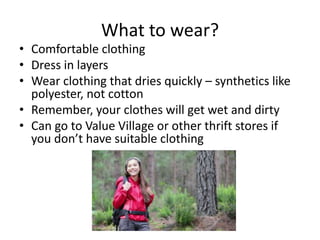
What to wear?

• Comfortable clothing
• Dress in layers
• Wear clothing that dries quickly – synthetics like
polyester, not cotton
• Remember, your clothes will get wet and dirty
• Can go to Value Village or other thrift stores if
you don’t have suitable clothing
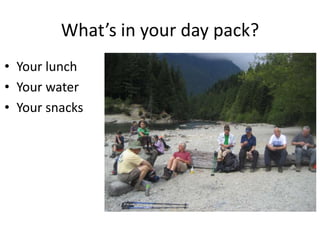
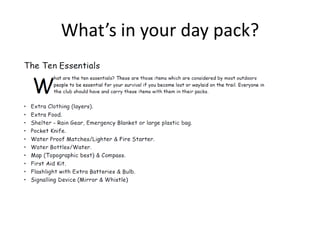
What’s in your day pack?
• Your lunch
• Your water
• Your snacks
What’s in your day pack?
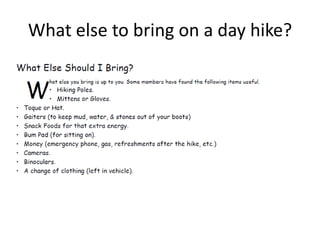
What else to bring on a day hike?
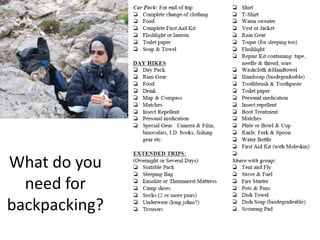
What do you
need for
backpacking?
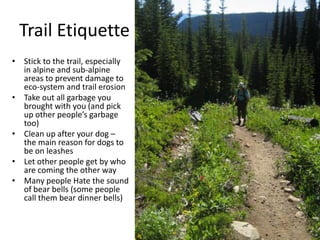
Trail Etiquette
• Stick to the trail, especially
in alpine and sub-alpine
areas to prevent damage to
eco-system and trail erosion
• Take out all garbage you
brought with you (and pick
up other people’s garbage
too)
• Clean up after your dog –
the main reason for dogs to
be on leashes
• Let other people get by who
are coming the other way
• Many people Hate the sound
of bear bells (some people
call them bear dinner bells)
Trail Safety
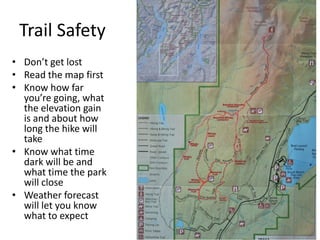
• Don’t get lost
• Read the map first
• Know how far
you’re going, what
the elevation gain
is and about how
long the hike will
take
• Know what time
dark will be and
what time the park
will close
• Weather forecast
will let you know
what to expect
Trail Safety

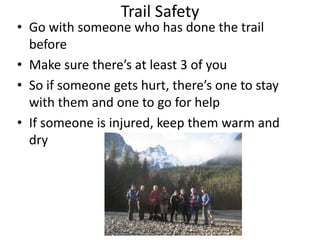
• Go with someone who has done the trail
before
• Make sure there’s at least 3 of you
• So if someone gets hurt, there’s one to stay
with them and one to go for help
• If someone is injured, keep them warm and
dry
Trail Safety
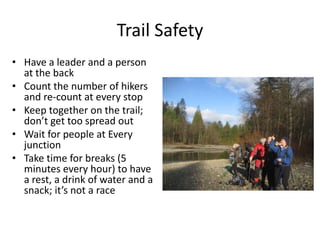
• Have a leader and a person
at the back
• Count the number of hikers
and re-count at every stop
• Keep together on the trail;
don’t get too spread out
• Wait for people at Every
junction
• Take time for breaks (5
minutes every hour) to have
a rest, a drink of water and a
snack; it’s not a race
Trail Safety – Whistle Signals
•
•
•
•
•

One whistle – Where are you?
Two whistles – Come to me
Three whistles – Emergency!
In each case, wait a minute between whistling
If it’s an emergency, keep whistling till people
find you
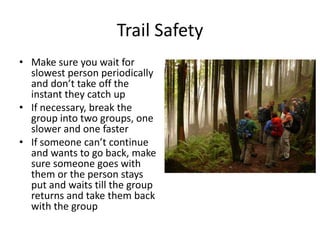
Trail Safety
• Make sure you wait for
slowest person periodically
and don’t take off the
instant they catch up
• If necessary, break the
group into two groups, one
slower and one faster
• If someone can’t continue
and wants to go back, make
sure someone goes with
them or the person stays
put and waits till the group
returns and take them back
with the group
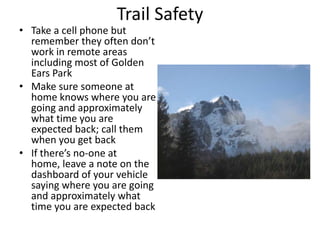
Trail Safety

• Take a cell phone but
remember they often don’t
work in remote areas
including most of Golden
Ears Park
• Make sure someone at
home knows where you are
going and approximately
what time you are
expected back; call them
when you get back
• If there’s no-one at
home, leave a note on the
dashboard of your vehicle
saying where you are going
and approximately what
time you are expected back
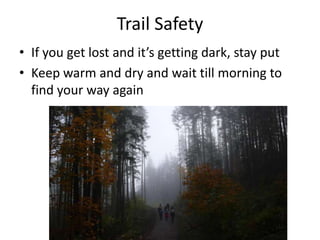
Trail Safety
• If you get lost and it’s getting dark, stay put
• Keep warm and dry and wait till morning to
find your way again
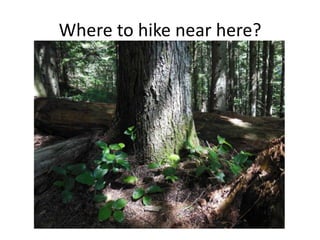
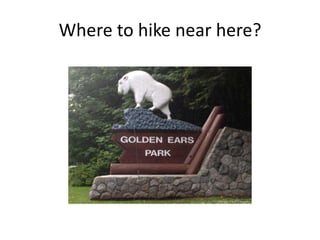
Where to hike near here?
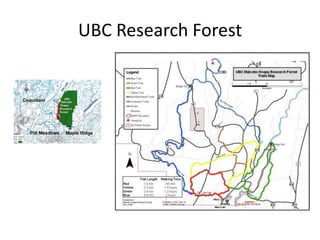
UBC Research Forest
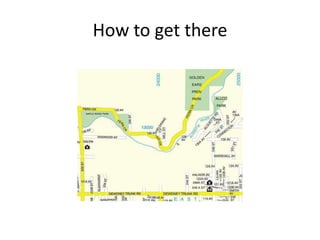
How to get there
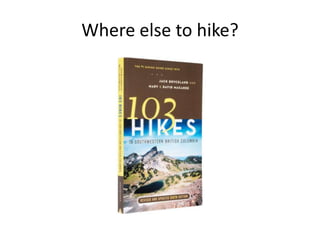
Where else to hike?
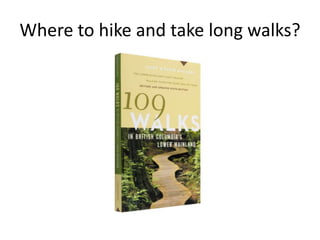
Where to hike and take long walks?
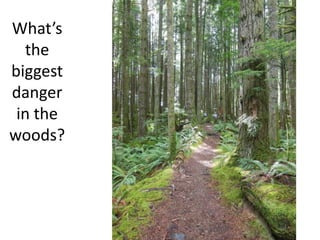
What’s
the
biggest
danger
in the
woods?
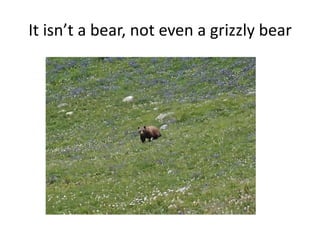
It isn’t a bear, not even a grizzly bear
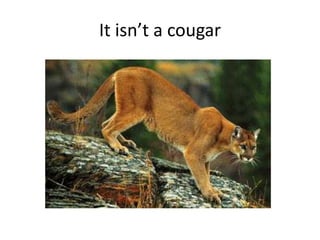
It isn’t a cougar
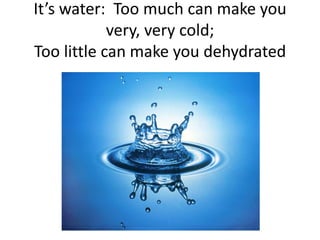
It’s water: Too much can make you
very, very cold;
Too little can make you dehydrated
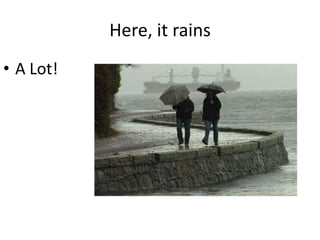
Here, it rains
• A Lot!
Two dangers
• Too much rain
• What can be caused in your body when it’s both
cold and wet?
• Hypothermia
• What can be caused in your body when there’s
far too little water and you get dehydrated?
• Heat stress or heat stroke
• Both can kill you
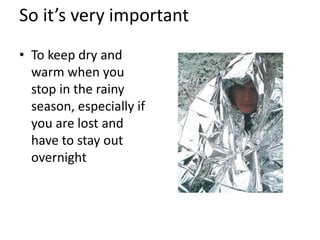
So it’s very important
• To keep dry and
warm when you
stop in the rainy
season, especially if
you are lost and
have to stay out
overnight
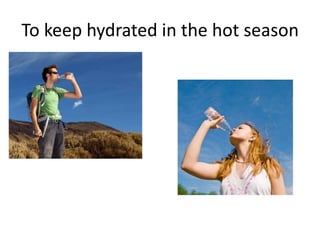
To keep hydrated in the hot season
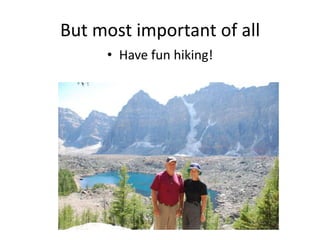
But most important of all
• Have fun hiking!
Thanks very much!
• http://www.rmoutdoorclub.ca/
• Any questions?

Having fun hiking

  • 1.
    Having Fun Hiking ByPracticing Safe Hiking Presentation to Guides and Pathfinders Cathy Walker Ridge Meadows Outdoors Club 2014
  • 2.
    If you canwalk, you can hike • You get to see so many beautiful and interesting places and things • As well as getting great exercise
  • 3.
    Have fun! • DiezVistas, Buntzen Lake
  • 4.
    See beautiful places •Marion Lake, UBC Research Forest
  • 5.
  • 6.
  • 7.
  • 8.
    Have lots offun! • Mt. Nutt, Golden Ears Park
  • 9.
    You can hikein the winter with snowshoes
  • 10.
    What do youneed to know to enjoy hiking and backpacking?
  • 11.
    Take care ofyour feet • Tend to hot spots Before they become blisters
  • 12.
    What do youneed on a hike? • Most important: boots that fit
  • 13.
    How to findgood boots? • Go to Mountain Equipment Co-op (MEC is in Langley at Willowbrook Mall) at end of day when your feet are slightly larger • Wear hiking socks: merino wool are best (Costco’s are great quality and by far the cheapest); some people wear two pairs of socks, inner and outer • Let the MEC store clerk fit your boots • Wear the boots in the store as long as you can, go up and down inclines • At MEC, you can take them back if they don’t work out on the trail • If you can’t find boots at MEC to fit, go elsewhere
  • 14.
    Find a goodpack • Packs also need to fit • Best ones have padded waist belt; weight rests on your hips • Make sure it’s big enough to carry what you need • Get MEC clerk to help you choose a pack and load it with stuff; walk around the store • At MEC you can take it back if it doesn’t fit right on the trail • Or, go for cheap – Canadian Tire • For overnight backpacking, fit is Essential
  • 15.
    What to wear? •Comfortable clothing • Dress in layers • Wear clothing that dries quickly – synthetics like polyester, not cotton • Remember, your clothes will get wet and dirty • Can go to Value Village or other thrift stores if you don’t have suitable clothing
  • 16.
    What’s in yourday pack? • Your lunch • Your water • Your snacks
  • 17.
  • 18.
    What else tobring on a day hike?
  • 19.
    What do you needfor backpacking?
  • 20.
    Trail Etiquette • Stickto the trail, especially in alpine and sub-alpine areas to prevent damage to eco-system and trail erosion • Take out all garbage you brought with you (and pick up other people’s garbage too) • Clean up after your dog – the main reason for dogs to be on leashes • Let other people get by who are coming the other way • Many people Hate the sound of bear bells (some people call them bear dinner bells)
  • 21.
    Trail Safety • Don’tget lost • Read the map first • Know how far you’re going, what the elevation gain is and about how long the hike will take • Know what time dark will be and what time the park will close • Weather forecast will let you know what to expect
  • 22.
    Trail Safety • Gowith someone who has done the trail before • Make sure there’s at least 3 of you • So if someone gets hurt, there’s one to stay with them and one to go for help • If someone is injured, keep them warm and dry
  • 23.
    Trail Safety • Havea leader and a person at the back • Count the number of hikers and re-count at every stop • Keep together on the trail; don’t get too spread out • Wait for people at Every junction • Take time for breaks (5 minutes every hour) to have a rest, a drink of water and a snack; it’s not a race
  • 24.
    Trail Safety –Whistle Signals • • • • • One whistle – Where are you? Two whistles – Come to me Three whistles – Emergency! In each case, wait a minute between whistling If it’s an emergency, keep whistling till people find you
  • 25.
    Trail Safety • Makesure you wait for slowest person periodically and don’t take off the instant they catch up • If necessary, break the group into two groups, one slower and one faster • If someone can’t continue and wants to go back, make sure someone goes with them or the person stays put and waits till the group returns and take them back with the group
  • 26.
    Trail Safety • Takea cell phone but remember they often don’t work in remote areas including most of Golden Ears Park • Make sure someone at home knows where you are going and approximately what time you are expected back; call them when you get back • If there’s no-one at home, leave a note on the dashboard of your vehicle saying where you are going and approximately what time you are expected back
  • 27.
    Trail Safety • Ifyou get lost and it’s getting dark, stay put • Keep warm and dry and wait till morning to find your way again
  • 28.
    Where to hikenear here?
  • 29.
    Where to hikenear here?
  • 30.
  • 31.
  • 32.
  • 33.
    Where to hikeand take long walks?
  • 34.
  • 35.
    It isn’t abear, not even a grizzly bear
  • 36.
  • 37.
    It’s water: Toomuch can make you very, very cold; Too little can make you dehydrated
  • 38.
  • 39.
    Two dangers • Toomuch rain • What can be caused in your body when it’s both cold and wet? • Hypothermia • What can be caused in your body when there’s far too little water and you get dehydrated? • Heat stress or heat stroke • Both can kill you
  • 40.
    So it’s veryimportant • To keep dry and warm when you stop in the rainy season, especially if you are lost and have to stay out overnight
  • 41.
    To keep hydratedin the hot season
  • 42.
    But most importantof all • Have fun hiking!
  • 43.
    Thanks very much! •http://www.rmoutdoorclub.ca/ • Any questions?