The Association Between Central Nervous-
System Active Medication Use and Fall-Related
Injury in Older Adults with Dementia
Laura A. Hart, PharmD, MS, BCPS, BCGP
Assistant Clinical Professor
UC San Diego Skaggs School of Pharmacy and
Pharmaceutical Sciences
Conflicts of Interest
• None to disclose
Acknowledgements: Collaborators
Zachary A. Marcum,1 PharmD, PhD, BCPS
Shelly L. Gray,1 PharmD, MS
Rod L. Walker,2 MS
Paul K. Crane,3 MD, MPH
Eric B. Larson,2,3 MD, MPH
1School of Pharmacy, University of Washington, Seattle, WA
2Kaiser Permanente Washington Health Research Institute,
Seattle, WA
3Division of General Internal Medicine, University of
Washington, Seattle, WA
Acknowledgements: Funding
• American College of Clinical Pharmacy Research Institute
Futures Grant Junior Investigator Award
• National Institute on Aging (U01AG006781)
Introduction
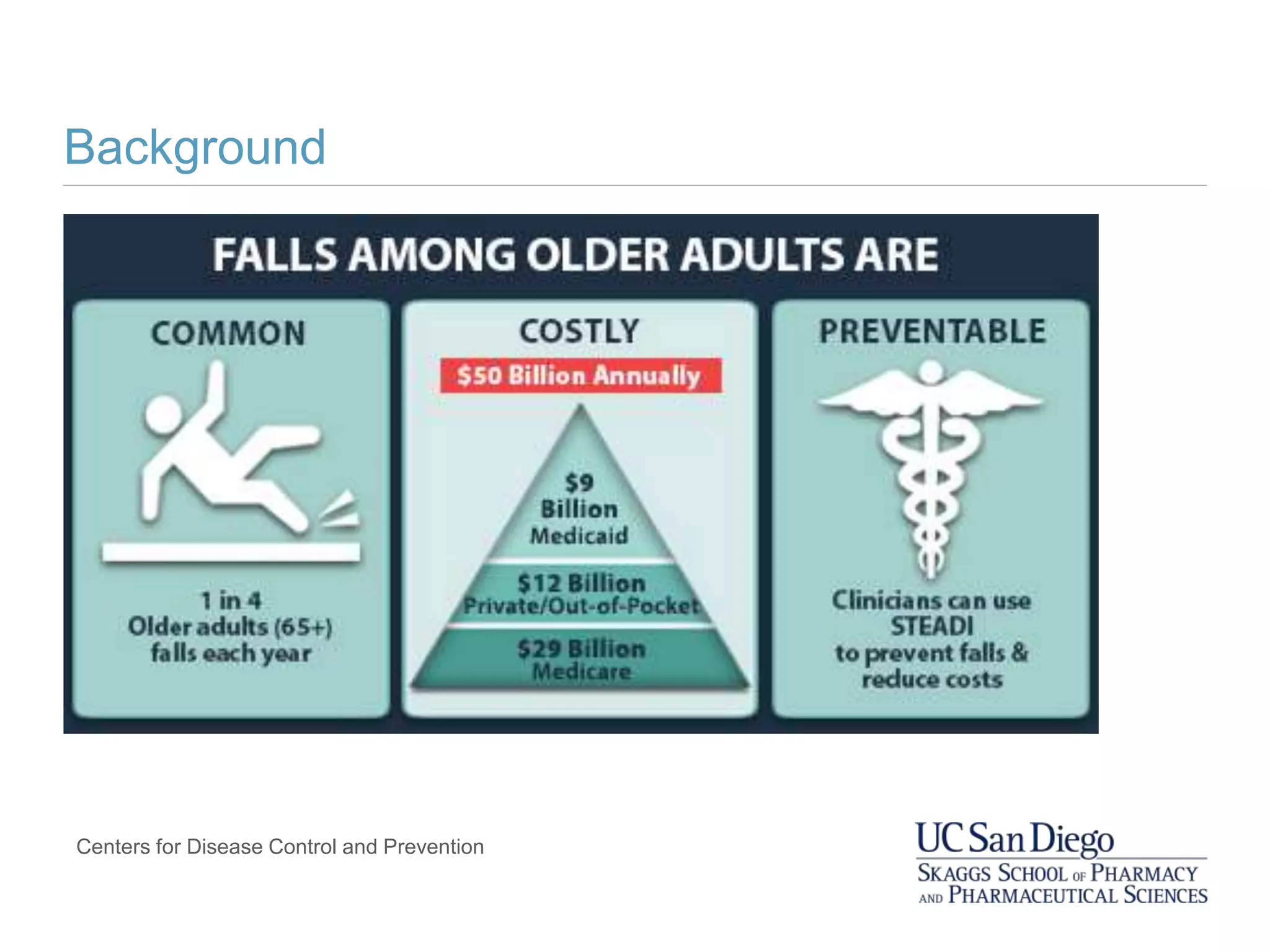
Background
Centers for Disease Control and Prevention
Falls in Older Adults with Dementia
In older adults with dementia, compared to those without
dementia:
• The risk of falling is higher (estimates of 2-8x)
• Health outcomes resulting from a fall are even more
devastating
Van Doorn C et al. J Am Geriatr Soc. 2003;51:1213-1218.
Tinetti ME et al. N Engl J Med. 1988;319(26):1701-7.
Magaziner J et al. J Gerontol. 1990;45(3):M101-7.
Meuleners LB et al. J Am Geriatr Soc. 2017;65(3):520-525.
Allan L et al. PloS one. 2009;4[5]:e5521
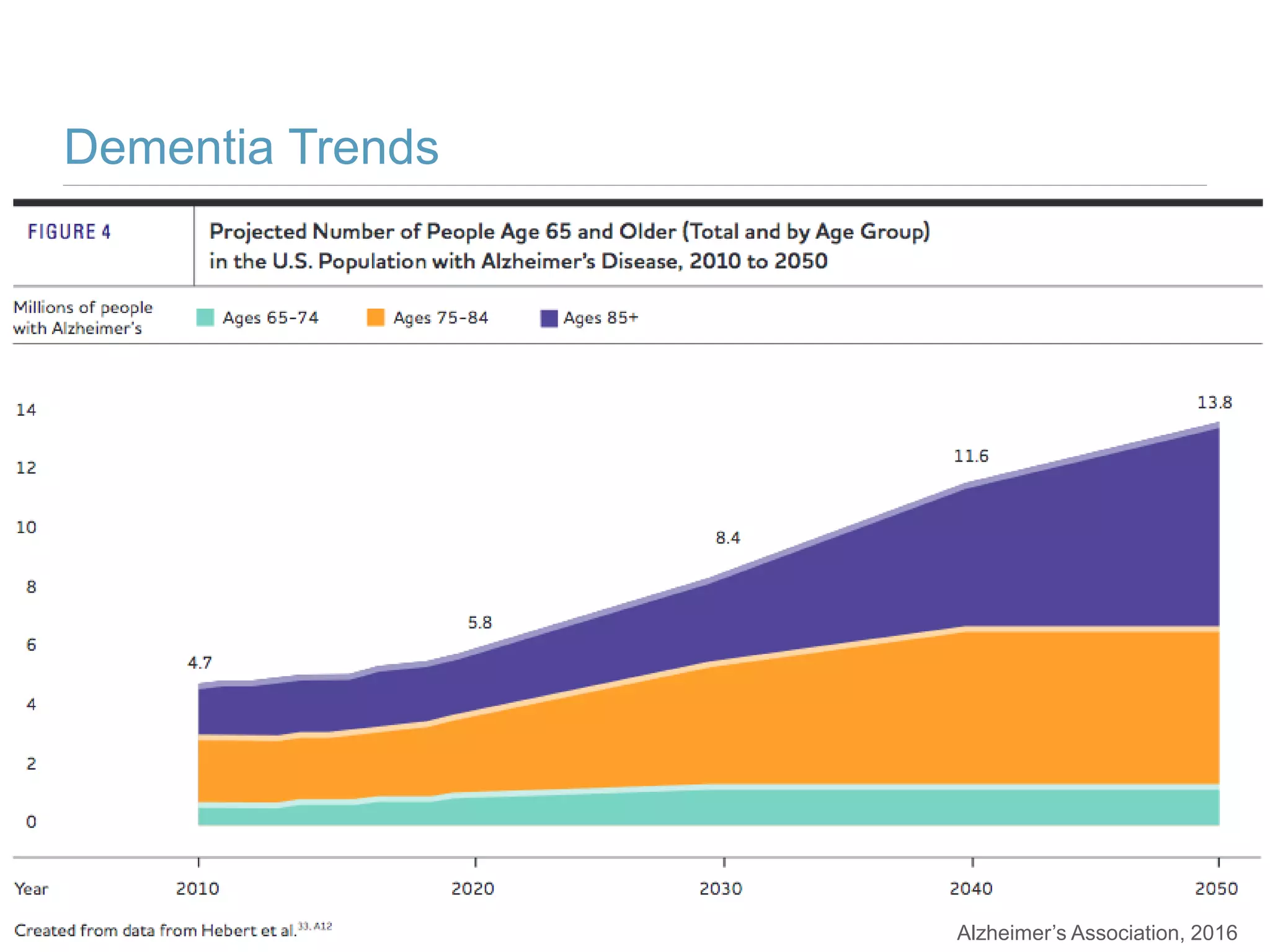
Dementia Trends
Alzheimer’s Association, 2016
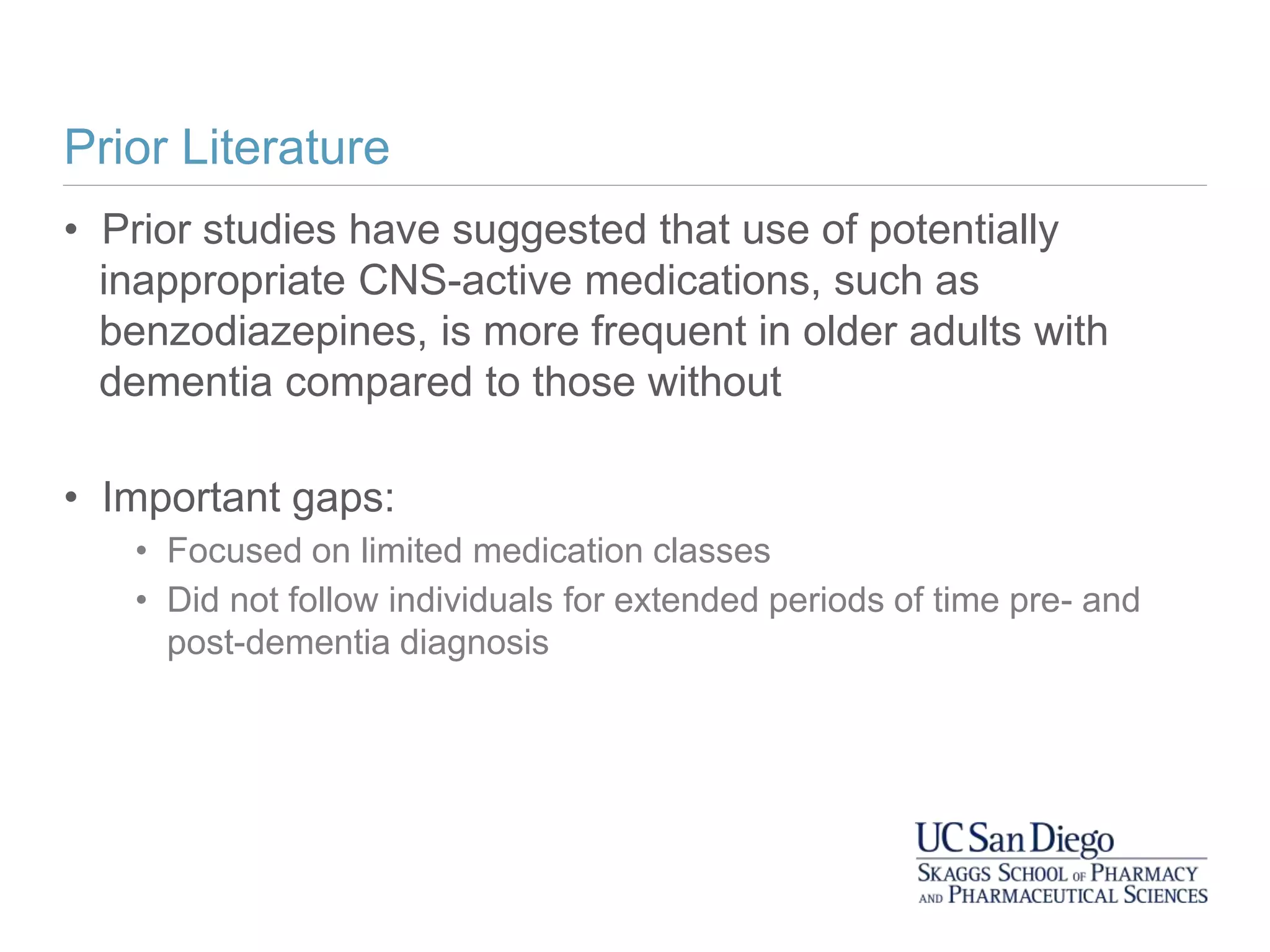
Prior Literature
• While much is known about central nervous system
(CNS)-active medication-related risk of falls in older adults
without dementia, few studies have examined this risk in
those with dementia
• Prior studies in older adults with dementia have found an
increased risk of falls or fractures associated with various
classes of CNS-active medications, including:
• Antidepressants
• Antipsychotics
• Benzodiazepines
• Hypnotics
Leipzig RM et al. J Am Geriatr Soc.1999;47:30-39.
Bloch F et al. J Aging and Health. 2011;23:329–46.
Tamiya H et al. PLoS One. 2015;10(6):e0129366.
Sterke CS et al. J Clin Pharmacol. 2012;52:947–55.
Sterke CS et al. Br J Clin Pharmacol.. 2012;73(5):812–20.
Jalbert JJ et al. J Am Med Dir Assoc. 2010;11:120–7.
Gaps in Prior Literature
• Focused on individual CNS-active medication classes
rather than combined exposures
• Did not evaluate risk in individuals at similar stage of
dementia (e.g., newly diagnosed)
• Focused on institutional settings rather than evaluating
community-dwelling older adults
Objectives
1. Examine the association between CNS-active medication
use and risk of fall-related injury in community-dwelling
older adults with a recent diagnosis of dementia.
2. Elucidate whether there is increased risk at higher doses
or with greater number of CNS-active medication
classes.
Methods
Sample
Adult Changes in Thought (ACT) Study
• Began in 1994-1996
• Enrolls people age ≥65 years without dementia
• Interview every 2 years, at which time cognitive function is
assessed
• Interview linked with Kaiser Permanente Washington
(formerly Group Health) medical and pharmacy databases
Kukull WA et al. Arch Neurol. 2002;59 (11):1737-1746
Inclusion Criteria
ACT subjects with a dementia diagnosis as of April 30, 2014
(n = 1,032)
• Enrolled in Kaiser Permanente Washington for at least 1
year prior to dementia diagnosis (n = 63 excluded)
• No history of fall-related injury within 1 year prior to
dementia diagnosis (n = 107 excluded)
Study Sample
Outcome
Fall-related injury based on inpatient, emergency
department, and outpatient ICD-9 codes and E codes
• Modified definition by Tinetti et al. to include outpatient
encounters
ICD-9 = International Classification of Diseases, Ninth Revision
E code = External Cause of Injury Code
Tinetti ME et al. JAMA Intern Med. 2014;174(4):588-95.
Exposure
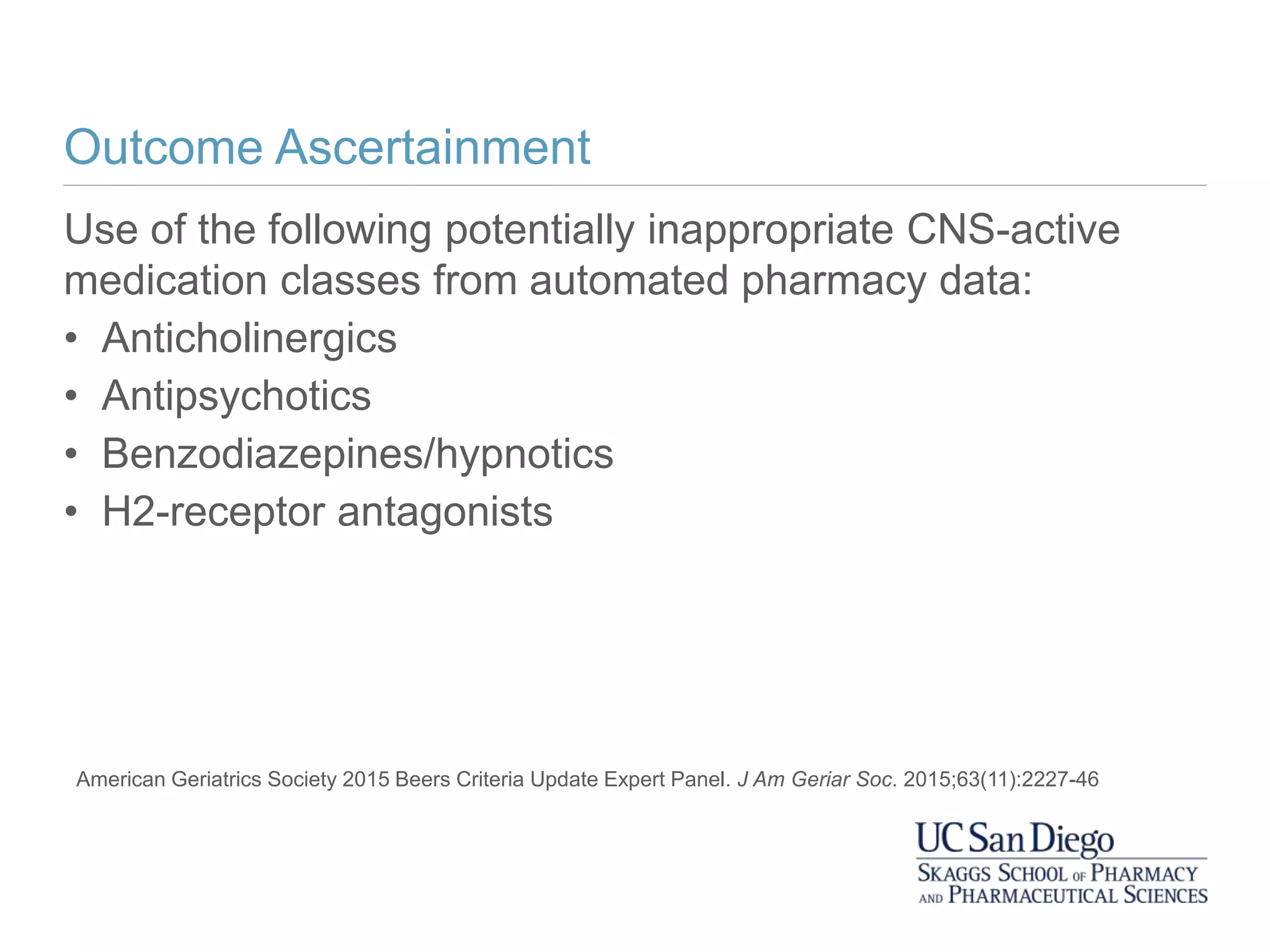
Use of the following CNS-active medication classes,
obtained from automated pharmacy data:
• Anticholinergics
• Antidepressants
• Antipsychotics
• Benzodiazepines/hypnotics
• Opioids
• Skeletal muscle relaxants
Exposure, continued
• Objective 1: Time-varying indicator of CNS-active medication
use classified as current, recent, past, or non-use
• Objective 2: Total burden of CNS-active medication use as
measured by standardized daily dose, and total number of
CNS-active medications
Gray SL et al. JAMA Intern Med. 2015;175(3):401-7.
Marcum ZA et al. Ann Pharmacother. 2015;49:1214-1221.
Standardized Daily Dose (SDD)
SDD calculated by:
1. Dividing total daily dose of each medication by the
minimum effective geriatric dose for that medication
2. Summing standardized doses of all CNS-active
medications for each current user
Gray SL et al. JAMA Intern Med. 2015;175(3):401-7.
Marcum ZA et al. Ann Pharmacother. 2015;49:1214-1221.
Statistical Analysis
• Cox proportional hazards models using time since
dementia onset as time axis
• Adjusted for health and functional characteristics,
including:
• Age
• Sex
• Self-rated health
• Frailty (according to gait speed)
• Coronary artery disease
• Depression
• Parkinson’s disease
• Anxiety
• Insomnia
Secondary Analyses
• Evaluate risk of fall-related injury associated with
individual CNS-active medication classes among current
users (compared to non-users):
• Antidepressants
• Antipsychotics
• Benzodiazepines/sedative hypnotics
• Opioids
• Urinary antispasmodics
• Evaluate risk of fall-related injury associated with new
initiation of a CNS-active medication
Post-Hoc Analyses
• Estimate time-varying hazard ratio (current users vs. non-
users)
• Primary analysis repeated, but follow-up truncated at 1 year, 3
years, and 5 years
• Evaluate use of lower minimum effective dose for opioids
(morphine 10 mg vs. 30 mg) in calculating SDD
Results
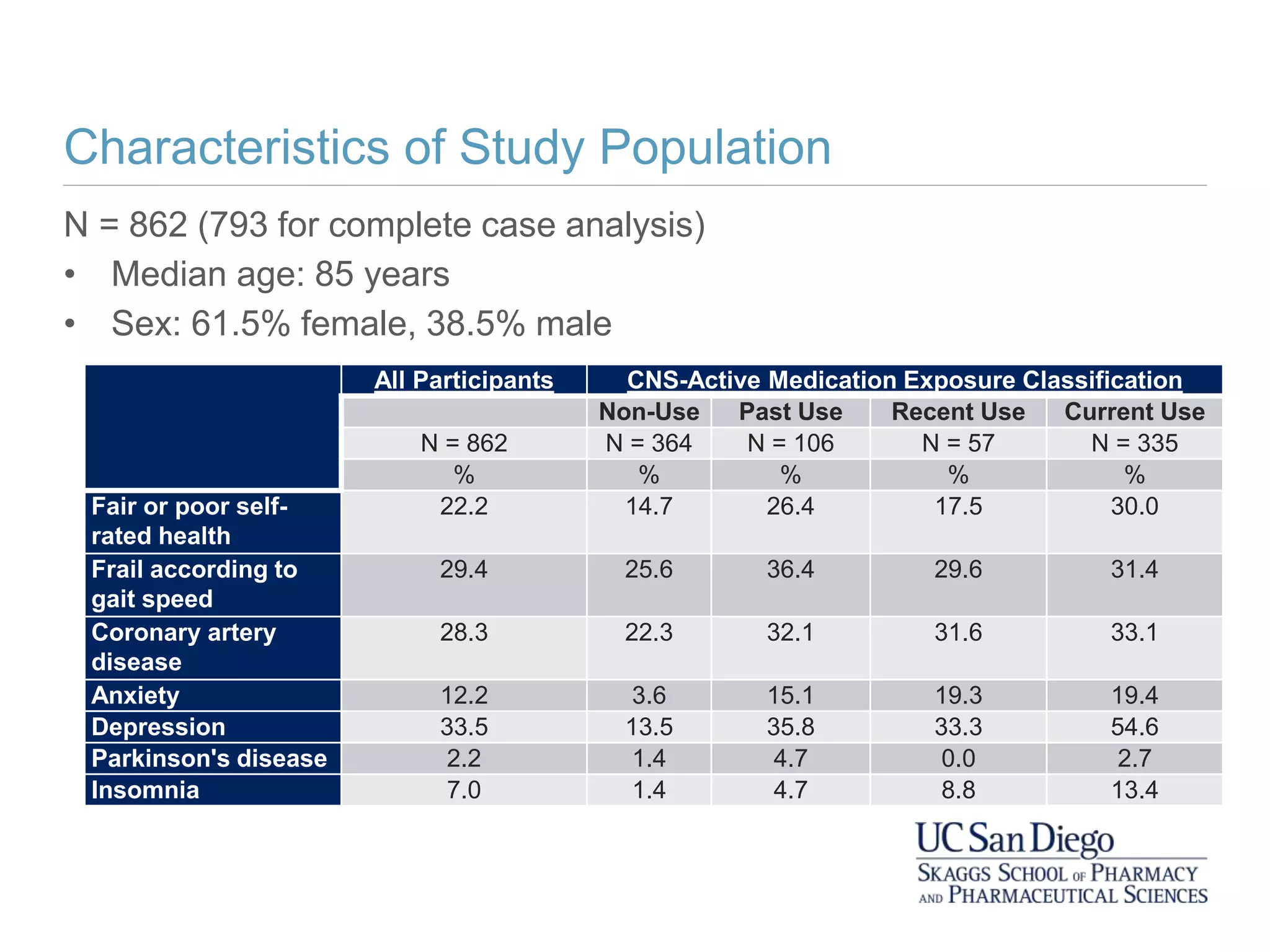
Characteristics of Study Population
N = 862 (793 for complete case analysis)
• Median age: 85 years
• Sex: 61.5% female, 38.5% male
All Participants CNS-Active Medication Exposure Classification
Non-Use Past Use Recent Use Current Use
N = 862 N = 364 N = 106 N = 57 N = 335
% % % % %
Fair or poor self-
rated health
22.2 14.7 26.4 17.5 30.0
Frail according to
gait speed
29.4 25.6 36.4 29.6 31.4
Coronary artery
disease
28.3 22.3 32.1 31.6 33.1
Anxiety 12.2 3.6 15.1 19.3 19.4
Depression 33.5 13.5 35.8 33.3 54.6
Parkinson's disease 2.2 1.4 4.7 0.0 2.7
Insomnia 7.0 1.4 4.7 8.8 13.4
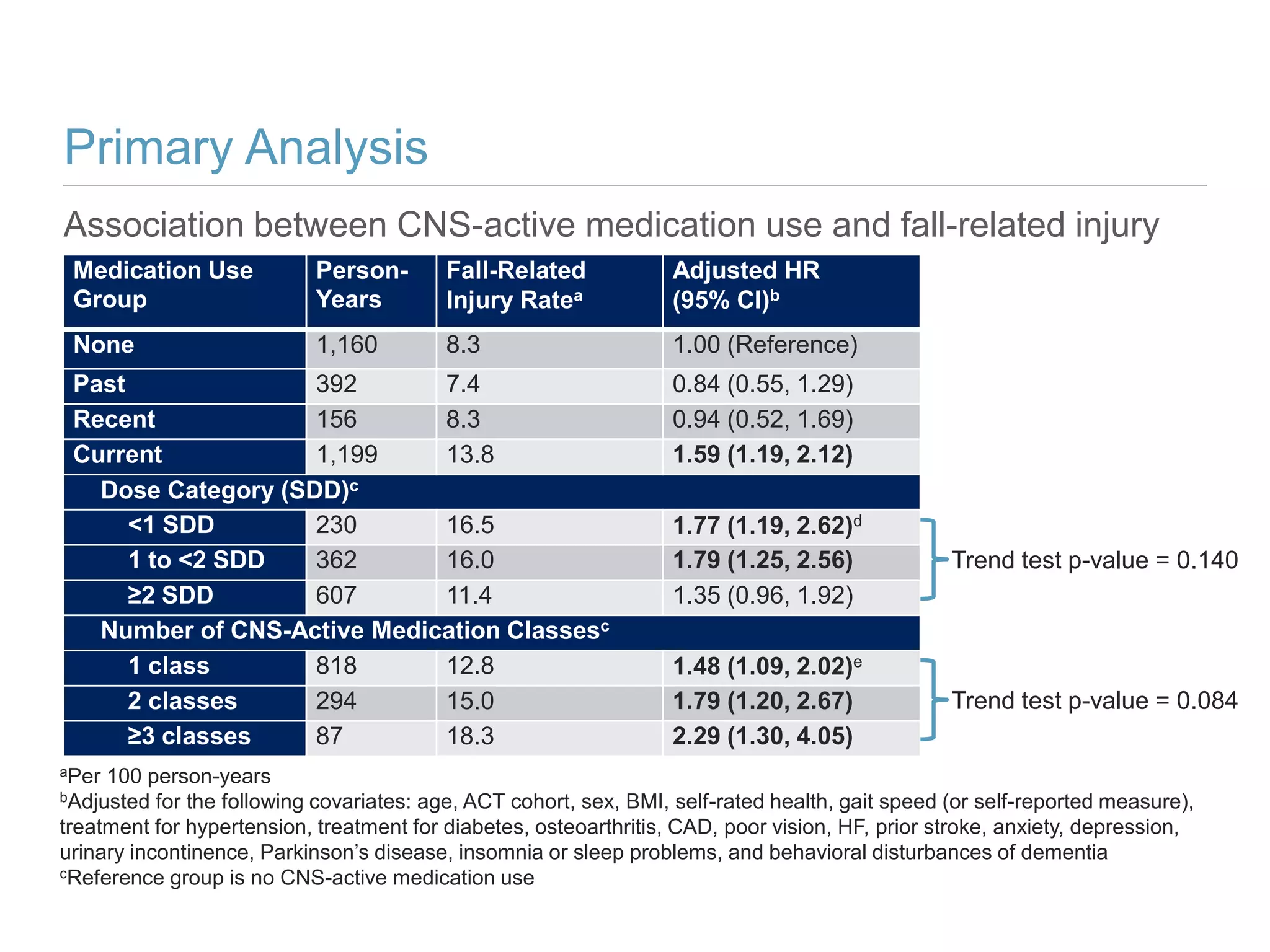
Primary Analysis
Association between CNS-active medication use and fall-related injury
aPer 100 person-years
bAdjusted for the following covariates: age, ACT cohort, sex, BMI, self-rated health, gait speed (or self-reported measure),
treatment for hypertension, treatment for diabetes, osteoarthritis, CAD, poor vision, HF, prior stroke, anxiety, depression,
urinary incontinence, Parkinson’s disease, insomnia or sleep problems, and behavioral disturbances of dementia
cReference group is no CNS-active medication use
Medication Use
Group
Person-
Years
Fall-Related
Injury Ratea
Adjusted HR
(95% CI)b
None 1,160 8.3 1.00 (Reference)
Past 392 7.4 0.84 (0.55, 1.29)
Recent 156 8.3 0.94 (0.52, 1.69)
Current 1,199 13.8 1.59 (1.19, 2.12)
Dose Category (SDD)c
<1 SDD 230 16.5 1.77 (1.19, 2.62)d
1 to <2 SDD 362 16.0 1.79 (1.25, 2.56)
≥2 SDD 607 11.4 1.35 (0.96, 1.92)
Number of CNS-Active Medication Classesc
1 class 818 12.8 1.48 (1.09, 2.02)e
2 classes 294 15.0 1.79 (1.20, 2.67)
≥3 classes 87 18.3 2.29 (1.30, 4.05)
Trend test p-value = 0.140
Trend test p-value = 0.084
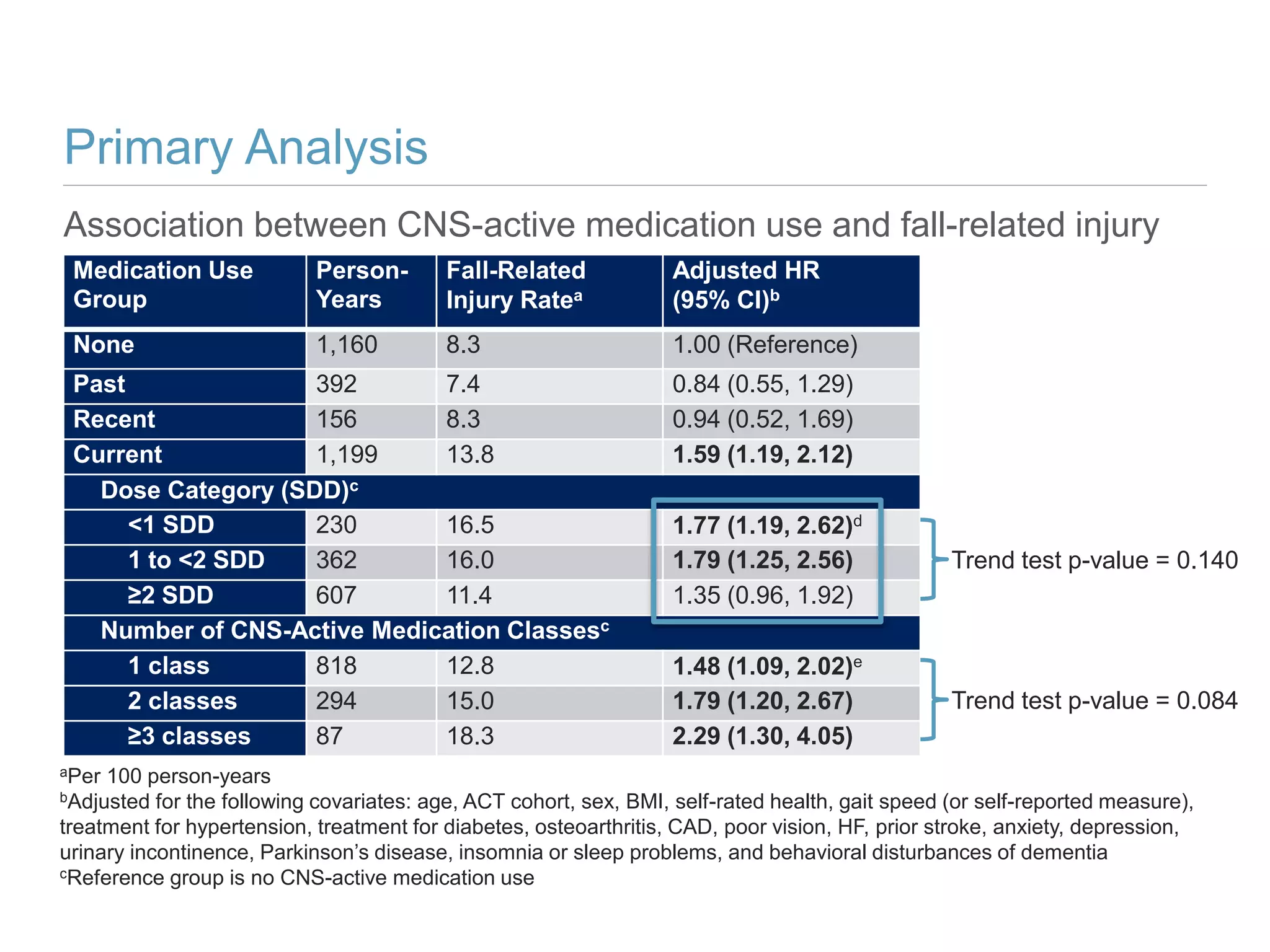
Primary Analysis
Association between CNS-active medication use and fall-related injury
aPer 100 person-years
bAdjusted for the following covariates: age, ACT cohort, sex, BMI, self-rated health, gait speed (or self-reported measure),
treatment for hypertension, treatment for diabetes, osteoarthritis, CAD, poor vision, HF, prior stroke, anxiety, depression,
urinary incontinence, Parkinson’s disease, insomnia or sleep problems, and behavioral disturbances of dementia
cReference group is no CNS-active medication use
Medication Use
Group
Person-
Years
Fall-Related
Injury Ratea
Adjusted HR
(95% CI)b
None 1,160 8.3 1.00 (Reference)
Past 392 7.4 0.84 (0.55, 1.29)
Recent 156 8.3 0.94 (0.52, 1.69)
Current 1,199 13.8 1.59 (1.19, 2.12)
Dose Category (SDD)c
<1 SDD 230 16.5 1.77 (1.19, 2.62)d
1 to <2 SDD 362 16.0 1.79 (1.25, 2.56)
≥2 SDD 607 11.4 1.35 (0.96, 1.92)
Number of CNS-Active Medication Classesc
1 class 818 12.8 1.48 (1.09, 2.02)e
2 classes 294 15.0 1.79 (1.20, 2.67)
≥3 classes 87 18.3 2.29 (1.30, 4.05)
Trend test p-value = 0.140
Trend test p-value = 0.084
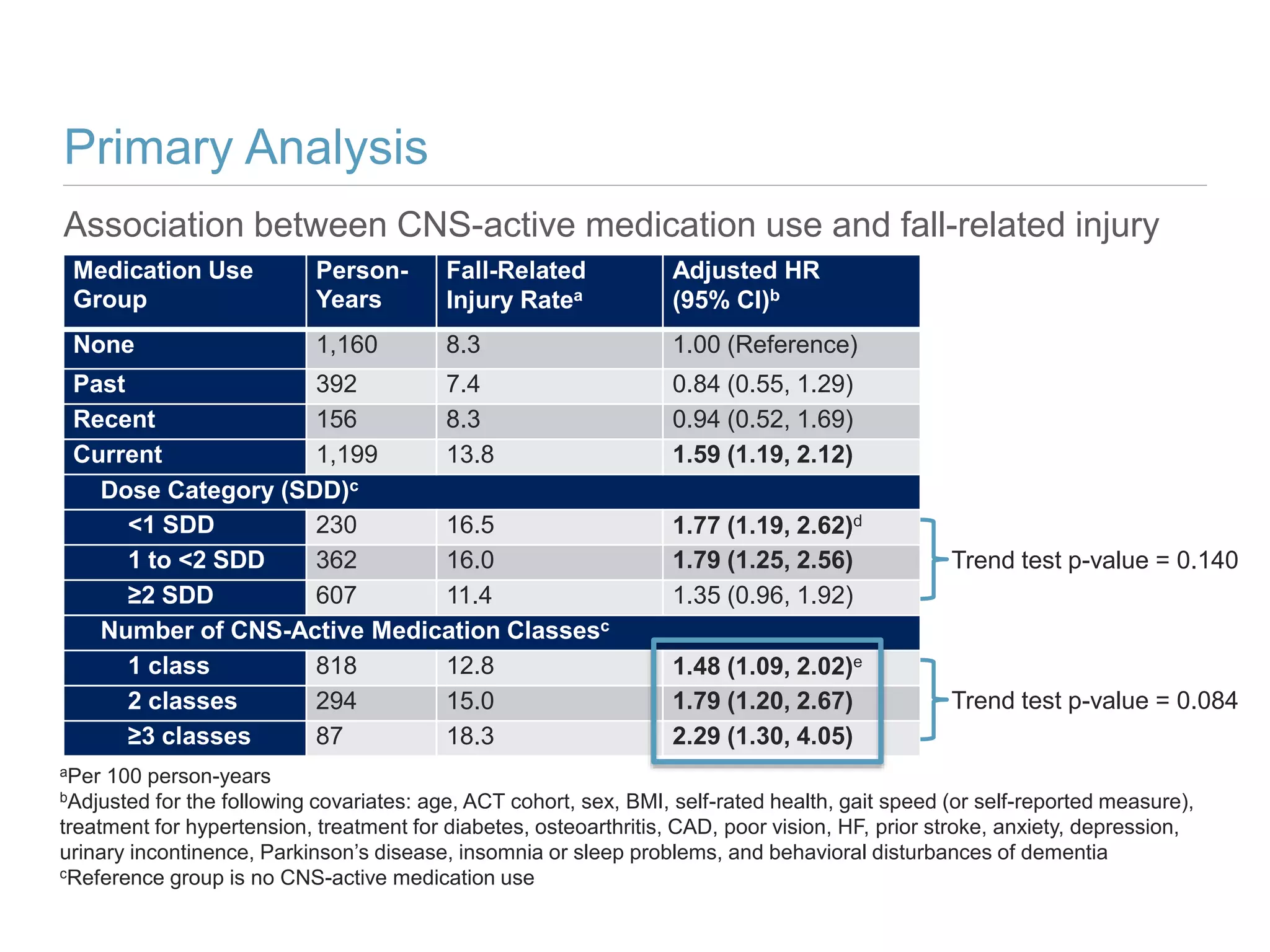
Primary Analysis
Association between CNS-active medication use and fall-related injury
aPer 100 person-years
bAdjusted for the following covariates: age, ACT cohort, sex, BMI, self-rated health, gait speed (or self-reported measure),
treatment for hypertension, treatment for diabetes, osteoarthritis, CAD, poor vision, HF, prior stroke, anxiety, depression,
urinary incontinence, Parkinson’s disease, insomnia or sleep problems, and behavioral disturbances of dementia
cReference group is no CNS-active medication use
Medication Use
Group
Person-
Years
Fall-Related
Injury Ratea
Adjusted HR
(95% CI)b
None 1,160 8.3 1.00 (Reference)
Past 392 7.4 0.84 (0.55, 1.29)
Recent 156 8.3 0.94 (0.52, 1.69)
Current 1,199 13.8 1.59 (1.19, 2.12)
Dose Category (SDD)c
<1 SDD 230 16.5 1.77 (1.19, 2.62)d
1 to <2 SDD 362 16.0 1.79 (1.25, 2.56)
≥2 SDD 607 11.4 1.35 (0.96, 1.92)
Number of CNS-Active Medication Classesc
1 class 818 12.8 1.48 (1.09, 2.02)e
2 classes 294 15.0 1.79 (1.20, 2.67)
≥3 classes 87 18.3 2.29 (1.30, 4.05)
Trend test p-value = 0.140
Trend test p-value = 0.084
Primary Analysis
Association between CNS-active medication use and fall-related injury
aPer 100 person-years
bAdjusted for the following covariates: age, ACT cohort, sex, BMI, self-rated health, gait speed (or self-reported measure),
treatment for hypertension, treatment for diabetes, osteoarthritis, CAD, poor vision, HF, prior stroke, anxiety, depression,
urinary incontinence, Parkinson’s disease, insomnia or sleep problems, and behavioral disturbances of dementia
cReference group is no CNS-active medication use
Medication Use
Group
Person-
Years
Fall-Related
Injury Ratea
Adjusted HR
(95% CI)b
None 1,160 8.3 1.00 (Reference)
Past 392 7.4 0.84 (0.55, 1.29)
Recent 156 8.3 0.94 (0.52, 1.69)
Current 1,199 13.8 1.59 (1.19, 2.12)
Dose Category (SDD)c
<1 SDD 230 16.5 1.77 (1.19, 2.62)d
1 to <2 SDD 362 16.0 1.79 (1.25, 2.56)
≥2 SDD 607 11.4 1.35 (0.96, 1.92)
Number of CNS-Active Medication Classesc
1 class 818 12.8 1.48 (1.09, 2.02)e
2 classes 294 15.0 1.79 (1.20, 2.67)
≥3 classes 87 18.3 2.29 (1.30, 4.05)
Trend test p-value = 0.140
Trend test p-value = 0.084
Primary Analysis
Association between CNS-active medication use and fall-related injury
aPer 100 person-years
bAdjusted for the following covariates: age, ACT cohort, sex, BMI, self-rated health, gait speed (or self-reported measure),
treatment for hypertension, treatment for diabetes, osteoarthritis, CAD, poor vision, HF, prior stroke, anxiety, depression,
urinary incontinence, Parkinson’s disease, insomnia or sleep problems, and behavioral disturbances of dementia
cReference group is no CNS-active medication use
Medication Use
Group
Person-
Years
Fall-Related
Injury Ratea
Adjusted HR
(95% CI)b
None 1,160 8.3 1.00 (Reference)
Past 392 7.4 0.84 (0.55, 1.29)
Recent 156 8.3 0.94 (0.52, 1.69)
Current 1,199 13.8 1.59 (1.19, 2.12)
Dose Category (SDD)c
<1 SDD 230 16.5 1.77 (1.19, 2.62)d
1 to <2 SDD 362 16.0 1.79 (1.25, 2.56)
≥2 SDD 607 11.4 1.35 (0.96, 1.92)
Number of CNS-Active Medication Classesc
1 class 818 12.8 1.48 (1.09, 2.02)e
2 classes 294 15.0 1.79 (1.20, 2.67)
≥3 classes 87 18.3 2.29 (1.30, 4.05)
Trend test p-value = 0.140
Trend test p-value = 0.084
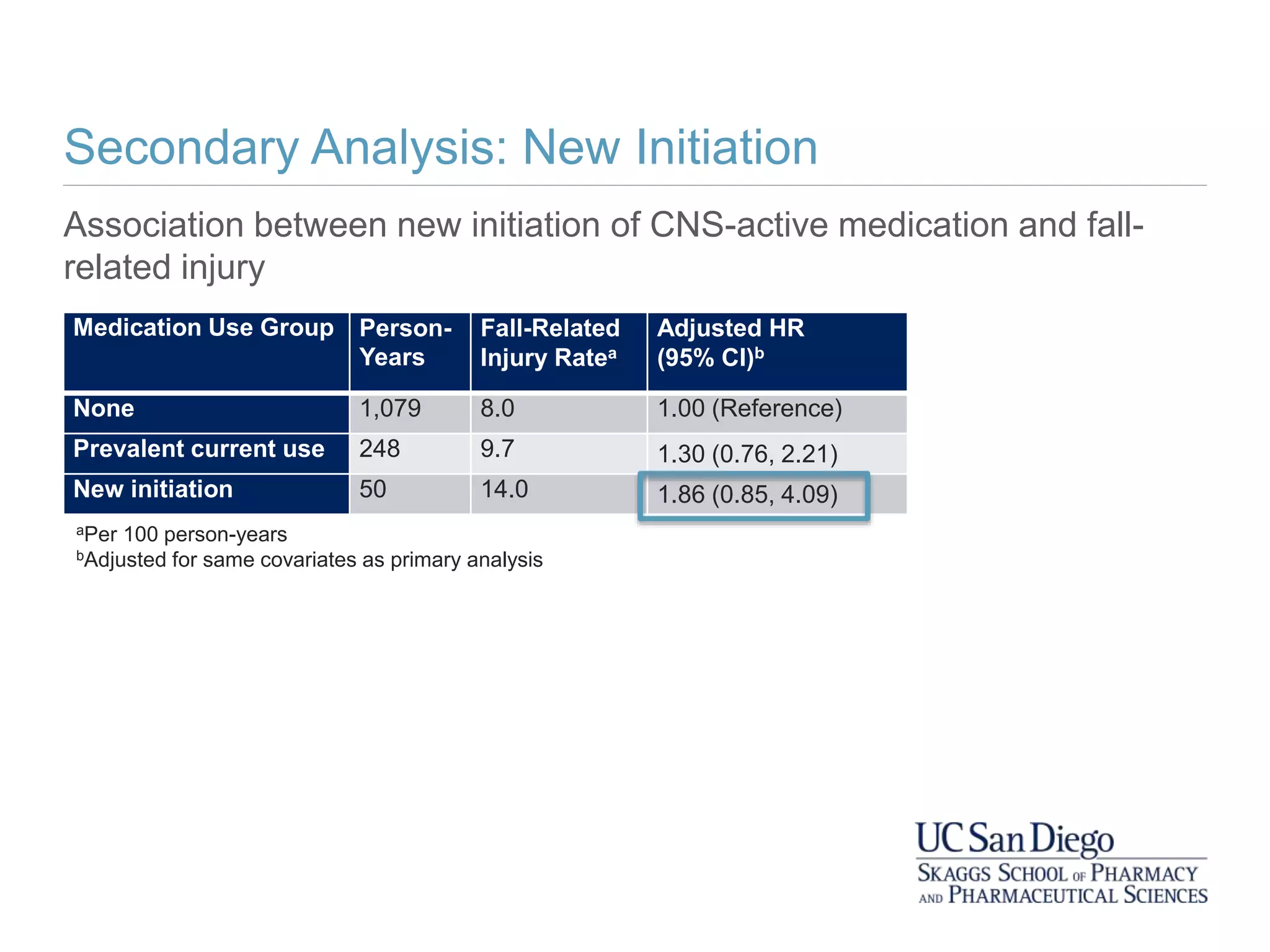
Secondary Analysis: New Initiation
Association between new initiation of CNS-active medication and fall-
related injury
Medication Use Group Person-
Years
Fall-Related
Injury Ratea
Adjusted HR
(95% CI)b
None 1,079 8.0 1.00 (Reference)
Prevalent current use 248 9.7 1.30 (0.76, 2.21)
New initiation 50 14.0 1.86 (0.85, 4.09)
aPer 100 person-years
bAdjusted for same covariates as primary analysis
Secondary Analysis: New Initiation
Association between new initiation of CNS-active medication and fall-
related injury
Medication Use Group Person-
Years
Fall-Related
Injury Ratea
Adjusted HR
(95% CI)b
None 1,079 8.0 1.00 (Reference)
Prevalent current use 248 9.7 1.30 (0.76, 2.21)
New initiation 50 14.0 1.86 (0.85, 4.09)
aPer 100 person-years
bAdjusted for same covariates as primary analysis
Secondary Analysis: Individual Classes
Association between use of individual classes of CNS-active medications
and fall-related injury
Medication Class Person-
Years
Fall-Related
Injury Ratea
Adjusted HR
(95% CI)b,c
Antidepressants 811 13.7 1.41 (1.06, 1.87)
Antipsychotics 167 12.0 1.06 (0.65, 1.71)
Benzodiazepines and
sedative hypnotics
170 15.8
1.31 (0.85, 2.02)
Opioids 262 19.1 1.69 (1.22, 2.33)
Urinary antispasmodics 194 11.4 0.94 (0.59, 1.49)
aPer 100 person-years
bCurrent use versus no use as the reference group
cAdjusted for same covariates as primary analysis, plus concurrent CNS-active medication use
Secondary Analysis: Individual Classes
Association between use of individual classes of CNS-active medications
and fall-related injury
Medication Class Person-
Years
Fall-Related
Injury Ratea
Adjusted HR
(95% CI)b,c
Antidepressants 811 13.7 1.41 (1.06, 1.87)
Antipsychotics 167 12.0 1.06 (0.65, 1.71)
Benzodiazepines and
sedative hypnotics
170 15.8
1.31 (0.85, 2.02)
Opioids 262 19.1 1.69 (1.22, 2.33)
Urinary antispasmodics 194 11.4 0.94 (0.59, 1.49)
aPer 100 person-years
bCurrent use versus no use as the reference group
cAdjusted for same covariates as primary analysis, plus concurrent CNS-active medication use
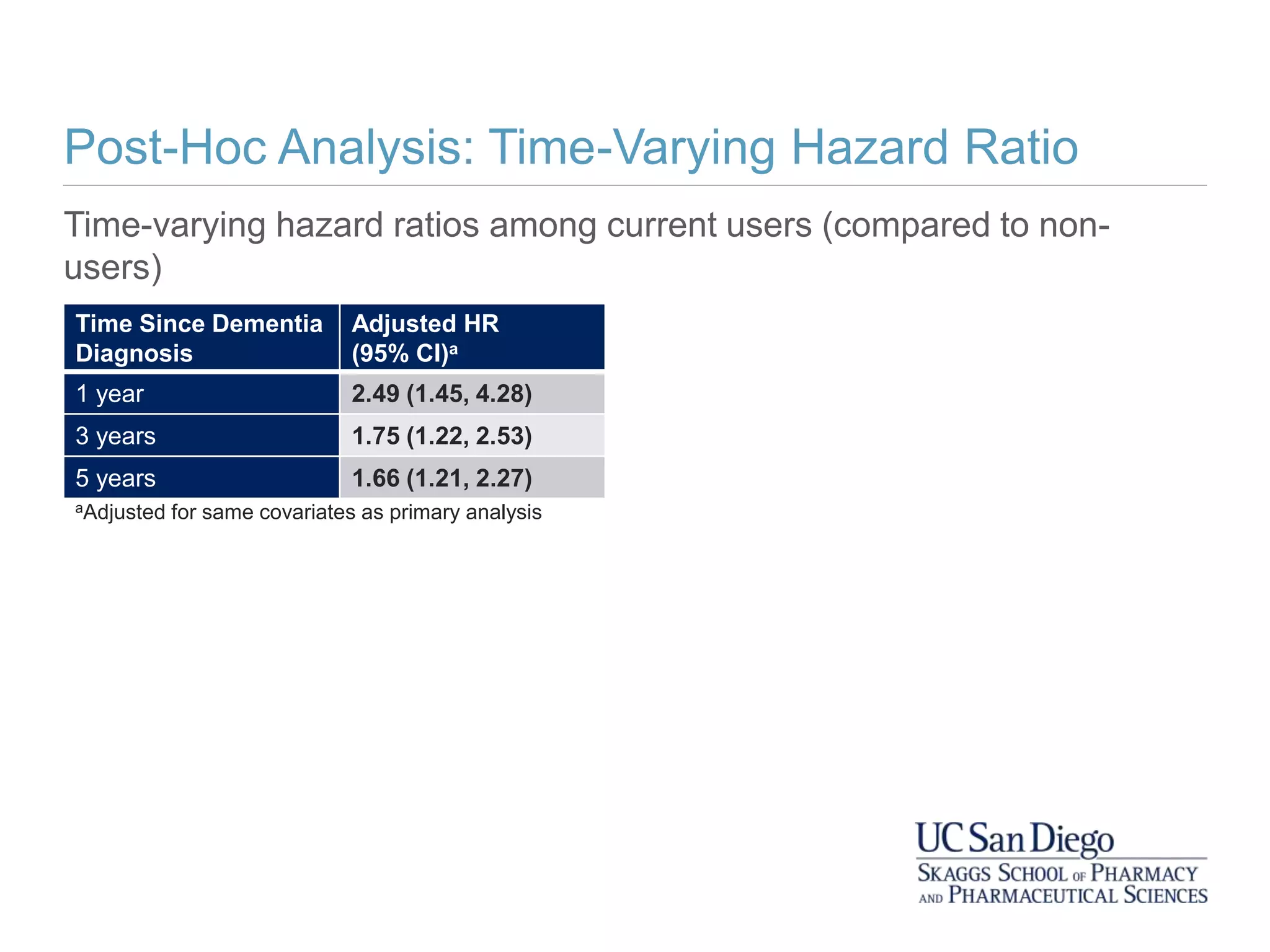
Post-Hoc Analysis: Time-Varying Hazard Ratio
Time-varying hazard ratios among current users (compared to non-
users)
Time Since Dementia
Diagnosis
Adjusted HR
(95% CI)a
1 year 2.49 (1.45, 4.28)
3 years 1.75 (1.22, 2.53)
5 years 1.66 (1.21, 2.27)
aAdjusted for same covariates as primary analysis
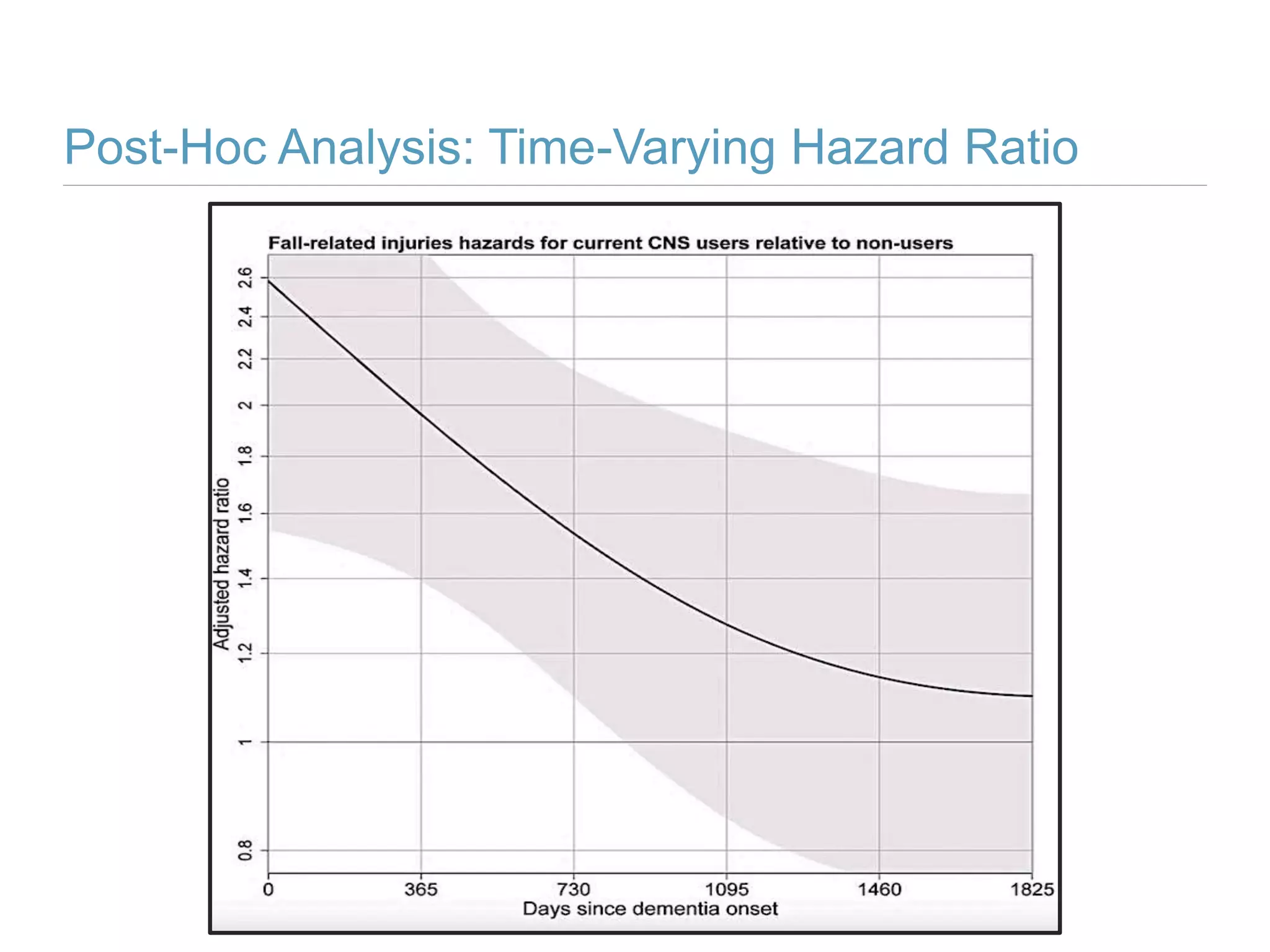
Post-Hoc Analysis: Time-Varying Hazard Ratio
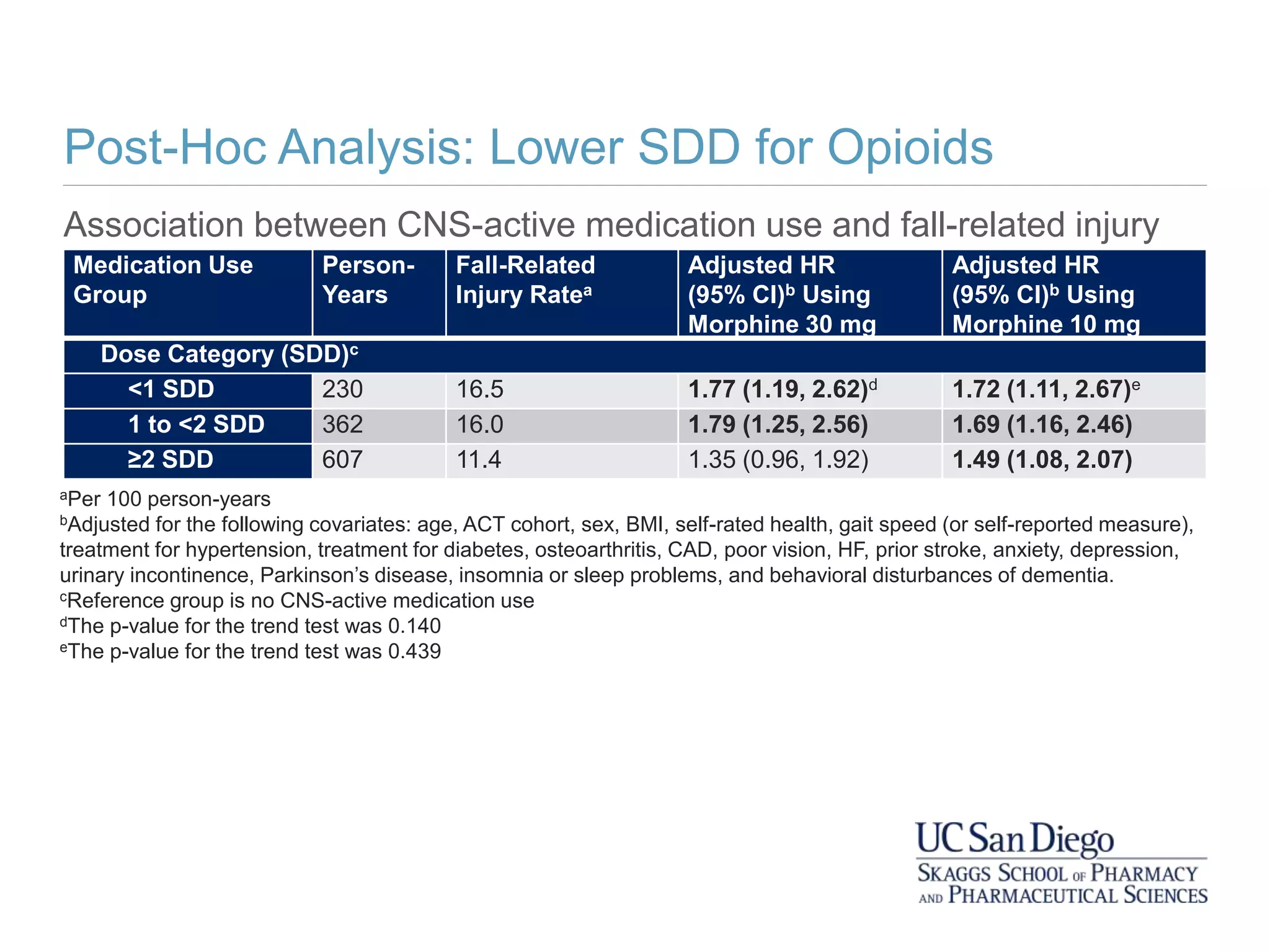
Post-Hoc Analysis: Lower SDD for Opioids
Association between CNS-active medication use and fall-related injury
aPer 100 person-years
bAdjusted for the following covariates: age, ACT cohort, sex, BMI, self-rated health, gait speed (or self-reported measure),
treatment for hypertension, treatment for diabetes, osteoarthritis, CAD, poor vision, HF, prior stroke, anxiety, depression,
urinary incontinence, Parkinson’s disease, insomnia or sleep problems, and behavioral disturbances of dementia.
cReference group is no CNS-active medication use
dThe p-value for the trend test was 0.140
eThe p-value for the trend test was 0.439
Medication Use
Group
Person-
Years
Fall-Related
Injury Ratea
Adjusted HR
(95% CI)b Using
Morphine 30 mg
Adjusted HR
(95% CI)b Using
Morphine 10 mg
Dose Category (SDD)c
<1 SDD 230 16.5 1.77 (1.19, 2.62)d 1.72 (1.11, 2.67)e
1 to <2 SDD 362 16.0 1.79 (1.25, 2.56) 1.69 (1.16, 2.46)
≥2 SDD 607 11.4 1.35 (0.96, 1.92) 1.49 (1.08, 2.07)
Discussion
Conclusions
• Current use of CNS-active medications was associated with fall-
related injury in community-dwelling older adults followed from
time of dementia onset, with increased risk even with use of low
doses
• Among individual classes, only current use of antidepressants
and opioids was associated with risk of fall-related injury
• Contrast in fall-related injury hazards between current use and
non-use of CNS-active medications appeared greatest soon
after dementia onset, with a decline in hazard ratio over time
• This study highlights the need for judicious use and close
monitoring of CNS-active medications in this population
Strengths
• Subjects with dementia identified using a research-quality
dementia diagnosis
• Ability to measure total CNS-active medication burden
(SDD) in addition to number of medications
• Availability of extensive covariate information
• Combined ACT interview data and administrative claims data
Limitations
• Possible misclassification of exposure
• Uncaptured use of over-the-counter medications
• Receipt of prescription but never taking medication
• Potential unmeasured confounders or residual
confounding
Patterns of Potentially Inappropriate Central
Nervous System (CNS)-Active Medication Use
in Older Adults with Dementia
Background
Background
• Many CNS-active medications are considered potentially
inappropriate for older adults with dementia
• CNS-active medications are often used as dementia
progresses to treat behavioral disturbances
• Estimated 80% of community-dwelling older adults with
dementia take at least 1 CNS-active medication
American Geriatrics Society 2019 Beers Criteria Update Expert Panel. J Am Geriar Soc. 2019.
Fick D et al. Aging & Mental Health. 2007b;11:588–595.
Prior Literature
• Prior studies have suggested that use of potentially
inappropriate CNS-active medications, such as
benzodiazepines, is more frequent in older adults with
dementia compared to those without
• Important gaps:
• Focused on limited medication classes
• Did not follow individuals for extended periods of time pre- and
post-dementia diagnosis
Objective
Evaluate patterns of potentially inappropriate CNS-active
medication use over time in older adults with dementia,
compared to older adults without dementia
Methods
Sample and Inclusion Criteria
Sample: Adult Changes in Thought (ACT Study)
Inclusion criteria (subjects with dementia): ACT subjects
with a dementia diagnosis between 1/1/2008 and 4/30/14
• Enrolled in Kaiser Permanente Washington for at least 3
years prior to dementia diagnosis
• Enrolled in Kaiser Permanente Washington for at least 1
year after dementia diagnosis
• Availability of matched controls
Matching
Each subject with dementia was matched up to 5 controls without
dementia based on:
• Age
• Sex
• ACT study cohort
Also required for matched controls:
• Enrolled in Kaiser Permanente Washington for at least 3 years
prior to index date
• Enrolled in Kaiser Permanente Washington for at least 1 year
after index date
Outcome Ascertainment
Use of the following potentially inappropriate CNS-active
medication classes from automated pharmacy data:
• Anticholinergics
• Antipsychotics
• Benzodiazepines/hypnotics
• H2-receptor antagonists
American Geriatrics Society 2015 Beers Criteria Update Expert Panel. J Am Geriar Soc. 2015;63(11):2227-46
Medication Use
For each subject, medication use was measured quarterly
during 3 time periods:
1. Pre-index date: -3 years to -1 year
2. Peri-index date: -1 year to 0 years
3. Post-index date: 0 years to 3 years
Stratified by sex based on known differences in medication
use patterns between females and males
Analysis
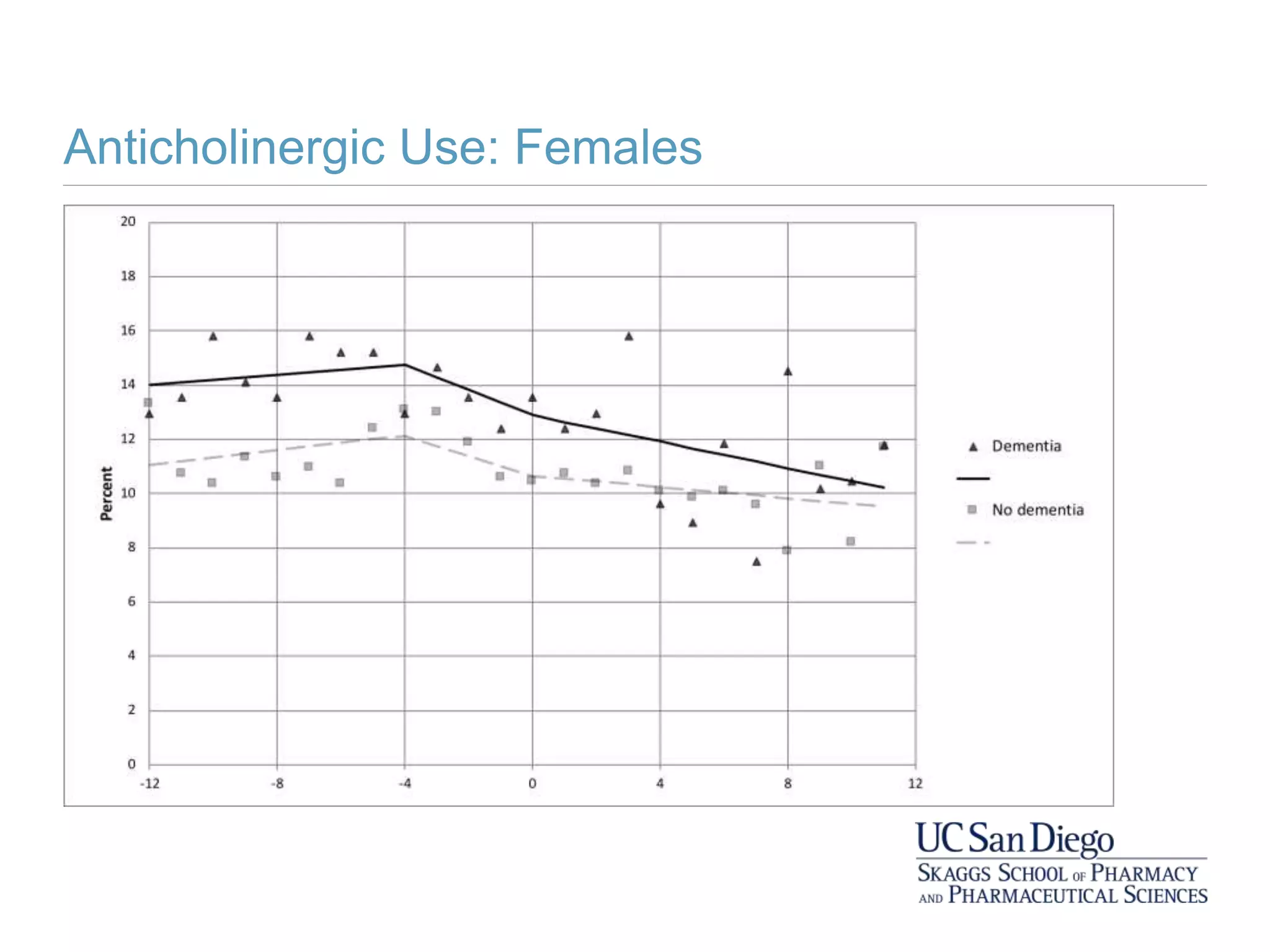
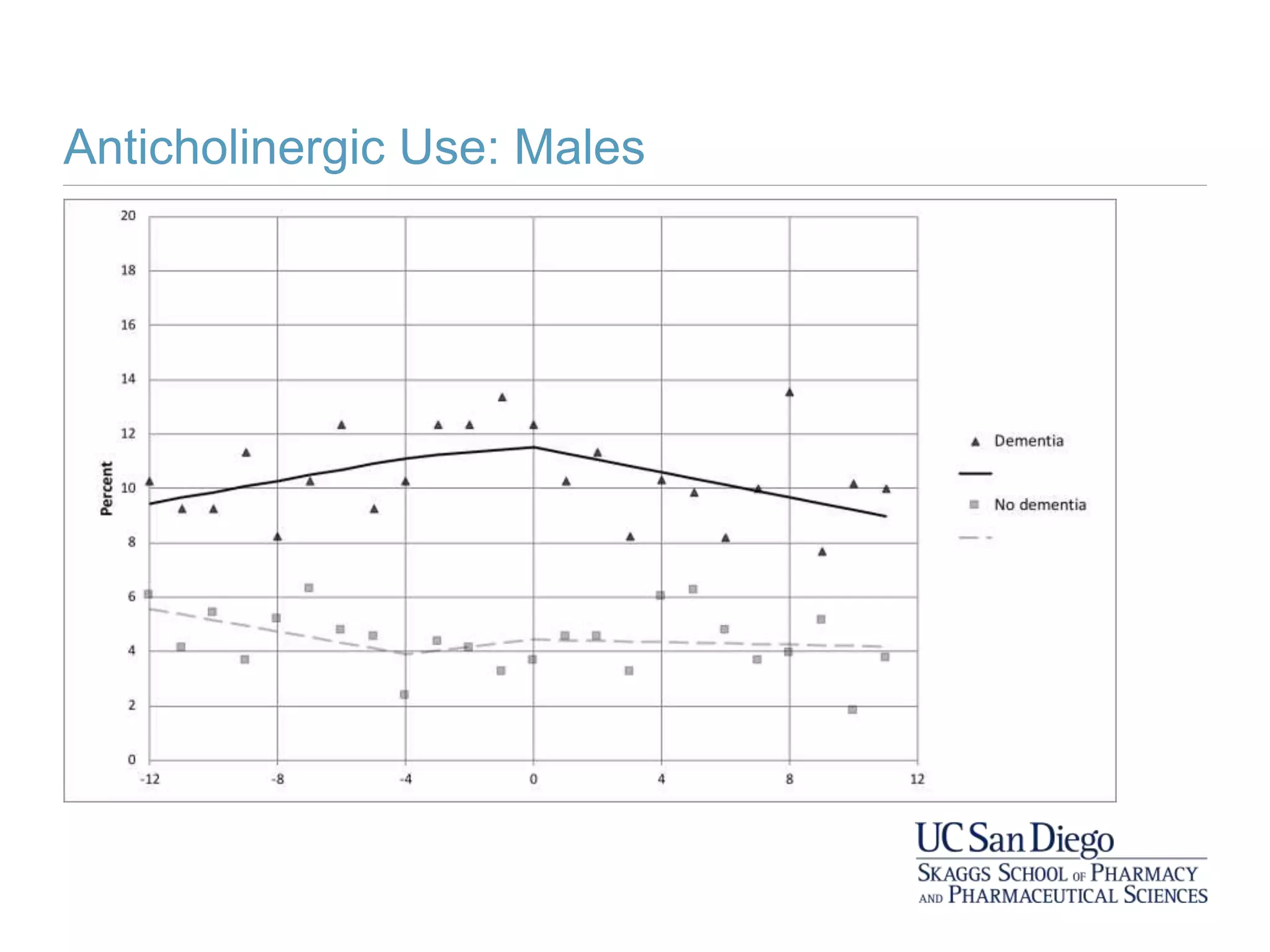
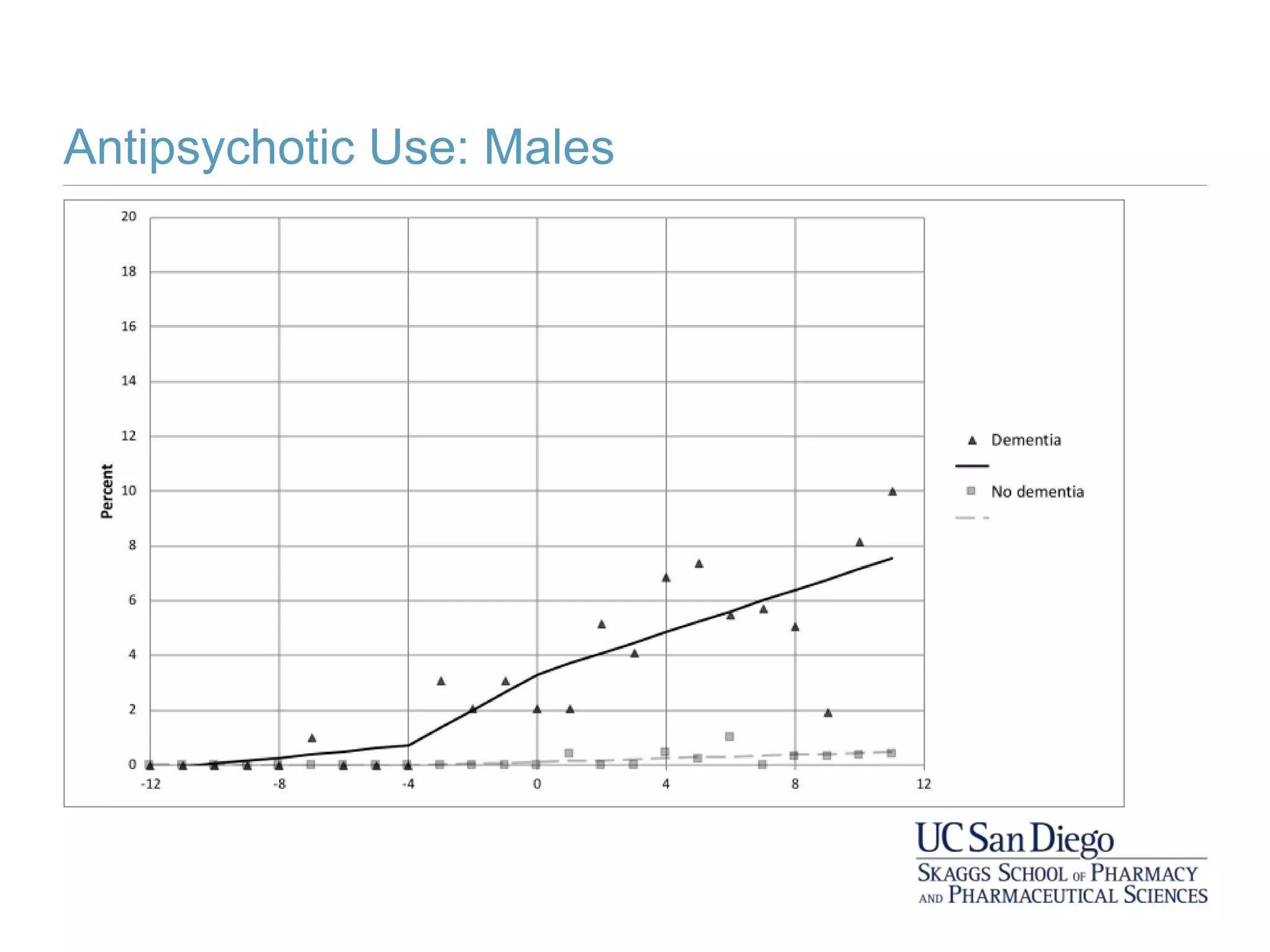
Time trend analysis: 3 years before and 3 years after
dementia diagnosis (index date for non-dementia controls)
• Graphical plots to display prevalence of use, divided into
quarters (stratified by sex)
• Difference in slope of prevalence before and after
dementia diagnosis (index date) for dementia group
• Same for non-dementia control group
• Test difference of differences in slope
Results
Study Sample Summary
N = 274 subjects with dementia
1,296 controls without dementia
Females Males
Dementia subjects 177 97
Non-dementia controls 838 458
Anticholinergic Use: Females
Anticholinergic Use: Males
Antipsychotic Use: Females
Antipsychotic Use: Males
Questions?
Email: lhart@ucsd.edu

Hart gwep presentation slides

  • 1.
    The Association BetweenCentral Nervous- System Active Medication Use and Fall-Related Injury in Older Adults with Dementia Laura A. Hart, PharmD, MS, BCPS, BCGP Assistant Clinical Professor UC San Diego Skaggs School of Pharmacy and Pharmaceutical Sciences
  • 2.
    Conflicts of Interest •None to disclose
  • 3.
    Acknowledgements: Collaborators Zachary A.Marcum,1 PharmD, PhD, BCPS Shelly L. Gray,1 PharmD, MS Rod L. Walker,2 MS Paul K. Crane,3 MD, MPH Eric B. Larson,2,3 MD, MPH 1School of Pharmacy, University of Washington, Seattle, WA 2Kaiser Permanente Washington Health Research Institute, Seattle, WA 3Division of General Internal Medicine, University of Washington, Seattle, WA
  • 4.
    Acknowledgements: Funding • AmericanCollege of Clinical Pharmacy Research Institute Futures Grant Junior Investigator Award • National Institute on Aging (U01AG006781)
  • 5.
  • 6.
    Background Centers for DiseaseControl and Prevention
  • 7.
    Falls in OlderAdults with Dementia In older adults with dementia, compared to those without dementia: • The risk of falling is higher (estimates of 2-8x) • Health outcomes resulting from a fall are even more devastating Van Doorn C et al. J Am Geriatr Soc. 2003;51:1213-1218. Tinetti ME et al. N Engl J Med. 1988;319(26):1701-7. Magaziner J et al. J Gerontol. 1990;45(3):M101-7. Meuleners LB et al. J Am Geriatr Soc. 2017;65(3):520-525. Allan L et al. PloS one. 2009;4[5]:e5521
  • 8.
  • 9.
    Prior Literature • Whilemuch is known about central nervous system (CNS)-active medication-related risk of falls in older adults without dementia, few studies have examined this risk in those with dementia • Prior studies in older adults with dementia have found an increased risk of falls or fractures associated with various classes of CNS-active medications, including: • Antidepressants • Antipsychotics • Benzodiazepines • Hypnotics Leipzig RM et al. J Am Geriatr Soc.1999;47:30-39. Bloch F et al. J Aging and Health. 2011;23:329–46. Tamiya H et al. PLoS One. 2015;10(6):e0129366. Sterke CS et al. J Clin Pharmacol. 2012;52:947–55. Sterke CS et al. Br J Clin Pharmacol.. 2012;73(5):812–20. Jalbert JJ et al. J Am Med Dir Assoc. 2010;11:120–7.
  • 10.
    Gaps in PriorLiterature • Focused on individual CNS-active medication classes rather than combined exposures • Did not evaluate risk in individuals at similar stage of dementia (e.g., newly diagnosed) • Focused on institutional settings rather than evaluating community-dwelling older adults
  • 11.
    Objectives 1. Examine theassociation between CNS-active medication use and risk of fall-related injury in community-dwelling older adults with a recent diagnosis of dementia. 2. Elucidate whether there is increased risk at higher doses or with greater number of CNS-active medication classes.
  • 12.
  • 13.
    Sample Adult Changes inThought (ACT) Study • Began in 1994-1996 • Enrolls people age ≥65 years without dementia • Interview every 2 years, at which time cognitive function is assessed • Interview linked with Kaiser Permanente Washington (formerly Group Health) medical and pharmacy databases Kukull WA et al. Arch Neurol. 2002;59 (11):1737-1746
  • 14.
    Inclusion Criteria ACT subjectswith a dementia diagnosis as of April 30, 2014 (n = 1,032) • Enrolled in Kaiser Permanente Washington for at least 1 year prior to dementia diagnosis (n = 63 excluded) • No history of fall-related injury within 1 year prior to dementia diagnosis (n = 107 excluded)
  • 15.
  • 16.
    Outcome Fall-related injury basedon inpatient, emergency department, and outpatient ICD-9 codes and E codes • Modified definition by Tinetti et al. to include outpatient encounters ICD-9 = International Classification of Diseases, Ninth Revision E code = External Cause of Injury Code Tinetti ME et al. JAMA Intern Med. 2014;174(4):588-95.
  • 17.
    Exposure Use of thefollowing CNS-active medication classes, obtained from automated pharmacy data: • Anticholinergics • Antidepressants • Antipsychotics • Benzodiazepines/hypnotics • Opioids • Skeletal muscle relaxants
  • 18.
    Exposure, continued • Objective1: Time-varying indicator of CNS-active medication use classified as current, recent, past, or non-use • Objective 2: Total burden of CNS-active medication use as measured by standardized daily dose, and total number of CNS-active medications Gray SL et al. JAMA Intern Med. 2015;175(3):401-7. Marcum ZA et al. Ann Pharmacother. 2015;49:1214-1221.
  • 19.
    Standardized Daily Dose(SDD) SDD calculated by: 1. Dividing total daily dose of each medication by the minimum effective geriatric dose for that medication 2. Summing standardized doses of all CNS-active medications for each current user Gray SL et al. JAMA Intern Med. 2015;175(3):401-7. Marcum ZA et al. Ann Pharmacother. 2015;49:1214-1221.
  • 20.
    Statistical Analysis • Coxproportional hazards models using time since dementia onset as time axis • Adjusted for health and functional characteristics, including: • Age • Sex • Self-rated health • Frailty (according to gait speed) • Coronary artery disease • Depression • Parkinson’s disease • Anxiety • Insomnia
  • 21.
    Secondary Analyses • Evaluaterisk of fall-related injury associated with individual CNS-active medication classes among current users (compared to non-users): • Antidepressants • Antipsychotics • Benzodiazepines/sedative hypnotics • Opioids • Urinary antispasmodics • Evaluate risk of fall-related injury associated with new initiation of a CNS-active medication
  • 22.
    Post-Hoc Analyses • Estimatetime-varying hazard ratio (current users vs. non- users) • Primary analysis repeated, but follow-up truncated at 1 year, 3 years, and 5 years • Evaluate use of lower minimum effective dose for opioids (morphine 10 mg vs. 30 mg) in calculating SDD
  • 23.
  • 24.
    Characteristics of StudyPopulation N = 862 (793 for complete case analysis) • Median age: 85 years • Sex: 61.5% female, 38.5% male All Participants CNS-Active Medication Exposure Classification Non-Use Past Use Recent Use Current Use N = 862 N = 364 N = 106 N = 57 N = 335 % % % % % Fair or poor self- rated health 22.2 14.7 26.4 17.5 30.0 Frail according to gait speed 29.4 25.6 36.4 29.6 31.4 Coronary artery disease 28.3 22.3 32.1 31.6 33.1 Anxiety 12.2 3.6 15.1 19.3 19.4 Depression 33.5 13.5 35.8 33.3 54.6 Parkinson's disease 2.2 1.4 4.7 0.0 2.7 Insomnia 7.0 1.4 4.7 8.8 13.4
  • 25.
    Primary Analysis Association betweenCNS-active medication use and fall-related injury aPer 100 person-years bAdjusted for the following covariates: age, ACT cohort, sex, BMI, self-rated health, gait speed (or self-reported measure), treatment for hypertension, treatment for diabetes, osteoarthritis, CAD, poor vision, HF, prior stroke, anxiety, depression, urinary incontinence, Parkinson’s disease, insomnia or sleep problems, and behavioral disturbances of dementia cReference group is no CNS-active medication use Medication Use Group Person- Years Fall-Related Injury Ratea Adjusted HR (95% CI)b None 1,160 8.3 1.00 (Reference) Past 392 7.4 0.84 (0.55, 1.29) Recent 156 8.3 0.94 (0.52, 1.69) Current 1,199 13.8 1.59 (1.19, 2.12) Dose Category (SDD)c <1 SDD 230 16.5 1.77 (1.19, 2.62)d 1 to <2 SDD 362 16.0 1.79 (1.25, 2.56) ≥2 SDD 607 11.4 1.35 (0.96, 1.92) Number of CNS-Active Medication Classesc 1 class 818 12.8 1.48 (1.09, 2.02)e 2 classes 294 15.0 1.79 (1.20, 2.67) ≥3 classes 87 18.3 2.29 (1.30, 4.05) Trend test p-value = 0.140 Trend test p-value = 0.084
  • 26.
    Primary Analysis Association betweenCNS-active medication use and fall-related injury aPer 100 person-years bAdjusted for the following covariates: age, ACT cohort, sex, BMI, self-rated health, gait speed (or self-reported measure), treatment for hypertension, treatment for diabetes, osteoarthritis, CAD, poor vision, HF, prior stroke, anxiety, depression, urinary incontinence, Parkinson’s disease, insomnia or sleep problems, and behavioral disturbances of dementia cReference group is no CNS-active medication use Medication Use Group Person- Years Fall-Related Injury Ratea Adjusted HR (95% CI)b None 1,160 8.3 1.00 (Reference) Past 392 7.4 0.84 (0.55, 1.29) Recent 156 8.3 0.94 (0.52, 1.69) Current 1,199 13.8 1.59 (1.19, 2.12) Dose Category (SDD)c <1 SDD 230 16.5 1.77 (1.19, 2.62)d 1 to <2 SDD 362 16.0 1.79 (1.25, 2.56) ≥2 SDD 607 11.4 1.35 (0.96, 1.92) Number of CNS-Active Medication Classesc 1 class 818 12.8 1.48 (1.09, 2.02)e 2 classes 294 15.0 1.79 (1.20, 2.67) ≥3 classes 87 18.3 2.29 (1.30, 4.05) Trend test p-value = 0.140 Trend test p-value = 0.084
  • 27.
    Primary Analysis Association betweenCNS-active medication use and fall-related injury aPer 100 person-years bAdjusted for the following covariates: age, ACT cohort, sex, BMI, self-rated health, gait speed (or self-reported measure), treatment for hypertension, treatment for diabetes, osteoarthritis, CAD, poor vision, HF, prior stroke, anxiety, depression, urinary incontinence, Parkinson’s disease, insomnia or sleep problems, and behavioral disturbances of dementia cReference group is no CNS-active medication use Medication Use Group Person- Years Fall-Related Injury Ratea Adjusted HR (95% CI)b None 1,160 8.3 1.00 (Reference) Past 392 7.4 0.84 (0.55, 1.29) Recent 156 8.3 0.94 (0.52, 1.69) Current 1,199 13.8 1.59 (1.19, 2.12) Dose Category (SDD)c <1 SDD 230 16.5 1.77 (1.19, 2.62)d 1 to <2 SDD 362 16.0 1.79 (1.25, 2.56) ≥2 SDD 607 11.4 1.35 (0.96, 1.92) Number of CNS-Active Medication Classesc 1 class 818 12.8 1.48 (1.09, 2.02)e 2 classes 294 15.0 1.79 (1.20, 2.67) ≥3 classes 87 18.3 2.29 (1.30, 4.05) Trend test p-value = 0.140 Trend test p-value = 0.084
  • 28.
    Primary Analysis Association betweenCNS-active medication use and fall-related injury aPer 100 person-years bAdjusted for the following covariates: age, ACT cohort, sex, BMI, self-rated health, gait speed (or self-reported measure), treatment for hypertension, treatment for diabetes, osteoarthritis, CAD, poor vision, HF, prior stroke, anxiety, depression, urinary incontinence, Parkinson’s disease, insomnia or sleep problems, and behavioral disturbances of dementia cReference group is no CNS-active medication use Medication Use Group Person- Years Fall-Related Injury Ratea Adjusted HR (95% CI)b None 1,160 8.3 1.00 (Reference) Past 392 7.4 0.84 (0.55, 1.29) Recent 156 8.3 0.94 (0.52, 1.69) Current 1,199 13.8 1.59 (1.19, 2.12) Dose Category (SDD)c <1 SDD 230 16.5 1.77 (1.19, 2.62)d 1 to <2 SDD 362 16.0 1.79 (1.25, 2.56) ≥2 SDD 607 11.4 1.35 (0.96, 1.92) Number of CNS-Active Medication Classesc 1 class 818 12.8 1.48 (1.09, 2.02)e 2 classes 294 15.0 1.79 (1.20, 2.67) ≥3 classes 87 18.3 2.29 (1.30, 4.05) Trend test p-value = 0.140 Trend test p-value = 0.084
  • 29.
    Primary Analysis Association betweenCNS-active medication use and fall-related injury aPer 100 person-years bAdjusted for the following covariates: age, ACT cohort, sex, BMI, self-rated health, gait speed (or self-reported measure), treatment for hypertension, treatment for diabetes, osteoarthritis, CAD, poor vision, HF, prior stroke, anxiety, depression, urinary incontinence, Parkinson’s disease, insomnia or sleep problems, and behavioral disturbances of dementia cReference group is no CNS-active medication use Medication Use Group Person- Years Fall-Related Injury Ratea Adjusted HR (95% CI)b None 1,160 8.3 1.00 (Reference) Past 392 7.4 0.84 (0.55, 1.29) Recent 156 8.3 0.94 (0.52, 1.69) Current 1,199 13.8 1.59 (1.19, 2.12) Dose Category (SDD)c <1 SDD 230 16.5 1.77 (1.19, 2.62)d 1 to <2 SDD 362 16.0 1.79 (1.25, 2.56) ≥2 SDD 607 11.4 1.35 (0.96, 1.92) Number of CNS-Active Medication Classesc 1 class 818 12.8 1.48 (1.09, 2.02)e 2 classes 294 15.0 1.79 (1.20, 2.67) ≥3 classes 87 18.3 2.29 (1.30, 4.05) Trend test p-value = 0.140 Trend test p-value = 0.084
  • 30.
    Secondary Analysis: NewInitiation Association between new initiation of CNS-active medication and fall- related injury Medication Use Group Person- Years Fall-Related Injury Ratea Adjusted HR (95% CI)b None 1,079 8.0 1.00 (Reference) Prevalent current use 248 9.7 1.30 (0.76, 2.21) New initiation 50 14.0 1.86 (0.85, 4.09) aPer 100 person-years bAdjusted for same covariates as primary analysis
  • 31.
    Secondary Analysis: NewInitiation Association between new initiation of CNS-active medication and fall- related injury Medication Use Group Person- Years Fall-Related Injury Ratea Adjusted HR (95% CI)b None 1,079 8.0 1.00 (Reference) Prevalent current use 248 9.7 1.30 (0.76, 2.21) New initiation 50 14.0 1.86 (0.85, 4.09) aPer 100 person-years bAdjusted for same covariates as primary analysis
  • 32.
    Secondary Analysis: IndividualClasses Association between use of individual classes of CNS-active medications and fall-related injury Medication Class Person- Years Fall-Related Injury Ratea Adjusted HR (95% CI)b,c Antidepressants 811 13.7 1.41 (1.06, 1.87) Antipsychotics 167 12.0 1.06 (0.65, 1.71) Benzodiazepines and sedative hypnotics 170 15.8 1.31 (0.85, 2.02) Opioids 262 19.1 1.69 (1.22, 2.33) Urinary antispasmodics 194 11.4 0.94 (0.59, 1.49) aPer 100 person-years bCurrent use versus no use as the reference group cAdjusted for same covariates as primary analysis, plus concurrent CNS-active medication use
  • 33.
    Secondary Analysis: IndividualClasses Association between use of individual classes of CNS-active medications and fall-related injury Medication Class Person- Years Fall-Related Injury Ratea Adjusted HR (95% CI)b,c Antidepressants 811 13.7 1.41 (1.06, 1.87) Antipsychotics 167 12.0 1.06 (0.65, 1.71) Benzodiazepines and sedative hypnotics 170 15.8 1.31 (0.85, 2.02) Opioids 262 19.1 1.69 (1.22, 2.33) Urinary antispasmodics 194 11.4 0.94 (0.59, 1.49) aPer 100 person-years bCurrent use versus no use as the reference group cAdjusted for same covariates as primary analysis, plus concurrent CNS-active medication use
  • 34.
    Post-Hoc Analysis: Time-VaryingHazard Ratio Time-varying hazard ratios among current users (compared to non- users) Time Since Dementia Diagnosis Adjusted HR (95% CI)a 1 year 2.49 (1.45, 4.28) 3 years 1.75 (1.22, 2.53) 5 years 1.66 (1.21, 2.27) aAdjusted for same covariates as primary analysis
  • 35.
  • 36.
    Post-Hoc Analysis: LowerSDD for Opioids Association between CNS-active medication use and fall-related injury aPer 100 person-years bAdjusted for the following covariates: age, ACT cohort, sex, BMI, self-rated health, gait speed (or self-reported measure), treatment for hypertension, treatment for diabetes, osteoarthritis, CAD, poor vision, HF, prior stroke, anxiety, depression, urinary incontinence, Parkinson’s disease, insomnia or sleep problems, and behavioral disturbances of dementia. cReference group is no CNS-active medication use dThe p-value for the trend test was 0.140 eThe p-value for the trend test was 0.439 Medication Use Group Person- Years Fall-Related Injury Ratea Adjusted HR (95% CI)b Using Morphine 30 mg Adjusted HR (95% CI)b Using Morphine 10 mg Dose Category (SDD)c <1 SDD 230 16.5 1.77 (1.19, 2.62)d 1.72 (1.11, 2.67)e 1 to <2 SDD 362 16.0 1.79 (1.25, 2.56) 1.69 (1.16, 2.46) ≥2 SDD 607 11.4 1.35 (0.96, 1.92) 1.49 (1.08, 2.07)
  • 37.
  • 38.
    Conclusions • Current useof CNS-active medications was associated with fall- related injury in community-dwelling older adults followed from time of dementia onset, with increased risk even with use of low doses • Among individual classes, only current use of antidepressants and opioids was associated with risk of fall-related injury • Contrast in fall-related injury hazards between current use and non-use of CNS-active medications appeared greatest soon after dementia onset, with a decline in hazard ratio over time • This study highlights the need for judicious use and close monitoring of CNS-active medications in this population
  • 39.
    Strengths • Subjects withdementia identified using a research-quality dementia diagnosis • Ability to measure total CNS-active medication burden (SDD) in addition to number of medications • Availability of extensive covariate information • Combined ACT interview data and administrative claims data
  • 40.
    Limitations • Possible misclassificationof exposure • Uncaptured use of over-the-counter medications • Receipt of prescription but never taking medication • Potential unmeasured confounders or residual confounding
  • 41.
    Patterns of PotentiallyInappropriate Central Nervous System (CNS)-Active Medication Use in Older Adults with Dementia
  • 42.
  • 43.
    Background • Many CNS-activemedications are considered potentially inappropriate for older adults with dementia • CNS-active medications are often used as dementia progresses to treat behavioral disturbances • Estimated 80% of community-dwelling older adults with dementia take at least 1 CNS-active medication American Geriatrics Society 2019 Beers Criteria Update Expert Panel. J Am Geriar Soc. 2019. Fick D et al. Aging & Mental Health. 2007b;11:588–595.
  • 44.
    Prior Literature • Priorstudies have suggested that use of potentially inappropriate CNS-active medications, such as benzodiazepines, is more frequent in older adults with dementia compared to those without • Important gaps: • Focused on limited medication classes • Did not follow individuals for extended periods of time pre- and post-dementia diagnosis
  • 45.
    Objective Evaluate patterns ofpotentially inappropriate CNS-active medication use over time in older adults with dementia, compared to older adults without dementia
  • 46.
  • 47.
    Sample and InclusionCriteria Sample: Adult Changes in Thought (ACT Study) Inclusion criteria (subjects with dementia): ACT subjects with a dementia diagnosis between 1/1/2008 and 4/30/14 • Enrolled in Kaiser Permanente Washington for at least 3 years prior to dementia diagnosis • Enrolled in Kaiser Permanente Washington for at least 1 year after dementia diagnosis • Availability of matched controls
  • 48.
    Matching Each subject withdementia was matched up to 5 controls without dementia based on: • Age • Sex • ACT study cohort Also required for matched controls: • Enrolled in Kaiser Permanente Washington for at least 3 years prior to index date • Enrolled in Kaiser Permanente Washington for at least 1 year after index date
  • 49.
    Outcome Ascertainment Use ofthe following potentially inappropriate CNS-active medication classes from automated pharmacy data: • Anticholinergics • Antipsychotics • Benzodiazepines/hypnotics • H2-receptor antagonists American Geriatrics Society 2015 Beers Criteria Update Expert Panel. J Am Geriar Soc. 2015;63(11):2227-46
  • 50.
    Medication Use For eachsubject, medication use was measured quarterly during 3 time periods: 1. Pre-index date: -3 years to -1 year 2. Peri-index date: -1 year to 0 years 3. Post-index date: 0 years to 3 years Stratified by sex based on known differences in medication use patterns between females and males
  • 51.
    Analysis Time trend analysis:3 years before and 3 years after dementia diagnosis (index date for non-dementia controls) • Graphical plots to display prevalence of use, divided into quarters (stratified by sex) • Difference in slope of prevalence before and after dementia diagnosis (index date) for dementia group • Same for non-dementia control group • Test difference of differences in slope
  • 52.
  • 53.
    Study Sample Summary N= 274 subjects with dementia 1,296 controls without dementia Females Males Dementia subjects 177 97 Non-dementia controls 838 458
  • 54.
  • 55.
  • 56.
  • 57.
  • 58.