Hangul
Origin Chinese writing in Korea (Chinese ocupation). Different systems for writing:  Hyangchal ,  Gukyeol  and  Idu . 1444 - Korean alphabet was invented and promulgated in 1446. Different names for the alphabet:  Hunmin jeongeum ,  Eonmeun  and  Gukmeun . Modern name:  Hangul. Korean writing was associated with people of low status. 19th and 20th    Mixed writing system ( Hanja + Hangul ). In the late 1960’s  Hanja  is reintroduced in schools.
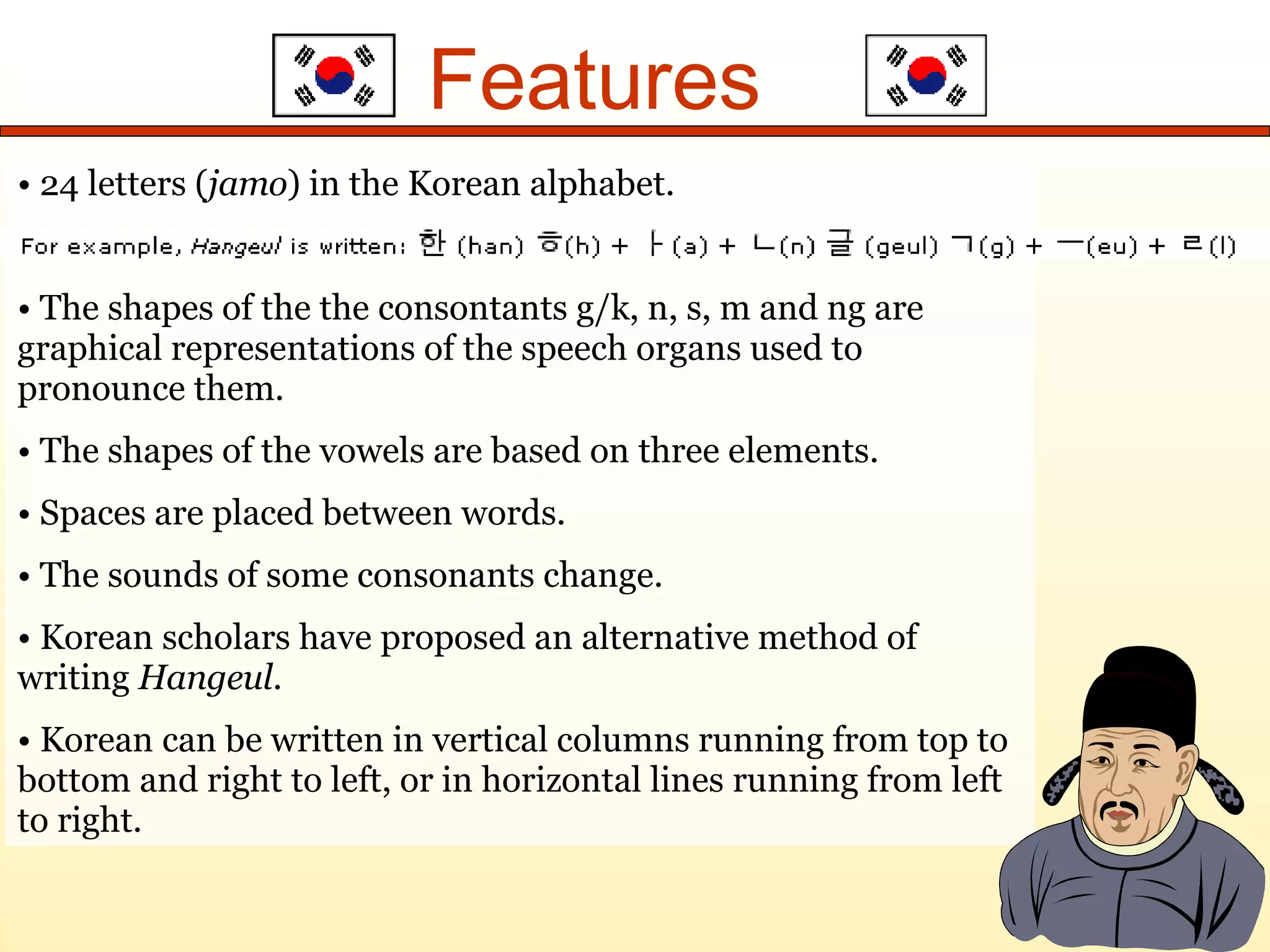
Features 24 letters ( jamo ) in the Korean alphabet. The shapes of the the consontants g/k, n, s, m and ng are graphical representations of the speech organs used to pronounce them.  The shapes of the vowels are based on three elements. Spaces are placed between words. The sounds of some consonants change. Korean scholars have proposed an alternative method of writing  Hangeul . Korean can be written in vertical columns running from top to bottom and right to left, or in horizontal lines running from left to right.
Hangeul alphabet
 
 
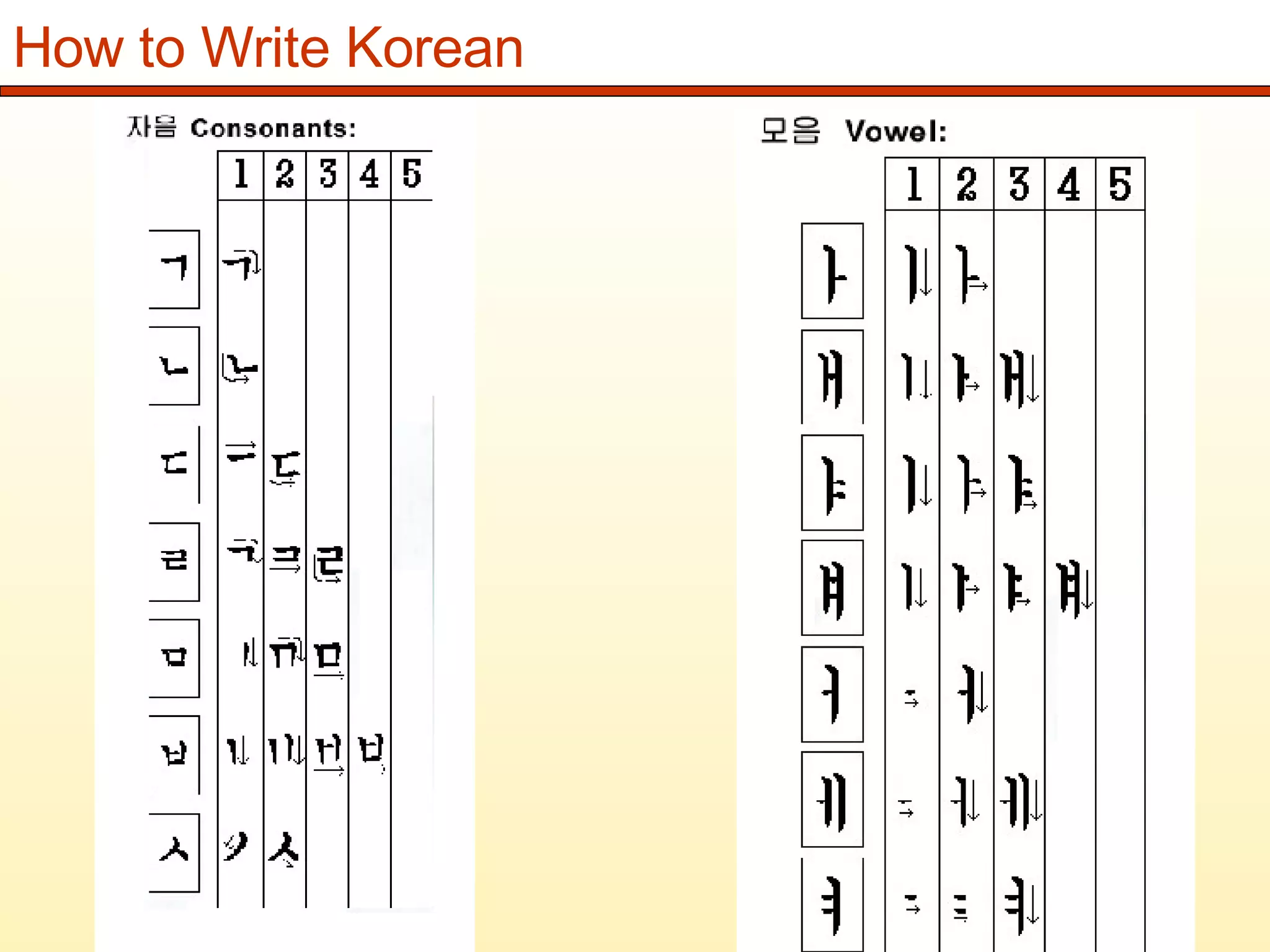
How to Write Korean
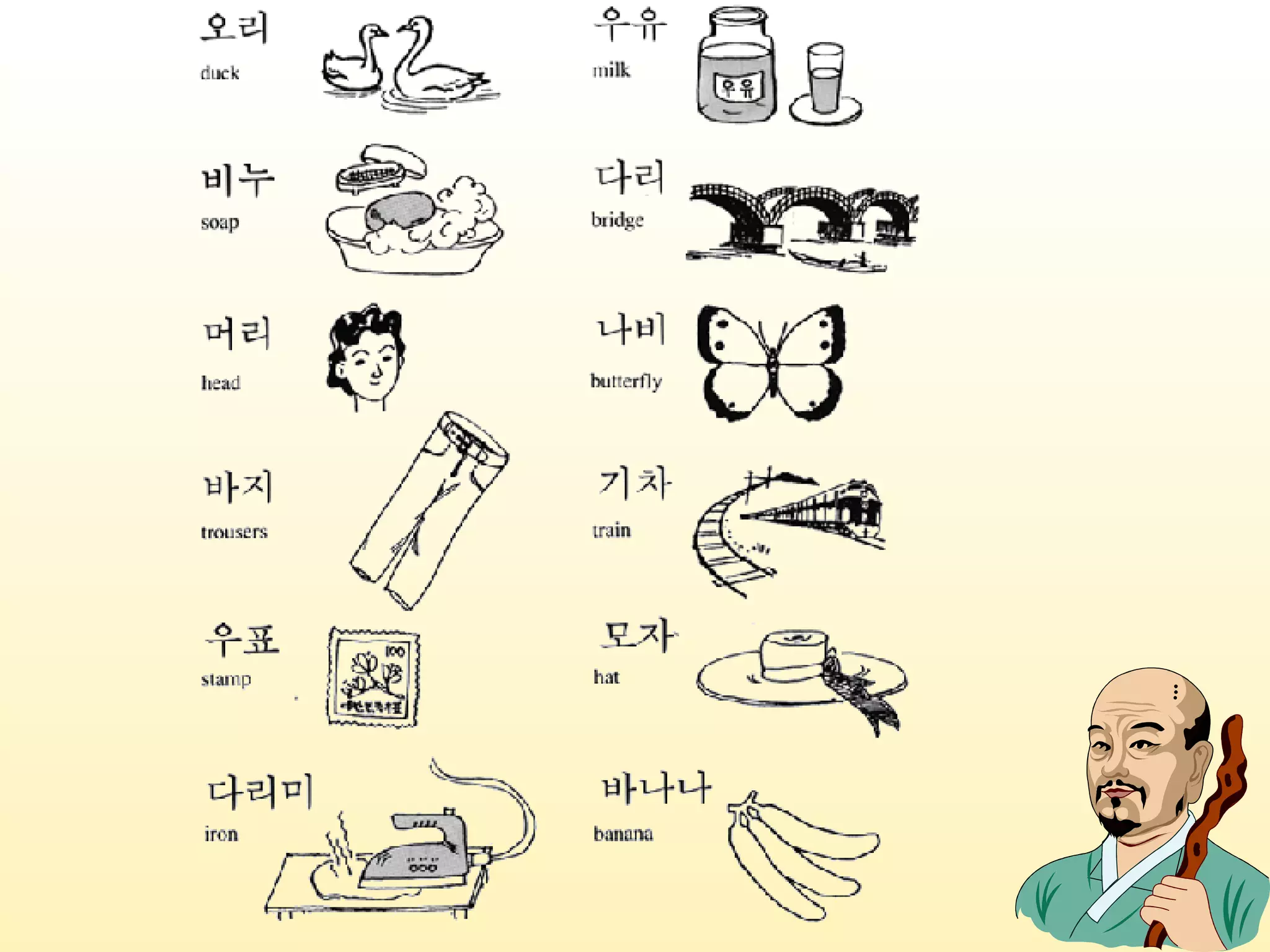
How to compose syllabic units
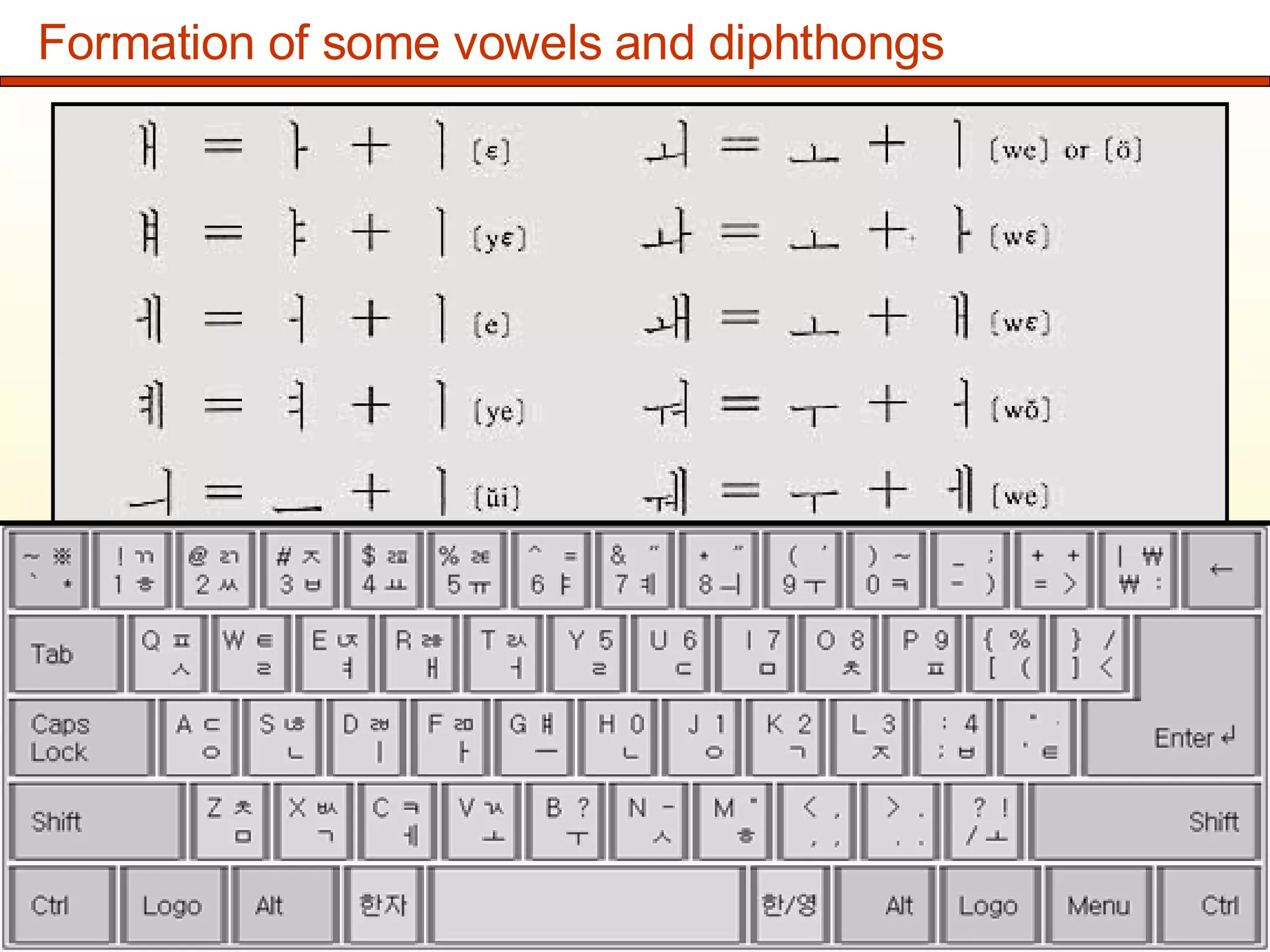
Formation of some vowels and diphthongs
 

Hangul

  • 1.
  • 2.
    Origin Chinese writingin Korea (Chinese ocupation). Different systems for writing: Hyangchal , Gukyeol and Idu . 1444 - Korean alphabet was invented and promulgated in 1446. Different names for the alphabet: Hunmin jeongeum , Eonmeun and Gukmeun . Modern name: Hangul. Korean writing was associated with people of low status. 19th and 20th  Mixed writing system ( Hanja + Hangul ). In the late 1960’s Hanja is reintroduced in schools.
  • 3.
    Features 24 letters( jamo ) in the Korean alphabet. The shapes of the the consontants g/k, n, s, m and ng are graphical representations of the speech organs used to pronounce them. The shapes of the vowels are based on three elements. Spaces are placed between words. The sounds of some consonants change. Korean scholars have proposed an alternative method of writing Hangeul . Korean can be written in vertical columns running from top to bottom and right to left, or in horizontal lines running from left to right.
  • 4.
  • 5.
  • 6.
  • 7.
  • 8.
    How to composesyllabic units
  • 9.
    Formation of somevowels and diphthongs
  • 10.