MD Omar Faruk
ID 934170032
BUMS 4th Batch
Hamdard University Bangladesh
Cont. 01685990112
Mail; djfarukkhan7@gmail.com
•Haemorrhoid
HAEMORRHOID
• Hemorrhoids, also known as piles, are swollen veins in the lower part
of the anus and rectum. When the walls of these vessels are stretched,
they become irritated.
CONT…
• Although hemorrhoids can be unpleasant and painful, they are easily
treated and very preventable. As hemorrhoids generally get worse
over time, doctors suggest that they should be treated as soon as they
appear.
FAST FACTS ON HAEMORRHOIDS
• Women are more likely to get hemorrhoids while pregnant.
• The likelihood of developing hemorrhoids increases as a person ages.
• Hemorrhoids occur when the veins surrounding the anus are
engorged or enlarged.
• Sometimes, medicines and surgery are needed to treat hemorrhoids.
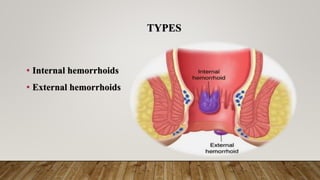
TYPES
• Internal hemorrhoids
• External hemorrhoids
CAUSES
• Pregnancy: They occur more commonly in pregnant women because, as the
uterus enlarges, it presses on the vein in the colon, causing it to bulge.
• Aging: Hemorrhoids are most common among adults aged 45 to 65 years. This
does not mean, however, that young people and children do not get them.
• Diarrhea: Hemorrhoids can occur after cases of chronic diarrhea.
• Chronic constipation: Straining to move stool puts additional pressure on the
walls of the blood vessels.
CONT..
• Sitting for too long: Staying in a seated position for long periods of time can
cause hemorrhoids, especially on the toilet.
• Heavy lifting: Repeatedly lifting heavy objects can lead to hemorrhoids.
• Anal intercourse: This can cause new hemorrhoids or worsen existing ones.
• Obesity: Diet-related obesity can cause hemorrhoids.
• Genetics: Some people inherit a tendency to develop hemorrhoids.
SYMPTOMS
• painless bleeding
• itching or irritation in the anal area
• discomfort, pain, or soreness in the same area
• lumps and swelling in the anal region
• leaking feces
DIAGNOSIS
• Anyone experiencing the symptoms outlined above should contact a
doctor. Bear in mind that other things, including colorectal and anal
cancers, can cause rectal bleeding.
TREATMENTS
• In the majority of cases, simple measures will alleviate symptoms
while hemorrhoids get better without treatment. However, medicines
and even surgery may sometimes be needed.
•Thanx To All

Haemorrhoid

  • 2.
    MD Omar Faruk ID934170032 BUMS 4th Batch Hamdard University Bangladesh Cont. 01685990112 Mail; djfarukkhan7@gmail.com
  • 3.
  • 4.
    HAEMORRHOID • Hemorrhoids, alsoknown as piles, are swollen veins in the lower part of the anus and rectum. When the walls of these vessels are stretched, they become irritated.
  • 5.
    CONT… • Although hemorrhoidscan be unpleasant and painful, they are easily treated and very preventable. As hemorrhoids generally get worse over time, doctors suggest that they should be treated as soon as they appear.
  • 6.
    FAST FACTS ONHAEMORRHOIDS • Women are more likely to get hemorrhoids while pregnant. • The likelihood of developing hemorrhoids increases as a person ages. • Hemorrhoids occur when the veins surrounding the anus are engorged or enlarged. • Sometimes, medicines and surgery are needed to treat hemorrhoids.
  • 7.
  • 8.
    CAUSES • Pregnancy: Theyoccur more commonly in pregnant women because, as the uterus enlarges, it presses on the vein in the colon, causing it to bulge. • Aging: Hemorrhoids are most common among adults aged 45 to 65 years. This does not mean, however, that young people and children do not get them. • Diarrhea: Hemorrhoids can occur after cases of chronic diarrhea. • Chronic constipation: Straining to move stool puts additional pressure on the walls of the blood vessels.
  • 9.
    CONT.. • Sitting fortoo long: Staying in a seated position for long periods of time can cause hemorrhoids, especially on the toilet. • Heavy lifting: Repeatedly lifting heavy objects can lead to hemorrhoids. • Anal intercourse: This can cause new hemorrhoids or worsen existing ones. • Obesity: Diet-related obesity can cause hemorrhoids. • Genetics: Some people inherit a tendency to develop hemorrhoids.
  • 10.
    SYMPTOMS • painless bleeding •itching or irritation in the anal area • discomfort, pain, or soreness in the same area • lumps and swelling in the anal region • leaking feces
  • 11.
    DIAGNOSIS • Anyone experiencingthe symptoms outlined above should contact a doctor. Bear in mind that other things, including colorectal and anal cancers, can cause rectal bleeding.
  • 12.
    TREATMENTS • In themajority of cases, simple measures will alleviate symptoms while hemorrhoids get better without treatment. However, medicines and even surgery may sometimes be needed.
  • 13.