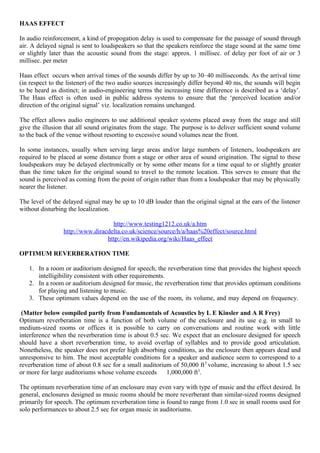

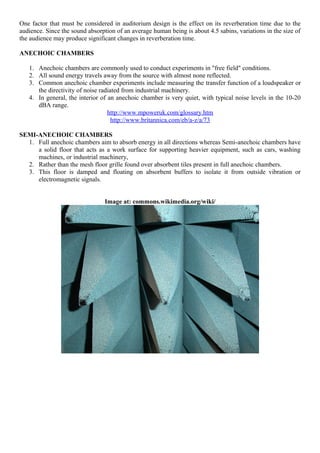
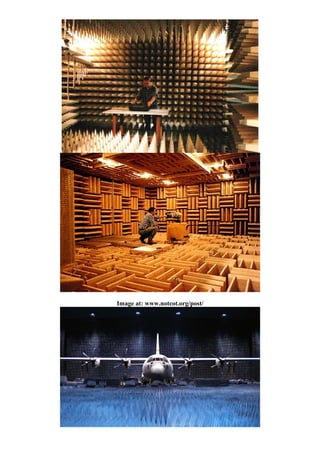
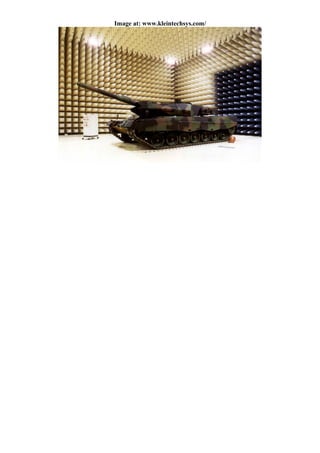

The Haas effect describes how the human auditory system is unable to distinguish between sounds arriving from separate sources if the time delay between the sounds is less than 30-40 milliseconds. Audio engineers make use of this effect by adding delayed signals to additional speakers to ensure the sound appears to originate from the stage rather than individual speakers, allowing sufficient volume throughout a venue. Optimum reverberation time depends on the volume and intended use of a space - shorter times around 0.5 seconds are best for speech while music benefits from 1-2 seconds. Anechoic chambers aim to absorb all sound reflections to study sources in free field conditions, maintaining very low noise levels of 10-20 dBA. Semi-anechoic chambers


