Guiding With Data
Understanding the Score Report
Understanding the Score Report Over 300 points of data on each student Cognitive Data Non-Cognitive Data
Cognitive Data
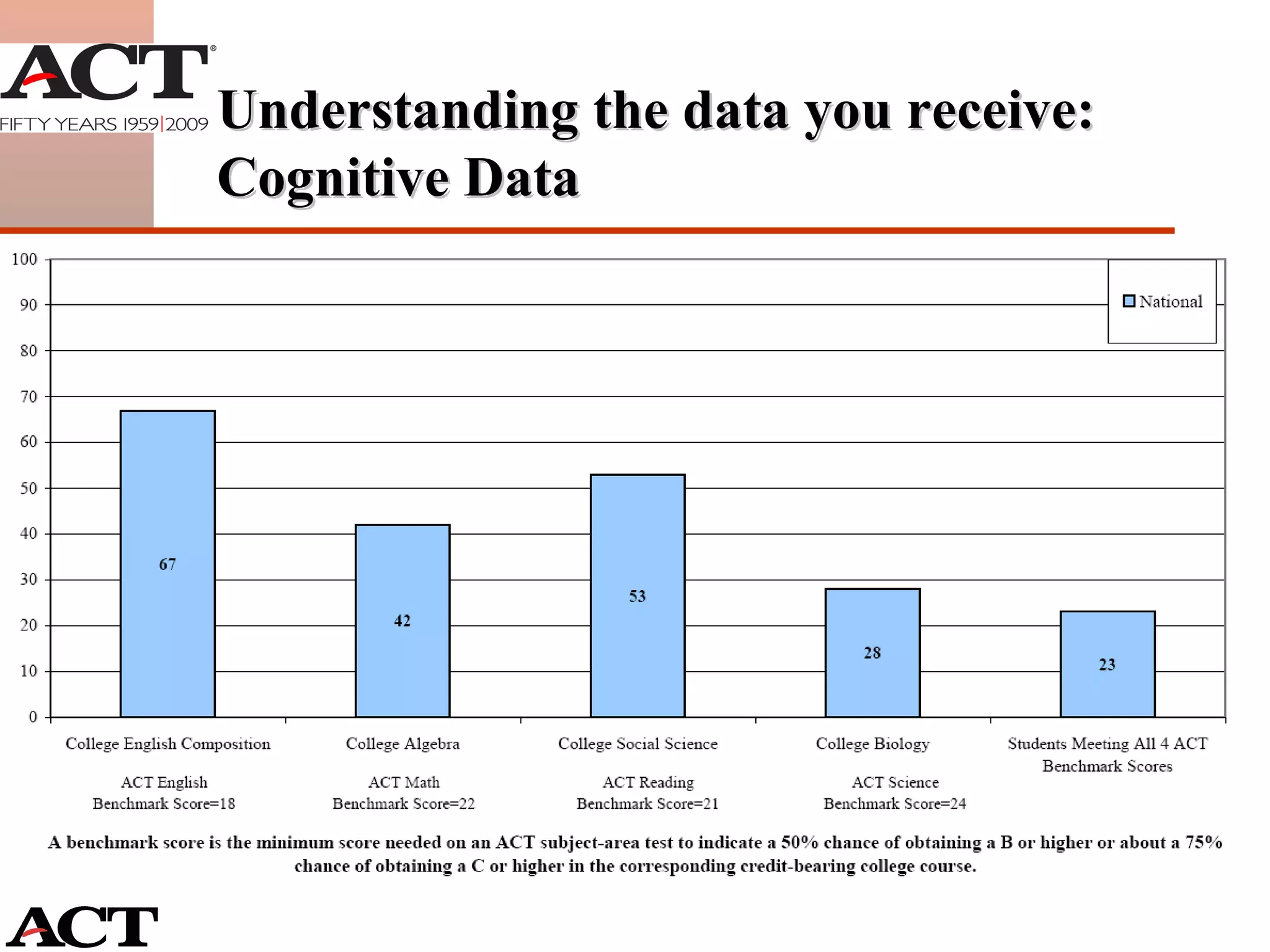
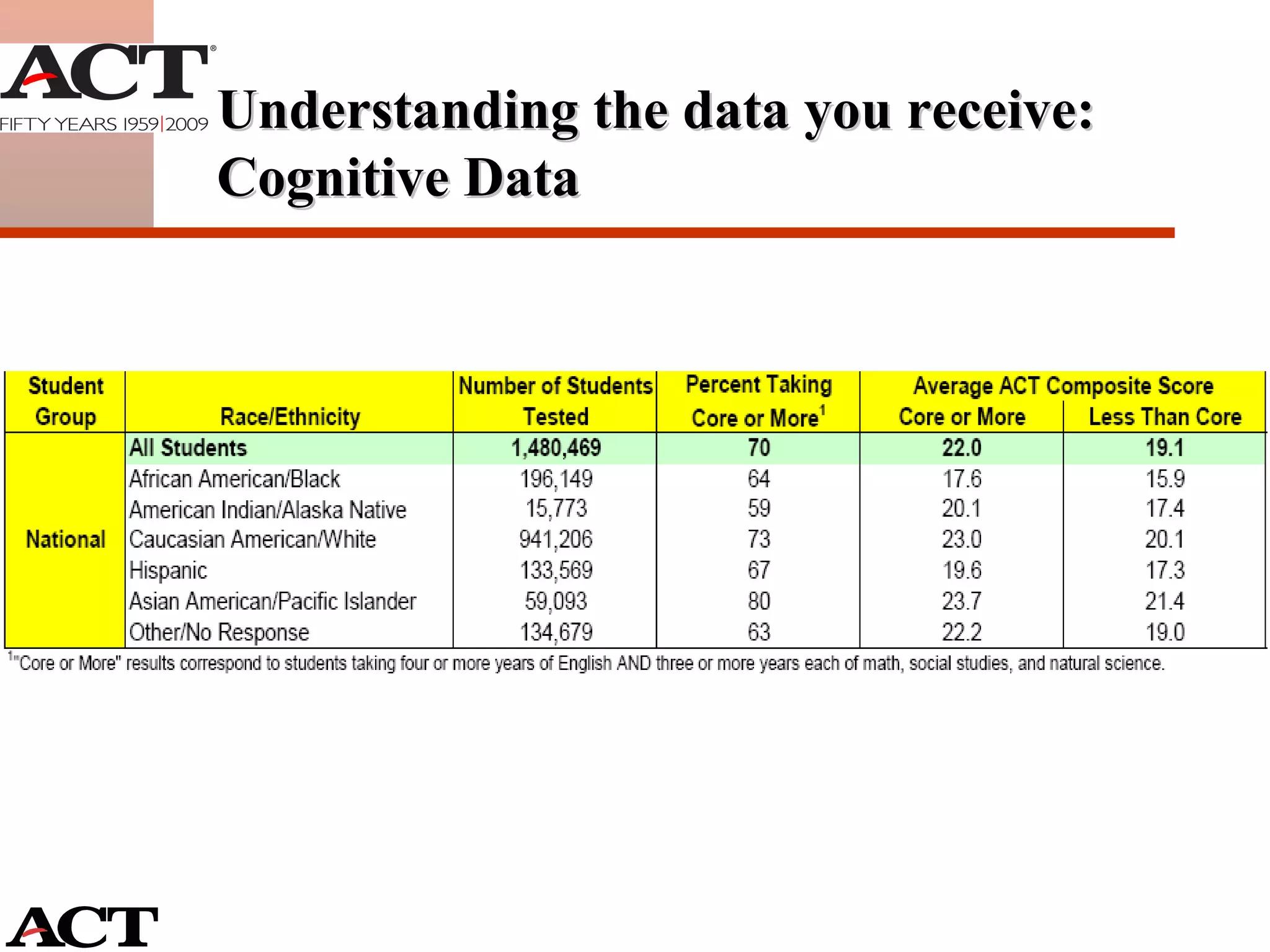
More than just a score! ACT National Curriculum Survey ACT College Readiness Standards Understanding the data you receive: Cognitive Data
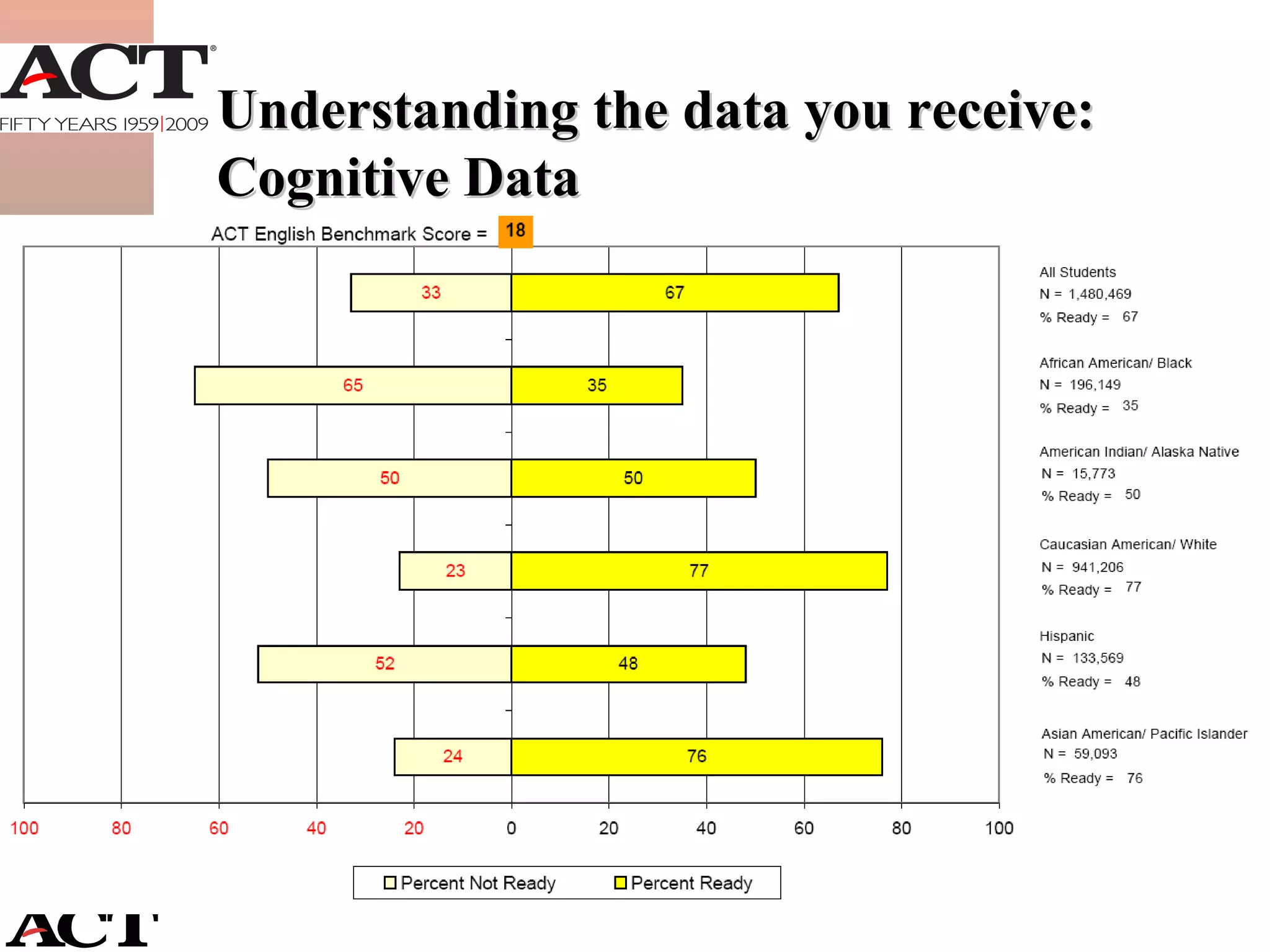
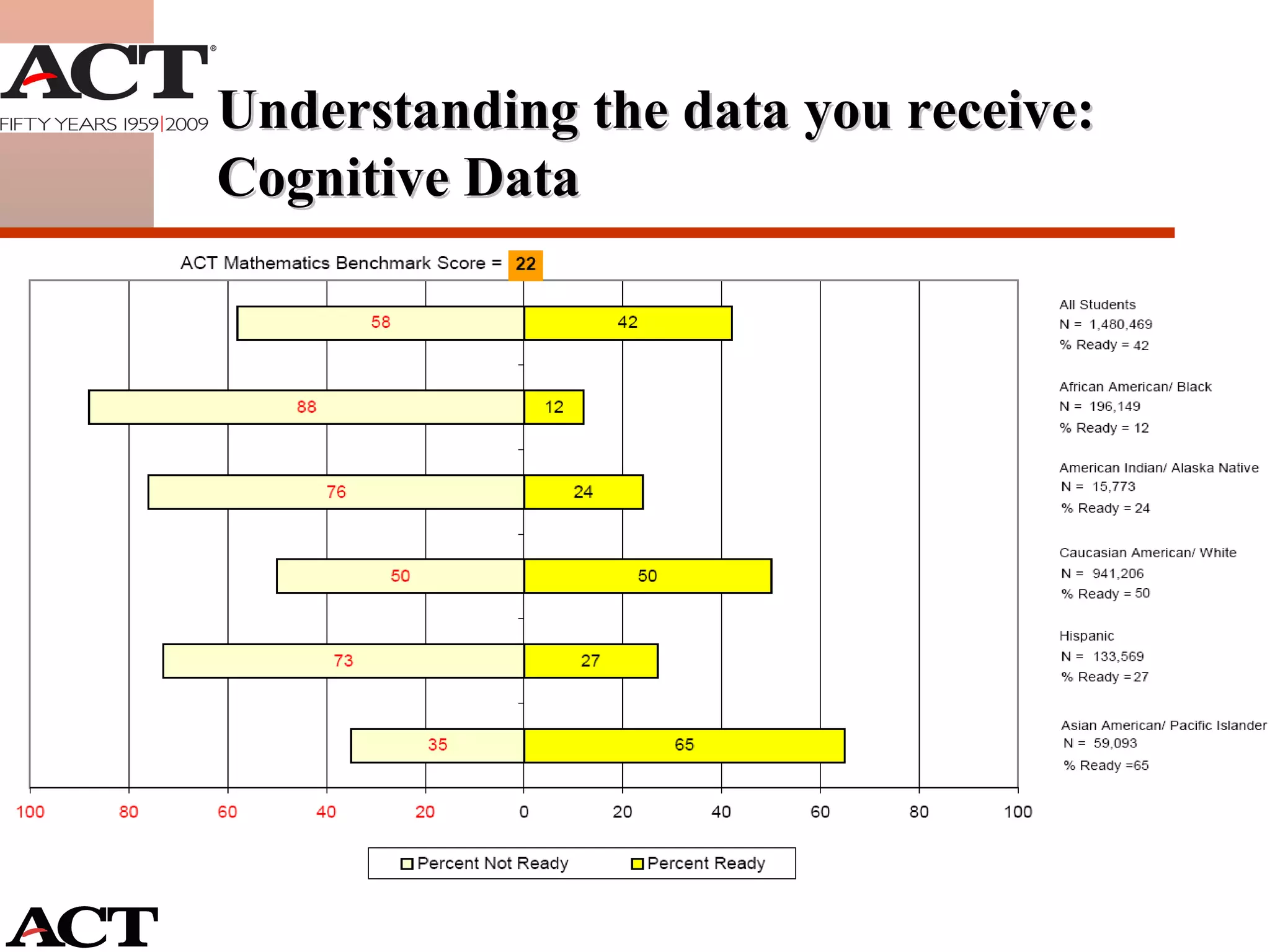
Understanding the data you receive: Cognitive Data The ACT is a curriculum-based assessment Tests students in core subject areas of English, mathematics  reading and science Assesses student proficiencies in these subject areas Informs and affects more than recruitment strategies
ACT National Curriculum Survey Survey middle, high school and postsecondary educators Determine faculty expectations in English, math, reading and science – then compare these to actual teaching and rigor practices as they tie to college readiness Survey is basis and foundation for EPAS Tests and promotes college readiness Standards are not opinions, but facts based on  survey and research Understanding the data you receive: Cognitive Data
ACT College Readiness Standards Narrative description of what students need to know and be able to do Reflect a common continuum of achievement Progressive model of student progress  from middle to high school Reflect student strengths/weaknesses evaluate student readiness for next levels of learning Understanding the data you receive: Cognitive Data
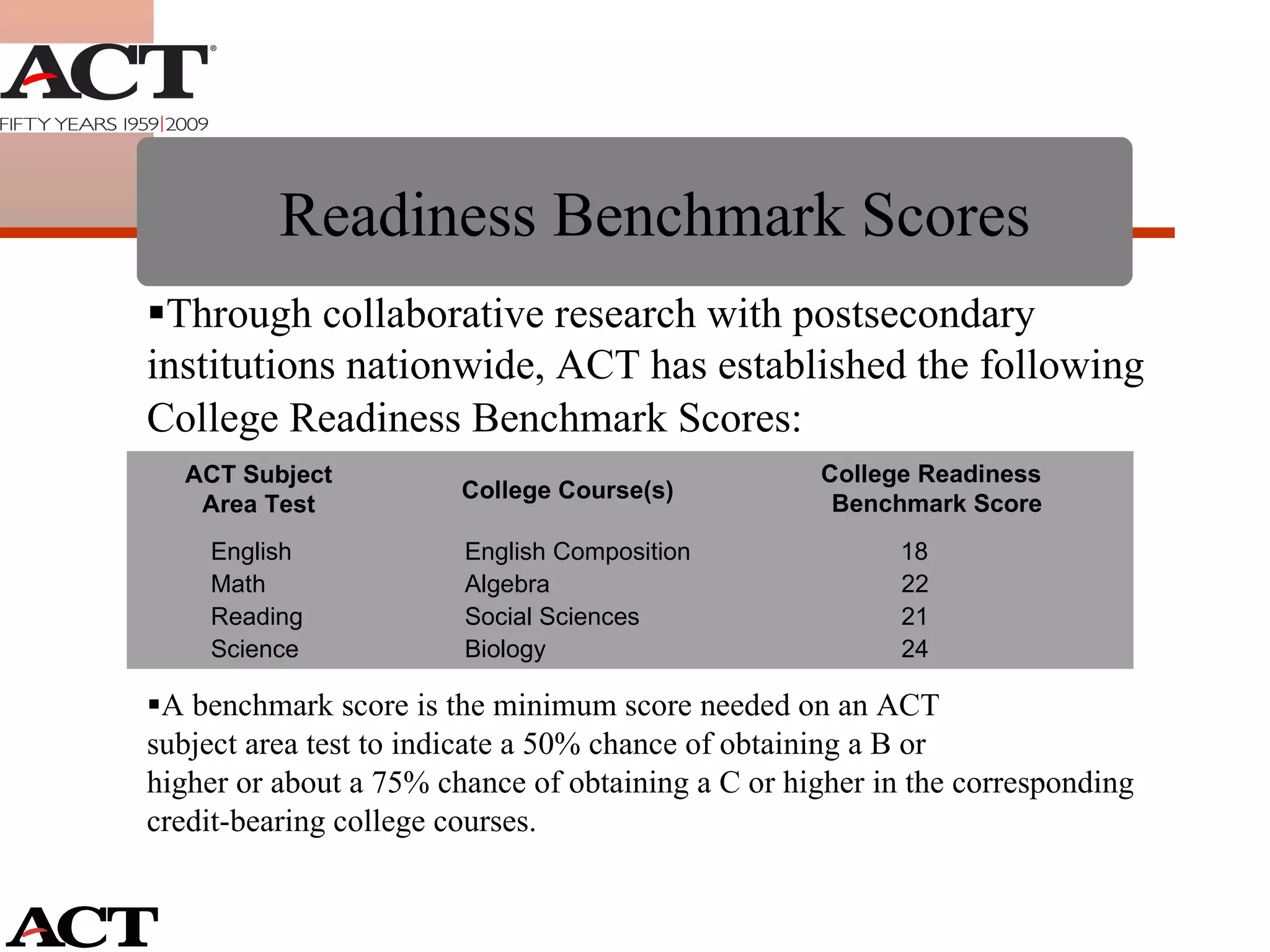
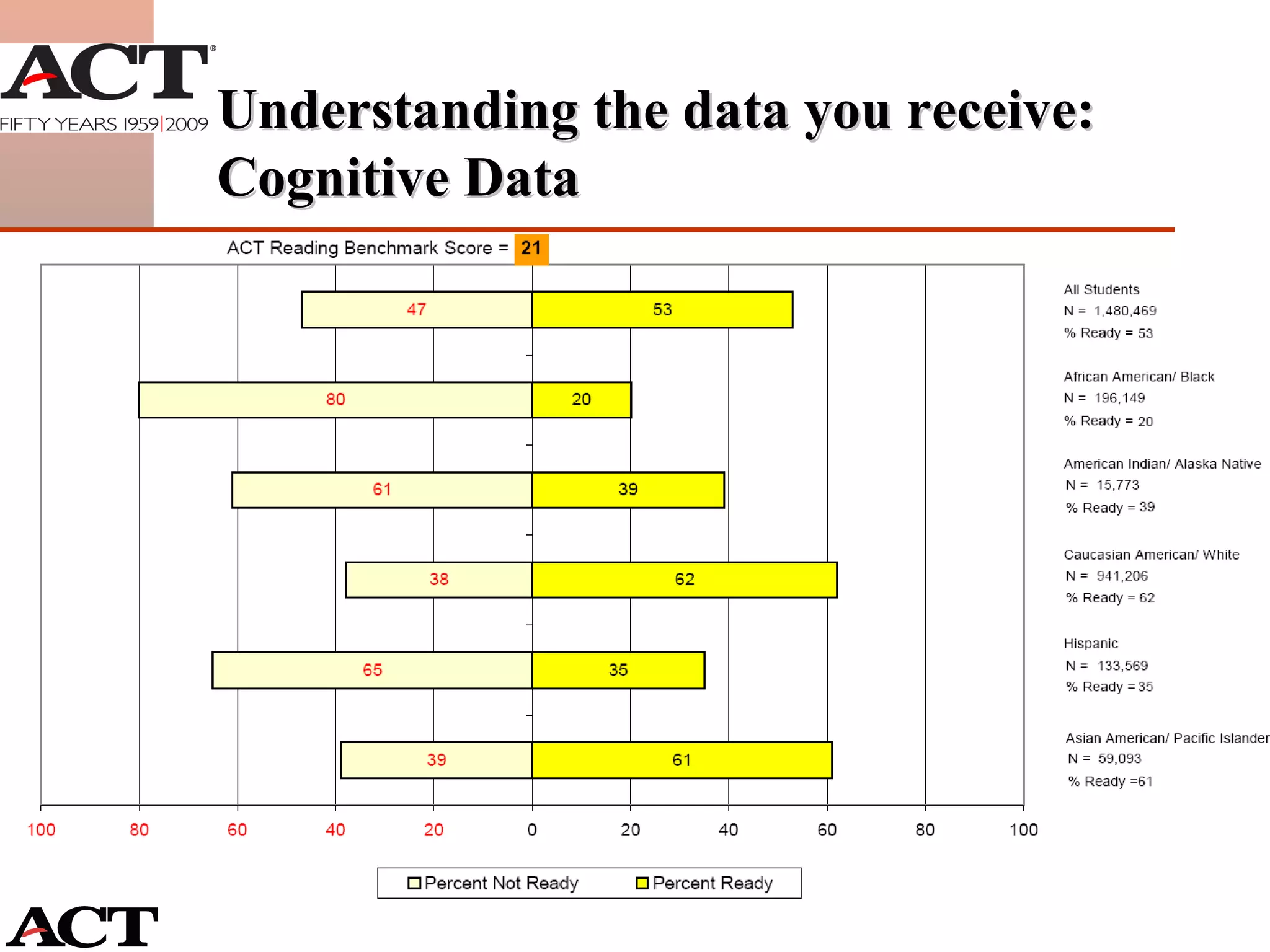
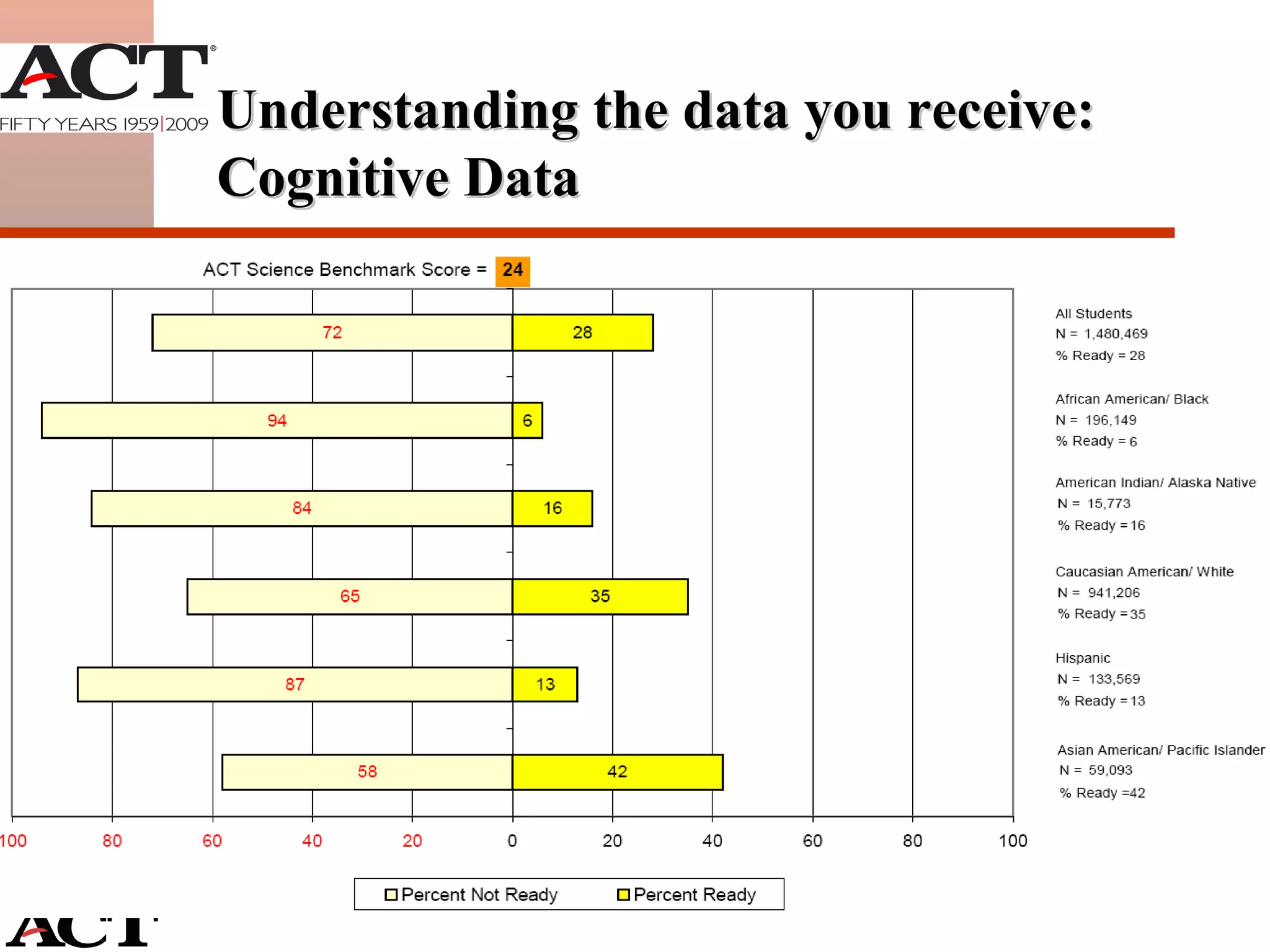
Readiness Benchmark Scores Through collaborative research with postsecondary institutions nationwide, ACT has established the following College Readiness Benchmark Scores: A benchmark score is the minimum score needed on an ACT  subject area test to indicate a 50% chance of obtaining a B or  higher or about a 75% chance of obtaining a C or higher in the corresponding credit-bearing college courses.   College Readiness   Benchmark Score  English English Composition 18  Math  Algebra  22  Reading Social Sciences 21  Science Biology 24 ACT Subject Area Test College Course(s)
Understanding the data you receive: Cognitive Data
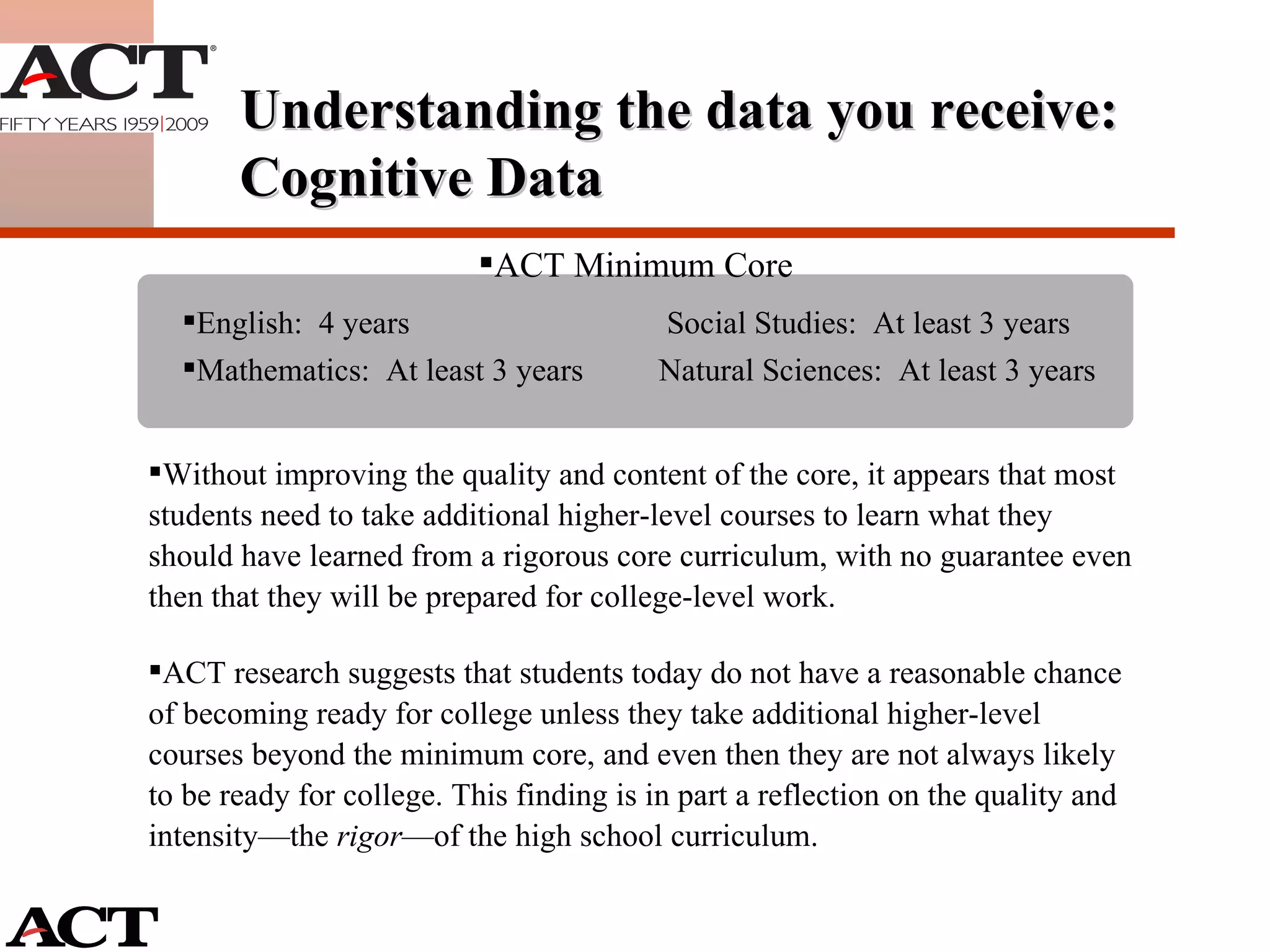
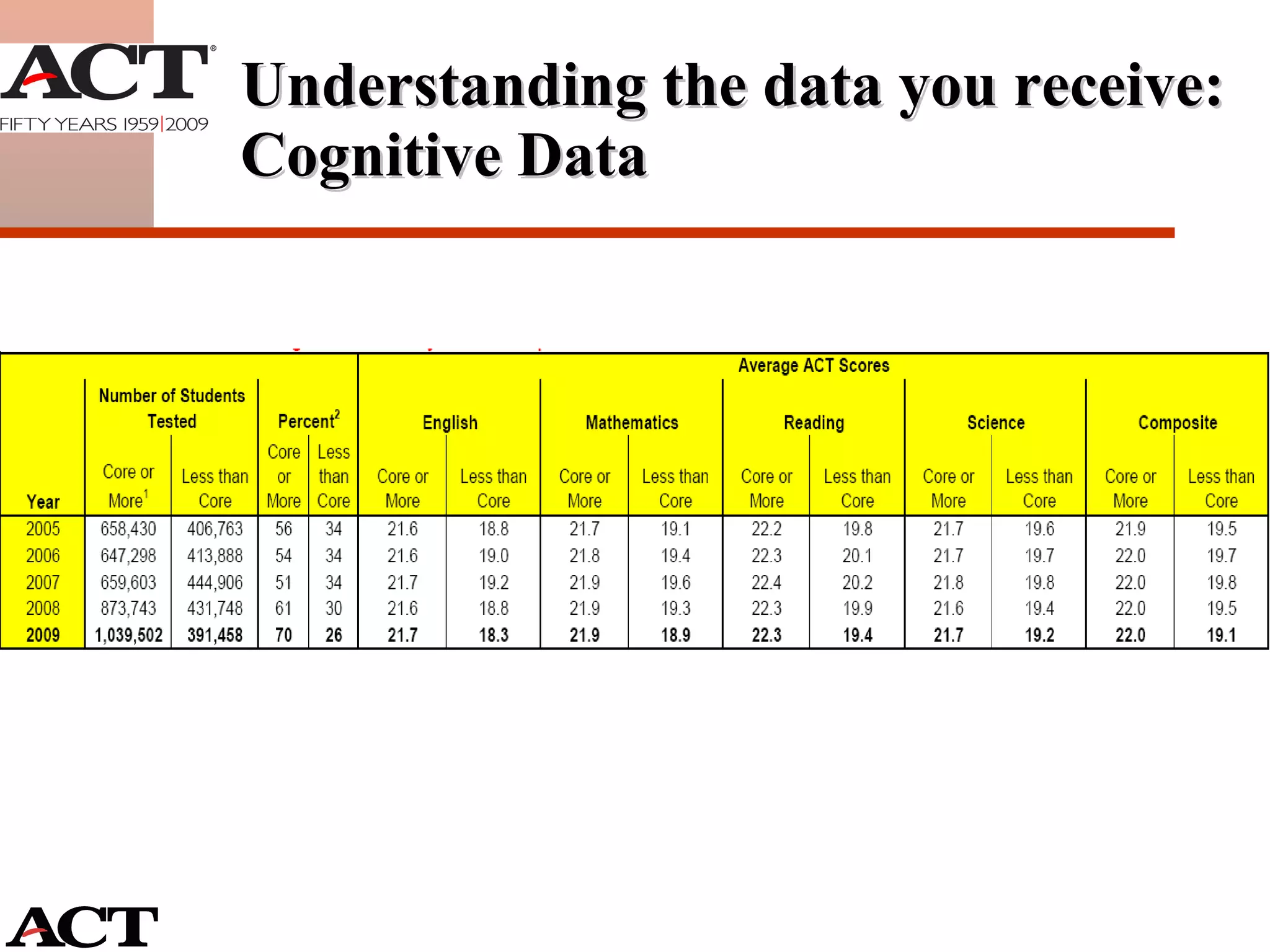
Without improving the quality and content of the core, it appears that most students need to take additional higher-level courses to learn what they should have learned from a rigorous core curriculum, with no guarantee even then that they will be prepared for college-level work. ACT research suggests that students today do not have a reasonable chance of becoming ready for college unless they take additional higher-level courses beyond the minimum core, and even then they are not always likely to be ready for college. This finding is in part a reflection on the quality and intensity—the  rigor —of the high school curriculum.  ACT Minimum Core  English:  4 years  Social Studies:  At least 3 years Mathematics:  At least 3 years Natural Sciences:  At least 3 years Understanding the data you receive: Cognitive Data
Understanding the data you receive: Cognitive Data
Non-Cognitive
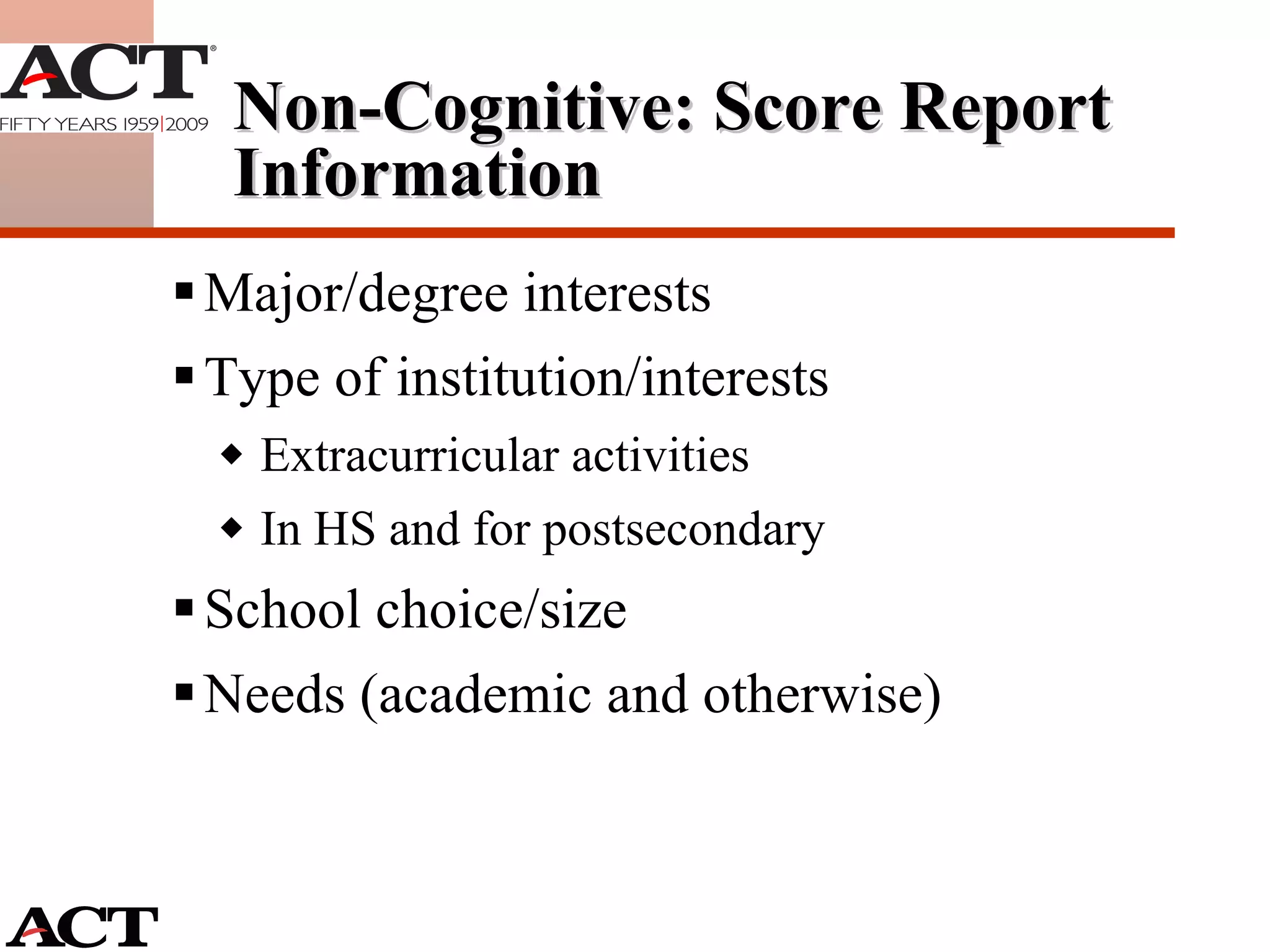
Non-Cognitive: Score Report Information Major/degree interests Type of institution/interests Extracurricular activities  In HS and for postsecondary School choice/size Needs (academic and otherwise)
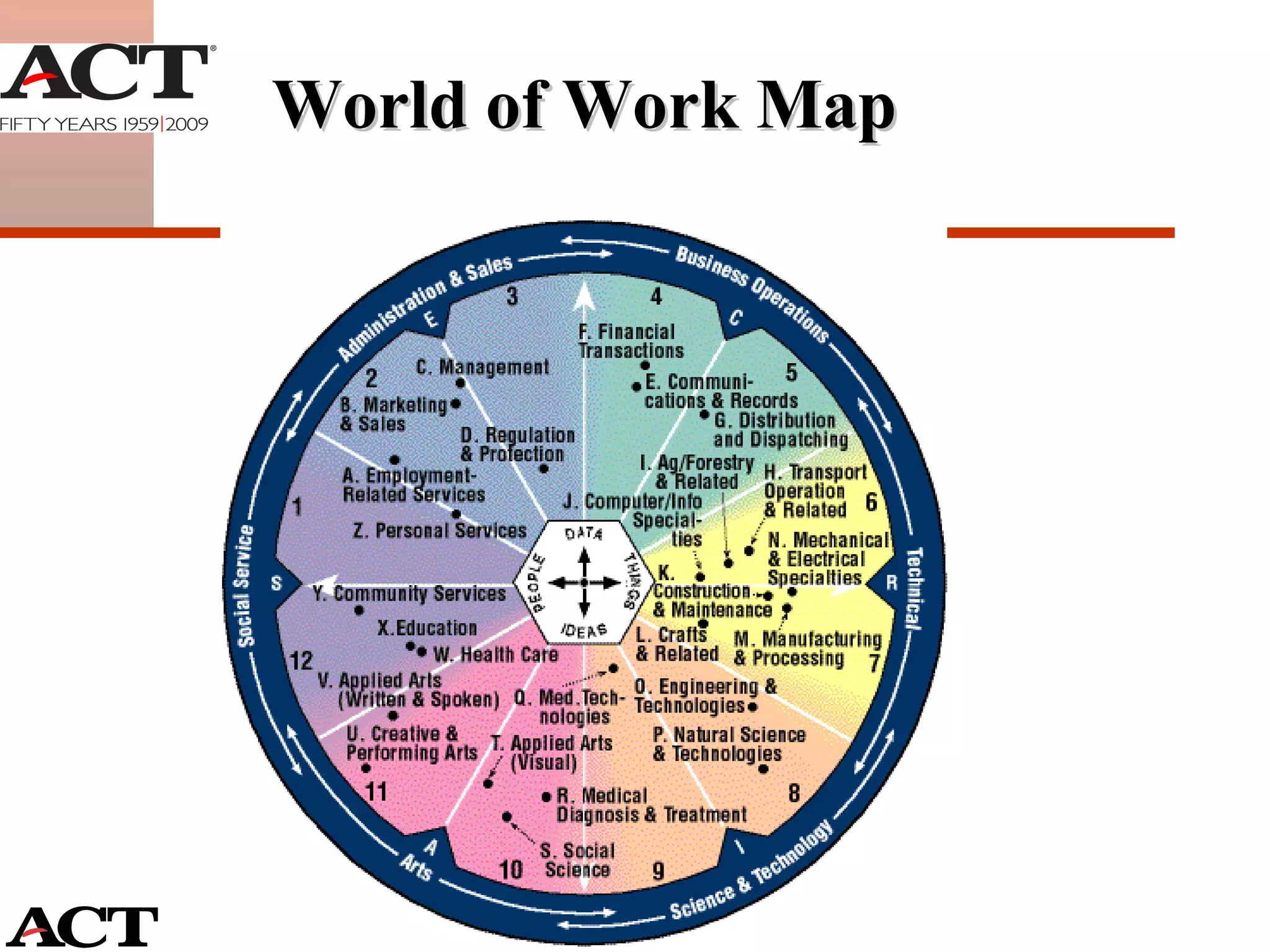
World of Work Map
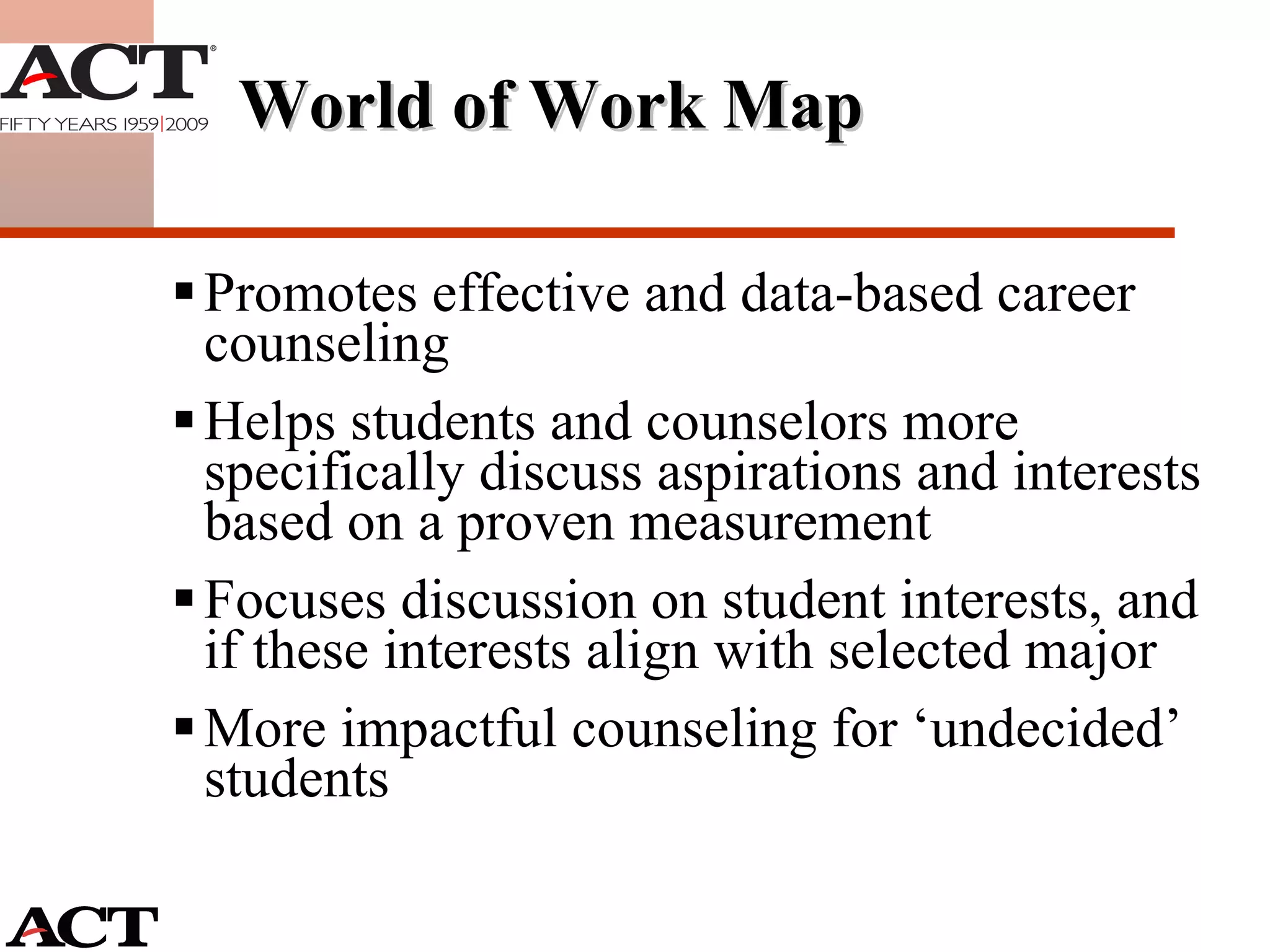
World of Work Map Promotes effective and data-based career counseling Helps students and counselors more specifically discuss aspirations and interests based on a proven measurement Focuses discussion on student interests, and if these interests align with selected major More impactful counseling for ‘undecided’ students
World of Work Map
Importance of Releasing Names to Colleges/Universities
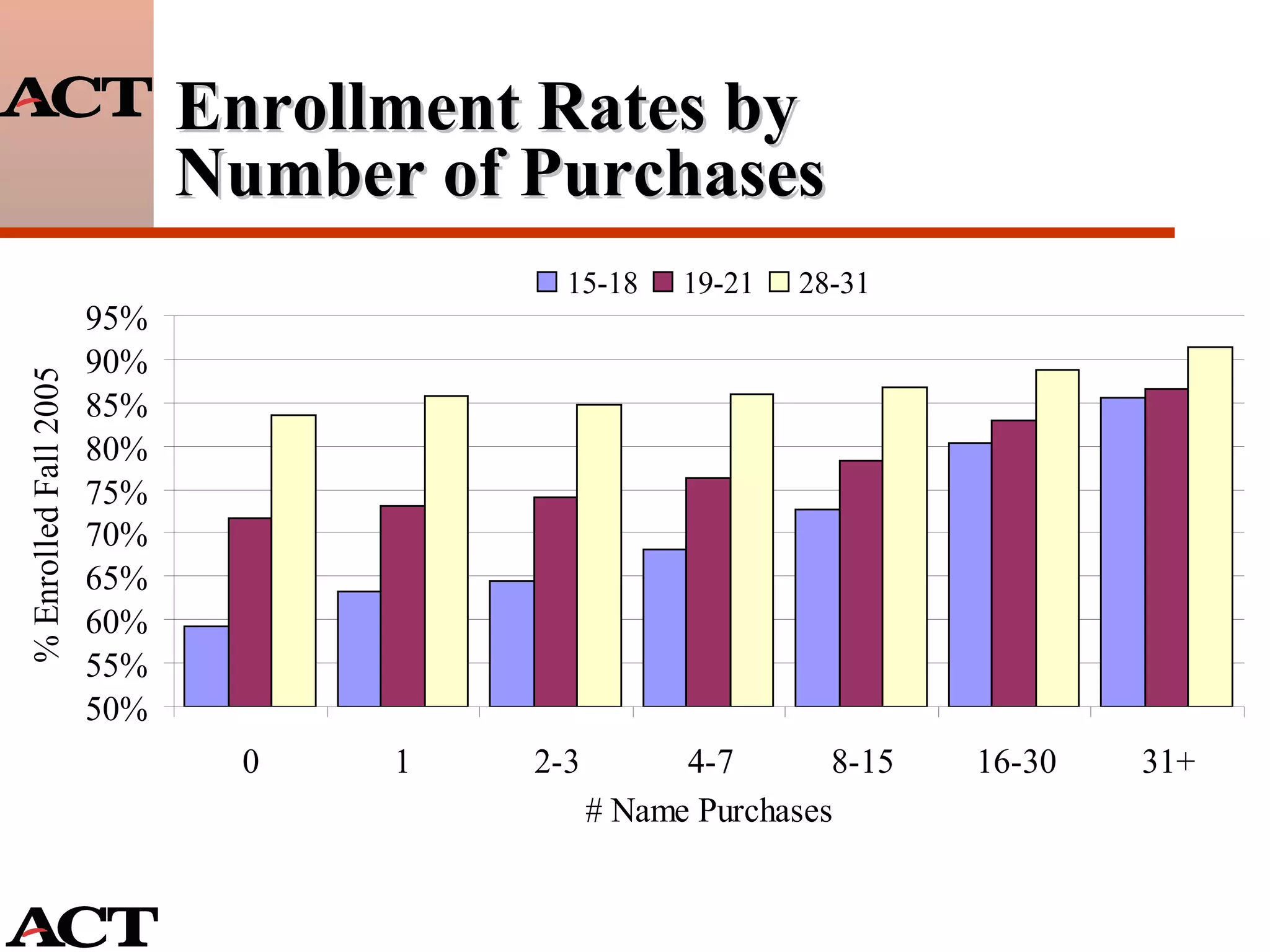
Enrollment Rates by  Number of Purchases
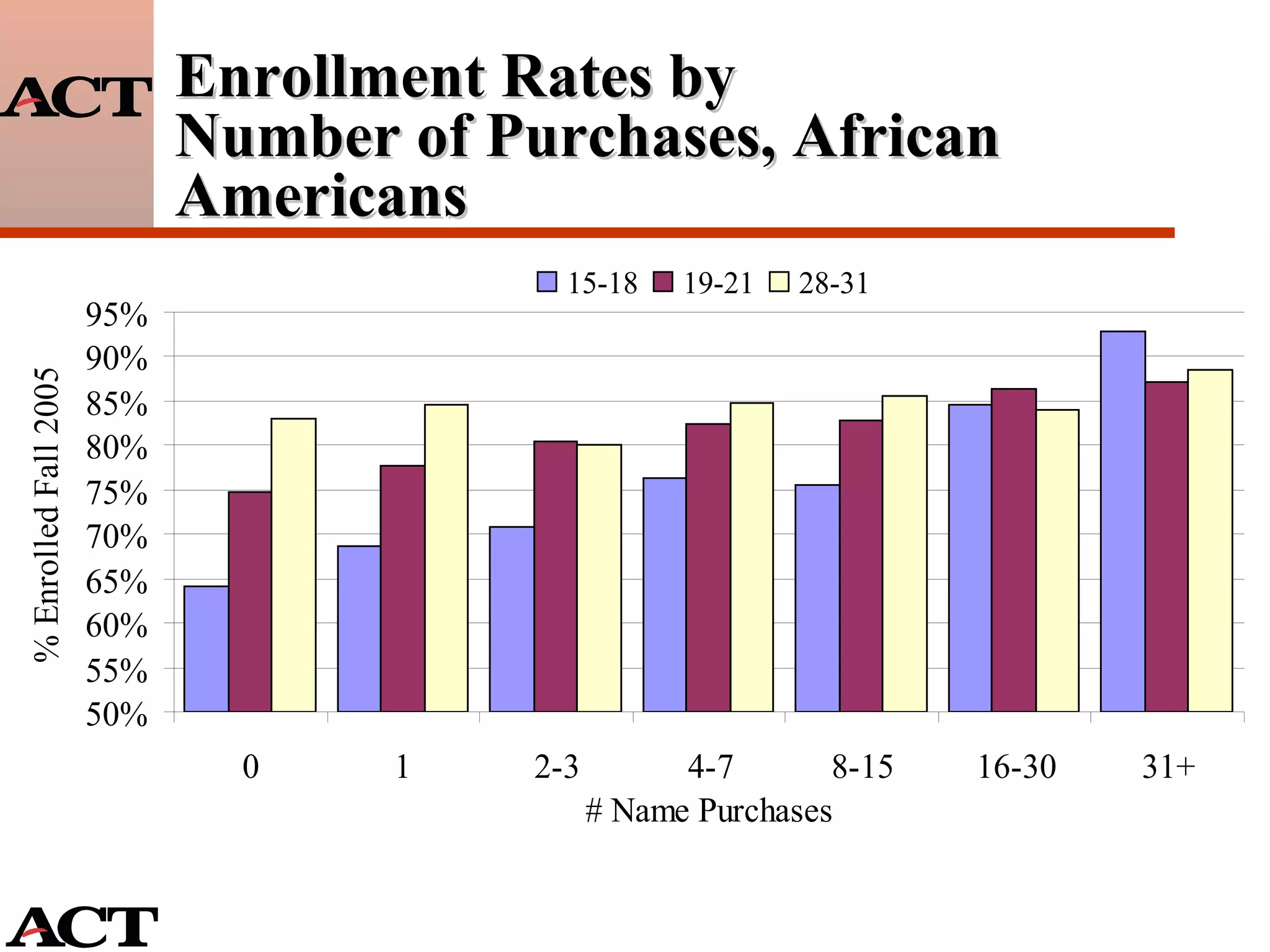
Enrollment Rates by  Number of Purchases, African Americans
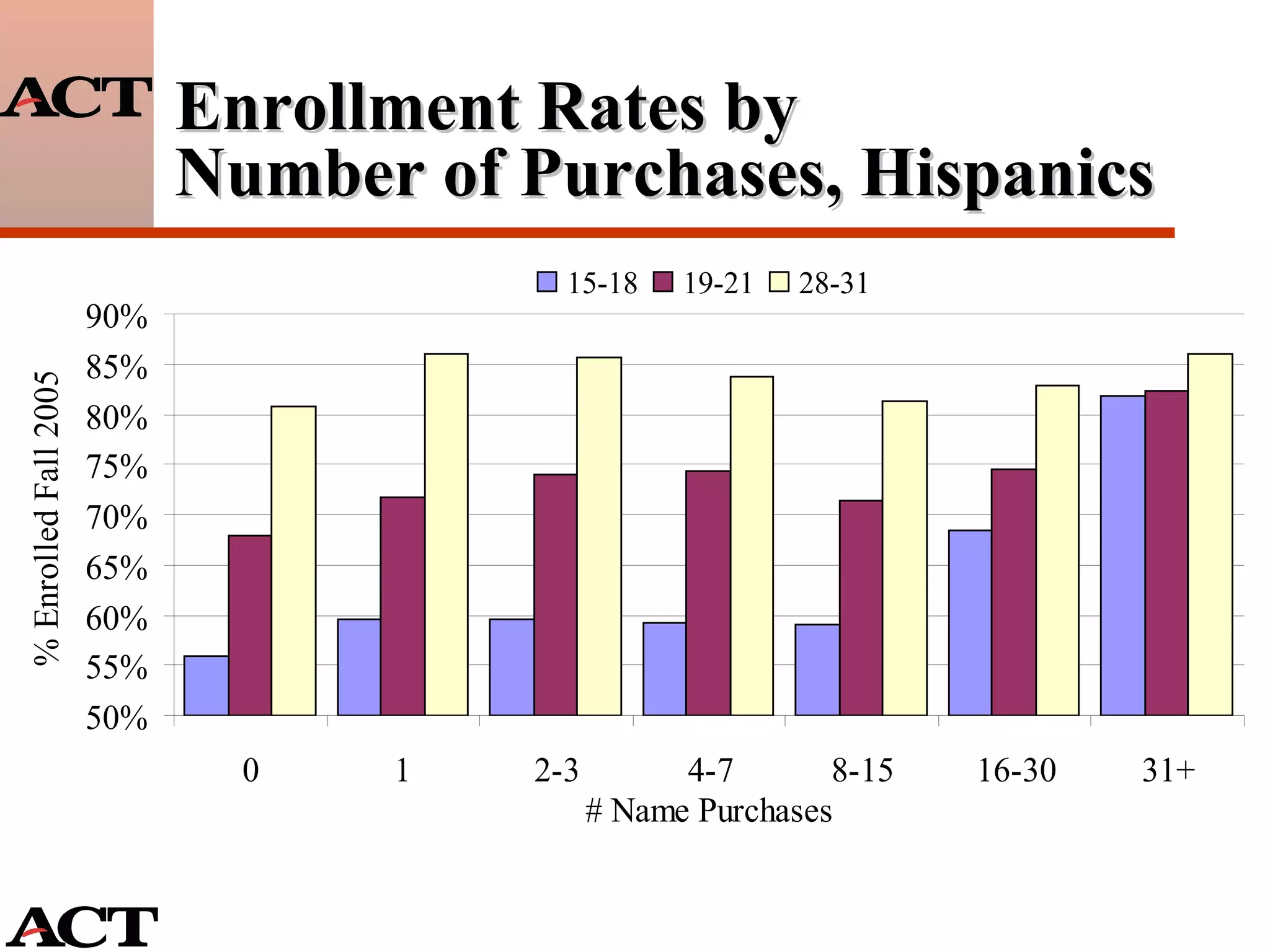
Enrollment Rates by  Number of Purchases, Hispanics
Late Testing
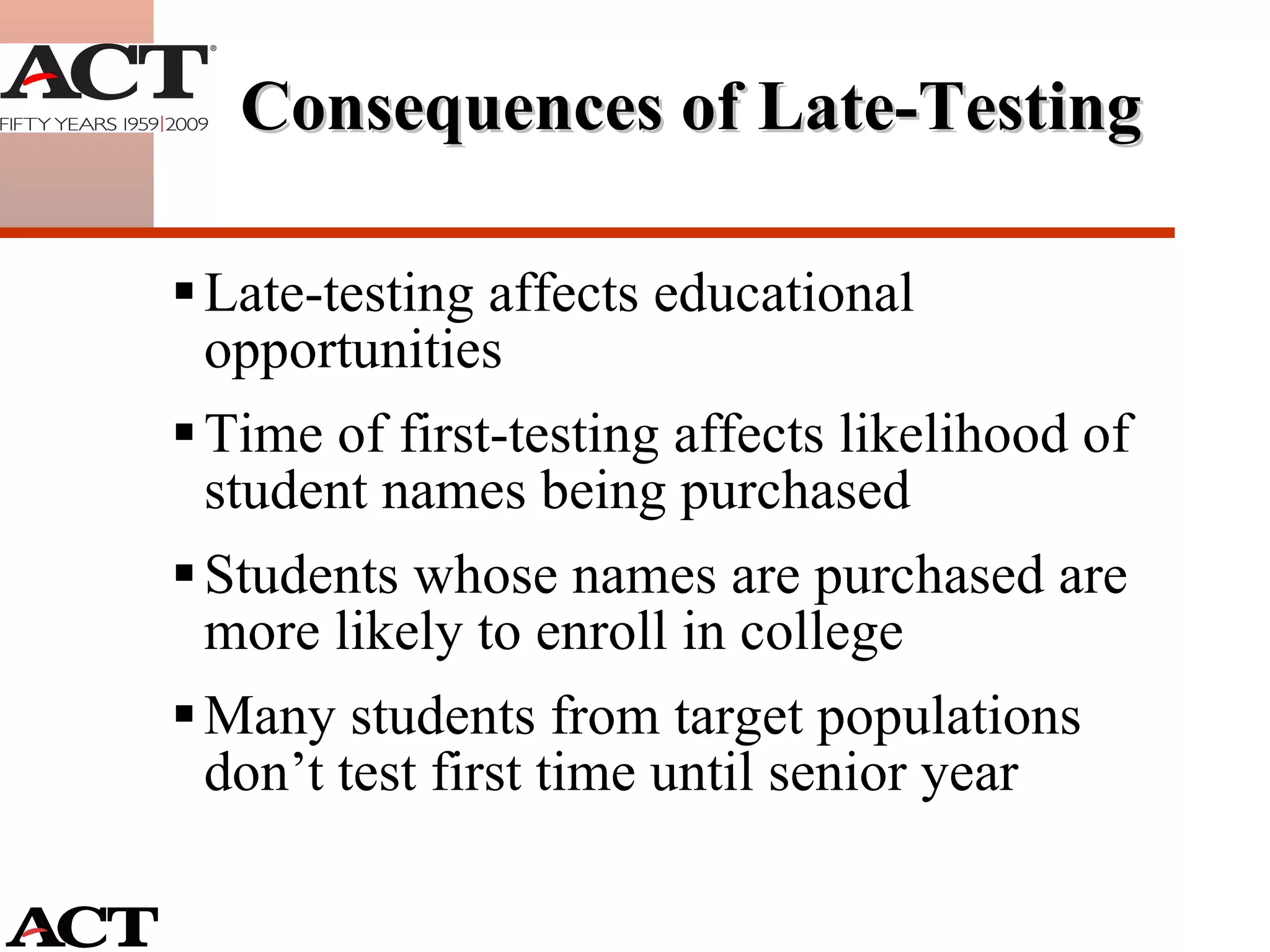
Consequences of Late-Testing  Late-testing affects educational opportunities Time of first-testing affects likelihood of student names being purchased Students whose names are purchased are more likely to enroll in college Many students from target populations don’t test first time until senior year
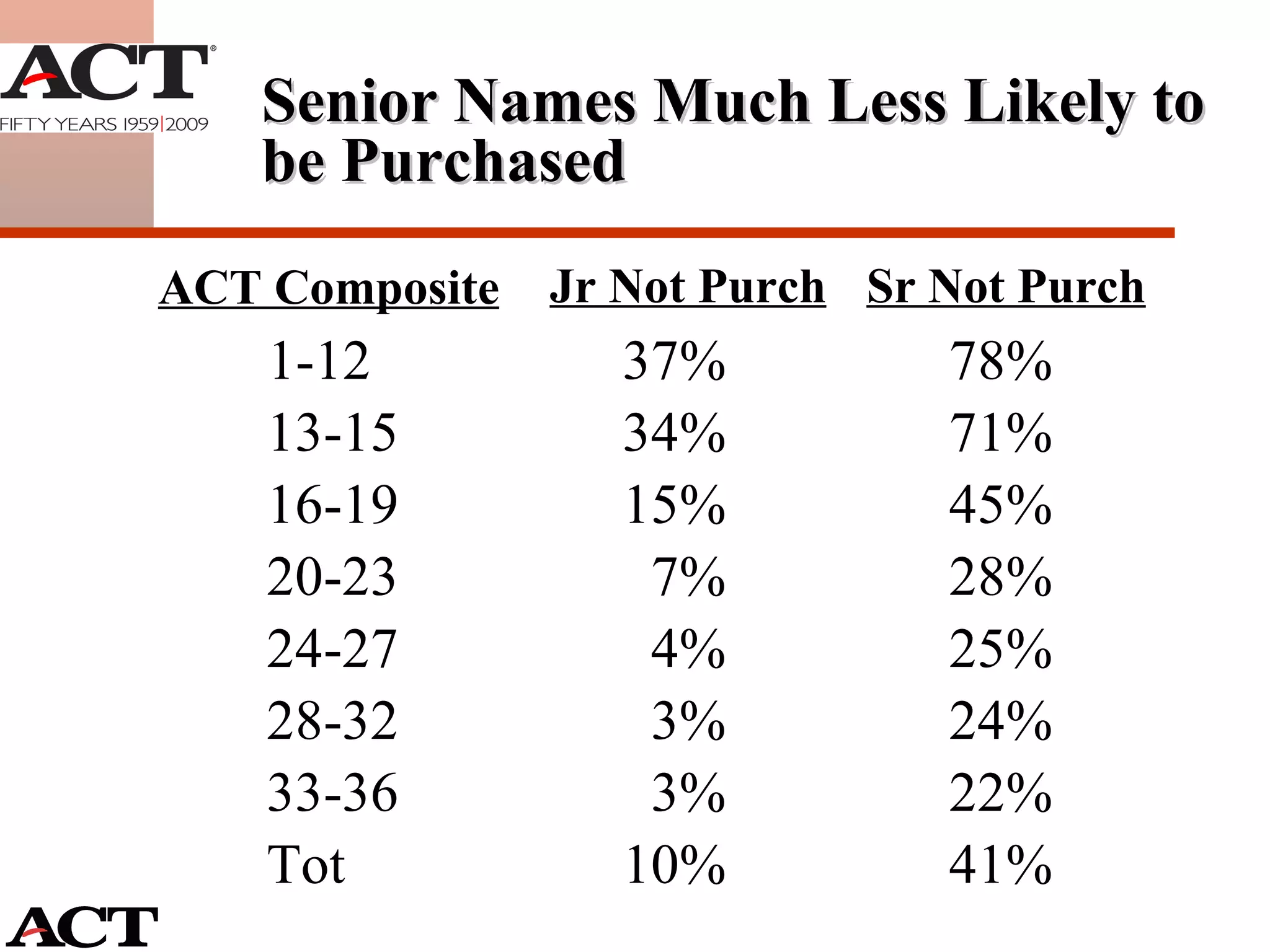
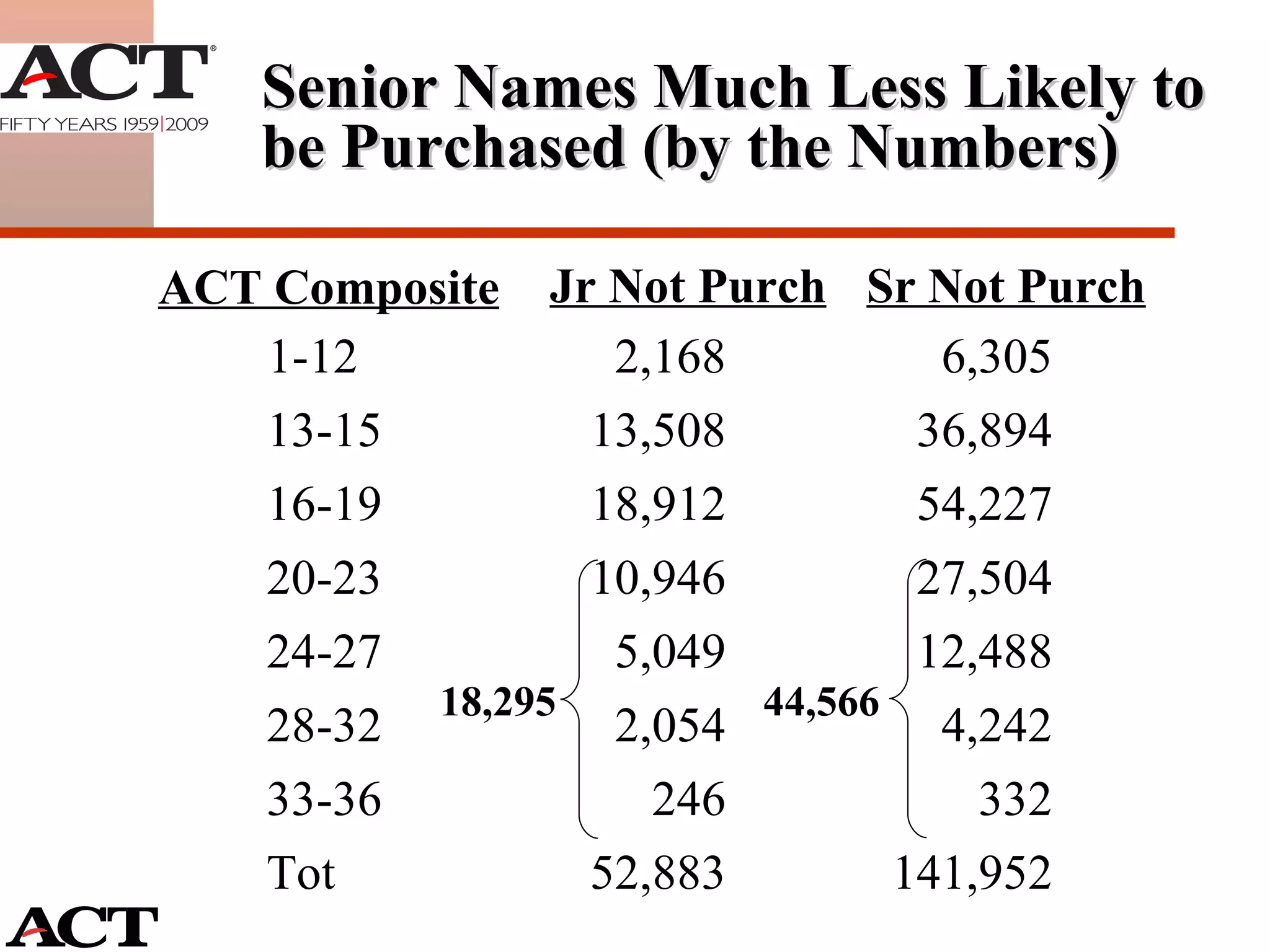
1-12 37% 78% 13-15 34% 71% 16-19 15% 45% 20-23 7% 28% 24-27 4% 25% 28-32 3% 24% 33-36 3% 22% Tot 10% 41% Senior Names Much Less Likely to  be Purchased Jr Not Purch Sr Not Purch ACT Composite
1-12 2,168 6,305 13-15 13,508 36,894 16-19 18,912 54,227 20-23 10,946 27,504 24-27 5,049 12,488 28-32 2,054 4,242 33-36 246 332 Tot 52,883 141,952 Senior Names Much Less Likely to  be Purchased (by the Numbers) Jr Not Purch Sr Not Purch ACT Composite 18,295 44,566
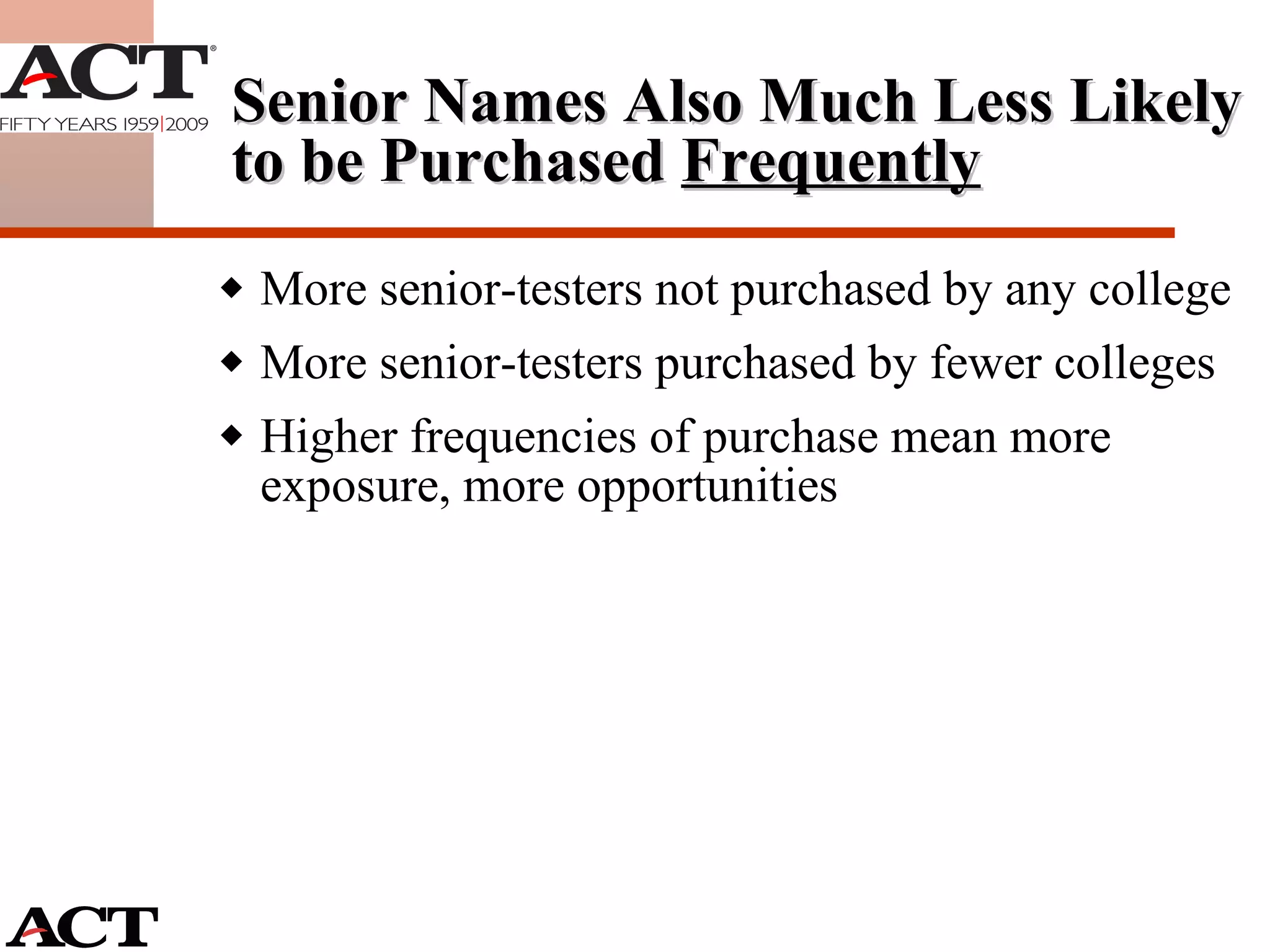
Senior Names Also Much Less Likely to be Purchased  Frequently More senior-testers not purchased by any college More senior-testers purchased by fewer colleges Higher frequencies of purchase mean more exposure, more opportunities
Most Important Factors for Effective Counseling
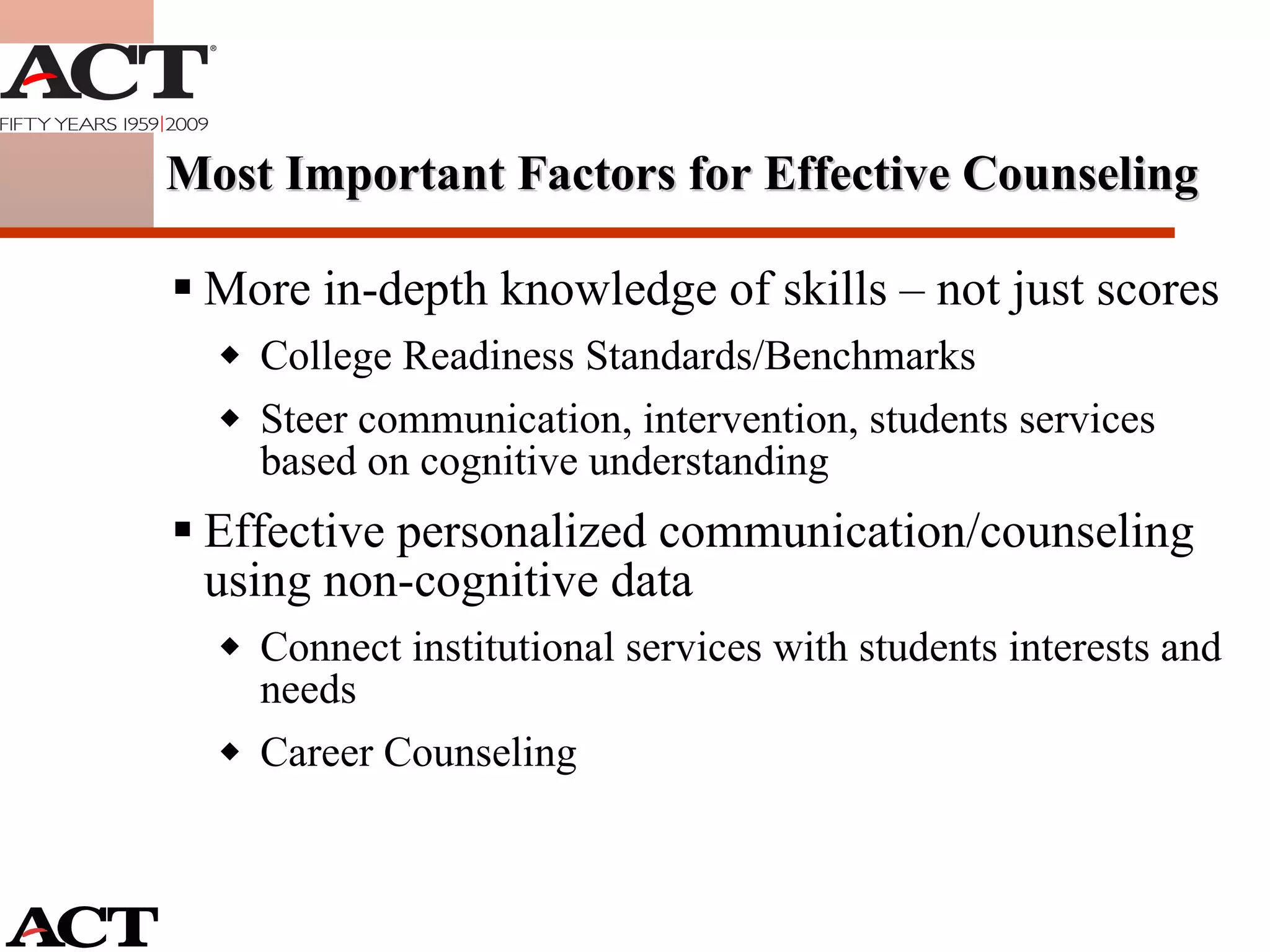
More in-depth knowledge of skills – not just scores College Readiness Standards/Benchmarks Steer communication, intervention, students services based on cognitive understanding Effective personalized communication/counseling using non-cognitive data Connect institutional services with students interests and needs Career Counseling Most Important Factors for Effective Counseling
Promoting early testing (Junior year) increases access for students and institutions to vital information/data Students and Counselors need to understand importance of releasing names  Making sure students take the right courses!!! Most Important Factors for Effective Counseling

Guiding Admissions With Data 1

  • 1.
  • 2.
  • 3.
    Understanding the ScoreReport Over 300 points of data on each student Cognitive Data Non-Cognitive Data
  • 4.
  • 5.
    More than justa score! ACT National Curriculum Survey ACT College Readiness Standards Understanding the data you receive: Cognitive Data
  • 6.
    Understanding the datayou receive: Cognitive Data The ACT is a curriculum-based assessment Tests students in core subject areas of English, mathematics reading and science Assesses student proficiencies in these subject areas Informs and affects more than recruitment strategies
  • 7.
    ACT National CurriculumSurvey Survey middle, high school and postsecondary educators Determine faculty expectations in English, math, reading and science – then compare these to actual teaching and rigor practices as they tie to college readiness Survey is basis and foundation for EPAS Tests and promotes college readiness Standards are not opinions, but facts based on survey and research Understanding the data you receive: Cognitive Data
  • 8.
    ACT College ReadinessStandards Narrative description of what students need to know and be able to do Reflect a common continuum of achievement Progressive model of student progress from middle to high school Reflect student strengths/weaknesses evaluate student readiness for next levels of learning Understanding the data you receive: Cognitive Data
  • 9.
    Readiness Benchmark ScoresThrough collaborative research with postsecondary institutions nationwide, ACT has established the following College Readiness Benchmark Scores: A benchmark score is the minimum score needed on an ACT subject area test to indicate a 50% chance of obtaining a B or higher or about a 75% chance of obtaining a C or higher in the corresponding credit-bearing college courses. College Readiness Benchmark Score English English Composition 18 Math Algebra 22 Reading Social Sciences 21 Science Biology 24 ACT Subject Area Test College Course(s)
  • 10.
    Understanding the datayou receive: Cognitive Data
  • 11.
    Understanding the datayou receive: Cognitive Data
  • 12.
    Understanding the datayou receive: Cognitive Data
  • 13.
    Understanding the datayou receive: Cognitive Data
  • 14.
    Understanding the datayou receive: Cognitive Data
  • 15.
    Without improving thequality and content of the core, it appears that most students need to take additional higher-level courses to learn what they should have learned from a rigorous core curriculum, with no guarantee even then that they will be prepared for college-level work. ACT research suggests that students today do not have a reasonable chance of becoming ready for college unless they take additional higher-level courses beyond the minimum core, and even then they are not always likely to be ready for college. This finding is in part a reflection on the quality and intensity—the rigor —of the high school curriculum. ACT Minimum Core English: 4 years Social Studies: At least 3 years Mathematics: At least 3 years Natural Sciences: At least 3 years Understanding the data you receive: Cognitive Data
  • 16.
    Understanding the datayou receive: Cognitive Data
  • 17.
    Understanding the datayou receive: Cognitive Data
  • 18.
  • 19.
    Non-Cognitive: Score ReportInformation Major/degree interests Type of institution/interests Extracurricular activities In HS and for postsecondary School choice/size Needs (academic and otherwise)
  • 20.
  • 21.
    World of WorkMap Promotes effective and data-based career counseling Helps students and counselors more specifically discuss aspirations and interests based on a proven measurement Focuses discussion on student interests, and if these interests align with selected major More impactful counseling for ‘undecided’ students
  • 22.
  • 23.
    Importance of ReleasingNames to Colleges/Universities
  • 24.
    Enrollment Rates by Number of Purchases
  • 25.
    Enrollment Rates by Number of Purchases, African Americans
  • 26.
    Enrollment Rates by Number of Purchases, Hispanics
  • 27.
  • 28.
    Consequences of Late-Testing Late-testing affects educational opportunities Time of first-testing affects likelihood of student names being purchased Students whose names are purchased are more likely to enroll in college Many students from target populations don’t test first time until senior year
  • 29.
    1-12 37% 78%13-15 34% 71% 16-19 15% 45% 20-23 7% 28% 24-27 4% 25% 28-32 3% 24% 33-36 3% 22% Tot 10% 41% Senior Names Much Less Likely to be Purchased Jr Not Purch Sr Not Purch ACT Composite
  • 30.
    1-12 2,168 6,30513-15 13,508 36,894 16-19 18,912 54,227 20-23 10,946 27,504 24-27 5,049 12,488 28-32 2,054 4,242 33-36 246 332 Tot 52,883 141,952 Senior Names Much Less Likely to be Purchased (by the Numbers) Jr Not Purch Sr Not Purch ACT Composite 18,295 44,566
  • 31.
    Senior Names AlsoMuch Less Likely to be Purchased Frequently More senior-testers not purchased by any college More senior-testers purchased by fewer colleges Higher frequencies of purchase mean more exposure, more opportunities
  • 32.
    Most Important Factorsfor Effective Counseling
  • 33.
    More in-depth knowledgeof skills – not just scores College Readiness Standards/Benchmarks Steer communication, intervention, students services based on cognitive understanding Effective personalized communication/counseling using non-cognitive data Connect institutional services with students interests and needs Career Counseling Most Important Factors for Effective Counseling
  • 34.
    Promoting early testing(Junior year) increases access for students and institutions to vital information/data Students and Counselors need to understand importance of releasing names Making sure students take the right courses!!! Most Important Factors for Effective Counseling