Guide to MD/PhD Application
By Colleen M. Farrelly
Marquette University, Honors B.S. 2009
Admitted to Multiple MD/PhD Programs, 2008-2009 Cycle
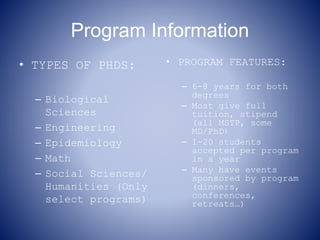
Program Information
• TYPES OF PHDS:
– Biological
Sciences
– Engineering
– Epidemiology
– Math
– Social Sciences/
Humanities (Only
select programs)
• PROGRAM FEATURES:
– 6-8 years for both
degrees
– Most give full
tuition, stipend
(all MSTP, some
MD/PhD)
– 1-20 students
accepted per program
in a year
– Many have events
sponsored by program
(dinners,
conferences,
retreats…)
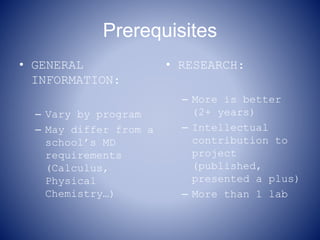
Prerequisites
• GENERAL
INFORMATION:
– Vary by program
– May differ from a
school’s MD
requirements
(Calculus,
Physical
Chemistry…)
• RESEARCH:
– More is better
(2+ years)
– Intellectual
contribution to
project
(published,
presented a plus)
– More than 1 lab
Making the Cut
• GPA:
– Prefer 3.7 or
better (waived if
publications
sometimes)
– High science GPA
– Want to see
science or math
majors
• MCAT (old):
– More emphasis on
Biological Science
and Physical
Science
– Most of us at
interviews had a
32-36ish, higher
in science than
verbal
– Minimum cut-offs
usually 30-32 (8
or 9 minimums)
More Preliminary Information
• LETTERS:
– Need MD letters,
plus research
letters
– Usually want 2-4
from researchers
– Most want
clinical
supervisor
letters
• GRE
– Some programs
require it
(Columbia, U of
Chicago)
• Find out BEFORE
deadline!
– Subject tests if
non-biology
department
– Don’t take while
studying for the
MCAT
– ASK THE PROGRAM!!!
AMCAS
• Essays:
– MD
• Focus on clinical
aspects
– MD/PhD
• Why both?
• Most of us really
could not decide
between the two
degrees
– Research
• Chronicle
experiences
• More is better;
details of project
are helpful
• Extracurricular
Activities:
– NEED CLINICAL
EXPERIENCE
• Some friends with
38 on MCAT and 3.9
not accepted
because of it
• Go to a clinic or
a hospital, shadow
– Leadership
• Clinical or
research
Secondaries
• MD
– Usual questions
• MD/PhD
– Most schools
– 1-4 extra essays
• PhD
– Some schools
– Extra 1-12 essays
• Be prompt.
• Lots of work.
• Time-consuming.
• Use the Writing
Center if your
school has one.
The Interview Experience
• 1-3 days long, plus travel
• Usually paid for by the school (some
including air fare)
• 6-12 interviews per school
– Some only do MD/PhD interviews, some
MD/PhD and MD, some MD/PhD and MD and
PhD
• Dinners with directors and students
• About 10-30% interviewed from
applicants, 40-70% of these accepted
• 5-6 interviews usually for at least
one acceptance
Interview Questions
• Why MD/PhD?
• Talk about your
research/X
project/your role in
X project.
• What clinical
experiences have you
had?
• Are you doing it for
the money?
• What area of
research most
interests you?
• Applying to any MD-
only schools? Why?
• What is an ideal mix
of clinical and
academic medicine
for you?
• Where do you see
yourself in 15
years?
• What does your
boyfriend think
about your decision?
• Why this department?
• What project do you
want to research
here?
Cautions
• Beware of new
programs
– May be cut
• Beware of small
programs
– If people do not go,
there may be a
reason.
– School doesn’t know
policies on MD/PhD
well.
• Try to meet
prospective advisors
on interviews or
revisits.
• Know if automatic
acceptance/funding/
tuition remission
– NYMC…
• Interview the school
while you are there.
– Has the department
had an MD/PhD student
before?
– What will they do if
the USLME is changed
to include steps 1
and 2 into 1 test
after clinical year 3
(pending)?
Other Information
• Many people do a year
out of research.
– Interviews are very
long and hard to do
while in school.
• Don’t apply only
MD/PhD, especially with
lower credentials.
• Do a tier approach.
• Choose an area in which
you would not mind
living for the next
decade of your life
(consider family,
weather, school
atmosphere).
• Ask attrition rates and
reasons.
– Some are legitimate
reasons; others raise
red flags.
• Apply to a lot of
programs.
• If you plan to apply
senior year, don’t
schedule a heavy load
of classes.
• Out of state
restrictions do not
apply to MD/PhD
students.
– Want a reason, though
Resources
• http://www.mdphds.org/
• http://www.aamc.org/students/co
nsidering/research/mdphd/
• School Websites

Guide to MD/PhD programs

  • 1.
    Guide to MD/PhDApplication By Colleen M. Farrelly Marquette University, Honors B.S. 2009 Admitted to Multiple MD/PhD Programs, 2008-2009 Cycle
  • 2.
    Program Information • TYPESOF PHDS: – Biological Sciences – Engineering – Epidemiology – Math – Social Sciences/ Humanities (Only select programs) • PROGRAM FEATURES: – 6-8 years for both degrees – Most give full tuition, stipend (all MSTP, some MD/PhD) – 1-20 students accepted per program in a year – Many have events sponsored by program (dinners, conferences, retreats…)
  • 3.
    Prerequisites • GENERAL INFORMATION: – Varyby program – May differ from a school’s MD requirements (Calculus, Physical Chemistry…) • RESEARCH: – More is better (2+ years) – Intellectual contribution to project (published, presented a plus) – More than 1 lab
  • 4.
    Making the Cut •GPA: – Prefer 3.7 or better (waived if publications sometimes) – High science GPA – Want to see science or math majors • MCAT (old): – More emphasis on Biological Science and Physical Science – Most of us at interviews had a 32-36ish, higher in science than verbal – Minimum cut-offs usually 30-32 (8 or 9 minimums)
  • 5.
    More Preliminary Information •LETTERS: – Need MD letters, plus research letters – Usually want 2-4 from researchers – Most want clinical supervisor letters • GRE – Some programs require it (Columbia, U of Chicago) • Find out BEFORE deadline! – Subject tests if non-biology department – Don’t take while studying for the MCAT – ASK THE PROGRAM!!!
  • 6.
    AMCAS • Essays: – MD •Focus on clinical aspects – MD/PhD • Why both? • Most of us really could not decide between the two degrees – Research • Chronicle experiences • More is better; details of project are helpful • Extracurricular Activities: – NEED CLINICAL EXPERIENCE • Some friends with 38 on MCAT and 3.9 not accepted because of it • Go to a clinic or a hospital, shadow – Leadership • Clinical or research
  • 7.
    Secondaries • MD – Usualquestions • MD/PhD – Most schools – 1-4 extra essays • PhD – Some schools – Extra 1-12 essays • Be prompt. • Lots of work. • Time-consuming. • Use the Writing Center if your school has one.
  • 8.
    The Interview Experience •1-3 days long, plus travel • Usually paid for by the school (some including air fare) • 6-12 interviews per school – Some only do MD/PhD interviews, some MD/PhD and MD, some MD/PhD and MD and PhD • Dinners with directors and students • About 10-30% interviewed from applicants, 40-70% of these accepted • 5-6 interviews usually for at least one acceptance
  • 9.
    Interview Questions • WhyMD/PhD? • Talk about your research/X project/your role in X project. • What clinical experiences have you had? • Are you doing it for the money? • What area of research most interests you? • Applying to any MD- only schools? Why? • What is an ideal mix of clinical and academic medicine for you? • Where do you see yourself in 15 years? • What does your boyfriend think about your decision? • Why this department? • What project do you want to research here?
  • 10.
    Cautions • Beware ofnew programs – May be cut • Beware of small programs – If people do not go, there may be a reason. – School doesn’t know policies on MD/PhD well. • Try to meet prospective advisors on interviews or revisits. • Know if automatic acceptance/funding/ tuition remission – NYMC… • Interview the school while you are there. – Has the department had an MD/PhD student before? – What will they do if the USLME is changed to include steps 1 and 2 into 1 test after clinical year 3 (pending)?
  • 11.
    Other Information • Manypeople do a year out of research. – Interviews are very long and hard to do while in school. • Don’t apply only MD/PhD, especially with lower credentials. • Do a tier approach. • Choose an area in which you would not mind living for the next decade of your life (consider family, weather, school atmosphere). • Ask attrition rates and reasons. – Some are legitimate reasons; others raise red flags. • Apply to a lot of programs. • If you plan to apply senior year, don’t schedule a heavy load of classes. • Out of state restrictions do not apply to MD/PhD students. – Want a reason, though
  • 12.