ESTIMATION OF REFERENCE SOIL ORGANIC CARBON
(SOC) FOR MINERAL SOILS OF COLOMBIA
Neira M. Fredy H.1, Turriago Juan D., Berrio Viviana
Introduction
Colombia is located in the equatorial – tropical
latitude with differences in altitude
Climate and edafo– diversity due to its climate,
geology, relief, soil materials…
Estimating SOC reference is a challenge due to lack
of data
Objectives
To estimate Soil Organic Carbon (SOC) for mineral soils
using IPCC methodology as reference
Future uses:
- Estimate emissions under land cover changes
- Validate IPCC methodology for national scale
Methodology
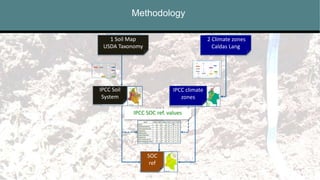
1 Soil Map
USDA Taxonomy
2 Climate zones
Caldas Lang
IPCC Soil
System
IPCC climate
zones
IPCC SOC ref. values
SOC
ref
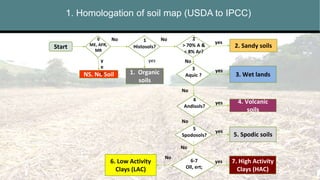
1. Homologation of soil map (USDA to IPCC)
Date
1. Organic
soils
1
Histosols? 2. Sandy soils
2
> 70% A &
< 8% Ar?
3. Wet lands
3
Aquic ?
yes
No
yes
No
yes
4. Volcanic
soils
4
Andisols?
No
yes
5. Spodic soils
5
Spodosols?
No
yes
7. High Activity
Clays (HAC)
6-7
Oll, ert;
No
yes6. Low Activity
Clays (LAC)
NS. No Soil
Start
0
ME, AFR,
MR
y
e
s
No
No
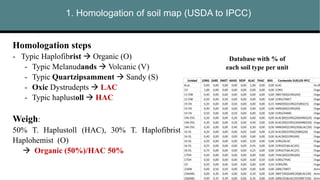
Homologation steps
- Typic Haplofibrist  Organic (O)
- Typic Melanudands  Volcanic (V)
- Typic Quartzipsamment  Sandy (S)
- Oxic Dystrudepts  LAC
- Typic haplustoll  HAC
Weigh:
50% T. Haplustoll (HAC), 30% T. Haplofibrist (O), 20% T.
Haplohemist (O)
 Organic (50%)/HAC 50%
Database with % of
each soil type per unit
1. Homologation of soil map (USDA to IPCC)
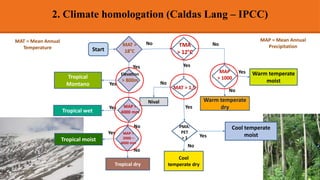
Tropical wet
Elevation
> 800m
TMA
> 12°C
Warm temperate
moist
MAP
> 1000
Yes
No
Yes
Yes
Warm temperate
dry
No
MAT > 1,5
No
Cool temperate
moist
PMA:
PET
> 1
Yes
Yes
Cool
temperate dry
Tropical
Montano
Start
MAT >
18°C
Yes
No
No
MAP >
4000 mm
Yes
Tropical moist
MAP >
2000 –
4000 mm
Tropical dry
Nival
No
Yes
No
2. Climate homologation (Caldas Lang – IPCC)
MAT = Mean Annual
Temperature
MAP = Mean Annual
Precipitation
Date
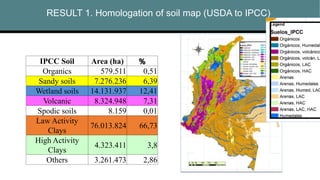
RESULT 1. Homologation of soil map (USDA to IPCC)
IPCC Soil Area (ha) %
Organics 579.511 0,51
Sandy soils 7.276.236 6,39
Wetland soils 14.131.937 12,41
Volcanic 8.324.948 7,31
Spodic soils 8.159 0,01
Law Activity
Clays
76.013.824 66,73
High Activity
Clays
4.323.411 3,8
Others 3.261.473 2,86
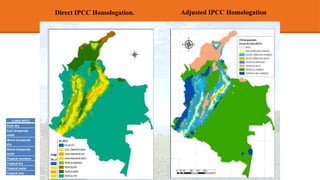
Direct IPCC Homologation. Adjusted IPCC Homologation
CLIMA (IPCC)
Polar dry
Cool temperate
moist
Warm temperate
dry
Warm temperate
moist
Tropical montano
Tropical dry
Tropical moist
Tropical wet
Date
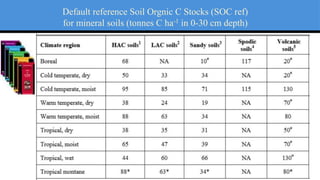
Default reference Soil Orgnic C Stocks (SOC ref)
for mineral soils (tonnes C ha-1 in 0-30 cm depth)
Date
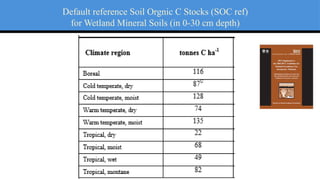
Default reference Soil Orgnic C Stocks (SOC ref)
for Wetland Mineral Soils (in 0-30 cm depth)
Date
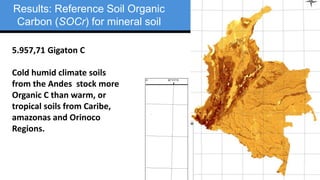
Results: Reference Soil Organic
Carbon (SOCr) for mineral soil
5.957,71 Gigaton C
Cold humid climate soils
from the Andes stock more
Organic C than warm, or
tropical soils from Caribe,
amazonas and Orinoco
Regions.
Discussions: Soil Homologation
Wetland soils: plenty of soil types have “aquic” conditions
and flooding time vary per year from 1 to more than 6
months.
“Recommended to consider specifications for wetland soils”
LAC vs HAC soils:
- Great part of mineral soils are neither LAC or HAC. Thus
over/under- estimation of SOC.
• Recommended to create an intermediate class
IPCC considers low precipitation differences between
tropical wet and Tropical moist (1000 mm) when
precipitation vary up to 14000 mm (wide range)
IPCC does not considers a tropical arid class, (Guajira =
Caribe).
Climate zoning must be estimated using effective
precipitation, specially in mountain regions where runoff
occurs commonly
Climate considerations
Date
Use of Reference Soil Organic Carbon (SOCr)
Next steps:
Validate with local data
Compare with land cover to estimate Soil Organic Carbon loss
Determine local factors of C stock and C loss
Gsoc17 fredy neira

Gsoc17 fredy neira

  • 1.
    ESTIMATION OF REFERENCESOIL ORGANIC CARBON (SOC) FOR MINERAL SOILS OF COLOMBIA Neira M. Fredy H.1, Turriago Juan D., Berrio Viviana
  • 2.
    Introduction Colombia is locatedin the equatorial – tropical latitude with differences in altitude Climate and edafo– diversity due to its climate, geology, relief, soil materials… Estimating SOC reference is a challenge due to lack of data
  • 3.
    Objectives To estimate SoilOrganic Carbon (SOC) for mineral soils using IPCC methodology as reference Future uses: - Estimate emissions under land cover changes - Validate IPCC methodology for national scale
  • 4.
    Methodology 1 Soil Map USDATaxonomy 2 Climate zones Caldas Lang IPCC Soil System IPCC climate zones IPCC SOC ref. values SOC ref
  • 5.
    1. Homologation ofsoil map (USDA to IPCC) Date 1. Organic soils 1 Histosols? 2. Sandy soils 2 > 70% A & < 8% Ar? 3. Wet lands 3 Aquic ? yes No yes No yes 4. Volcanic soils 4 Andisols? No yes 5. Spodic soils 5 Spodosols? No yes 7. High Activity Clays (HAC) 6-7 Oll, ert; No yes6. Low Activity Clays (LAC) NS. No Soil Start 0 ME, AFR, MR y e s No No
  • 6.
    Homologation steps - TypicHaplofibrist  Organic (O) - Typic Melanudands  Volcanic (V) - Typic Quartzipsamment  Sandy (S) - Oxic Dystrudepts  LAC - Typic haplustoll  HAC Weigh: 50% T. Haplustoll (HAC), 30% T. Haplofibrist (O), 20% T. Haplohemist (O)  Organic (50%)/HAC 50% Database with % of each soil type per unit 1. Homologation of soil map (USDA to IPCC)
  • 7.
    Tropical wet Elevation > 800m TMA >12°C Warm temperate moist MAP > 1000 Yes No Yes Yes Warm temperate dry No MAT > 1,5 No Cool temperate moist PMA: PET > 1 Yes Yes Cool temperate dry Tropical Montano Start MAT > 18°C Yes No No MAP > 4000 mm Yes Tropical moist MAP > 2000 – 4000 mm Tropical dry Nival No Yes No 2. Climate homologation (Caldas Lang – IPCC) MAT = Mean Annual Temperature MAP = Mean Annual Precipitation
  • 8.
    Date RESULT 1. Homologationof soil map (USDA to IPCC) IPCC Soil Area (ha) % Organics 579.511 0,51 Sandy soils 7.276.236 6,39 Wetland soils 14.131.937 12,41 Volcanic 8.324.948 7,31 Spodic soils 8.159 0,01 Law Activity Clays 76.013.824 66,73 High Activity Clays 4.323.411 3,8 Others 3.261.473 2,86
  • 9.
    Direct IPCC Homologation.Adjusted IPCC Homologation CLIMA (IPCC) Polar dry Cool temperate moist Warm temperate dry Warm temperate moist Tropical montano Tropical dry Tropical moist Tropical wet
  • 10.
    Date Default reference SoilOrgnic C Stocks (SOC ref) for mineral soils (tonnes C ha-1 in 0-30 cm depth)
  • 11.
    Date Default reference SoilOrgnic C Stocks (SOC ref) for Wetland Mineral Soils (in 0-30 cm depth)
  • 12.
    Date Results: Reference SoilOrganic Carbon (SOCr) for mineral soil 5.957,71 Gigaton C Cold humid climate soils from the Andes stock more Organic C than warm, or tropical soils from Caribe, amazonas and Orinoco Regions.
  • 13.
    Discussions: Soil Homologation Wetlandsoils: plenty of soil types have “aquic” conditions and flooding time vary per year from 1 to more than 6 months. “Recommended to consider specifications for wetland soils” LAC vs HAC soils: - Great part of mineral soils are neither LAC or HAC. Thus over/under- estimation of SOC. • Recommended to create an intermediate class
  • 14.
    IPCC considers lowprecipitation differences between tropical wet and Tropical moist (1000 mm) when precipitation vary up to 14000 mm (wide range) IPCC does not considers a tropical arid class, (Guajira = Caribe). Climate zoning must be estimated using effective precipitation, specially in mountain regions where runoff occurs commonly Climate considerations
  • 15.
    Date Use of ReferenceSoil Organic Carbon (SOCr) Next steps: Validate with local data Compare with land cover to estimate Soil Organic Carbon loss Determine local factors of C stock and C loss

Editor's Notes

  • #2 Gráfica: El globo sobre Colombia (relaciono imagen guia en adjunto)