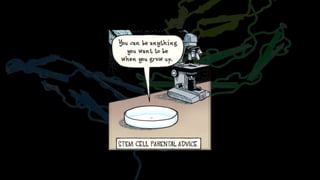
PLATELET CYTOKINES
Applications and Limitations
Dr R VISWA CHANDRA MDS;DNB
Prof and Head
SVSIDS
Mahabubnagar TS
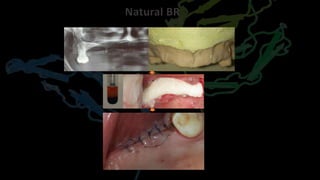
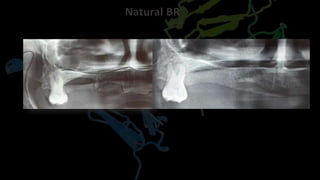
Natural BR
Natural BR
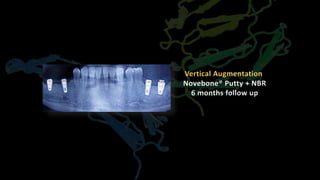
Vertical Augmentation
Novebone® Putty + NBR
6 months follow up
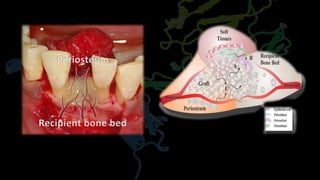
Recipient bone bed
Periosteum
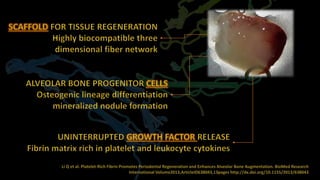
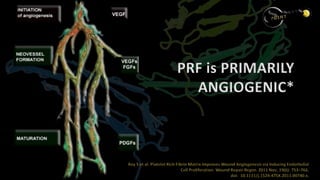
PRF is PRIMARILY
ANGIOGENIC*
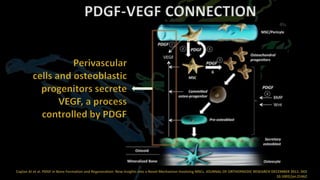
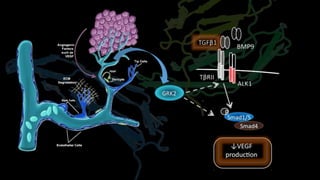
PDGF-VEGF CONNECTION
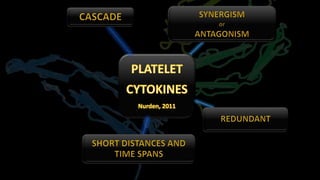
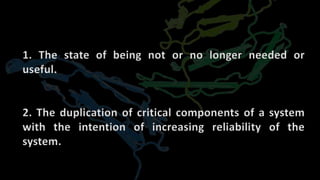
1. The state of being not or no longer needed or
useful.
2. The duplication of critical components of a system
with the intention of increasing reliability of the
system.
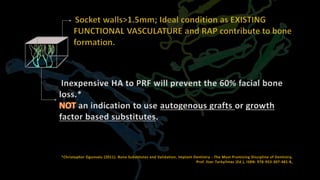
Inexpensive HA to PRF will prevent the 60% facial bone
loss.*
an indication to use autogenous grafts or growth
factor based substitutes.
*Christopher Ogunsalu (2011). Bone Substitutes and Validation, Implant Dentistry - The Most Promising Discipline of Dentistry,
Prof. Ilser Turkyilmaz (Ed.), ISBN: 978-953-307-481-8,
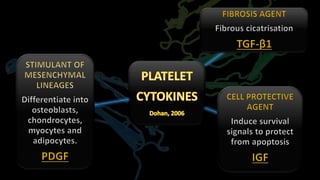
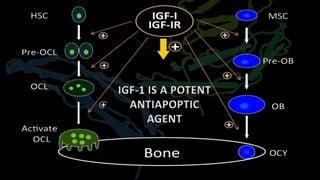
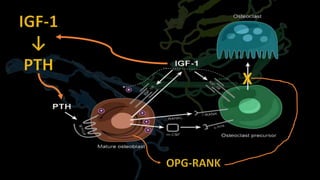
IGF-1 IS A POTENT
ANTIAPOPTIC
AGENT
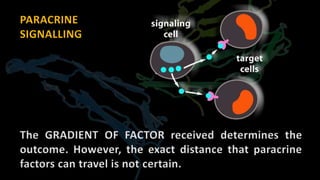
PARACRINE
SIGNALLING
The GRADIENT OF FACTOR received determines the
outcome. However, the exact distance that paracrine
factors can travel is not certain.
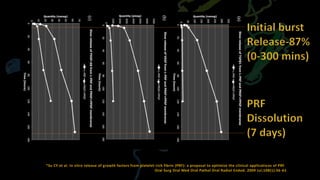
*Su CY et al. In vitro release of growth factors from platelet-rich fibrin (PRF): a proposal to optimize the clinical applications of PRF.
Oral Surg Oral Med Oral Pathol Oral Radiol Endod. 2009 Jul;108(1):56-61
Fibrinogen, Fibronectin and Vitronectin are released
totally within 4 hours.
IGF-1 retains the maximum concentration and remains
constant for about 7 days.
L-PRF shows maximum IGF-1 and maximum vital cell
counts.
*Su CY et al. In vitro release of growth factors from platelet-rich fibrin (PRF): a proposal to optimize the clinical applications of PRF.
Oral Surg Oral Med Oral Pathol Oral Radiol Endod. 2009 Jul;108(1):56-61
Limitations of Platelet Cytokines
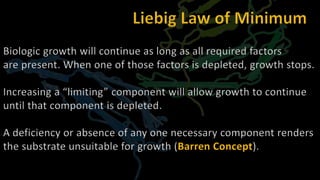
Biologic growth will continue as long as all required factors
are present. When one of those factors is depleted, growth stops.
Increasing a “limiting” component will allow growth to continue
until that component is depleted.
A deficiency or absence of any one necessary component renders
the substrate unsuitable for growth (Barren Concept).
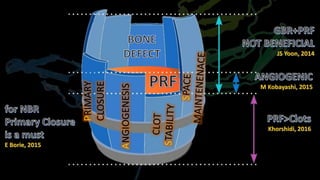
ANGIOGENESIS
PRIMARY
CLOSURE
Khorshidi, 2016
M Kobayashi, 2015
JS Yoon, 2014
E Borie, 2015
REGENERATION
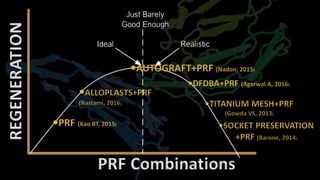
PRF Combinations
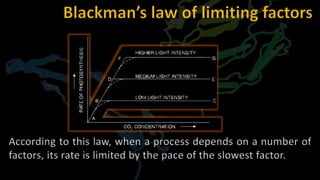
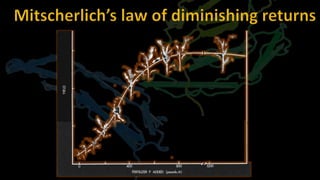
According to this law, when a process depends on a number of
factors, its rate is limited by the pace of the slowest factor.
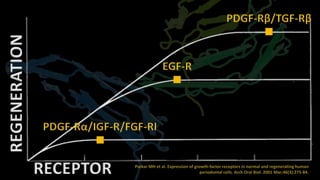
REGENERATION
RECEPTOR
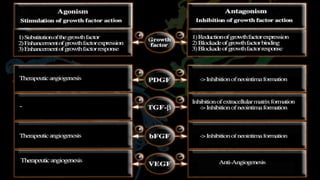
Growth factors applications and limitations

Growth factors applications and limitations

  • 1.
    PLATELET CYTOKINES Applications andLimitations Dr R VISWA CHANDRA MDS;DNB Prof and Head SVSIDS Mahabubnagar TS
  • 3.
  • 4.
  • 5.
  • 14.
  • 15.
  • 18.
  • 22.
    1. The stateof being not or no longer needed or useful. 2. The duplication of critical components of a system with the intention of increasing reliability of the system.
  • 25.
    Inexpensive HA toPRF will prevent the 60% facial bone loss.* an indication to use autogenous grafts or growth factor based substitutes. *Christopher Ogunsalu (2011). Bone Substitutes and Validation, Implant Dentistry - The Most Promising Discipline of Dentistry, Prof. Ilser Turkyilmaz (Ed.), ISBN: 978-953-307-481-8,
  • 27.
    IGF-1 IS APOTENT ANTIAPOPTIC AGENT
  • 30.
    PARACRINE SIGNALLING The GRADIENT OFFACTOR received determines the outcome. However, the exact distance that paracrine factors can travel is not certain.
  • 32.
    *Su CY etal. In vitro release of growth factors from platelet-rich fibrin (PRF): a proposal to optimize the clinical applications of PRF. Oral Surg Oral Med Oral Pathol Oral Radiol Endod. 2009 Jul;108(1):56-61
  • 33.
    Fibrinogen, Fibronectin andVitronectin are released totally within 4 hours. IGF-1 retains the maximum concentration and remains constant for about 7 days. L-PRF shows maximum IGF-1 and maximum vital cell counts. *Su CY et al. In vitro release of growth factors from platelet-rich fibrin (PRF): a proposal to optimize the clinical applications of PRF. Oral Surg Oral Med Oral Pathol Oral Radiol Endod. 2009 Jul;108(1):56-61
  • 34.
  • 35.
    Biologic growth willcontinue as long as all required factors are present. When one of those factors is depleted, growth stops. Increasing a “limiting” component will allow growth to continue until that component is depleted. A deficiency or absence of any one necessary component renders the substrate unsuitable for growth (Barren Concept).
  • 36.
  • 38.
  • 39.
    According to thislaw, when a process depends on a number of factors, its rate is limited by the pace of the slowest factor.
  • 40.

Editor's Notes

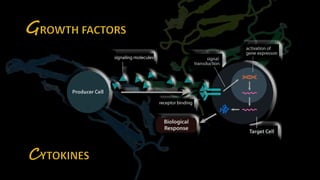
  • #7 a substance, such as a vitamin or hormone, which is required for the stimulation of growth in living cells. Growth factor is sometimes used interchangeably among scientists with the term cytokine.[2] Historically, cytokines were associated with hematopoietic (blood forming) cells andimmune system cells (e.g., lymphocytes and tissue cells from spleen, thymus, and lymph nodes). For the circulatory system and bone marrow in which cells can occur in a liquid suspension and not bound up in solid tissue, it makes sense for them to communicate by soluble, circulating protein molecules. However, as different lines of research converged, it became clear that some of the same signaling proteins the hematopoietic and immune systems used were also being used by all sorts of other cells and tissues, during development and in the mature organism. any of a number of substances, such as interferon, interleukin, and growth factors, which are secreted by certain cells of the immune system and have an effect on other cells
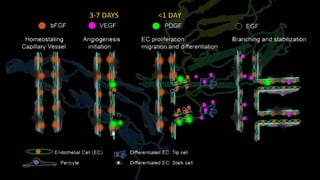
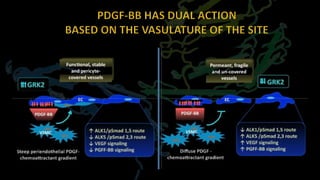
  • #19 PDGF in bone formation: The detailed depiction of the osteogenic lineage shown in Figure 1 with the added interaction of the orienting and driving vasculature that provides both activating bioactive molecules and the starting progenitors. With the documentation of the pericyte giving rise to the MSC that is the progenitor for both osteoblasts and osteocytes, the detailed lineage is fashioned after the information provided by studying both embryonic events and endochondral osteogenesis. Perivascular cells secrete VEGF, a process controlled by PDGF (1); PDGF releases MSCs/pericytes cells from their abluminal location (2) giving rise to ‘‘free’’ MSCs; PDGF stimulates osteochondral progenitor proliferation (3) and modulates the response of osteoblastic progenitors to key differentiating factors such as BMPs (4); finally, PDGF reassembles MSCs as perivascular (mural) cells to insure the structural stability of the newly formed vessels (5).
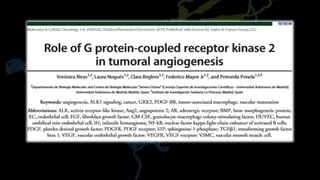
  • #21 G protein-coupled receptor kinase 2. It upregulates when the vascularization reaches a critical mass. ALK1It is also known as activin receptor-like kinase 1. Mothers against decapentaplegic homolog 1 SMAD.
  • #28 A schema illustrating the actions of IGF-I/IGF-IR signaling in the differentiation of osteoblast and osteoclast in bone. IGF-IR signaling can promote the proliferation, survival, and differentiation of osteoblast (OB), osteocyte (OCY) and osteoclast (OCL), directly (blue arrows) or indirectly, by enhancing cell-cell interactions/couplings between OBs and OCLs, by increasing the expression of critical components in the c-fms/M-CSF, RANK/RANKL and EphrinB2/EphB4 signaling pathways (red boxes and arrows). Red arrows indicate uni- or bi-directional signaling responses mediated by these cell-cell interactions. IGF-IR signaling is also required for mechanosensing in osteocytes. See the main text for detailed descriptions of these IGF-I actions. HSC: hematopoietic stem cell; MSC: mesenchymal stem cells.
  • #29 In bone, PTH enhances the release of calcium from the large reservoir contained in the bones.[14] Bone resorption is the normal destruction of bone by osteoclasts, which are indirectly stimulated by PTH. Stimulation is indirect since osteoclasts do not have a receptor for PTH; rather, PTH binds to osteoblasts, the cells responsible for creating bone. Binding stimulates osteoblasts to increase their expression of RANKL and inhibits their secretion of Osteoprotegerin (OPG). Free OPG competitively binds to RANKL as a decoy receptor, preventing RANKL from interacting with RANK, a receptor for RANKL. The binding of RANKL to RANK (facilitated by the decreased amount of OPG available for binding the excess RANKL) stimulates these osteoclast precursors to fuse, forming new osteoclasts, which ultimately enhances bone resorption.
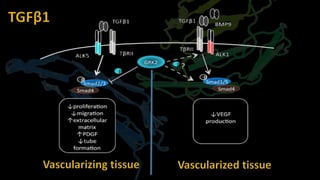
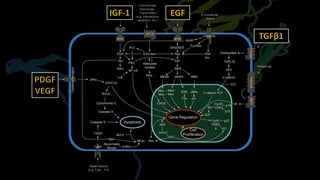
  • #32 Receptor Tyrosine Kinase (RTK) pathway