Medication Related Osteonecrosis of
the Jaw
[MRONJ]
Brendan Da Silva Proserpine Hospital
Case:
 70 year old Caucasian male.
 History of monthly Denosumab injections (Xgeva) for metastatic cancer taken since 2011.
 History of abiraterone, prednisone and MS contin for cancer treatment.
 History of radiation therapy to spine and ribs.
 Current medications include Fentanyl, Endep and dexamethasone for pain relief.
Social and Dental History
 Previous smoker for 50 years but has since quit.
 Does not consume alcohol.
 Under continued care of a nurse at an aged care facility.
 Cleans teeth at least once a day.
 Last dental procedure was extractions of teeth 36 and 34 at Mareeba in 2012.
 Noticed two areas since extractions performed.
 No chief complaint.
Denosumab
 RANKL monoclonal antibody indicated for individuals
with osteoporosis, hypercalcemia of malignancy or
bone metastases.
 Typical dosage for osteoporosis (Prolia) is 50mg
biannually whilst Xgeva has 120mg injections every 4
weeks.
 Neutralises the RANK Ligand which is required for
osteoblast production and activates RANK receptors on
osteoclasts and their precursors.
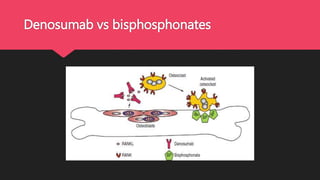
Denosumab vs bisphosphonates
 Bone turnover marker suppression is greater in cancer patients undergoing denosumab compared
to the bisphosphonate zoledronate.
 However due to bone remodelling obstruction, clinical effects such as osteonecrosis of the jaw are
at similar indices.
 The RANKL-RANK pathway is not only limited to osteoclastogenesis, RANKL is a cytokine for T cell
activation and growth. Consequently, interference with the T cell biochemistry has an influence on
the adaptive immune system leading to potentially higher risk of infections and thus poorer wound
healing.
Diagnosing MRONJ
 Characteristics determined by the American Association of Oral and Maxillofacial Surgeons
[AAOMS] include:
1. Current or previous treatment with anti-resorptive or anti-angiogenic agents;
2. Exposed bone or bone that can be probed through an intraoral or extraoral fistula in the maxillofacial
region that has persisted for more than eight weeks;
3. No history of radiation therapy to the jaws or obvious metastatic disease to the jaws.
AAOMS Staging MRONJ
Pathophysiology of MRONJ
 The exact pathophysiology has not been determined for MRONJ however several theories have
sought to explain the mechanism:
1. Inhibition of osteoclastic bone resorption and bone remodelling: Due to bisphosphonates and denosumab
inhibiting osteoclastic resorption it directly effects bone healing and skeletal site remodelling.
2. Inflammation or infection: Patients whose necrotic bone was biopsied found bacteria including
Actinomyces species.
3. Inhibition of angiogenesis: Patients displaying MRONJ also demonstrated avascular necrosis.
Bisphosphonates have shown to decrease angiogenesis through reducing vascular endothelial growth
factor levels.
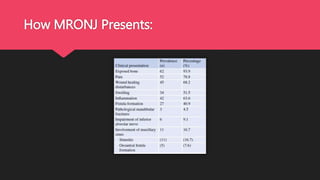
How MRONJ Presents:
How MRONJ Presents:
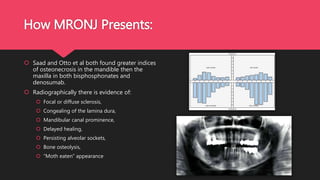
 Saad and Otto et al both found greater indices
of osteonecrosis in the mandible then the
maxilla in both bisphosphonates and
denosumab.
 Radiographically there is evidence of:
 Focal or diffuse sclerosis,
 Congealing of the lamina dura,
 Mandibular canal prominence,
 Delayed healing,
 Persisting alveolar sockets,
 Bone osteolysis,
 “Moth eaten” appearance
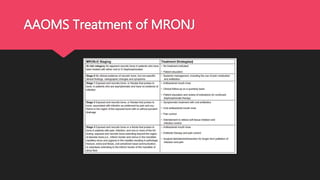
AAOMS Treatment of MRONJ
Our patient:
 70 year old Caucasian male.
 History of monthly Denosumab injections (Xgeva) for metastatic cancer taken since 2011.
 History of radiation therapy to spine and ribs.
 Last dental procedure was extractions of teeth 36 and 34 at Mareeba in 2012.
MRONJ Presentation
 34 and 36/37 area demonstrate exposed bone.
 No evidence of healing.
 Bone sequelae visible.
 No pain or symptoms for the patient.
 No evidence of infection presented.
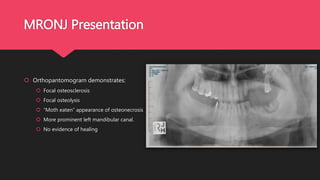
MRONJ Presentation
 Orthopantomogram demonstrates:
 Focal osteosclerosis
 Focal osteolysis
 “Moth eaten” appearance of osteonecrosis
 More prominent left mandibular canal.
 No evidence of healing
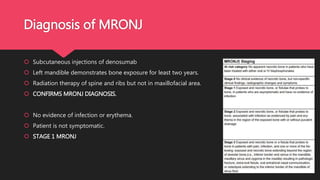
Diagnosis of MRONJ
 Subcutaneous injections of denosumab
 Left mandible demonstrates bone exposure for least two years.
 Radiation therapy of spine and ribs but not in maxillofacial area.
 CONFIRMS MRONJ DIAGNOSIS.
 No evidence of infection or erythema.
 Patient is not symptomatic.
 STAGE 1 MRONJ
Treatment of Stage 1 MRONJ
 0.12% Chlorhexidine gluconate antiseptic bisquanide mouthrinses.
 Any development of infection requires:
 Penicillin V 500mg QDS
 Guided surgical debridement through oral and maxillofacial surgeon referral.
Preventing MRONJ in patients
 For patients commencing or taking denosumab, practitioners should treat as if taking
bisphosphonates. Therefore:
 Inform of benefits and risks of denosumab therapy.
 Perform necessary extractions prior to commencing denosumab therapy.
 Monitor oral health regularly along with implants for loss of osseointegration.
 If extractions required assess C-terminal telopeptide concentration (CTX) for bone turnover:
Fasted morning serum CTX concentration Risk of MRONJ/BRONJ
<70 pg/mL High risk
70 -150 pg/mL Moderate risk
>150 pg/mL Negligible risk
Preventing MRONJ in patients
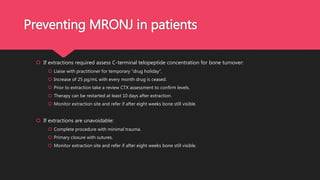
 If extractions required assess C-terminal telopeptide concentration for bone turnover:
 Liaise with practitioner for temporary “drug holiday”.
 Increase of 25 pg/mL with every month drug is ceased.
 Prior to extraction take a review CTX assessment to confirm levels.
 Therapy can be restarted at least 10 days after extraction.
 Monitor extraction site and refer if after eight weeks bone still visible.
 If extractions are unavoidable:
 Complete procedure with minimal trauma.
 Primary closure with sutures.
 Monitor extraction site and refer if after eight weeks bone still visible.
Questions?

MRONJ PRESENTATION

  • 1.
    Medication Related Osteonecrosisof the Jaw [MRONJ] Brendan Da Silva Proserpine Hospital
  • 2.
    Case:  70 yearold Caucasian male.  History of monthly Denosumab injections (Xgeva) for metastatic cancer taken since 2011.  History of abiraterone, prednisone and MS contin for cancer treatment.  History of radiation therapy to spine and ribs.  Current medications include Fentanyl, Endep and dexamethasone for pain relief.
  • 3.
    Social and DentalHistory  Previous smoker for 50 years but has since quit.  Does not consume alcohol.  Under continued care of a nurse at an aged care facility.  Cleans teeth at least once a day.  Last dental procedure was extractions of teeth 36 and 34 at Mareeba in 2012.  Noticed two areas since extractions performed.  No chief complaint.
  • 4.
    Denosumab  RANKL monoclonalantibody indicated for individuals with osteoporosis, hypercalcemia of malignancy or bone metastases.  Typical dosage for osteoporosis (Prolia) is 50mg biannually whilst Xgeva has 120mg injections every 4 weeks.  Neutralises the RANK Ligand which is required for osteoblast production and activates RANK receptors on osteoclasts and their precursors.
  • 5.
  • 6.
    Denosumab vs bisphosphonates Bone turnover marker suppression is greater in cancer patients undergoing denosumab compared to the bisphosphonate zoledronate.  However due to bone remodelling obstruction, clinical effects such as osteonecrosis of the jaw are at similar indices.  The RANKL-RANK pathway is not only limited to osteoclastogenesis, RANKL is a cytokine for T cell activation and growth. Consequently, interference with the T cell biochemistry has an influence on the adaptive immune system leading to potentially higher risk of infections and thus poorer wound healing.
  • 7.
    Diagnosing MRONJ  Characteristicsdetermined by the American Association of Oral and Maxillofacial Surgeons [AAOMS] include: 1. Current or previous treatment with anti-resorptive or anti-angiogenic agents; 2. Exposed bone or bone that can be probed through an intraoral or extraoral fistula in the maxillofacial region that has persisted for more than eight weeks; 3. No history of radiation therapy to the jaws or obvious metastatic disease to the jaws.
  • 8.
  • 9.
    Pathophysiology of MRONJ The exact pathophysiology has not been determined for MRONJ however several theories have sought to explain the mechanism: 1. Inhibition of osteoclastic bone resorption and bone remodelling: Due to bisphosphonates and denosumab inhibiting osteoclastic resorption it directly effects bone healing and skeletal site remodelling. 2. Inflammation or infection: Patients whose necrotic bone was biopsied found bacteria including Actinomyces species. 3. Inhibition of angiogenesis: Patients displaying MRONJ also demonstrated avascular necrosis. Bisphosphonates have shown to decrease angiogenesis through reducing vascular endothelial growth factor levels.
  • 10.
  • 11.
    How MRONJ Presents: Saad and Otto et al both found greater indices of osteonecrosis in the mandible then the maxilla in both bisphosphonates and denosumab.  Radiographically there is evidence of:  Focal or diffuse sclerosis,  Congealing of the lamina dura,  Mandibular canal prominence,  Delayed healing,  Persisting alveolar sockets,  Bone osteolysis,  “Moth eaten” appearance
  • 12.
  • 13.
    Our patient:  70year old Caucasian male.  History of monthly Denosumab injections (Xgeva) for metastatic cancer taken since 2011.  History of radiation therapy to spine and ribs.  Last dental procedure was extractions of teeth 36 and 34 at Mareeba in 2012.
  • 14.
    MRONJ Presentation  34and 36/37 area demonstrate exposed bone.  No evidence of healing.  Bone sequelae visible.  No pain or symptoms for the patient.  No evidence of infection presented.
  • 15.
    MRONJ Presentation  Orthopantomogramdemonstrates:  Focal osteosclerosis  Focal osteolysis  “Moth eaten” appearance of osteonecrosis  More prominent left mandibular canal.  No evidence of healing
  • 16.
    Diagnosis of MRONJ Subcutaneous injections of denosumab  Left mandible demonstrates bone exposure for least two years.  Radiation therapy of spine and ribs but not in maxillofacial area.  CONFIRMS MRONJ DIAGNOSIS.  No evidence of infection or erythema.  Patient is not symptomatic.  STAGE 1 MRONJ
  • 17.
    Treatment of Stage1 MRONJ  0.12% Chlorhexidine gluconate antiseptic bisquanide mouthrinses.  Any development of infection requires:  Penicillin V 500mg QDS  Guided surgical debridement through oral and maxillofacial surgeon referral.
  • 18.
    Preventing MRONJ inpatients  For patients commencing or taking denosumab, practitioners should treat as if taking bisphosphonates. Therefore:  Inform of benefits and risks of denosumab therapy.  Perform necessary extractions prior to commencing denosumab therapy.  Monitor oral health regularly along with implants for loss of osseointegration.  If extractions required assess C-terminal telopeptide concentration (CTX) for bone turnover: Fasted morning serum CTX concentration Risk of MRONJ/BRONJ <70 pg/mL High risk 70 -150 pg/mL Moderate risk >150 pg/mL Negligible risk
  • 19.
    Preventing MRONJ inpatients  If extractions required assess C-terminal telopeptide concentration for bone turnover:  Liaise with practitioner for temporary “drug holiday”.  Increase of 25 pg/mL with every month drug is ceased.  Prior to extraction take a review CTX assessment to confirm levels.  Therapy can be restarted at least 10 days after extraction.  Monitor extraction site and refer if after eight weeks bone still visible.  If extractions are unavoidable:  Complete procedure with minimal trauma.  Primary closure with sutures.  Monitor extraction site and refer if after eight weeks bone still visible.
  • 20.

Editor's Notes

  • #6 Denosumab varies from bisphosphonates which bind and enter bone to inhibit resorption by activated osteoclasts.