



Why is the knowledge of interest rates important
for a retail banker?
How does it impact the sales pitch?
What are investors options during high & low interest rates

Faculty name:
Vishwanathan R

Batch code
HYD01AA0213

Date
30-10-2013

Student Name

Enrolment ID

Harivardhan

E130031000112

Rajasekhar

E130031000127

Kowsar

E130031000129

Amit

E130031000147
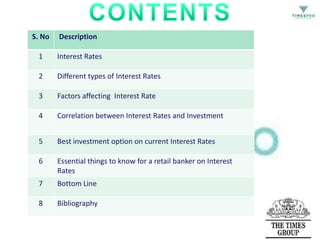
S. No

Description

1

Interest Rates

2

Different types of Interest Rates

3

Factors affecting Interest Rate

4

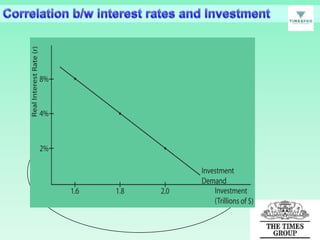
Correlation between Interest Rates and Investment

5

Best investment option on current Interest Rates

6

Essential things to know for a retail banker on Interest
Rates

7

Bottom Line

8

Bibliography
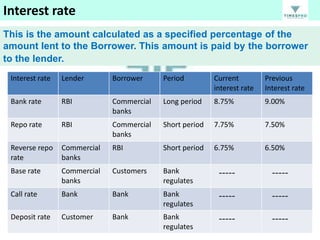
Interest rate
This is the amount calculated as a specified percentage of the
amount lent to the Borrower. This amount is paid by the borrower
to the lender.
Interest rate

Lender

Borrower

Period

Current
interest rate

Previous
Interest rate

Bank rate

RBI

Commercial
banks

Long period

8.75%

9.00%

Repo rate

RBI

Commercial
banks

Short period

7.75%

7.50%

Reverse repo
rate

Commercial
banks

RBI

Short period

6.75%

6.50%

Base rate

Commercial
banks

Customers

Bank
regulates

-----

-----

Call rate

Bank

Bank

Bank
regulates

-----

-----

Deposit rate

Customer

Bank

Bank
regulates

-----

-----
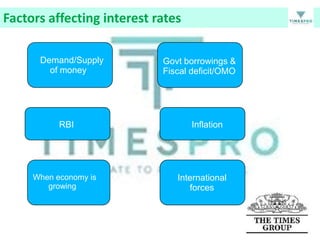
Factors affecting interest rates
Demand/Supply
of money

RBI

When economy is
growing

Govt borrowings &
Fiscal deficit/OMO

Inflation

International
forces
Interest

1
investment

Int rate

investment
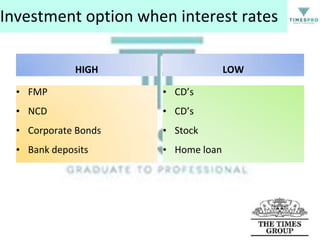
Investment option when interest rates
HIGH

LOW

• FMP

• CD’s

• NCD

• CD’s

• Corporate Bonds

• Stock

• Bank deposits

• Home loan
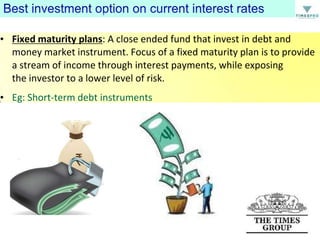
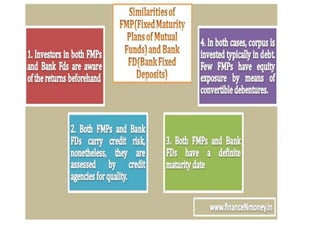
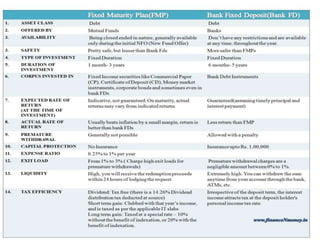
• Fixed maturity plans: A close ended fund that invest in debt and
money market instrument. Focus of a fixed maturity plan is to provide
a stream of income through interest payments, while exposing
the investor to a lower level of risk.
• Eg: Short-term debt instruments
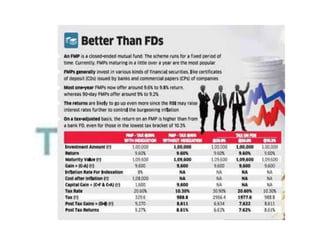
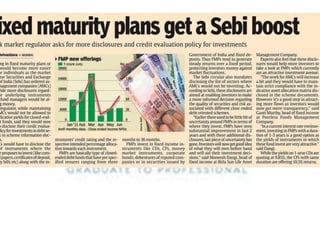
• These plans invest in a mix of short-term options, such as money
market instruments, certificates of deposit, commercial papers etc.
• These are currently offering a yield of 9.5-10%.
• Diminishes the uncertainity of higher yields, which most of debt
market products do not offer.
 Tax efficiency

 Fixed tenure
 Low sensitivity to interest rates.
 Initial investment- Rs.5000/-.
 Capital protection
 Lower cost
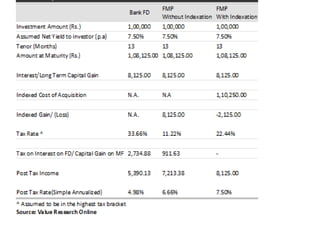
• Protection through Indexation FMP's more beneficial than FD's, as the interest is
not clubbed with income, & is taxed only after indexation.

• Leading FMP’s Reliance Mutual Fund, ICICI Prudential Mutual Fund, Birla Mutual
Fund, TATA Mutual Fund, DSP BlackRock Mutual Fund and others.
• The investment is earmarked ONLY in BANK CDs/FDs.
• Investments & returns are guranteed.
• TDs after Indexation.
• Nri investor’s yeild rose from 8.5 to 9%, with total repatriation.
• Similar to the FD of a bank’s , in terms of a pre-determined return to the investors/
depositors.
Essential things to know for a retail banker on Interest Rates

• Flourishing economy indicates rising Interest rates,
making it essential for the Banker to advise their
customers on various Investment options.
• Rise in OMO confirms that Govt securities & debt
market are the safest bets.
• Key Interest rate changes confirms the RBI’s
intentions to combat Inflation.
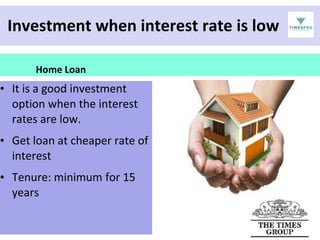
Investment when interest rate is low
Home Loan

• It is a good investment
option when the interest
rates are low.
• Get loan at cheaper rate of
interest
• Tenure: minimum for 15
years
Bottom Line
• It is important to know the interest rates to
retail bankers to guide their customer in a right
way.
• Leads to increase the sales pitch
• Leads to retain a customer for a longer period.
Bibliography
• www.investopedia.com
• www.wikipedia.com
• www.rbi.org

• www.economictimes.com
• www.business-standard.com
26/10/13

Investment habits during High & Low Interest rates

  • 1.
    Why is theknowledge of interest rates important for a retail banker? How does it impact the sales pitch? What are investors options during high & low interest rates Faculty name: Vishwanathan R Batch code HYD01AA0213 Date 30-10-2013 Student Name Enrolment ID Harivardhan E130031000112 Rajasekhar E130031000127 Kowsar E130031000129 Amit E130031000147
  • 2.
    S. No Description 1 Interest Rates 2 Differenttypes of Interest Rates 3 Factors affecting Interest Rate 4 Correlation between Interest Rates and Investment 5 Best investment option on current Interest Rates 6 Essential things to know for a retail banker on Interest Rates 7 Bottom Line 8 Bibliography
  • 3.
    Interest rate This isthe amount calculated as a specified percentage of the amount lent to the Borrower. This amount is paid by the borrower to the lender. Interest rate Lender Borrower Period Current interest rate Previous Interest rate Bank rate RBI Commercial banks Long period 8.75% 9.00% Repo rate RBI Commercial banks Short period 7.75% 7.50% Reverse repo rate Commercial banks RBI Short period 6.75% 6.50% Base rate Commercial banks Customers Bank regulates ----- ----- Call rate Bank Bank Bank regulates ----- ----- Deposit rate Customer Bank Bank regulates ----- -----
  • 4.
    Factors affecting interestrates Demand/Supply of money RBI When economy is growing Govt borrowings & Fiscal deficit/OMO Inflation International forces
  • 5.
  • 6.
    Investment option wheninterest rates HIGH LOW • FMP • CD’s • NCD • CD’s • Corporate Bonds • Stock • Bank deposits • Home loan
  • 7.
    • Fixed maturityplans: A close ended fund that invest in debt and money market instrument. Focus of a fixed maturity plan is to provide a stream of income through interest payments, while exposing the investor to a lower level of risk. • Eg: Short-term debt instruments
  • 8.
    • These plansinvest in a mix of short-term options, such as money market instruments, certificates of deposit, commercial papers etc. • These are currently offering a yield of 9.5-10%. • Diminishes the uncertainity of higher yields, which most of debt market products do not offer.
  • 9.
     Tax efficiency Fixed tenure  Low sensitivity to interest rates.  Initial investment- Rs.5000/-.  Capital protection  Lower cost
  • 10.
    • Protection throughIndexation FMP's more beneficial than FD's, as the interest is not clubbed with income, & is taxed only after indexation. • Leading FMP’s Reliance Mutual Fund, ICICI Prudential Mutual Fund, Birla Mutual Fund, TATA Mutual Fund, DSP BlackRock Mutual Fund and others. • The investment is earmarked ONLY in BANK CDs/FDs. • Investments & returns are guranteed. • TDs after Indexation. • Nri investor’s yeild rose from 8.5 to 9%, with total repatriation. • Similar to the FD of a bank’s , in terms of a pre-determined return to the investors/ depositors.
  • 11.
    Essential things toknow for a retail banker on Interest Rates • Flourishing economy indicates rising Interest rates, making it essential for the Banker to advise their customers on various Investment options. • Rise in OMO confirms that Govt securities & debt market are the safest bets. • Key Interest rate changes confirms the RBI’s intentions to combat Inflation.
  • 12.
    Investment when interestrate is low Home Loan • It is a good investment option when the interest rates are low. • Get loan at cheaper rate of interest • Tenure: minimum for 15 years
  • 13.
    Bottom Line • Itis important to know the interest rates to retail bankers to guide their customer in a right way. • Leads to increase the sales pitch • Leads to retain a customer for a longer period.
  • 14.
    Bibliography • www.investopedia.com • www.wikipedia.com •www.rbi.org • www.economictimes.com • www.business-standard.com
  • 21.