COMMENT: “IN A RISING RATE SCENARIO, SHORT 
DURATION PLANS SUCH AS LIQUID FUNDS, ULTRA 
SHORT TERM FUNDS AND FIXED MATURITY 
PLANS(FMPs) ARE THE RIGHT CHOICE.”
POWERED BY:- 
ANUP TIWARI YASHMEEN 
MD. DANISH KHAN TRISHA SINGH
OUR PROJECT OBJECTIVE IS:- 
WHAT IS INTEREST RATE AND REASION THAT’S 
IMPACT ON INTEREST RATE. 
WHAT IS LIQUID FUNDS, ULTRA SORT TERM FUNDS 
AND FIXED MATURITY PLANS(FMPs). 
 WHY LIQUID FUNDS, ULTRA SHORT TERM FUND 
AND FIXED MATURITY PLANS(FMPs) ARE THE RIGHT 
CHOICE, IN A RISING RATE OF SCENARIO.?
WHAT IS INTEREST RATE 
AN INTEREST RATE AT WHICH INTEREST IS PAID BY 
BORROWERS FOR THE USE OF MONEY THAT THEY BORROW 
FROM A LENDER. 
INTEREST RATE OFTEN CHANGE AS A RESULT OF INFLATION 
AND CENTARL BANKs. 
REASION THAT’S IMPACT ON INTEREST RATE:- 
BANK RATE 
REPO RATE 
REVERSE REPO RATE 
BASE RATE & DEPOSIT RATE
BANK RATE 
RBI LEND TO THE COMMERCIAL BANKS THROUGH ITS 
DISCOUNT WINDOW TO HELP BANKS MEET DEPOSITOR’S 
DEMANDS AND RESERVE REQUIREMENTS FOR LONG TERM. 
THE BANK RATE RBI CHARGE THE BANK FOR THIS PURPOSE 
IS CALLED BANK RATE. 
IF RBI WANTS TO INCREASE LIQUIDITY AND MONEY 
SUPPLY IN MARKET, IT WILL BE DECREASE THE BANK RATE. 
IF RBI WANTS TO REDUCE LIQUIDITY AND MONEY SUPPLY 
IN MARKET, IT WILL BE INCREASE THE BANK RATE. 
CURRENT BANK RATE IS:- 9%
REPO RATE 
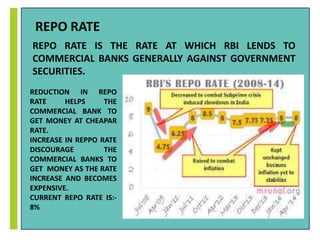
REPO RATE IS THE RATE AT WHICH RBI LENDS TO 
COMMERCIAL BANKS GENERALLY AGAINST GOVERNMENT 
SECURITIES. 
REDUCTION IN REPO 
RATE HELPS THE 
COMMERCIAL BANK TO 
GET MONEY AT CHEAPAR 
RATE. 
INCREASE IN REPPO RATE 
DISCOURAGE THE 
COMMERCIAL BANKS TO 
GET MONEY AS THE RATE 
INCREASE AND BECOMES 
EXPENSIVE. 
CURRENT REPO RATE IS:- 
8%
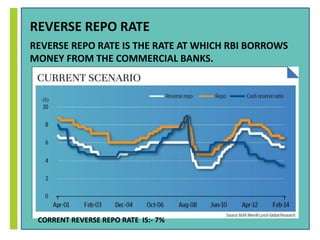
REVERSE REPO RATE 
REVERSE REPO RATE IS THE RATE AT WHICH RBI BORROWS 
MONEY FROM THE COMMERCIAL BANKS. 
CORRENT REVERSE REPO RATE IS:- 7%
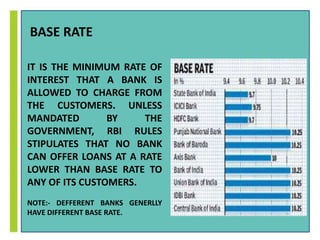
BASE RATE 
IT IS THE MINIMUM RATE OF 
INTEREST THAT A BANK IS 
ALLOWED TO CHARGE FROM 
THE CUSTOMERS. UNLESS 
MANDATED BY THE 
GOVERNMENT, RBI RULES 
STIPULATES THAT NO BANK 
CAN OFFER LOANS AT A RATE 
LOWER THAN BASE RATE TO 
ANY OF ITS CUSTOMERS. 
NOTE:- DEFFERENT BANKS GENERLLY 
HAVE DIFFERENT BASE RATE.
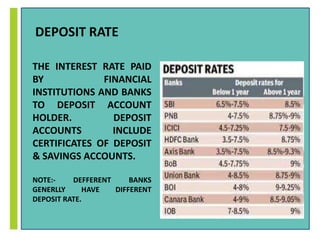
DEPOSIT RATE 
THE INTEREST RATE PAID 
BY FINANCIAL 
INSTITUTIONS AND BANKS 
TO DEPOSIT ACCOUNT 
HOLDER. DEPOSIT 
ACCOUNTS INCLUDE 
CERTIFICATES OF DEPOSIT 
& SAVINGS ACCOUNTS. 
NOTE:- DEFFERENT BANKS 
GENERLLY HAVE DIFFERENT 
DEPOSIT RATE.
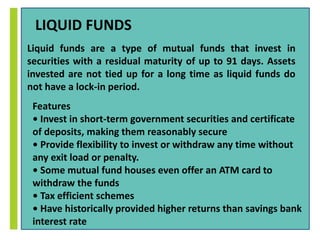
LIQUID FUNDS 
Liquid funds are a type of mutual funds that invest in 
securities with a residual maturity of up to 91 days. Assets 
invested are not tied up for a long time as liquid funds do 
not have a lock-in period. 
Features 
• Invest in short-term government securities and certificate 
of deposits, making them reasonably secure 
• Provide flexibility to invest or withdraw any time without 
any exit load or penalty. 
• Some mutual fund houses even offer an ATM card to 
withdraw the funds 
• Tax efficient schemes 
• Have historically provided higher returns than savings bank 
interest rate
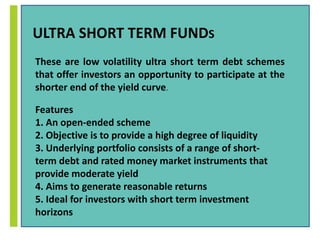
ULTRA SHORT TERM FUNDS 
These are low volatility ultra short term debt schemes 
that offer investors an opportunity to participate at the 
shorter end of the yield curve. 
Features 
1. An open-ended scheme 
2. Objective is to provide a high degree of liquidity 
3. Underlying portfolio consists of a range of short-term 
debt and rated money market instruments that 
provide moderate yield 
4. Aims to generate reasonable returns 
5. Ideal for investors with short term investment 
horizons
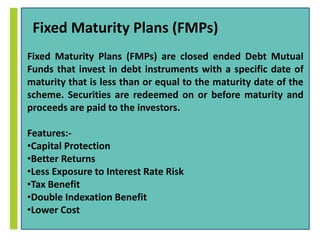
Fixed Maturity Plans (FMPs) 
Fixed Maturity Plans (FMPs) are closed ended Debt Mutual 
Funds that invest in debt instruments with a specific date of 
maturity that is less than or equal to the maturity date of the 
scheme. Securities are redeemed on or before maturity and 
proceeds are paid to the investors. 
Features:- 
•Capital Protection 
•Better Returns 
•Less Exposure to Interest Rate Risk 
•Tax Benefit 
•Double Indexation Benefit 
•Lower Cost
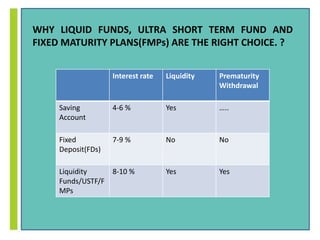
WHY LIQUID FUNDS, ULTRA SHORT TERM FUND AND 
FIXED MATURITY PLANS(FMPs) ARE THE RIGHT CHOICE. ? 
Interest rate Liquidity Prematurity 
Withdrawal 
Saving 
Account 
4-6 % Yes ….. 
Fixed 
Deposit(FDs) 
7-9 % No No 
Liquidity 
Funds/USTF/F 
MPs 
8-10 % Yes Yes
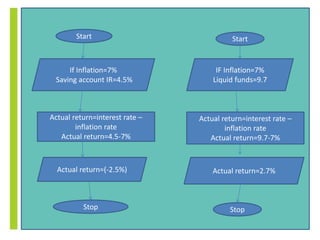
Start 
If Inflation=7% 
Saving account IR=4.5% 
Actual return=interest rate – 
inflation rate 
Actual return=4.5-7% 
Actual return=(-2.5%) 
Stop 
Start 
IF Inflation=7% 
Liquid funds=9.7 
Actual return=interest rate – 
inflation rate 
Actual return=9.7-7% 
Actual return=2.7% 
Stop
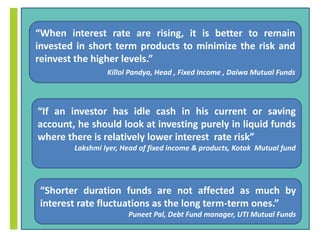
“When interest rate are rising, it is better to remain 
invested in short term products to minimize the risk and 
reinvest the higher levels.” 
Killol Pandya, Head , Fixed Income , Daiwa Mutual Funds 
“If an investor has idle cash in his current or saving 
account, he should look at investing purely in liquid funds 
where there is relatively lower interest rate risk” 
Lakshmi Iyer, Head of fixed income & products, Kotak Mutual fund 
“Shorter duration funds are not affected as much by 
interest rate fluctuations as the long term-term ones.” 
Puneet Pal, Debt Fund manager, UTI Mutual Funds
liquid funds

liquid funds

  • 1.
    COMMENT: “IN ARISING RATE SCENARIO, SHORT DURATION PLANS SUCH AS LIQUID FUNDS, ULTRA SHORT TERM FUNDS AND FIXED MATURITY PLANS(FMPs) ARE THE RIGHT CHOICE.”
  • 2.
    POWERED BY:- ANUPTIWARI YASHMEEN MD. DANISH KHAN TRISHA SINGH
  • 3.
    OUR PROJECT OBJECTIVEIS:- WHAT IS INTEREST RATE AND REASION THAT’S IMPACT ON INTEREST RATE. WHAT IS LIQUID FUNDS, ULTRA SORT TERM FUNDS AND FIXED MATURITY PLANS(FMPs).  WHY LIQUID FUNDS, ULTRA SHORT TERM FUND AND FIXED MATURITY PLANS(FMPs) ARE THE RIGHT CHOICE, IN A RISING RATE OF SCENARIO.?
  • 4.
    WHAT IS INTERESTRATE AN INTEREST RATE AT WHICH INTEREST IS PAID BY BORROWERS FOR THE USE OF MONEY THAT THEY BORROW FROM A LENDER. INTEREST RATE OFTEN CHANGE AS A RESULT OF INFLATION AND CENTARL BANKs. REASION THAT’S IMPACT ON INTEREST RATE:- BANK RATE REPO RATE REVERSE REPO RATE BASE RATE & DEPOSIT RATE
  • 5.
    BANK RATE RBILEND TO THE COMMERCIAL BANKS THROUGH ITS DISCOUNT WINDOW TO HELP BANKS MEET DEPOSITOR’S DEMANDS AND RESERVE REQUIREMENTS FOR LONG TERM. THE BANK RATE RBI CHARGE THE BANK FOR THIS PURPOSE IS CALLED BANK RATE. IF RBI WANTS TO INCREASE LIQUIDITY AND MONEY SUPPLY IN MARKET, IT WILL BE DECREASE THE BANK RATE. IF RBI WANTS TO REDUCE LIQUIDITY AND MONEY SUPPLY IN MARKET, IT WILL BE INCREASE THE BANK RATE. CURRENT BANK RATE IS:- 9%
  • 6.
    REPO RATE REPORATE IS THE RATE AT WHICH RBI LENDS TO COMMERCIAL BANKS GENERALLY AGAINST GOVERNMENT SECURITIES. REDUCTION IN REPO RATE HELPS THE COMMERCIAL BANK TO GET MONEY AT CHEAPAR RATE. INCREASE IN REPPO RATE DISCOURAGE THE COMMERCIAL BANKS TO GET MONEY AS THE RATE INCREASE AND BECOMES EXPENSIVE. CURRENT REPO RATE IS:- 8%
  • 7.
    REVERSE REPO RATE REVERSE REPO RATE IS THE RATE AT WHICH RBI BORROWS MONEY FROM THE COMMERCIAL BANKS. CORRENT REVERSE REPO RATE IS:- 7%
  • 8.
    BASE RATE ITIS THE MINIMUM RATE OF INTEREST THAT A BANK IS ALLOWED TO CHARGE FROM THE CUSTOMERS. UNLESS MANDATED BY THE GOVERNMENT, RBI RULES STIPULATES THAT NO BANK CAN OFFER LOANS AT A RATE LOWER THAN BASE RATE TO ANY OF ITS CUSTOMERS. NOTE:- DEFFERENT BANKS GENERLLY HAVE DIFFERENT BASE RATE.
  • 9.
    DEPOSIT RATE THEINTEREST RATE PAID BY FINANCIAL INSTITUTIONS AND BANKS TO DEPOSIT ACCOUNT HOLDER. DEPOSIT ACCOUNTS INCLUDE CERTIFICATES OF DEPOSIT & SAVINGS ACCOUNTS. NOTE:- DEFFERENT BANKS GENERLLY HAVE DIFFERENT DEPOSIT RATE.
  • 10.
    LIQUID FUNDS Liquidfunds are a type of mutual funds that invest in securities with a residual maturity of up to 91 days. Assets invested are not tied up for a long time as liquid funds do not have a lock-in period. Features • Invest in short-term government securities and certificate of deposits, making them reasonably secure • Provide flexibility to invest or withdraw any time without any exit load or penalty. • Some mutual fund houses even offer an ATM card to withdraw the funds • Tax efficient schemes • Have historically provided higher returns than savings bank interest rate
  • 11.
    ULTRA SHORT TERMFUNDS These are low volatility ultra short term debt schemes that offer investors an opportunity to participate at the shorter end of the yield curve. Features 1. An open-ended scheme 2. Objective is to provide a high degree of liquidity 3. Underlying portfolio consists of a range of short-term debt and rated money market instruments that provide moderate yield 4. Aims to generate reasonable returns 5. Ideal for investors with short term investment horizons
  • 12.
    Fixed Maturity Plans(FMPs) Fixed Maturity Plans (FMPs) are closed ended Debt Mutual Funds that invest in debt instruments with a specific date of maturity that is less than or equal to the maturity date of the scheme. Securities are redeemed on or before maturity and proceeds are paid to the investors. Features:- •Capital Protection •Better Returns •Less Exposure to Interest Rate Risk •Tax Benefit •Double Indexation Benefit •Lower Cost
  • 13.
    WHY LIQUID FUNDS,ULTRA SHORT TERM FUND AND FIXED MATURITY PLANS(FMPs) ARE THE RIGHT CHOICE. ? Interest rate Liquidity Prematurity Withdrawal Saving Account 4-6 % Yes ….. Fixed Deposit(FDs) 7-9 % No No Liquidity Funds/USTF/F MPs 8-10 % Yes Yes
  • 14.
    Start If Inflation=7% Saving account IR=4.5% Actual return=interest rate – inflation rate Actual return=4.5-7% Actual return=(-2.5%) Stop Start IF Inflation=7% Liquid funds=9.7 Actual return=interest rate – inflation rate Actual return=9.7-7% Actual return=2.7% Stop
  • 15.
    “When interest rateare rising, it is better to remain invested in short term products to minimize the risk and reinvest the higher levels.” Killol Pandya, Head , Fixed Income , Daiwa Mutual Funds “If an investor has idle cash in his current or saving account, he should look at investing purely in liquid funds where there is relatively lower interest rate risk” Lakshmi Iyer, Head of fixed income & products, Kotak Mutual fund “Shorter duration funds are not affected as much by interest rate fluctuations as the long term-term ones.” Puneet Pal, Debt Fund manager, UTI Mutual Funds