Different eras of
dance
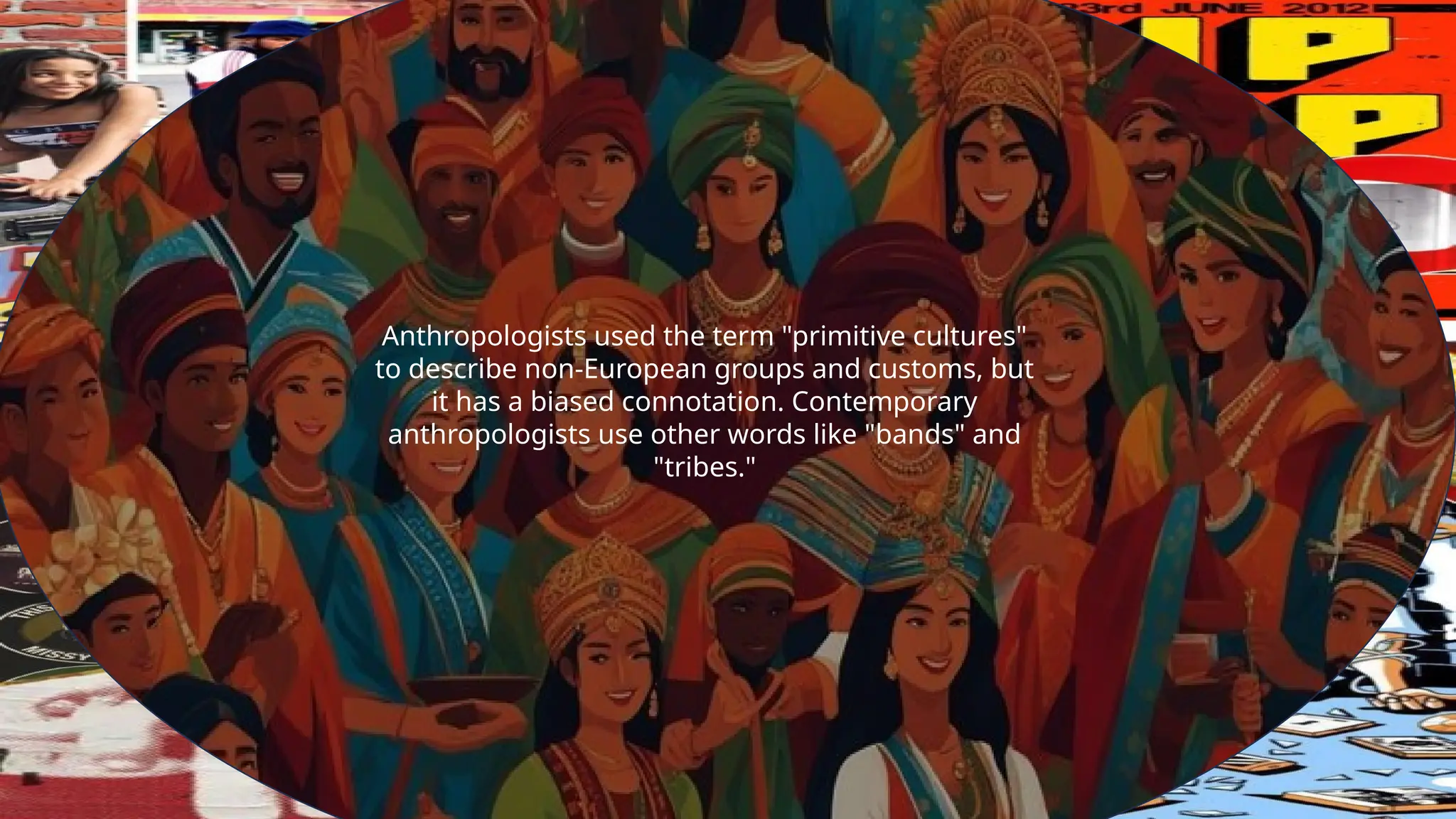
Anthropologists used the term "primitive cultures"
to describe non-European groups and customs, but
it has a biased connotation. Contemporary
anthropologists use other words like "bands" and
"tribes."
About Igorot
There are six Igorot ethnolinguistic
tribes living in Luzon's mountain
terrains: the Bontoc, Ifugao, Benguet,
Apayo, and the Kalinga tribes, which
retained much of their anito religions.
Their lives have been centered on
appeasing their gods and maintaining
a harmonious relationship between
spirits and man. Dances are usually
linked to rituals for a good harvest,
health, prayers for peace, and safety in
war.
About Moro
The Moro people are the various
usually unrelated Muslim
Filipino ethnic groups. Most of their
dances are marked by intricate hand
and arm movements, accompanied by
instruments such as the agong
and kulintang.
About Lumad.
The non-Islamized natives of Mindanao
are collectively known as
the Lumad people. Like the Tagakaulo,
they still practice worshiping anitos
through dance.
About Ancient
Egypt
Dance was an important part of
ancient Egyptian culture. Dancers were
frequently depicted in murals, tomb
paintings, and temple engravings.
Dance was performed for various
purposes, including religious rituals,
social occasions, and funerary
practices. Hand clapping, finger
snapping, tambourines, drums, and
body slapping provided dance
rhythms, while flutes, harps, lyres, and
clarinets provided music. Dancers wore
various costumes and accessories,
makeup, and jewelry.
About Greek &
Bacchanalian
Dance
Dance was an important activity in
ancient Greece. It was believed to be
one of the civilizing activities, along
with wine-making and music. Greek
Mythology was written by poets like
Homer and dance was seen as a way to
communicate wisdom and truth.
Learning to dance was considered a
necessary part of education, which
favored learning an appreciation of
beauty. Ancient Greece drove a sharp
distinction between the Apollonian
dance, which was ceremonial and
slower, and the Dionysian dance, which
was about passion, panic and desire.
The synthesis of the Apollonian and
the Dionysian is the art of dance.
About Christianized
Filipinos
In the Philippines, dancing has been a
part of the culture for thousands of
years. People danced to appease the
gods, celebrate a hunt or harvest, or
mimic the exotic life forms around
them. Tribal dances like Dugso, Sohten,
and Lawin-Lawin are still kept alive in
performance by Filipino folk dance
troupes and cultural institutions.
About Nobility
Baroque dance was a popular style of
dancing during the 17th and 18th
centuries, influenced and promoted by
Louis XIV. The style dominated until the
French Revolution and had great social
and political importance. Louis
founded the Académie Royale de
Danse in 1661, which devised a system
of notation to make learning new
dances easier for dancing masters.
About Early
Renaissance Period
Dance rose to prominence during the
European Renaissance. Unfortunately,
no choreographic descriptions survive
from the 14th century. The dances of
the aristocracy were documented in
the 15th century. The primary dance of
the Burgundian court was the stately
Bassedanse. The Italian court's
epitome of dance was the Ballo,
featuring beautifully designed
choreographies with a wide variety of
steps, figures, and rhythms.
About Courts of
Europe
Renaissance dances can be divided
into court dances and country dances.
Court dances required training and
were for display, while country dances
were for everyone. The earliest
manuscripts with detailed dance
instructions come from 15th-century
Italy, and the first printed English
source appeared in 1651. The dances
varied from slow and stately to fast
and energetic. Queen Elizabeth I
enjoyed galliards.
Let’s have a short activity! “Promote Cultural
Beats.”
Description Score: 1 2 3 4 5
The group
shows effort for
the activity.
The group was
able to
coordinate with
its members.
The group was
able to promote
their culture
based on their
understanding.
Let’s have a short quiz!
1. It is a term for a group of non-European groups.
a) Primitive Cultures
b) Pro-player
c) Igorot
2. Then, later on, change into___ by the modern anthropologist.
a. Rapper
b. Dancer
c. Tribes or Bands
3. It is a tribe living in Luzon's mountain terrain.
a) Lumad
b) Igorot
c) Jews
4. They're tribes that are known for using Kulintang and Agong.
d) Lumad
e) Igorot
f) Moro
5. Tagakaulo is from this ethnic group.
a) Lumad
b) Igorot
c) Dancers
6. Dancers were frequently depicted in the murals' tomb paintings and
temple engravings.
d) Nobility
e) Ancient Egypt
f) Courts of Europe
7. A very important dance in ancient Greece.
a. Greek & Bacchanalian Dance
b. Igorot
c. Courts of Europe
8. Dominated until the French Revolution and had great social and
political importance.
d. Dancing
e. Early Renaissance Period
f. Nobility
9. Dance rose to prominence during the European Renaissance.
a. Nobility
b. Early Renaissance Period
c. Courts of Europe
10. The dances varied from slow and stately to fast and energetic. Which
is enjoyed by Queen Elizabeth the First.
d. Nobility
e. Lumad
f. Igorot

GROUP 1 LANCE,PAULA,JANINE (PowerPoint).pptx

  • 1.
  • 2.
    Anthropologists used theterm "primitive cultures" to describe non-European groups and customs, but it has a biased connotation. Contemporary anthropologists use other words like "bands" and "tribes."
  • 3.
    About Igorot There aresix Igorot ethnolinguistic tribes living in Luzon's mountain terrains: the Bontoc, Ifugao, Benguet, Apayo, and the Kalinga tribes, which retained much of their anito religions. Their lives have been centered on appeasing their gods and maintaining a harmonious relationship between spirits and man. Dances are usually linked to rituals for a good harvest, health, prayers for peace, and safety in war.
  • 4.
    About Moro The Moropeople are the various usually unrelated Muslim Filipino ethnic groups. Most of their dances are marked by intricate hand and arm movements, accompanied by instruments such as the agong and kulintang.
  • 5.
    About Lumad. The non-Islamizednatives of Mindanao are collectively known as the Lumad people. Like the Tagakaulo, they still practice worshiping anitos through dance.
  • 6.
    About Ancient Egypt Dance wasan important part of ancient Egyptian culture. Dancers were frequently depicted in murals, tomb paintings, and temple engravings. Dance was performed for various purposes, including religious rituals, social occasions, and funerary practices. Hand clapping, finger snapping, tambourines, drums, and body slapping provided dance rhythms, while flutes, harps, lyres, and clarinets provided music. Dancers wore various costumes and accessories, makeup, and jewelry.
  • 7.
    About Greek & Bacchanalian Dance Dancewas an important activity in ancient Greece. It was believed to be one of the civilizing activities, along with wine-making and music. Greek Mythology was written by poets like Homer and dance was seen as a way to communicate wisdom and truth. Learning to dance was considered a necessary part of education, which favored learning an appreciation of beauty. Ancient Greece drove a sharp distinction between the Apollonian dance, which was ceremonial and slower, and the Dionysian dance, which was about passion, panic and desire. The synthesis of the Apollonian and the Dionysian is the art of dance.
  • 8.
    About Christianized Filipinos In thePhilippines, dancing has been a part of the culture for thousands of years. People danced to appease the gods, celebrate a hunt or harvest, or mimic the exotic life forms around them. Tribal dances like Dugso, Sohten, and Lawin-Lawin are still kept alive in performance by Filipino folk dance troupes and cultural institutions.
  • 9.
    About Nobility Baroque dancewas a popular style of dancing during the 17th and 18th centuries, influenced and promoted by Louis XIV. The style dominated until the French Revolution and had great social and political importance. Louis founded the Académie Royale de Danse in 1661, which devised a system of notation to make learning new dances easier for dancing masters.
  • 10.
    About Early Renaissance Period Dancerose to prominence during the European Renaissance. Unfortunately, no choreographic descriptions survive from the 14th century. The dances of the aristocracy were documented in the 15th century. The primary dance of the Burgundian court was the stately Bassedanse. The Italian court's epitome of dance was the Ballo, featuring beautifully designed choreographies with a wide variety of steps, figures, and rhythms.
  • 11.
    About Courts of Europe Renaissancedances can be divided into court dances and country dances. Court dances required training and were for display, while country dances were for everyone. The earliest manuscripts with detailed dance instructions come from 15th-century Italy, and the first printed English source appeared in 1651. The dances varied from slow and stately to fast and energetic. Queen Elizabeth I enjoyed galliards.
  • 14.
    Let’s have ashort activity! “Promote Cultural Beats.” Description Score: 1 2 3 4 5 The group shows effort for the activity. The group was able to coordinate with its members. The group was able to promote their culture based on their understanding.
  • 15.
    Let’s have ashort quiz! 1. It is a term for a group of non-European groups. a) Primitive Cultures b) Pro-player c) Igorot 2. Then, later on, change into___ by the modern anthropologist. a. Rapper b. Dancer c. Tribes or Bands
  • 16.
    3. It isa tribe living in Luzon's mountain terrain. a) Lumad b) Igorot c) Jews 4. They're tribes that are known for using Kulintang and Agong. d) Lumad e) Igorot f) Moro
  • 17.
    5. Tagakaulo isfrom this ethnic group. a) Lumad b) Igorot c) Dancers 6. Dancers were frequently depicted in the murals' tomb paintings and temple engravings. d) Nobility e) Ancient Egypt f) Courts of Europe
  • 18.
    7. A veryimportant dance in ancient Greece. a. Greek & Bacchanalian Dance b. Igorot c. Courts of Europe 8. Dominated until the French Revolution and had great social and political importance. d. Dancing e. Early Renaissance Period f. Nobility
  • 19.
    9. Dance roseto prominence during the European Renaissance. a. Nobility b. Early Renaissance Period c. Courts of Europe 10. The dances varied from slow and stately to fast and energetic. Which is enjoyed by Queen Elizabeth the First. d. Nobility e. Lumad f. Igorot