PRESENTED BY
 2102271
 2102272
 2102273
 2102274 STUDY ON ANATOMY OF
GROUNDNUT STEM
OUTLINE
Background study of Groundnut
Anatomical Structures of Groundnut
Field Application
Purpose of Studying Anatomical
Structures of Groundnut Stem
We can easily identify whether Groundnut
stem or others stem by seeing transverse
section of stem.
We can differentiate between roots and stem.
Anatomical
Structures of
Groundnut
Stem
cuticle
epidermis
hypodermis
General cortex
Endodermis
Bundle cap
Sieve tube
Companion cell
Cambial zone
Secondary Xylem
vessel
Metaxylem vessel
Protoxylem vessel
Pith
T.S. of a Groundnut stem
Epidermis
Outer most layer
Barrel shaped parenchymatous
cell
No intercellular space, compactly
arranged
Protect from outer hazard
Epidermis
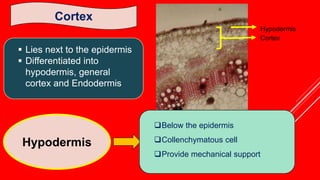
Cortex
 Lies next to the epidermis
 Differentiated into
hypodermis, general
cortex and Endodermis
Hypodermis
Below the epidermis
Collenchymatous cell
Provide mechanical support
Hypodermis
Cortex
General cortex
Below the hypodermis
Round or oval shaped
parenchymatous cell
Storage food materials
Endodermis
o Inner most layer of cortex
o Compactly arranged, barrel shaped
parenchymatous cell
o Contain starch grains
General
cortex
Endodermis
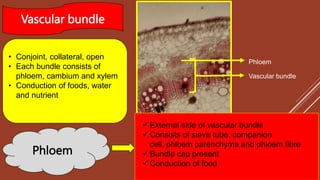
Vascular bundle
• Conjoint, collateral, open
• Each bundle consists of
phloem, cambium and xylem
• Conduction of foods, water
and nutrient
Phloem
 External side of vascular bundle
 Consists of sieve tube, companion
cell, phloem parenchyma and phloem fibre
 Bundle cap present
 Conduction of food
Phloem
Vascular bundle
Cambium
Between xylem and phloem
Thin walled, rectangular cells,
arranged in a radial rows
Produce secondary xylem
and phloem
Xylem
Lies inner to the cambium
Consists of xylem vessel, xylem parenchyma, xylem fibre
Xylem endarch
Ray parenchyma – radial line and axial parenchyma
surrounded xylem vessel
Cambium
Xylem
Pith :Round or oval shaped, parenchymatous cell
How we can
identify it's a root
or stem ?
How we can identify
it's a monocot or
dicot plant ?
i. Vascular bundle conjoint
ii. Xylem endarch
i. Vascular bundle conjoint, collateral
open
ii. Hypodermis consist collenchyma cell
Field application
i. Helps us to understand the structural adaptations of plants
with respect to diverse environmental condition
ii. It helps in the improvement of food crops
iii. The study of plant anatomic structure allows us to predict
the strength of wood
iv. The study of various plant fibres such as jute, flax, etc,
helps in their commercial exploitation
Groundnut stem anatomy.pptx

Groundnut stem anatomy.pptx

  • 2.
    PRESENTED BY  2102271 2102272  2102273  2102274 STUDY ON ANATOMY OF GROUNDNUT STEM
  • 3.
    OUTLINE Background study ofGroundnut Anatomical Structures of Groundnut Field Application
  • 4.
    Purpose of StudyingAnatomical Structures of Groundnut Stem We can easily identify whether Groundnut stem or others stem by seeing transverse section of stem. We can differentiate between roots and stem.
  • 5.
    Anatomical Structures of Groundnut Stem cuticle epidermis hypodermis General cortex Endodermis Bundlecap Sieve tube Companion cell Cambial zone Secondary Xylem vessel Metaxylem vessel Protoxylem vessel Pith T.S. of a Groundnut stem
  • 6.
    Epidermis Outer most layer Barrelshaped parenchymatous cell No intercellular space, compactly arranged Protect from outer hazard Epidermis
  • 7.
    Cortex  Lies nextto the epidermis  Differentiated into hypodermis, general cortex and Endodermis Hypodermis Below the epidermis Collenchymatous cell Provide mechanical support Hypodermis Cortex
  • 8.
    General cortex Below thehypodermis Round or oval shaped parenchymatous cell Storage food materials Endodermis o Inner most layer of cortex o Compactly arranged, barrel shaped parenchymatous cell o Contain starch grains General cortex Endodermis
  • 9.
    Vascular bundle • Conjoint,collateral, open • Each bundle consists of phloem, cambium and xylem • Conduction of foods, water and nutrient Phloem  External side of vascular bundle  Consists of sieve tube, companion cell, phloem parenchyma and phloem fibre  Bundle cap present  Conduction of food Phloem Vascular bundle
  • 10.
    Cambium Between xylem andphloem Thin walled, rectangular cells, arranged in a radial rows Produce secondary xylem and phloem Xylem Lies inner to the cambium Consists of xylem vessel, xylem parenchyma, xylem fibre Xylem endarch Ray parenchyma – radial line and axial parenchyma surrounded xylem vessel Cambium Xylem
  • 11.
    Pith :Round oroval shaped, parenchymatous cell How we can identify it's a root or stem ? How we can identify it's a monocot or dicot plant ? i. Vascular bundle conjoint ii. Xylem endarch i. Vascular bundle conjoint, collateral open ii. Hypodermis consist collenchyma cell
  • 12.
    Field application i. Helpsus to understand the structural adaptations of plants with respect to diverse environmental condition ii. It helps in the improvement of food crops iii. The study of plant anatomic structure allows us to predict the strength of wood iv. The study of various plant fibres such as jute, flax, etc, helps in their commercial exploitation