GREENHOUSE EFFECT


                Presented by:
            SACHIN KANDHARKAR
             MIS NO.: 121124008
What is Greenhouse Effect?

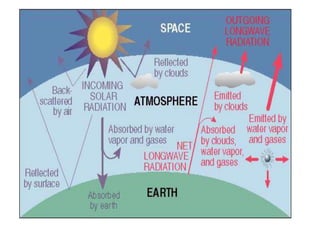
• The amount of solar energy absorbed or radiated by Earth
  is modulated by the atmosphere and depends on its
  composition. Greenhouse gases—such as water vapour,
  carbon dioxide, and methane—occur naturally in small
  amounts and absorb and release heat energy more
  efficiently than abundant atmospheric gases like nitrogen
  and oxygen. Small increases in carbon dioxide
  concentration have a large effect on the climate system.
• A greenhouse traps the sun's rays and keeps the heat from
  escaping.
• It is warm inside.
• In the same way that the glass traps heat in a greenhouse, the
  atmosphere traps heat next to the earth.
• Certain gases in the atmosphere such as carbon dioxide,
  methane and water vapour trap energy from the sun.
• The natural greenhouse gases act like a big blanket around the
  earth, keeping it warm.
• Humans can create extra greenhouse gases but this means that
  more heat gets trapped.
What Happens if More Greenhouse Gases are Generated?
• Warming Earth’s climate.
• Global Warming
• Higher sea levels
• More rainfall and
• Severe droughts and floods.
References:
• IPCC, 2007: Climate Change 2007:
• Science Education Handout, March 2011
• Greenhouse Effect: A Scientific Analysis

Greenhouse effect

  • 1.
    GREENHOUSE EFFECT Presented by: SACHIN KANDHARKAR MIS NO.: 121124008
  • 2.
    What is GreenhouseEffect? • The amount of solar energy absorbed or radiated by Earth is modulated by the atmosphere and depends on its composition. Greenhouse gases—such as water vapour, carbon dioxide, and methane—occur naturally in small amounts and absorb and release heat energy more efficiently than abundant atmospheric gases like nitrogen and oxygen. Small increases in carbon dioxide concentration have a large effect on the climate system.
  • 4.
    • A greenhousetraps the sun's rays and keeps the heat from escaping. • It is warm inside. • In the same way that the glass traps heat in a greenhouse, the atmosphere traps heat next to the earth. • Certain gases in the atmosphere such as carbon dioxide, methane and water vapour trap energy from the sun. • The natural greenhouse gases act like a big blanket around the earth, keeping it warm. • Humans can create extra greenhouse gases but this means that more heat gets trapped.
  • 5.
    What Happens ifMore Greenhouse Gases are Generated? • Warming Earth’s climate. • Global Warming • Higher sea levels • More rainfall and • Severe droughts and floods.
  • 6.
    References: • IPCC, 2007:Climate Change 2007: • Science Education Handout, March 2011 • Greenhouse Effect: A Scientific Analysis