Green and Competitive
          Ending the stalemate
The Dilemma


Does going green mean companies have
        to be less competitive?
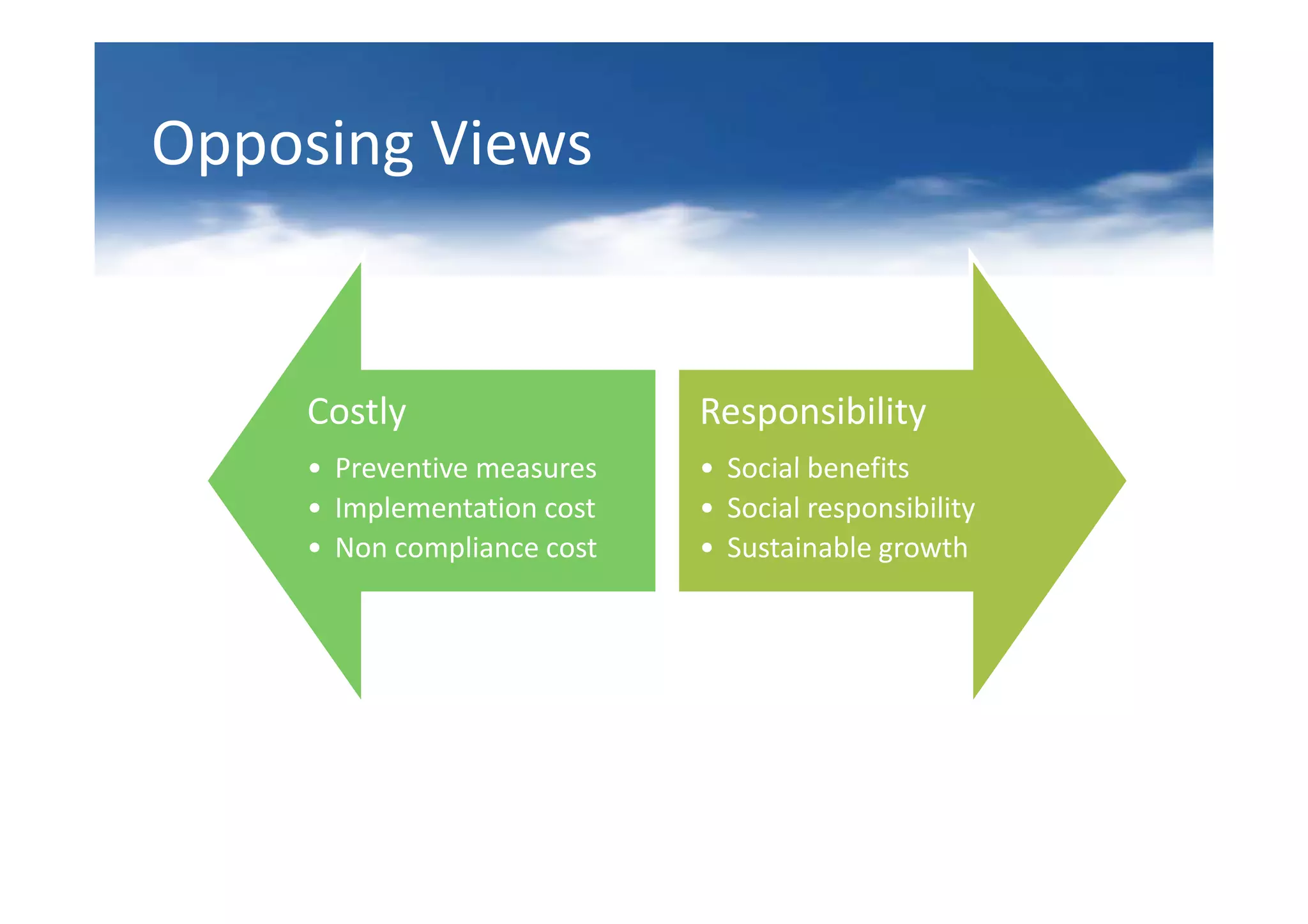
Opposing Views


    Costly                  Responsibility
    • Preventive measures   • Social benefits
    • Implementation cost   • Social responsibility
    • Non compliance cost   • Sustainable growth
Traditional Views On Going Green

      Stricter regulations mean higher cost
      required to achieve compliance.

      Environment concerns limit firm’s freedom
      when coming up with innovations.


      It raises production cost and generate no
      profit to the business.
The Current Situation


   Are there any changes from the
          traditional view?
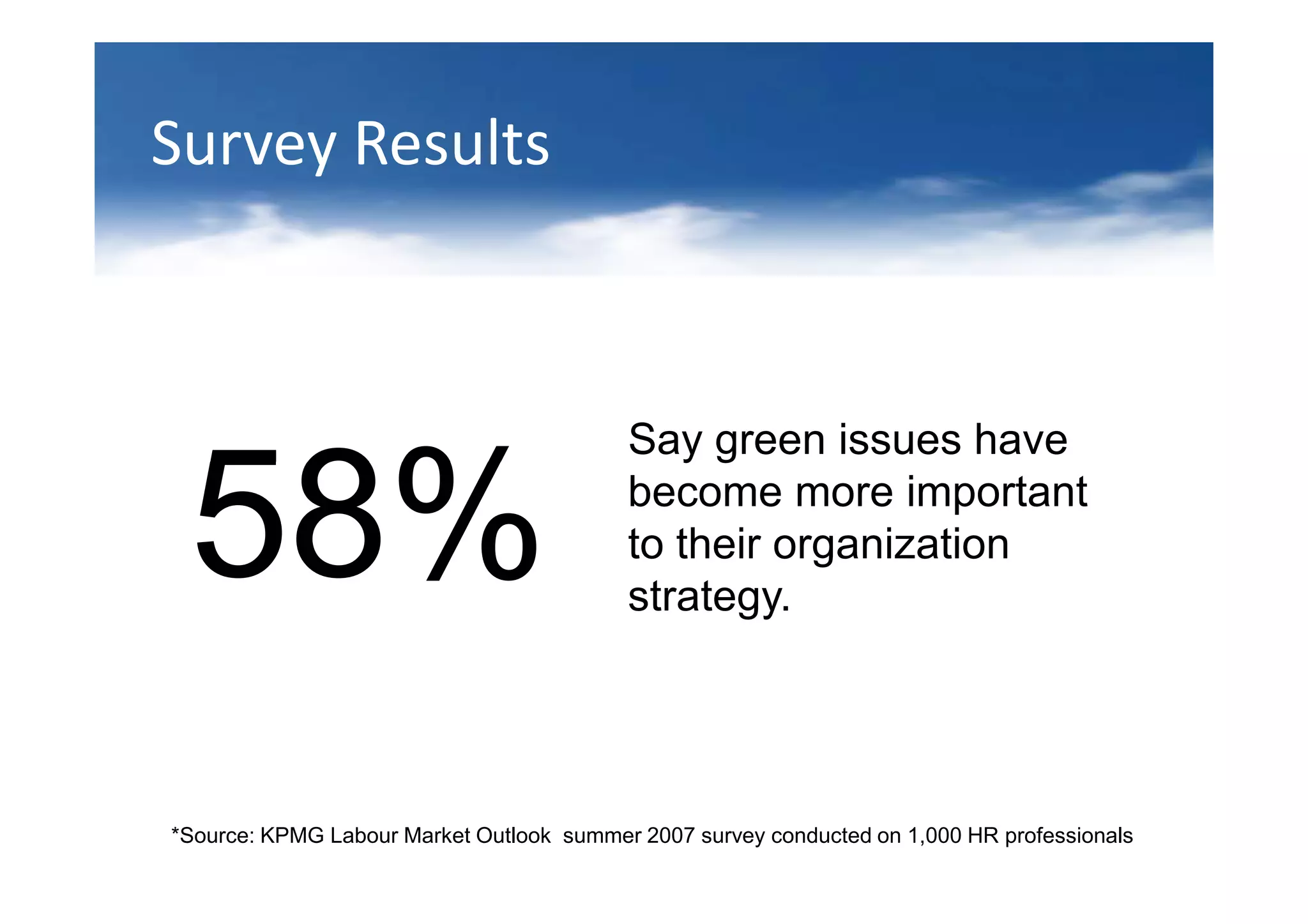
Survey Results


                                          Say green issues have

 58%                                      become more important
                                          to their organization
                                          strategy.


*Source: KPMG Labour Market Outlook summer 2007 survey conducted on 1,000 HR professionals
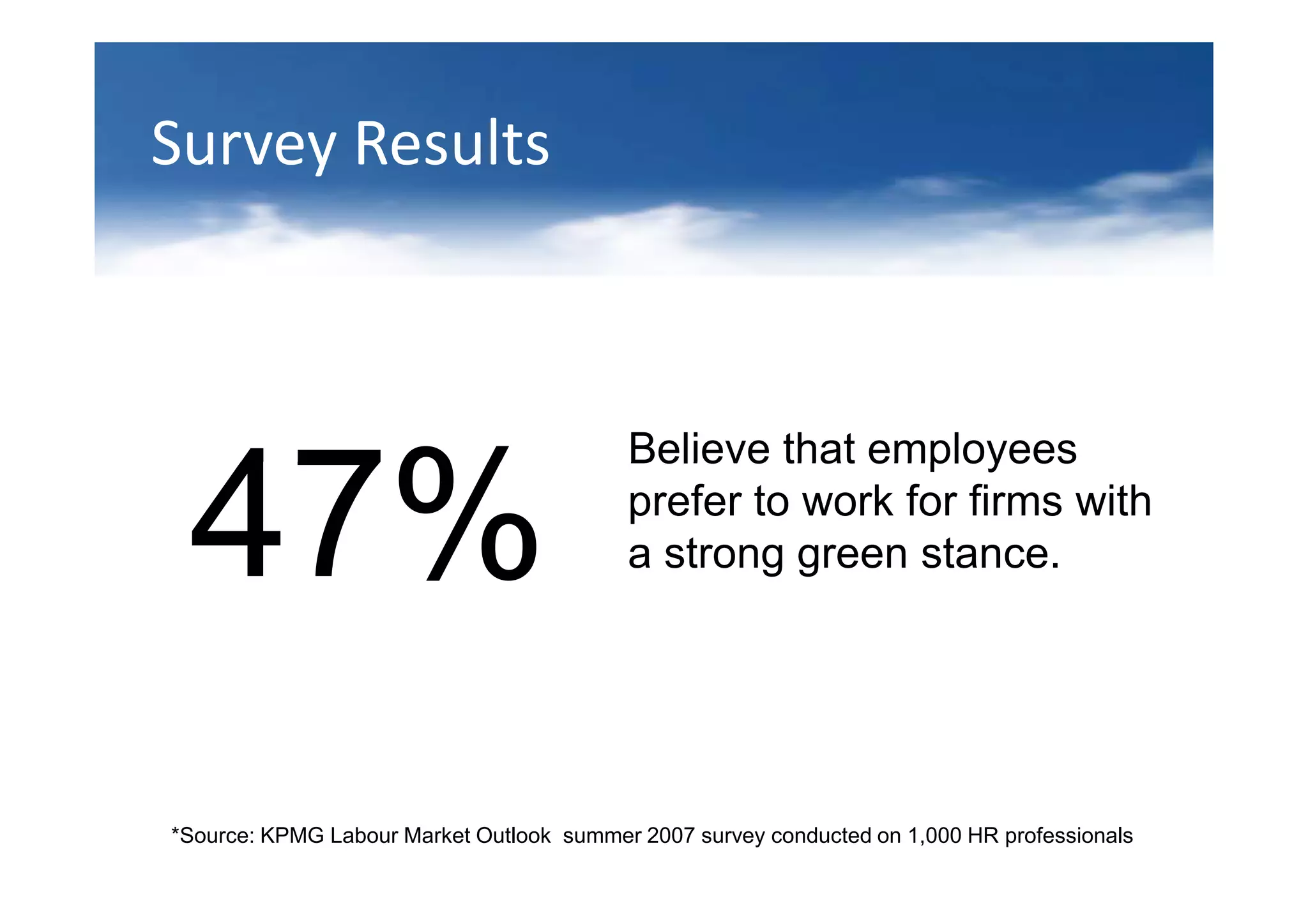
Survey Results


                                          Believe that employees

 47%                                      prefer to work for firms with
                                          a strong green stance.


*Source: KPMG Labour Market Outlook summer 2007 survey conducted on 1,000 HR professionals
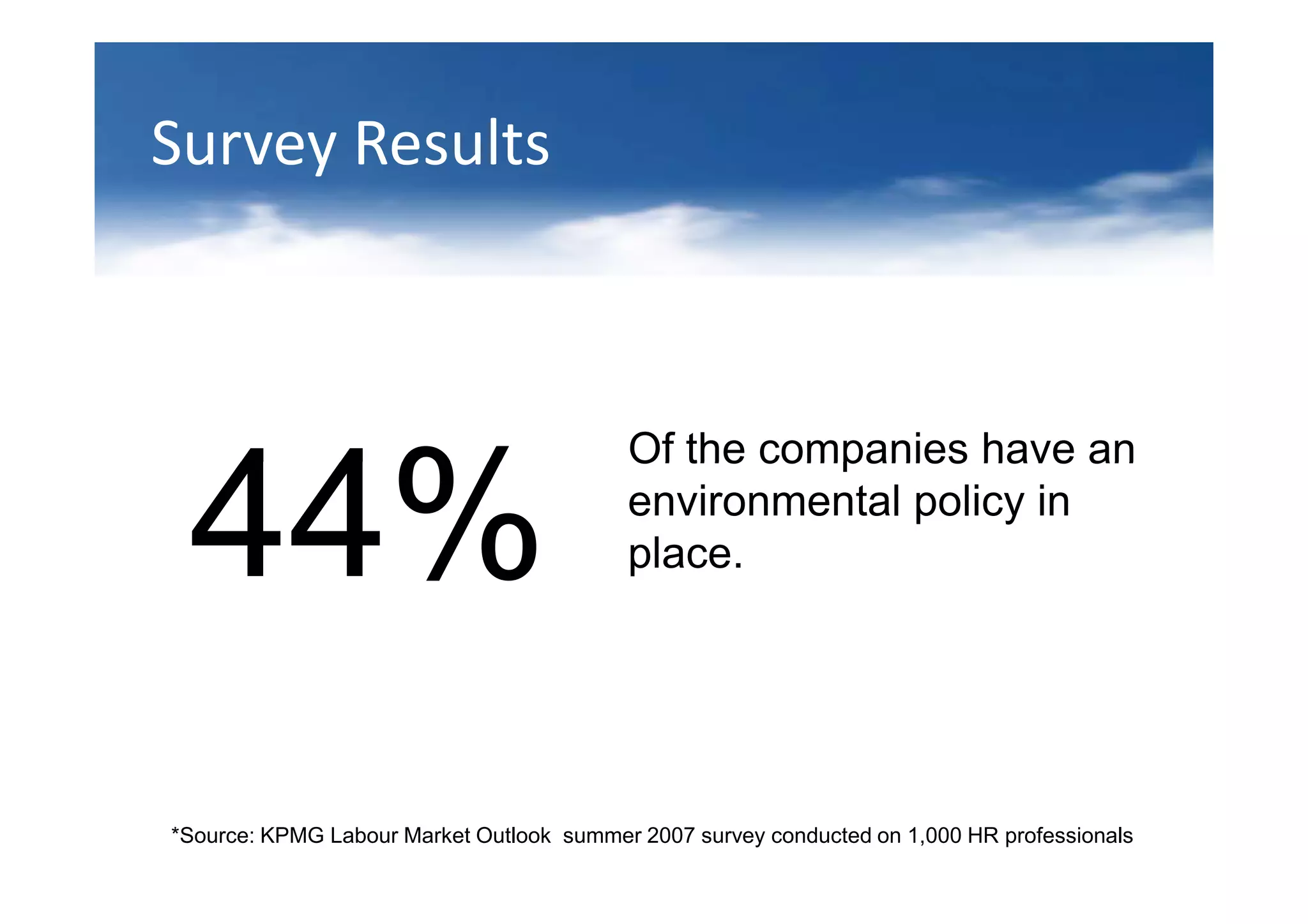
Survey Results


                                          Of the companies have an

 44%                                      environmental policy in
                                          place.


*Source: KPMG Labour Market Outlook summer 2007 survey conducted on 1,000 HR professionals
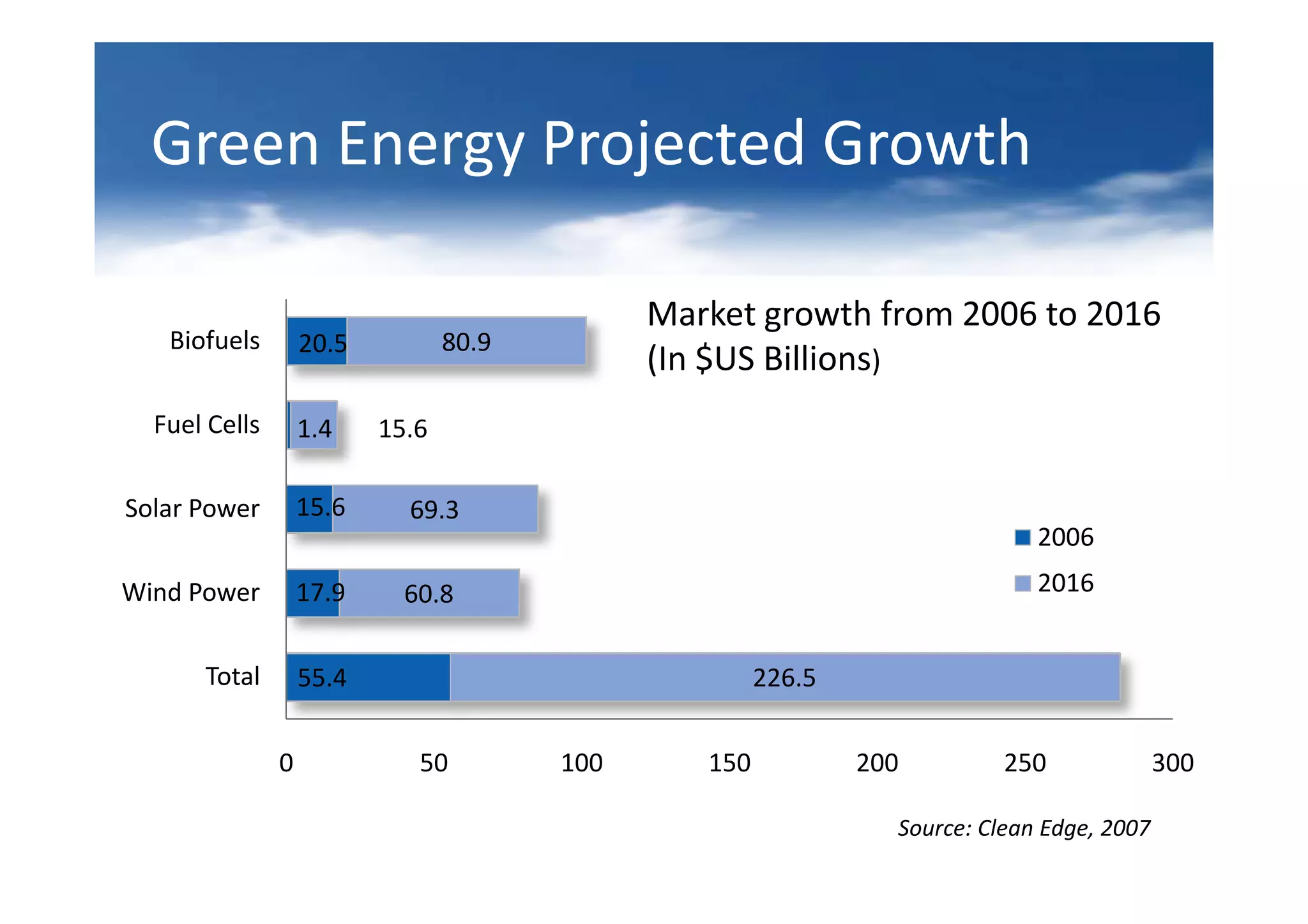
Green Energy Projected Growth

                                              Market growth from 2006 to 2016
   Biofuels        20.5          80.9
                                              (In $US Billions)
  Fuel Cells       1.4    15.6

Solar Power        15.6     69.3
                                                                              2006
Wind Power         17.9     60.8                                              2016


      Total        55.4                                226.5


               0             50         100      150           200         250              300

                                                                 Source: Clean Edge, 2007
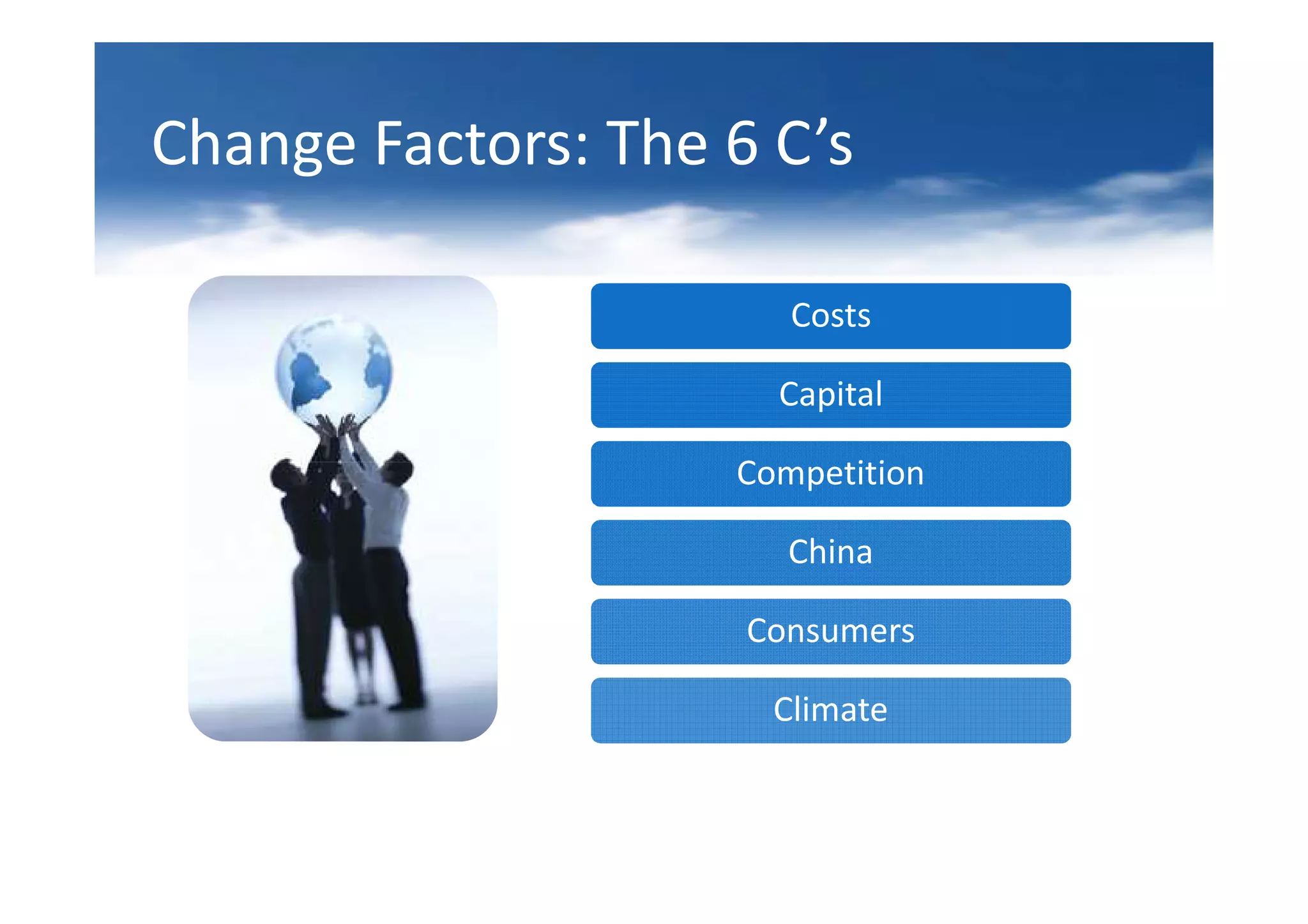
Change Factors: The 6 C’s

                       Costs

                      Capital

                    Competition

                       China

                     Consumers

                      Climate
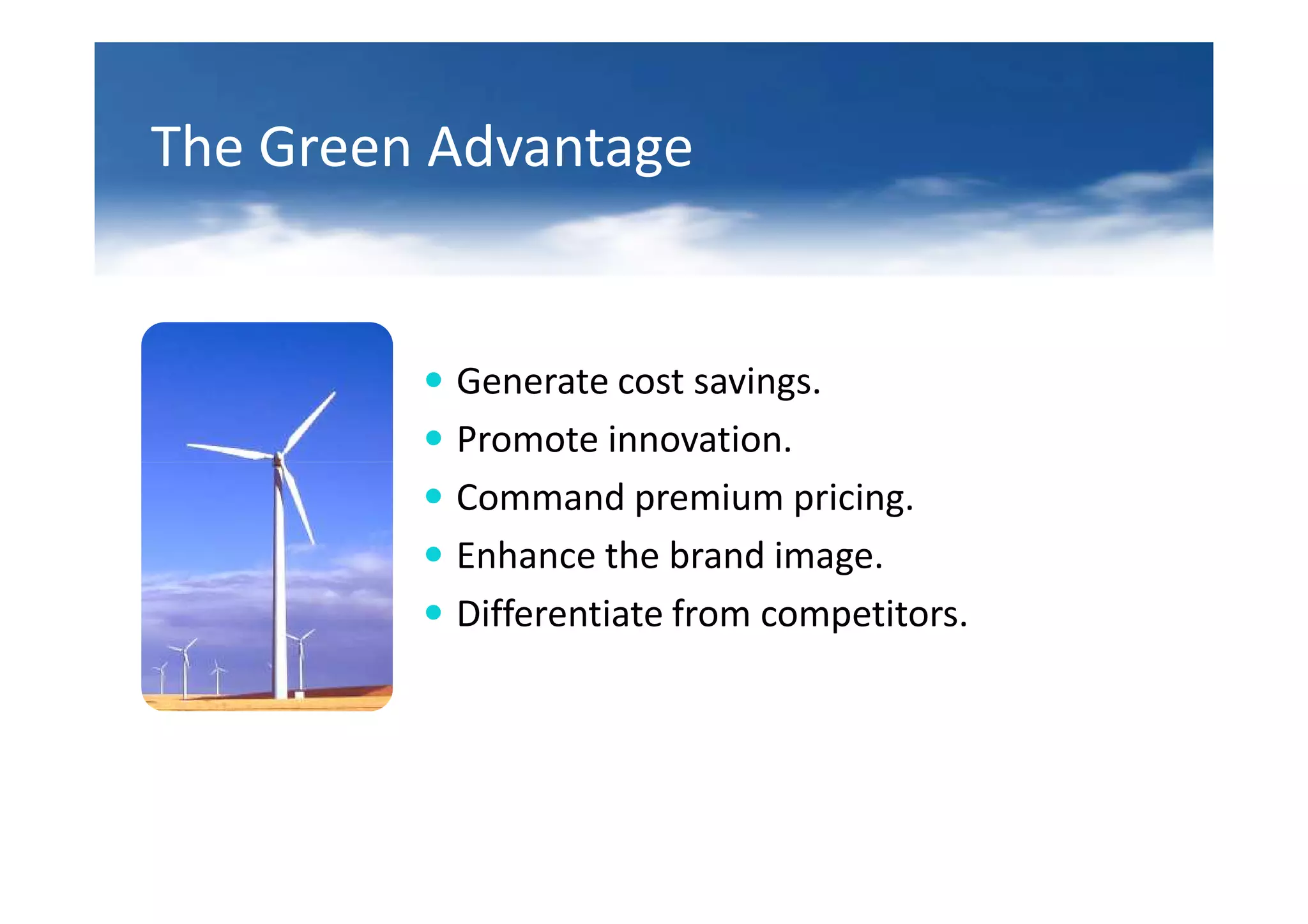
The Green Advantage


          Generate cost savings.
          Promote innovation.
          Command premium pricing.
          Enhance the brand image.
          Differentiate from competitors.
Putting It Into Action


 What strategies can firms employ to
    gain the green advantage?
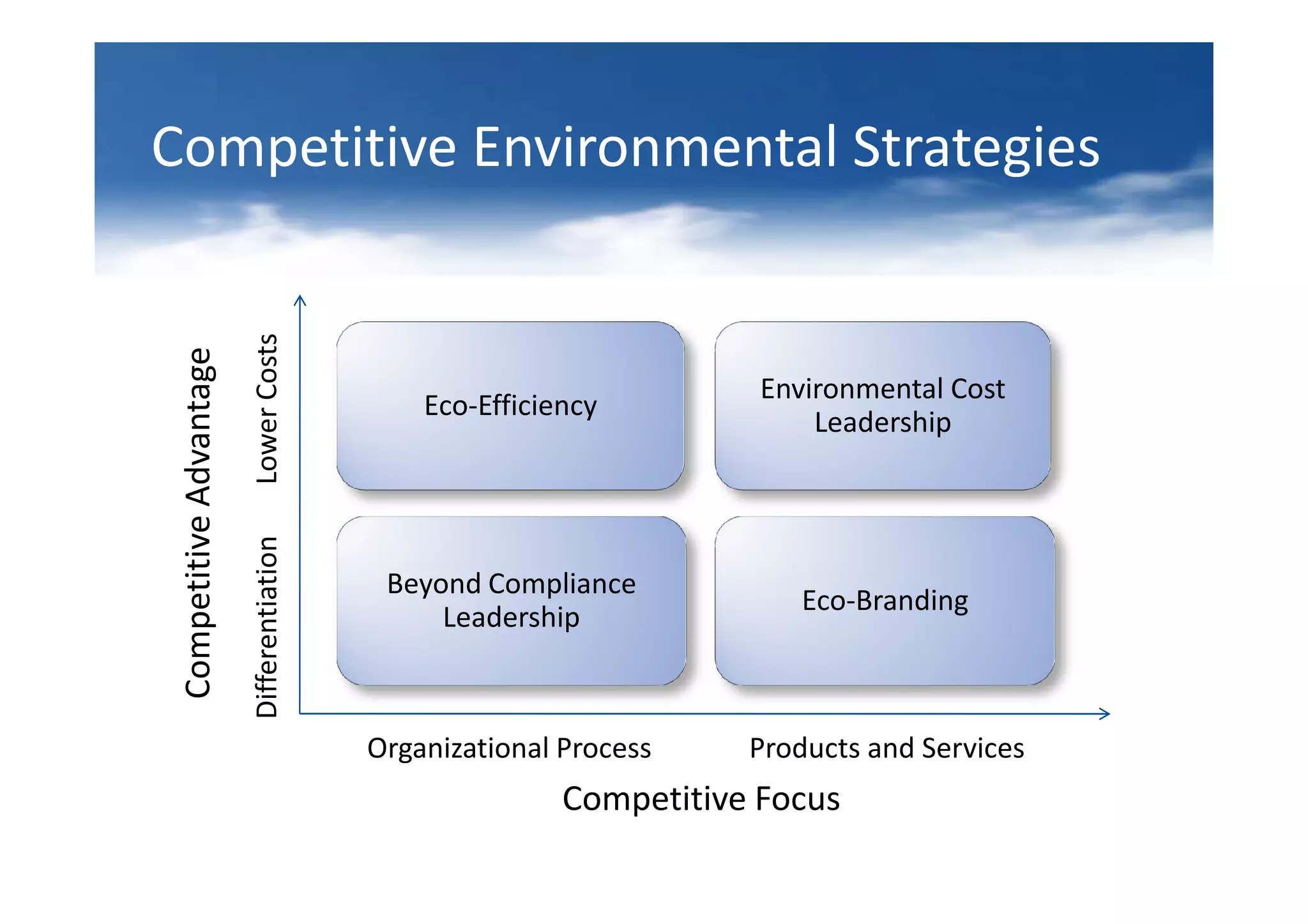
Competitive Environmental Strategies
                         Lower Costs
 Competitive Advantage


                                                                      Environmental Cost
                                               Eco-Efficiency
                                                                          Leadership
                         Differentiation


                                            Beyond Compliance
                                                                         Eco-Branding
                                                Leadership


                                           Organizational Process    Products and Services
                                                          Competitive Focus
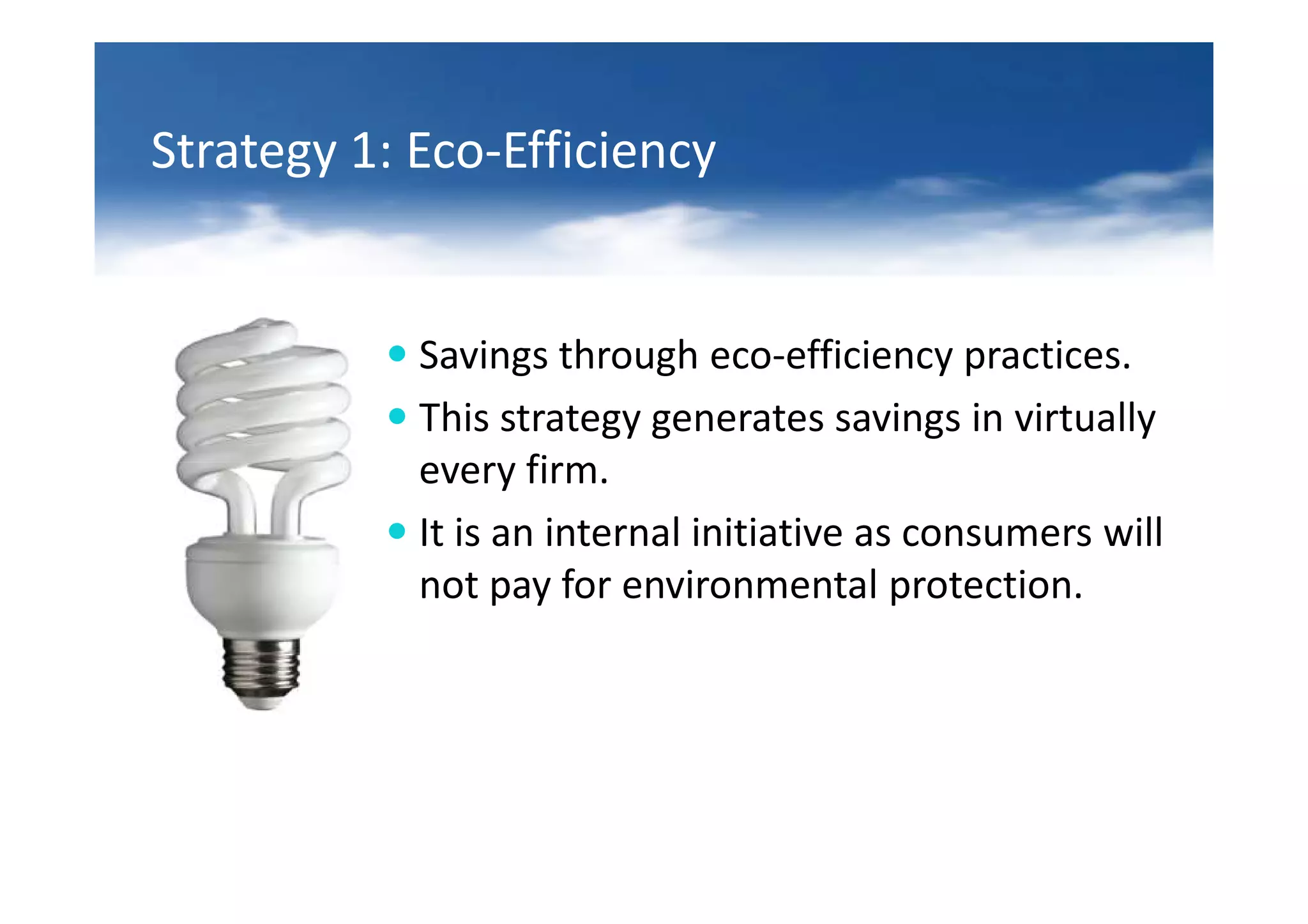
Strategy 1: Eco-Efficiency


            Savings through eco-efficiency practices.
            This strategy generates savings in virtually
            every firm.
            It is an internal initiative as consumers will
            not pay for environmental protection.
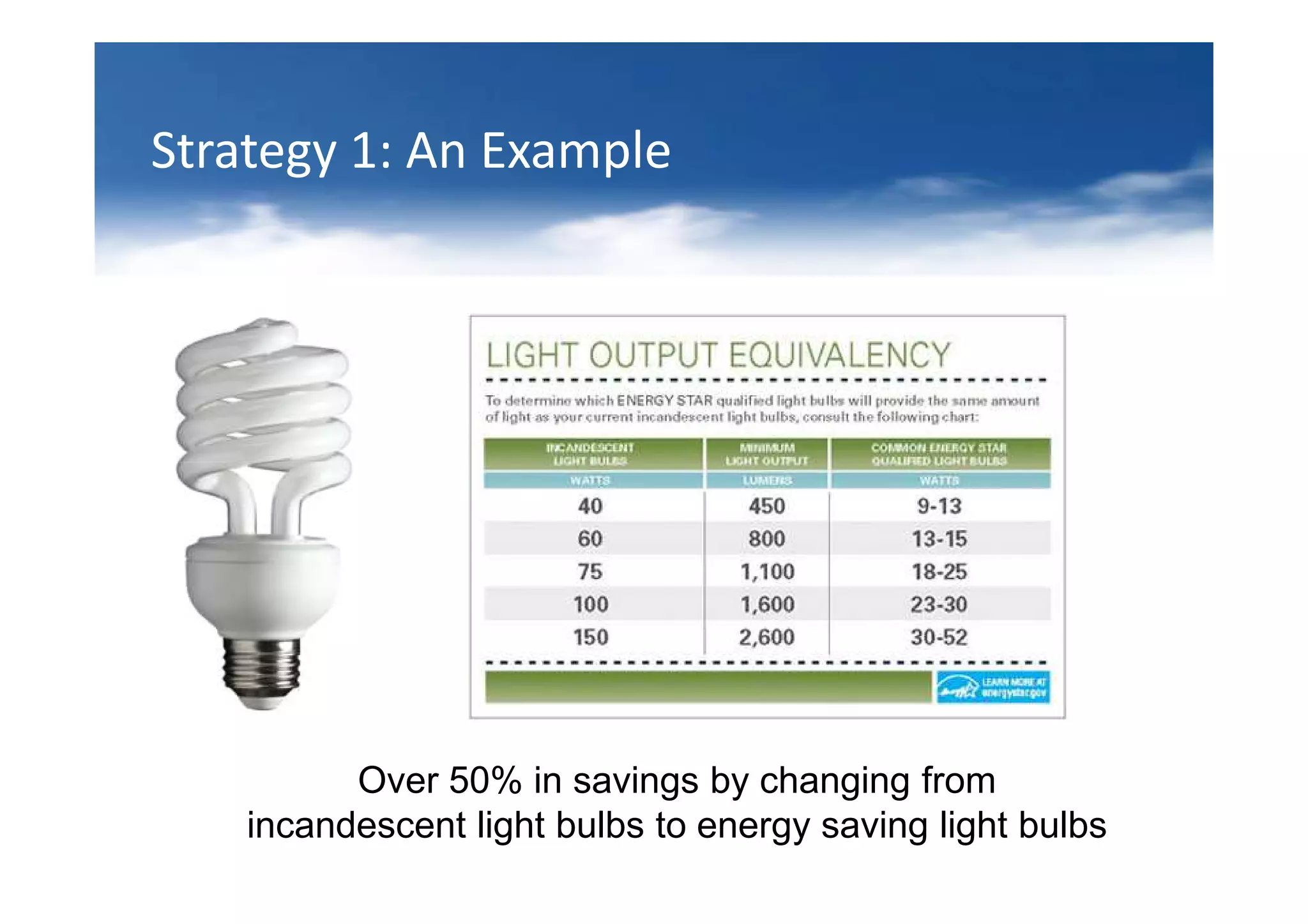
Strategy 1: An Example


          Over 50% in savings by changing from
    incandescent light bulbs to energy saving light bulbs
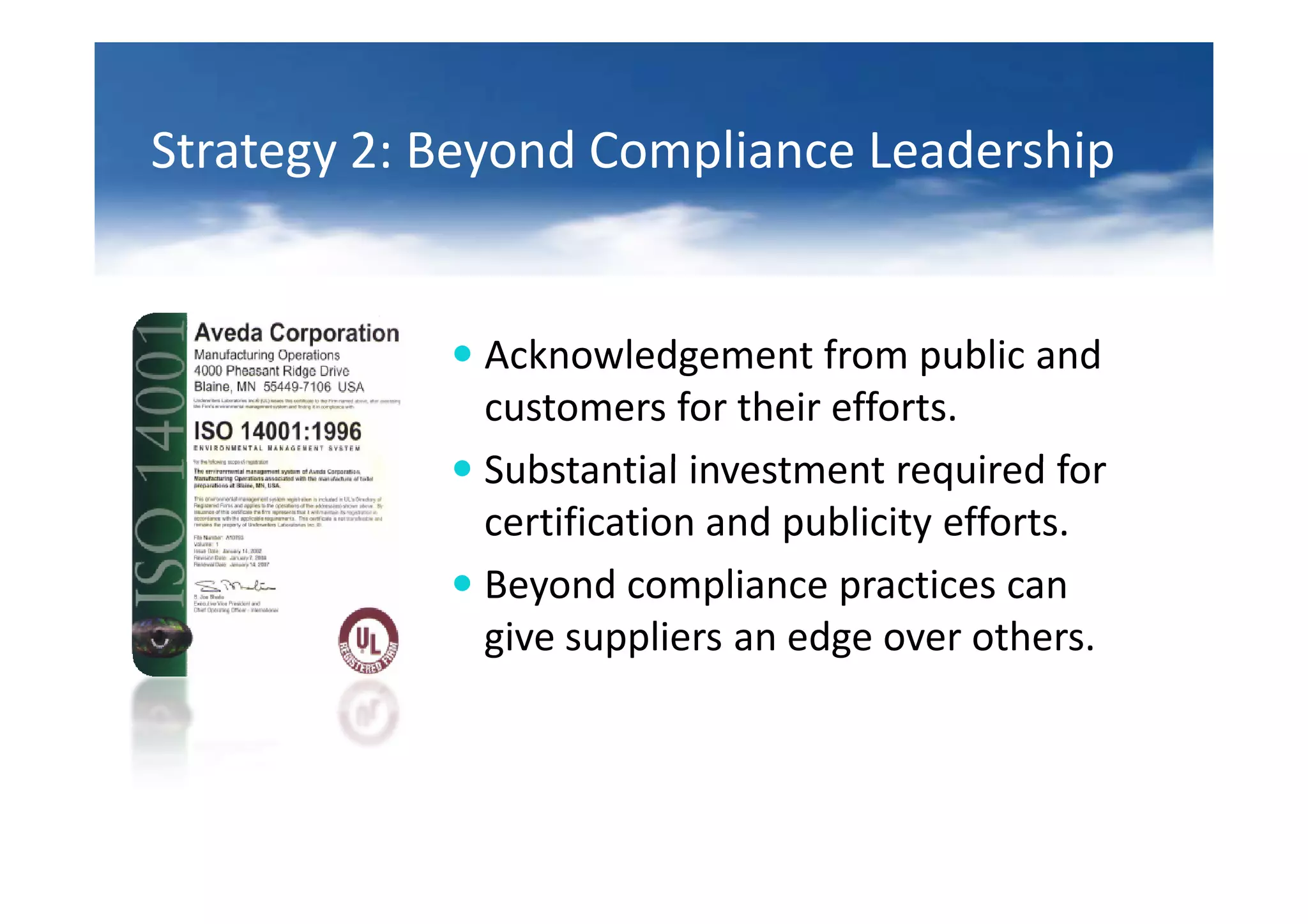
Strategy 2: Beyond Compliance Leadership


             Acknowledgement from public and
             customers for their efforts.
             Substantial investment required for
             certification and publicity efforts.
             Beyond compliance practices can
             give suppliers an edge over others.
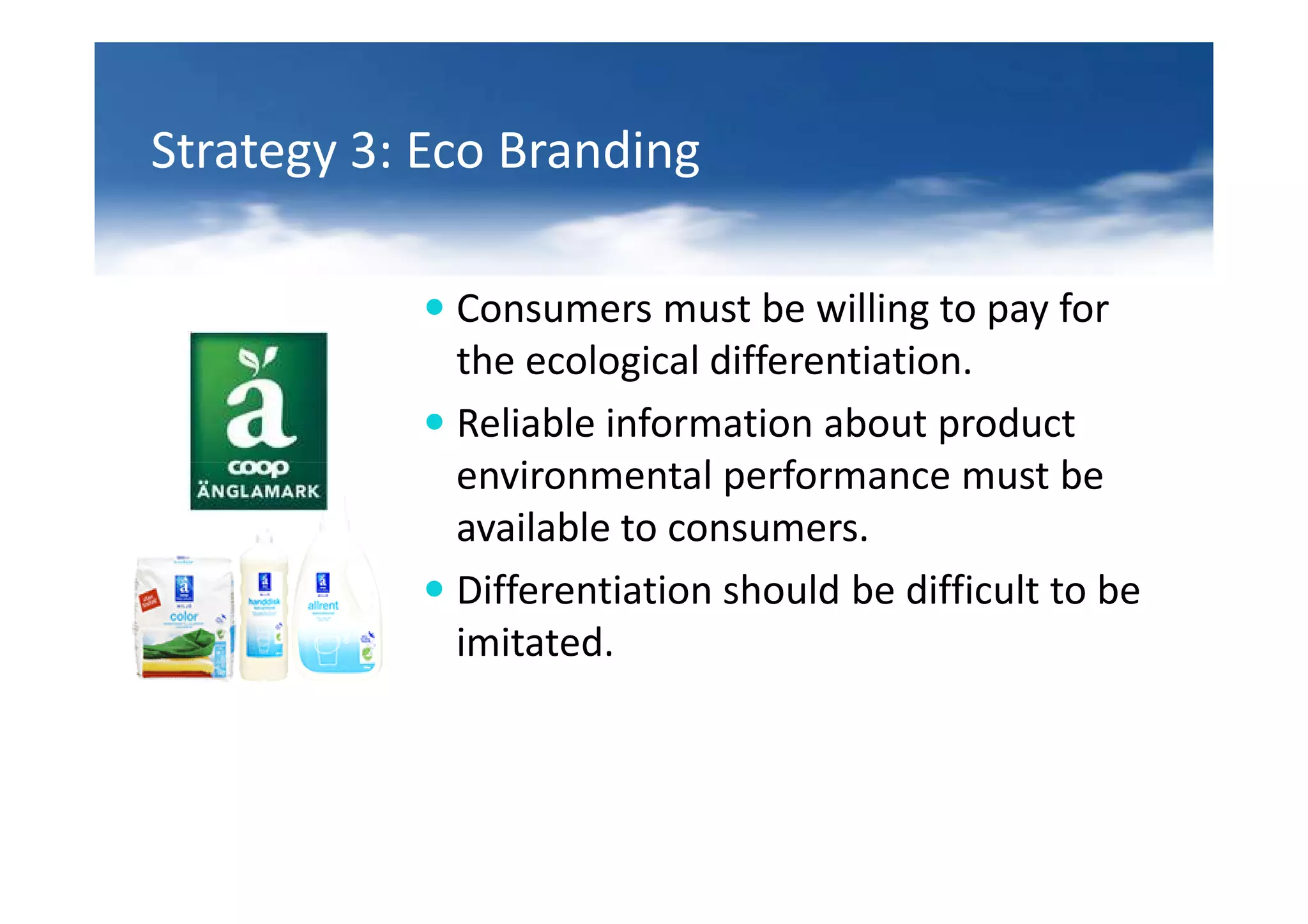
Strategy 3: Eco Branding

             Consumers must be willing to pay for
             the ecological differentiation.
             Reliable information about product
             environmental performance must be
             available to consumers.
             Differentiation should be difficult to be
             imitated.
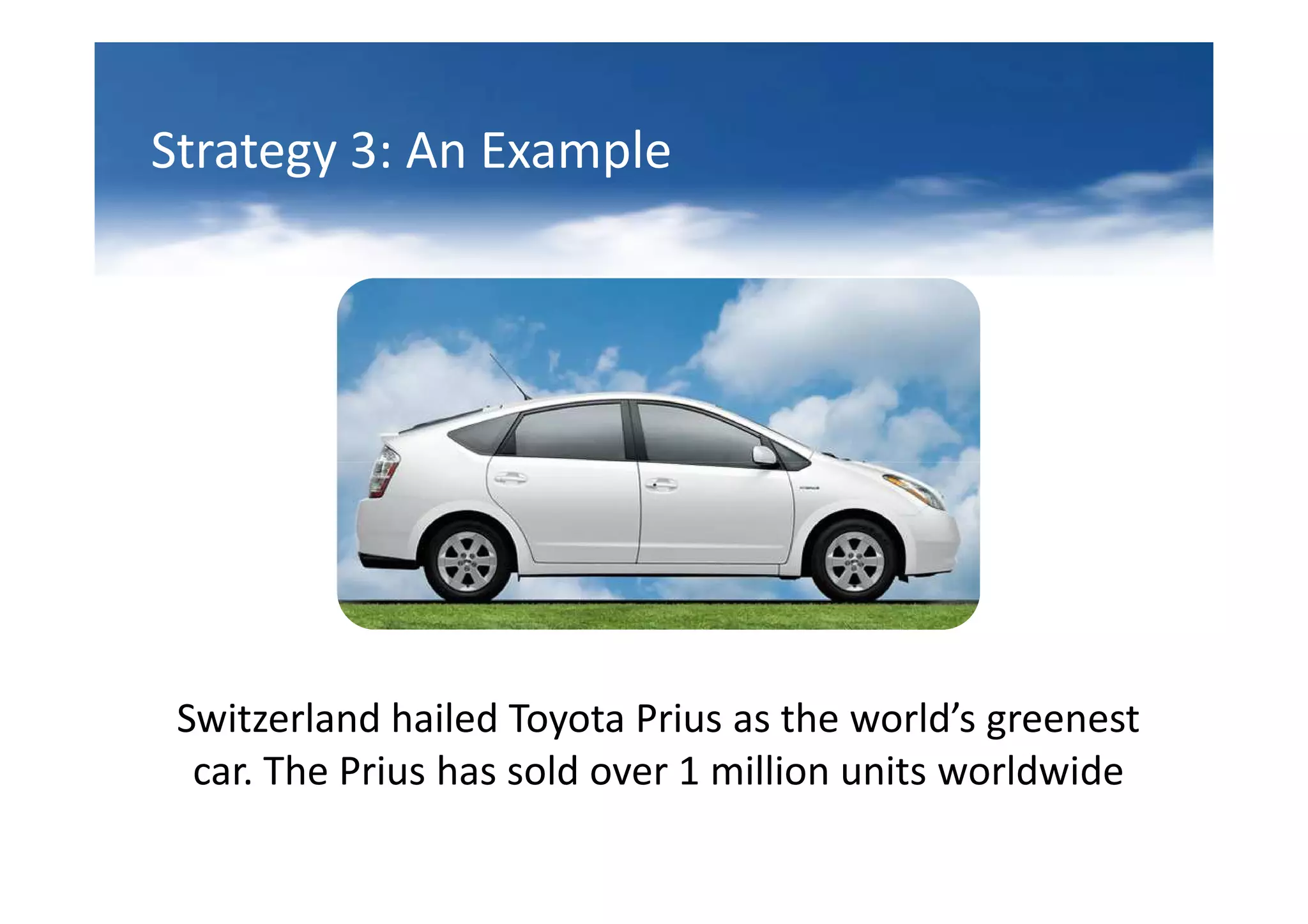
Strategy 3: An Example


 Switzerland hailed Toyota Prius as the world’s greenest
  car. The Prius has sold over 1 million units worldwide
Strategy 4: Environmental Cost Leadership

             Production of cost competitive
             products with environmental
             attributes built-in.
             Radical product innovation such as
             material substitution, packaging, etc.
             Better product design results in more
             efficient use of resources which
             translates to lower price.
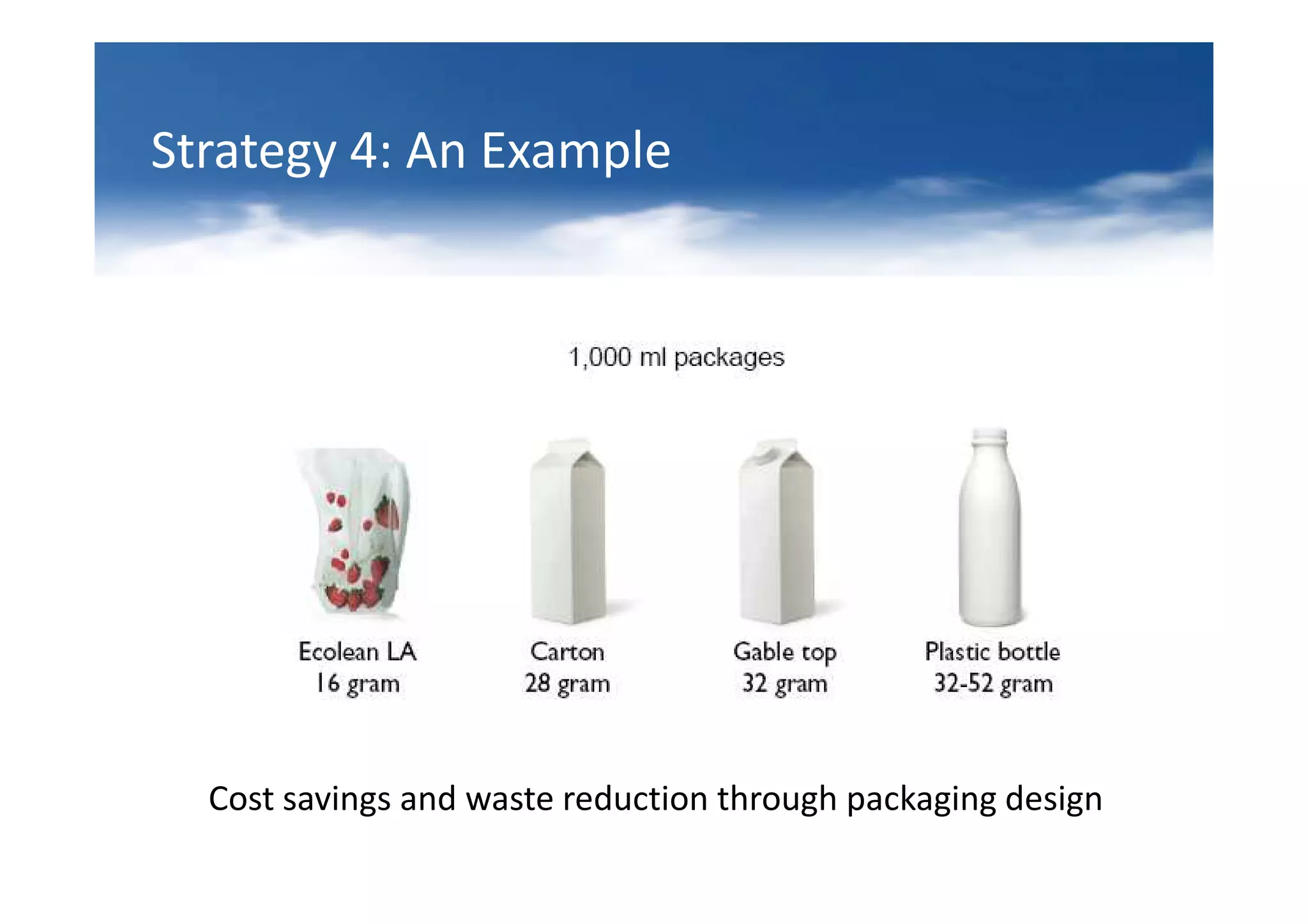
Strategy 4: An Example


  Cost savings and waste reduction through packaging design
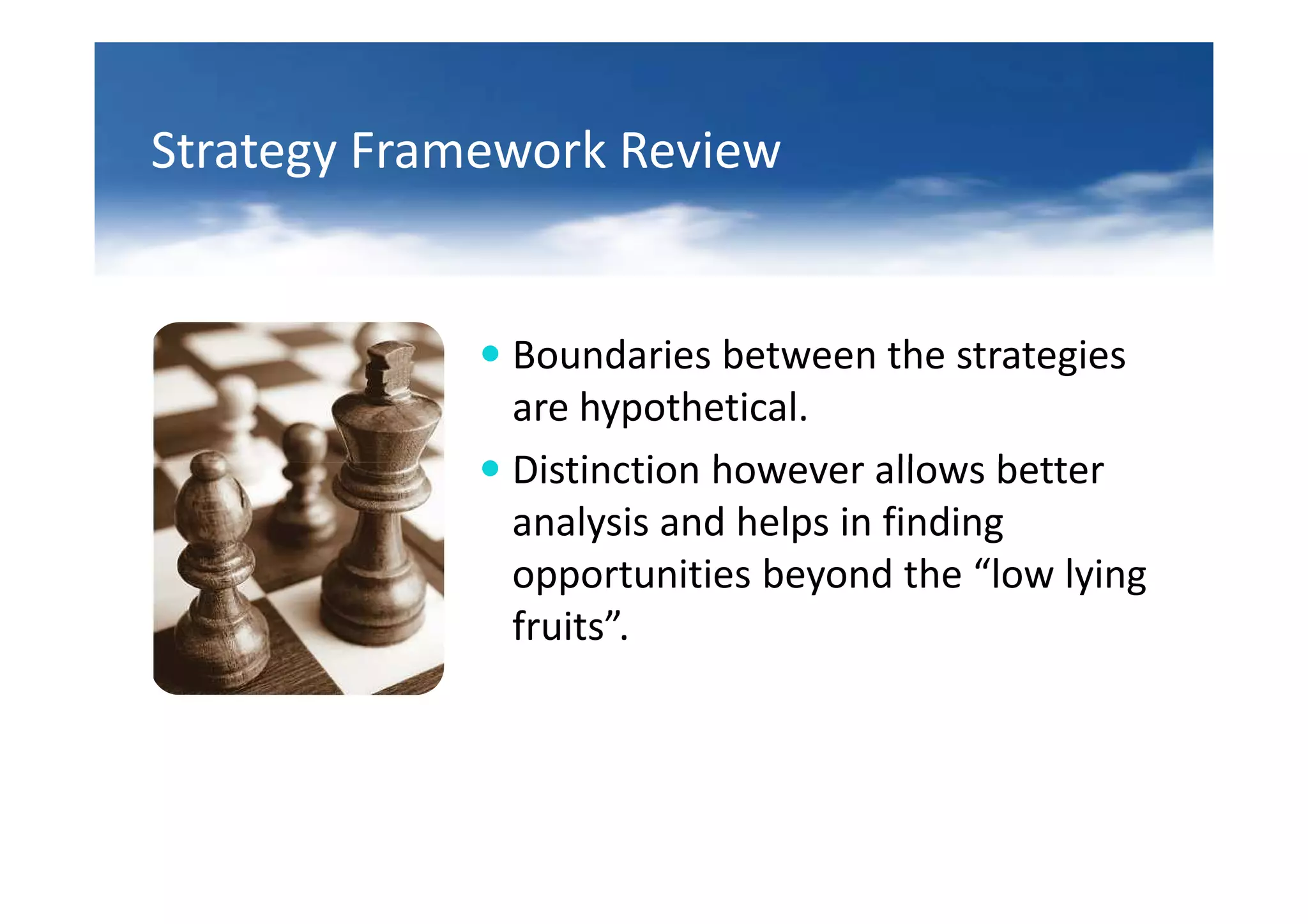
Strategy Framework Review


              Boundaries between the strategies
              are hypothetical.
              Distinction however allows better
              analysis and helps in finding
              opportunities beyond the “low lying
              fruits”.
Conclusion


              Change factors have increased attention
                   on environmental practices

               Being green can be a new competitive
                            advantage.

             Firms can adopt different strategies to gain
                        the green advantage.
Questions


            “We do not inherit the earth from
            our ancestors, we borrow it from
            our children.”
                                    Unknown
References

 Ron Pernick, Clint Wilder. (2007). The clean tech revolution. New York (NY)
 Lucy Phillips. (2007). Go green to gain the edge over rivals. People
 Management, 9.
 Michael E.Porter, Class van der Linde. (1995). Green and competitive.
 Ending the stalemate. Harvard Review, 120-134.
 Renato J.Orsato. (2006). Competitive environmental strategies: When does
 it pay to be green? California Management Review, Vol 48, 127-143.

Greenandcompetitive 100117012641 Phpapp01

  • 1.
    Green and Competitive Ending the stalemate
  • 2.
    The Dilemma Does goinggreen mean companies have to be less competitive?
  • 3.
    Opposing Views Costly Responsibility • Preventive measures • Social benefits • Implementation cost • Social responsibility • Non compliance cost • Sustainable growth
  • 4.
    Traditional Views OnGoing Green Stricter regulations mean higher cost required to achieve compliance. Environment concerns limit firm’s freedom when coming up with innovations. It raises production cost and generate no profit to the business.
  • 5.
    The Current Situation Are there any changes from the traditional view?
  • 6.
    Survey Results Say green issues have 58% become more important to their organization strategy. *Source: KPMG Labour Market Outlook summer 2007 survey conducted on 1,000 HR professionals
  • 7.
    Survey Results Believe that employees 47% prefer to work for firms with a strong green stance. *Source: KPMG Labour Market Outlook summer 2007 survey conducted on 1,000 HR professionals
  • 8.
    Survey Results Of the companies have an 44% environmental policy in place. *Source: KPMG Labour Market Outlook summer 2007 survey conducted on 1,000 HR professionals
  • 9.
    Green Energy ProjectedGrowth Market growth from 2006 to 2016 Biofuels 20.5 80.9 (In $US Billions) Fuel Cells 1.4 15.6 Solar Power 15.6 69.3 2006 Wind Power 17.9 60.8 2016 Total 55.4 226.5 0 50 100 150 200 250 300 Source: Clean Edge, 2007
  • 10.
    Change Factors: The6 C’s Costs Capital Competition China Consumers Climate
  • 11.
    The Green Advantage Generate cost savings. Promote innovation. Command premium pricing. Enhance the brand image. Differentiate from competitors.
  • 12.
    Putting It IntoAction What strategies can firms employ to gain the green advantage?
  • 13.
    Competitive Environmental Strategies Lower Costs Competitive Advantage Environmental Cost Eco-Efficiency Leadership Differentiation Beyond Compliance Eco-Branding Leadership Organizational Process Products and Services Competitive Focus
  • 14.
    Strategy 1: Eco-Efficiency Savings through eco-efficiency practices. This strategy generates savings in virtually every firm. It is an internal initiative as consumers will not pay for environmental protection.
  • 15.
    Strategy 1: AnExample Over 50% in savings by changing from incandescent light bulbs to energy saving light bulbs
  • 16.
    Strategy 2: BeyondCompliance Leadership Acknowledgement from public and customers for their efforts. Substantial investment required for certification and publicity efforts. Beyond compliance practices can give suppliers an edge over others.
  • 17.
    Strategy 3: EcoBranding Consumers must be willing to pay for the ecological differentiation. Reliable information about product environmental performance must be available to consumers. Differentiation should be difficult to be imitated.
  • 18.
    Strategy 3: AnExample Switzerland hailed Toyota Prius as the world’s greenest car. The Prius has sold over 1 million units worldwide
  • 19.
    Strategy 4: EnvironmentalCost Leadership Production of cost competitive products with environmental attributes built-in. Radical product innovation such as material substitution, packaging, etc. Better product design results in more efficient use of resources which translates to lower price.
  • 20.
    Strategy 4: AnExample Cost savings and waste reduction through packaging design
  • 21.
    Strategy Framework Review Boundaries between the strategies are hypothetical. Distinction however allows better analysis and helps in finding opportunities beyond the “low lying fruits”.
  • 22.
    Conclusion Change factors have increased attention on environmental practices Being green can be a new competitive advantage. Firms can adopt different strategies to gain the green advantage.
  • 23.
    Questions “We do not inherit the earth from our ancestors, we borrow it from our children.” Unknown
  • 24.
    References Ron Pernick,Clint Wilder. (2007). The clean tech revolution. New York (NY) Lucy Phillips. (2007). Go green to gain the edge over rivals. People Management, 9. Michael E.Porter, Class van der Linde. (1995). Green and competitive. Ending the stalemate. Harvard Review, 120-134. Renato J.Orsato. (2006). Competitive environmental strategies: When does it pay to be green? California Management Review, Vol 48, 127-143.