GREENGLOBE
PRESENTATION BY
SHAMITHA K.
HARIKA V.
SRAVYA S.
ABOUT GREEN
GLOBE
 Green Globes is an online green building rating and certification tool
that is used primarily in Canada and the USA. In Canada, there
are Green Globes modules for:
 New Construction/Significant Renovations
 Commercial Interiors (i.e. Office Fit-ups)
 These modules can be used for a wide range of commercial,
institutional and multi-residential building types including offices,
school, hospitals, hotels, academic and industrial facilities,
warehouses, laboratories, sports facilities and multi-residential
buildings.
 The genesis of Green Globes, similar to LEED and many other
systems around the world was BREEAM, developed in the UK in the
1980’s.
 Based on the 1996 CSA publication of BREEAM Canada, Green
Globes for Existing Buildings was developed in 2000 by ECD
Energy and Environmental Canada i.
 Green Globes for New Buildings Canada followed shortly thereafter,
with the support of the Canadian Department of National Défense
and Public Works and Government Services.
 In 2004, the system was adapted for the USA, where it is
administered by the GBI
Green Globes
Design Rating
System and
Program NEWAND EXISTING
BUILDINGS,AND
INTERIOR
FEDERALGOVERNMENT
AND PRIVATESECTOR
ONLINE REGETRATION
Objectives of
the Program
The objectives of Green Globes are to:
• Evaluate energy and environmental performance of buildings.
• Encourage peer reviews of design and management practices.
ECD EECCDD ECD Energy & Environment Canada Ltd.
• Increase awareness of environmental issues amongst building
owners, designers and managers.
• Provide action plans for improvement at varying stages of project
delivery.
• Provide certification and awards for green building design and
management.
Green Globes assists in the design of buildings that are energy and
resource efficient, achieve operational savings and which are
healthier and more comfortable to work and live in.
ORAGANIZATION
STRUCTURE
Selection Of
Project Stage
Area Assessment
&Sub Area
Assessment
Rating And
Reporting
Green Global
Rating
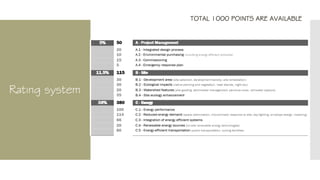
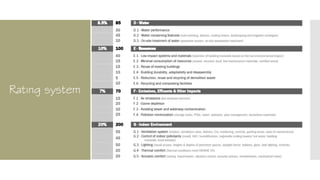
Rating system
TOTAL 1000 POINTS ARE AVAILABLE
Rating system
Certification
levels
Case Study-
New World
Headquarters
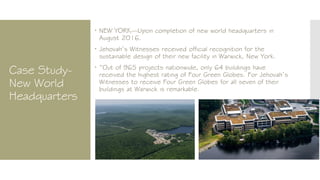
 NEW YORK—Upon completion of new world headquarters in
August 2016.
 Jehovah’s Witnesses received official recognition for the
sustainable design of their new facility in Warwick, New York.
 “Out of 965 projects nationwide, only 64 buildings have
received the highest rating of Four Green Globes. For Jehovah’s
Witnesses to receive Four Green Globes for all seven of their
buildings at Warwick is remarkable.
BRIEF
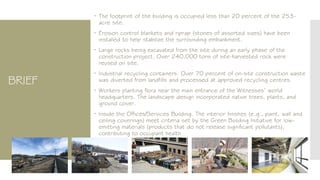
 The footprint of the building is occupied less than 20 percent of the 253-
acre site.
 Erosion control blankets and riprap (stones of assorted sizes) have been
installed to help stabilize the surrounding embankment.
 Large rocks being excavated from the site during an early phase of the
construction project. Over 240,000 tons of site-harvested rock were
reused on site.
 Industrial recycling containers. Over 70 percent of on-site construction waste
was diverted from landfills and processed at approved recycling centres.
 Workers planting flora near the main entrance of the Witnesses’ world
headquarters. The landscape design incorporated native trees, plants, and
ground cover.
 Inside the Offices/Services Building. The interior finishes (e.g., paint, wall and
ceiling coverings) meet criteria set by the Green Building Initiative for low-
emitting materials (products that do not release significant pollutants),
contributing to occupant health
BRIEF
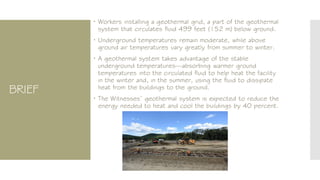
 Workers installing a geothermal grid, a part of the geothermal
system that circulates fluid 499 feet (152 m) below ground.
 Underground temperatures remain moderate, while above
ground air temperatures vary greatly from summer to winter.
 A geothermal system takes advantage of the stable
underground temperatures—absorbing warmer ground
temperatures into the circulated fluid to help heat the facility
in the winter and, in the summer, using the fluid to dissipate
heat from the buildings to the ground.
 The Witnesses’ geothermal system is expected to reduce the
energy needed to heat and cool the buildings by 40 percent.
Thank you

Green globe

  • 1.
  • 2.
    ABOUT GREEN GLOBE  GreenGlobes is an online green building rating and certification tool that is used primarily in Canada and the USA. In Canada, there are Green Globes modules for:  New Construction/Significant Renovations  Commercial Interiors (i.e. Office Fit-ups)  These modules can be used for a wide range of commercial, institutional and multi-residential building types including offices, school, hospitals, hotels, academic and industrial facilities, warehouses, laboratories, sports facilities and multi-residential buildings.  The genesis of Green Globes, similar to LEED and many other systems around the world was BREEAM, developed in the UK in the 1980’s.  Based on the 1996 CSA publication of BREEAM Canada, Green Globes for Existing Buildings was developed in 2000 by ECD Energy and Environmental Canada i.  Green Globes for New Buildings Canada followed shortly thereafter, with the support of the Canadian Department of National Défense and Public Works and Government Services.  In 2004, the system was adapted for the USA, where it is administered by the GBI
  • 3.
    Green Globes Design Rating Systemand Program NEWAND EXISTING BUILDINGS,AND INTERIOR FEDERALGOVERNMENT AND PRIVATESECTOR ONLINE REGETRATION
  • 4.
    Objectives of the Program Theobjectives of Green Globes are to: • Evaluate energy and environmental performance of buildings. • Encourage peer reviews of design and management practices. ECD EECCDD ECD Energy & Environment Canada Ltd. • Increase awareness of environmental issues amongst building owners, designers and managers. • Provide action plans for improvement at varying stages of project delivery. • Provide certification and awards for green building design and management. Green Globes assists in the design of buildings that are energy and resource efficient, achieve operational savings and which are healthier and more comfortable to work and live in.
  • 5.
    ORAGANIZATION STRUCTURE Selection Of Project Stage AreaAssessment &Sub Area Assessment Rating And Reporting Green Global Rating
  • 6.
    Rating system TOTAL 1000POINTS ARE AVAILABLE
  • 7.
  • 8.
  • 9.
    Case Study- New World Headquarters NEW YORK—Upon completion of new world headquarters in August 2016.  Jehovah’s Witnesses received official recognition for the sustainable design of their new facility in Warwick, New York.  “Out of 965 projects nationwide, only 64 buildings have received the highest rating of Four Green Globes. For Jehovah’s Witnesses to receive Four Green Globes for all seven of their buildings at Warwick is remarkable.
  • 10.
    BRIEF  The footprintof the building is occupied less than 20 percent of the 253- acre site.  Erosion control blankets and riprap (stones of assorted sizes) have been installed to help stabilize the surrounding embankment.  Large rocks being excavated from the site during an early phase of the construction project. Over 240,000 tons of site-harvested rock were reused on site.  Industrial recycling containers. Over 70 percent of on-site construction waste was diverted from landfills and processed at approved recycling centres.  Workers planting flora near the main entrance of the Witnesses’ world headquarters. The landscape design incorporated native trees, plants, and ground cover.  Inside the Offices/Services Building. The interior finishes (e.g., paint, wall and ceiling coverings) meet criteria set by the Green Building Initiative for low- emitting materials (products that do not release significant pollutants), contributing to occupant health
  • 11.
    BRIEF  Workers installinga geothermal grid, a part of the geothermal system that circulates fluid 499 feet (152 m) below ground.  Underground temperatures remain moderate, while above ground air temperatures vary greatly from summer to winter.  A geothermal system takes advantage of the stable underground temperatures—absorbing warmer ground temperatures into the circulated fluid to help heat the facility in the winter and, in the summer, using the fluid to dissipate heat from the buildings to the ground.  The Witnesses’ geothermal system is expected to reduce the energy needed to heat and cool the buildings by 40 percent.
  • 12.