Cooling the Data Center
      Going Green
          MAY 2012


                          1
Why Go Green


               2
Cooling the Data Center is the single greatest
contributed to CO2 emissions
                                          Overall eGA eGov Projects - Scope and Budget Statistics

                                                                                                          Key Findings
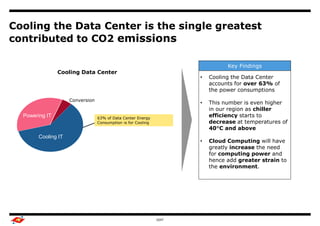
                 Cooling Data Center
                                                                                            •       Cooling the Data Center
                                                                                                    accounts for over 63% of
                                                                                                    the power consumptions
                                                     Budget Statistics
                      Conversion
                                                                                            •       This number is even higher
                                                                                                    in our region as chiller
  Powering IT                      63% of Data Center Energy
                                                                                                    efficiency starts to
                                   Consumption is for Cooling                                       decrease at temperatures of
                                                                                                    40°C and above
        Cooling IT
         Cooling IT
                                                                                            •       Cloud Computing will have
                                                                                                    greatly increase the need
                                                                                                    for computing power and
                                                                   87%                              hence add greater strain to
                93%
                                                                                                    the environment.


                                                                   GDIT                                                           3
Cooling More Efficiently


                           4
Ambient Temperature

    Ambient temperature is the average
     temperature in a data center     Benchmark Study Overview


    Easiest efficiency target and often                         Output

     the one that is most overlooked
    Historically, data centers were
     operated with room temperatures
     in the 20°C to 22°C range
    Today's server, storage and
     networking equipment have
     operating temperature variances
     that can easily exceed 35°C
    Raising the ambient temperature by
     0.5°C can save upward of 3% in
     energy costs
    Data center operators should
     consider an average ambient
     temperature of 25°C


                                                GDIT                      5
Hot and Cold Containment

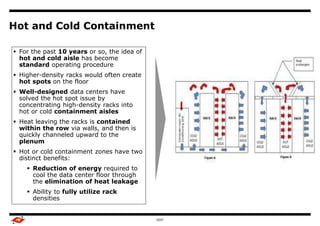
 For the past 10 years or so, the idea of
                                        Benchmark Study Overview
  hot and cold aisle has become
  standard operating procedure
                                                                   Output
 Higher-density racks would often create
  hot spots on the floor
 Well-designed data centers have
  solved the hot spot issue by
  concentrating high-density racks into
  hot or cold containment aisles
 Heat leaving the racks is contained
  within the row via walls, and then is
  quickly channeled upward to the
  plenum
 Hot or cold containment zones have two
  distinct benefits:
      Reduction of energy required to
       cool the data center floor through
       the elimination of heat leakage
      Ability to fully utilize rack
       densities


                                                     GDIT                   6
Airflow

 The primary force for cooling in data
  centers is air, and the control of    Benchmark Study Overview

  airflow can be a simple method of
  increasing cooling efficiencies with                             Output
  minimal expense.
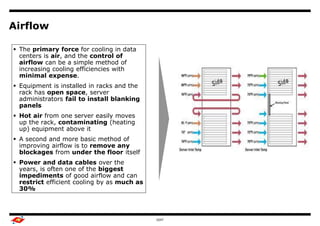
 Equipment is installed in racks and the
  rack has open space, server
  administrators fail to install blanking
  panels
 Hot air from one server easily moves
  up the rack, contaminating (heating
  up) equipment above it
 A second and more basic method of
  improving airflow is to remove any
  blockages from under the floor itself
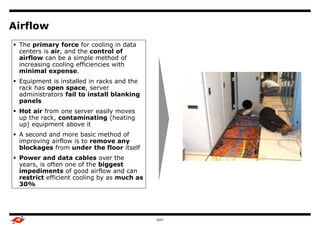
 Power and data cables over the
  years, is often one of the biggest
  impediments of good airflow and can
  restrict efficient cooling by as much as
  30%


                                                     GDIT                   7
Airflow
 The primary force for cooling in data
  centers is air, and the control of    Benchmark Study Overview
  airflow can be a simple method of
  increasing cooling efficiencies with
  minimal expense.                                                 Output

 Equipment is installed in racks and the
  rack has open space, server
  administrators fail to install blanking
  panels
 Hot air from one server easily moves
  up the rack, contaminating (heating
  up) equipment above it
 A second and more basic method of
  improving airflow is to remove any
  blockages from under the floor itself
 Power and data cables over the
  years, is often one of the biggest
  impediments of good airflow and can
  restrict efficient cooling by as much as
  30%


                                                     GDIT                   8
Technology Refresh

  Using technology refresh as a cooling
                                       Benchmark Study Overview

   solution may seem counterintuitive to
   many people, but it is a proven                                Output
   solution for many
  Growth and a continuous drive toward
   virtualization while keeping existing
   equipment in "maintenance mode“
  One reason is that the energy
   requirements of older servers, in some
   cases, are three to four times greater
   than new equipment.
  In recent years, x86 server performance
   has been doubling with each new
   generation, while also becoming more
   energy-efficient. Doubling the
   performance and halving the power
   in the same space is a sound cost-
   saving concept


                                                 GDIT                      9
Renewable Cooling


                    10
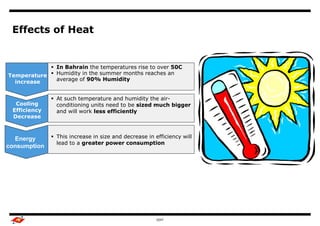
Effects of Heat


             In Bahrain the temperatures rise to over 50C
Temperature  Humidity in the summer months reaches an
  increase    average of 90% Humidity


                At such temperature and humidity the air-
  Cooling        conditioning units need to be sized much bigger
 Efficiency      and will work less efficiently
 Decrease


  Energy        This increase in size and decrease in efficiency will
                 lead to a greater power consumption
consumption


   Retention


                                                        GDIT
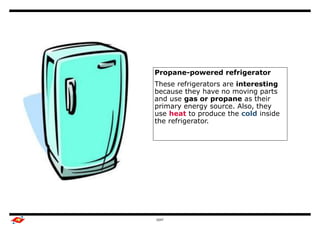
Propane-powered refrigerator
These refrigerators are interesting
because they have no moving parts
and use gas or propane as their
primary energy source. Also, they
use heat to produce the cold inside
the refrigerator.


GDIT
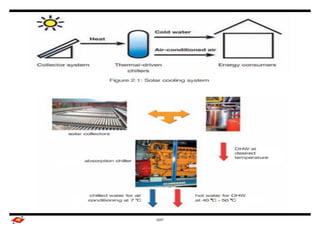
Why not use the Sun’s energy against its self
 and convert Solar Heat into Solar Cooling?


                                                13
GDIT
Using the Sun’s Energy

•   Driving energy for absorption chillers is taken
    from renewable energy and thus CO2-neutral.
•   Reduction of electrical consumption and thus of
    cooling-related CO2 emissions.
•   Facilitates the use of renewable cooling for
    existing properties.
•   Absorption chillers complements air-cooled
    compression chillers in arid climate zones affected
    by a rise in ambient temperatures: since the
    efficiency of air-cooled compression chillers is
    drastically reduced by ambient temperatures
    above 40°C.
•   The use of ICE storage systems for use at night
    to cool the data center will enable 24 hour free
    cooling. This is achieved by connecting the ICE
    storage system to the absorption chiller and using
    the excess cold water to produce ICE and store
    the ICE for when its needed.


                                             GDIT
Bottom Line


    Each of these techniques have been proven again
    and again by large and small data centers
    worldwide. While some solutions may not be right
    for your environment, implementation of any of
    these solutions can help reduce cooling costs and,
    therefore, reduce month-to-month operating costs
    while freeing up power and cooling resources
    for other workloads.


                            GDIT

Green datacenter finnal

  • 1.
    Cooling the DataCenter Going Green MAY 2012 1
  • 2.
  • 3.
    Cooling the DataCenter is the single greatest contributed to CO2 emissions Overall eGA eGov Projects - Scope and Budget Statistics Key Findings Cooling Data Center • Cooling the Data Center accounts for over 63% of the power consumptions Budget Statistics Conversion • This number is even higher in our region as chiller Powering IT 63% of Data Center Energy efficiency starts to Consumption is for Cooling decrease at temperatures of 40°C and above Cooling IT Cooling IT • Cloud Computing will have greatly increase the need for computing power and 87% hence add greater strain to 93% the environment. GDIT 3
  • 4.
  • 5.
    Ambient Temperature  Ambient temperature is the average temperature in a data center Benchmark Study Overview  Easiest efficiency target and often Output the one that is most overlooked  Historically, data centers were operated with room temperatures in the 20°C to 22°C range  Today's server, storage and networking equipment have operating temperature variances that can easily exceed 35°C  Raising the ambient temperature by 0.5°C can save upward of 3% in energy costs  Data center operators should consider an average ambient temperature of 25°C GDIT 5
  • 6.
    Hot and ColdContainment  For the past 10 years or so, the idea of Benchmark Study Overview hot and cold aisle has become standard operating procedure Output  Higher-density racks would often create hot spots on the floor  Well-designed data centers have solved the hot spot issue by concentrating high-density racks into hot or cold containment aisles  Heat leaving the racks is contained within the row via walls, and then is quickly channeled upward to the plenum  Hot or cold containment zones have two distinct benefits:  Reduction of energy required to cool the data center floor through the elimination of heat leakage  Ability to fully utilize rack densities GDIT 6
  • 7.
    Airflow  The primaryforce for cooling in data centers is air, and the control of Benchmark Study Overview airflow can be a simple method of increasing cooling efficiencies with Output minimal expense.  Equipment is installed in racks and the rack has open space, server administrators fail to install blanking panels  Hot air from one server easily moves up the rack, contaminating (heating up) equipment above it  A second and more basic method of improving airflow is to remove any blockages from under the floor itself  Power and data cables over the years, is often one of the biggest impediments of good airflow and can restrict efficient cooling by as much as 30% GDIT 7
  • 8.
    Airflow  The primaryforce for cooling in data centers is air, and the control of Benchmark Study Overview airflow can be a simple method of increasing cooling efficiencies with minimal expense. Output  Equipment is installed in racks and the rack has open space, server administrators fail to install blanking panels  Hot air from one server easily moves up the rack, contaminating (heating up) equipment above it  A second and more basic method of improving airflow is to remove any blockages from under the floor itself  Power and data cables over the years, is often one of the biggest impediments of good airflow and can restrict efficient cooling by as much as 30% GDIT 8
  • 9.
    Technology Refresh Using technology refresh as a cooling Benchmark Study Overview solution may seem counterintuitive to many people, but it is a proven Output solution for many  Growth and a continuous drive toward virtualization while keeping existing equipment in "maintenance mode“  One reason is that the energy requirements of older servers, in some cases, are three to four times greater than new equipment.  In recent years, x86 server performance has been doubling with each new generation, while also becoming more energy-efficient. Doubling the performance and halving the power in the same space is a sound cost- saving concept GDIT 9
  • 10.
  • 11.
    Effects of Heat  In Bahrain the temperatures rise to over 50C Temperature  Humidity in the summer months reaches an increase average of 90% Humidity  At such temperature and humidity the air- Cooling conditioning units need to be sized much bigger Efficiency and will work less efficiently Decrease Energy  This increase in size and decrease in efficiency will lead to a greater power consumption consumption Retention GDIT
  • 12.
    Propane-powered refrigerator These refrigeratorsare interesting because they have no moving parts and use gas or propane as their primary energy source. Also, they use heat to produce the cold inside the refrigerator. GDIT
  • 13.
    Why not usethe Sun’s energy against its self and convert Solar Heat into Solar Cooling? 13
  • 14.
  • 15.
    Using the Sun’sEnergy • Driving energy for absorption chillers is taken from renewable energy and thus CO2-neutral. • Reduction of electrical consumption and thus of cooling-related CO2 emissions. • Facilitates the use of renewable cooling for existing properties. • Absorption chillers complements air-cooled compression chillers in arid climate zones affected by a rise in ambient temperatures: since the efficiency of air-cooled compression chillers is drastically reduced by ambient temperatures above 40°C. • The use of ICE storage systems for use at night to cool the data center will enable 24 hour free cooling. This is achieved by connecting the ICE storage system to the absorption chiller and using the excess cold water to produce ICE and store the ICE for when its needed. GDIT
  • 16.
    Bottom Line Each of these techniques have been proven again and again by large and small data centers worldwide. While some solutions may not be right for your environment, implementation of any of these solutions can help reduce cooling costs and, therefore, reduce month-to-month operating costs while freeing up power and cooling resources for other workloads. GDIT