SEMINAR
PRESENTATION
GREEEN BUILDINGGREEEN BUILDING
Submitted To: Submitted by:
Miss.Shivanshi Udit Gupta
Mrs.Shruti Bhargava PCE/CV/14/059
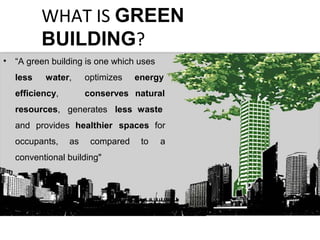
• “A green building is one which uses
less water, optimizes energy
conservesefficiency,
resources, generates less
natural
waste
and provides healthier spaces for
aoccupants, as compared to
conventional building"
WHAT IS GREEN
BUILDING?
Why is Green Building Important?
 8000kg of waste are typically thrown into a
landfill during the construction of a 2000sqft
home.
 The buildings in the India consume more than
twice as much energy as all the cars in the India
 Buildings account for 68% of total electricity
consumption in the India
 Buildings use 80% of total drinking water
consumption in the India
 Indoor levels of pollution are commonly 2 to 5
times higher than outdoor pollution levels
New Project Planning
 Construction – Reduce the amount of waste
generated at a construction site
 Design – Building design details will help
to reduce construction materials, and
energy/water requirements when
completed
 Material Selection – Careful selection of
construction materials will leave less of an
environmental impact
Construction
 Construction waste accounts for 10 to as much as
30% of municipal waste stream
 Goal: Reduce / Reuse / Recycle
 Building design based on standard sizes of materials
 Buy higher quality to reduce rejects
 Recycle (use scraps)
 Train crew
 Renovate an existing building
Building Design
Goal: To design the building so that it requires less
energy/water and is healthier for inhabitants when
it is complete and in use
 Air ducts for an efficient and healthy air flow
 Insulation
 Windows designed for maximum daylight
 Passive Solar Control
 Solar Cells
 Heat Exchanger for climate control system
 Location
Materials
Goal: Choose materials that have low environmental
costs and do not contribute to indoor air pollution
 Engineered Lumber (recycled and reclaimed
material)
 Doors and Windows (energy and placement)
 Floor Coverings (recycled with no off-gassing)
 Roof Materials (Reflective and light)
 Energy Efficient Appliances
Obstacles
 93% of consumers worry about their
home’s environmental performance.
However, only 18% are willing to pay
more to reduce the impact.
 There are higher initial costs for Green
Building
 Customers are concerned they would be
sacrificing comfort
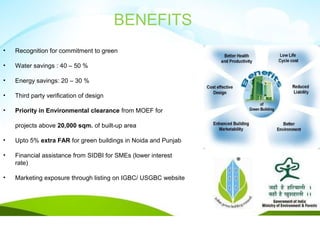
• Recognition for commitment to green
• Water savings : 40 – 50 %
• Energy savings: 20 – 30 %
• Third party verification of design
• Priority in Environmental clearance from MOEF for
projects above 20,000 sqm. of built-up area
• Upto 5% extra FAR for green buildings in Noida and Punjab
• Financial assistance from SIDBI for SMEs (lower interest
rate)
• Marketing exposure through listing on IGBC/ USGBC website
BENEFITS
INDIAN GREEN RATINGINDIAN GREEN RATING
• GRIHA is a rating tool that helps people assesses
the performance of their building against certain
nationally acceptable benchmarks. It evaluates
the environmental performance of a building
holistically over its entire life cycle, thereby
providing a definitive standard for what
constitutes a ‘green building’. The rating system,
based on accepted energy and environmental
principles, will seek to strike a balance between
the established practices and emerging
concepts, both national and international.
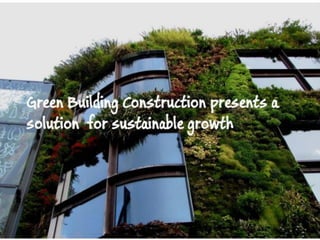
Green Building Construction
is Rapidly Gaining
Momentum in India
Green Building Construction is
Rapidly Gaining Momentum in
India
Green Building
Green Building
Green Building

Green Building

  • 1.
    SEMINAR PRESENTATION GREEEN BUILDINGGREEEN BUILDING SubmittedTo: Submitted by: Miss.Shivanshi Udit Gupta Mrs.Shruti Bhargava PCE/CV/14/059
  • 6.
    • “A greenbuilding is one which uses less water, optimizes energy conservesefficiency, resources, generates less natural waste and provides healthier spaces for aoccupants, as compared to conventional building" WHAT IS GREEN BUILDING?
  • 7.
    Why is GreenBuilding Important?  8000kg of waste are typically thrown into a landfill during the construction of a 2000sqft home.  The buildings in the India consume more than twice as much energy as all the cars in the India  Buildings account for 68% of total electricity consumption in the India  Buildings use 80% of total drinking water consumption in the India  Indoor levels of pollution are commonly 2 to 5 times higher than outdoor pollution levels
  • 8.
    New Project Planning Construction – Reduce the amount of waste generated at a construction site  Design – Building design details will help to reduce construction materials, and energy/water requirements when completed  Material Selection – Careful selection of construction materials will leave less of an environmental impact
  • 9.
    Construction  Construction wasteaccounts for 10 to as much as 30% of municipal waste stream  Goal: Reduce / Reuse / Recycle  Building design based on standard sizes of materials  Buy higher quality to reduce rejects  Recycle (use scraps)  Train crew  Renovate an existing building
  • 10.
    Building Design Goal: Todesign the building so that it requires less energy/water and is healthier for inhabitants when it is complete and in use  Air ducts for an efficient and healthy air flow  Insulation  Windows designed for maximum daylight  Passive Solar Control  Solar Cells  Heat Exchanger for climate control system  Location
  • 11.
    Materials Goal: Choose materialsthat have low environmental costs and do not contribute to indoor air pollution  Engineered Lumber (recycled and reclaimed material)  Doors and Windows (energy and placement)  Floor Coverings (recycled with no off-gassing)  Roof Materials (Reflective and light)  Energy Efficient Appliances
  • 12.
    Obstacles  93% ofconsumers worry about their home’s environmental performance. However, only 18% are willing to pay more to reduce the impact.  There are higher initial costs for Green Building  Customers are concerned they would be sacrificing comfort
  • 13.
    • Recognition forcommitment to green • Water savings : 40 – 50 % • Energy savings: 20 – 30 % • Third party verification of design • Priority in Environmental clearance from MOEF for projects above 20,000 sqm. of built-up area • Upto 5% extra FAR for green buildings in Noida and Punjab • Financial assistance from SIDBI for SMEs (lower interest rate) • Marketing exposure through listing on IGBC/ USGBC website BENEFITS
  • 14.
    INDIAN GREEN RATINGINDIANGREEN RATING • GRIHA is a rating tool that helps people assesses the performance of their building against certain nationally acceptable benchmarks. It evaluates the environmental performance of a building holistically over its entire life cycle, thereby providing a definitive standard for what constitutes a ‘green building’. The rating system, based on accepted energy and environmental principles, will seek to strike a balance between the established practices and emerging concepts, both national and international.
  • 15.
    Green Building Construction isRapidly Gaining Momentum in India Green Building Construction is Rapidly Gaining Momentum in India