G R A P
S
GRASPING
THE
S
Ma. Catherine A. Omori
REVISIT the
overview and
objectives of
GRASPS model
REVIEW and
ADAPT the
GRASPS as
implemented by
the Grade 10
DESIGN a
GRASPS plan for
the first quarter
using the
template
provided
LEARNING OBJECTIVES
WHAT IS GRASPS? WHAT IS AN AUTHENTIC
ASSESSMENT?
WHY GRASPS?
GRASPS is a model
advocated for by
Grant Wiggins and
Jay McTighe to
guide teachers in
designing authentic
performance-based
assessment.
It’s a form of assessment
that engages learners to
employ their thinking skills
and demonstrate application
of the essential knowledge,
conceptual understanding,
and skills acquired
throughout a unit of
learning.
Authentic assessments are
engaging and worthy problems or
questions of importance, in
which students must use
knowledge to fashion
performances effectively and
creatively.
The tasks are either replica of
or analogous to the kinds of
problems faced by adult
citizens and consumers or
professionals in the field.
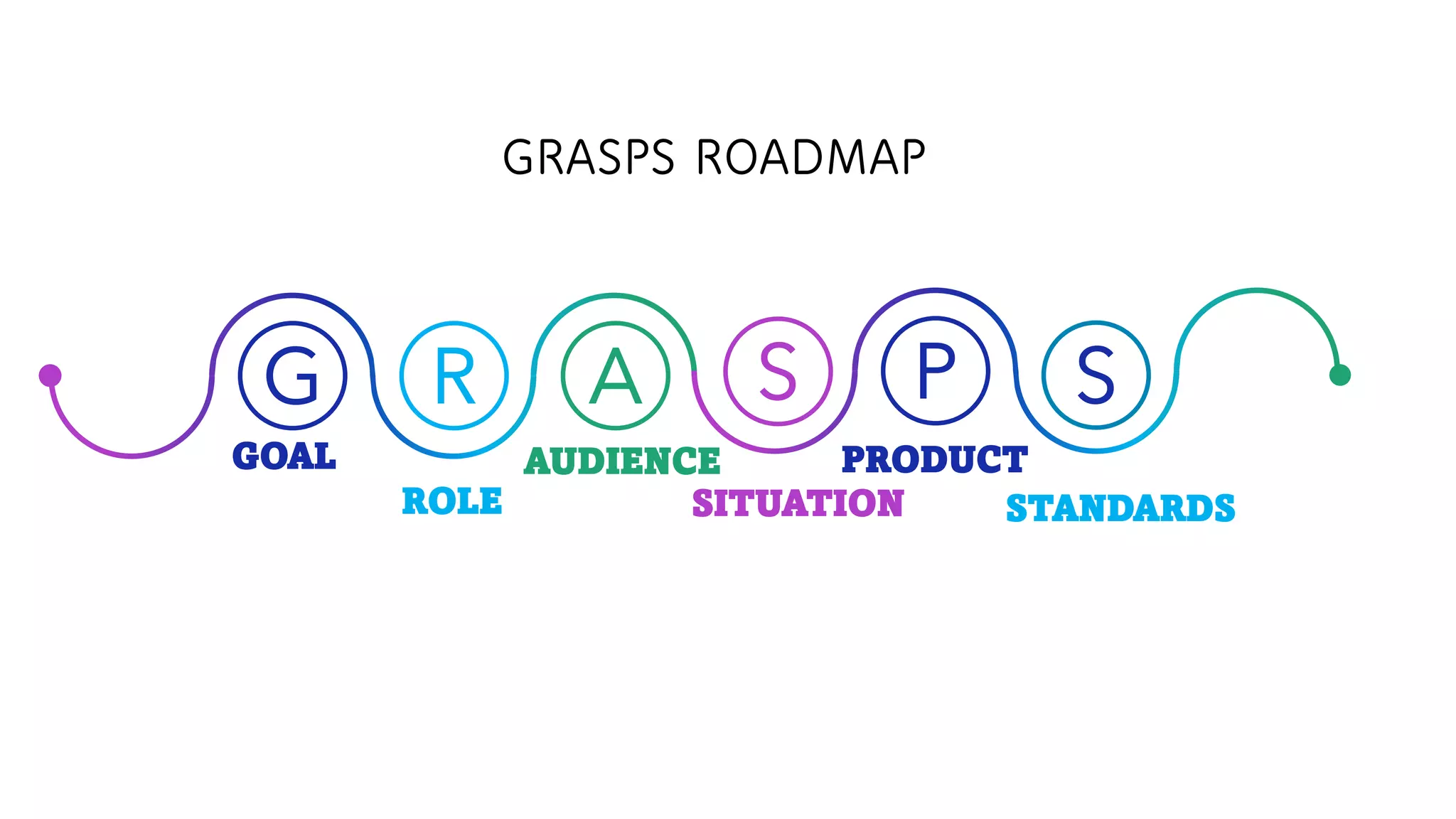
G R A P
S
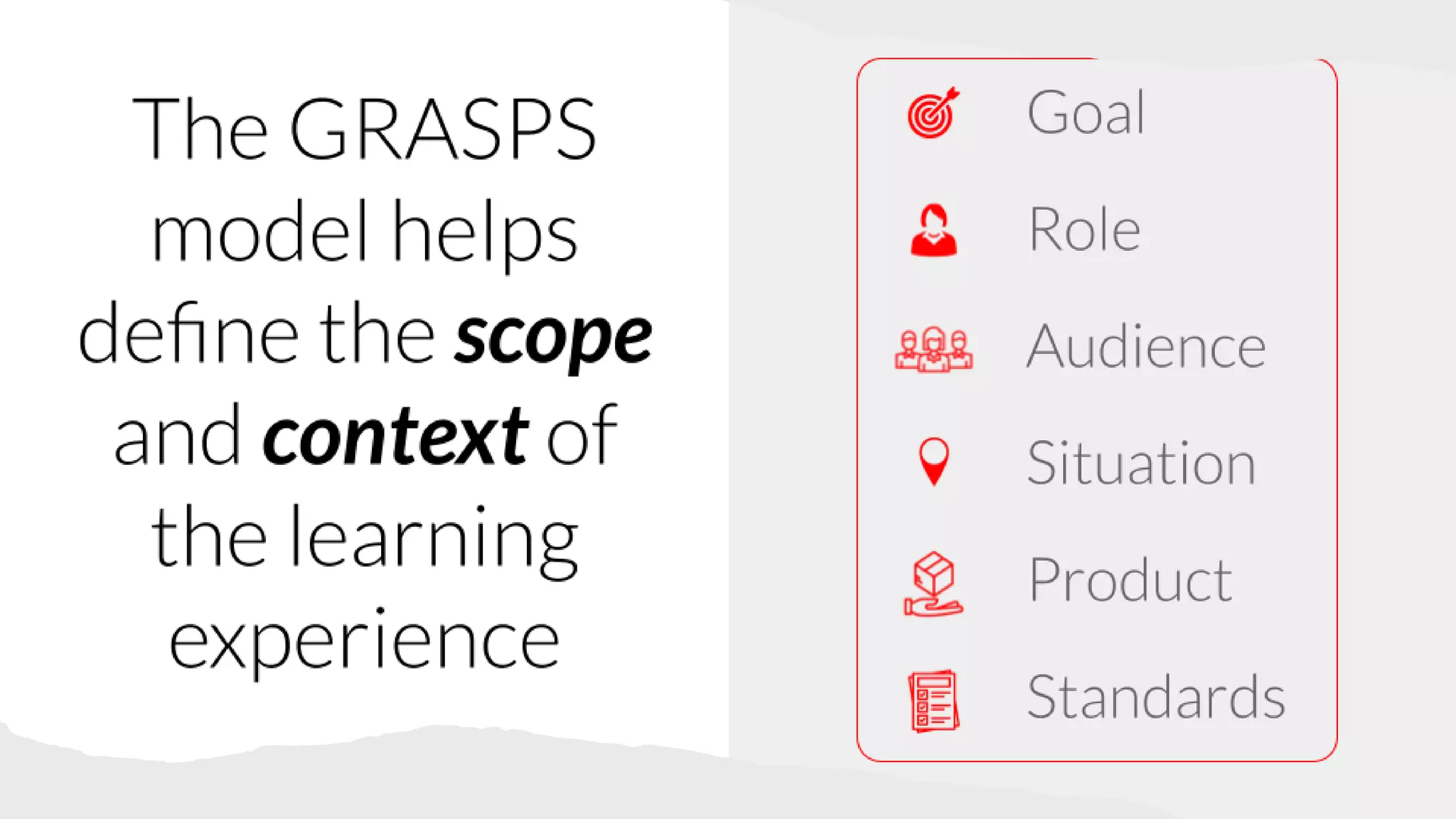
GOAL
ROLE
AUDIENCE
SITUATION
PRODUCT
STANDARDS
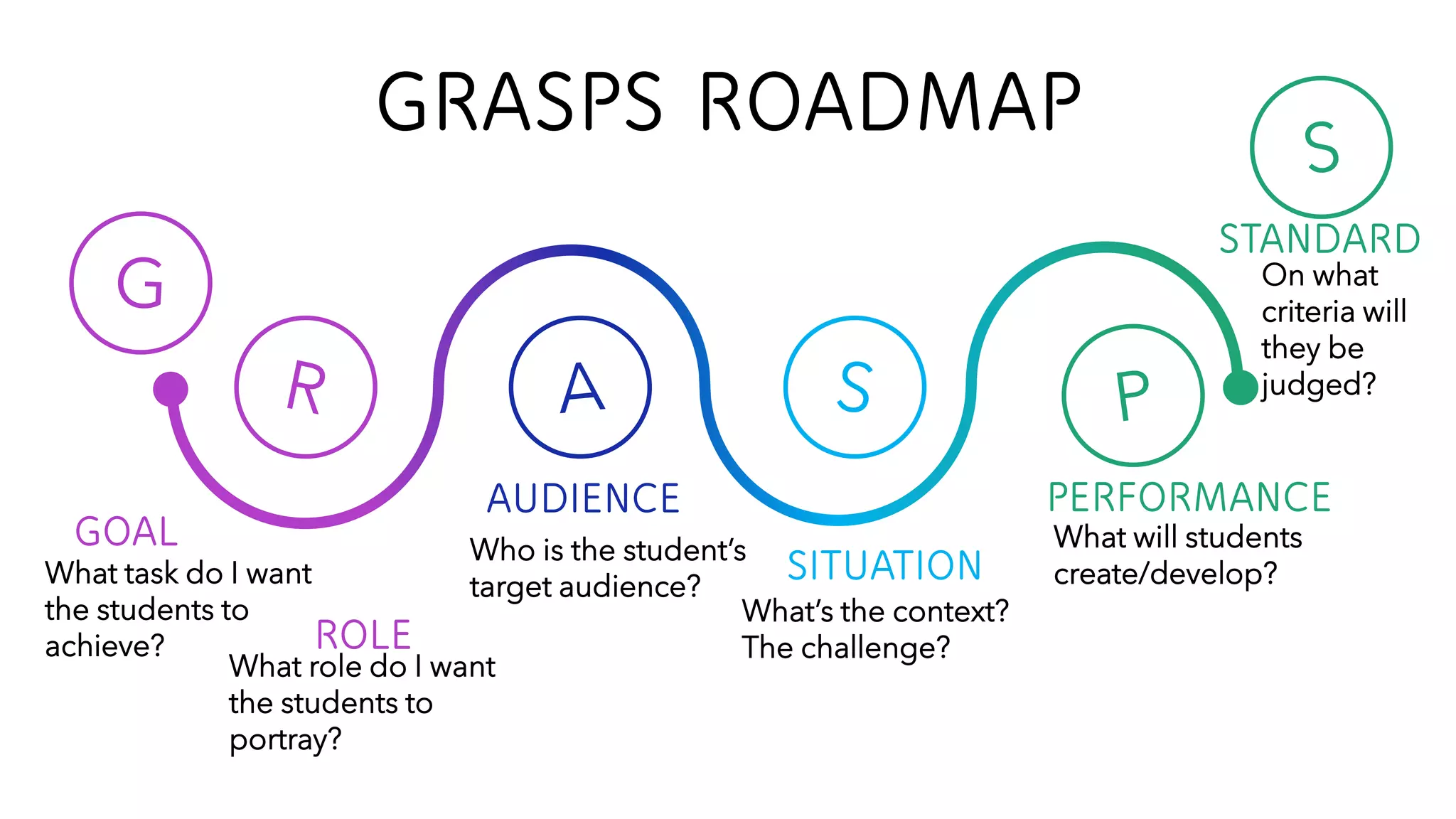
GRASPS ROADMAP
S
GOAL
What task do I want
the students to
achieve?
AUDIENCE
SITUATION
PERFORMANCE
GRASPS ROADMAP
ROLE
What role do I want
the students to
portray?
STANDARD
What’s the context?
The challenge?
Who is the student’s
target audience?
What will students
create/develop?
On what
criteria will
they be
judged?
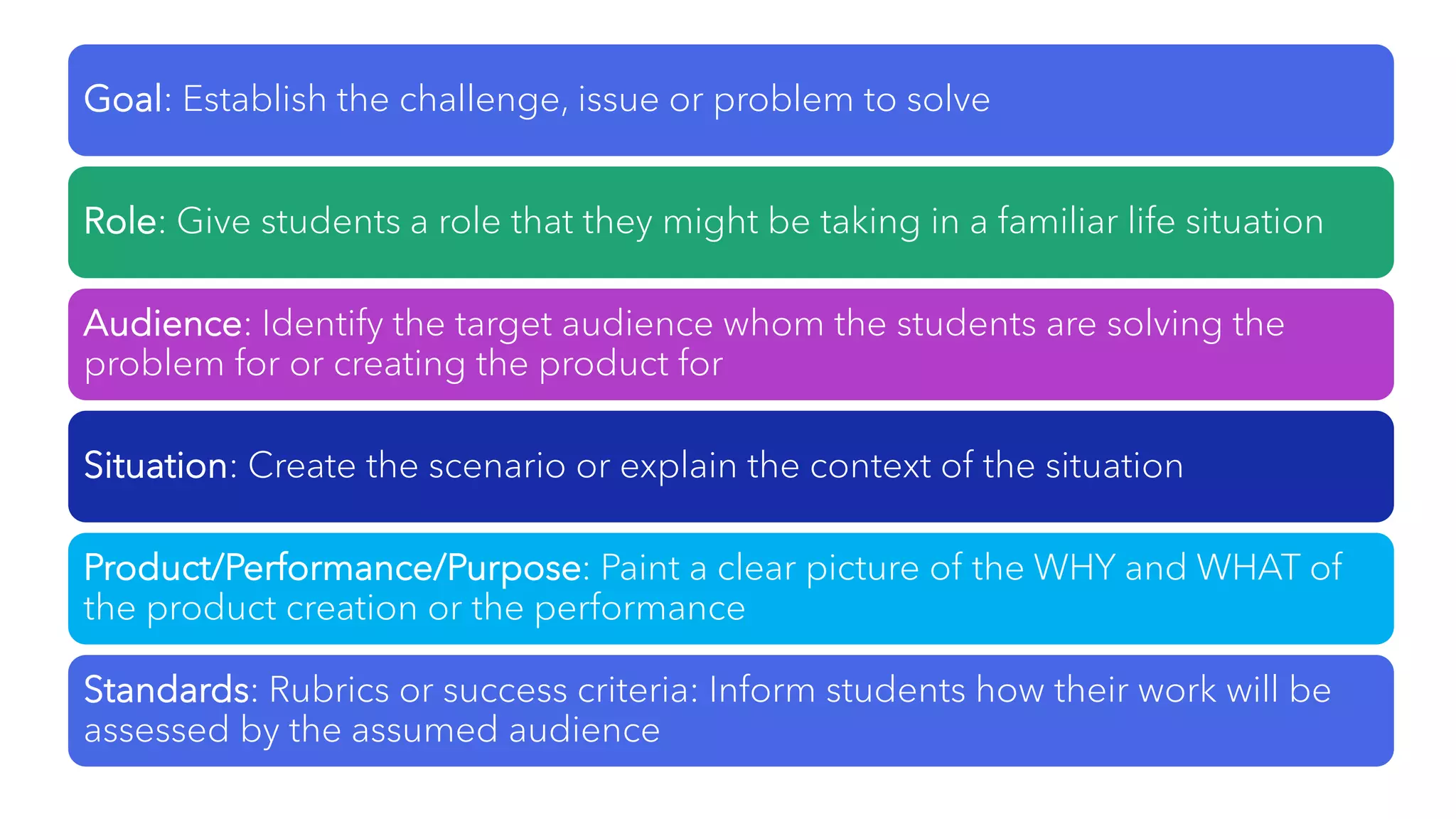
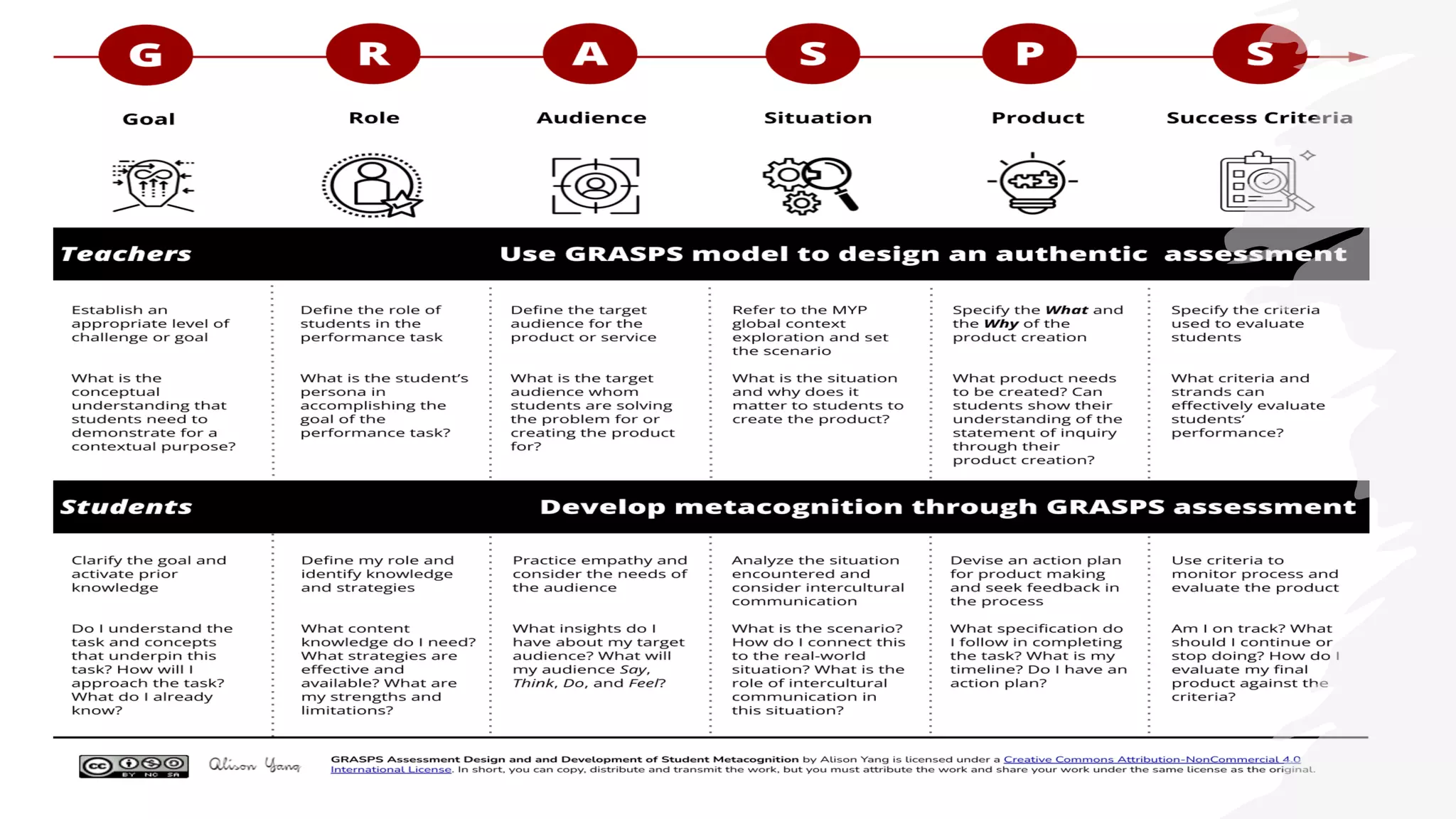
Goal: Establish the challenge, issue or problem to solve
Role: Give students a role that they might be taking in a familiar life situation
Audience: Identify the target audience whom the students are solving the
problem for or creating the product for
Situation: Create the scenario or explain the context of the situation
Product/Performance/Purpose: Paint a clear picture of the WHY and WHAT of
the product creation or the performance
Standards: Rubrics or success criteria: Inform students how their work will be
assessed by the assumed audience
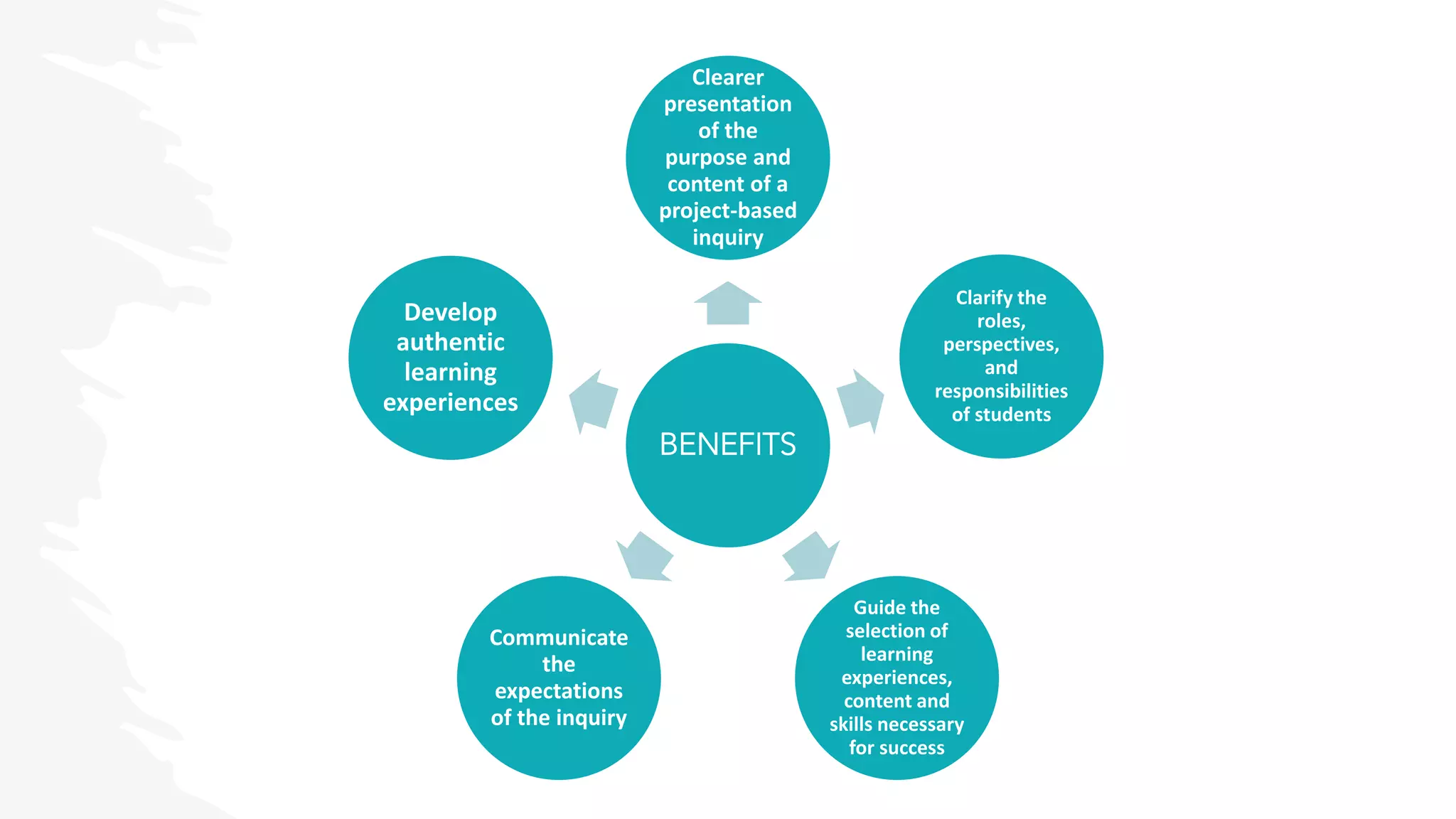
BENEFITS
Clearer
presentation
of the
purpose and
content of a
project-based
inquiry
Clarify the
roles,
perspectives,
and
responsibilities
of students
Guide the
selection of
learning
experiences,
content and
skills necessary
for success
Communicate
the
expectations
of the inquiry
Develop
authentic
learning
experiences
2
3
4
1
6
7
8
5
10
11
12
9
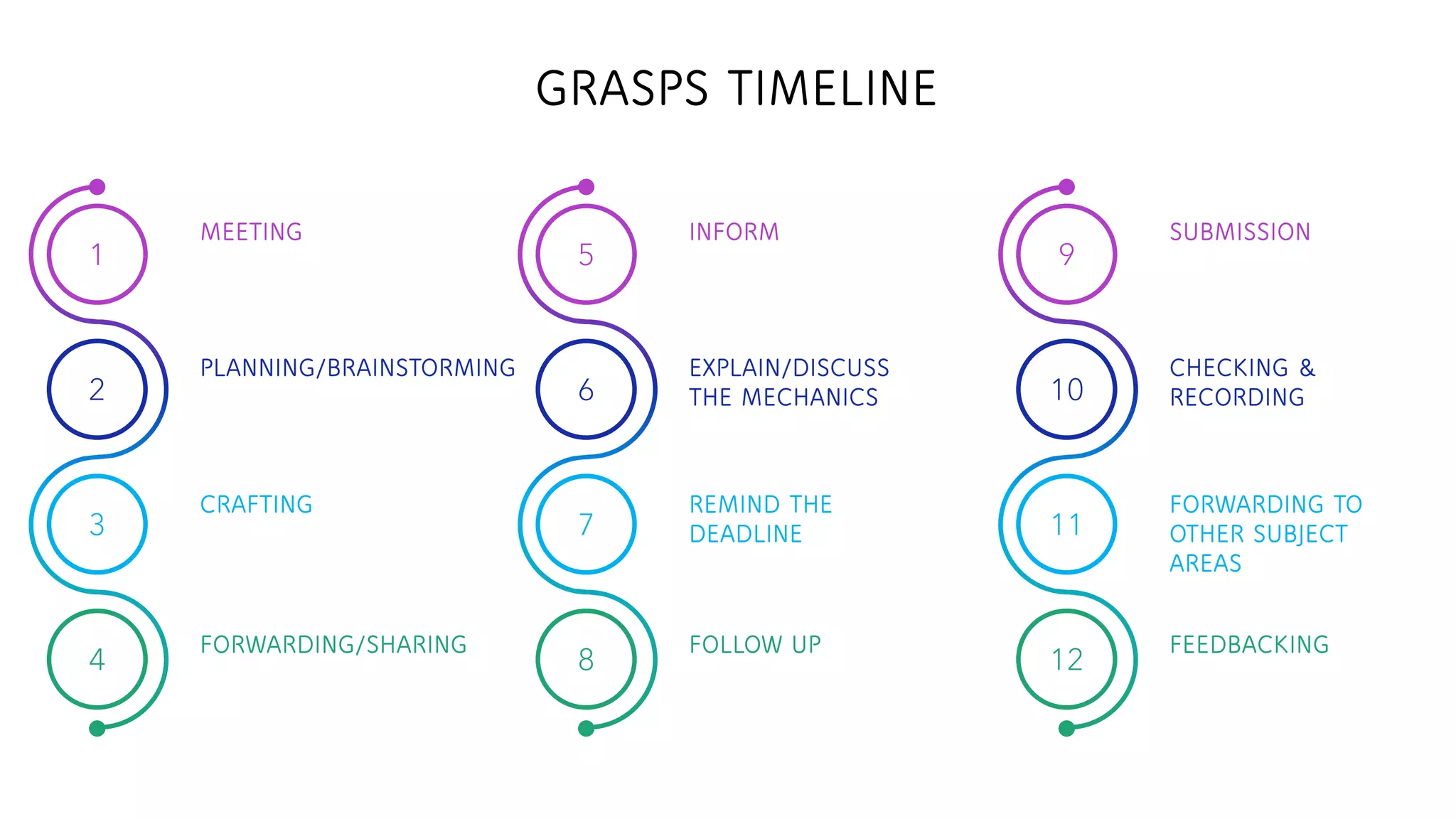
MEETING INFORM SUBMISSION
PLANNING/BRAINSTORMING EXPLAIN/DISCUSS
THE MECHANICS
CHECKING &
RECORDING
CRAFTING REMIND THE
DEADLINE
FORWARDING TO
OTHER SUBJECT
AREAS
FORWARDING/SHARING FOLLOW UP FEEDBACKING
GRASPS TIMELINE
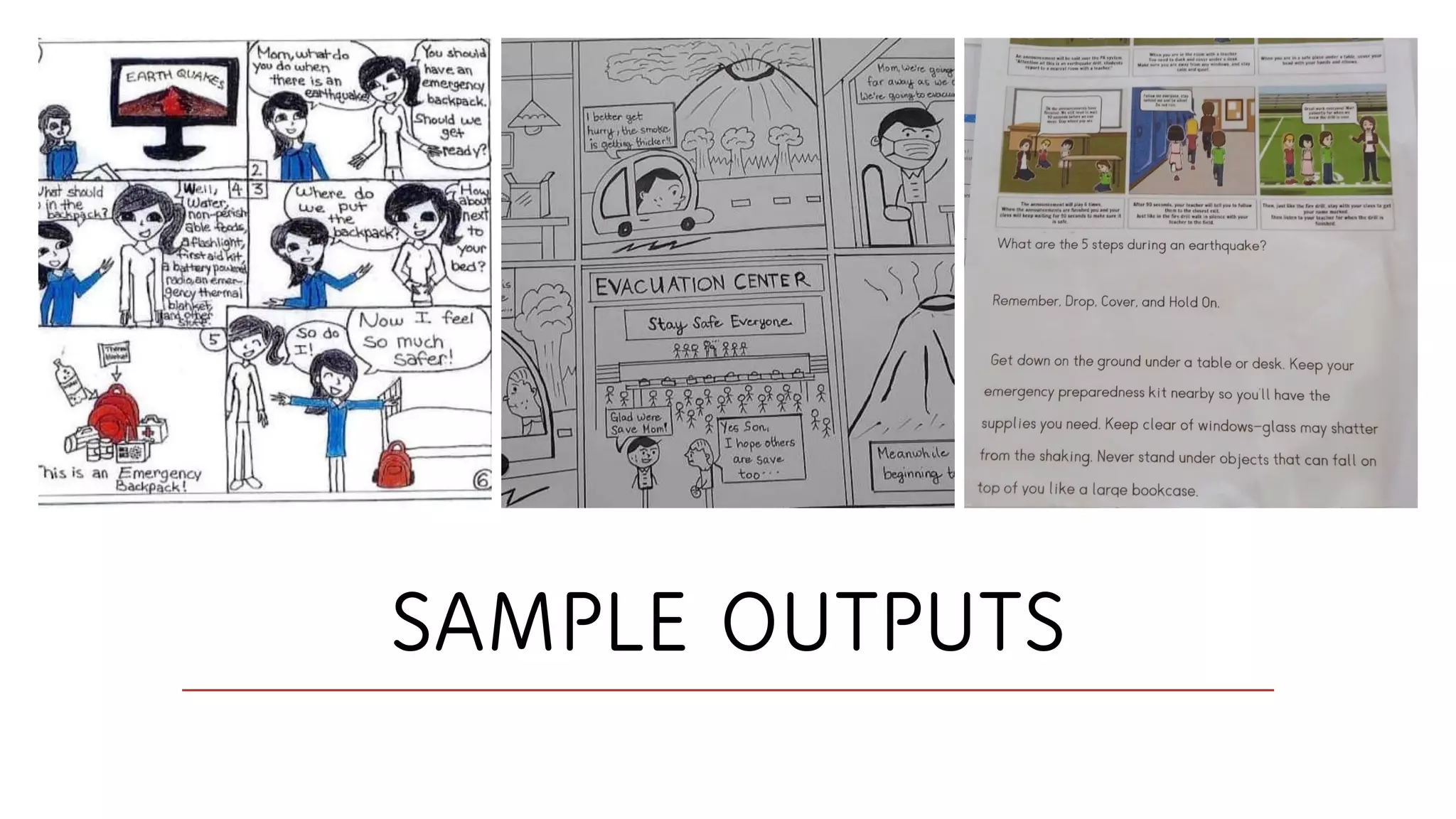
SAMPLE OUTPUTS
FOR
GRASPING
THE
GRASPS
THANK
YOU

Grasping the GRASPS.pdf

  • 1.
    G R AP S GRASPING THE S Ma. Catherine A. Omori
  • 2.
    REVISIT the overview and objectivesof GRASPS model REVIEW and ADAPT the GRASPS as implemented by the Grade 10 DESIGN a GRASPS plan for the first quarter using the template provided LEARNING OBJECTIVES
  • 3.
    WHAT IS GRASPS?WHAT IS AN AUTHENTIC ASSESSMENT? WHY GRASPS?
  • 4.
    GRASPS is amodel advocated for by Grant Wiggins and Jay McTighe to guide teachers in designing authentic performance-based assessment.
  • 5.
    It’s a formof assessment that engages learners to employ their thinking skills and demonstrate application of the essential knowledge, conceptual understanding, and skills acquired throughout a unit of learning.
  • 6.
    Authentic assessments are engagingand worthy problems or questions of importance, in which students must use knowledge to fashion performances effectively and creatively.
  • 7.
    The tasks areeither replica of or analogous to the kinds of problems faced by adult citizens and consumers or professionals in the field.
  • 8.
    G R AP S GOAL ROLE AUDIENCE SITUATION PRODUCT STANDARDS GRASPS ROADMAP S
  • 9.
    GOAL What task doI want the students to achieve? AUDIENCE SITUATION PERFORMANCE GRASPS ROADMAP ROLE What role do I want the students to portray? STANDARD What’s the context? The challenge? Who is the student’s target audience? What will students create/develop? On what criteria will they be judged?
  • 10.
    Goal: Establish thechallenge, issue or problem to solve Role: Give students a role that they might be taking in a familiar life situation Audience: Identify the target audience whom the students are solving the problem for or creating the product for Situation: Create the scenario or explain the context of the situation Product/Performance/Purpose: Paint a clear picture of the WHY and WHAT of the product creation or the performance Standards: Rubrics or success criteria: Inform students how their work will be assessed by the assumed audience
  • 12.
    BENEFITS Clearer presentation of the purpose and contentof a project-based inquiry Clarify the roles, perspectives, and responsibilities of students Guide the selection of learning experiences, content and skills necessary for success Communicate the expectations of the inquiry Develop authentic learning experiences
  • 18.
    2 3 4 1 6 7 8 5 10 11 12 9 MEETING INFORM SUBMISSION PLANNING/BRAINSTORMINGEXPLAIN/DISCUSS THE MECHANICS CHECKING & RECORDING CRAFTING REMIND THE DEADLINE FORWARDING TO OTHER SUBJECT AREAS FORWARDING/SHARING FOLLOW UP FEEDBACKING GRASPS TIMELINE
  • 19.
  • 20.