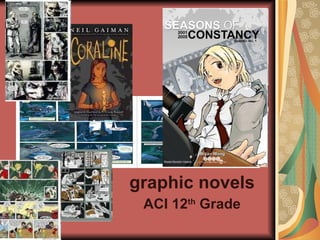
graphic novels ACI 12 th  Grade
What is the difference between graphic novels and comic books? Comics: monthly, serialized, using cheap papers and staples Comic strip: short strip of cartoons published in newspaper, magazine Graphic Novel: narrative work which uses comics to convey the story May be original story, fiction or even non fiction, or collection of shorter works. Book length and published using book materials, sold in book stores.
Is the “graphic novel” a genre? No, ‘comics’ is the name of a  medium  – the genre refers to the content matter e.g. superhero; social criticism, etc
Historically speaking? Stories originally told through pictures: cave paintings ; tapestries (Bayeaux 1077); woodcut illustrations. Early 1900’s: collections of comic strips became popular in US 1933:  Funnies on Parade  was the first regularly published comic book. 1938: Superman first appeared in  Action Comics.
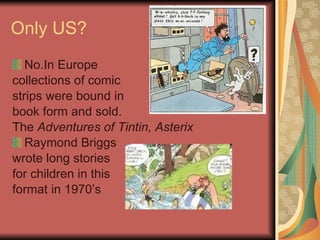
Only US? No.In Europe collections of comic  strips were bound in  book form and sold.  The  Adventures of Tintin, Asterix Raymond Briggs  wrote long stories  for children in this  format in 1970’s
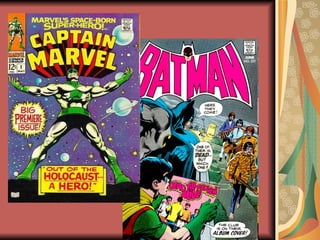
The Golden Age of comics late1930’s - late1940’s: provided cheap, easy entertainment for troops in WWII Captain Marvel also dual identity superhero…but a teenage boy Batman, Wonderwoman, all with magical reasons for their superpowers Similar characters – too good to be true!
 
So they just grew in popularity? No … concerns about effects on young people. 1954:  Seduction of the Innocent by  Dr Fredric Wertham  was published … blamed juvenile delinquency on comic books ‘ Code of Conduct’ was created to regulate content and curb violence
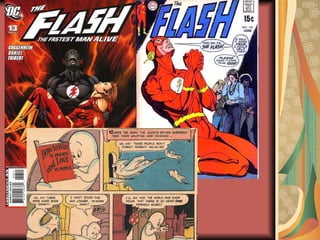
The Silver Age of comics 1956 – 1970 Updated versions of Superheroes … new costumes, identities. Characters more realistic, “self doubting and flawed”. Magic – out; Science – in! ‘ The Flash ’  published in  Showcase  #4 Girls and children targeted: Casper, Richie Rich, Little Dot.
 
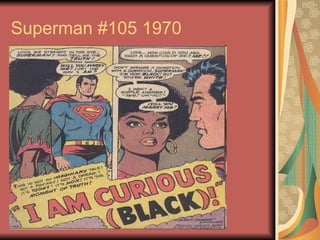
The Bronze Age of comics 1970’s – 1980’s Similar superheroes Interest in real world social issues e.g. drug abuse, racial prejudice. Amazing Spiderman (3 part) 1971 commis s ioned by US govt .  to make drug usage seem dangerous and unglamorous
Superman #105 1970
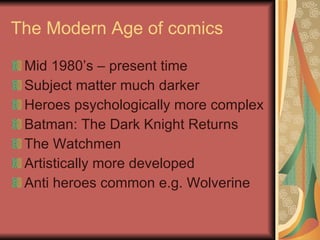
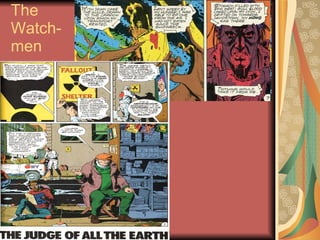
The Modern Age of comics Mid 1980’s – present time Subject matter much darker Heroes psychologically more complex Batman: The Dark Knight Returns The Watchmen Artistically more developed Anti heroes common e.g. Wolverine
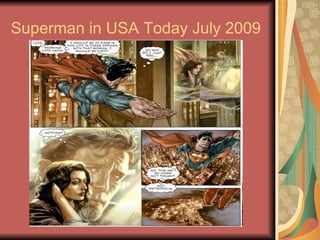
Superman in USA Today July 2009
The  Watch- men
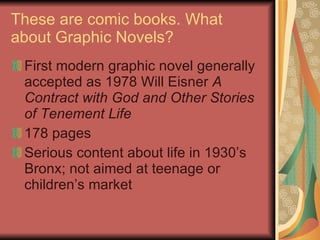
These are comic books. What about Graphic Novels? First modern graphic novel generally accepted as 1978 Will Eisner  A Contract with God and Other Stories of Tenement Life 178 pages Serious content about life in 1930’s Bronx; not aimed at teenage or children’s market
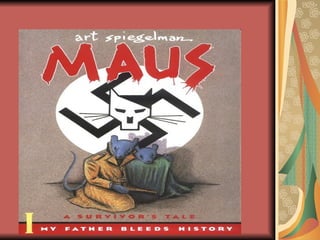
And… 1987:  Maus: A Survivor’s Tale  by Art Speigelman Biographical family memoir of Holocaust 1992: won Pulitzer prize for Literature
 
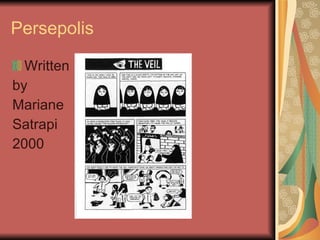
Persepolis  Written by Mariane  Satrapi 2000
What are ‘anime’ and ‘manga’? Anime: Japanese–style animation … popular with children in US 1990’s. Manga: Japanese-style comics often for adults, fiction and non fiction, works of literature
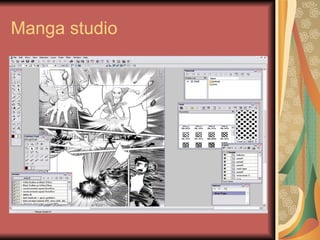
Manga studio
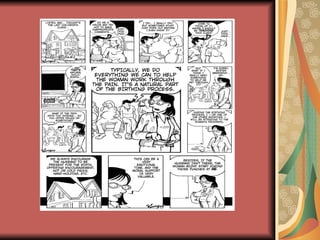
What to look for … layout 1. Layout of page Read left to right and top to bottom Number and size of panels – emphasis, pacing, flow of story Use of negative space (white bits in between panels)
 
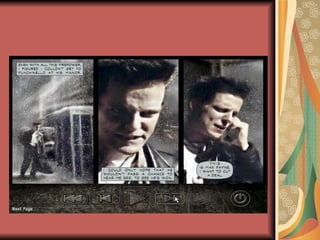
Visuals 2. Visuals within panel Like a storyboard for film Perspective (high/low angle; close up etc) Point of view (clear/blocked view … through a window, etc) Meaning? Tone?
 
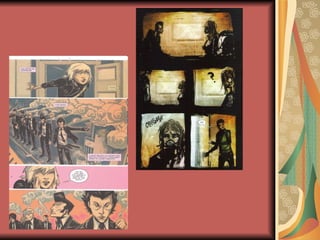
Visuals 3. Visuals: style of artwork realistic – objective but flat, everyday Caricature – subjective but lively, exciting Often mixture used Lines- strong, thick or thin, faint Effect on reader?
 
Visuals 4. Visuals: color versus black/white Use of particular color palettes Effect on mood?
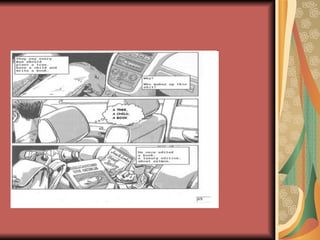
Text 5. Where are the words?  3 rd  person narration Dialogue Shape of balloon Inner thoughts Point of view of story Type of language used
 
White space or ‘gutter’ 6. Notice change between panels/frames – leads to ‘static’ or ‘dynamic’ stories Time lapse: how much must we ‘fill in’ with our imagination Similarity between frames can be tedious … too much difference can be confusing
Points of interest 7. Contrast of text and image may produce irony Image enhances text Text supports image Allusions to real events, politics, etc
Further Reading Non Fiction Examples: The Cartoon History of the Universe II  (Gonick, 1994) covers the history of China and India up to the fall of Rome with irony and humor  9–11: Artists Respond  (Chaos! Comics, Dark Horse Comics, & Image, 2002). In it various well-known comic artists like Will Eisner and Frank Miller respond to the terrorist attacks of September 11, 2001. Pieces touch on the heroics of the rescuers, the fears of children, reflections on hate, and much more.  Larry Gonick and Wollcott Smith wrote  The Cartoon Guide to Statistics  (1993).  The Four Immigrants Manga  (Kiyama, 1999), was recently discovered and translated into English. It describes the life of four Japanese immigrants in San Francisco, California, from 1904 to 1924.

Graphic Novels

  • 1.
    graphic novels ACI12 th Grade
  • 2.
    What is thedifference between graphic novels and comic books? Comics: monthly, serialized, using cheap papers and staples Comic strip: short strip of cartoons published in newspaper, magazine Graphic Novel: narrative work which uses comics to convey the story May be original story, fiction or even non fiction, or collection of shorter works. Book length and published using book materials, sold in book stores.
  • 3.
    Is the “graphicnovel” a genre? No, ‘comics’ is the name of a medium – the genre refers to the content matter e.g. superhero; social criticism, etc
  • 4.
    Historically speaking? Storiesoriginally told through pictures: cave paintings ; tapestries (Bayeaux 1077); woodcut illustrations. Early 1900’s: collections of comic strips became popular in US 1933: Funnies on Parade was the first regularly published comic book. 1938: Superman first appeared in Action Comics.
  • 5.
    Only US? No.InEurope collections of comic strips were bound in book form and sold. The Adventures of Tintin, Asterix Raymond Briggs wrote long stories for children in this format in 1970’s
  • 6.
    The Golden Ageof comics late1930’s - late1940’s: provided cheap, easy entertainment for troops in WWII Captain Marvel also dual identity superhero…but a teenage boy Batman, Wonderwoman, all with magical reasons for their superpowers Similar characters – too good to be true!
  • 7.
  • 8.
    So they justgrew in popularity? No … concerns about effects on young people. 1954: Seduction of the Innocent by Dr Fredric Wertham was published … blamed juvenile delinquency on comic books ‘ Code of Conduct’ was created to regulate content and curb violence
  • 9.
    The Silver Ageof comics 1956 – 1970 Updated versions of Superheroes … new costumes, identities. Characters more realistic, “self doubting and flawed”. Magic – out; Science – in! ‘ The Flash ’ published in Showcase #4 Girls and children targeted: Casper, Richie Rich, Little Dot.
  • 10.
  • 11.
    The Bronze Ageof comics 1970’s – 1980’s Similar superheroes Interest in real world social issues e.g. drug abuse, racial prejudice. Amazing Spiderman (3 part) 1971 commis s ioned by US govt . to make drug usage seem dangerous and unglamorous
  • 12.
  • 13.
    The Modern Ageof comics Mid 1980’s – present time Subject matter much darker Heroes psychologically more complex Batman: The Dark Knight Returns The Watchmen Artistically more developed Anti heroes common e.g. Wolverine
  • 14.
    Superman in USAToday July 2009
  • 15.
  • 16.
    These are comicbooks. What about Graphic Novels? First modern graphic novel generally accepted as 1978 Will Eisner A Contract with God and Other Stories of Tenement Life 178 pages Serious content about life in 1930’s Bronx; not aimed at teenage or children’s market
  • 17.
    And… 1987: Maus: A Survivor’s Tale by Art Speigelman Biographical family memoir of Holocaust 1992: won Pulitzer prize for Literature
  • 18.
  • 19.
    Persepolis Writtenby Mariane Satrapi 2000
  • 20.
    What are ‘anime’and ‘manga’? Anime: Japanese–style animation … popular with children in US 1990’s. Manga: Japanese-style comics often for adults, fiction and non fiction, works of literature
  • 21.
  • 22.
    What to lookfor … layout 1. Layout of page Read left to right and top to bottom Number and size of panels – emphasis, pacing, flow of story Use of negative space (white bits in between panels)
  • 23.
  • 24.
    Visuals 2. Visualswithin panel Like a storyboard for film Perspective (high/low angle; close up etc) Point of view (clear/blocked view … through a window, etc) Meaning? Tone?
  • 25.
  • 26.
    Visuals 3. Visuals:style of artwork realistic – objective but flat, everyday Caricature – subjective but lively, exciting Often mixture used Lines- strong, thick or thin, faint Effect on reader?
  • 27.
  • 28.
    Visuals 4. Visuals:color versus black/white Use of particular color palettes Effect on mood?
  • 29.
    Text 5. Whereare the words? 3 rd person narration Dialogue Shape of balloon Inner thoughts Point of view of story Type of language used
  • 30.
  • 31.
    White space or‘gutter’ 6. Notice change between panels/frames – leads to ‘static’ or ‘dynamic’ stories Time lapse: how much must we ‘fill in’ with our imagination Similarity between frames can be tedious … too much difference can be confusing
  • 32.
    Points of interest7. Contrast of text and image may produce irony Image enhances text Text supports image Allusions to real events, politics, etc
  • 33.
    Further Reading NonFiction Examples: The Cartoon History of the Universe II (Gonick, 1994) covers the history of China and India up to the fall of Rome with irony and humor 9–11: Artists Respond (Chaos! Comics, Dark Horse Comics, & Image, 2002). In it various well-known comic artists like Will Eisner and Frank Miller respond to the terrorist attacks of September 11, 2001. Pieces touch on the heroics of the rescuers, the fears of children, reflections on hate, and much more. Larry Gonick and Wollcott Smith wrote The Cartoon Guide to Statistics (1993). The Four Immigrants Manga (Kiyama, 1999), was recently discovered and translated into English. It describes the life of four Japanese immigrants in San Francisco, California, from 1904 to 1924.