Gram negative rods
Helicobacter
Properties
Helicobacters are curved gram-negative rods similar in appearance to campylobacters, but because they
differ sufficiently in certain biochemical and flagellar characteristics, they are classified as a separate
genus. In particular, helicobacters are strongly urease-positive, whereas campylobacterios are urease
negative.
Disease
Helicobacter pylori causes gastritis and peptic ulcers. Infection with H. pylori is a risk factor for gastric
carcinoma and is linked to mucosal-associated lymphoid tissue (MALT) lymphomas.
Pathogenesis
H. pylori attaches to the mucus-secreting cells of the gastric mucosa. The production of large amounts of
ammonia from urea by the organism’s urease, coupled with an inflammatory response, leads to damage to
the mucosa. Loss of the protective mucus coating predisposes to gastritis and peptic ulcer. The ammonia
also neutralizes stomach acid, allowing the organism to survive.
Epidemiology
Epidemiologically, most patients with these diseases show H. pylori in biopsy specimens of the gastric
epithelium. The natural habitat of H. pylori is the human stomach, and it is probably acquired by ingestion.
However, it has not been isolated from stool, food, water, or animals. Person-to-person transmission
probably occurs because there is clustering of infection within families. The rate of infection with H.
pylori in developing countries is very high—a finding that is in accord with the high rate of gastric
carcinoma in those countries.
Laboratory diagnoses
The organism can be seen on Gram-stained smears of biopsy specimens of the gastric mucosa. It can be
cultured on the same media as campylobacters.
A test for Helicobacter antigen in the stool can be used for diagnosis and for confirmation that treatment
has eliminated the organism. The presence of IgG antibodies in the patient’s serum can also be used as
evidence of infection.
Treatment and Prevention
The concept that underlies the choice of drugs is to use antibiotics to eliminate Helicobacter plus a drug
to reduce gastric acidity. A combination of two antibiotics is used because resistance, especially to
metronidazole, has emerged. Treatment of duodenal ulcers with antibiotics (e.g., amoxicillin and
metronidazole) and bismuth salts (Pepto-Bismol) results in a greatly decreased recurrence rate.
Tetracycline can be used instead of amoxicillin. There is no vaccine or other specific preventive measure.
Pseodomonas
Important properties
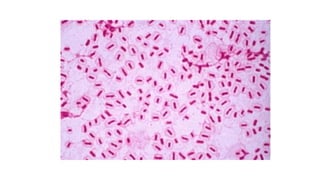
Pseudomonads are gram-negative rods that resemble the members of the Enterobacteriaceae but differ in that they
are strict aerobes (they derive their energy only by oxidation of sugars rather than by fermentation). Because they do
not ferment glucose, they are called nonfermenters, in contrast to the members of the Enterobacteriaceae, which do
ferment glucose. Oxidation involves electron transport by cytochrome.
Important properties
Pseudomonads are able to grow in water containing only traces of nutrients ( tap water), and this favors
their persistence in the hospital environment. P. aeruginosa and B. cepacia have a remarkable ability to
withstand disinfectants; this accounts in part for their role in hospital-acquired infections. They have
been found growing in hexachlorophene-containing soap solutions, in antiseptics, and in detergents.
Disease
Pseudomonas aeruginosa causes infections (sepsis, pneumonia, and urinary tract infections) primarily in patients
with lowered host defenses. It also causes chronic lower respiratory tract infections in patients with cystic fibrosis,
wound infections (cellulitis) in burn patients, and malignant otitis externa in diabetic patients. It is the most common
cause of ventilator-associated pneumonia. (P. aeruginosa is also known as Burkholderia aeruginosa.)
Disease
Pseudomonas cepacia (renamed Burkholderia cepacia) and Pseudomonas maltophilia (renamed
Xanthomonas maltophilia and now called Stenotrophomonas maltophilia) also cause these infections, but
much less frequently. Pseudomonas pseudomallei (also known as Burkholderia pseudomallei), the cause
of melioidosis.
Epidemiology
P. aeruginosa is found chiefly in soil and water, although approximately 10% of people carry it in the
normal flora of the colon. It is found on the skin in moist areas and can colonize the upper respiratory
tract of hospitalized patients. Its ability to grow in simple aqueous solutions has resulted in
contamination of respiratory therapy and anesthesia equipment, intravenous fluids, and even distilled
water.
Pathogenesis
Pathogenesis is based on multiple virulence factors: endotoxin, exotoxins, and enzymes. Its endotoxin,
like that of other gram-negative bacteria, causes the symptoms of sepsis and septic shock. The best
known of the exotoxins is exotoxin A, which causes tissue necrosis. It inhibits eukaryotic protein synthesis
by the same mechanism as diphtheria exotoxin, namely, ADP-ribosylation of elongation factor-2. It also
produces enzymes, such as elastase and proteases, that are histotoxic and facilitate invasion of the
organism into the bloodstream. Pyocyanin damages the cilia and mucosal cells of the respiratory tract.
Haemophilus influenzae
Disease
Sinusitis, otitis media, and pneumonia are common. Epiglottitis is uncommon, but H. influenzae is the
most important cause. H. influenzae used to be a leading cause of meningitis, but the vaccine has greatly
reduced the number of cases.
Characteristica
Small gram-negative (coccobacillary) rods. Requires factors X (hemin) and V (NAD) for growth. Of the six
capsular polysaccharide types, type b causes 95% of invasive disease. Type b capsule is poly ribitol
phosphate.
Habitat and Transmission
Habitat is the upper respiratory tract. Transmission is via respiratory droplets.
Prevention
Vaccine containing the type b capsular polysaccharide conjugated to diphtheria toxoid or other protein is
given between 2 and 18 months of age. Rifampin can prevent meningitis in close contacts.
Bordetella pertussis
Disease
Whooping cough (pertussis) is a highly contagious respiratory tract infection. In many people, it's marked
by a severe hacking cough followed by a high-pitched intake of breath that sounds like "whoop."
Before the vaccine was developed, whooping cough was considered a childhood disease. Now whooping
cough primarily affects children too young to have completed the full course of vaccinations and
teenagers and adults whose immunity has faded.
Causes
Pertussis, a respiratory illness commonly known as whooping cough, is a very contagious disease caused
by a type of bacteria called Bordetella pertussis. These bacteria attach to the cilia (tiny, hair-like
extensions) that line part of the upper respiratory system. The bacteria release toxins (poisons), which
damage the cilia and cause airways to swell.
Transmission
Pertussis is a very contagious disease only found in humans. Pertussis spreads from person to person.
People with pertussis usually spread the disease to another person by coughing or sneezing or when
spending a lot of time near one another where you share breathing space. Many babies who get pertussis
are infected by older siblings, parents, or caregivers who might not even know they have the disease.
Pathogenesis
Pertussis toxin stimulates adenylate cyclase by adding ADP-ribose onto the inhibitory G protein. Toxin
has two components: subunit A, which has the ADP-ribosylating activity, and subunit B, which binds the
toxin to cell surface receptors. Pertussis toxin causes lymphocytosis in the blood by inhibiting chemokine
receptors. Inhibition of these receptors prevents lymphocytes from entering tissue, resulting in large
numbers being retained in the blood. Inhibition of chemokine receptors occurs because pertussis toxin
ADP-ribosylates the inhibitory G protein which prevents signal transduction within the cell. In addition,
extracellular adenylate cyclase is produced, which can inhibit killing by phagocytes. Tracheal cytotoxin
damages ciliated epithelium of respiratory tract.
Laboratory Diagnosis
Gram-stained smear plus culture on Bordet-Gengou agar. Identified by biochemical reactions and slide
agglutination with known antisera. PCR tests, if available, are both sensitive and specific. Serologic tests
for antibody in patient’s serum not useful.
Treatment
Healthcare providers generally treat pertussis with antibiotics and early treatment is very important.
Treatment may make your infection less serious if you start it early, before coughing fits begin. Treatment
can also help prevent spreading the disease to close contacts (people who have spent a lot of time around
the infected person). Treatment after three weeks of illness is unlikely to help. The bacteria are gone
from your body by then, even though you usually will still have symptoms. This is because the bacteria
have already done damage to your body.
Prevention
The acellular vaccine containing pertussis toxoid and four other purified proteins is recommended rather
than the killed vaccine, which contains whole organisms. Usually given to children in combination with
diphtheria and tetanus toxoids (DTaP). Azithromycin is useful in unimmunized people who are known to
be exposed.

Gram negative rods.pdf

  • 1.
  • 2.
  • 4.
    Properties Helicobacters are curvedgram-negative rods similar in appearance to campylobacters, but because they differ sufficiently in certain biochemical and flagellar characteristics, they are classified as a separate genus. In particular, helicobacters are strongly urease-positive, whereas campylobacterios are urease negative.
  • 5.
    Disease Helicobacter pylori causesgastritis and peptic ulcers. Infection with H. pylori is a risk factor for gastric carcinoma and is linked to mucosal-associated lymphoid tissue (MALT) lymphomas.
  • 6.
    Pathogenesis H. pylori attachesto the mucus-secreting cells of the gastric mucosa. The production of large amounts of ammonia from urea by the organism’s urease, coupled with an inflammatory response, leads to damage to the mucosa. Loss of the protective mucus coating predisposes to gastritis and peptic ulcer. The ammonia also neutralizes stomach acid, allowing the organism to survive.
  • 7.
    Epidemiology Epidemiologically, most patientswith these diseases show H. pylori in biopsy specimens of the gastric epithelium. The natural habitat of H. pylori is the human stomach, and it is probably acquired by ingestion. However, it has not been isolated from stool, food, water, or animals. Person-to-person transmission probably occurs because there is clustering of infection within families. The rate of infection with H. pylori in developing countries is very high—a finding that is in accord with the high rate of gastric carcinoma in those countries.
  • 8.
    Laboratory diagnoses The organismcan be seen on Gram-stained smears of biopsy specimens of the gastric mucosa. It can be cultured on the same media as campylobacters. A test for Helicobacter antigen in the stool can be used for diagnosis and for confirmation that treatment has eliminated the organism. The presence of IgG antibodies in the patient’s serum can also be used as evidence of infection.
  • 9.
    Treatment and Prevention Theconcept that underlies the choice of drugs is to use antibiotics to eliminate Helicobacter plus a drug to reduce gastric acidity. A combination of two antibiotics is used because resistance, especially to metronidazole, has emerged. Treatment of duodenal ulcers with antibiotics (e.g., amoxicillin and metronidazole) and bismuth salts (Pepto-Bismol) results in a greatly decreased recurrence rate. Tetracycline can be used instead of amoxicillin. There is no vaccine or other specific preventive measure.
  • 10.
  • 12.
    Important properties Pseudomonads aregram-negative rods that resemble the members of the Enterobacteriaceae but differ in that they are strict aerobes (they derive their energy only by oxidation of sugars rather than by fermentation). Because they do not ferment glucose, they are called nonfermenters, in contrast to the members of the Enterobacteriaceae, which do ferment glucose. Oxidation involves electron transport by cytochrome.
  • 13.
    Important properties Pseudomonads areable to grow in water containing only traces of nutrients ( tap water), and this favors their persistence in the hospital environment. P. aeruginosa and B. cepacia have a remarkable ability to withstand disinfectants; this accounts in part for their role in hospital-acquired infections. They have been found growing in hexachlorophene-containing soap solutions, in antiseptics, and in detergents.
  • 14.
    Disease Pseudomonas aeruginosa causesinfections (sepsis, pneumonia, and urinary tract infections) primarily in patients with lowered host defenses. It also causes chronic lower respiratory tract infections in patients with cystic fibrosis, wound infections (cellulitis) in burn patients, and malignant otitis externa in diabetic patients. It is the most common cause of ventilator-associated pneumonia. (P. aeruginosa is also known as Burkholderia aeruginosa.)
  • 15.
    Disease Pseudomonas cepacia (renamedBurkholderia cepacia) and Pseudomonas maltophilia (renamed Xanthomonas maltophilia and now called Stenotrophomonas maltophilia) also cause these infections, but much less frequently. Pseudomonas pseudomallei (also known as Burkholderia pseudomallei), the cause of melioidosis.
  • 16.
    Epidemiology P. aeruginosa isfound chiefly in soil and water, although approximately 10% of people carry it in the normal flora of the colon. It is found on the skin in moist areas and can colonize the upper respiratory tract of hospitalized patients. Its ability to grow in simple aqueous solutions has resulted in contamination of respiratory therapy and anesthesia equipment, intravenous fluids, and even distilled water.
  • 17.
    Pathogenesis Pathogenesis is basedon multiple virulence factors: endotoxin, exotoxins, and enzymes. Its endotoxin, like that of other gram-negative bacteria, causes the symptoms of sepsis and septic shock. The best known of the exotoxins is exotoxin A, which causes tissue necrosis. It inhibits eukaryotic protein synthesis by the same mechanism as diphtheria exotoxin, namely, ADP-ribosylation of elongation factor-2. It also produces enzymes, such as elastase and proteases, that are histotoxic and facilitate invasion of the organism into the bloodstream. Pyocyanin damages the cilia and mucosal cells of the respiratory tract.
  • 18.
  • 20.
    Disease Sinusitis, otitis media,and pneumonia are common. Epiglottitis is uncommon, but H. influenzae is the most important cause. H. influenzae used to be a leading cause of meningitis, but the vaccine has greatly reduced the number of cases.
  • 21.
    Characteristica Small gram-negative (coccobacillary)rods. Requires factors X (hemin) and V (NAD) for growth. Of the six capsular polysaccharide types, type b causes 95% of invasive disease. Type b capsule is poly ribitol phosphate.
  • 22.
    Habitat and Transmission Habitatis the upper respiratory tract. Transmission is via respiratory droplets.
  • 23.
    Prevention Vaccine containing thetype b capsular polysaccharide conjugated to diphtheria toxoid or other protein is given between 2 and 18 months of age. Rifampin can prevent meningitis in close contacts.
  • 24.
  • 26.
    Disease Whooping cough (pertussis)is a highly contagious respiratory tract infection. In many people, it's marked by a severe hacking cough followed by a high-pitched intake of breath that sounds like "whoop." Before the vaccine was developed, whooping cough was considered a childhood disease. Now whooping cough primarily affects children too young to have completed the full course of vaccinations and teenagers and adults whose immunity has faded.
  • 27.
    Causes Pertussis, a respiratoryillness commonly known as whooping cough, is a very contagious disease caused by a type of bacteria called Bordetella pertussis. These bacteria attach to the cilia (tiny, hair-like extensions) that line part of the upper respiratory system. The bacteria release toxins (poisons), which damage the cilia and cause airways to swell.
  • 28.
    Transmission Pertussis is avery contagious disease only found in humans. Pertussis spreads from person to person. People with pertussis usually spread the disease to another person by coughing or sneezing or when spending a lot of time near one another where you share breathing space. Many babies who get pertussis are infected by older siblings, parents, or caregivers who might not even know they have the disease.
  • 29.
    Pathogenesis Pertussis toxin stimulatesadenylate cyclase by adding ADP-ribose onto the inhibitory G protein. Toxin has two components: subunit A, which has the ADP-ribosylating activity, and subunit B, which binds the toxin to cell surface receptors. Pertussis toxin causes lymphocytosis in the blood by inhibiting chemokine receptors. Inhibition of these receptors prevents lymphocytes from entering tissue, resulting in large numbers being retained in the blood. Inhibition of chemokine receptors occurs because pertussis toxin ADP-ribosylates the inhibitory G protein which prevents signal transduction within the cell. In addition, extracellular adenylate cyclase is produced, which can inhibit killing by phagocytes. Tracheal cytotoxin damages ciliated epithelium of respiratory tract.
  • 30.
    Laboratory Diagnosis Gram-stained smearplus culture on Bordet-Gengou agar. Identified by biochemical reactions and slide agglutination with known antisera. PCR tests, if available, are both sensitive and specific. Serologic tests for antibody in patient’s serum not useful.
  • 31.
    Treatment Healthcare providers generallytreat pertussis with antibiotics and early treatment is very important. Treatment may make your infection less serious if you start it early, before coughing fits begin. Treatment can also help prevent spreading the disease to close contacts (people who have spent a lot of time around the infected person). Treatment after three weeks of illness is unlikely to help. The bacteria are gone from your body by then, even though you usually will still have symptoms. This is because the bacteria have already done damage to your body.
  • 32.
    Prevention The acellular vaccinecontaining pertussis toxoid and four other purified proteins is recommended rather than the killed vaccine, which contains whole organisms. Usually given to children in combination with diphtheria and tetanus toxoids (DTaP). Azithromycin is useful in unimmunized people who are known to be exposed.