TERM 2
Grade 7
Natural Sciences
Lesson plan 1
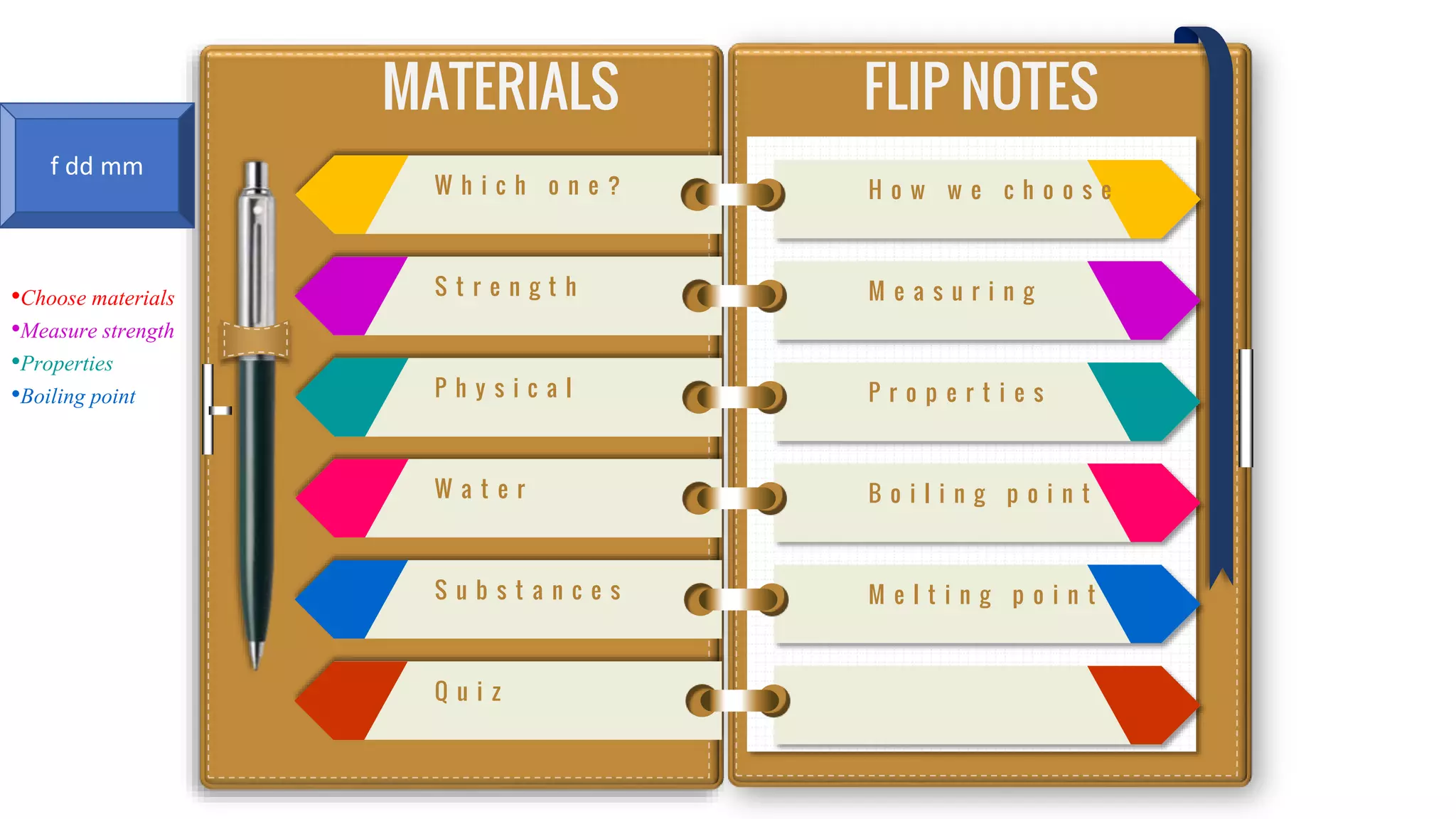
W h i c h o n e ?
S t r e n g t h
P h y s i c a l
W a t e r
S u b s t a n c e s
Q u i z
How should we choose materials to build a house
or for a pan to cook an egg?
H o w w e c h o o s e
FLIP NOTES
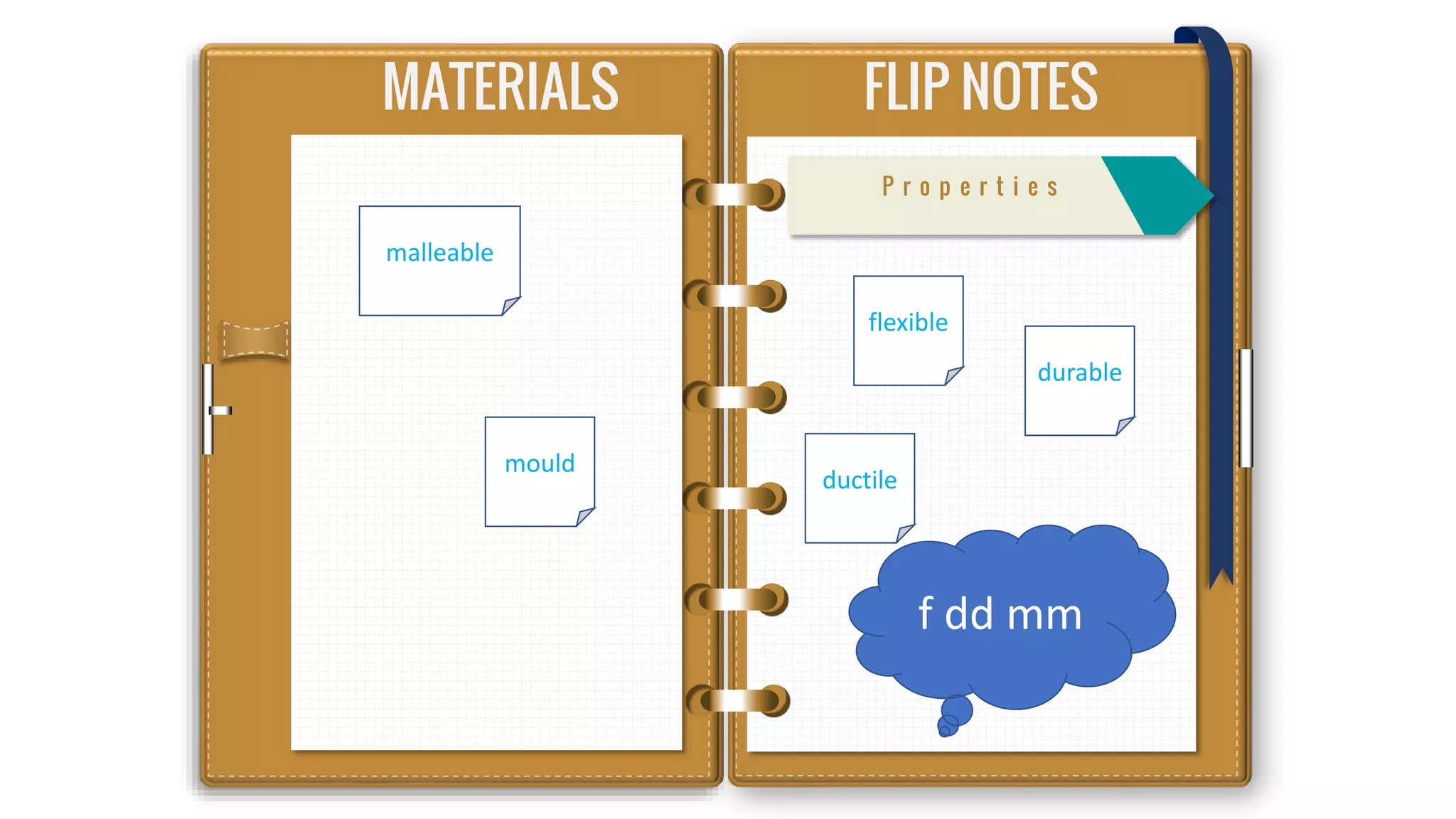
Property, durable, ductile, malleable, flexible,
mould
M e a s u r i n g
Strong, Flexible, Conducts electricity,
Conducts heat
P r o p e r t i e s
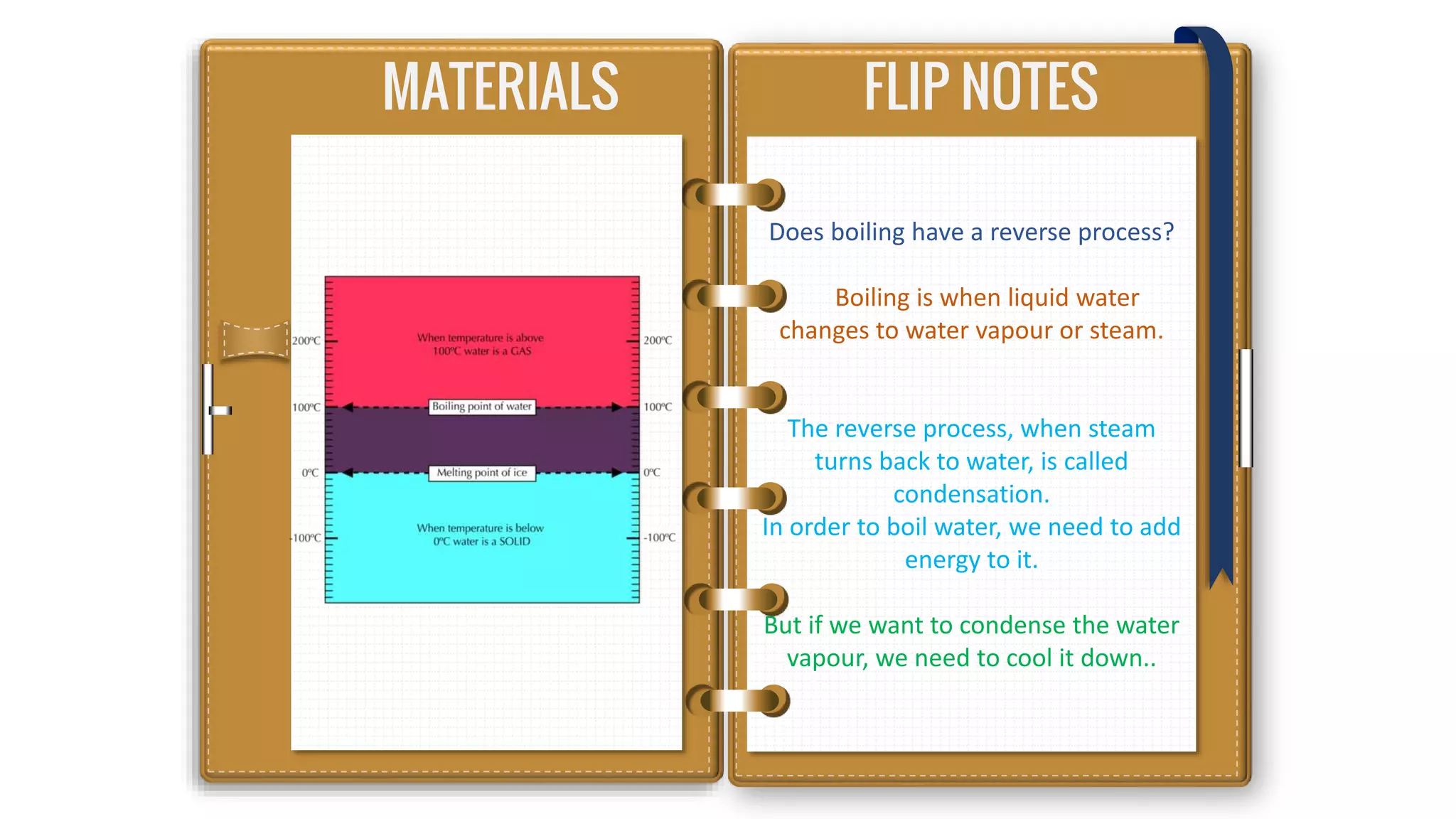
Water boils at 100 degrees
B o i l i n g p o i n t
Ice melts at 0 degrees
M e l t i n g p o i n t
Go download the quiz and questions below!
MATERIALS
f dd mm
•Choose materials
•Measure strength
•Properties
•Boiling point
FLIP NOTES
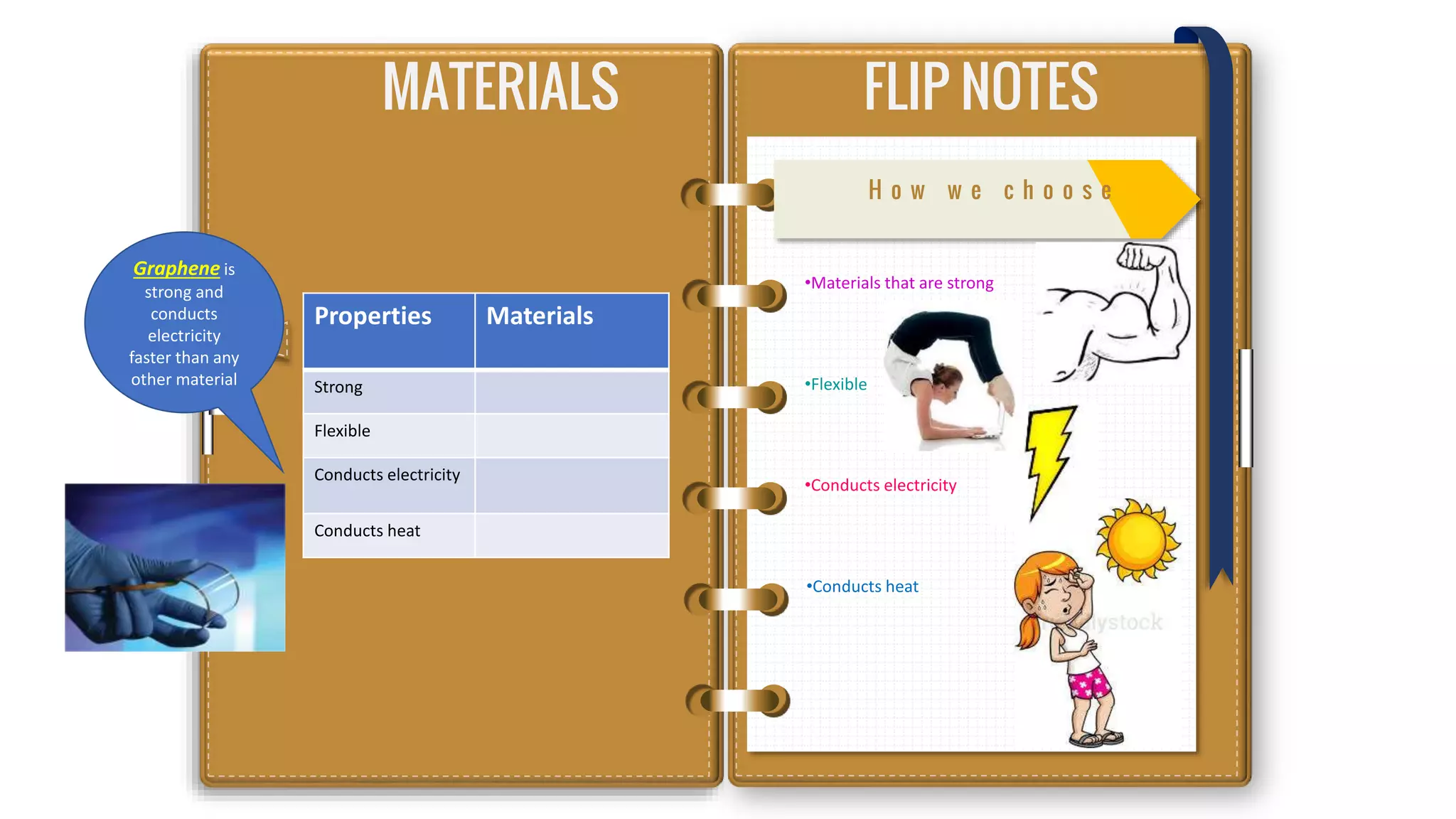
•Materials that are strong
•Flexible
•Conducts electricity
•Conducts heat
MATERIALS
Properties Materials
Strong
Flexible
Conducts electricity
Conducts heat
H o w w e c h o o s e
Graphene is
strong and
conducts
electricity
faster than any
other material
FLIP NOTES
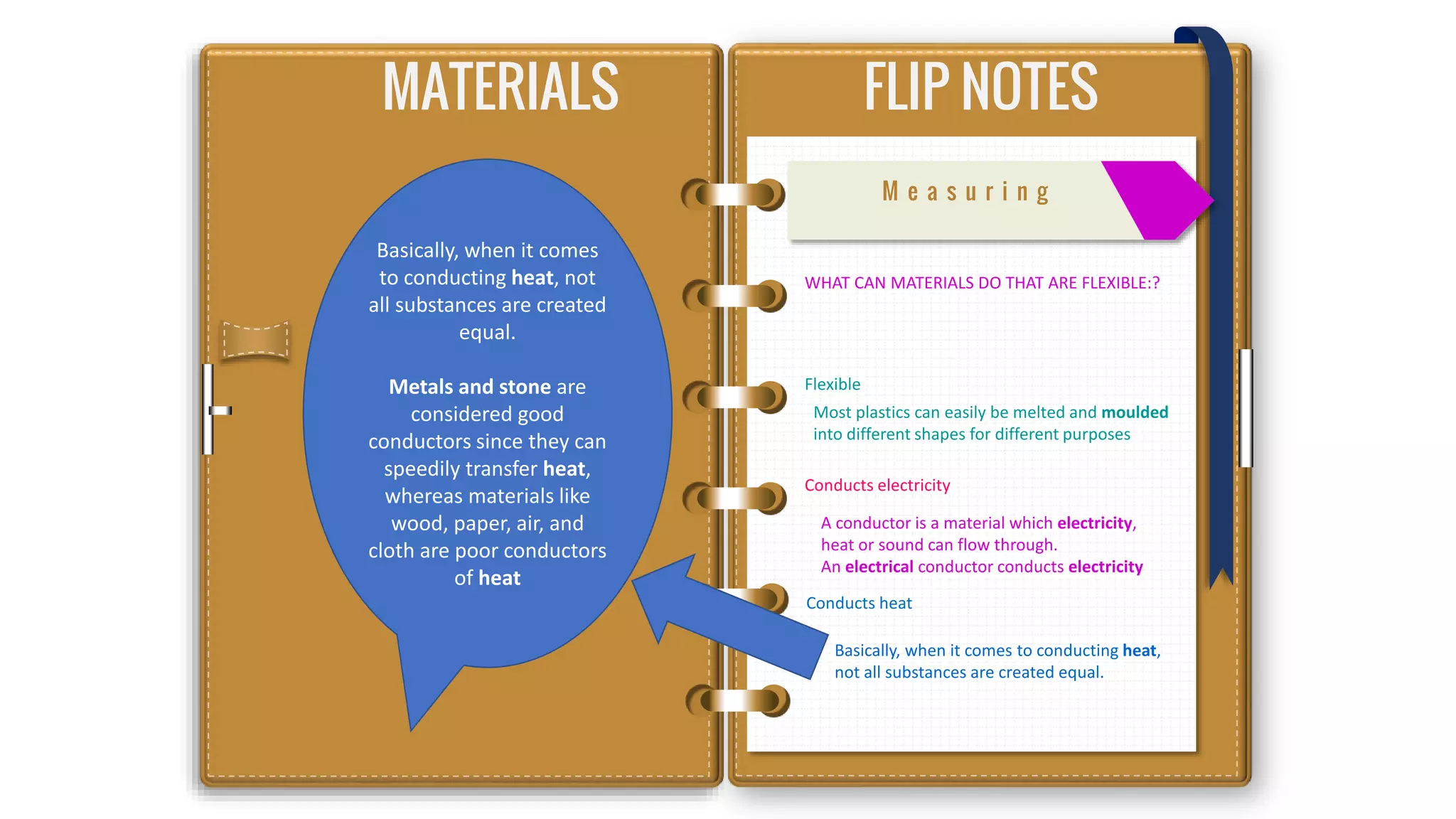
WHAT CAN MATERIALS DO THAT ARE FLEXIBLE:?
Flexible
Conducts electricity
Conducts heat
MATERIALS
M e a s u r i n g
Most plastics can easily be melted and moulded
into different shapes for different purposes
A conductor is a material which electricity,
heat or sound can flow through.
An electrical conductor conducts electricity
Basically, when it comes to conducting heat,
not all substances are created equal.
Basically, when it comes
to conducting heat, not
all substances are created
equal.
Metals and stone are
considered good
conductors since they can
speedily transfer heat,
whereas materials like
wood, paper, air, and
cloth are poor conductors
of heat
FLIP NOTESMATERIALS
f dd mm
P r o p e r t i e s
flexible
durable
ductile
malleable
mould
FLIP NOTES
HEAT and TEMPERATURE
HEAT
TEMPERATURE
MATERIALS
Liquid can change into a gas
by evaporation. For example
if you leave a saucer of water
out in the sun, the water will
evaporate.
Evaporation can take place at
any temperature. But, in
boiling, the liquid needs to be
heated to reach its boiling
point.
Bubbles of water vapour then
form in the liquid and rise up.
At what
temperature will
the water boil?
B o i l i n g p o i n t
FLIP NOTES
THERMOMETER
MATERIALS
The mercury inside these kinds of
thermometers is toxic and dangerous so they
must be handled with care.
contract
expand
constant
independent variable
dependent variable
altitude
Perhaps You have had your
temperature taken with
a thermometer .
A thermometer can be used to
find out how hot or cold
something is. A thermometer
is an instrument for measuring
temperature.
This is a thermometer used to
take your temperature when
you have a fever.
FLIP NOTESMATERIALS
Statement AGREE DISAGREE NOT SURE
Water can get hotter than 100°C.
Water always freezes at 0°C.
The boiling point of water also
depends on the purity of the water.
Water which contains impurities (such
as salt or sugar) boils at a higher
temperature than pure water.
This is why orange juice or apple juice
will boil at temperatures slightly
above 100°C
FLIP NOTESMATERIALS
Different thermometers from
different batches might also give
slightly different readings. This is
because they might have been
calibrated differently.
Ice melts at 0°C.
Water freezes at 0°C
Does boiling have a reverse process?
Boiling is when liquid water
changes to water vapour or steam.
The reverse process, when steam
turns back to water, is called
condensation.
In order to boil water, we need to add
energy to it.
But if we want to condense the water
vapour, we need to cool it down..
FLIP NOTESMATERIALS
Melting is when a solid changes
into a liquid. Look at this photo of a
candle burning.
What is happening to the wax around
the flame?
A liquid can change into a gas by
evaporation.
For example if you leave a saucer of
water out in the sun, the water will
evaporate.
FLIP NOTESMATERIALS
Evaporation can take place at
any temperature. But, in boiling,
the liquid needs to be heated to
reach its boiling point. Bubbles
of water vapour then form in the
liquid and rise up.
M e l t i n g p o i n t
WELL
DONE!!!!
FLIP NOTESMATERIALS
F I N I S H ! ! ! ! !

Grade 7 term 2 Natural Science Materials Lesson 1 Visual Style

  • 1.
    TERM 2 Grade 7 NaturalSciences Lesson plan 1
  • 2.
    W h ic h o n e ? S t r e n g t h P h y s i c a l W a t e r S u b s t a n c e s Q u i z How should we choose materials to build a house or for a pan to cook an egg? H o w w e c h o o s e FLIP NOTES Property, durable, ductile, malleable, flexible, mould M e a s u r i n g Strong, Flexible, Conducts electricity, Conducts heat P r o p e r t i e s Water boils at 100 degrees B o i l i n g p o i n t Ice melts at 0 degrees M e l t i n g p o i n t Go download the quiz and questions below! MATERIALS f dd mm •Choose materials •Measure strength •Properties •Boiling point
  • 3.
    FLIP NOTES •Materials thatare strong •Flexible •Conducts electricity •Conducts heat MATERIALS Properties Materials Strong Flexible Conducts electricity Conducts heat H o w w e c h o o s e Graphene is strong and conducts electricity faster than any other material
  • 4.
    FLIP NOTES WHAT CANMATERIALS DO THAT ARE FLEXIBLE:? Flexible Conducts electricity Conducts heat MATERIALS M e a s u r i n g Most plastics can easily be melted and moulded into different shapes for different purposes A conductor is a material which electricity, heat or sound can flow through. An electrical conductor conducts electricity Basically, when it comes to conducting heat, not all substances are created equal. Basically, when it comes to conducting heat, not all substances are created equal. Metals and stone are considered good conductors since they can speedily transfer heat, whereas materials like wood, paper, air, and cloth are poor conductors of heat
  • 5.
    FLIP NOTESMATERIALS f ddmm P r o p e r t i e s flexible durable ductile malleable mould
  • 6.
    FLIP NOTES HEAT andTEMPERATURE HEAT TEMPERATURE MATERIALS Liquid can change into a gas by evaporation. For example if you leave a saucer of water out in the sun, the water will evaporate. Evaporation can take place at any temperature. But, in boiling, the liquid needs to be heated to reach its boiling point. Bubbles of water vapour then form in the liquid and rise up. At what temperature will the water boil? B o i l i n g p o i n t
  • 7.
    FLIP NOTES THERMOMETER MATERIALS The mercuryinside these kinds of thermometers is toxic and dangerous so they must be handled with care. contract expand constant independent variable dependent variable altitude Perhaps You have had your temperature taken with a thermometer . A thermometer can be used to find out how hot or cold something is. A thermometer is an instrument for measuring temperature. This is a thermometer used to take your temperature when you have a fever.
  • 8.
    FLIP NOTESMATERIALS Statement AGREEDISAGREE NOT SURE Water can get hotter than 100°C. Water always freezes at 0°C.
  • 9.
    The boiling pointof water also depends on the purity of the water. Water which contains impurities (such as salt or sugar) boils at a higher temperature than pure water. This is why orange juice or apple juice will boil at temperatures slightly above 100°C FLIP NOTESMATERIALS Different thermometers from different batches might also give slightly different readings. This is because they might have been calibrated differently. Ice melts at 0°C. Water freezes at 0°C
  • 10.
    Does boiling havea reverse process? Boiling is when liquid water changes to water vapour or steam. The reverse process, when steam turns back to water, is called condensation. In order to boil water, we need to add energy to it. But if we want to condense the water vapour, we need to cool it down.. FLIP NOTESMATERIALS
  • 11.
    Melting is whena solid changes into a liquid. Look at this photo of a candle burning. What is happening to the wax around the flame? A liquid can change into a gas by evaporation. For example if you leave a saucer of water out in the sun, the water will evaporate. FLIP NOTESMATERIALS Evaporation can take place at any temperature. But, in boiling, the liquid needs to be heated to reach its boiling point. Bubbles of water vapour then form in the liquid and rise up. M e l t i n g p o i n t
  • 12.

Editor's Notes