 Have back bones
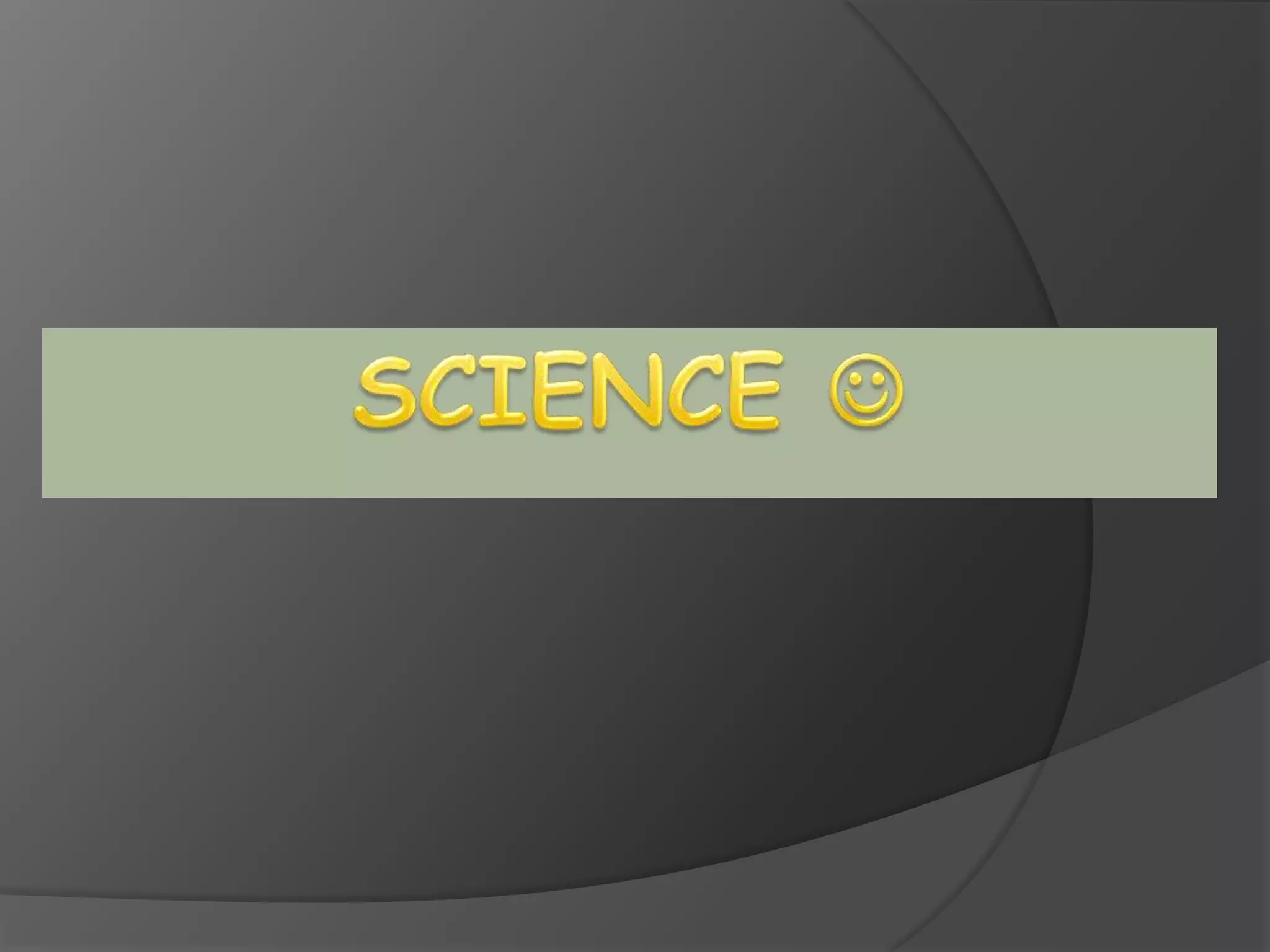
 FISHES
 -Aquatic animals wich move using fins
  and breath through gills
 Examples: Bony and cartilaginous fishes
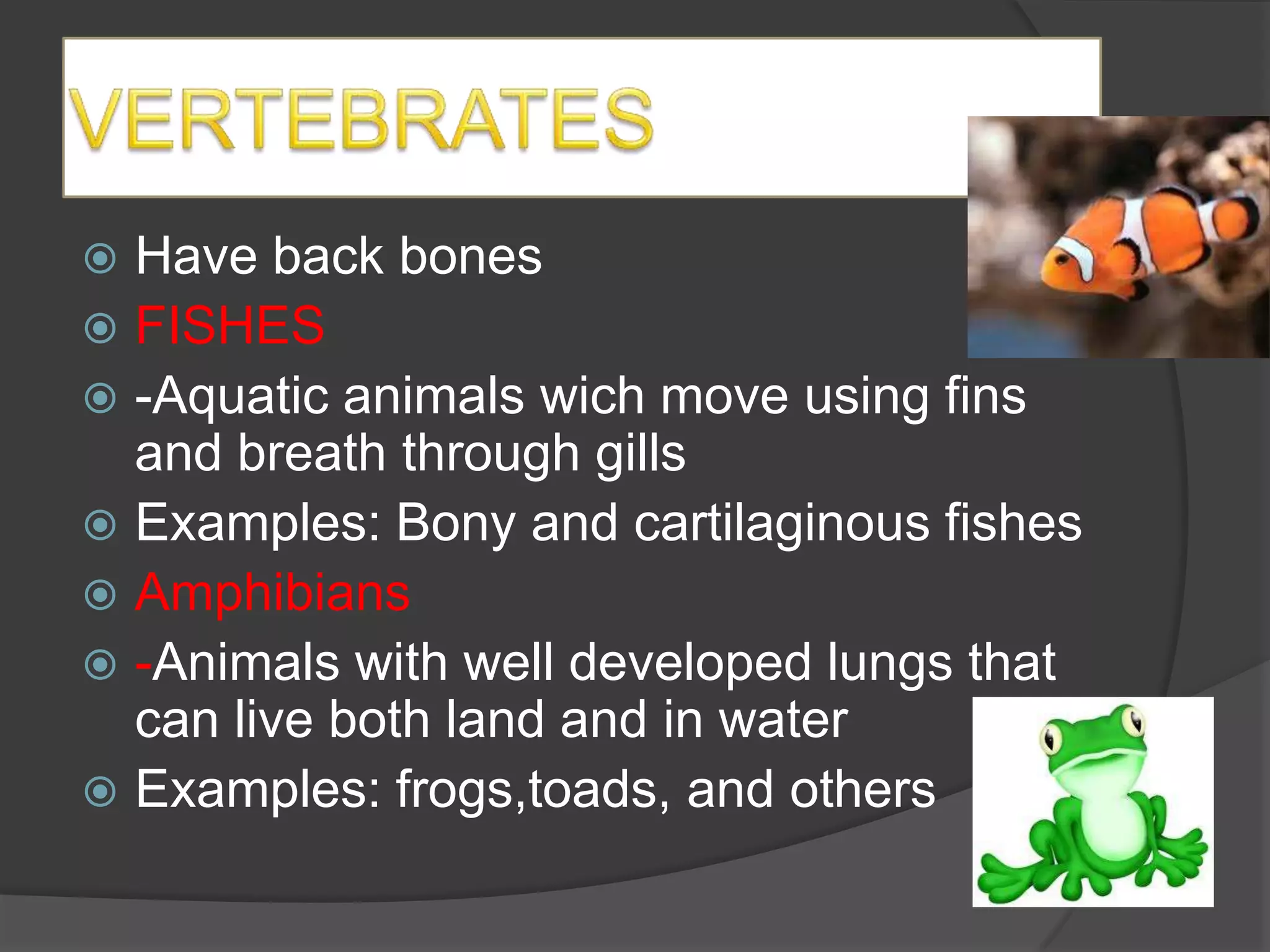
 Amphibians
 -Animals with well developed lungs that
  can live both land and in water
 Examples: frogs,toads, and others
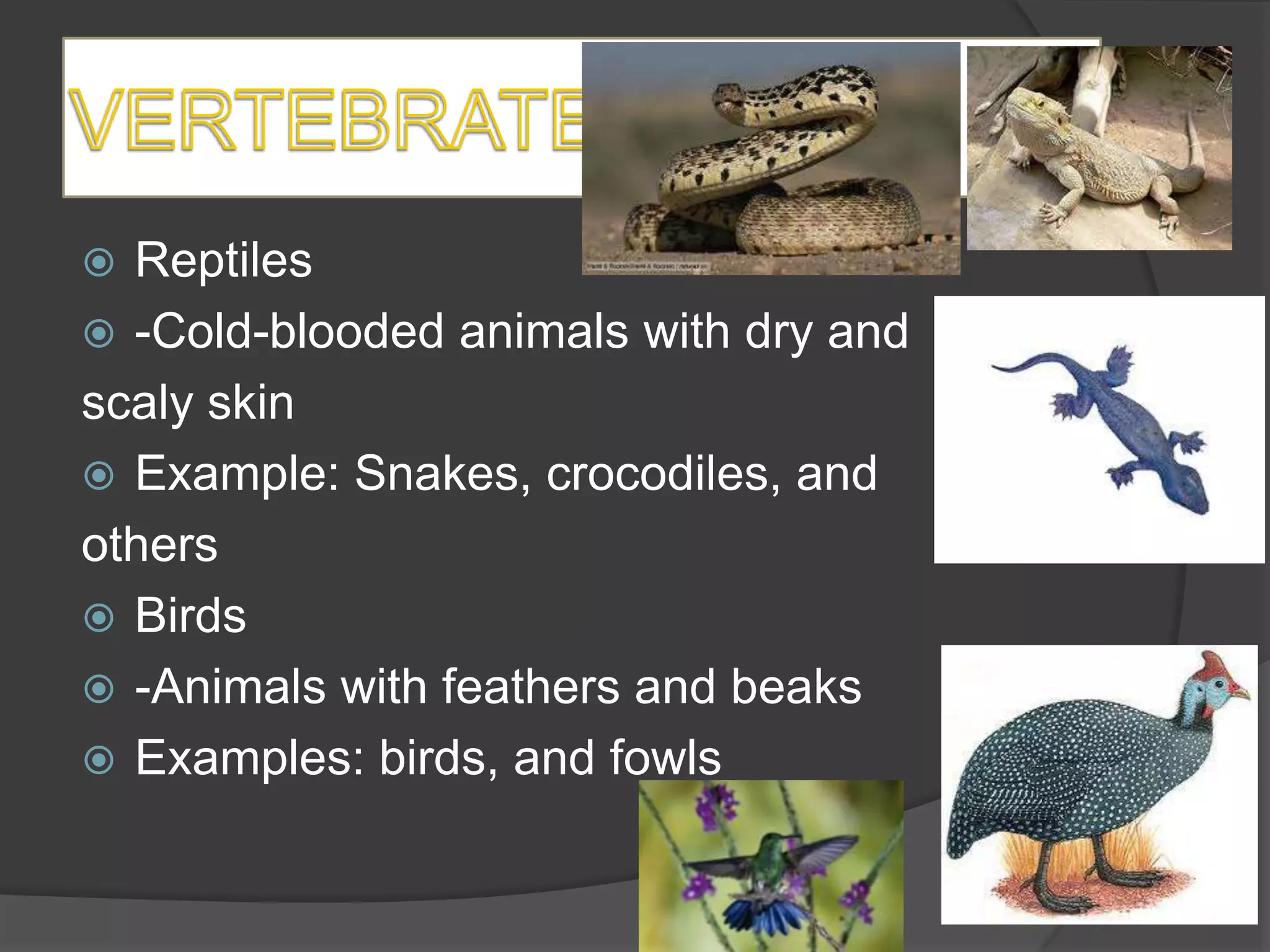
 Reptiles
 -Cold-blooded animals with dry and
scaly skin
 Example: Snakes, crocodiles, and
others
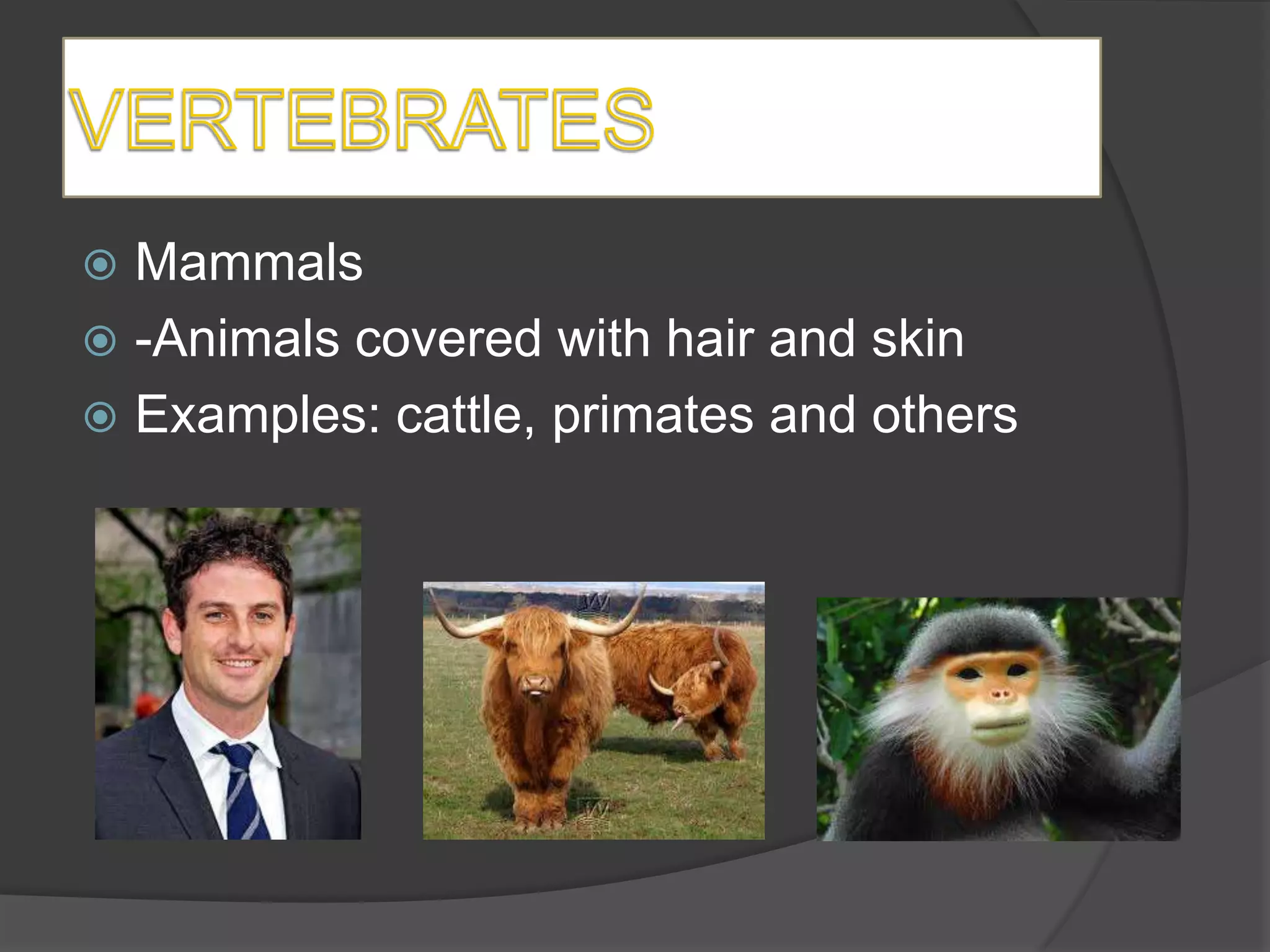
 Birds
 -Animals with feathers and beaks
 Examples: birds, and fowls
 Mammals
 -Animals covered with hair and skin
 Examples: cattle, primates and others
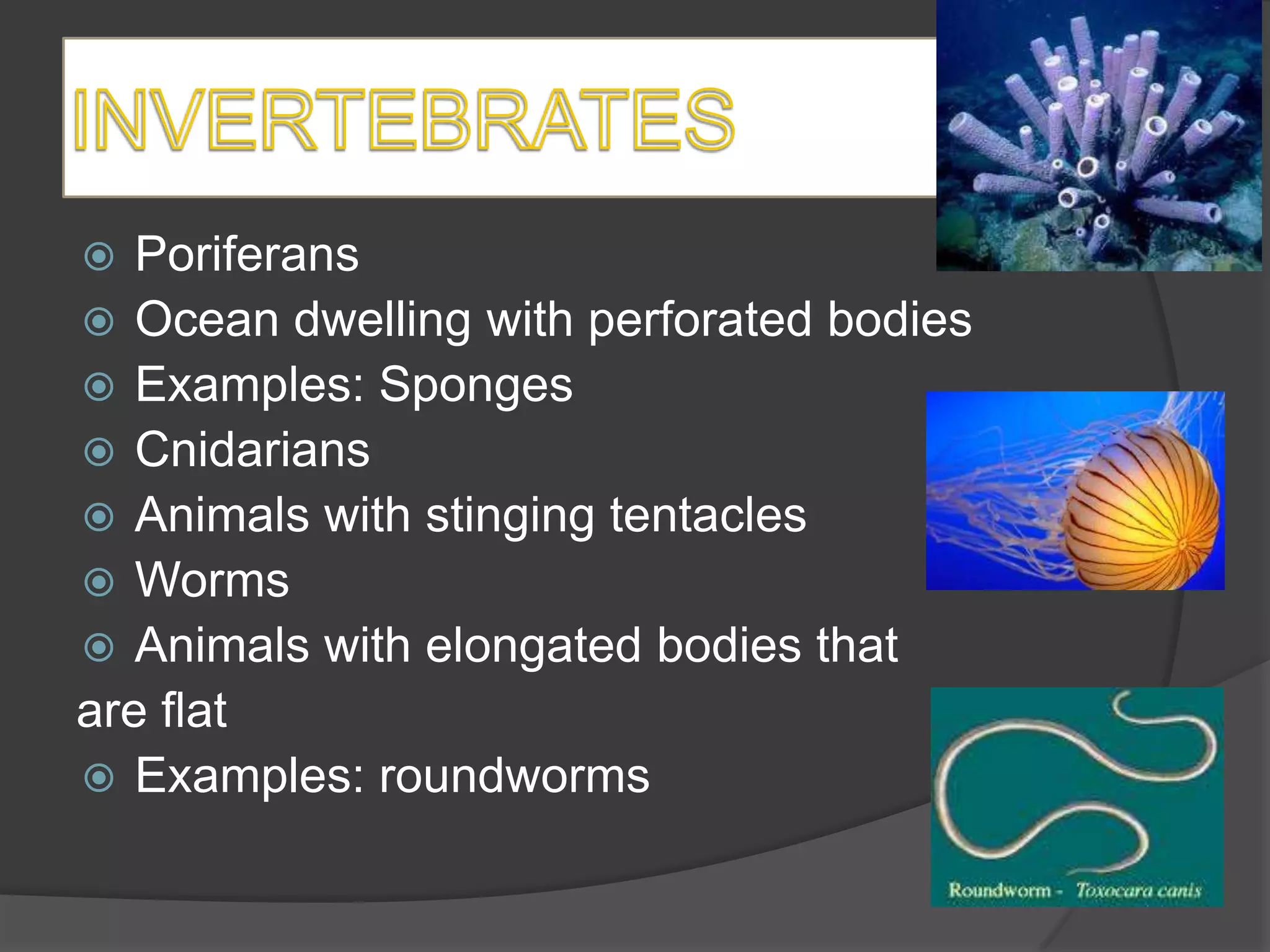
  Poriferans
 Ocean dwelling with perforated bodies
 Examples: Sponges
 Cnidarians
 Animals with stinging tentacles
 Worms
 Animals with elongated bodies that
are flat
 Examples: roundworms
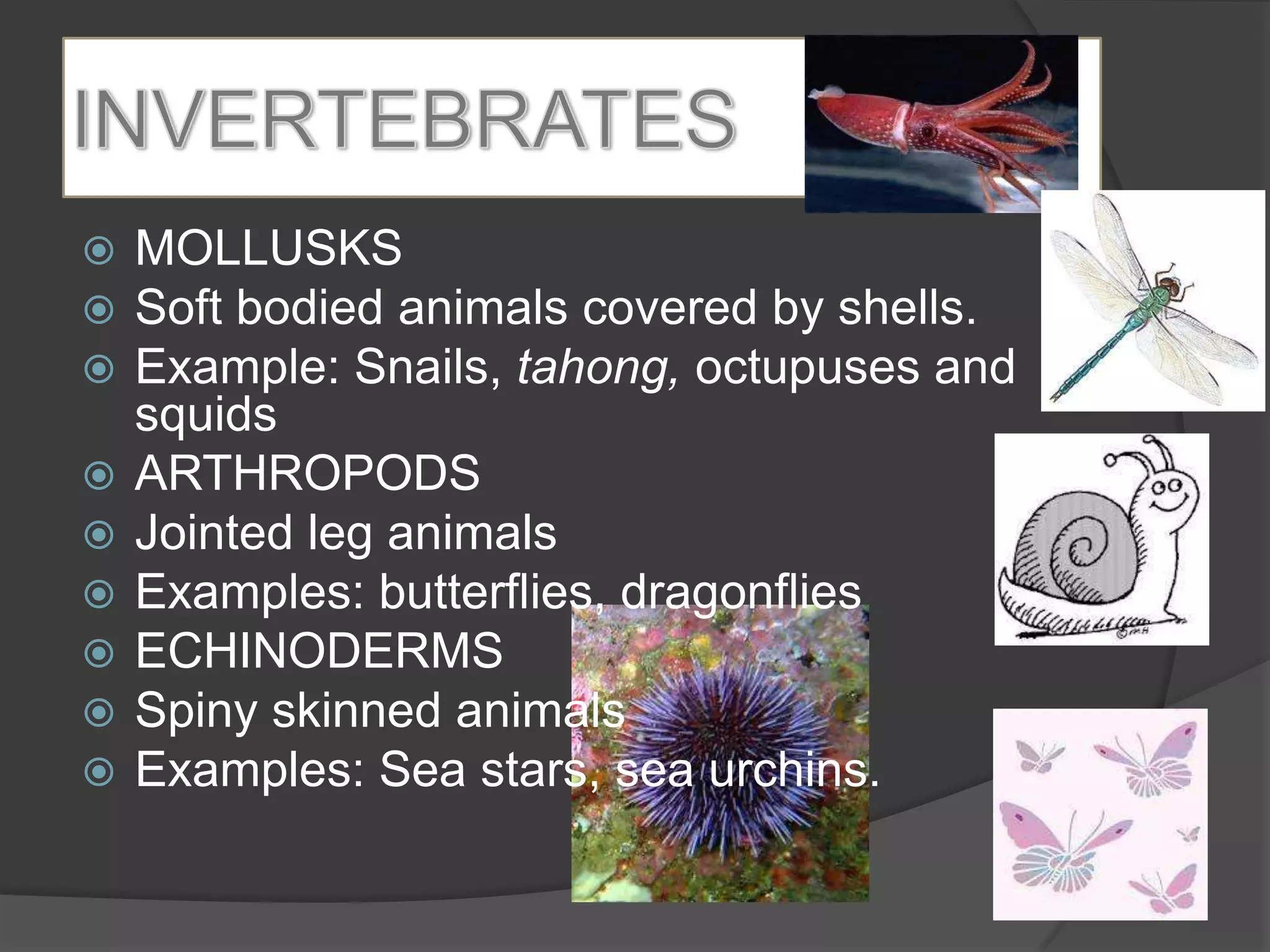
   MOLLUSKS
   Soft bodied animals covered by shells.
   Example: Snails, tahong, octupuses and
    squids
   ARTHROPODS
   Jointed leg animals
   Examples: butterflies, dragonflies
   ECHINODERMS
   Spiny skinned animals
   Examples: Sea stars, sea urchins.
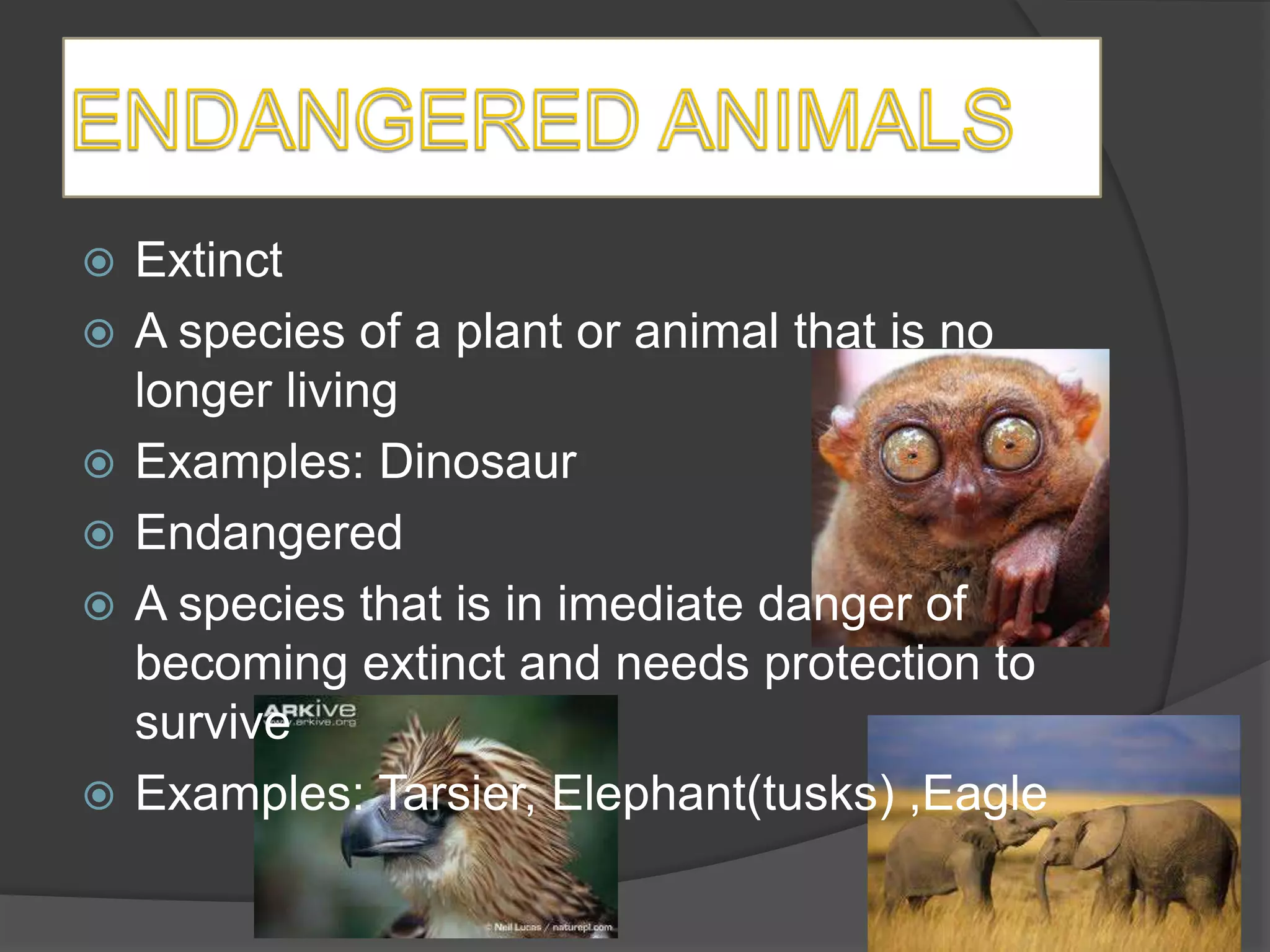
   Extinct
   A species of a plant or animal that is no
    longer living
   Examples: Dinosaur
   Endangered
   A species that is in imediate danger of
    becoming extinct and needs protection to
    survive
   Examples: Tarsier, Elephant(tusks) ,Eagle
   Threatened
   A species is like to become endangered if it is
    not protected

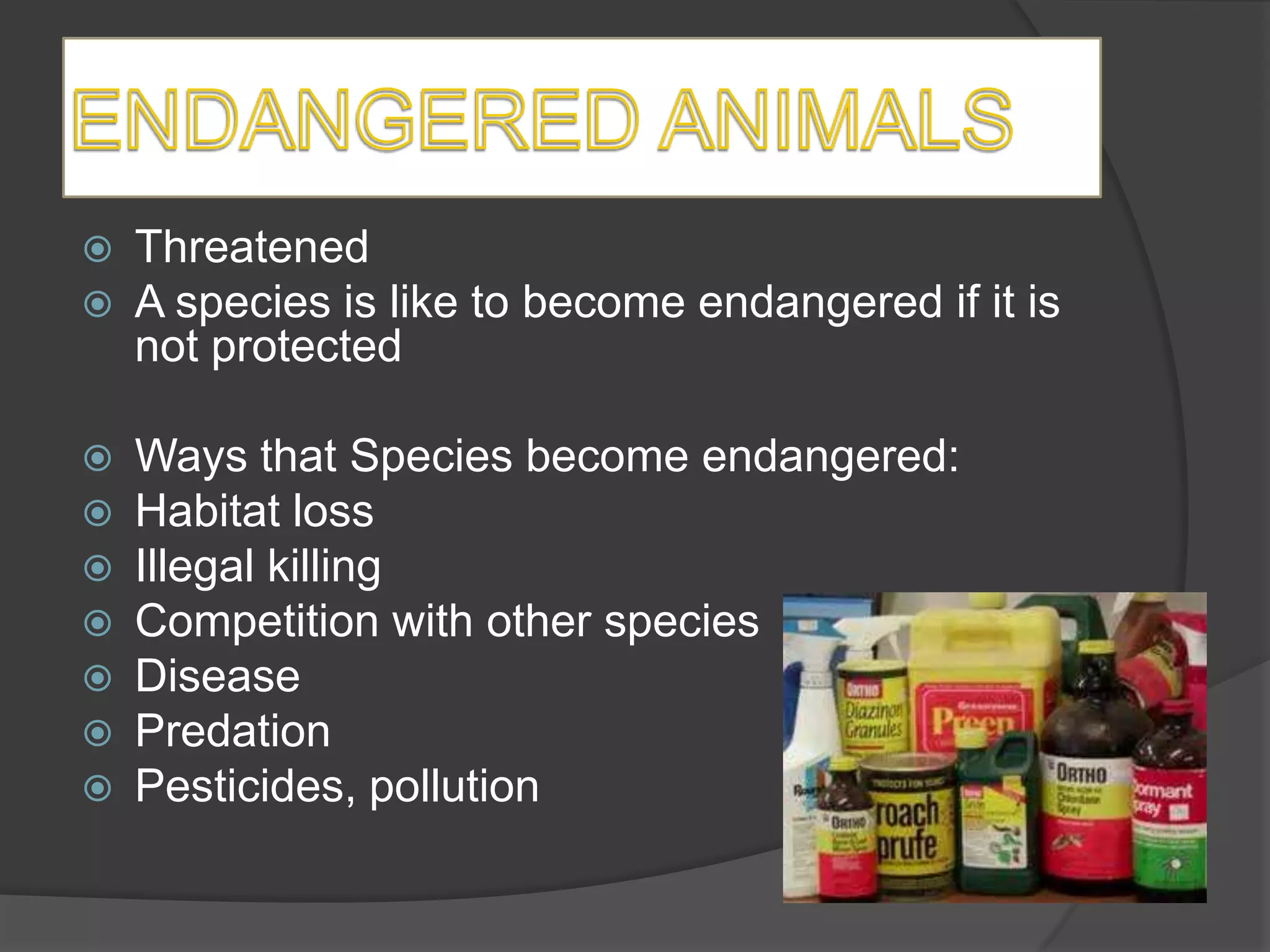
   Ways that Species become endangered:
   Habitat loss
   Illegal killing
   Competition with other species
   Disease
   Predation
   Pesticides, pollution
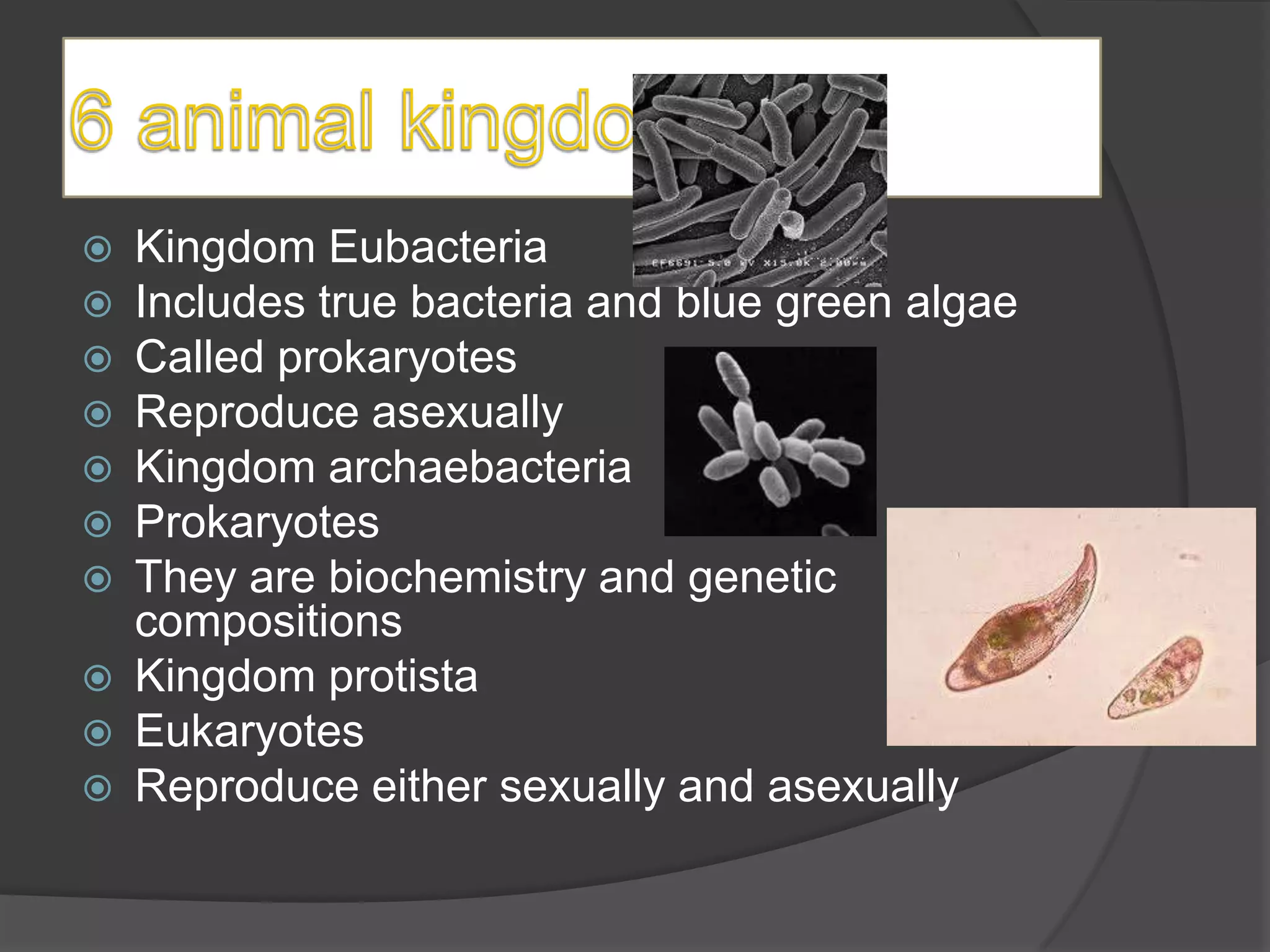
   Kingdom Eubacteria
   Includes true bacteria and blue green algae
   Called prokaryotes
   Reproduce asexually
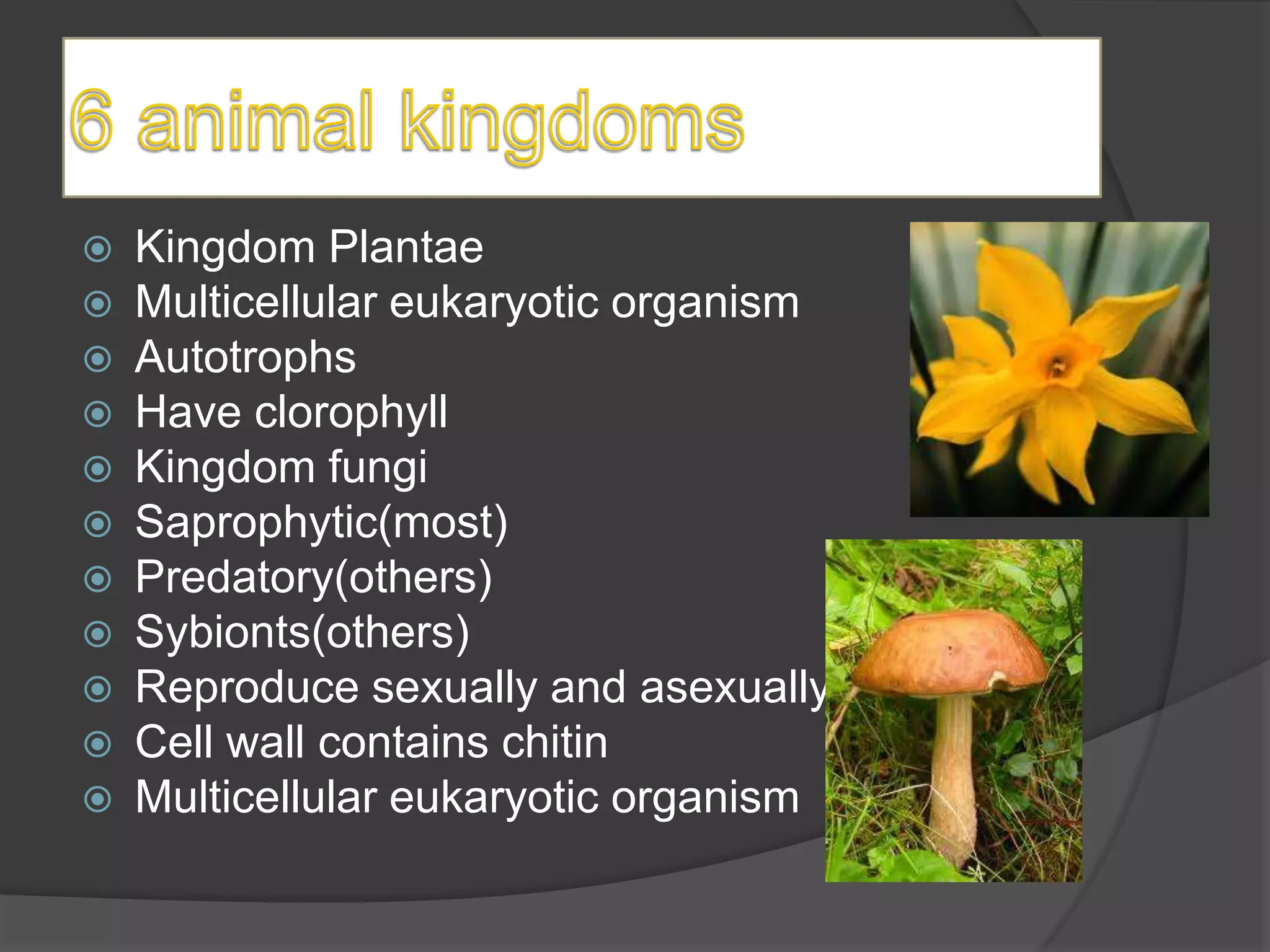
   Kingdom archaebacteria
   Prokaryotes
   They are biochemistry and genetic
    compositions
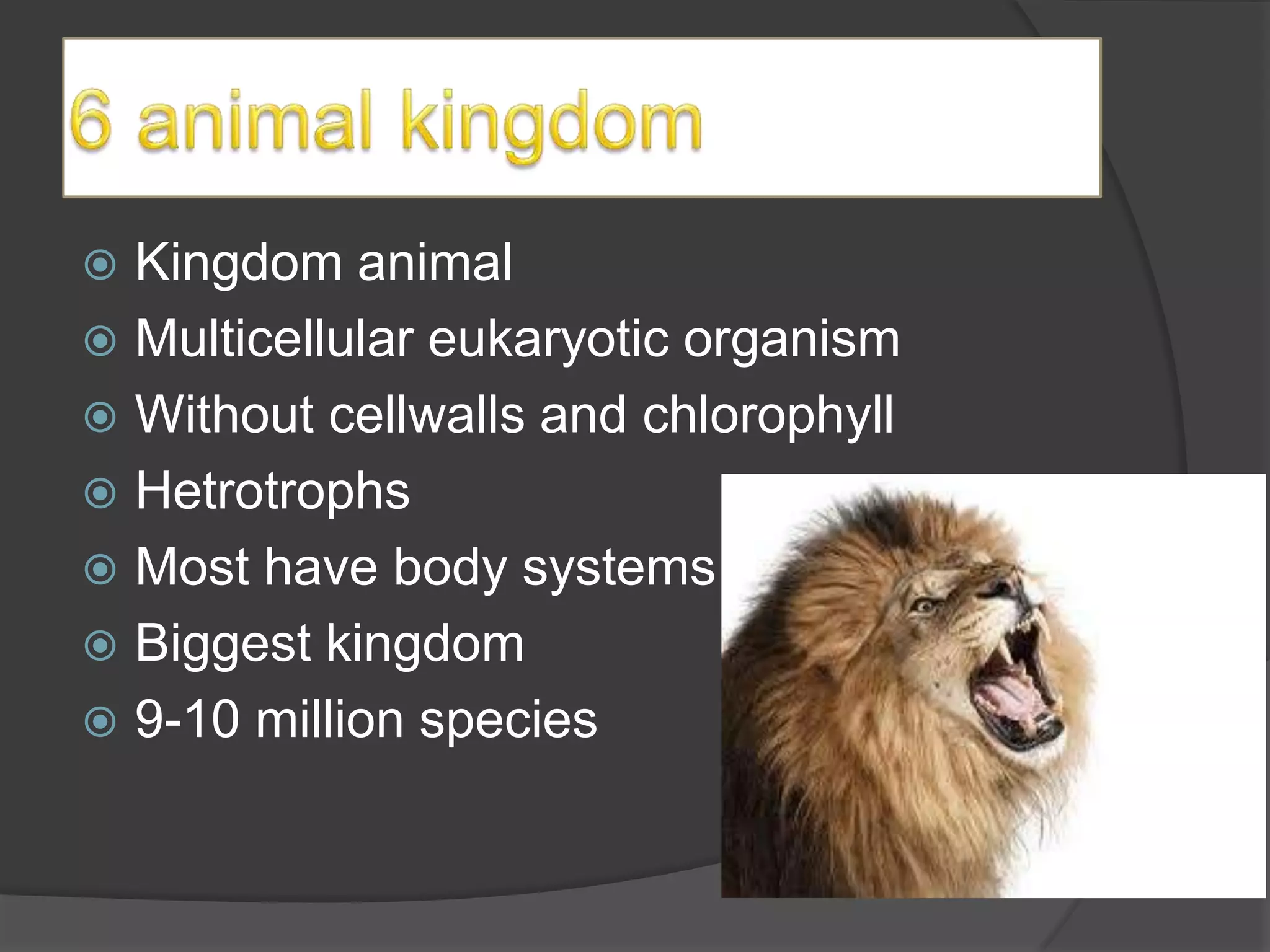
   Kingdom protista
   Eukaryotes
   Reproduce either sexually and asexually
   Kingdom Plantae
   Multicellular eukaryotic organism
   Autotrophs
   Have clorophyll
   Kingdom fungi
   Saprophytic(most)
   Predatory(others)
   Sybionts(others)
   Reproduce sexually and asexually
   Cell wall contains chitin
   Multicellular eukaryotic organism
 Kingdom animal
 Multicellular eukaryotic organism
 Without cellwalls and chlorophyll
 Hetrotrophs
 Most have body systems
 Biggest kingdom
 9-10 million species
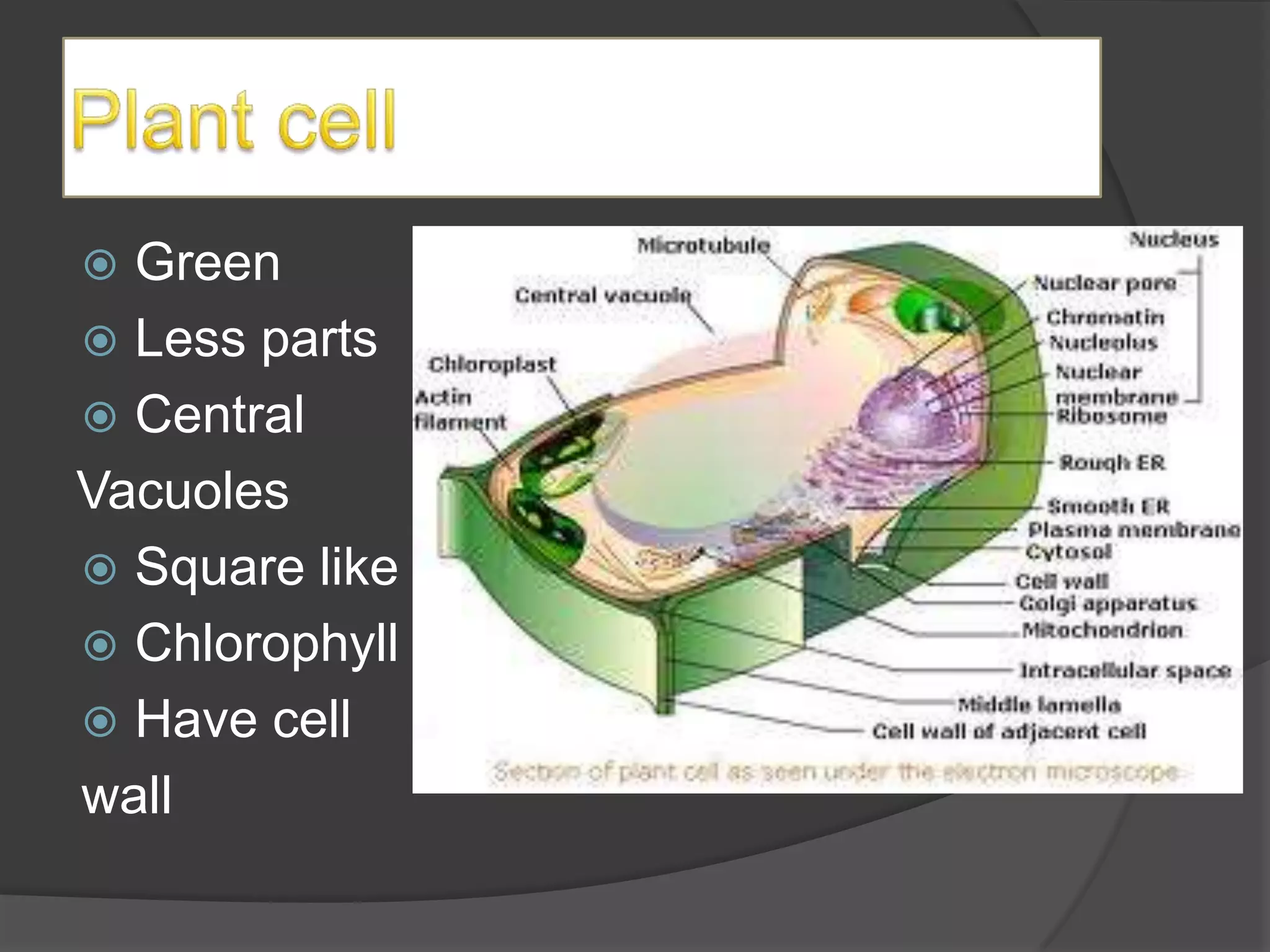
 Green
 Less parts
 Central
Vacuoles
 Square like
 Chlorophyll
 Have cell
wall
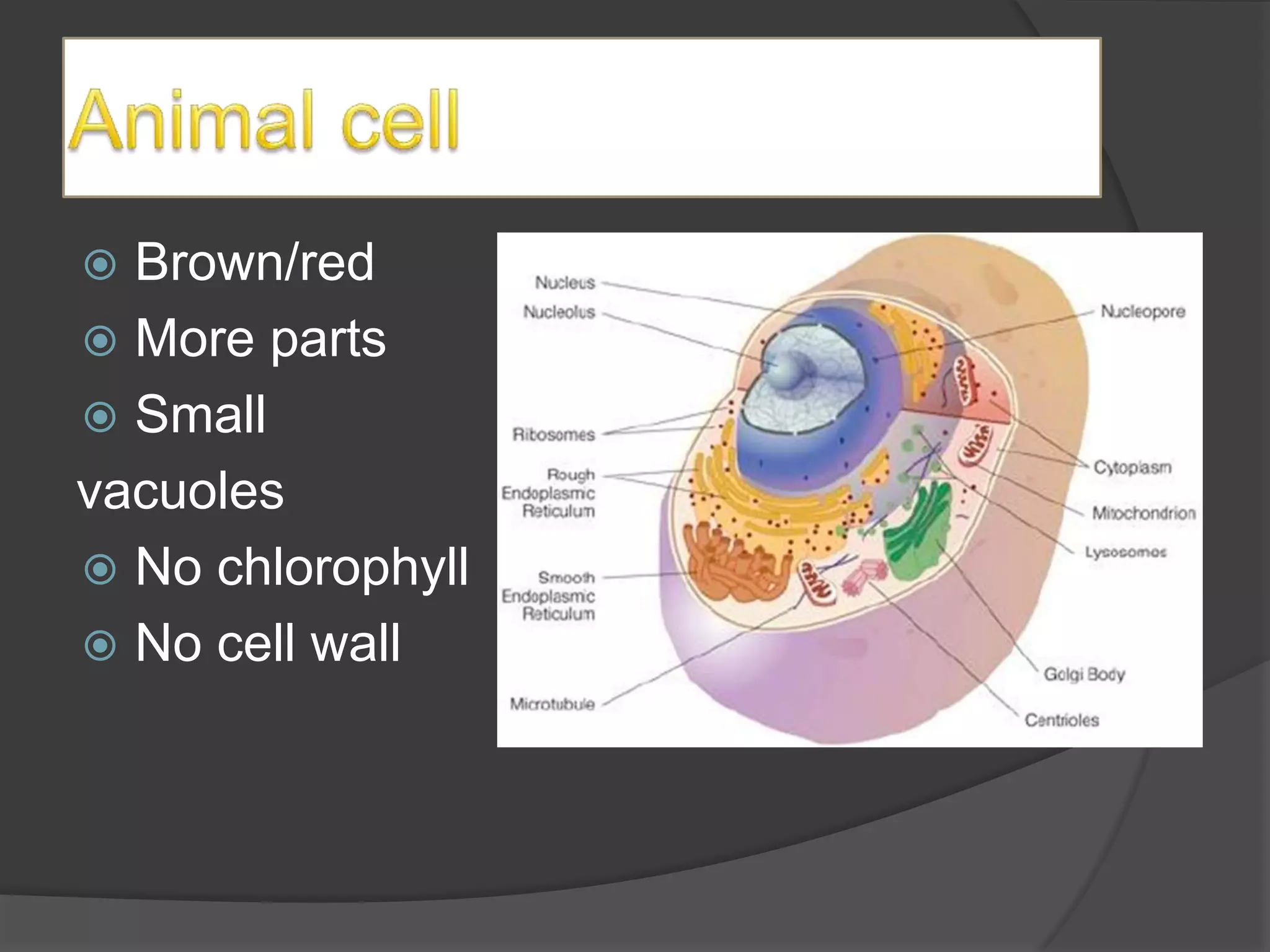
 Brown/red
 More parts
 Small
vacuoles
 No chlorophyll
 No cell wall
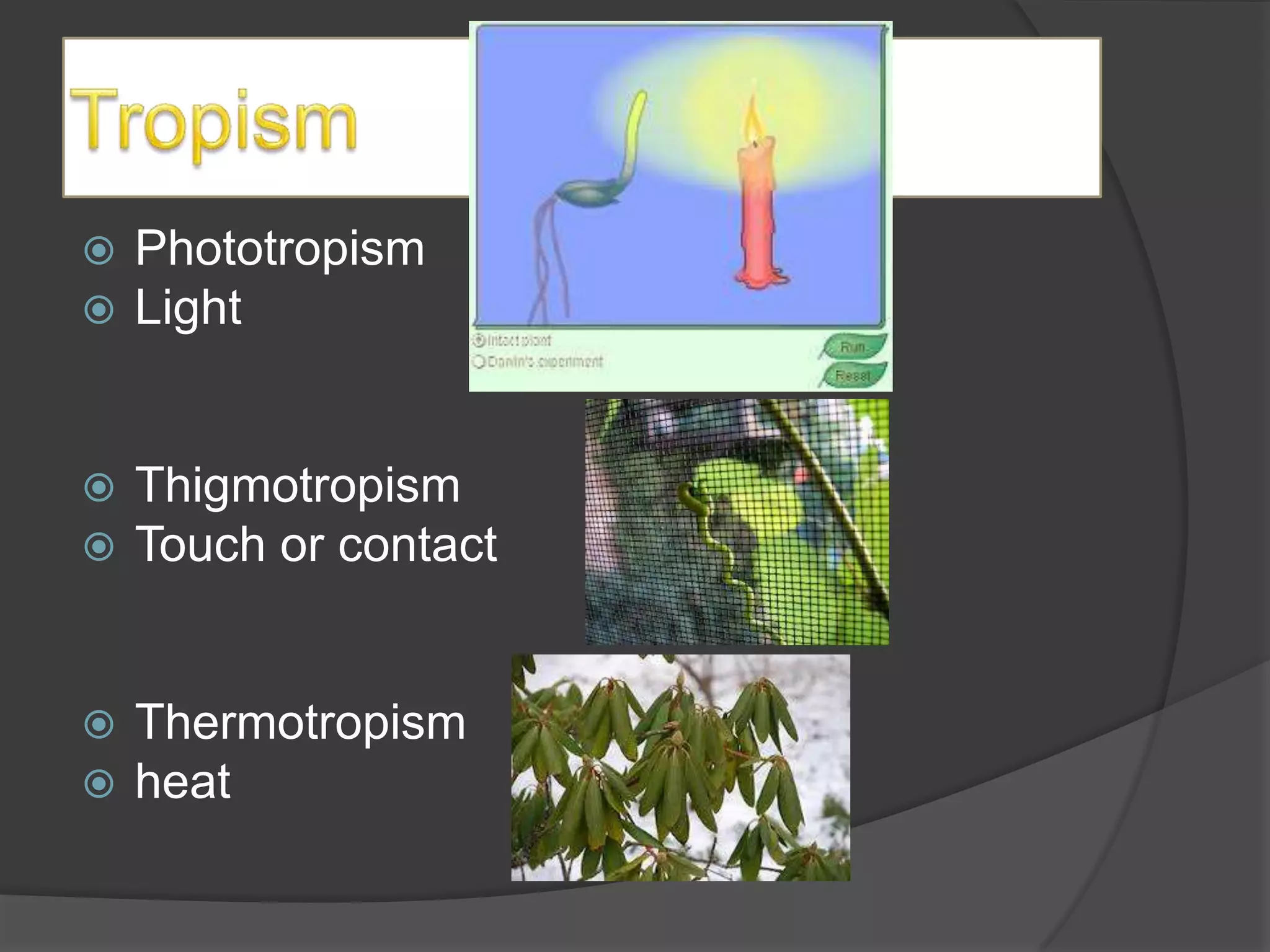
   Phototropism
   Light


   Thigmotropism
   Touch or contact


   Thermotropism
   heat
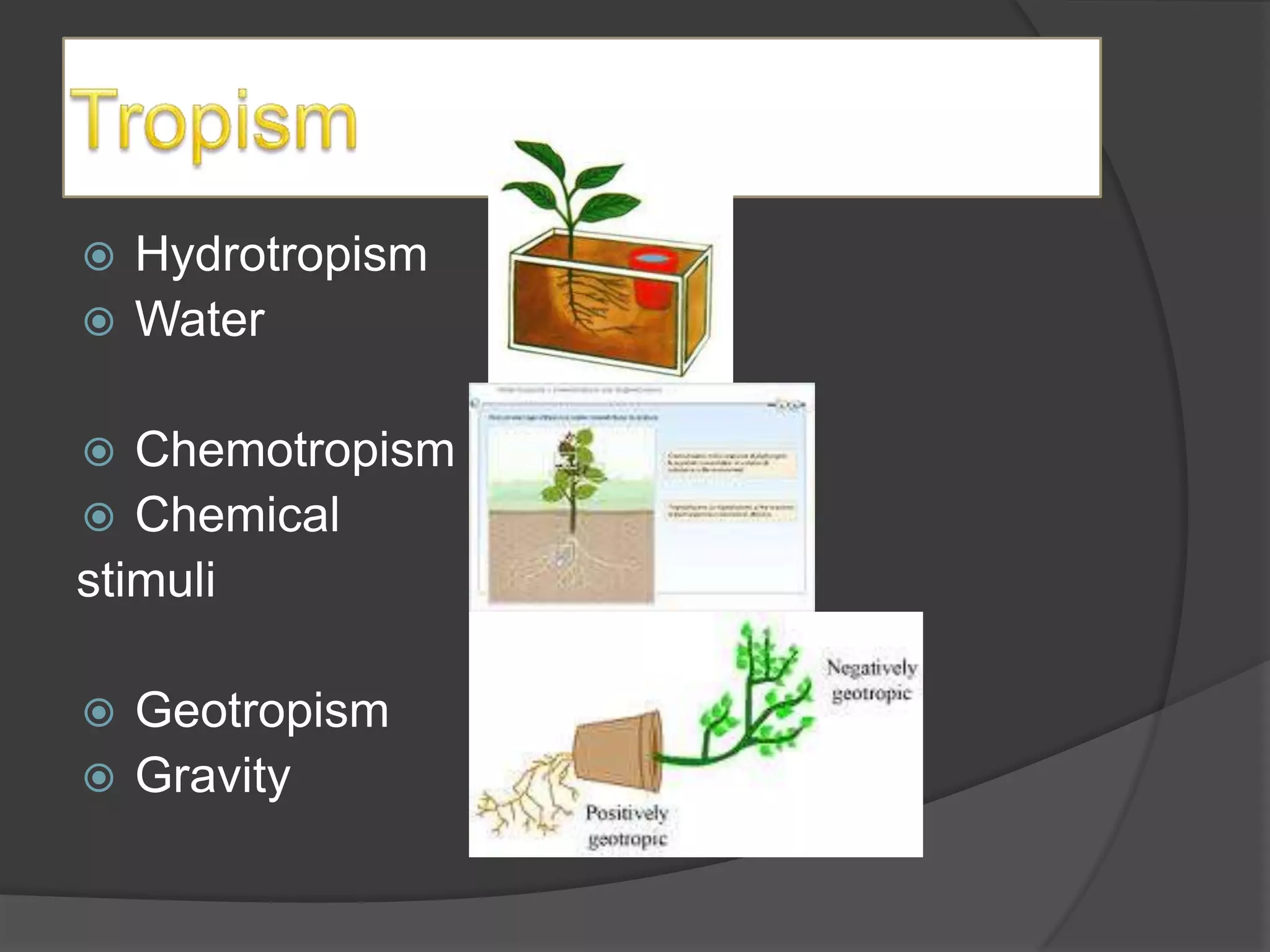
 Hydrotropism
 Water


  Chemotropism
 Chemical
stimuli

 Geotropism
 Gravity
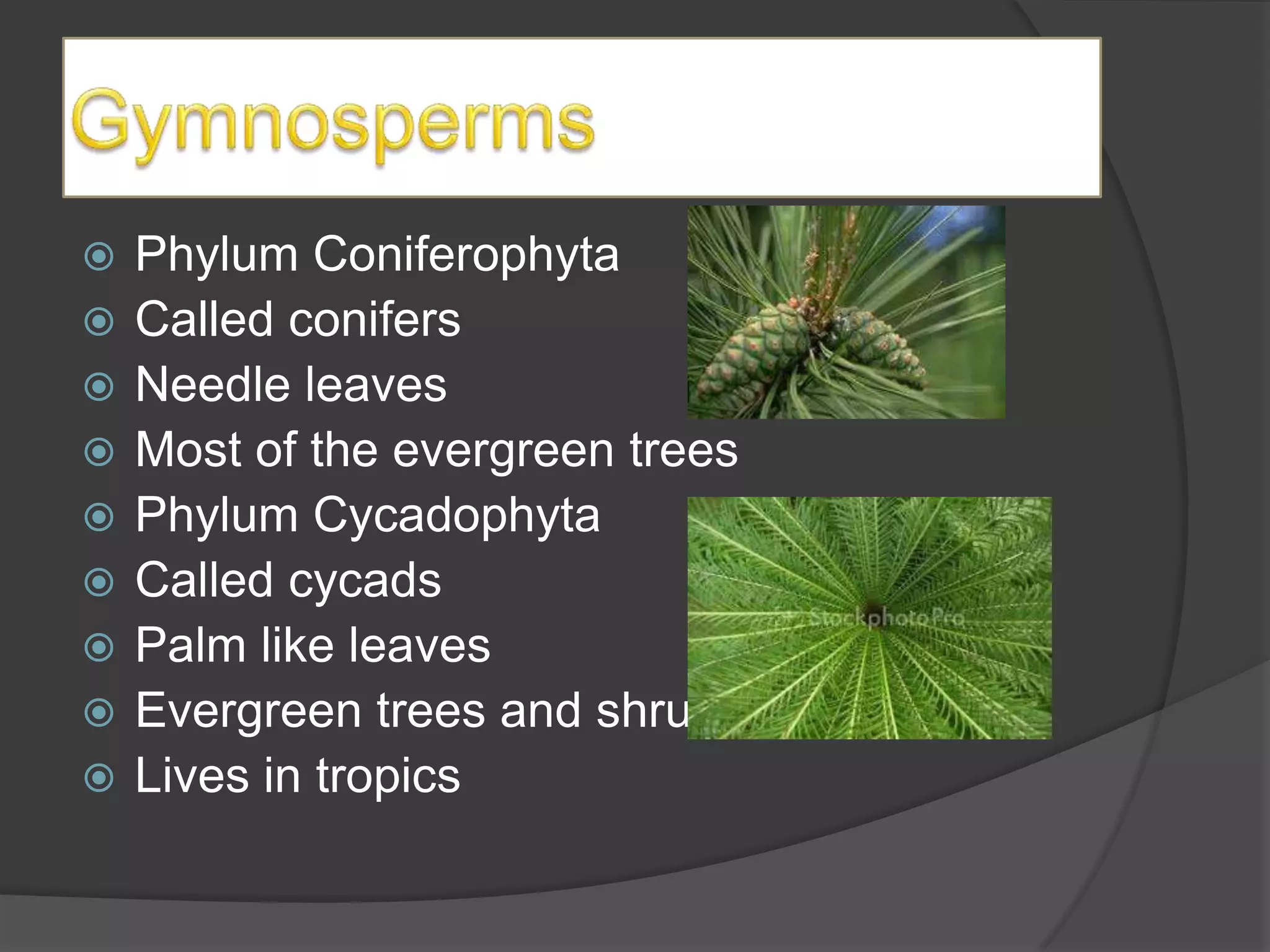
   Phylum Coniferophyta
   Called conifers
   Needle leaves
   Most of the evergreen trees
   Phylum Cycadophyta
   Called cycads
   Palm like leaves
   Evergreen trees and shrubs
   Lives in tropics
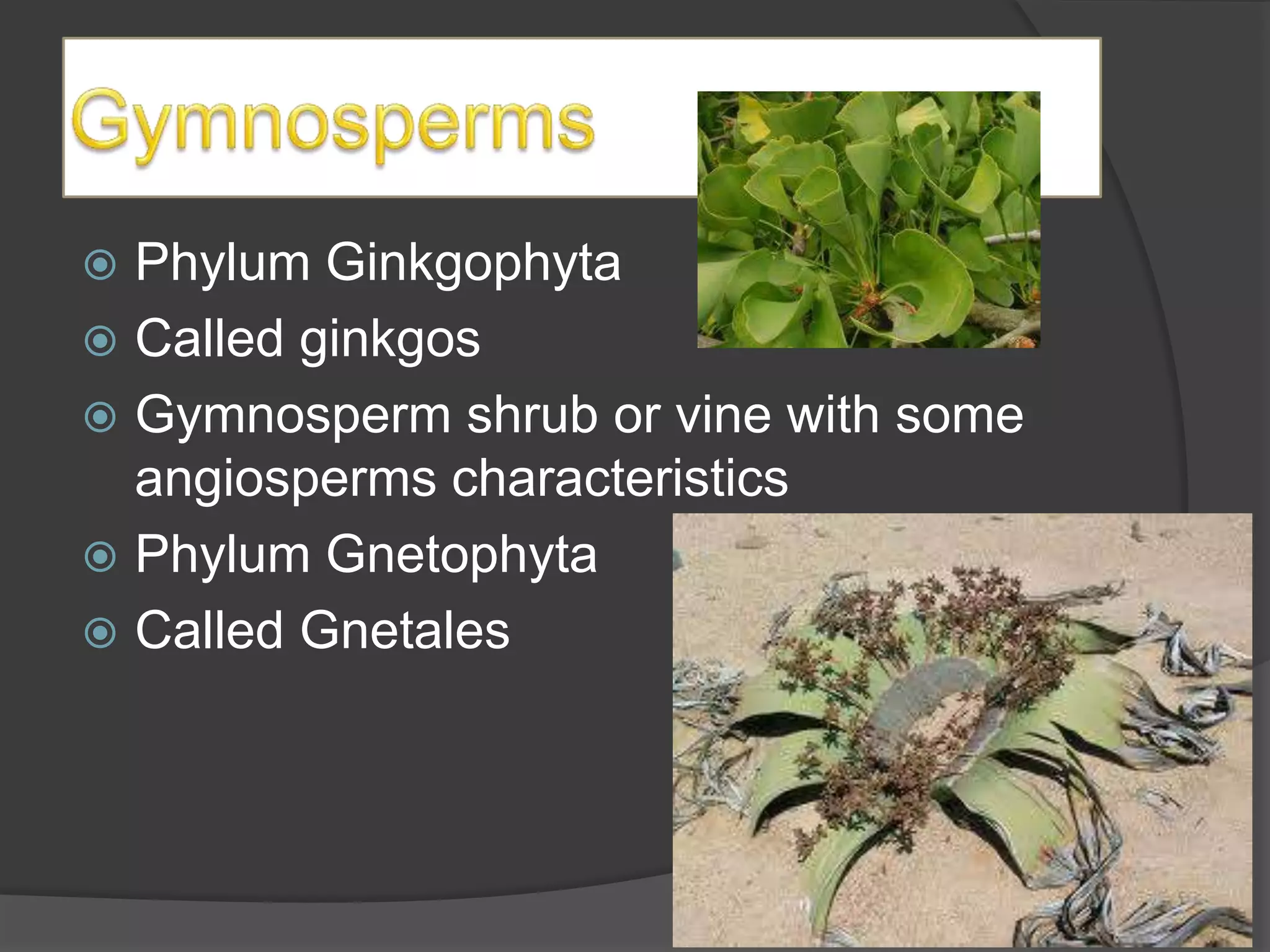
 Phylum Ginkgophyta
 Called ginkgos
 Gymnosperm shrub or vine with some
  angiosperms characteristics
 Phylum Gnetophyta
 Called Gnetales
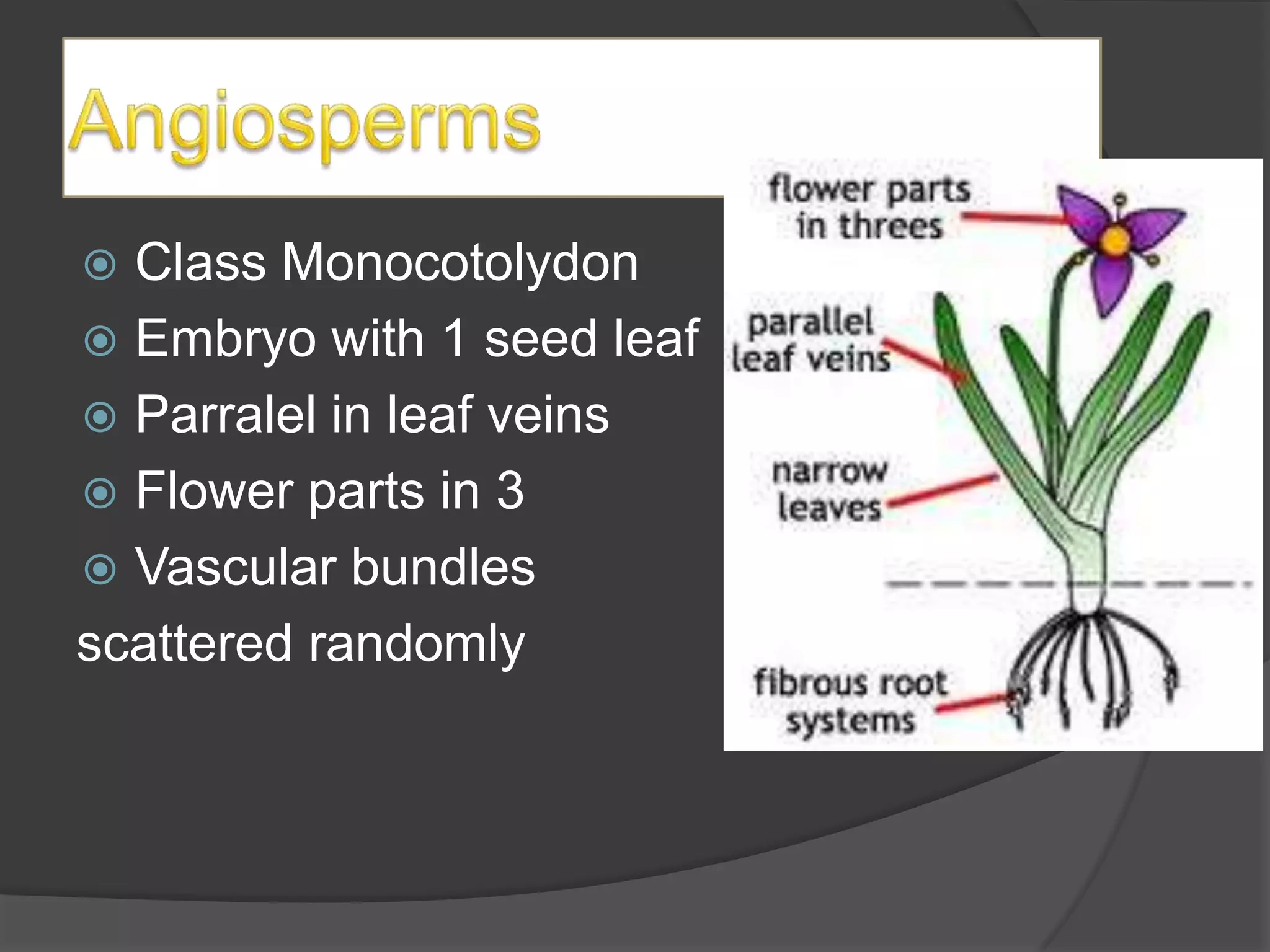
 Class Monocotolydon
 Embryo with 1 seed leaf
 Parralel in leaf veins
 Flower parts in 3
 Vascular bundles
scattered randomly
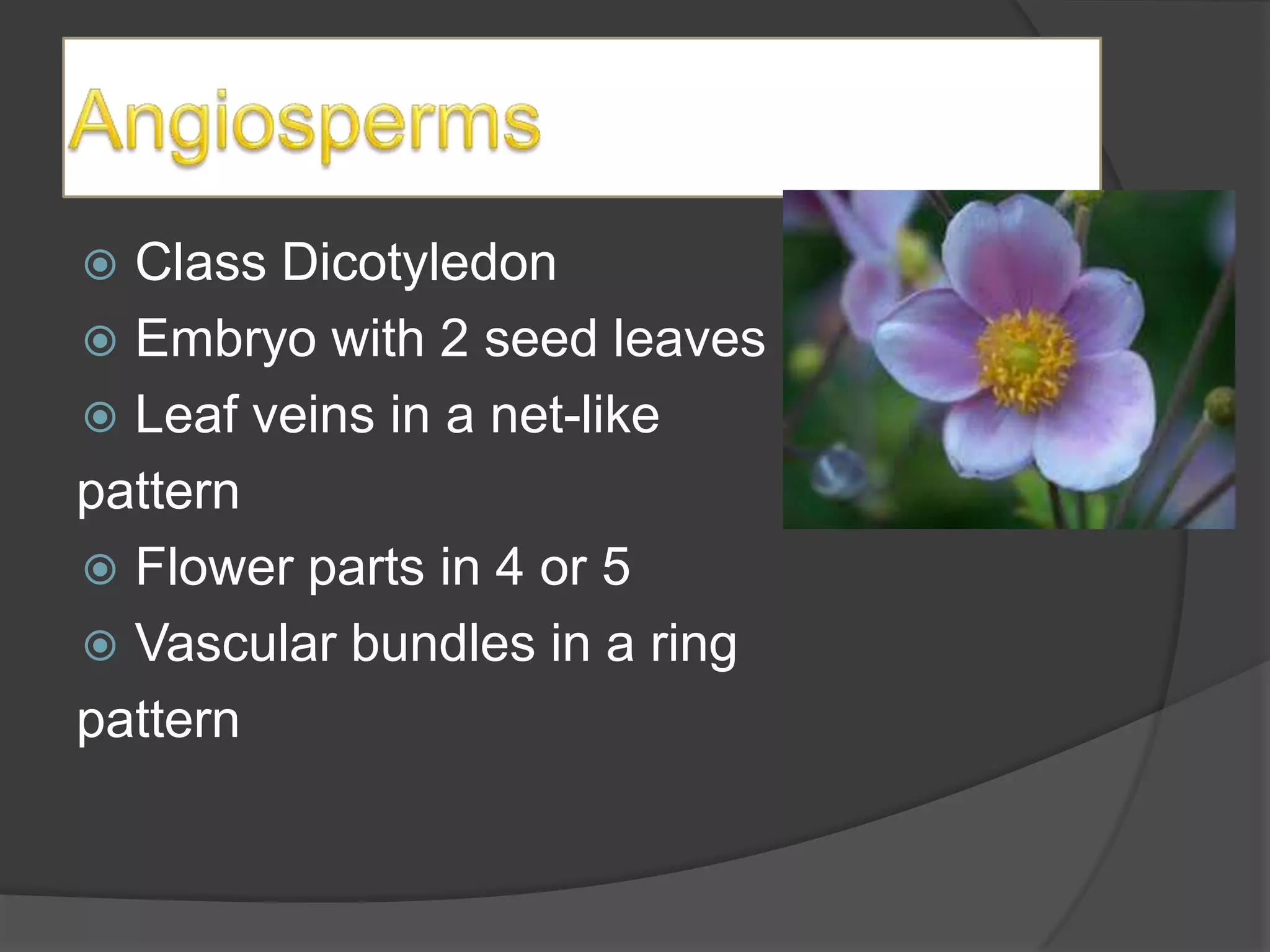
 Class Dicotyledon
 Embryo with 2 seed leaves
 Leaf veins in a net-like
pattern
 Flower parts in 4 or 5
 Vascular bundles in a ring
pattern
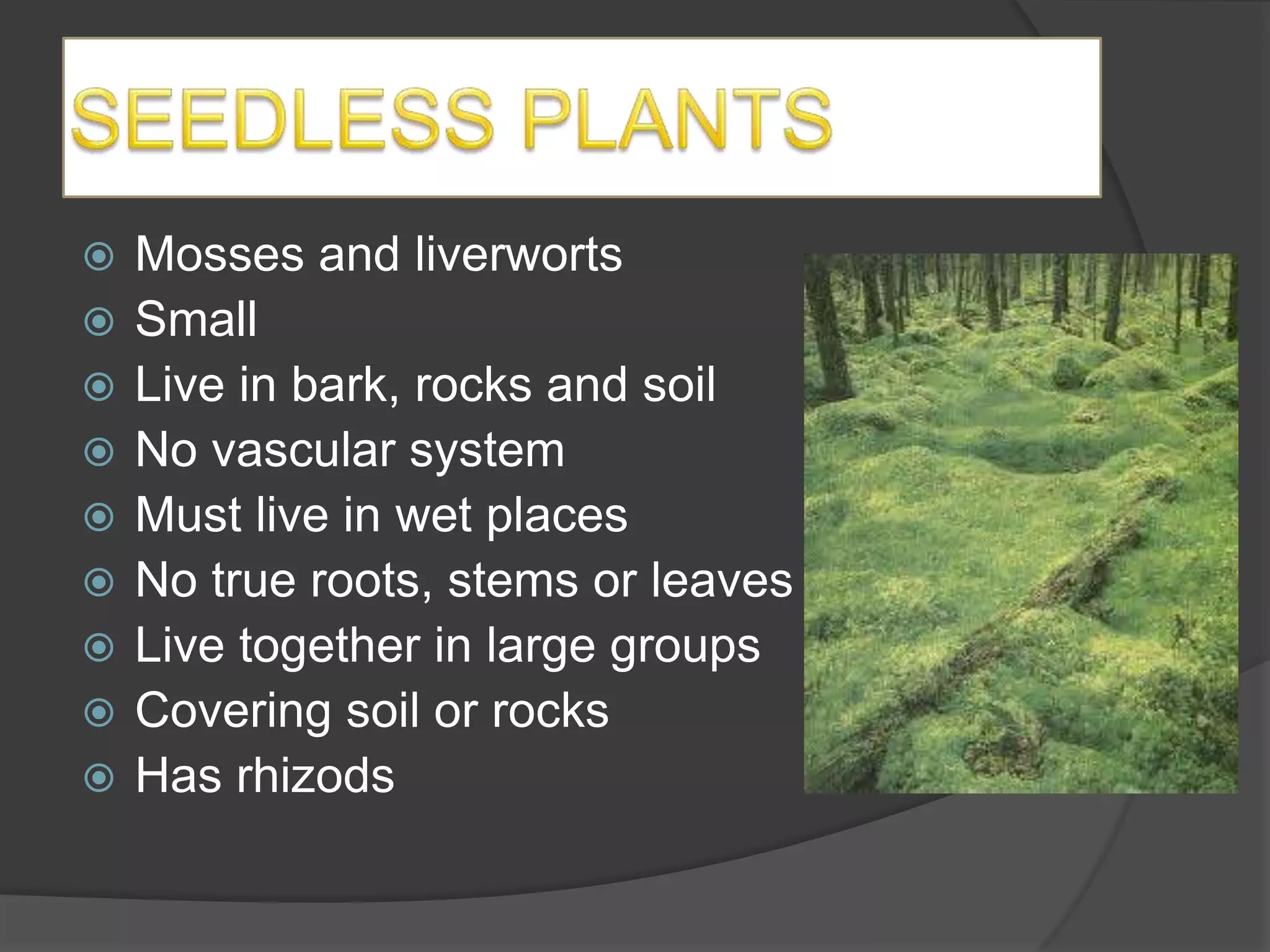
   Mosses and liverworts
   Small
   Live in bark, rocks and soil
   No vascular system
   Must live in wet places
   No true roots, stems or leaves
   Live together in large groups
   Covering soil or rocks
   Has rhizods
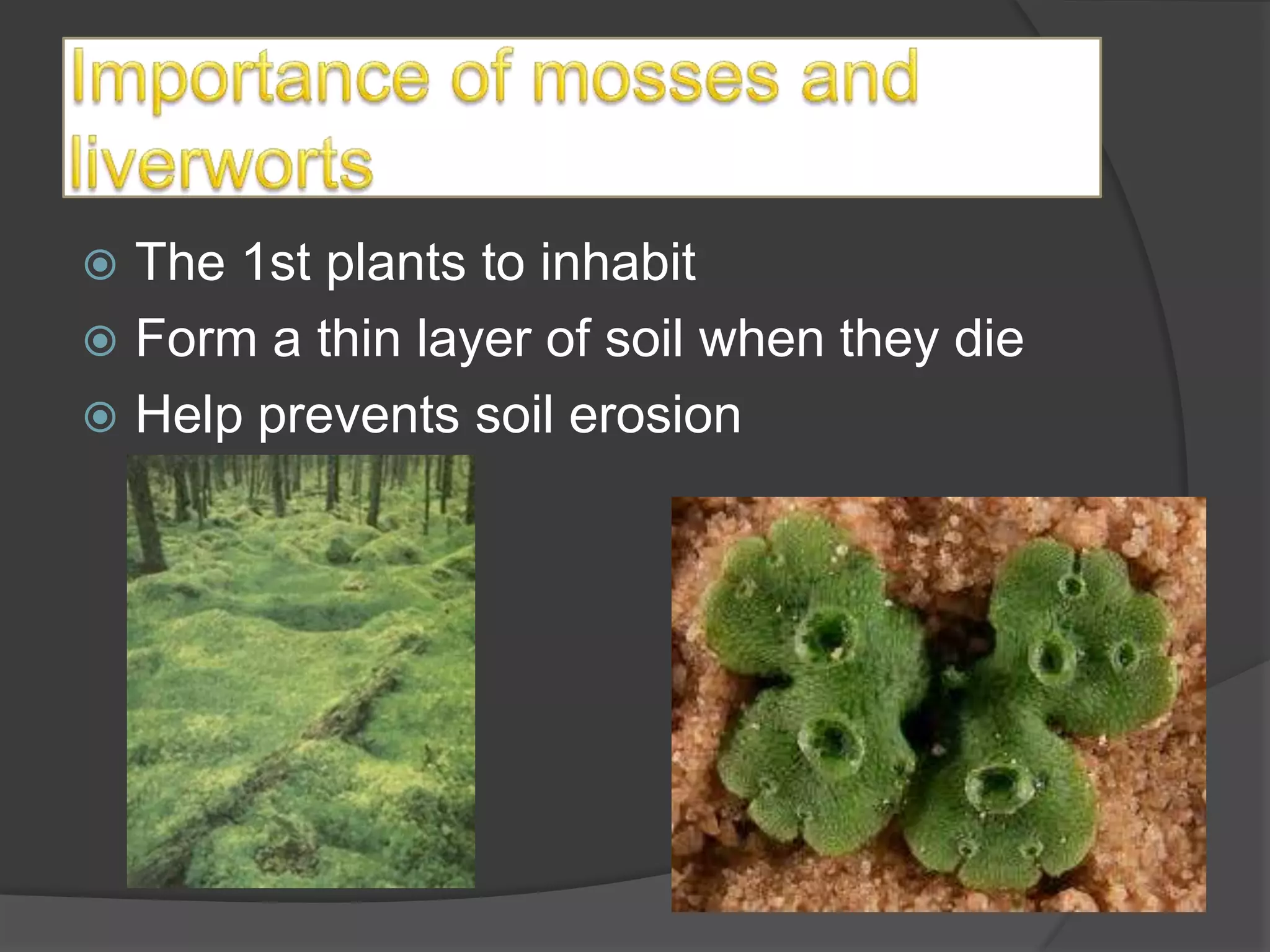
 The 1st plants to inhabit
 Form a thin layer of soil when they die
 Help prevents soil erosion
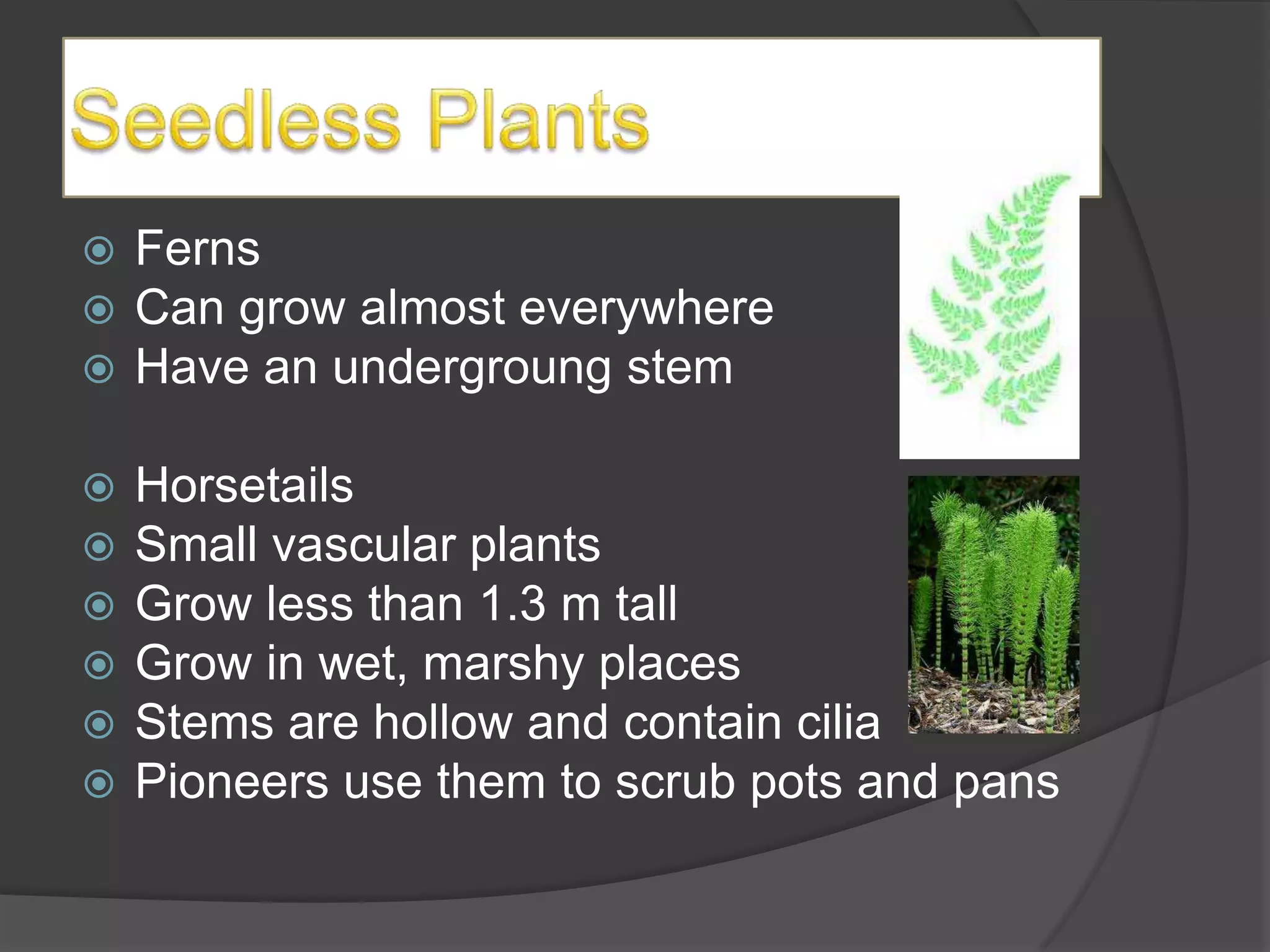
   Ferns
   Can grow almost everywhere
   Have an undergroung stem

   Horsetails
   Small vascular plants
   Grow less than 1.3 m tall
   Grow in wet, marshy places
   Stems are hollow and contain cilia
   Pioneers use them to scrub pots and pans
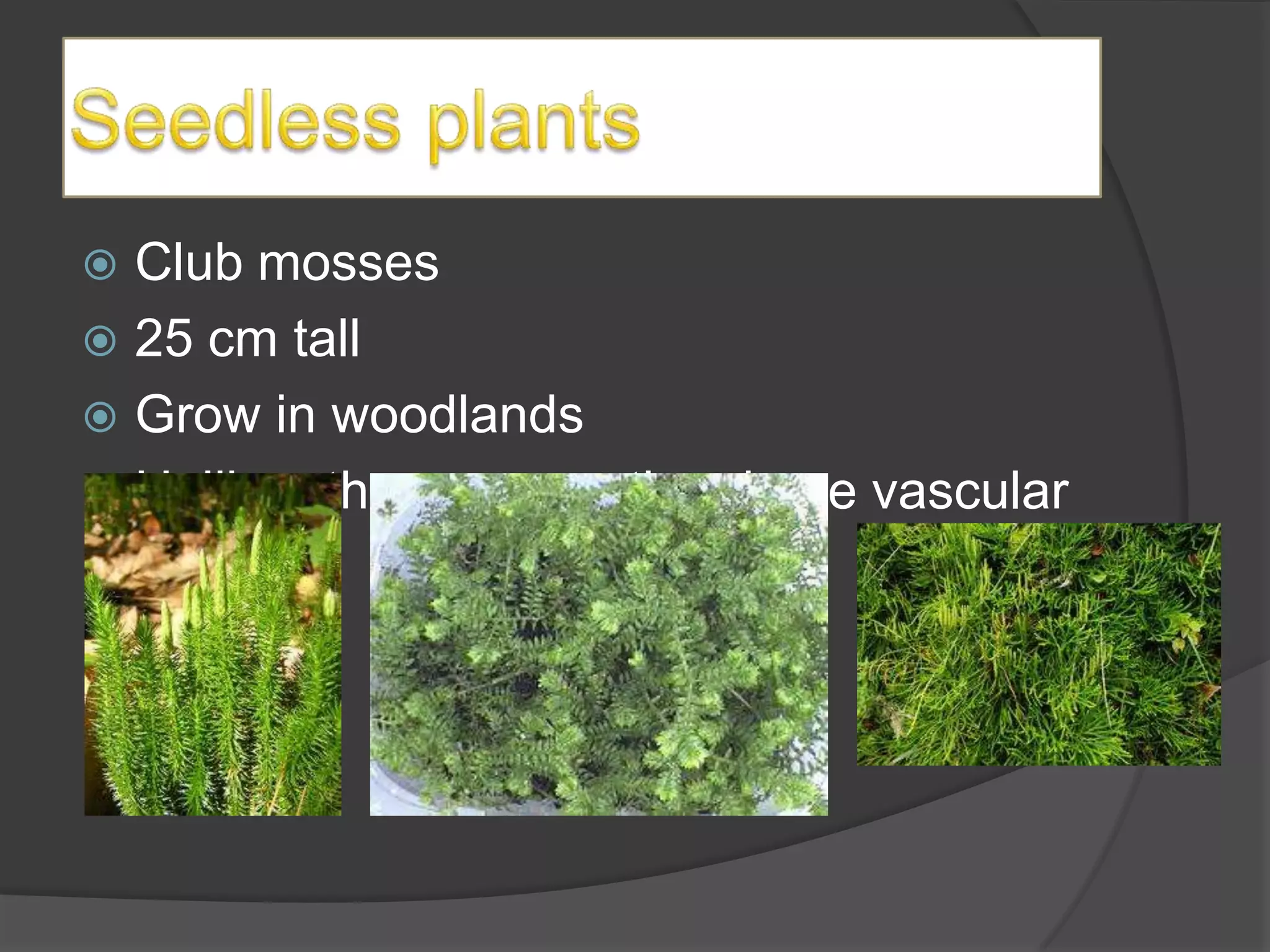
 Club mosses
 25 cm tall
 Grow in woodlands
 Unlike other mosses they have vascular
  tissues
The end 

Grade 5 lessons on science

  • 2.
     Have backbones  FISHES  -Aquatic animals wich move using fins and breath through gills  Examples: Bony and cartilaginous fishes  Amphibians  -Animals with well developed lungs that can live both land and in water  Examples: frogs,toads, and others
  • 3.
     Reptiles  -Cold-bloodedanimals with dry and scaly skin  Example: Snakes, crocodiles, and others  Birds  -Animals with feathers and beaks  Examples: birds, and fowls
  • 4.
     Mammals  -Animalscovered with hair and skin  Examples: cattle, primates and others
  • 5.
     Poriferans Ocean dwelling with perforated bodies  Examples: Sponges  Cnidarians  Animals with stinging tentacles  Worms  Animals with elongated bodies that are flat  Examples: roundworms
  • 6.
    MOLLUSKS  Soft bodied animals covered by shells.  Example: Snails, tahong, octupuses and squids  ARTHROPODS  Jointed leg animals  Examples: butterflies, dragonflies  ECHINODERMS  Spiny skinned animals  Examples: Sea stars, sea urchins.
  • 7.
    Extinct  A species of a plant or animal that is no longer living  Examples: Dinosaur  Endangered  A species that is in imediate danger of becoming extinct and needs protection to survive  Examples: Tarsier, Elephant(tusks) ,Eagle
  • 8.
    Threatened  A species is like to become endangered if it is not protected  Ways that Species become endangered:  Habitat loss  Illegal killing  Competition with other species  Disease  Predation  Pesticides, pollution
  • 9.
    Kingdom Eubacteria  Includes true bacteria and blue green algae  Called prokaryotes  Reproduce asexually  Kingdom archaebacteria  Prokaryotes  They are biochemistry and genetic compositions  Kingdom protista  Eukaryotes  Reproduce either sexually and asexually
  • 10.
    Kingdom Plantae  Multicellular eukaryotic organism  Autotrophs  Have clorophyll  Kingdom fungi  Saprophytic(most)  Predatory(others)  Sybionts(others)  Reproduce sexually and asexually  Cell wall contains chitin  Multicellular eukaryotic organism
  • 11.
     Kingdom animal Multicellular eukaryotic organism  Without cellwalls and chlorophyll  Hetrotrophs  Most have body systems  Biggest kingdom  9-10 million species
  • 12.
     Green  Lessparts  Central Vacuoles  Square like  Chlorophyll  Have cell wall
  • 13.
     Brown/red  Moreparts  Small vacuoles  No chlorophyll  No cell wall
  • 14.
    Phototropism  Light  Thigmotropism  Touch or contact  Thermotropism  heat
  • 15.
     Hydrotropism  Water  Chemotropism  Chemical stimuli  Geotropism  Gravity
  • 16.
    Phylum Coniferophyta  Called conifers  Needle leaves  Most of the evergreen trees  Phylum Cycadophyta  Called cycads  Palm like leaves  Evergreen trees and shrubs  Lives in tropics
  • 17.
     Phylum Ginkgophyta Called ginkgos  Gymnosperm shrub or vine with some angiosperms characteristics  Phylum Gnetophyta  Called Gnetales
  • 18.
     Class Monocotolydon Embryo with 1 seed leaf  Parralel in leaf veins  Flower parts in 3  Vascular bundles scattered randomly
  • 19.
     Class Dicotyledon Embryo with 2 seed leaves  Leaf veins in a net-like pattern  Flower parts in 4 or 5  Vascular bundles in a ring pattern
  • 20.
    Mosses and liverworts  Small  Live in bark, rocks and soil  No vascular system  Must live in wet places  No true roots, stems or leaves  Live together in large groups  Covering soil or rocks  Has rhizods
  • 21.
     The 1stplants to inhabit  Form a thin layer of soil when they die  Help prevents soil erosion
  • 22.
    Ferns  Can grow almost everywhere  Have an undergroung stem  Horsetails  Small vascular plants  Grow less than 1.3 m tall  Grow in wet, marshy places  Stems are hollow and contain cilia  Pioneers use them to scrub pots and pans
  • 23.
     Club mosses 25 cm tall  Grow in woodlands  Unlike other mosses they have vascular tissues
  • 24.