Indian Wear
Project
Priyanshi Arora
Gota Patti
The royalty of Rajasthan
This presentation is about the craft
of Rajasthan Gota Patti. This is the
craft I would like to work on for my
Indian Wear project. The craft is
very old and has been going on from
the centuries in Rajasthan.
What ?
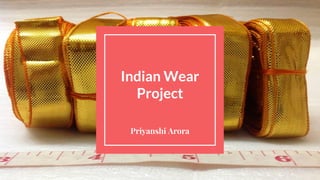
Gota- The ribbon
● A gold and silver lace from lucknow. The metallic
lace or ribbon is generally made up of metal
coated weft yarn, while the warp yarn is made of
fiber like cotton, polyester in ribbon.
● Earlier these metal coated weft were used to be
made of original gold and silver.
● Gota ribbons are available in different colors as
well.
● The ribbons are woven on Satin and Twill weave.
● The Gota available these days is known as “ plastic
Gota”. It is highly durable as is its made of
polyester yarns.
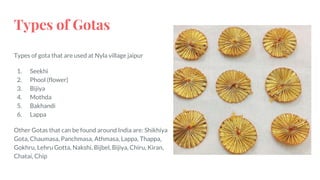
Types of gota that are used at Nyla village jaipur
1. Seekhi
2. Phool (flower)
3. Bijiya
4. Mothda
5. Bakhandi
6. Lappa
Other Gotas that can be found around India are: Shikhiya
Gota, Chaumasa, Panchmasa, Athmasa, Lappa, Thappa,
Gokhru, Lehru Gotta, Nakshi, Bijbel, Bijiya, Chiru, Kiran,
Chatai, Chip
Types of Gotas
Patti- The leaf
Patti is the local name of a leaf. The leafs are
the most important part of motifs which are
used to create a motif and then a pattern. All
the work is done around a leaf.
The gota ribbons are cut into these leaves
and the thread work is done around it.
Royal Embroidery
If we look into the history we will find Gota Patti as
the royal craft of Rajasthan. The embroidery was
done on the garments of kings and Queens.
Although it is still unsure where the craft came from
and how it reached India. Apart from Jaipur, traces
of the work was found cities like Surat and Ajmer.
Royal Garments of Gota Patti can still be found in
the museums of City Palace, Jaipur
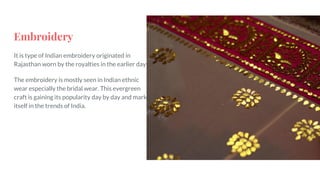
Embroidery
It is type of Indian embroidery originated in
Rajasthan worn by the royalties in the earlier days.
The embroidery is mostly seen in Indian ethnic
wear especially the bridal wear. This evergreen
craft is gaining its popularity day by day and marks
itself in the trends of India.
Applique Work
The applique work is used as a technique of surface
ornamentation of the fabric. Hence the name,
Lappe -Ka_kaam
The Gota ribbons are cut into various shapes and
placed on the fabric and the edges are sewn to fix it
with the zari threads.
The work can be seen mainly on Chiffon, Georgette,
Velvet and Silk fabrics. These days synthetic fabrics
are also used. The common colors include Red,
Orange, Pink, Magenta, Maroon and Yellow.
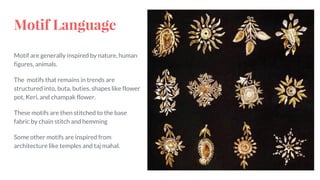
Motif are generally inspired by nature, human
figures, animals.
The motifs that remains in trends are
structured into, buta, buties, shapes like flower
pot, Keri, and champak flower.
These motifs are then stitched to the base
fabric by chain stitch and hemming
Some other motifs are inspired from
architecture like temples and taj mahal.
Motif Language
When?
The Mughal Connection
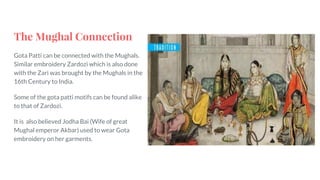
Gota Patti can be connected with the Mughals.
Similar embroidery Zardozi which is also done
with the Zari was brought by the Mughals in the
16th Century to India.
Some of the gota patti motifs can be found alike
to that of Zardozi.
It is also believed Jodha Bai (Wife of great
Mughal emperor Akbar) used to wear Gota
embroidery on her garments.
Where?
India
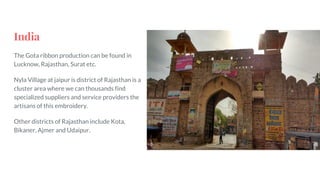
The Gota ribbon production can be found in
Lucknow, Rajasthan, Surat etc.
Nyla Village at jaipur is district of Rajasthan is a
cluster area where we can thousands find
specialized suppliers and service providers the
artisans of this embroidery.
Other districts of Rajasthan include Kota,
Bikaner, Ajmer and Udaipur.
How?
Materials Required
Wooden frame: The Gota Patti work is done on
Wooden or metallic Frame also known as adda
over which base fabric is drag tightly to provide
uniform tension and that prevents pattern
distortion. Needle: Awe or ari needle used for the
process. it is type of crochet needle. Base Fabric :
The light weight fabric used for this process like
Chiffon, Georgette, silk, satin etc. Other materials:
Scissors, Wooden Hammer, Iron tool known as
Pitan Kutan, beads, stones, crystals, tracing Paper,
Chalk Powder.
The Process
Gota Embroidery is a pain and time taking
process.
Process Fabric selection Tracing the design on
paper Setting fabric on the wooden frame
Making a design on base fabric Attachment of
Gota Patti by back stitch, Compacting the
design with wooden hammer Finishing the
fabric
Fabric selection
Gota results best on the light fabrics like
chiffon, Georgette, Tussar silks, crapes and
satin.
The selection of fabric also depends on the
trends in the market
Tracing the design on paper
A design is created on the paper using the
motifs according to the client’s choice.
The design is usually made on the tracing
paper with the help of carbon paper so it is
easy to trace on the fabric
Setting fabric on wooden frame
The edges of the fabric specially the hard
sides are attached to the wooden frame
called ” Adda”. This step is necessary to be
done as it holds onto the fabric which makes
it easier do the embroidery
Making design on base fabric
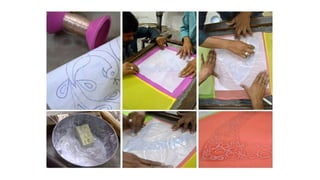
The next step is to trace this design to the
fabric. The process is known as “Chapayi”
The design is traced on the fabric with the
help of tracing paper with the holes.
Chalk powder paste is rubbed over the
tracing paper which leaves in imprint of
the desired pattern on the fabric.
Sticking the
patties
The patties are stuck on the
fabric in the design. This is
done with the help of mild
glue.
Attachment of the patties with stitches
After the patties are glued to the fabric the next step is
known as “takaayi”. It is the process of stitching of leaves
on the base fabric to create the earlier traced design.
To enhance the beauty of these designs outlines are made
from threads like silk, cotton and metal
Stitching is known as “silaayi” the additions sequences,
buttons, beads are attached to it.
Compacting the design with wooden hammer
Completing the design and stiched of zari
around it, the wooden hammer is patted on
the design to fix the design and assuring it is
done properly.
Finishing
Final finishing is done which involves
checking the whole work again.
The mistakes are identified and rectified to
create a breathtaking piece.
Craft then and now
THEN
Gota was woven using gold and silver threads
Weaving by manual machines
It was a hobby of women
Base fabric was pure
Red, Orange, Green colour base fabric
Only royal families people use to wear Gota work
dresses
Only the Gota of silver and Golden colour was
used
NOW
Gota is woven using polyester coloured threads
Weaving using electric machines
Commercial activity by both men and women
The base fabric not necessarily pure (synthetic)
Every color is used as per the market demand
Now every person Gota work dresses
To make it more attractive coloured fabrics are
used on gota
Who?
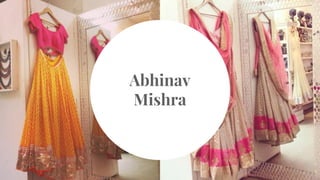
Some known designers
Anita Dongre
Abhinav Mishra
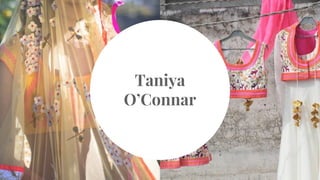
Taniya O’Connar
Swati Ubroi
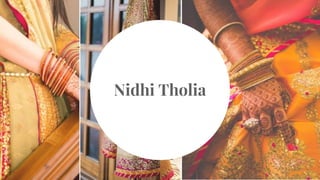
Nidhi Tholia
Hansa Khatwani
Anita Dongre
Abhinav
Mishra
Taniya
O’Connar
Swati Ubroi
Nidhi Tholia
Contemporisation of craft
The craft is contemporised to the suits, cushion
covers, jewellery, kurtas koties men’s jackets
Ideas and
interests
Long back I did a research for this craft
for some other assignment. I always
wanted to work on this craft as a part
of collection. But the authentic and
traditional motifs like flowers are not
my place of interest.
Motifs like Taj and Temple which are
inspired by the architecture catched my
attention in a whole new way becoming
my idea of inspiration.
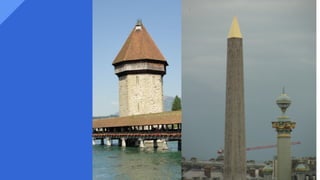
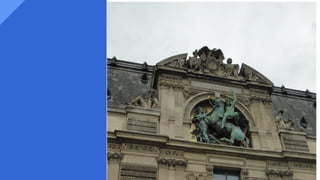
I want to use European architecture as
my inspiration here mixing them with
the geometrical shapes to
contemporize the motifs of the craft.
Some of the pictures of
European things that caught
my attention
Gota patti
Gota patti
Gota patti
Gota patti
Gota patti
Gota patti
Gota patti
Gota patti
Gota patti
Gota patti
Gota patti
Gota patti
Gota patti
Gota patti

Gota patti

  • 1.
  • 2.
    Gota Patti The royaltyof Rajasthan This presentation is about the craft of Rajasthan Gota Patti. This is the craft I would like to work on for my Indian Wear project. The craft is very old and has been going on from the centuries in Rajasthan.
  • 3.
  • 4.
    Gota- The ribbon ●A gold and silver lace from lucknow. The metallic lace or ribbon is generally made up of metal coated weft yarn, while the warp yarn is made of fiber like cotton, polyester in ribbon. ● Earlier these metal coated weft were used to be made of original gold and silver. ● Gota ribbons are available in different colors as well. ● The ribbons are woven on Satin and Twill weave. ● The Gota available these days is known as “ plastic Gota”. It is highly durable as is its made of polyester yarns.
  • 5.
    Types of gotathat are used at Nyla village jaipur 1. Seekhi 2. Phool (flower) 3. Bijiya 4. Mothda 5. Bakhandi 6. Lappa Other Gotas that can be found around India are: Shikhiya Gota, Chaumasa, Panchmasa, Athmasa, Lappa, Thappa, Gokhru, Lehru Gotta, Nakshi, Bijbel, Bijiya, Chiru, Kiran, Chatai, Chip Types of Gotas
  • 6.
    Patti- The leaf Pattiis the local name of a leaf. The leafs are the most important part of motifs which are used to create a motif and then a pattern. All the work is done around a leaf. The gota ribbons are cut into these leaves and the thread work is done around it.
  • 7.
    Royal Embroidery If welook into the history we will find Gota Patti as the royal craft of Rajasthan. The embroidery was done on the garments of kings and Queens. Although it is still unsure where the craft came from and how it reached India. Apart from Jaipur, traces of the work was found cities like Surat and Ajmer. Royal Garments of Gota Patti can still be found in the museums of City Palace, Jaipur
  • 8.
    Embroidery It is typeof Indian embroidery originated in Rajasthan worn by the royalties in the earlier days. The embroidery is mostly seen in Indian ethnic wear especially the bridal wear. This evergreen craft is gaining its popularity day by day and marks itself in the trends of India.
  • 9.
    Applique Work The appliquework is used as a technique of surface ornamentation of the fabric. Hence the name, Lappe -Ka_kaam The Gota ribbons are cut into various shapes and placed on the fabric and the edges are sewn to fix it with the zari threads. The work can be seen mainly on Chiffon, Georgette, Velvet and Silk fabrics. These days synthetic fabrics are also used. The common colors include Red, Orange, Pink, Magenta, Maroon and Yellow.
  • 10.
    Motif are generallyinspired by nature, human figures, animals. The motifs that remains in trends are structured into, buta, buties, shapes like flower pot, Keri, and champak flower. These motifs are then stitched to the base fabric by chain stitch and hemming Some other motifs are inspired from architecture like temples and taj mahal. Motif Language
  • 11.
  • 12.
    The Mughal Connection GotaPatti can be connected with the Mughals. Similar embroidery Zardozi which is also done with the Zari was brought by the Mughals in the 16th Century to India. Some of the gota patti motifs can be found alike to that of Zardozi. It is also believed Jodha Bai (Wife of great Mughal emperor Akbar) used to wear Gota embroidery on her garments.
  • 13.
  • 14.
    India The Gota ribbonproduction can be found in Lucknow, Rajasthan, Surat etc. Nyla Village at jaipur is district of Rajasthan is a cluster area where we can thousands find specialized suppliers and service providers the artisans of this embroidery. Other districts of Rajasthan include Kota, Bikaner, Ajmer and Udaipur.
  • 15.
  • 16.
    Materials Required Wooden frame:The Gota Patti work is done on Wooden or metallic Frame also known as adda over which base fabric is drag tightly to provide uniform tension and that prevents pattern distortion. Needle: Awe or ari needle used for the process. it is type of crochet needle. Base Fabric : The light weight fabric used for this process like Chiffon, Georgette, silk, satin etc. Other materials: Scissors, Wooden Hammer, Iron tool known as Pitan Kutan, beads, stones, crystals, tracing Paper, Chalk Powder.
  • 17.
    The Process Gota Embroideryis a pain and time taking process. Process Fabric selection Tracing the design on paper Setting fabric on the wooden frame Making a design on base fabric Attachment of Gota Patti by back stitch, Compacting the design with wooden hammer Finishing the fabric
  • 18.
    Fabric selection Gota resultsbest on the light fabrics like chiffon, Georgette, Tussar silks, crapes and satin. The selection of fabric also depends on the trends in the market
  • 19.
    Tracing the designon paper A design is created on the paper using the motifs according to the client’s choice. The design is usually made on the tracing paper with the help of carbon paper so it is easy to trace on the fabric
  • 20.
    Setting fabric onwooden frame The edges of the fabric specially the hard sides are attached to the wooden frame called ” Adda”. This step is necessary to be done as it holds onto the fabric which makes it easier do the embroidery
  • 21.
    Making design onbase fabric The next step is to trace this design to the fabric. The process is known as “Chapayi” The design is traced on the fabric with the help of tracing paper with the holes. Chalk powder paste is rubbed over the tracing paper which leaves in imprint of the desired pattern on the fabric.
  • 23.
    Sticking the patties The pattiesare stuck on the fabric in the design. This is done with the help of mild glue.
  • 24.
    Attachment of thepatties with stitches After the patties are glued to the fabric the next step is known as “takaayi”. It is the process of stitching of leaves on the base fabric to create the earlier traced design. To enhance the beauty of these designs outlines are made from threads like silk, cotton and metal Stitching is known as “silaayi” the additions sequences, buttons, beads are attached to it.
  • 25.
    Compacting the designwith wooden hammer Completing the design and stiched of zari around it, the wooden hammer is patted on the design to fix the design and assuring it is done properly.
  • 26.
    Finishing Final finishing isdone which involves checking the whole work again. The mistakes are identified and rectified to create a breathtaking piece.
  • 27.
    Craft then andnow THEN Gota was woven using gold and silver threads Weaving by manual machines It was a hobby of women Base fabric was pure Red, Orange, Green colour base fabric Only royal families people use to wear Gota work dresses Only the Gota of silver and Golden colour was used NOW Gota is woven using polyester coloured threads Weaving using electric machines Commercial activity by both men and women The base fabric not necessarily pure (synthetic) Every color is used as per the market demand Now every person Gota work dresses To make it more attractive coloured fabrics are used on gota
  • 28.
  • 29.
    Some known designers AnitaDongre Abhinav Mishra Taniya O’Connar Swati Ubroi Nidhi Tholia Hansa Khatwani
  • 30.
  • 31.
  • 32.
  • 33.
  • 34.
  • 35.
    Contemporisation of craft Thecraft is contemporised to the suits, cushion covers, jewellery, kurtas koties men’s jackets
  • 36.
  • 37.
    Long back Idid a research for this craft for some other assignment. I always wanted to work on this craft as a part of collection. But the authentic and traditional motifs like flowers are not my place of interest. Motifs like Taj and Temple which are inspired by the architecture catched my attention in a whole new way becoming my idea of inspiration. I want to use European architecture as my inspiration here mixing them with the geometrical shapes to contemporize the motifs of the craft.
  • 38.
    Some of thepictures of European things that caught my attention