Presentation for PPM
By ASGAR HUSSAIN INAMDAR
Company Brief
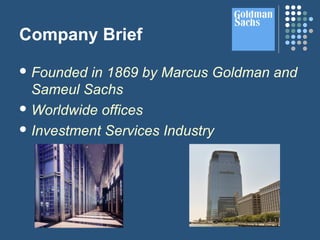
 Founded in 1869 by Marcus Goldman and
Sameul Sachs
 Worldwide offices
 Investment Services Industry
 Goldman entered the IPO market in 1906
when it took Sears, Roebuck and
Company public.
 The deal occurred due to Henry Goldman's
personal friendship with the owner of
Sears, Julius Rosenwald.
Products OR Services
 Asset management
 Commercial banking
 Commodities
 Investment banking
 Investment management
 Mutual Funds
 Prime brokerage
Internal
Analysis
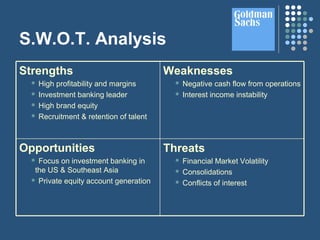
S.W.O.T. Analysis
Threats
 Financial Market Volatility
 Consolidations
 Conflicts of interest
Opportunities
 Focus on investment banking in
the US & Southeast Asia
 Private equity account generation
Weaknesses
 Negative cash flow from operations
 Interest income instability
Strengths
 High profitability and margins
 Investment banking leader
 High brand equity
 Recruitment & retention of talent
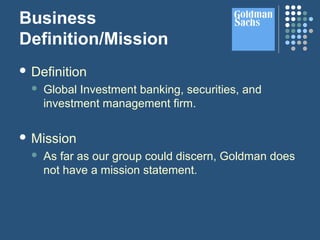
Business
Definition/Mission
 Definition
 Global Investment banking, securities, and
investment management firm.
 Mission
 As far as our group could discern, Goldman does
not have a mission statement.
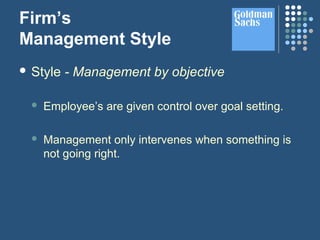
Firm’s
Management Style
 Style - Management by objective
 Employee’s are given control over goal setting.
 Management only intervenes when something is
not going right.
Organizational Structure
 Flat
 Minimum chain of command
 Efficiency is key
 Decentralized
 Authority is delegated to divisions, functions and
employees at lower levels.
Organizational Controls
 Output Controls
 Flat and decentralized = focus on divisional and individual
goals
 Behavior Controls
 Incentives such as pay raises and bonuses
 Clients come first
 Fiduciary responsibility
Organizational Values
 Creativity and Imagination
 Ability to avoid pitfalls others could not because
employee’s are challenged to “think out side of the box.”
 Integrity and Honesty
 Trust is key in financial industry
Competitive Advantage
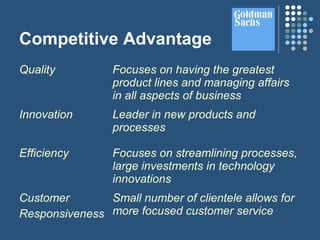
Quality Focuses on having the greatest
product lines and managing affairs
in all aspects of business
Innovation Leader in new products and
processes
Efficiency Focuses on streamlining processes,
large investments in technology
innovations
Customer
Responsiveness
Small number of clientele allows for
more focused customer service
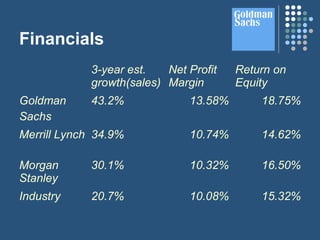
3-year est.
growth(sales)
Net Profit
Margin
Return on
Equity
Goldman
Sachs
43.2% 13.58% 18.75%
Merrill Lynch 34.9% 10.74% 14.62%
Morgan
Stanley
30.1% 10.32% 16.50%
Industry 20.7% 10.08% 15.32%
Financials
Critical Issues
Current events & concerns
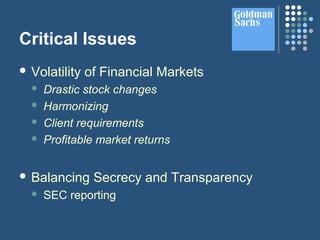
Critical Issues
 Volatility of Financial Markets
 Drastic stock changes
 Harmonizing
 Client requirements
 Profitable market returns
 Balancing Secrecy and Transparency
 SEC reporting
Questions
Final thoughts?

GOLDMAN SACHS

  • 1.
    Presentation for PPM ByASGAR HUSSAIN INAMDAR
  • 2.
    Company Brief  Foundedin 1869 by Marcus Goldman and Sameul Sachs  Worldwide offices  Investment Services Industry
  • 3.
     Goldman enteredthe IPO market in 1906 when it took Sears, Roebuck and Company public.  The deal occurred due to Henry Goldman's personal friendship with the owner of Sears, Julius Rosenwald.
  • 4.
    Products OR Services Asset management  Commercial banking  Commodities  Investment banking  Investment management  Mutual Funds  Prime brokerage
  • 5.
  • 6.
    S.W.O.T. Analysis Threats  FinancialMarket Volatility  Consolidations  Conflicts of interest Opportunities  Focus on investment banking in the US & Southeast Asia  Private equity account generation Weaknesses  Negative cash flow from operations  Interest income instability Strengths  High profitability and margins  Investment banking leader  High brand equity  Recruitment & retention of talent
  • 7.
    Business Definition/Mission  Definition  GlobalInvestment banking, securities, and investment management firm.  Mission  As far as our group could discern, Goldman does not have a mission statement.
  • 8.
    Firm’s Management Style  Style- Management by objective  Employee’s are given control over goal setting.  Management only intervenes when something is not going right.
  • 9.
    Organizational Structure  Flat Minimum chain of command  Efficiency is key  Decentralized  Authority is delegated to divisions, functions and employees at lower levels.
  • 10.
    Organizational Controls  OutputControls  Flat and decentralized = focus on divisional and individual goals  Behavior Controls  Incentives such as pay raises and bonuses  Clients come first  Fiduciary responsibility
  • 11.
    Organizational Values  Creativityand Imagination  Ability to avoid pitfalls others could not because employee’s are challenged to “think out side of the box.”  Integrity and Honesty  Trust is key in financial industry
  • 12.
    Competitive Advantage Quality Focuseson having the greatest product lines and managing affairs in all aspects of business Innovation Leader in new products and processes Efficiency Focuses on streamlining processes, large investments in technology innovations Customer Responsiveness Small number of clientele allows for more focused customer service
  • 13.
    3-year est. growth(sales) Net Profit Margin Returnon Equity Goldman Sachs 43.2% 13.58% 18.75% Merrill Lynch 34.9% 10.74% 14.62% Morgan Stanley 30.1% 10.32% 16.50% Industry 20.7% 10.08% 15.32% Financials
  • 14.
  • 15.
    Critical Issues  Volatilityof Financial Markets  Drastic stock changes  Harmonizing  Client requirements  Profitable market returns  Balancing Secrecy and Transparency  SEC reporting
  • 16.

Editor's Notes

  • #16 Credit Crunch Avoidance df Volatility of Financial Markets df Balancing Secrecy and Transparency sd