LEARNING FOR SUCCESS: CONVERTING THE UNIQUE INTO THE
UNIVERSAL
TUSHAR KANT UPADHYAYA & V. P. SHARMA
Golden Jubilee National Seminar
On
“DEVELOPMENT OF ANTHROPOLOGY IN TWO DISTINCT
TIME FRAMES: PRE- INDEPENDENT AND POST-
INDEPENDENT PERIOD
17-19 DECEMBER, 2010
RESEARCH METHODOLOGY
 The paper is based on secondary data and
primary field work in Koderma district of
Jharkhand.
 The purpose of the paper is to report and evaluate
the nutrition programmes run by the government of
Jharkhand and suggest mitigation strategy for its
success.
BACKGROUND
 Jharkhand is a state with poor irrigation;
almost 75% of the districts have been
classified as being deprived of water.
 This, combined with other socio-
economic factors, has led to extreme food
insecurity in the state especially among
people living Below Poverty Line
(BPL)causing malnutrition.
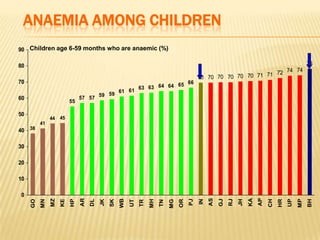
ANAEMIA AMONG CHILDREN
70 70 70 70 70 70 71 71 72 74 74
78
55
57 57
59 59 61 61
63 63 64 64 65 66
38
41
44 45
0
10
20
30
40
50
60
70
80
90
GO
MN
MZ
KE
HP
AR
DL
JK
SK
WB
UT
TR
MH
TN
MG
OR
PJ
IN
AS
GJ
RJ
JH
KA
AP
CH
HR
UP
MP
BH
Children age 6-59 months who are anaemic (%)
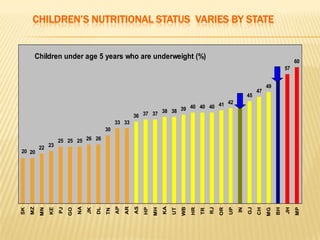
CHILDREN’S NUTRITIONAL STATUS VARIES BY STATE
Children under age 5 years who are underweight (%)
20
22 23
25 25 25 26 26
30
33 33
36 37 37 38 38 39 40 40 40 41 42 43
45
47
49
56 57
60
20
SK
MZ
MN
KE
PJ
GO
NA
JK
DL
TN
AP
AR
AS
HP
MH
KA
UT
WB
HR
TR
RJ
OR
UP
IN
GJ
CH
MG
BH
JH
MP
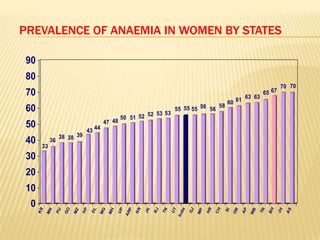
PREVALENCE OF ANAEMIA IN WOMEN BY STATES
33
36
38 38 39
43 44
47 48
50 51 52 52 53 53
55 55 55 56 56
58
60 61 63 63
65 67
70 70
0
10
20
30
40
50
60
70
80
90
KR
MN
PU
GO
MZ
HP
DL
MG
MH
UP
ARP
KN
JK
RJ
TN
UT
India
GJ
MP
HR
CH
SI
OR
AP
WB
TR
BH
JH
AS
MICRONUTRIENT SUPPLEMENTATION PROGRAMMES
 The government runs several
micronutrient supplementation
programmes in IFA and Vitamin A;
nutrition programmes are also conducted
through Anganwadi and Sub Centres for
pregnant and lactating women,
adolescent girls and children below the
age of 6 years.
---
 Despite that, the Rapid Household Survey
found that coverage of IFA tablets was
very low, ranging from 1.9% to 32.5%;
regular consumption of these tablets was
even lower at 14.6%. The reason for such
low compliance was lack of awareness of
the importance of IFA in foetal growth.
NUTRITIONAL ANTHROPOLOGY
 Nutritional anthropology refers to a field
of study at the interface of anthropology
and nutritional sciences focused
particularly on understanding how the
interactions of social and biological
factors affect the nutritional status of
individuals and populations.
MITIGATION STRATEGY
 A significant body of Indian and global evidence supports
that these interventions are the most critical and effective to
improve nutrition security:
 Focus on proven, essential nutrition interventions, the timely
initiation of breastfeeding within one hour of birth, exclusive
breastfeeding during the first six months of life, the timely
introduction of age-appropriate complementary foods at six
months (adequate in terms of quality, quantity and
frequency), hygienic child feeding practices, improved
nutrition for women (especially adolescent girls, pregnant
women and lactating mothers), focusing on iron and folic
acid supplements and de-worming, and timely, high quality
therapeutic feeding and care for all children with severe
acute malnutrition (with leadership from the Ministry of
Women and Child Development).
MITIGATION STRATEGY
 Focus on proven, essential primary health
care interventions: full immunization, bi-
annual vitamin A supplementation with de-
worming for infants and young children,
appropriate and active feeding of children
during and after illness, including oral
rehydration with zinc supplementation
during diarrhea and timely, high quality
therapeutic feeding and care for all children
with severe acute malnutrition (with
leadership from the Ministry of Health and
Family Welfare).
MITIGATION STRATEGY
 Promote personal hygiene, environmental sanitation,
safe drinking water and food safety (with leadership
from Ministry of Rural Development).
 Integrate household food and nutrition security
considerations into the design of cropping and
farming systems (with leadership from the Ministry of
Agriculture).
 Expand and improve nutrition education and
awareness as well as involvement and accountability
for improved nutrition at the community level (with
leadership from the Ministry of Women and Child
Development and the Ministry of Panchayati Raj
[local self government] and including others, such as
the Ministry of Information and Broadcasting and the
Department of Education).
CONVERGENCE (POSSIBILITIES WITH OTHER /RELATED EFFORTS)
 Based on the Indian context and significant
programming experience, following are the ways to
improve nutrition.
 Expand efforts to engage and empower vulnerable
communities, particularly women in these
communities, to overcome malnutrition (including
through Gram Sabhas [local councils] and self help
groups).
 Ensure that nutrition related programmes focus on
key nutrition outcomes and are reaching the priority
target groups of children under two years of age, and
women (especially adolescent girls, pregnant women
and lactating mothers) in order to break the
intergenerational cycle of malnutrition and to achieve
the desired result
CONVERGENCE (POSSIBILITIES WITH OTHER /RELATED EFFORTS)
 Strengthen the focus on improving
nutrition through a leadership and
coordination mechanism with clear
authority and responsibility, working from
local to state levels (possibly through a
mechanism like a separate department of
Nutrition).
LEARNING FOR SUCCESS: CONVERTING THE UNIQUE INTO THE UNIVERSAL
 State Governments should develop a
‘Hunger Free State’ strategy, which adopts a
life cycle approach to the delivery of
nutrition support and reaches the key target
groups and vulnerable sections of the
population .With a special programme to
prevent maternal, fetal and young child
malnutrition.
 Based on evidence and successful
programming, it will be prudent to place
special focus on Child Nutrition in the First
Two Years of Life and Women’s Nutrition
IMMEDIATE ACTION PLAN:
 Strengthening the BCC component of the
ongoing programs (Community Health
Awareness, JBSY)
 Facilitate development of community level BCC
strategy
 Strengthening IFA and de-worming programs
 Enhancing counseling skills of Anganwadi
workers and their supervisors
 ANM and their supervisors capacity building
to ensure the convergence of efforts at the
site level
IMMEDIATE ACTION PLAN:
 Sensitizing the community on equality of
the gender and more attention towards a
girl child

 Activating the village health committees
envisaged in the Panchayati Raj set-up at the
panchayat level after Panchayat election In
Jharkhand.
 Fixed day Village Health and Nutrition Day which
would include all the services supposed to be
provided at village level including RI and other
services as envisaged in NRHM concept paper.
Thank You

NUTRITIONAL ANTHROPOLOGY-Learning for Success: JHARKHAND

  • 1.
    LEARNING FOR SUCCESS:CONVERTING THE UNIQUE INTO THE UNIVERSAL TUSHAR KANT UPADHYAYA & V. P. SHARMA Golden Jubilee National Seminar On “DEVELOPMENT OF ANTHROPOLOGY IN TWO DISTINCT TIME FRAMES: PRE- INDEPENDENT AND POST- INDEPENDENT PERIOD 17-19 DECEMBER, 2010
  • 2.
    RESEARCH METHODOLOGY  Thepaper is based on secondary data and primary field work in Koderma district of Jharkhand.  The purpose of the paper is to report and evaluate the nutrition programmes run by the government of Jharkhand and suggest mitigation strategy for its success.
  • 3.
    BACKGROUND  Jharkhand isa state with poor irrigation; almost 75% of the districts have been classified as being deprived of water.  This, combined with other socio- economic factors, has led to extreme food insecurity in the state especially among people living Below Poverty Line (BPL)causing malnutrition.
  • 4.
    ANAEMIA AMONG CHILDREN 7070 70 70 70 70 71 71 72 74 74 78 55 57 57 59 59 61 61 63 63 64 64 65 66 38 41 44 45 0 10 20 30 40 50 60 70 80 90 GO MN MZ KE HP AR DL JK SK WB UT TR MH TN MG OR PJ IN AS GJ RJ JH KA AP CH HR UP MP BH Children age 6-59 months who are anaemic (%)
  • 5.
    CHILDREN’S NUTRITIONAL STATUSVARIES BY STATE Children under age 5 years who are underweight (%) 20 22 23 25 25 25 26 26 30 33 33 36 37 37 38 38 39 40 40 40 41 42 43 45 47 49 56 57 60 20 SK MZ MN KE PJ GO NA JK DL TN AP AR AS HP MH KA UT WB HR TR RJ OR UP IN GJ CH MG BH JH MP
  • 6.
    PREVALENCE OF ANAEMIAIN WOMEN BY STATES 33 36 38 38 39 43 44 47 48 50 51 52 52 53 53 55 55 55 56 56 58 60 61 63 63 65 67 70 70 0 10 20 30 40 50 60 70 80 90 KR MN PU GO MZ HP DL MG MH UP ARP KN JK RJ TN UT India GJ MP HR CH SI OR AP WB TR BH JH AS
  • 7.
    MICRONUTRIENT SUPPLEMENTATION PROGRAMMES The government runs several micronutrient supplementation programmes in IFA and Vitamin A; nutrition programmes are also conducted through Anganwadi and Sub Centres for pregnant and lactating women, adolescent girls and children below the age of 6 years.
  • 8.
    ---  Despite that,the Rapid Household Survey found that coverage of IFA tablets was very low, ranging from 1.9% to 32.5%; regular consumption of these tablets was even lower at 14.6%. The reason for such low compliance was lack of awareness of the importance of IFA in foetal growth.
  • 9.
    NUTRITIONAL ANTHROPOLOGY  Nutritionalanthropology refers to a field of study at the interface of anthropology and nutritional sciences focused particularly on understanding how the interactions of social and biological factors affect the nutritional status of individuals and populations.
  • 10.
    MITIGATION STRATEGY  Asignificant body of Indian and global evidence supports that these interventions are the most critical and effective to improve nutrition security:  Focus on proven, essential nutrition interventions, the timely initiation of breastfeeding within one hour of birth, exclusive breastfeeding during the first six months of life, the timely introduction of age-appropriate complementary foods at six months (adequate in terms of quality, quantity and frequency), hygienic child feeding practices, improved nutrition for women (especially adolescent girls, pregnant women and lactating mothers), focusing on iron and folic acid supplements and de-worming, and timely, high quality therapeutic feeding and care for all children with severe acute malnutrition (with leadership from the Ministry of Women and Child Development).
  • 11.
    MITIGATION STRATEGY  Focuson proven, essential primary health care interventions: full immunization, bi- annual vitamin A supplementation with de- worming for infants and young children, appropriate and active feeding of children during and after illness, including oral rehydration with zinc supplementation during diarrhea and timely, high quality therapeutic feeding and care for all children with severe acute malnutrition (with leadership from the Ministry of Health and Family Welfare).
  • 12.
    MITIGATION STRATEGY  Promotepersonal hygiene, environmental sanitation, safe drinking water and food safety (with leadership from Ministry of Rural Development).  Integrate household food and nutrition security considerations into the design of cropping and farming systems (with leadership from the Ministry of Agriculture).  Expand and improve nutrition education and awareness as well as involvement and accountability for improved nutrition at the community level (with leadership from the Ministry of Women and Child Development and the Ministry of Panchayati Raj [local self government] and including others, such as the Ministry of Information and Broadcasting and the Department of Education).
  • 13.
    CONVERGENCE (POSSIBILITIES WITHOTHER /RELATED EFFORTS)  Based on the Indian context and significant programming experience, following are the ways to improve nutrition.  Expand efforts to engage and empower vulnerable communities, particularly women in these communities, to overcome malnutrition (including through Gram Sabhas [local councils] and self help groups).  Ensure that nutrition related programmes focus on key nutrition outcomes and are reaching the priority target groups of children under two years of age, and women (especially adolescent girls, pregnant women and lactating mothers) in order to break the intergenerational cycle of malnutrition and to achieve the desired result
  • 14.
    CONVERGENCE (POSSIBILITIES WITHOTHER /RELATED EFFORTS)  Strengthen the focus on improving nutrition through a leadership and coordination mechanism with clear authority and responsibility, working from local to state levels (possibly through a mechanism like a separate department of Nutrition).
  • 15.
    LEARNING FOR SUCCESS:CONVERTING THE UNIQUE INTO THE UNIVERSAL  State Governments should develop a ‘Hunger Free State’ strategy, which adopts a life cycle approach to the delivery of nutrition support and reaches the key target groups and vulnerable sections of the population .With a special programme to prevent maternal, fetal and young child malnutrition.  Based on evidence and successful programming, it will be prudent to place special focus on Child Nutrition in the First Two Years of Life and Women’s Nutrition
  • 16.
    IMMEDIATE ACTION PLAN: Strengthening the BCC component of the ongoing programs (Community Health Awareness, JBSY)  Facilitate development of community level BCC strategy  Strengthening IFA and de-worming programs  Enhancing counseling skills of Anganwadi workers and their supervisors  ANM and their supervisors capacity building to ensure the convergence of efforts at the site level
  • 17.
    IMMEDIATE ACTION PLAN: Sensitizing the community on equality of the gender and more attention towards a girl child   Activating the village health committees envisaged in the Panchayati Raj set-up at the panchayat level after Panchayat election In Jharkhand.  Fixed day Village Health and Nutrition Day which would include all the services supposed to be provided at village level including RI and other services as envisaged in NRHM concept paper.
  • 18.