LMTC Kannur
1 year
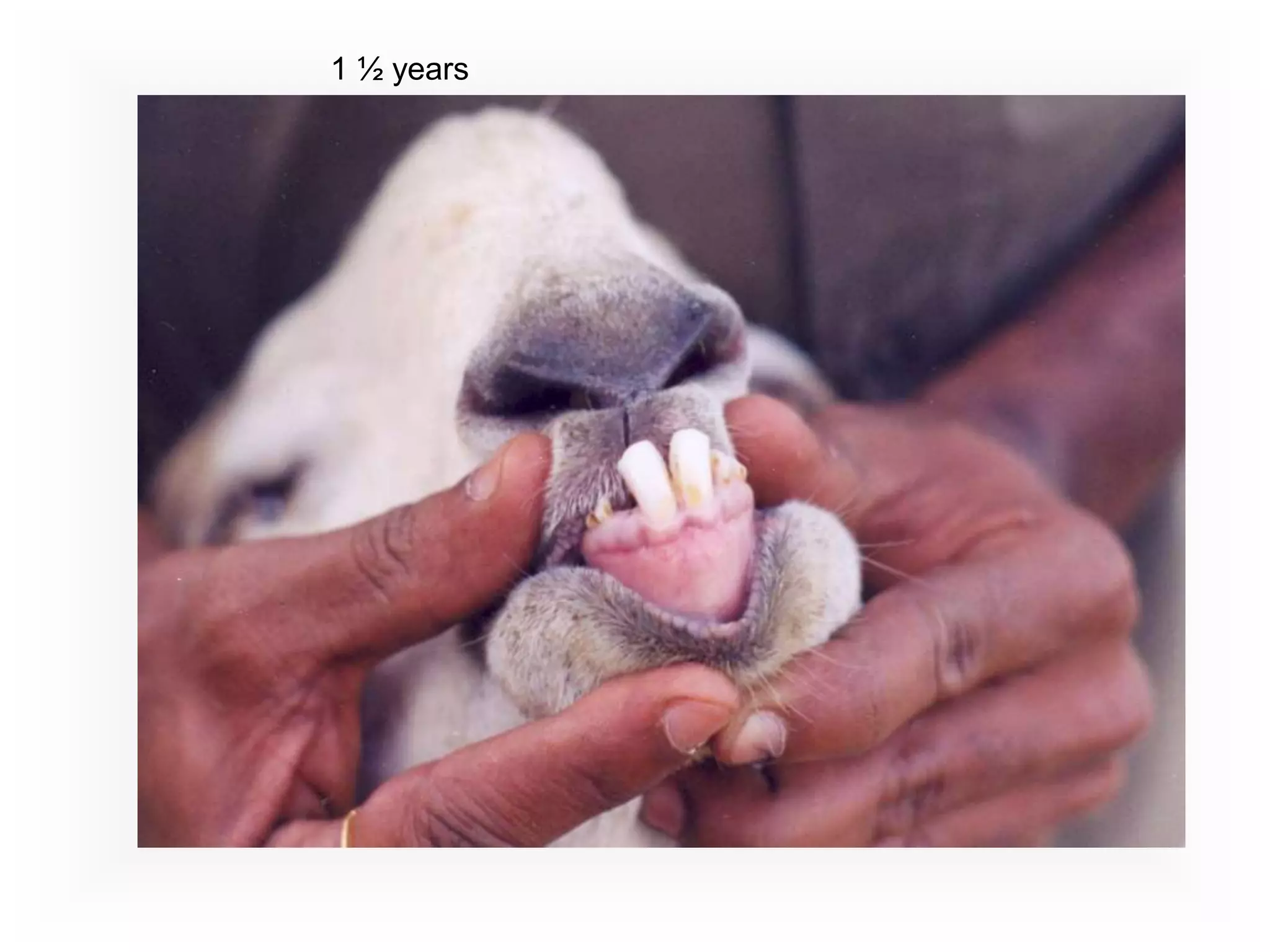
1 ½ years
2 years
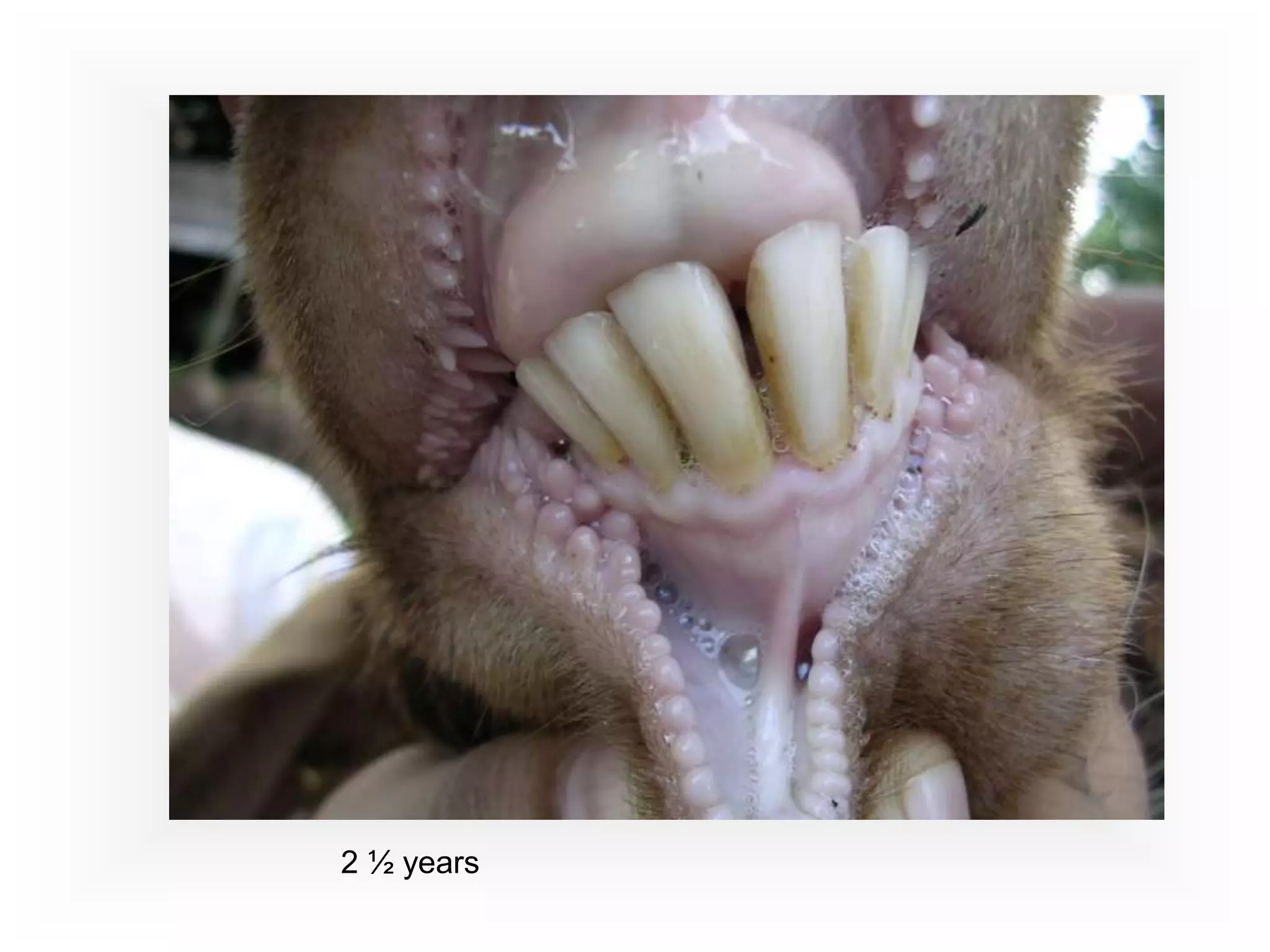
2 ½ years
TEATHERING
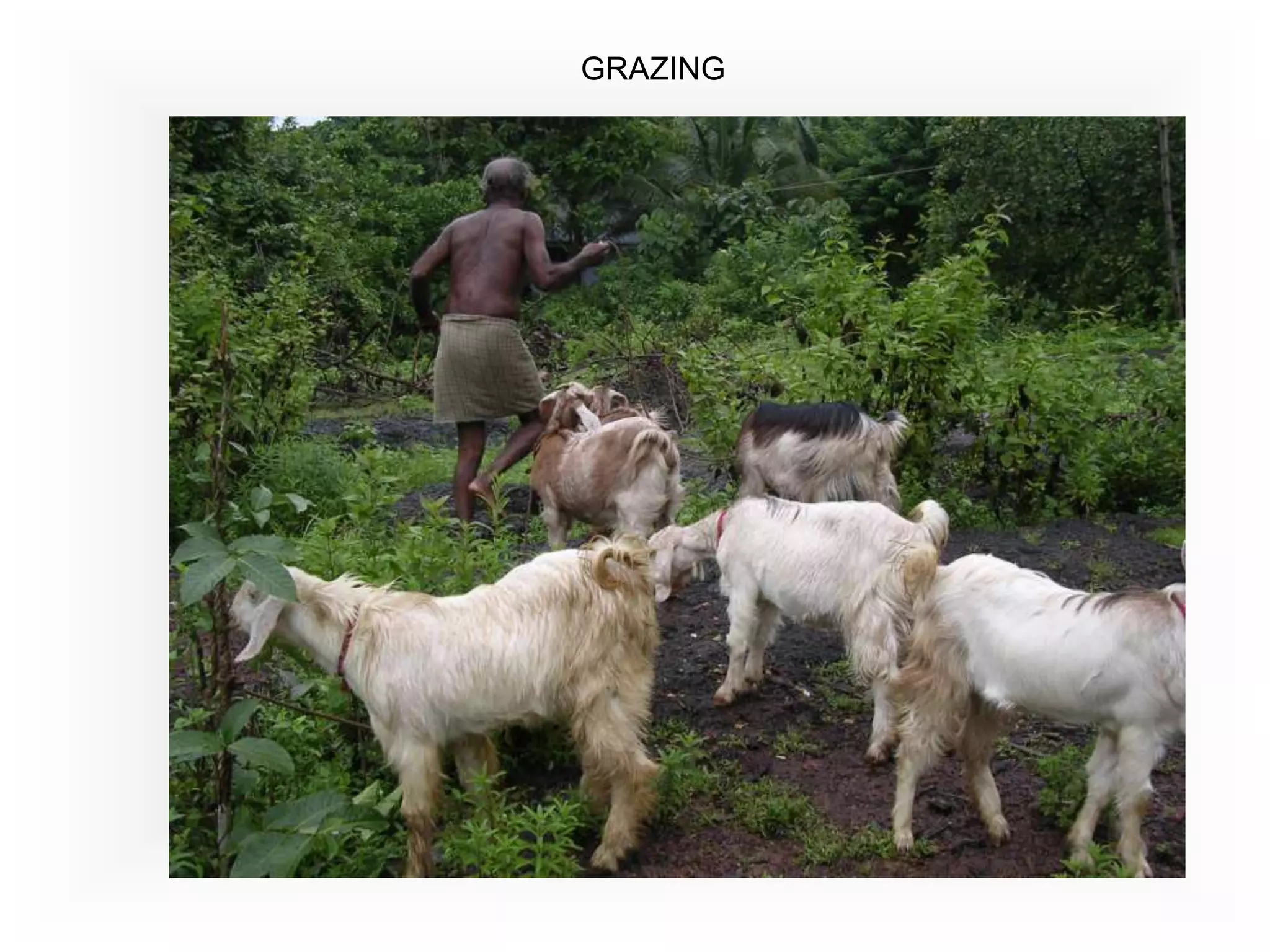
GRAZING
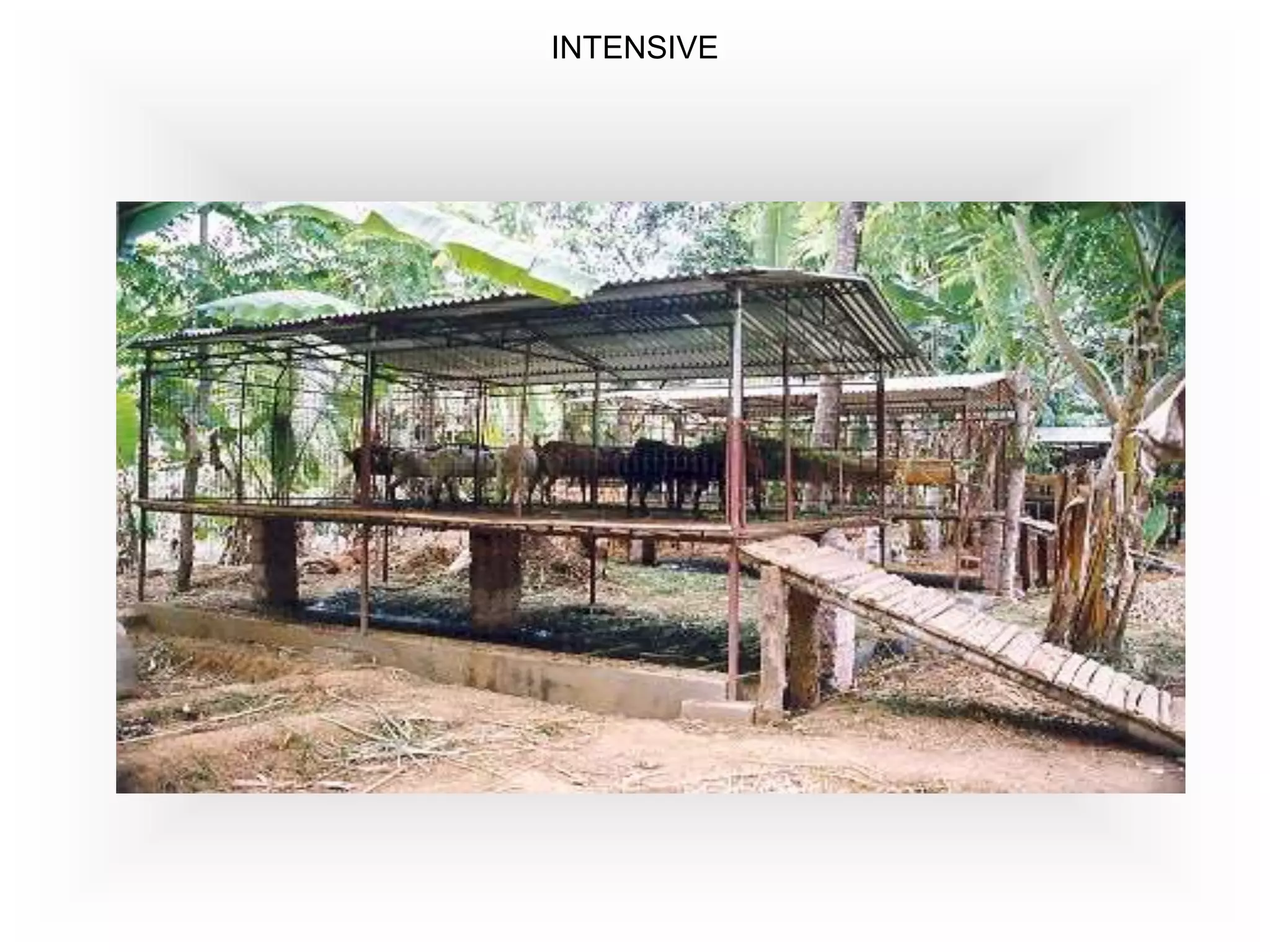
INTENSIVE
CONCENTRATE
ROUGHAGE
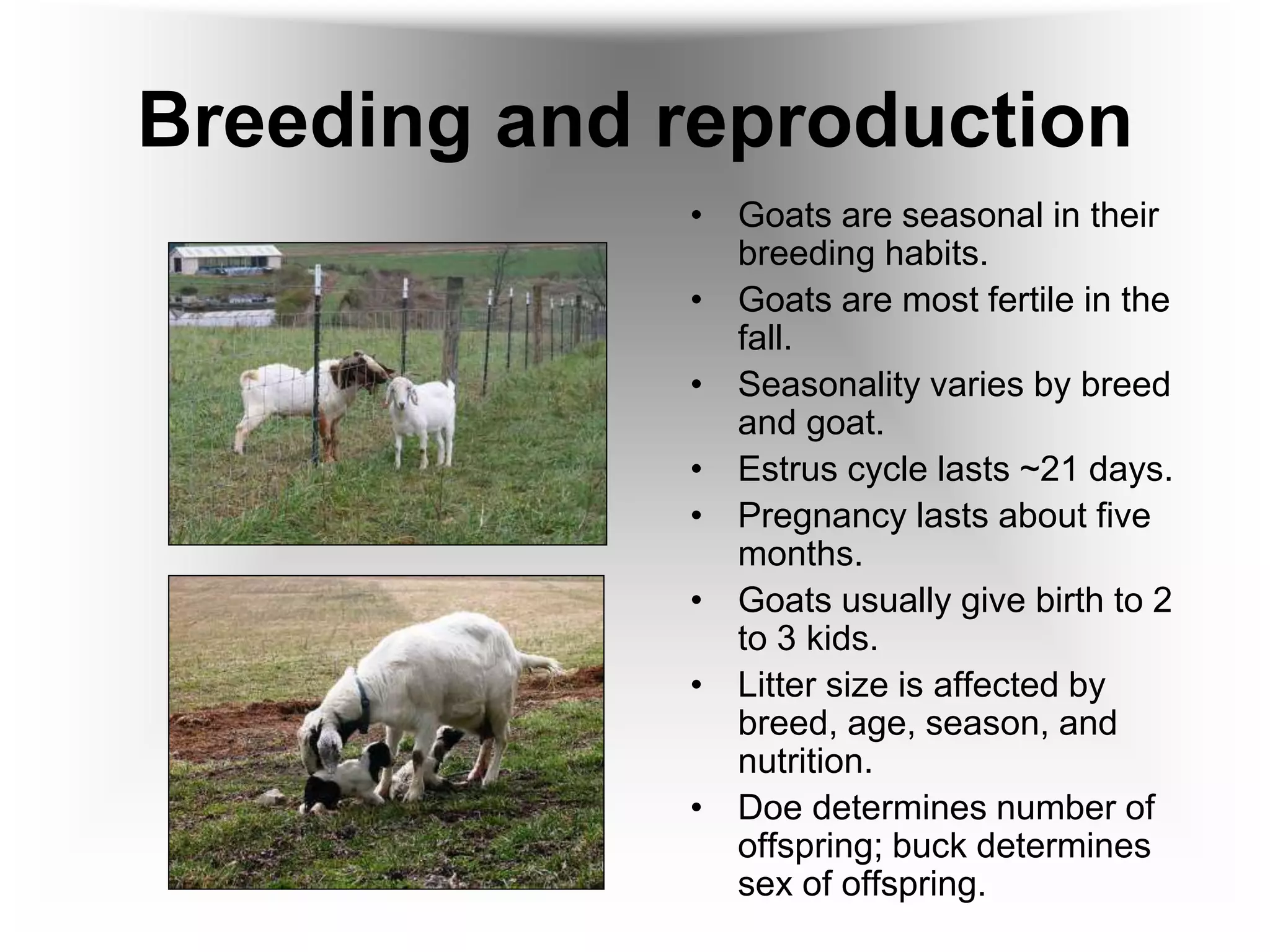
Breeding and reproduction
• Goats are seasonal in their
breeding habits.
• Goats are most fertile in the
fall.
• Seasonality varies by breed
and goat.
• Estrus cycle lasts ~21 days.
• Pregnancy lasts about five
months.
• Goats usually give birth to 2
to 3 kids.
• Litter size is affected by
breed, age, season, and
nutrition.
• Doe determines number of
offspring; buck determines
sex of offspring.
Kidding
• Most does kid on their
own without the need
for help.
• Most kids nurse on their
own without the need
for help.
• It’s best to leave doe
and kids alone unless
there is a problem.
• Check doe if no
progress 1 hour after
water bag breaks.
• After 30 minutes of
trying to help with a
difficult birth, seek
qualified help.
• Make sure kids get
adequate colostrum
within 24 hours.
• Feed week kids via
esophageal tube
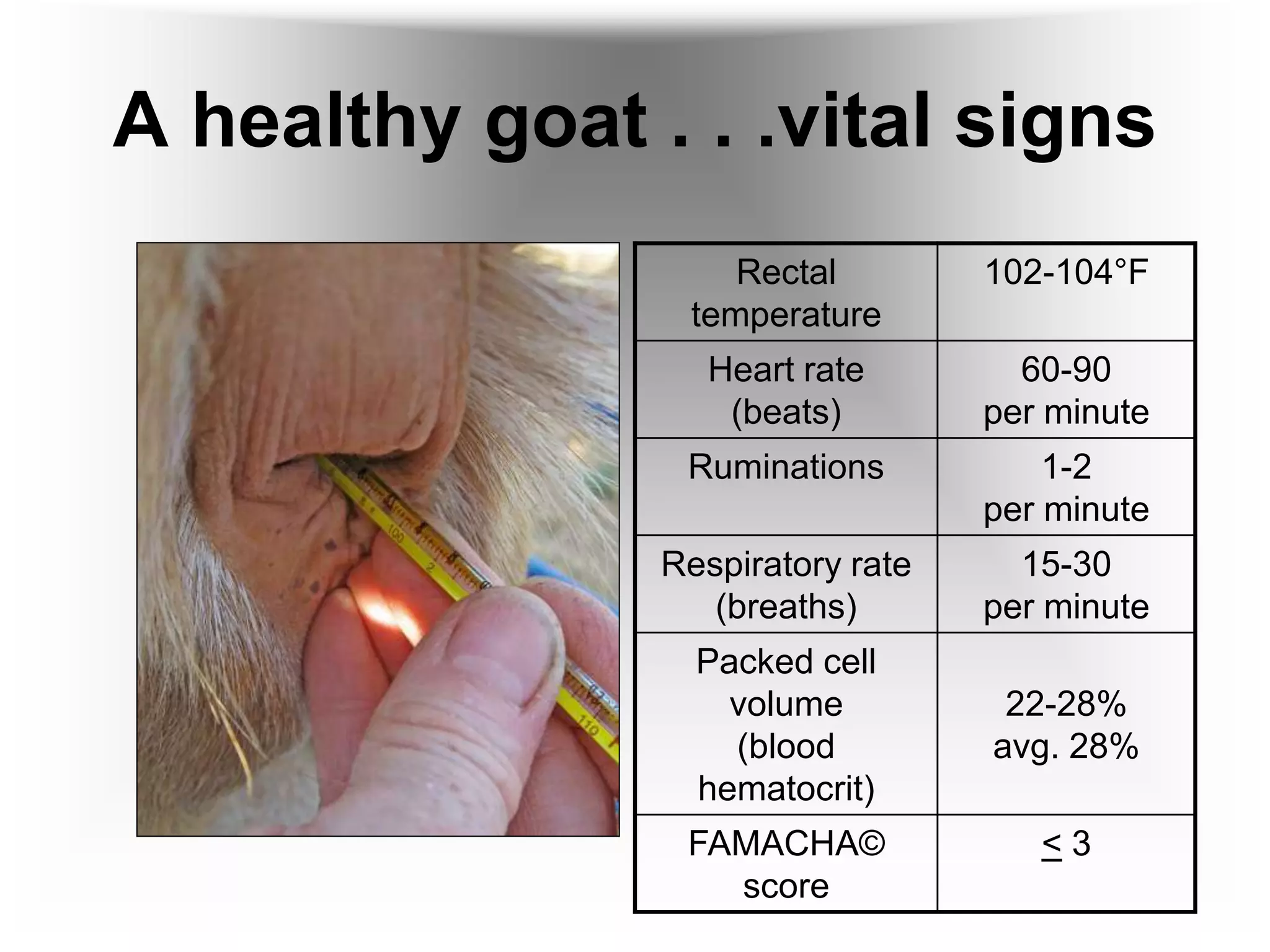
A healthy goat . . .vital signs
Rectal
temperature
102-104°F
Heart rate
(beats)
60-90
per minute
Ruminations 1-2
per minute
Respiratory rate
(breaths)
15-30
per minute
Packed cell
volume
(blood
hematocrit)
22-28%
avg. 28%
FAMACHA©
score
< 3
Common health problems
• Internal parasites
• Digestive/Nutritional
• Respiratory complex
• Reproductive
• Hoof
• Skin
• Chronic
Internal parasites (worms)
 Primary health problem
affecting small ruminants
 It is normal for goats to
have some parasites.
 Goal is to control, not
eradicate parasites.
 Due to long-time overuse
and misuse of
anthelmintics, parasites
have developed
resistance to all of
anthelmintics.
 Resistance varies by drug, animal,
and farm.
 Safeguard, Ivermectin have most
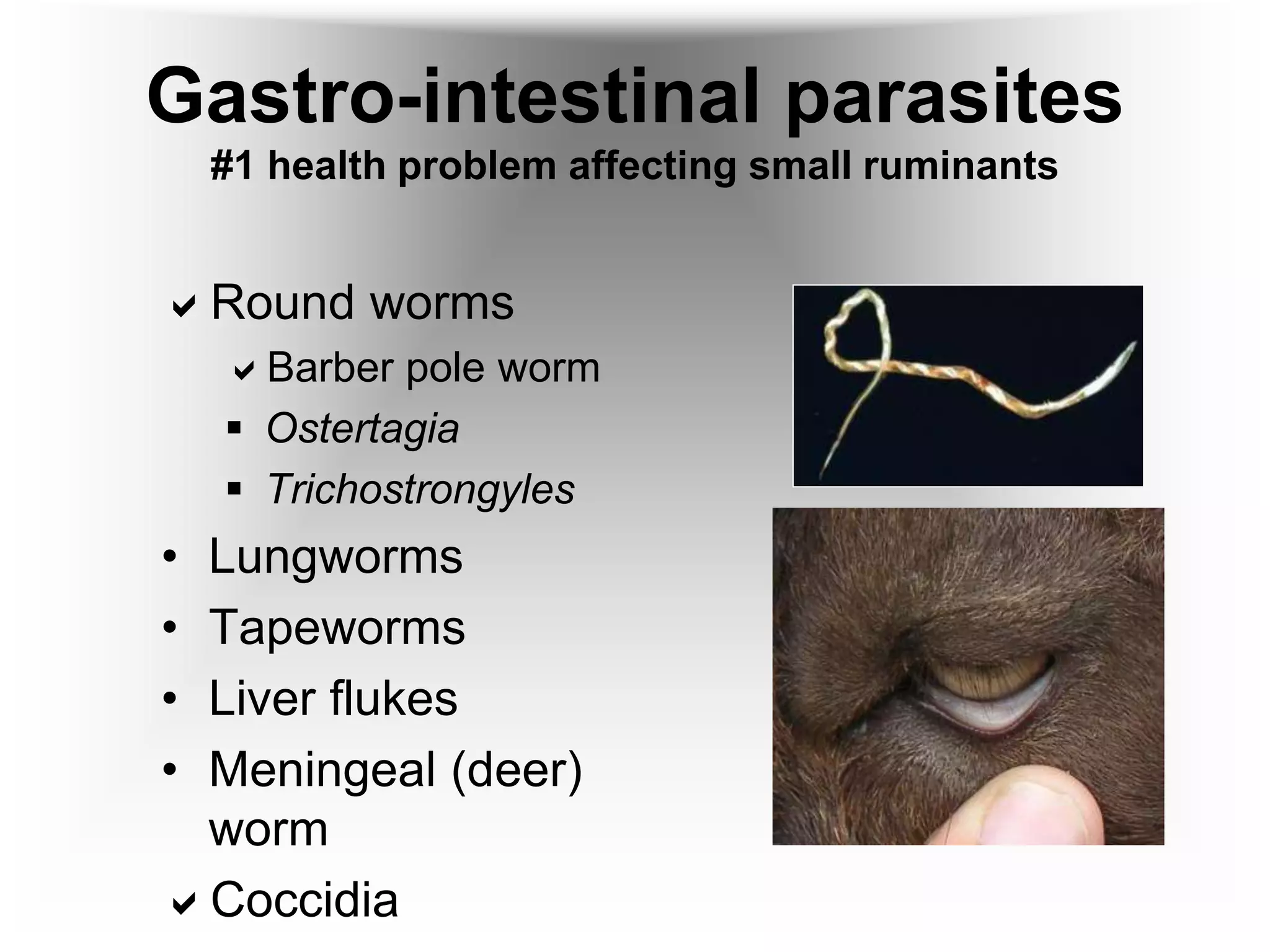
Gastro-intestinal parasites
#1 health problem affecting small ruminants
Round worms
Barber pole worm
 Ostertagia
 Trichostrongyles
• Lungworms
• Tapeworms
• Liver flukes
• Meningeal (deer)
worm
Coccidia
The FAMACHA© System
for assessing anemia and barber pole worm infection in small ruminants
Clinical
Category
Color PCV Deworm?
1 Red > 28 No
2 Red-Pink 23-27 No
3 Pink 18-22 ?
4 Pink-White 13-17 Yes
5 White < 12 Yes
sheep
goats
Digestive / nutritional /
metabolic
• Scours (diarrhea)
– Infectious
– Non-infectious
• Enterotoxemia
• Urinary calculi
• Acidosis
• Bloat
• Polioencephalomalacia
• White muscle disease
• Floppy kid syndrome
• Pregnancy toxemia
• Milk fever
• Poisonous plants
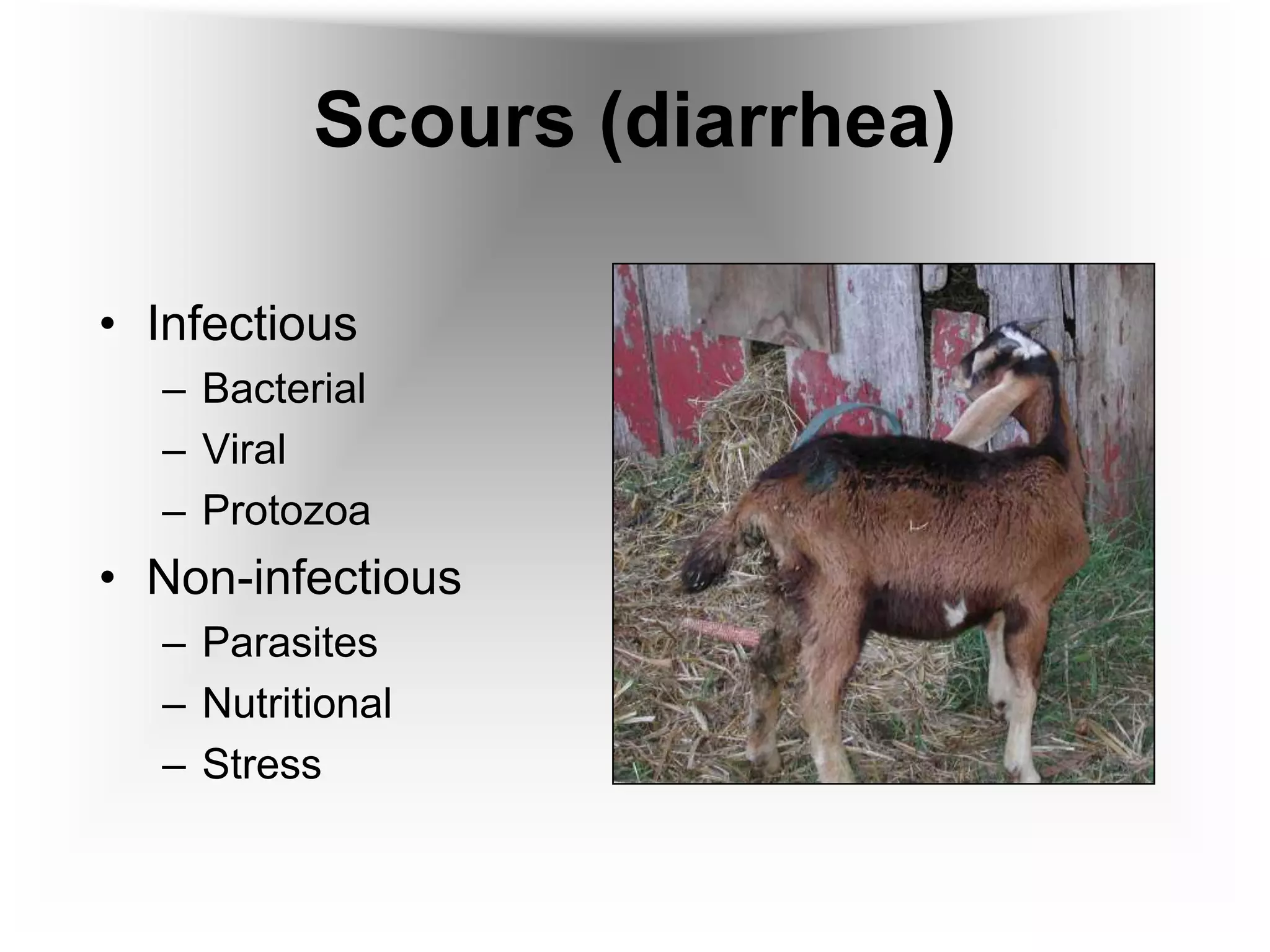
Scours (diarrhea)
• Infectious
– Bacterial
– Viral
– Protozoa
• Non-infectious
– Parasites
– Nutritional
– Stress
Respiratory complex
• Infectious
– Bacterial pneumonia
• Non-infectious
– Dust
– Poor ventilation
– Nasal bots
– Lung worms
– Stress
• Secondary
Hoof
• Foot rot (in hoof)
– Infectious
– Two bacteria
– Contagious
– Foul odor
• Foot scald
(between toes)
– Environmental
– One bacteria
– Not contagious
Skin
• External parasites
– Mites
– Ticks
– Lice
– Nose bots
• Sore mouth
Reproductive
• Dystocia
• Abortion
– Infectious
• Chlamydia
• Vibro
• Toxoplasmosis
– Environmental
• Metabolic
– Pregnancy toxemia
inadequate energy consumption
– Milk fever
low blood Ca
• Mastitis
– Chronic
– Acute
GOAT BREED AND MANAGEMENT  ONE.ppt

GOAT BREED AND MANAGEMENT ONE.ppt

  • 1.
  • 25.
  • 26.
  • 27.
  • 28.
  • 32.
  • 33.
  • 34.
  • 35.
  • 36.
  • 37.
    Breeding and reproduction •Goats are seasonal in their breeding habits. • Goats are most fertile in the fall. • Seasonality varies by breed and goat. • Estrus cycle lasts ~21 days. • Pregnancy lasts about five months. • Goats usually give birth to 2 to 3 kids. • Litter size is affected by breed, age, season, and nutrition. • Doe determines number of offspring; buck determines sex of offspring.
  • 38.
    Kidding • Most doeskid on their own without the need for help. • Most kids nurse on their own without the need for help. • It’s best to leave doe and kids alone unless there is a problem. • Check doe if no progress 1 hour after water bag breaks. • After 30 minutes of trying to help with a difficult birth, seek qualified help. • Make sure kids get adequate colostrum within 24 hours. • Feed week kids via esophageal tube
  • 39.
    A healthy goat. . .vital signs Rectal temperature 102-104°F Heart rate (beats) 60-90 per minute Ruminations 1-2 per minute Respiratory rate (breaths) 15-30 per minute Packed cell volume (blood hematocrit) 22-28% avg. 28% FAMACHA© score < 3
  • 40.
    Common health problems •Internal parasites • Digestive/Nutritional • Respiratory complex • Reproductive • Hoof • Skin • Chronic
  • 41.
    Internal parasites (worms) Primary health problem affecting small ruminants  It is normal for goats to have some parasites.  Goal is to control, not eradicate parasites.  Due to long-time overuse and misuse of anthelmintics, parasites have developed resistance to all of anthelmintics.  Resistance varies by drug, animal, and farm.  Safeguard, Ivermectin have most
  • 42.
    Gastro-intestinal parasites #1 healthproblem affecting small ruminants Round worms Barber pole worm  Ostertagia  Trichostrongyles • Lungworms • Tapeworms • Liver flukes • Meningeal (deer) worm Coccidia
  • 43.
    The FAMACHA© System forassessing anemia and barber pole worm infection in small ruminants Clinical Category Color PCV Deworm? 1 Red > 28 No 2 Red-Pink 23-27 No 3 Pink 18-22 ? 4 Pink-White 13-17 Yes 5 White < 12 Yes sheep goats
  • 44.
    Digestive / nutritional/ metabolic • Scours (diarrhea) – Infectious – Non-infectious • Enterotoxemia • Urinary calculi • Acidosis • Bloat • Polioencephalomalacia • White muscle disease • Floppy kid syndrome • Pregnancy toxemia • Milk fever • Poisonous plants
  • 45.
    Scours (diarrhea) • Infectious –Bacterial – Viral – Protozoa • Non-infectious – Parasites – Nutritional – Stress
  • 46.
    Respiratory complex • Infectious –Bacterial pneumonia • Non-infectious – Dust – Poor ventilation – Nasal bots – Lung worms – Stress • Secondary
  • 47.
    Hoof • Foot rot(in hoof) – Infectious – Two bacteria – Contagious – Foul odor • Foot scald (between toes) – Environmental – One bacteria – Not contagious
  • 48.
    Skin • External parasites –Mites – Ticks – Lice – Nose bots • Sore mouth
  • 49.
    Reproductive • Dystocia • Abortion –Infectious • Chlamydia • Vibro • Toxoplasmosis – Environmental • Metabolic – Pregnancy toxemia inadequate energy consumption – Milk fever low blood Ca • Mastitis – Chronic – Acute