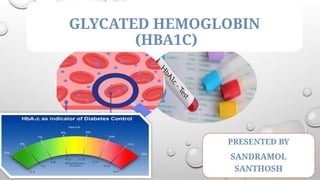
GLYCATED HEMOGLOBIN
(HBA1C)
PRESENTED BY
SANDRAMOL
SANTHOSH
CONTENT
• INRODUCTION TO HbA1C
• THE ELEMENTS OF HEMOGLOBIN
• DIABETES MELLITUS
• SYMPTOMS OF HYPERGLYCEMIA
• DIAGNOSIS OF DIABETES
• SPECIMEN COLLECTION
• METHODS
• REFERENCE VALUE
• FACTORS AFFECTING HbA1C
• PREVENTION
INTRODUCTION TO HBA1C
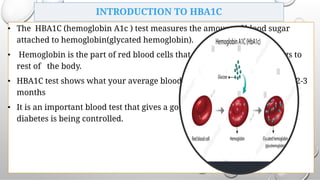
• The HBA1C (hemoglobin A1c ) test measures the amount of blood sugar
attached to hemoglobin(glycated hemoglobin).
• Hemoglobin is the part of red blood cells that carries oxygen from lungs to
rest of the body.
• HBA1C test shows what your average blood sugar level was over the past 2-3
months
• It is an important blood test that gives a good indication of how well your
diabetes is being controlled.
• Glucose is a type of sugar in your blood that comes from the food you eat ,
your cells use the glucose for energy.
• A hormone called insulin ( secreted from pancreas) helps glucose to get in
to your cells.
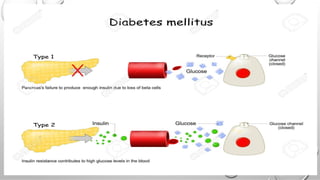
• If you have diabetes , your body does not make enough insulin or your cells
cannot use it well , As a result glucose does not get in to your cells so your
blood sugar levels gradually increase.
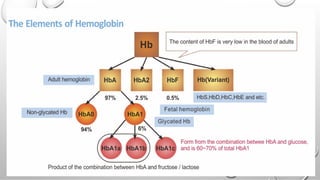
• Glucose in your blood have affinity to bind to N-terminal of the beta chain
in hemoglobin result in the formation of glycated hemoglobin (HbA1c). It
helps to diagnose pre diabetics which raises your risk for diabetics and also
diagnose diabetes.
• The most type of hemoglobin present in our blood are HbA ,HbA2 and HbF
• Hb variant is a genetic defect that results changes in their structure,globins
DIABETES MELLITUS
What is diabetes mellitus?
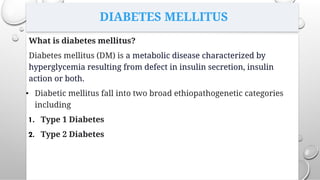
Diabetes mellitus (DM) is a metabolic disease characterized by
hyperglycemia resulting from defect in insulin secretion, insulin
action or both.
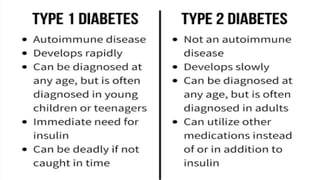
• Diabetic mellitus fall into two broad ethiopathogenetic categories
including
1. Type 1 Diabetes
2. Type 2 Diabetes
Symptoms of marked hyperglycemia include
• Polyuria
• Polydipsia
• Polyphagia
• Weight loss
• blurred vision and fatigue
Other conditions result hyperglycemia
• Diabetic Ketoacidosis (DKA develop when your body doesn’t get the glucose
as a source of energy instead your liver breaks down fat for fuel produces
acid as ketones , accumulation of these ketones leads to ketoacidosis).
• Gestational diabetes: Diabetes that develop during pregnancy
Long term complications diabetes include:
• Retinopathy
• Nephropathy
• Peripheral neuropathy with risk of foot ulcers
• Recurrent UTI
• cardiovascular disease
• Hypertension
DIAGNOSIS OF DIABETICS
• Diagnosis of diabetes is made through the following tests,
according to American Diabetes Association (ADA)
• Glycated hemoglobin (HbA1C) test
• Fasting plasma glucose (FPG)
• Oral glucose tolerance test (OGTT)
• Random blood sugar (RBS)
SPECIMEN COLLECTION
SAMPLE TYPE
• Whole blood K2 EDTA sample.
SPECIMEN STORAGE
• Adverse sample storage condition can cause erroneous HbA1c
result . Sample can be stored at 2-4°c for a week and for long term
stability samples should be stored at -70°c.
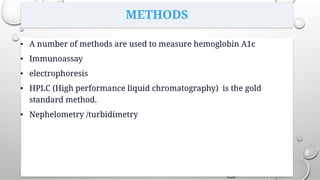
METHODS
• A number of methods are used to measure hemoglobin A1c
• Immunoassay
• electrophoresis
• HPLC (High performance liquid chromatography) is the gold
standard method.
• Nephelometry /turbidimetry
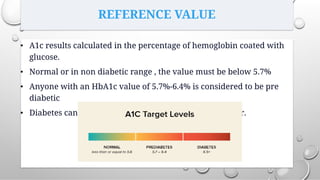
REFERENCE VALUE
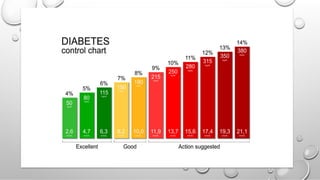
• A1c results calculated in the percentage of hemoglobin coated with
glucose.
• Normal or in non diabetic range , the value must be below 5.7%
• Anyone with an HbA1c value of 5.7%-6.4% is considered to be pre
diabetic
• Diabetes can be diagnosed with HbA1c of 6.5% or higher.
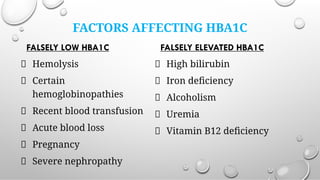
FACTORS AFFECTING HBA1C
FALSELY LOW HBA1C
Hemolysis
Certain
hemoglobinopathies
Recent blood transfusion
Acute blood loss
Pregnancy
Severe nephropathy
FALSELY ELEVATED HBA1C
High bilirubin
Iron deficiency
Alcoholism
Uremia
Vitamin B12 deficiency
REFERENCE
1. American diabetes association [internet]. Arlington (VA): American diabetes
association; c1995–2022. Understanding A1C: A1C does it all; [ cited 2022 may
17];
2. American diabetes association [internet]. Arlington (VA): American diabetes
association; c1995–2022. Common terms; [cited 2022 may 17]; [about 57 screens]
3. Centers for disease control and prevention [internet]. Atlanta: U.S. Department
of health and human services; all about your A1C; [reviewed 2021 Aug 10; cited
2022 may 17];
4. Centers for disease control and prevention [internet]. Atlanta: U.S. Department
of health and human services; diabetes risk factors; [reviewed 2022 Apr 5;cited
2022 may 17];
5. Mayo clinic [internet]. Mayo foundation for medical education and research;
Glycalated haemoglobin and analysisppt.pdf

Glycalated haemoglobin and analysisppt.pdf

  • 1.
  • 2.
    CONTENT • INRODUCTION TOHbA1C • THE ELEMENTS OF HEMOGLOBIN • DIABETES MELLITUS • SYMPTOMS OF HYPERGLYCEMIA • DIAGNOSIS OF DIABETES • SPECIMEN COLLECTION • METHODS • REFERENCE VALUE • FACTORS AFFECTING HbA1C • PREVENTION
  • 3.
    INTRODUCTION TO HBA1C •The HBA1C (hemoglobin A1c ) test measures the amount of blood sugar attached to hemoglobin(glycated hemoglobin). • Hemoglobin is the part of red blood cells that carries oxygen from lungs to rest of the body. • HBA1C test shows what your average blood sugar level was over the past 2-3 months • It is an important blood test that gives a good indication of how well your diabetes is being controlled.
  • 4.
    • Glucose isa type of sugar in your blood that comes from the food you eat , your cells use the glucose for energy. • A hormone called insulin ( secreted from pancreas) helps glucose to get in to your cells. • If you have diabetes , your body does not make enough insulin or your cells cannot use it well , As a result glucose does not get in to your cells so your blood sugar levels gradually increase. • Glucose in your blood have affinity to bind to N-terminal of the beta chain in hemoglobin result in the formation of glycated hemoglobin (HbA1c). It helps to diagnose pre diabetics which raises your risk for diabetics and also diagnose diabetes. • The most type of hemoglobin present in our blood are HbA ,HbA2 and HbF • Hb variant is a genetic defect that results changes in their structure,globins
  • 6.
    DIABETES MELLITUS What isdiabetes mellitus? Diabetes mellitus (DM) is a metabolic disease characterized by hyperglycemia resulting from defect in insulin secretion, insulin action or both. • Diabetic mellitus fall into two broad ethiopathogenetic categories including 1. Type 1 Diabetes 2. Type 2 Diabetes
  • 9.
    Symptoms of markedhyperglycemia include • Polyuria • Polydipsia • Polyphagia • Weight loss • blurred vision and fatigue Other conditions result hyperglycemia • Diabetic Ketoacidosis (DKA develop when your body doesn’t get the glucose as a source of energy instead your liver breaks down fat for fuel produces acid as ketones , accumulation of these ketones leads to ketoacidosis). • Gestational diabetes: Diabetes that develop during pregnancy
  • 10.
    Long term complicationsdiabetes include: • Retinopathy • Nephropathy • Peripheral neuropathy with risk of foot ulcers • Recurrent UTI • cardiovascular disease • Hypertension
  • 11.
    DIAGNOSIS OF DIABETICS •Diagnosis of diabetes is made through the following tests, according to American Diabetes Association (ADA) • Glycated hemoglobin (HbA1C) test • Fasting plasma glucose (FPG) • Oral glucose tolerance test (OGTT) • Random blood sugar (RBS)
  • 12.
    SPECIMEN COLLECTION SAMPLE TYPE •Whole blood K2 EDTA sample. SPECIMEN STORAGE • Adverse sample storage condition can cause erroneous HbA1c result . Sample can be stored at 2-4°c for a week and for long term stability samples should be stored at -70°c.
  • 13.
    METHODS • A numberof methods are used to measure hemoglobin A1c • Immunoassay • electrophoresis • HPLC (High performance liquid chromatography) is the gold standard method. • Nephelometry /turbidimetry
  • 14.
    REFERENCE VALUE • A1cresults calculated in the percentage of hemoglobin coated with glucose. • Normal or in non diabetic range , the value must be below 5.7% • Anyone with an HbA1c value of 5.7%-6.4% is considered to be pre diabetic • Diabetes can be diagnosed with HbA1c of 6.5% or higher.
  • 16.
    FACTORS AFFECTING HBA1C FALSELYLOW HBA1C Hemolysis Certain hemoglobinopathies Recent blood transfusion Acute blood loss Pregnancy Severe nephropathy FALSELY ELEVATED HBA1C High bilirubin Iron deficiency Alcoholism Uremia Vitamin B12 deficiency
  • 18.
    REFERENCE 1. American diabetesassociation [internet]. Arlington (VA): American diabetes association; c1995–2022. Understanding A1C: A1C does it all; [ cited 2022 may 17]; 2. American diabetes association [internet]. Arlington (VA): American diabetes association; c1995–2022. Common terms; [cited 2022 may 17]; [about 57 screens] 3. Centers for disease control and prevention [internet]. Atlanta: U.S. Department of health and human services; all about your A1C; [reviewed 2021 Aug 10; cited 2022 may 17]; 4. Centers for disease control and prevention [internet]. Atlanta: U.S. Department of health and human services; diabetes risk factors; [reviewed 2022 Apr 5;cited 2022 may 17]; 5. Mayo clinic [internet]. Mayo foundation for medical education and research;