Dr H N Sowbhagya
Glaucoma is a group of eye diseases
that can cause vision loss and
blindness by damaging a nerve in the
back of the eye called the optic nerve.
 AQUIRED
 1.Primary Open
Angle Glaucoma,
 2. Angle Closure
Glaucoma,
 3 Normal Tension
Glaucoma,
 4.Secondary
Glaucoma.
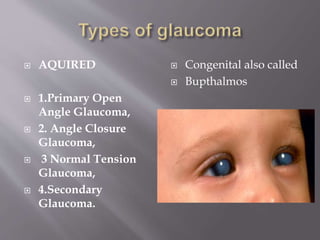
 Congenital also called
 Bupthalmos
Open-angle glaucoma is a chronic, progressive,
and irreversible multifactorial optic neuropathy
that is characterized by an open angle of the
anterior chamber, optic nerve head changes,
progressive loss of peripheral vision, followed
by central visual field loss.
 Glaucoma affects 70 million people worldwide
.
 second leading cause of blindness.
 Estimated prevalence for age 40-89 1.2%, rising
from 0.2% for those in their 40s to 4.3% for
those in their 80s.
1. Old age (African American over 40 and Caucasian over 65 years old)
2. Family history (The Rotterdam Eye study found 9.2 times higher risk of
developing OAG if first degree relatives had glaucoma)
3. Elevated IOP
4. Myopia
5. Increased cup-to-disc ratio
6. Disc hemorrhage
7. Thin central corneal thickness
8. Low ocular perfusion pressure
9. Low blood pressure
10. High blood pressure (systemic arterial hypertension has been associated but not
confirmed risk factor for OAG)
11. Type 2 diabetes mellitus
12. Migraine or vasospasm
13. Low intracranial (CSF) pressure
14. Oral contraceptive pill
15. Other risk factors include smoking, obesity, alcohol, anxiety, stress, and sleep
apnea
 pathology lies in the apoptosis of retinal ganglion cells.
 The lamina cribrosa is a sieve-like fenestration at the
back of the sclera that allows for a conglomeration of
retinal axons and blood vessels to exit the posterior of
the eye. Changes in the three-dimensional structure of
the lamina cribrosa have been implicated in the
pathogenesis of glaucomatous optic atrophy.
 Elevated Intraocular Pressure
 Aqueous Outflow two main proposed mechanisms
1.vascular dysfunction resulting in ischemia to the optic
nerve 2.mechanical dysfunction as a result of compression
of the axons.
 glaucomatous optic nerve atrophy
 thinning and atrophy of the retinal ganglion
cell layer
 thinning of the nerve fiber layer above the
ganglion cells.
 particulate matter can lodge into the fine openings
in the trabecular meshwork and thus increase the
passive resistance to aqueous humor drainage.
 Lens proteins:
 Red blood cells: "Ghost cell glaucoma.“
 Pigment granules: pigmentary glaucoma, and
pigment dispersion syndrome.
 Tumor debris: Melanomalytic glaucoma.
 Corticosteroids: Steroid Induced glaucoma
 No symptoms in early stages. Headache
 Gradually, patchy blind spots in side vision.
known as peripheral vision.
 In later stages, difficulty seeing things in
central vision.
 Delayed dark adoptation
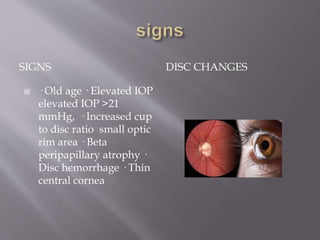
SIGNS DISC CHANGES
 · Old age · Elevated IOP
elevated IOP >21
mmHg, · Increased cup
to disc ratio small optic
rim area · Beta
peripapillary atrophy ·
Disc hemorrhage · Thin
central cornea
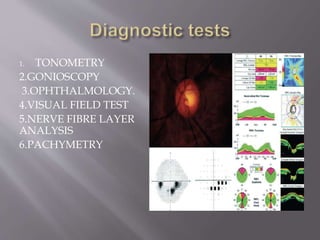
1. TONOMETRY
2.GONIOSCOPY
3.OPHTHALMOLOGY.
4.VISUAL FIELD TEST
5.NERVE FIBRE LAYER
ANALYSIS
6.PACHYMETRY
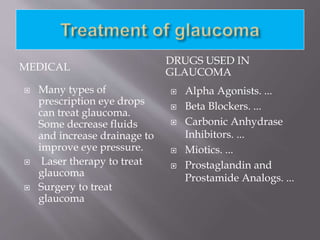
MEDICAL
DRUGS USED IN
GLAUCOMA
 Many types of
prescription eye drops
can treat glaucoma.
Some decrease fluids
and increase drainage to
improve eye pressure.
 Laser therapy to treat
glaucoma
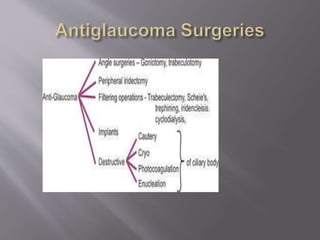
 Surgery to treat
glaucoma
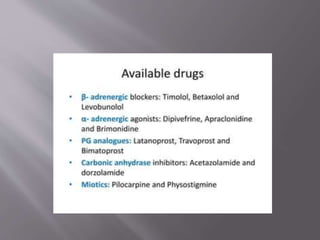
 Alpha Agonists. ...
 Beta Blockers. ...
 Carbonic Anhydrase
Inhibitors. ...
 Miotics. ...
 Prostaglandin and
Prostamide Analogs. ...
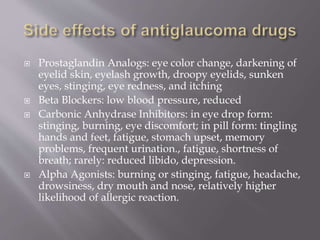
 Prostaglandin Analogs: eye color change, darkening of
eyelid skin, eyelash growth, droopy eyelids, sunken
eyes, stinging, eye redness, and itching
 Beta Blockers: low blood pressure, reduced
 Carbonic Anhydrase Inhibitors: in eye drop form:
stinging, burning, eye discomfort; in pill form: tingling
hands and feet, fatigue, stomach upset, memory
problems, frequent urination., fatigue, shortness of
breath; rarely: reduced libido, depression.
 Alpha Agonists: burning or stinging, fatigue, headache,
drowsiness, dry mouth and nose, relatively higher
likelihood of allergic reaction.
Thank you

Glaucoma HNS.pptx

  • 1.
    Dr H NSowbhagya
  • 2.
    Glaucoma is agroup of eye diseases that can cause vision loss and blindness by damaging a nerve in the back of the eye called the optic nerve.
  • 3.
     AQUIRED  1.PrimaryOpen Angle Glaucoma,  2. Angle Closure Glaucoma,  3 Normal Tension Glaucoma,  4.Secondary Glaucoma.  Congenital also called  Bupthalmos
  • 4.
    Open-angle glaucoma isa chronic, progressive, and irreversible multifactorial optic neuropathy that is characterized by an open angle of the anterior chamber, optic nerve head changes, progressive loss of peripheral vision, followed by central visual field loss.
  • 5.
     Glaucoma affects70 million people worldwide .  second leading cause of blindness.  Estimated prevalence for age 40-89 1.2%, rising from 0.2% for those in their 40s to 4.3% for those in their 80s.
  • 6.
    1. Old age(African American over 40 and Caucasian over 65 years old) 2. Family history (The Rotterdam Eye study found 9.2 times higher risk of developing OAG if first degree relatives had glaucoma) 3. Elevated IOP 4. Myopia 5. Increased cup-to-disc ratio 6. Disc hemorrhage 7. Thin central corneal thickness 8. Low ocular perfusion pressure 9. Low blood pressure 10. High blood pressure (systemic arterial hypertension has been associated but not confirmed risk factor for OAG) 11. Type 2 diabetes mellitus 12. Migraine or vasospasm 13. Low intracranial (CSF) pressure 14. Oral contraceptive pill 15. Other risk factors include smoking, obesity, alcohol, anxiety, stress, and sleep apnea
  • 7.
     pathology liesin the apoptosis of retinal ganglion cells.  The lamina cribrosa is a sieve-like fenestration at the back of the sclera that allows for a conglomeration of retinal axons and blood vessels to exit the posterior of the eye. Changes in the three-dimensional structure of the lamina cribrosa have been implicated in the pathogenesis of glaucomatous optic atrophy.  Elevated Intraocular Pressure  Aqueous Outflow two main proposed mechanisms 1.vascular dysfunction resulting in ischemia to the optic nerve 2.mechanical dysfunction as a result of compression of the axons.
  • 8.
     glaucomatous opticnerve atrophy  thinning and atrophy of the retinal ganglion cell layer  thinning of the nerve fiber layer above the ganglion cells.
  • 9.
     particulate mattercan lodge into the fine openings in the trabecular meshwork and thus increase the passive resistance to aqueous humor drainage.  Lens proteins:  Red blood cells: "Ghost cell glaucoma.“  Pigment granules: pigmentary glaucoma, and pigment dispersion syndrome.  Tumor debris: Melanomalytic glaucoma.  Corticosteroids: Steroid Induced glaucoma
  • 10.
     No symptomsin early stages. Headache  Gradually, patchy blind spots in side vision. known as peripheral vision.  In later stages, difficulty seeing things in central vision.  Delayed dark adoptation
  • 11.
    SIGNS DISC CHANGES · Old age · Elevated IOP elevated IOP >21 mmHg, · Increased cup to disc ratio small optic rim area · Beta peripapillary atrophy · Disc hemorrhage · Thin central cornea
  • 12.
    1. TONOMETRY 2.GONIOSCOPY 3.OPHTHALMOLOGY. 4.VISUAL FIELDTEST 5.NERVE FIBRE LAYER ANALYSIS 6.PACHYMETRY
  • 13.
    MEDICAL DRUGS USED IN GLAUCOMA Many types of prescription eye drops can treat glaucoma. Some decrease fluids and increase drainage to improve eye pressure.  Laser therapy to treat glaucoma  Surgery to treat glaucoma  Alpha Agonists. ...  Beta Blockers. ...  Carbonic Anhydrase Inhibitors. ...  Miotics. ...  Prostaglandin and Prostamide Analogs. ...
  • 15.
     Prostaglandin Analogs:eye color change, darkening of eyelid skin, eyelash growth, droopy eyelids, sunken eyes, stinging, eye redness, and itching  Beta Blockers: low blood pressure, reduced  Carbonic Anhydrase Inhibitors: in eye drop form: stinging, burning, eye discomfort; in pill form: tingling hands and feet, fatigue, stomach upset, memory problems, frequent urination., fatigue, shortness of breath; rarely: reduced libido, depression.  Alpha Agonists: burning or stinging, fatigue, headache, drowsiness, dry mouth and nose, relatively higher likelihood of allergic reaction.
  • 18.