Getting on board with REFGetting on board with REF
requirements:requirements:
games for early careergames for early career
researchersresearchers
Alison McNab
University of Huddersfield
@alisonmcnab / @hudlib
Outline
○ Introduction
○ Overview of research games,
gamification and the Vitae
Researcher Development
Framework (RDF)
○ Mapping games to the RDF
○ Mind the (RDF) gaps!
○ Feedback from group work
○ Conclusion / action planning
2
3
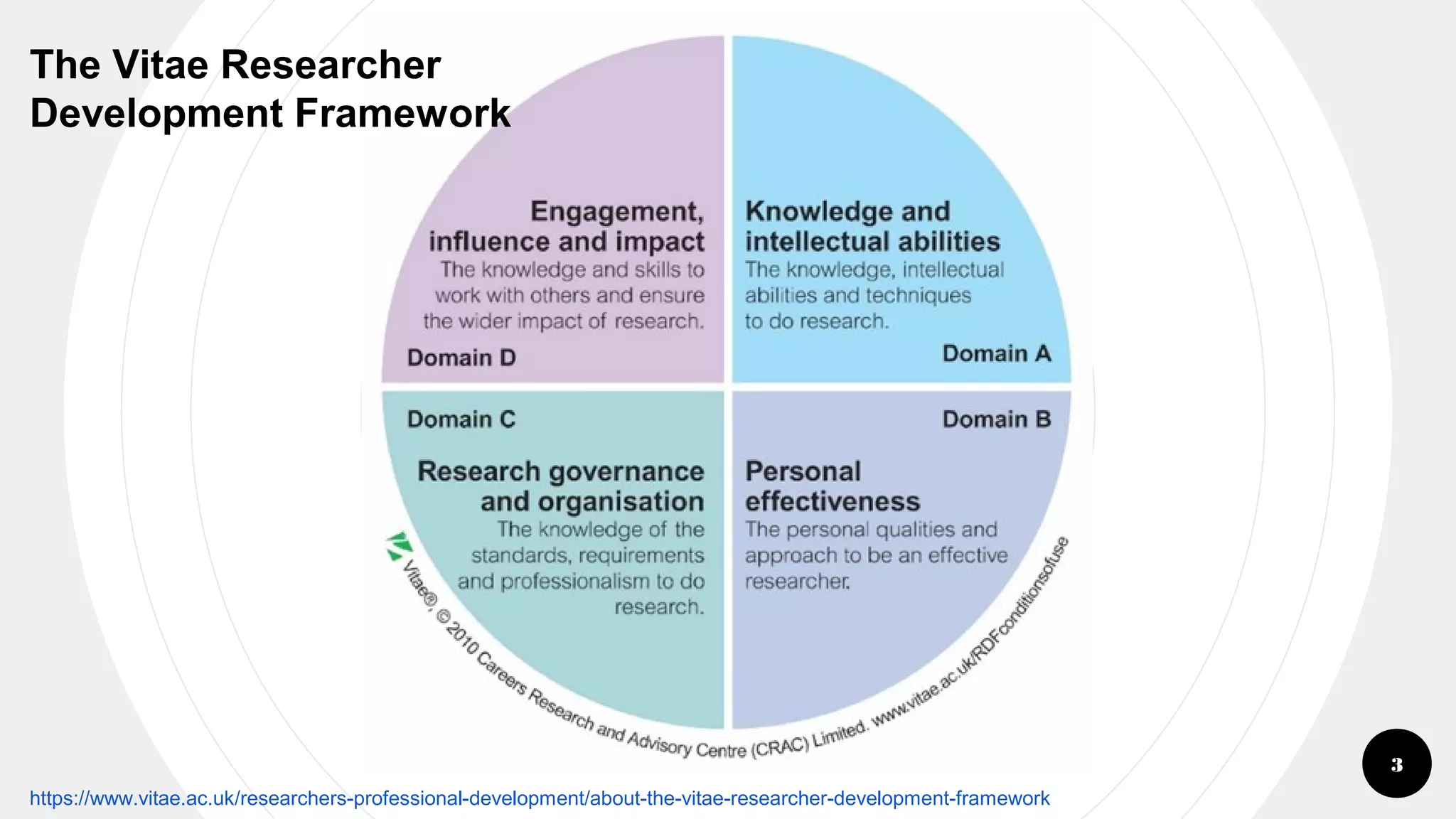
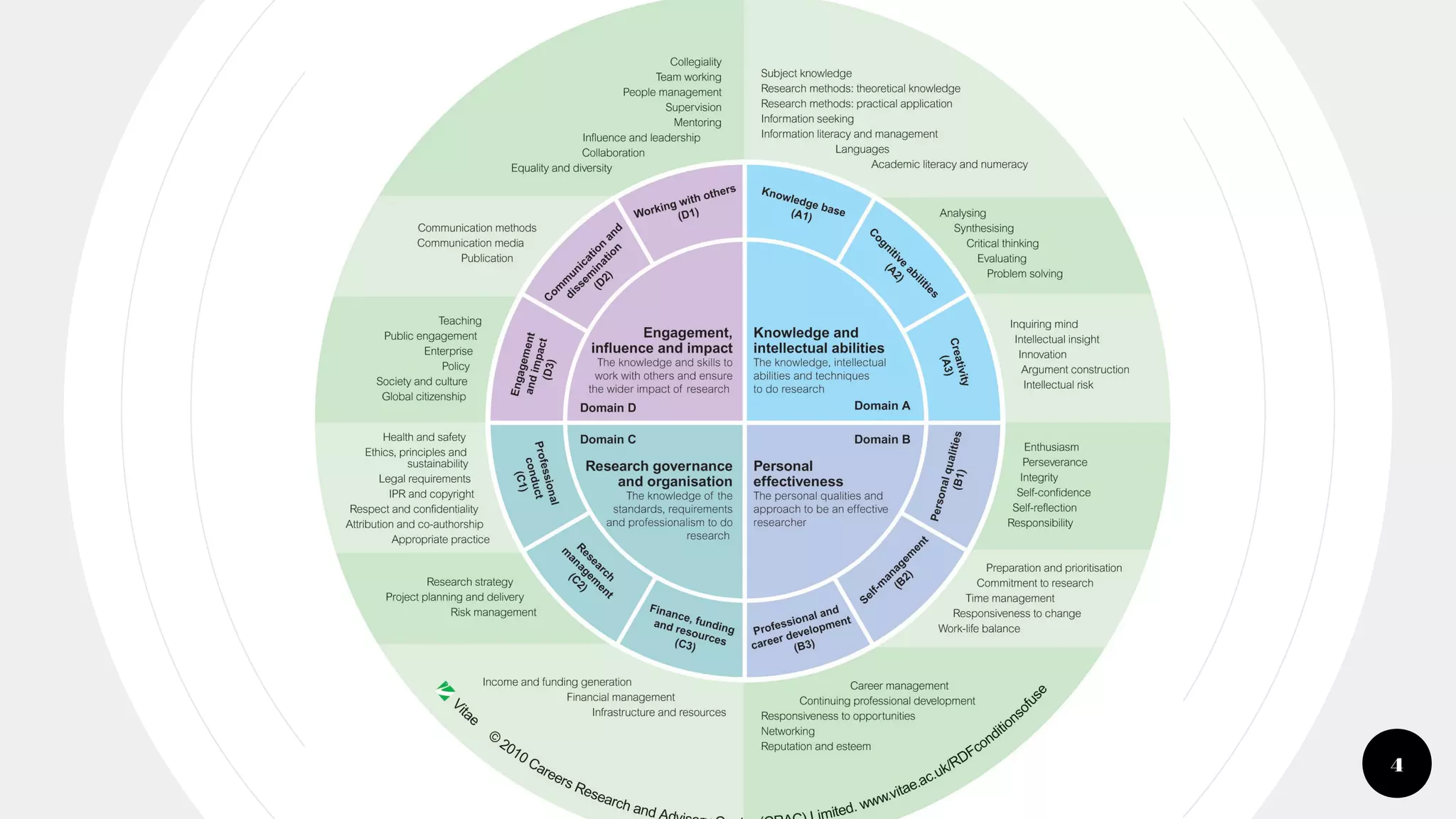
https://www.vitae.ac.uk/researchers-professional-development/about-the-vitae-researcher-development-framework
The Vitae Researcher
Development Framework
4
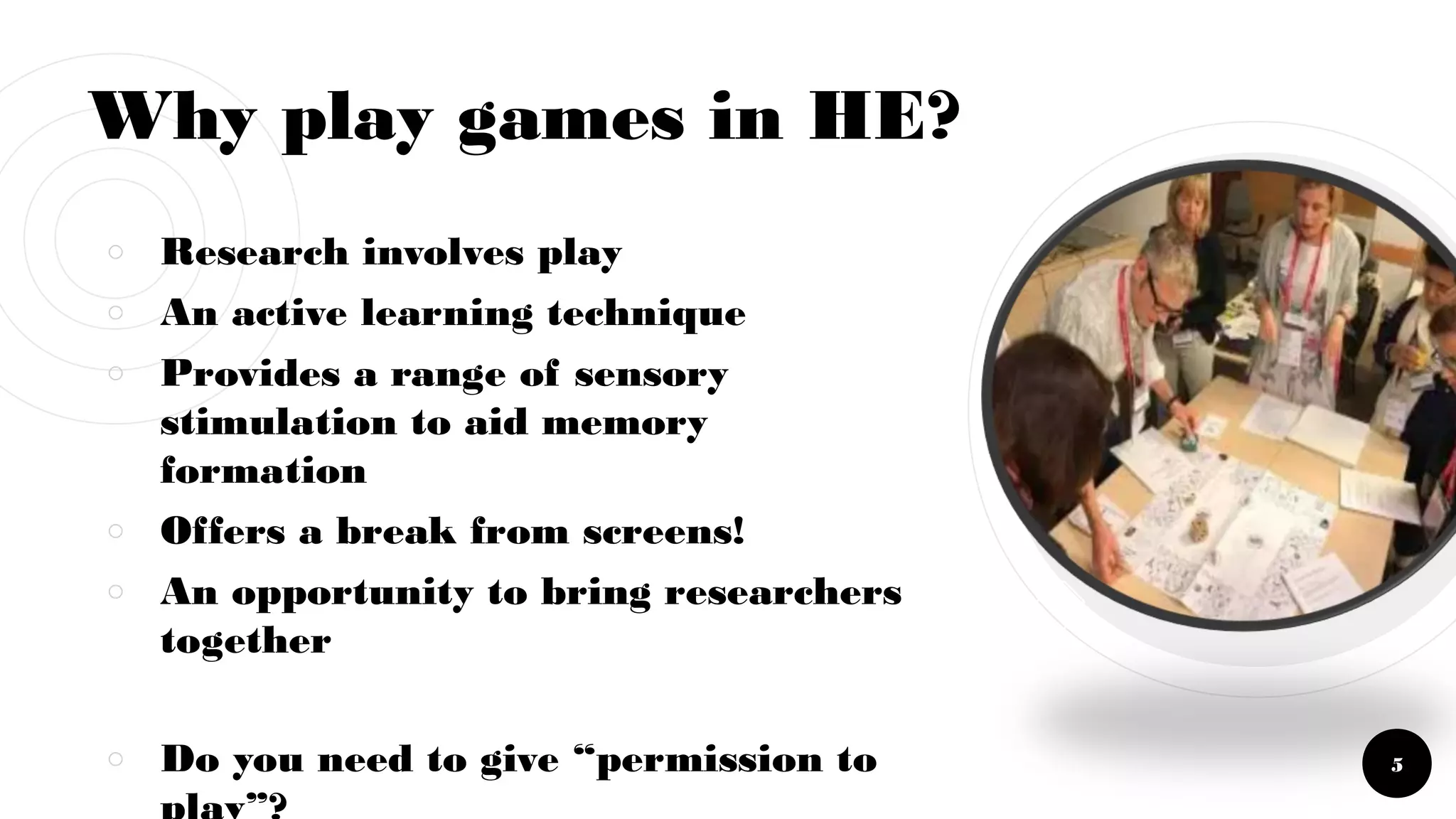
Why play games in HE?
○ Research involves play
○ An active learning technique
○ Provides a range of sensory
stimulation to aid memory
formation
○ Offers a break from screens!
○ An opportunity to bring researchers
together
○ Do you need to give “permission to 5
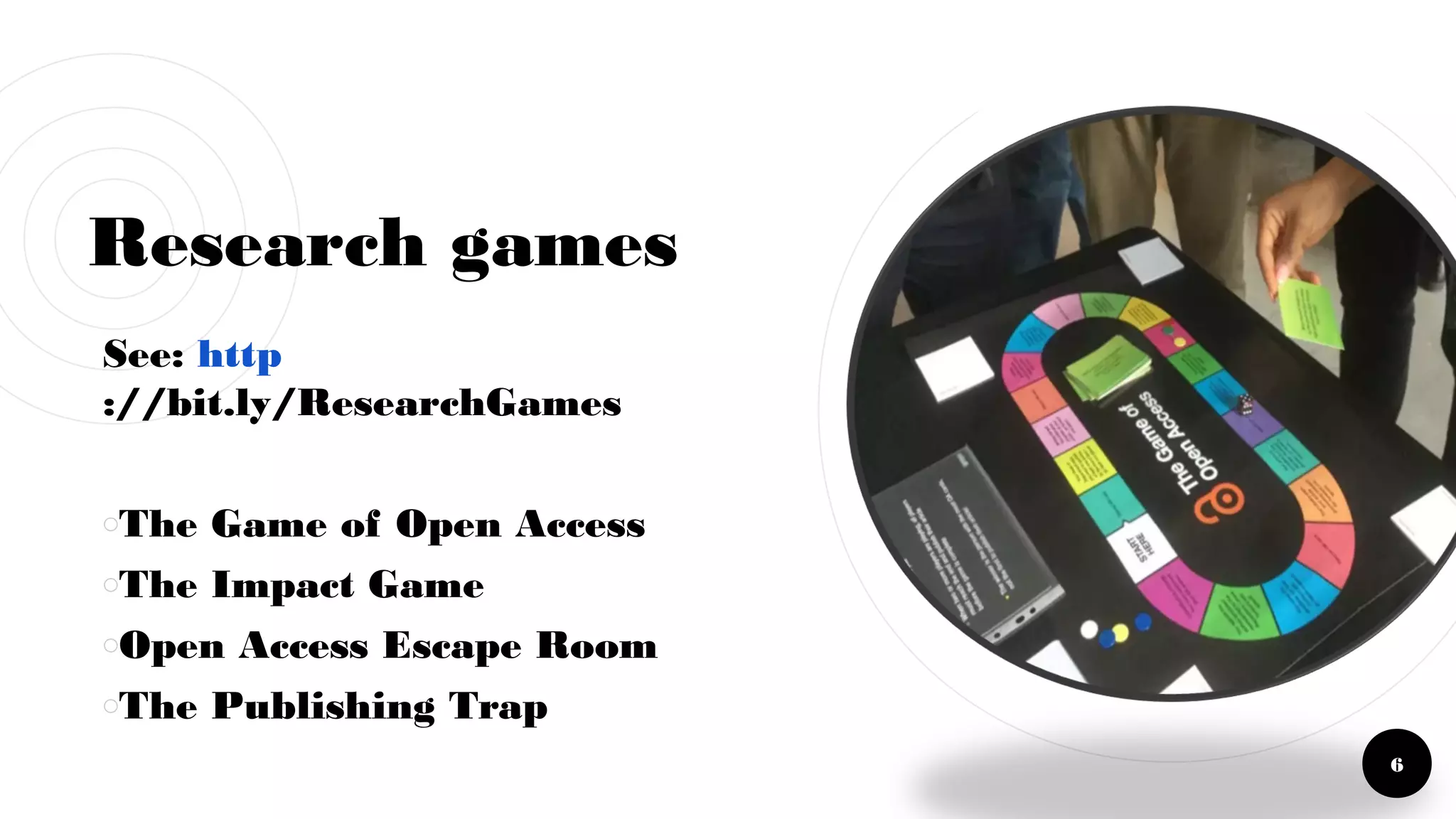
Research games
See: http
://bit.ly/ResearchGames
○The Game of Open Access
○The Impact Game
○Open Access Escape Room
○The Publishing Trap
6
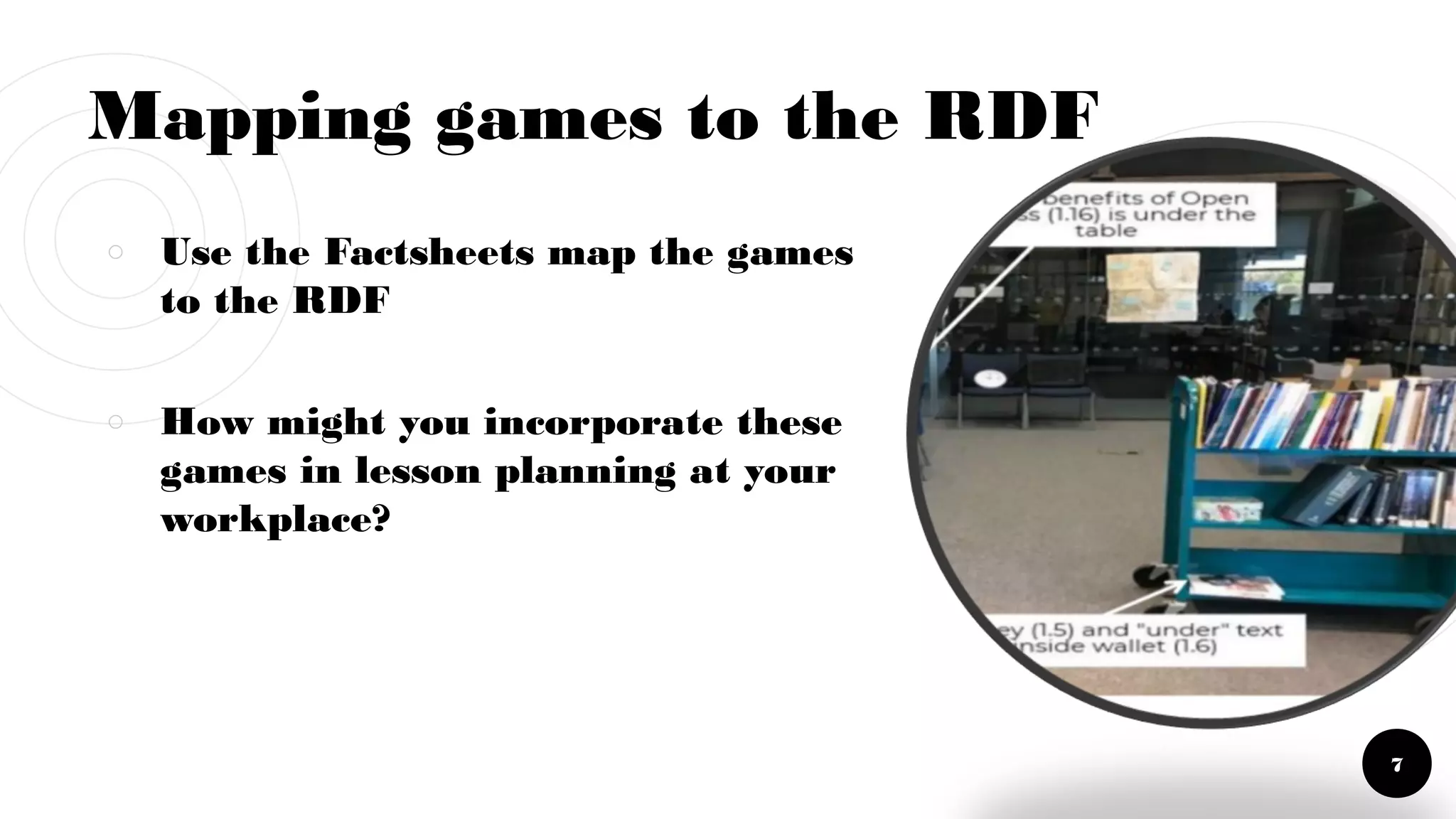
Mapping games to the RDF
○ Use the Factsheets map the games
to the RDF
○ How might you incorporate these
games in lesson planning at your
workplace?
7
Mind the (RDF) gaps!
○ Which RDF sub-domains don’t have
games or activities mapped to them?
○ Does your service offer existing
activities / training which might fill
the gaps?
○ Is there a research game that you
might develop?
8
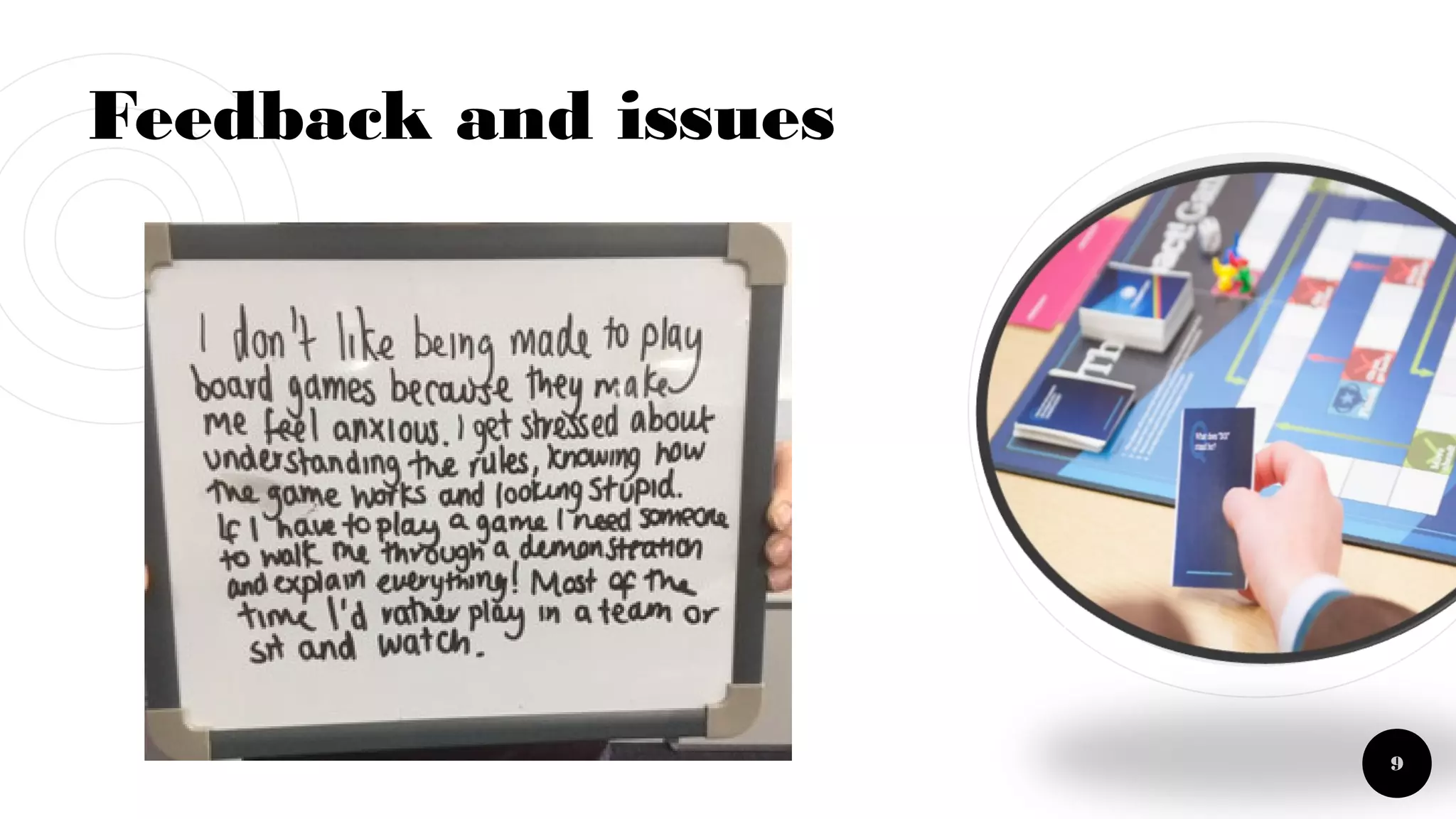
Feedback and issues
9
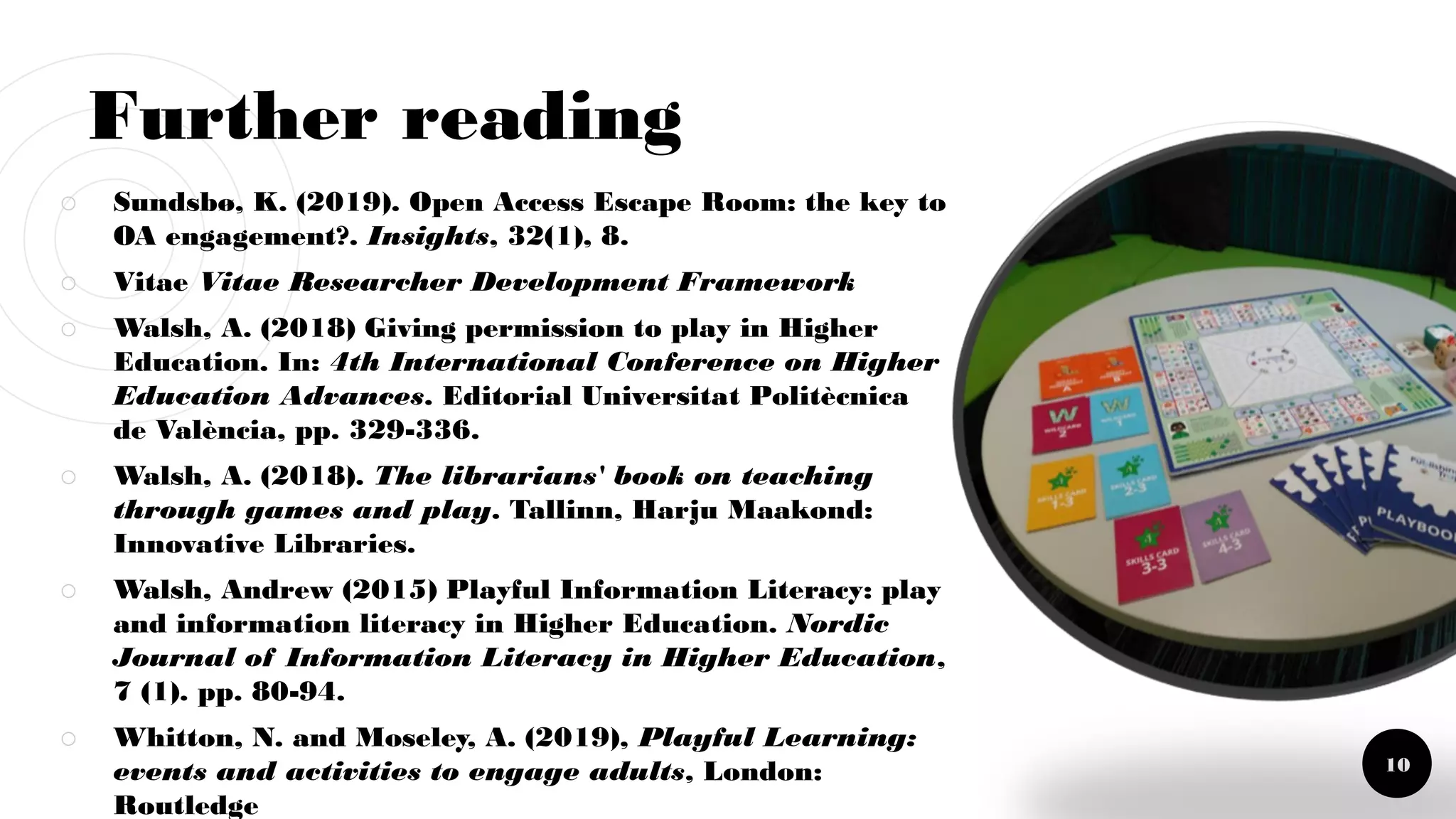
Further reading
○ Sundsbø, K. (2019). Open Access Escape Room: the key to
OA engagement?. Insights, 32(1), 8.
○ Vitae Vitae Researcher Development Framework
○ Walsh, A. (2018) Giving permission to play in Higher
Education. In: 4th International Conference on Higher
Education Advances. Editorial Universitat Politècnica
de València, pp. 329-336.
○ Walsh, A. (2018). The librarians' book on teaching
through games and play. Tallinn, Harju Maakond:
Innovative Libraries.
○ Walsh, Andrew (2015) Playful Information Literacy: play
and information literacy in Higher Education. Nordic
Journal of Information Literacy in Higher Education,
7 (1). pp. 80-94.
○ Whitton, N. and Moseley, A. (2019), Playful Learning:
events and activities to engage adults, London:
Routledge
10
11
Thanks!
Any questions?
You can find me at
○@AlisonMcNab
○A.McNab@hud.ac.uk
○http://bit.ly/Research
Games
Photo credits: Alison McNab, Chris Morrison & Jane
Secker, Laura Palmer, Georgina Parsons and Katrine
Sundsbø
12
Game of Open Access The Impact Game
Open Access Escape Room The Publishing Trap

Getting on board with REF requirements: games for early career researchers

  • 1.
    Getting on boardwith REFGetting on board with REF requirements:requirements: games for early careergames for early career researchersresearchers Alison McNab University of Huddersfield @alisonmcnab / @hudlib
  • 2.
    Outline ○ Introduction ○ Overviewof research games, gamification and the Vitae Researcher Development Framework (RDF) ○ Mapping games to the RDF ○ Mind the (RDF) gaps! ○ Feedback from group work ○ Conclusion / action planning 2
  • 3.
  • 4.
  • 5.
    Why play gamesin HE? ○ Research involves play ○ An active learning technique ○ Provides a range of sensory stimulation to aid memory formation ○ Offers a break from screens! ○ An opportunity to bring researchers together ○ Do you need to give “permission to 5
  • 6.
    Research games See: http ://bit.ly/ResearchGames ○TheGame of Open Access ○The Impact Game ○Open Access Escape Room ○The Publishing Trap 6
  • 7.
    Mapping games tothe RDF ○ Use the Factsheets map the games to the RDF ○ How might you incorporate these games in lesson planning at your workplace? 7
  • 8.
    Mind the (RDF)gaps! ○ Which RDF sub-domains don’t have games or activities mapped to them? ○ Does your service offer existing activities / training which might fill the gaps? ○ Is there a research game that you might develop? 8
  • 9.
  • 10.
    Further reading ○ Sundsbø,K. (2019). Open Access Escape Room: the key to OA engagement?. Insights, 32(1), 8. ○ Vitae Vitae Researcher Development Framework ○ Walsh, A. (2018) Giving permission to play in Higher Education. In: 4th International Conference on Higher Education Advances. Editorial Universitat Politècnica de València, pp. 329-336. ○ Walsh, A. (2018). The librarians' book on teaching through games and play. Tallinn, Harju Maakond: Innovative Libraries. ○ Walsh, Andrew (2015) Playful Information Literacy: play and information literacy in Higher Education. Nordic Journal of Information Literacy in Higher Education, 7 (1). pp. 80-94. ○ Whitton, N. and Moseley, A. (2019), Playful Learning: events and activities to engage adults, London: Routledge 10
  • 11.
    11 Thanks! Any questions? You canfind me at ○@AlisonMcNab ○A.McNab@hud.ac.uk ○http://bit.ly/Research Games Photo credits: Alison McNab, Chris Morrison & Jane Secker, Laura Palmer, Georgina Parsons and Katrine Sundsbø
  • 12.
    12 Game of OpenAccess The Impact Game Open Access Escape Room The Publishing Trap