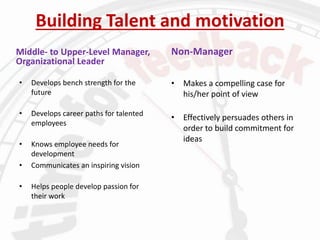
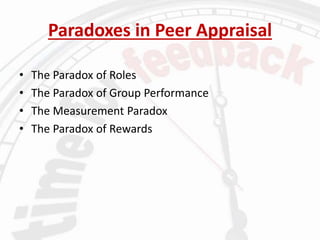
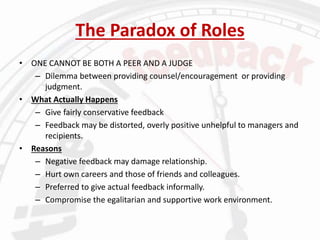
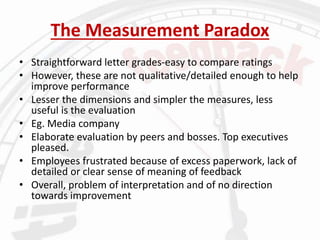
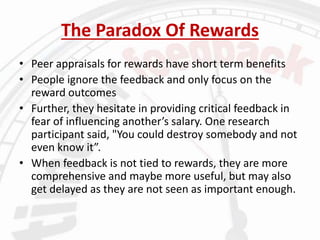
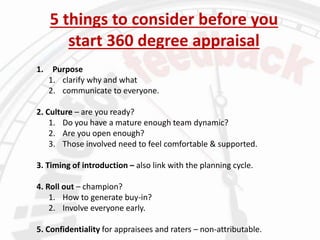
360-degree feedback involves employees receiving anonymous feedback from subordinates, peers, supervisors, and a self-evaluation. It provides a unique perspective beyond what managers can assess. Structured questionnaires gather opinions on competencies and allow open-ended feedback. 360 feedback is used for employee development, helping them improve weaknesses, and for performance appraisal, though it is better suited to development. It originated in the military and was popularized by companies like GE in the 1980s. Proper implementation requires addressing paradoxes like maintaining peer relationships while providing judgment and avoiding group risks when focusing on individuals. Organizations must consider cultural readiness and communication before starting a 360 program.