Intoduct t Confl St es
  r ion o ict yl


                    Copyright 2011 Riverhouse ePress
                    www.ConflictStyleMatters.com
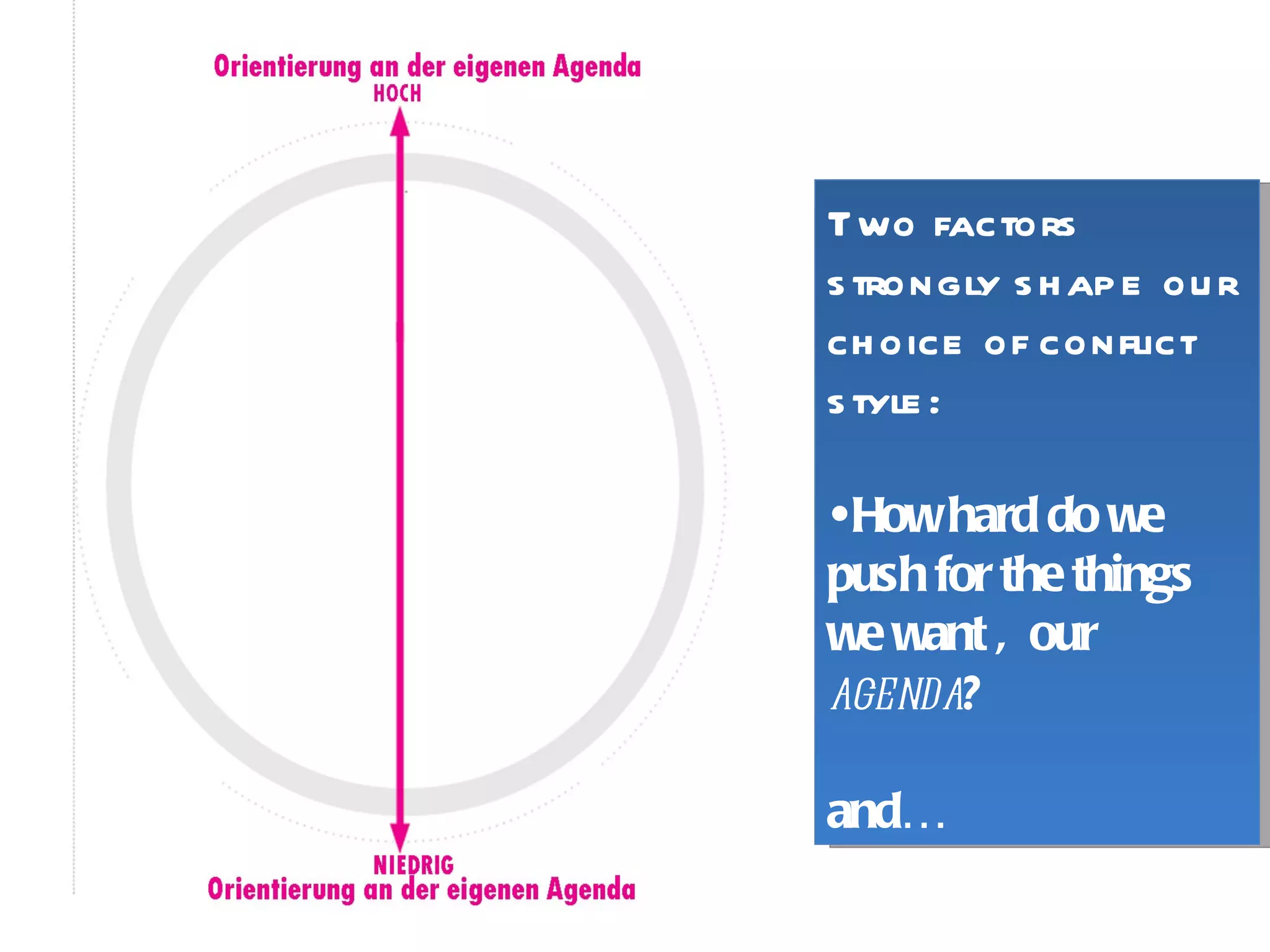
Two factors
s trongly s h ap e ou r
ch oice of conflict
s tyle :

•How hard do we
push for the things
we want , our
agenda?

and…
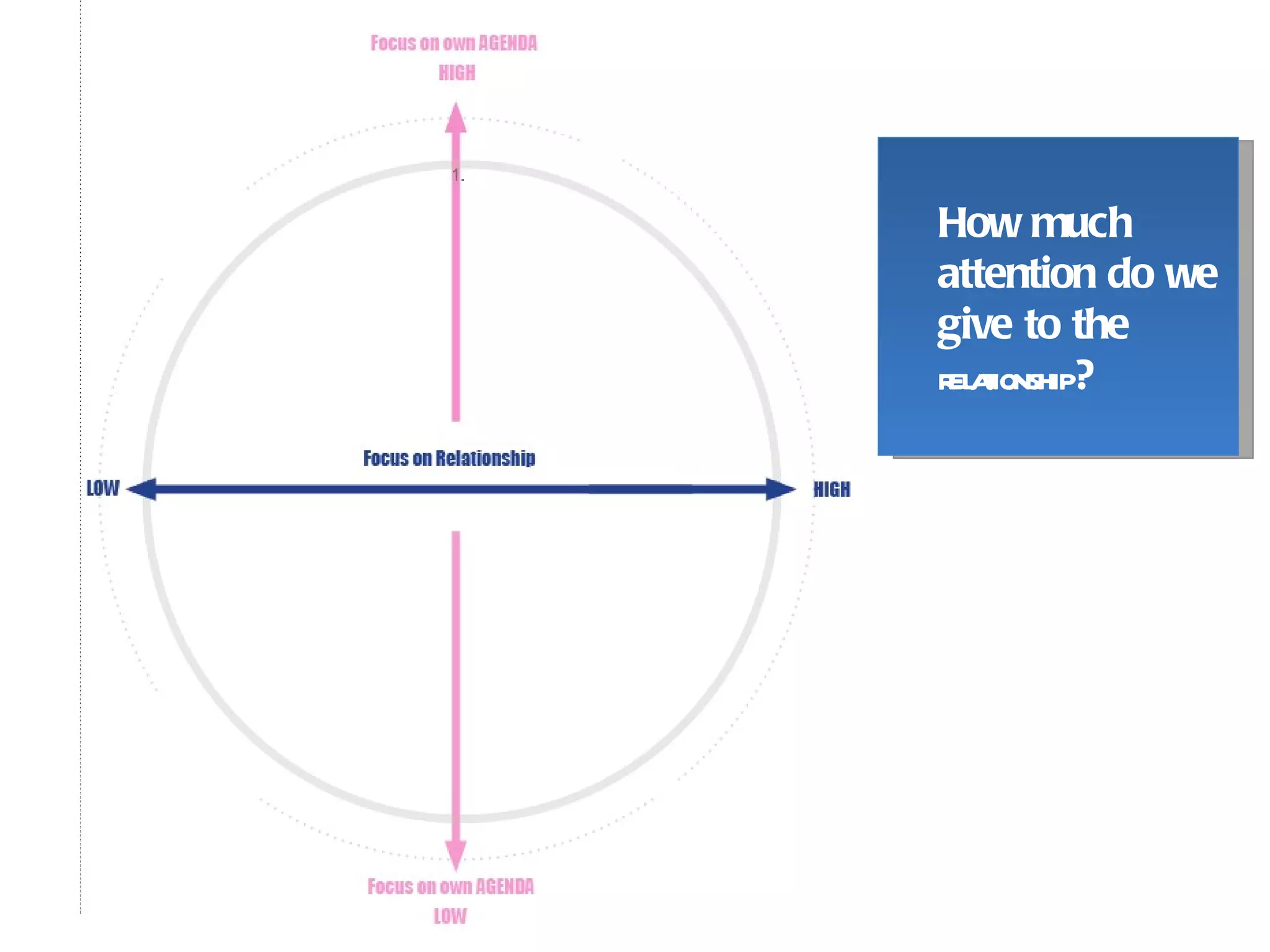
How much
attention do we
give to the
r aionship?
 el t
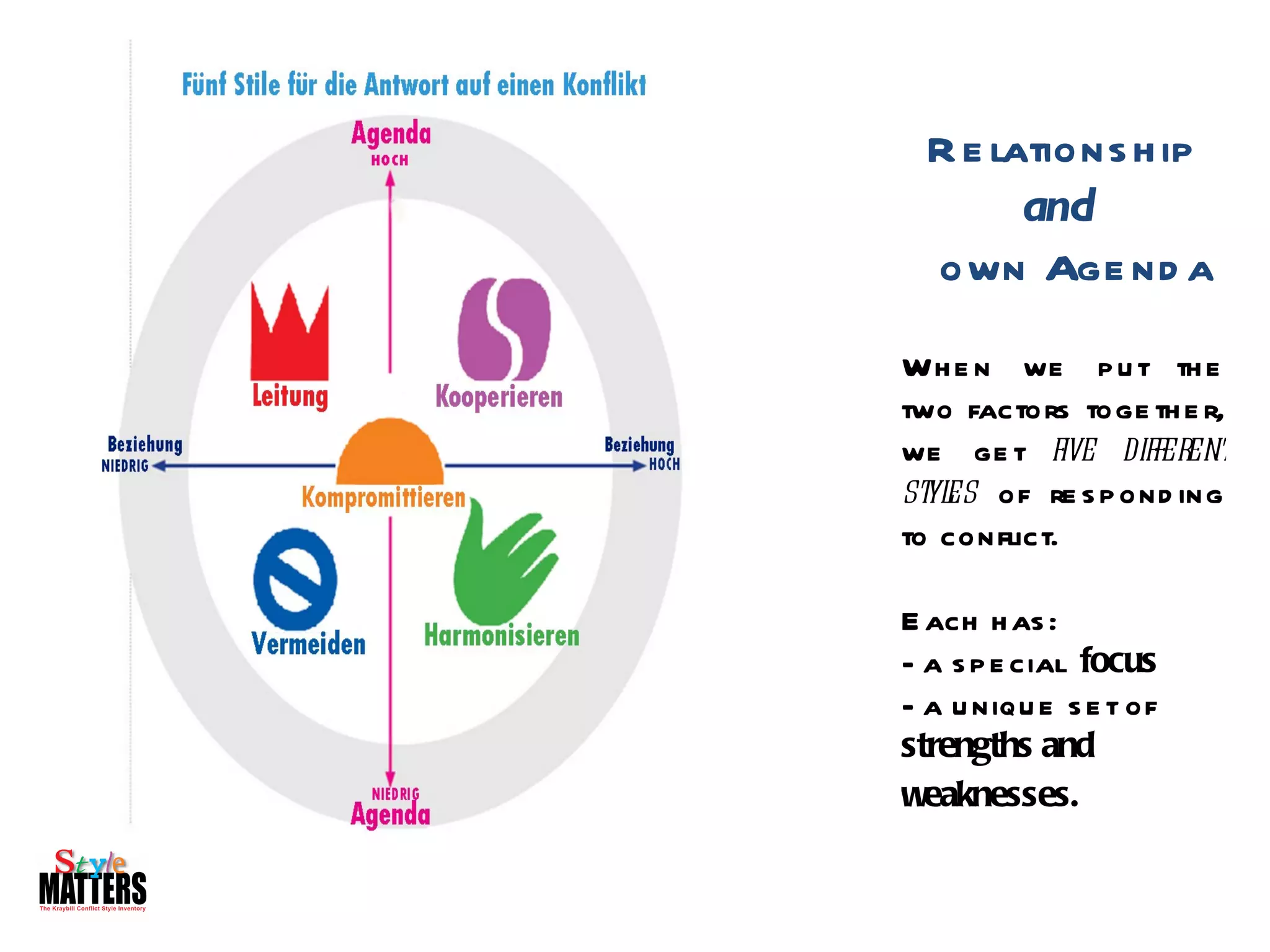
R e lations h ip
        and
  own Age nd a
Wh e n we p u t th e
two factors toge th e r,
we ge t five different
st es of re s p ond ing
  yl
to conflict.

E ach h as :
- a s p e cial focus
- a u niqu e s e t of
strengths and
weaknesses.
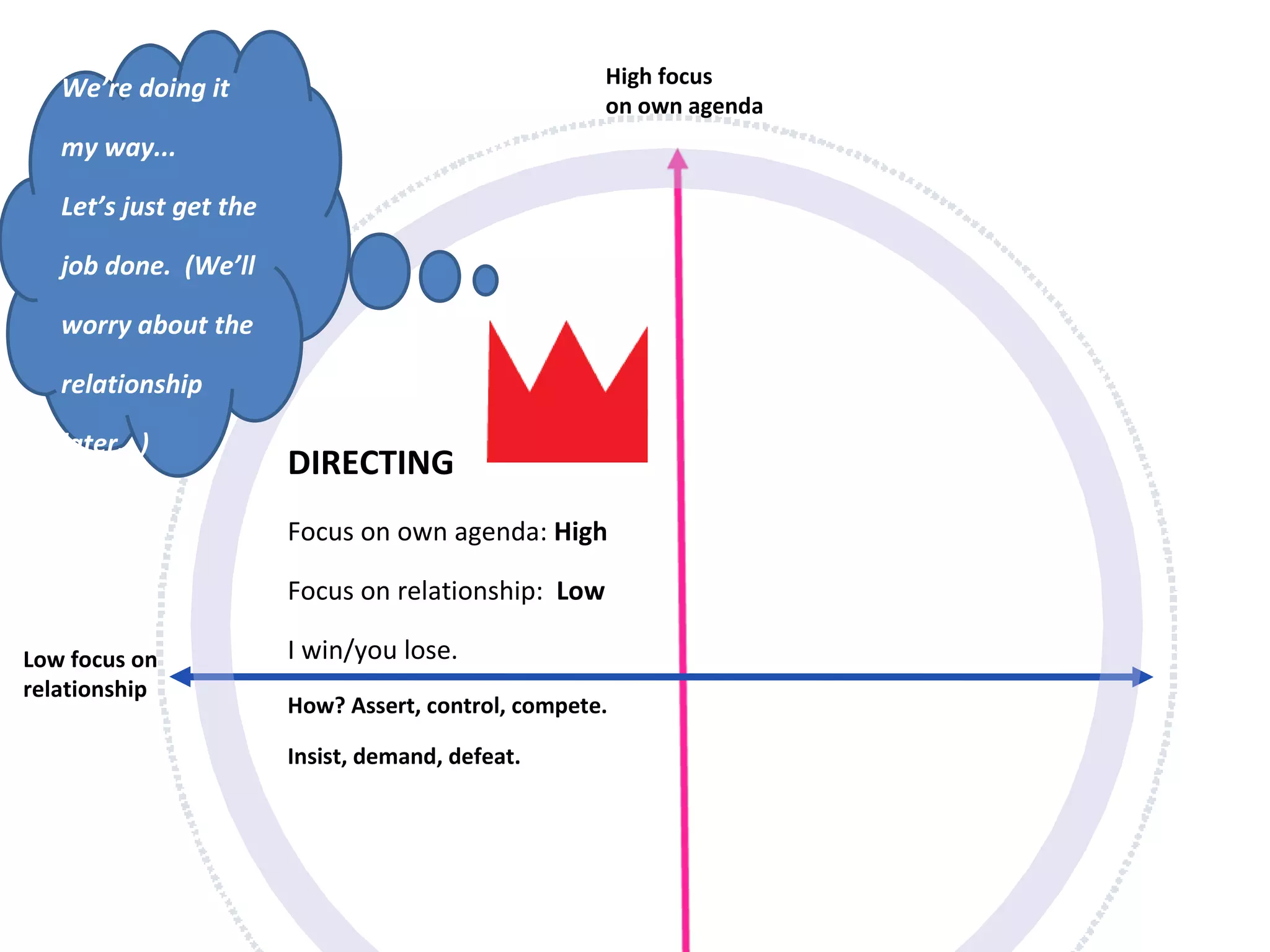
High focus
   We’re doing it
                                                     on own agenda
   my way...

   Let’s just get the

   job done. (We’ll

   worry about the

   relationship

   later...)
                        DIRECTING
                        Focus on own agenda: High

                        Focus on relationship: Low

Low focus on            I win/you lose.
relationship
                        How? Assert, control, compete.

                        Insist, demand, defeat.
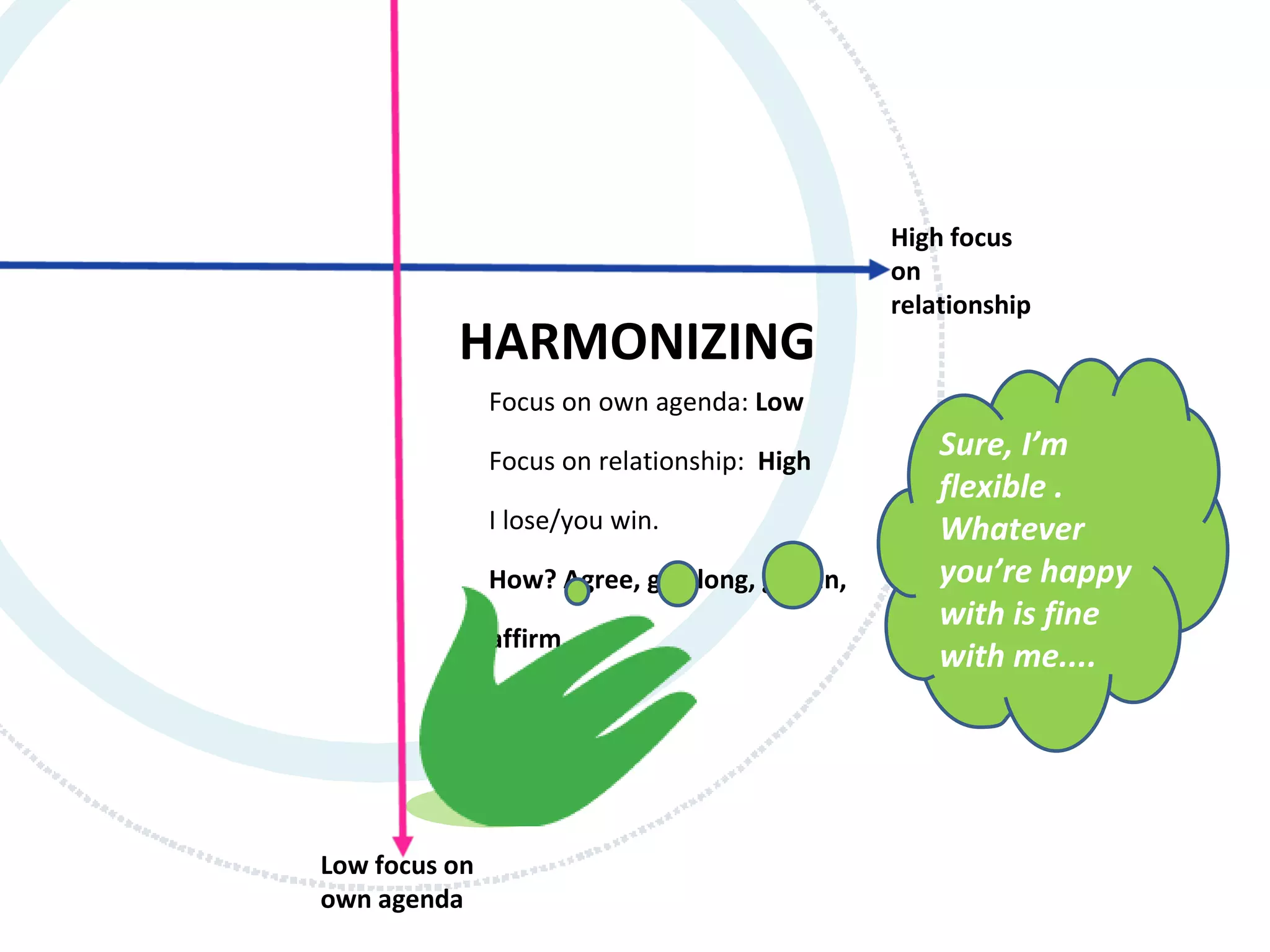
High focus
                                                on
                                                relationship
          HARMONIZING
               Focus on own agenda: Low

               Focus on relationship: High
                                                    Sure, I’m
                                                    flexible .
               I lose/you win.                      Whatever
               How? Agree, go along, give in,       you’re happy
                                                    with is fine
               affirm.
                                                    with me....


Low focus on
own agenda
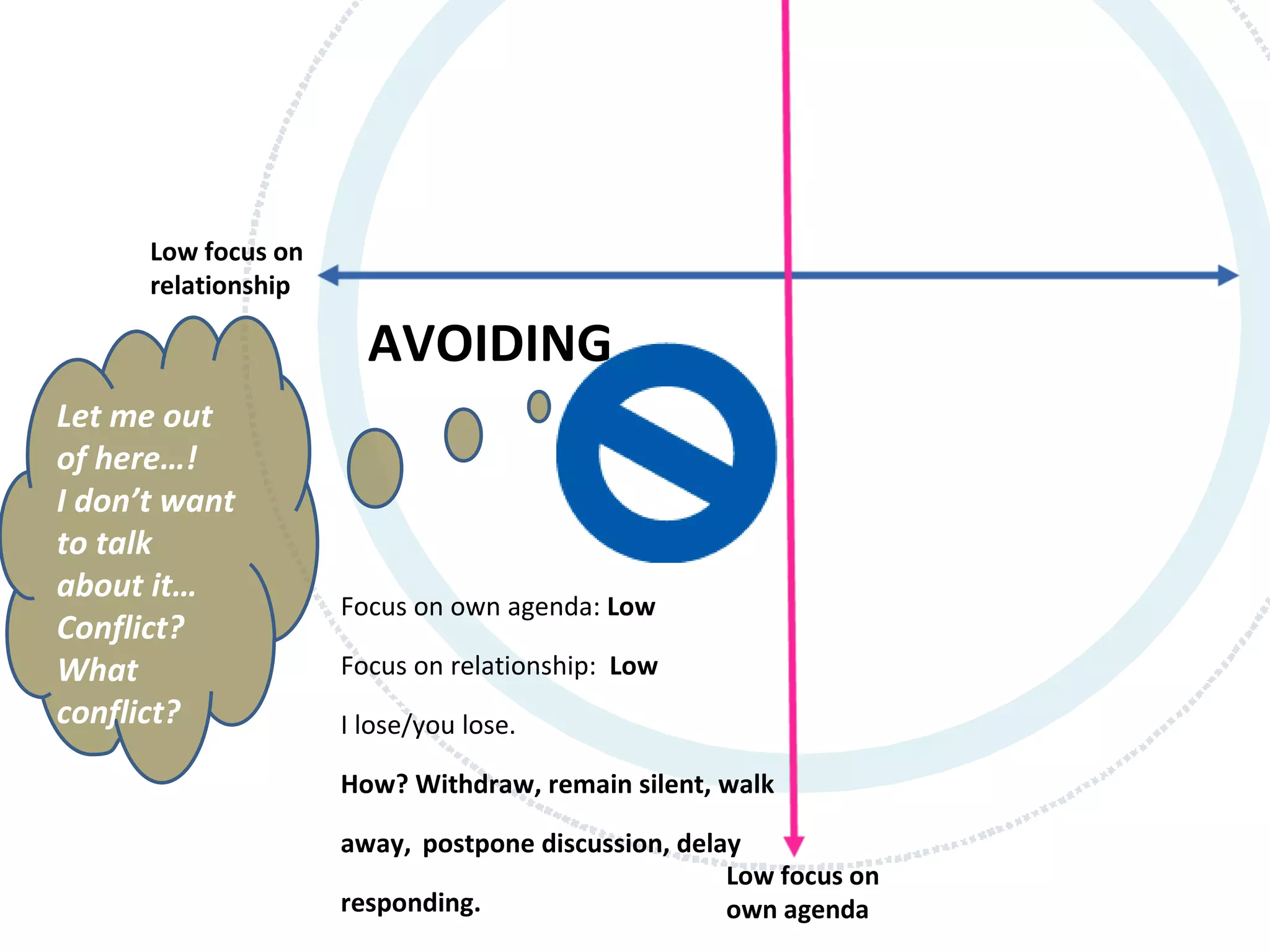
Low focus on
      relationship

                       AVOIDING
Let me out
of here…!
I don’t want
to talk
about it…
                     Focus on own agenda: Low
Conflict?
What                 Focus on relationship: Low
conflict?            I lose/you lose.

                     How? Withdraw, remain silent, walk

                     away, postpone discussion, delay
                                                    Low focus on
                     responding.                    own agenda
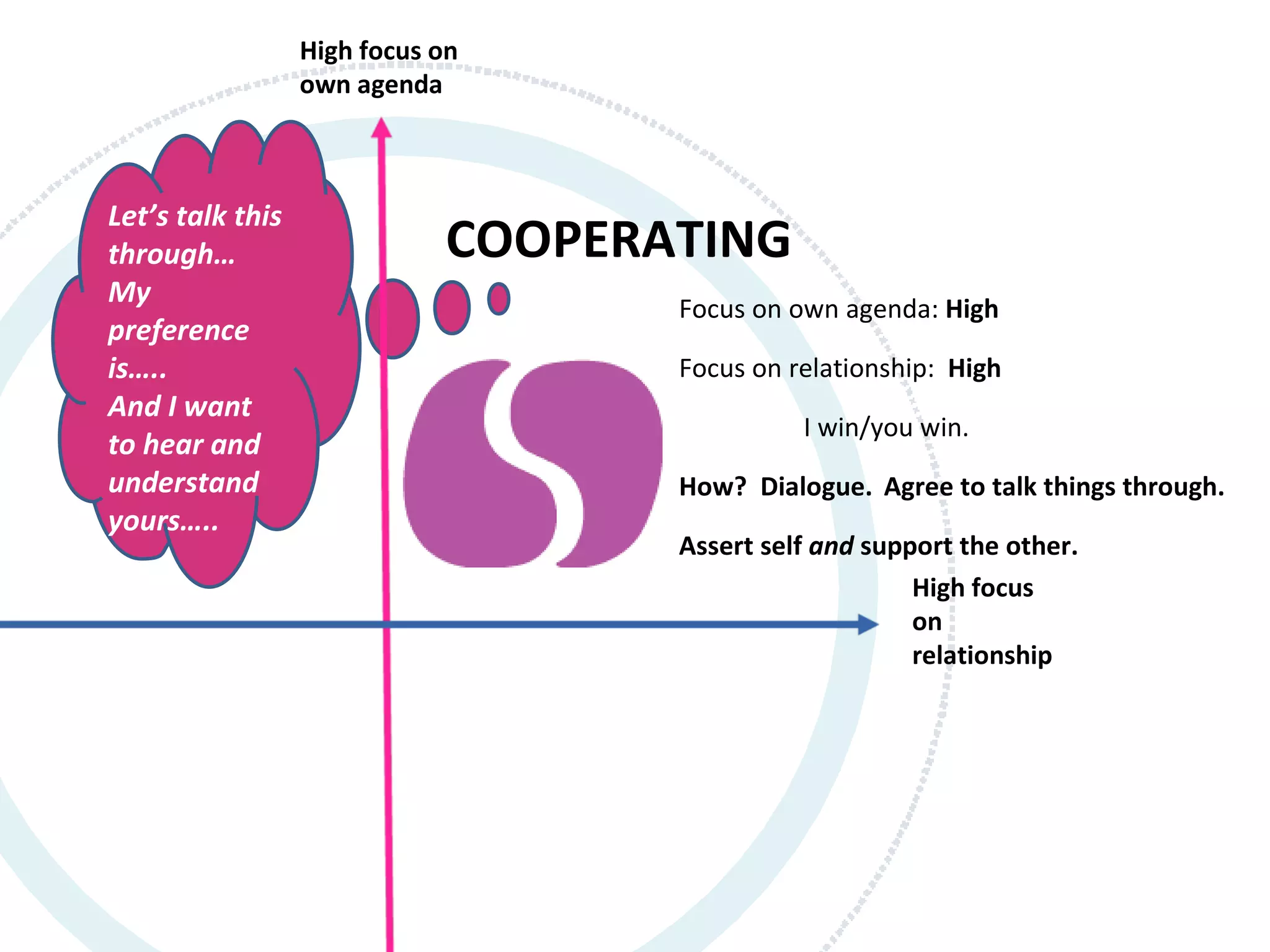
High focus on
                  own agenda


Let’s talk this
through…                     COOPERATING
My                                  Focus on own agenda: High
preference
is…..                               Focus on relationship: High
And I want
                                              I win/you win.
to hear and
understand                          How? Dialogue. Agree to talk things through.
yours…..
                                    Assert self and support the other.
                                                        High focus
                                                        on
                                                        relationship
If we each
                               back off
                               and accept
                               half of
                               what we
                               want, we
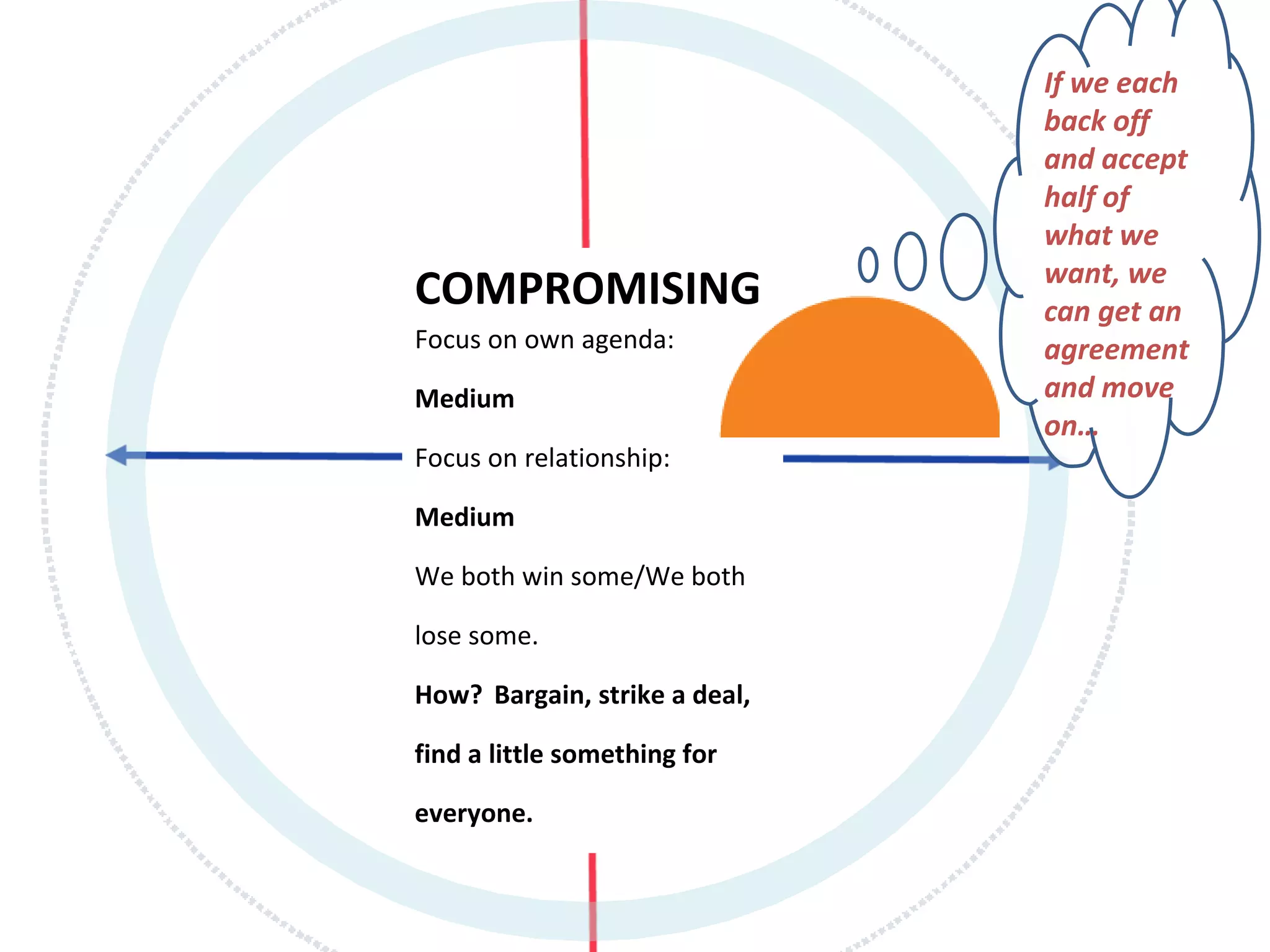
COMPROMISING                   can get an
Focus on own agenda:           agreement
Medium                         and move
                               on…
Focus on relationship:

Medium

We both win some/We both

lose some.

How? Bargain, strike a deal,

find a little something for

everyone.
“When t onl t you have
         he y ool
is a hammer ever hing you
             ,  yt
see is a nail
            .”      Mark
Twain

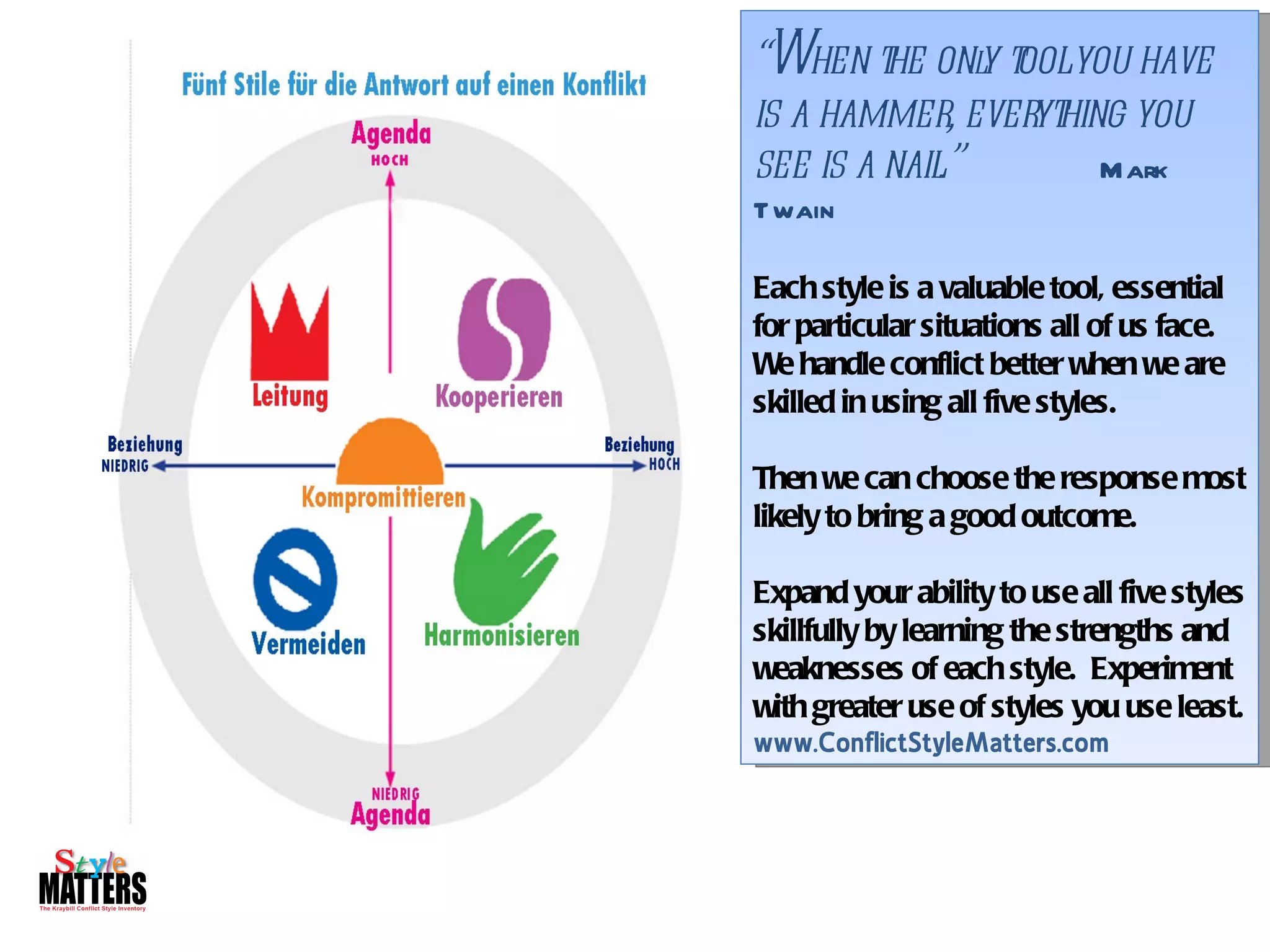
Each style is a valuable tool, essential
for particular situations all of us face.
We handle conflict better when we are
skilled in using all five styles.

Then we can choose the response most
likely to bring a good outcome.

Expand your ability to use all five styles
skillfully by learning the strengths and
weaknesses of each style. Experiment
with greater use of styles you use least.
www.ConflictStyleMatters.com

German pp

  • 1.
    Intoduct t ConflSt es r ion o ict yl Copyright 2011 Riverhouse ePress www.ConflictStyleMatters.com
  • 2.
    Two factors s tronglys h ap e ou r ch oice of conflict s tyle : •How hard do we push for the things we want , our agenda? and…
  • 3.
    How much attention dowe give to the r aionship? el t
  • 4.
    R e lationsh ip and own Age nd a Wh e n we p u t th e two factors toge th e r, we ge t five different st es of re s p ond ing yl to conflict. E ach h as : - a s p e cial focus - a u niqu e s e t of strengths and weaknesses.
  • 5.
    High focus We’re doing it on own agenda my way... Let’s just get the job done. (We’ll worry about the relationship later...) DIRECTING Focus on own agenda: High Focus on relationship: Low Low focus on I win/you lose. relationship How? Assert, control, compete. Insist, demand, defeat.
  • 6.
    High focus on relationship HARMONIZING Focus on own agenda: Low Focus on relationship: High Sure, I’m flexible . I lose/you win. Whatever How? Agree, go along, give in, you’re happy with is fine affirm. with me.... Low focus on own agenda
  • 7.
    Low focus on relationship AVOIDING Let me out of here…! I don’t want to talk about it… Focus on own agenda: Low Conflict? What Focus on relationship: Low conflict? I lose/you lose. How? Withdraw, remain silent, walk away, postpone discussion, delay Low focus on responding. own agenda
  • 8.
    High focus on own agenda Let’s talk this through… COOPERATING My Focus on own agenda: High preference is….. Focus on relationship: High And I want I win/you win. to hear and understand How? Dialogue. Agree to talk things through. yours….. Assert self and support the other. High focus on relationship
  • 9.
    If we each back off and accept half of what we want, we COMPROMISING can get an Focus on own agenda: agreement Medium and move on… Focus on relationship: Medium We both win some/We both lose some. How? Bargain, strike a deal, find a little something for everyone.
  • 10.
    “When t onlt you have he y ool is a hammer ever hing you , yt see is a nail .” Mark Twain Each style is a valuable tool, essential for particular situations all of us face. We handle conflict better when we are skilled in using all five styles. Then we can choose the response most likely to bring a good outcome. Expand your ability to use all five styles skillfully by learning the strengths and weaknesses of each style. Experiment with greater use of styles you use least. www.ConflictStyleMatters.com