Presented by Pete Jefferson
            M.E. Group, Inc.
Geothermal Basics
Applications
Advantages of Geothermal
Process for Implementing Geothermal
Palmer Ridge High School Case Study
Brent’s Place Case Study
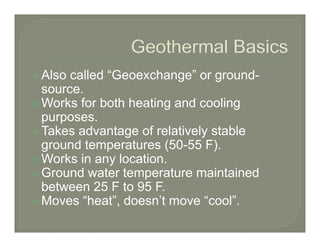
Also called “Geoexchange” or ground
             Geoexchange       ground-
source.
Works for both heating and cooling
                     g            g
purposes.
Takes advantage of relatively stable
ground temperatures (50-55 F).
Works in any location.
Ground ater temperature
Gro nd water temperat re maintained
between 25 F to 95 F.
Moves “heat”, doesn’t move “cool”.
        heat doesn t         cool
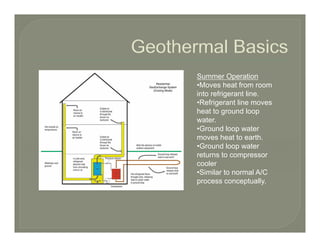
Summer Operation
•Moves heat from room
into refrigerant line.
•Refrigerant line moves
heat to ground loop
water.
•Ground loop water
moves heat to earth
                earth.
•Ground loop water
returns to compressor
cooler
•Similar t normal A/C
 Si il to           l
process conceptually.
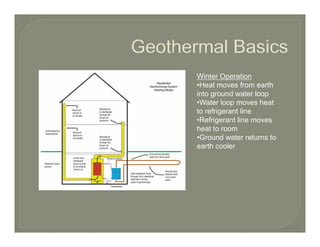
Winter Operation
•Heat moves from earth
into ground water loop
•Water loop moves heat
to refrigerant line
•Refrigerant line moves
heat to room
•Ground water returns to
 Ground
earth cooler
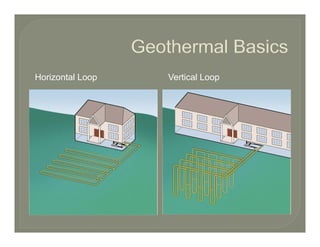
Horizontal Loop   Vertical Loop
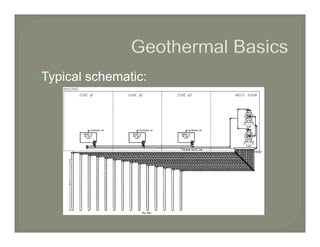
Typical schematic:
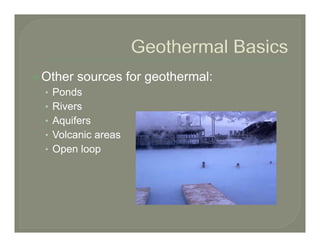
Other sources for geothermal:
• Ponds
• Rivers
• Aquifers
• Volcanic areas
• Open loop
Building heating and cooling
Hot water heating
Process cooling
Snowmelt systems
Geothermal can be used on any project
type
Historically,
Historically these projects have used
geothermal systems most often:
• Schools
• Government
• Offices
• Residences
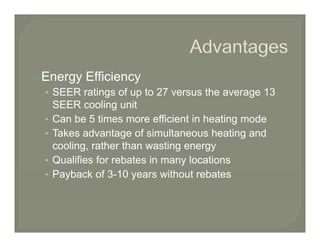
Energy Efficiency
• SEER ratings of up to 27 versus the average 13
    SEER cooling unit
•   Can be 5 times more efficient in heating mode
•   Takes advantage of simultaneous heating and
    cooling, rather than wasting energy
•   Qualifies for rebates in many locations
•   Payback of 3-10 years without rebates
               f 3 10
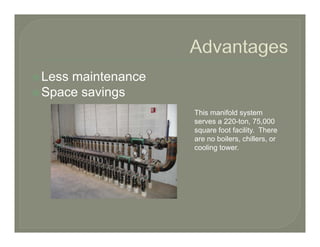
Less maintenance
Space savings
                   This manifold system
                   serves a 220-ton, 75,000
                   square foot facility. There
                   are no boilers chillers or
                          boilers, chillers,
                   cooling tower.
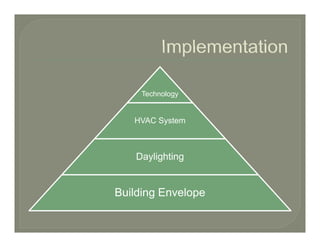
Technology


   HVAC System


    Daylighting


Building Envelope
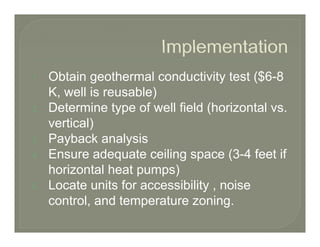
1.
1    Obtain geothermal conductivity test ($6-8
                                            ($6 8
     K, well is reusable)
2.
2    Determine type of well field (horizontal vs
                                               vs.
     vertical)
3.
3    Payback analysis
4.   Ensure adequate ceiling space (3-4 feet if
     horizontal heat pumps)
5.   Locate units for accessibility , noise
     control,
     control and temperature zoning
                               zoning.
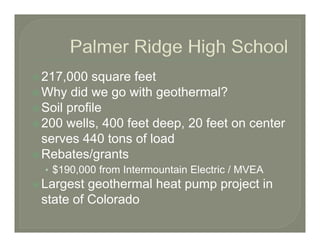
217,000 square feet
217 000
Why did we go with geothermal?
Soil profile
200 wells, 400 feet deep, 20 feet on center
serves 440 tons of load
Rebates/grants
• $190 000 from Intermountain Electric / MVEA
  $190,000
Largest geothermal heat pump project in
state of Colorado
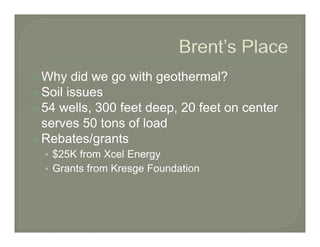
Why did we go with geothermal?
Soil issues
54 wells 300 feet deep 20 feet on center
   wells,          deep,
serves 50 tons of load
Rebates/grants
• $25K from Xcel Energy
• Grants from Kresge Foundation
Geothermal Heat Pump Consortium
• http://www.geoexchange.org
Department of Energy
• http://www1.eere.energy.gov/geothermal/

Geothermal / Geoexchange Systems

  • 1.
    Presented by PeteJefferson M.E. Group, Inc.
  • 2.
    Geothermal Basics Applications Advantages ofGeothermal Process for Implementing Geothermal Palmer Ridge High School Case Study Brent’s Place Case Study
  • 3.
    Also called “Geoexchange”or ground Geoexchange ground- source. Works for both heating and cooling g g purposes. Takes advantage of relatively stable ground temperatures (50-55 F). Works in any location. Ground ater temperature Gro nd water temperat re maintained between 25 F to 95 F. Moves “heat”, doesn’t move “cool”. heat doesn t cool
  • 4.
    Summer Operation •Moves heatfrom room into refrigerant line. •Refrigerant line moves heat to ground loop water. •Ground loop water moves heat to earth earth. •Ground loop water returns to compressor cooler •Similar t normal A/C Si il to l process conceptually.
  • 5.
    Winter Operation •Heat movesfrom earth into ground water loop •Water loop moves heat to refrigerant line •Refrigerant line moves heat to room •Ground water returns to Ground earth cooler
  • 6.
    Horizontal Loop Vertical Loop
  • 7.
  • 10.
    Other sources forgeothermal: • Ponds • Rivers • Aquifers • Volcanic areas • Open loop
  • 11.
    Building heating andcooling Hot water heating Process cooling Snowmelt systems
  • 12.
    Geothermal can beused on any project type Historically, Historically these projects have used geothermal systems most often: • Schools • Government • Offices • Residences
  • 13.
    Energy Efficiency • SEERratings of up to 27 versus the average 13 SEER cooling unit • Can be 5 times more efficient in heating mode • Takes advantage of simultaneous heating and cooling, rather than wasting energy • Qualifies for rebates in many locations • Payback of 3-10 years without rebates f 3 10
  • 14.
    Less maintenance Space savings This manifold system serves a 220-ton, 75,000 square foot facility. There are no boilers chillers or boilers, chillers, cooling tower.
  • 15.
    Technology HVAC System Daylighting Building Envelope
  • 16.
    1. 1 Obtain geothermal conductivity test ($6-8 ($6 8 K, well is reusable) 2. 2 Determine type of well field (horizontal vs vs. vertical) 3. 3 Payback analysis 4. Ensure adequate ceiling space (3-4 feet if horizontal heat pumps) 5. Locate units for accessibility , noise control, control and temperature zoning zoning.
  • 17.
    217,000 square feet 217000 Why did we go with geothermal? Soil profile 200 wells, 400 feet deep, 20 feet on center serves 440 tons of load Rebates/grants • $190 000 from Intermountain Electric / MVEA $190,000 Largest geothermal heat pump project in state of Colorado
  • 18.
    Why did wego with geothermal? Soil issues 54 wells 300 feet deep 20 feet on center wells, deep, serves 50 tons of load Rebates/grants • $25K from Xcel Energy • Grants from Kresge Foundation
  • 19.
    Geothermal Heat PumpConsortium • http://www.geoexchange.org Department of Energy • http://www1.eere.energy.gov/geothermal/