GEOGRAPHICAL INDICATION
ABOUT GI
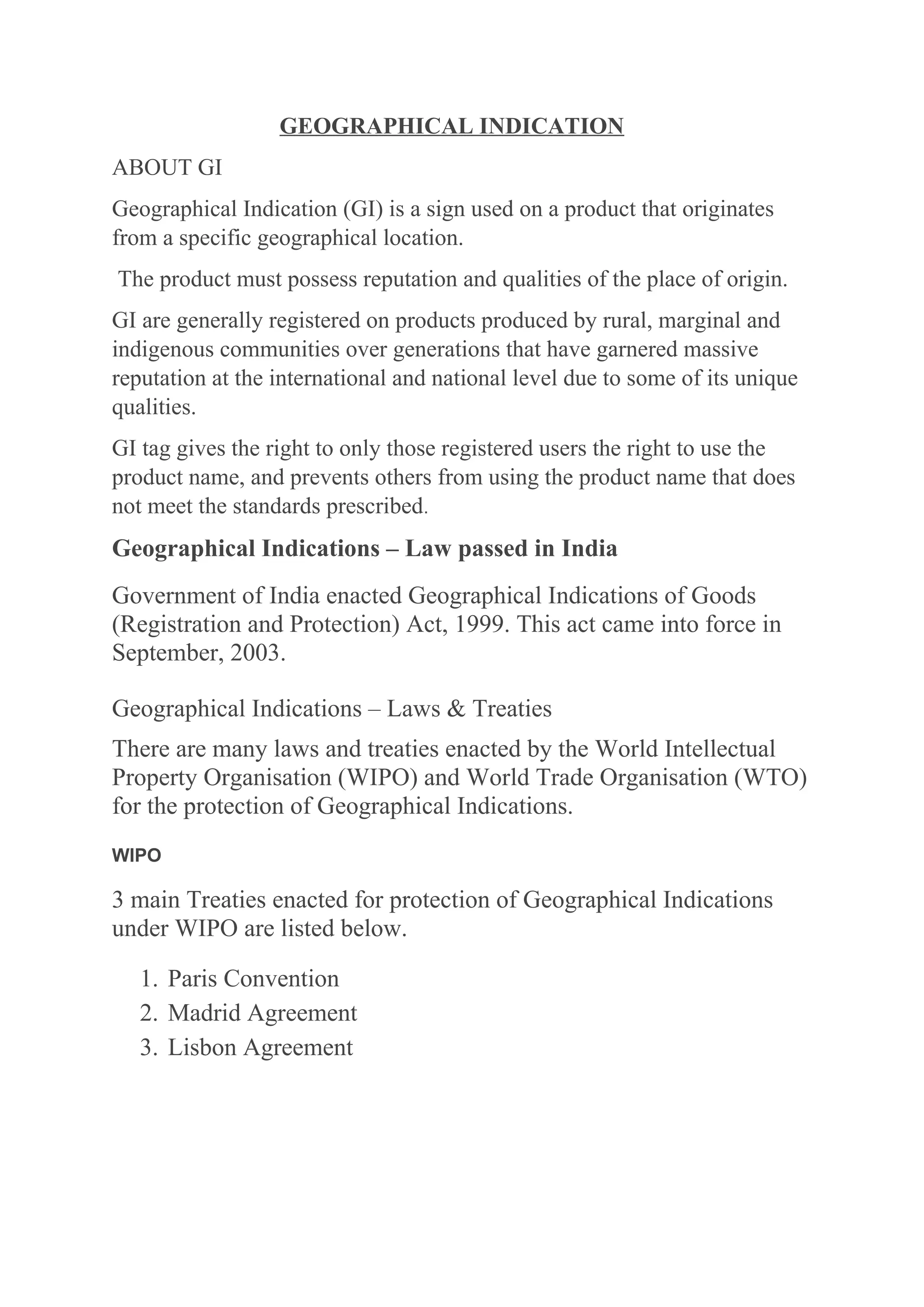
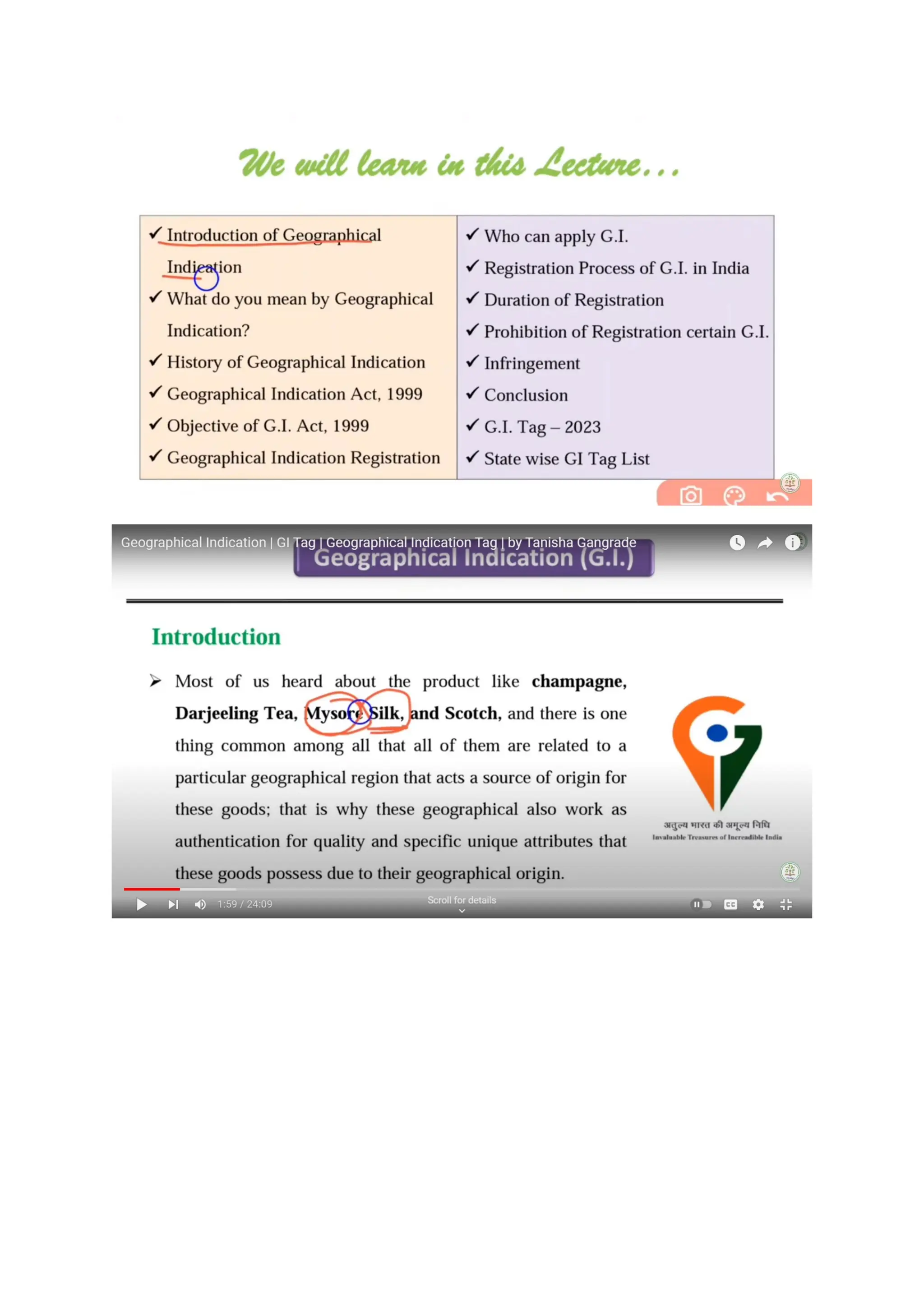
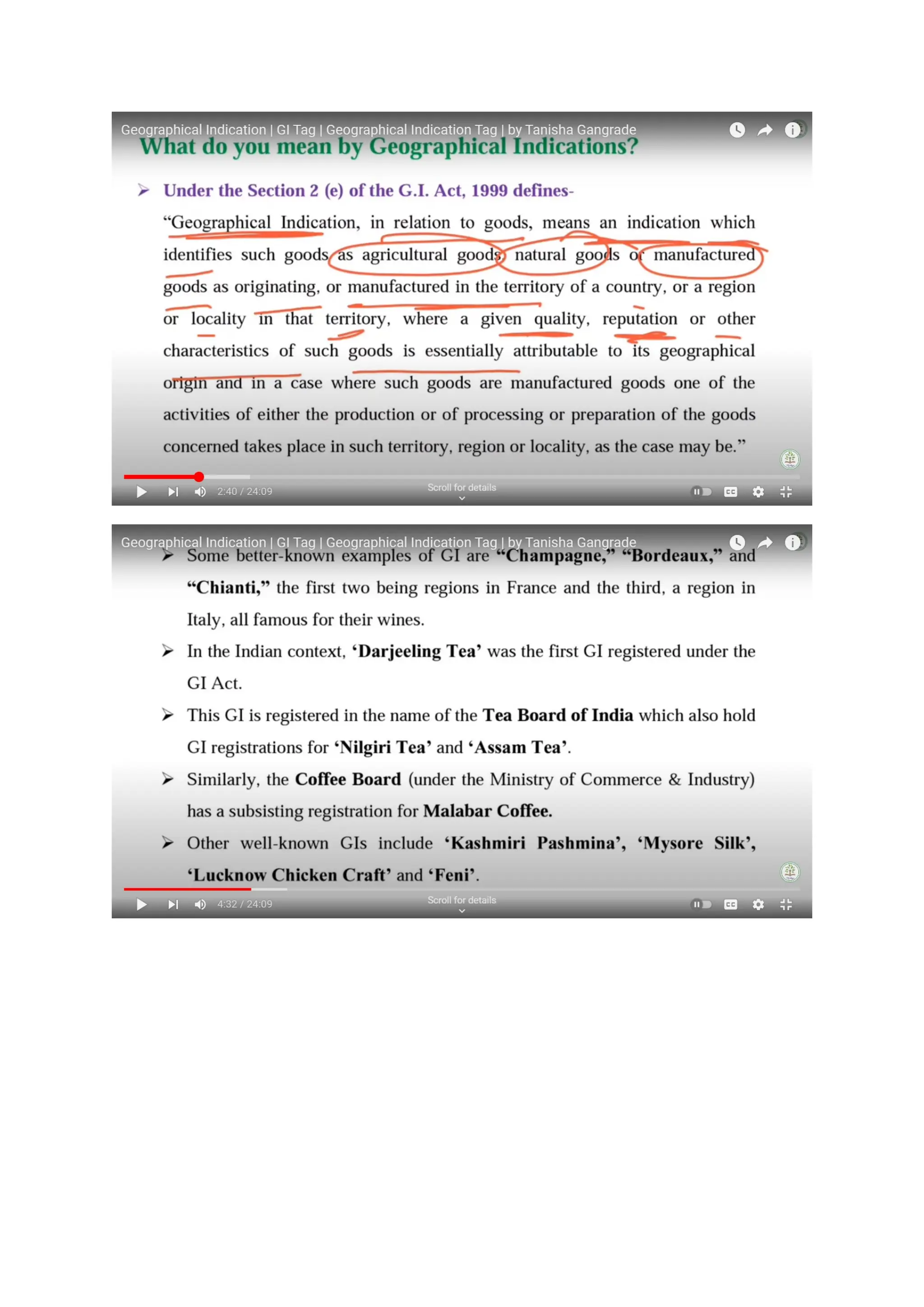
Geographical Indication (GI) is a sign used on a product that originates
from a specific geographical location.
The product must possess reputation and qualities of the place of origin.
GI are generally registered on products produced by rural, marginal and
indigenous communities over generations that have garnered massive
reputation at the international and national level due to some of its unique
qualities.
GI tag gives the right to only those registered users the right to use the
product name, and prevents others from using the product name that does
not meet the standards prescribed.
Geographical Indications – Law passed in India
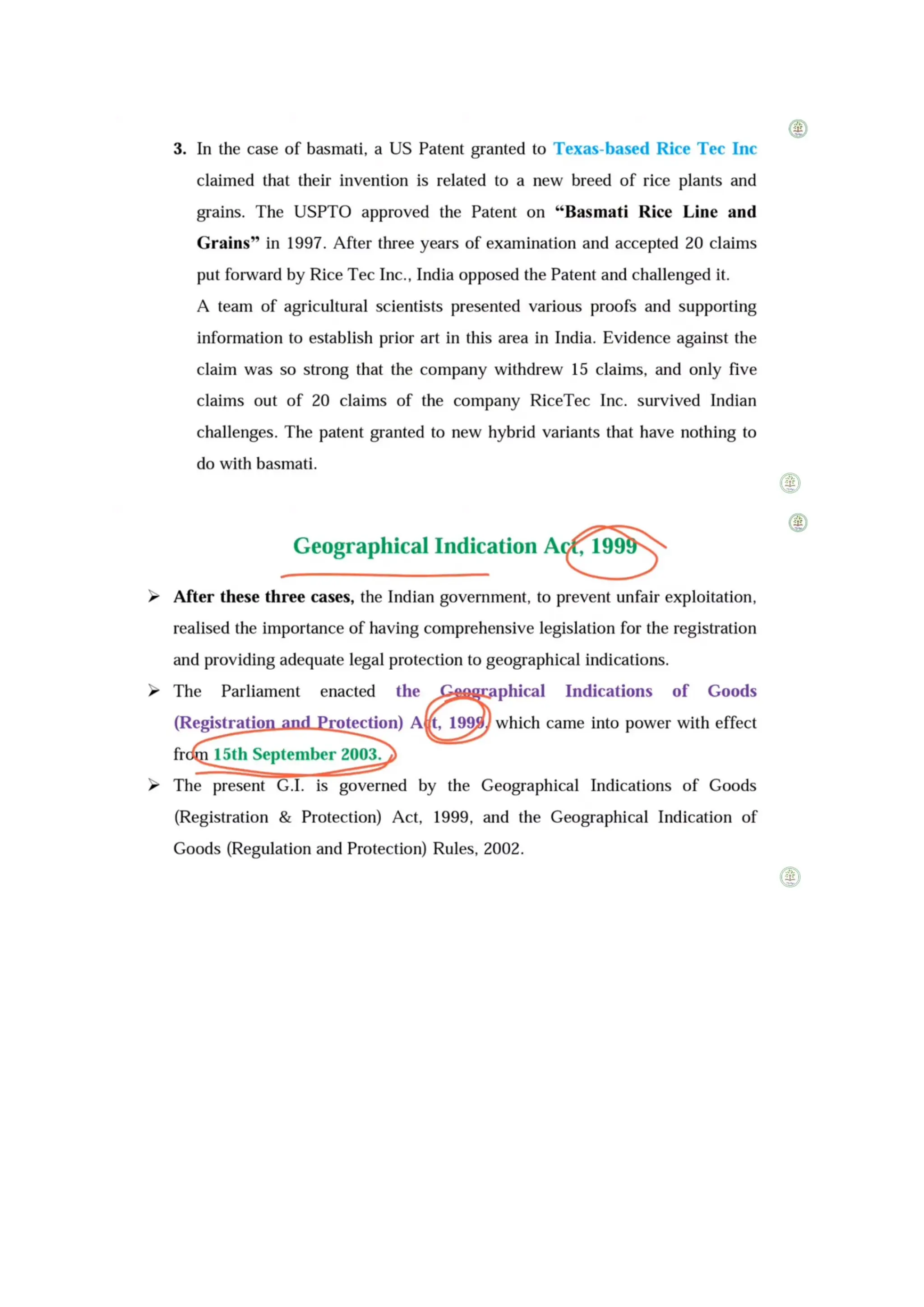
Government of India enacted Geographical Indications of Goods
(Registration and Protection) Act, 1999. This act came into force in
September, 2003.
Geographical Indications – Laws & Treaties
There are many laws and treaties enacted by the World Intellectual
Property Organisation (WIPO) and World Trade Organisation (WTO)
for the protection of Geographical Indications.
WIPO
3 main Treaties enacted for protection of Geographical Indications
under WIPO are listed below.
1. Paris Convention
2. Madrid Agreement
3. Lisbon Agreement
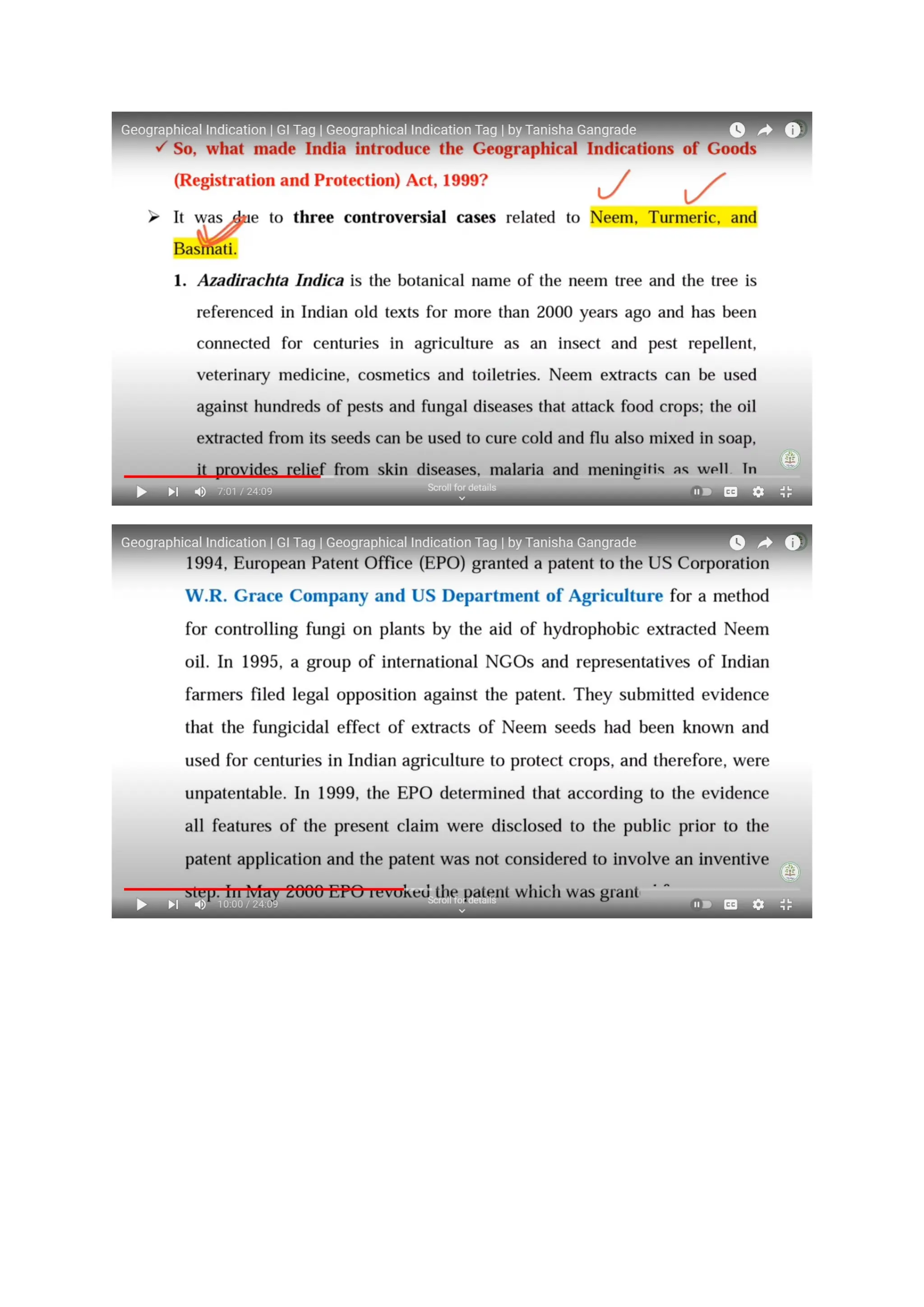
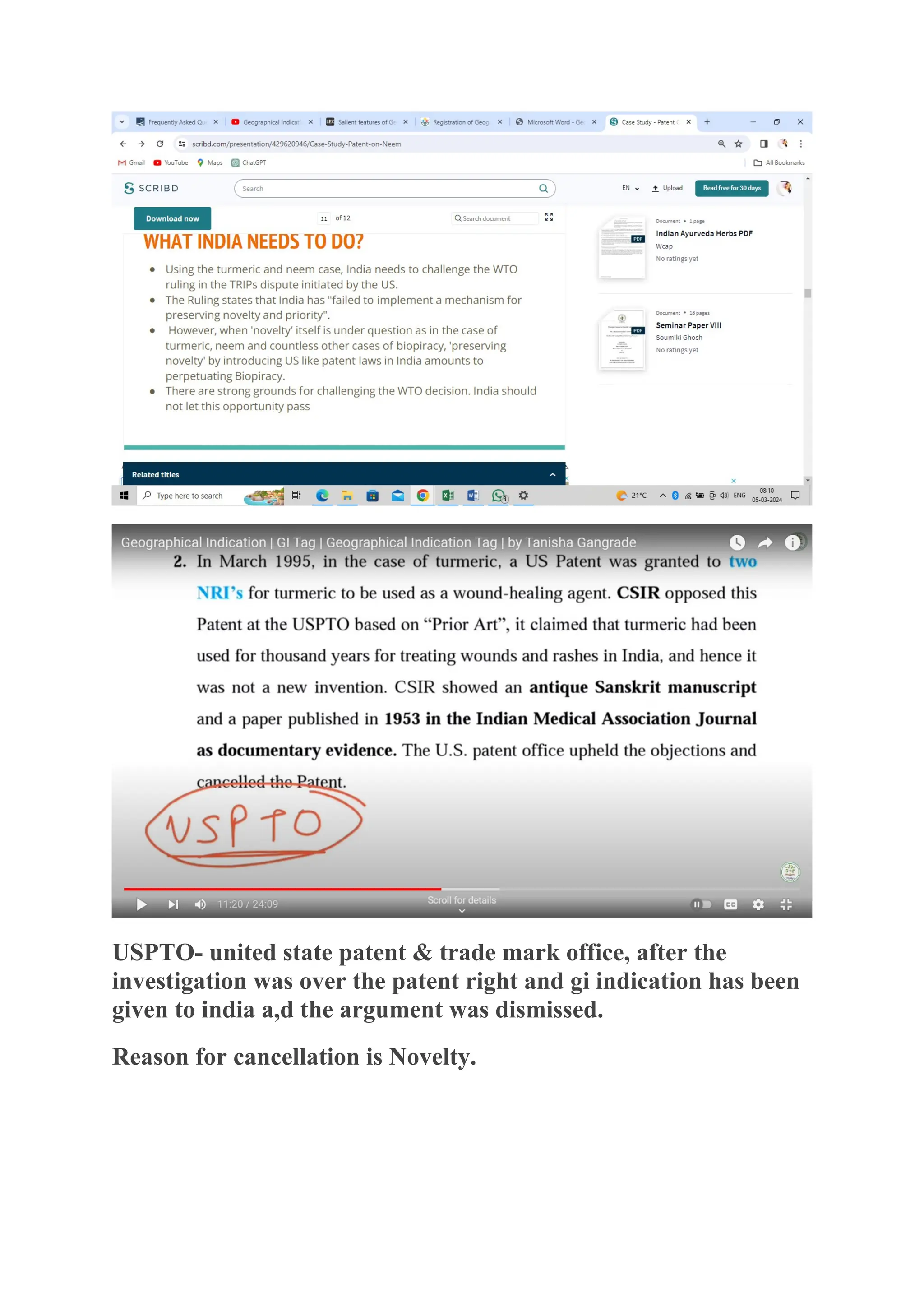
USPTO- united state patent & trade mark office, after the
investigation was over the patent right and gi indication has been
given to india a,d the argument was dismissed.
Reason for cancellation is Novelty.
WTO
The main Agreement under WTO for protection of Geographical
Indications is listed below.
1. Trade Related Aspects of Intellectual Property Rights (TRIPS)
Agreement
Geographical Indication Registered Products – India
1. As of March 2020, India had registered 361 Geographical
Indication Products.
2. Registration of GI’s began in the year 2004-05 after the above
mentioned law came into effect in 2003.
3. Darjeeling Tea of West Bengal was the first product to receive
the GI tag in India. Both the product and the logo received the
GI tag.
4. In the first year apart from Darjeeling Tea, the other products to
receive GI tags were Aranmula Kannadi a Handicraft from
Kerala, Pochampalli Ikat a Handicraft from Telangana.
5. The latest 4 products to receive GI tags were Dindigul Locks,
manufactured product from Tamil Nadu, Kandangi Saree a
handicraft of Tamil Nadu, Srivilliputtur Palkova Food stuff of
Tamil Nadu, and the 361st GI product (the last product to
receive GI Tag as of March 2020), is Kaji Nemu an agricultural
product of Assam.
6. Out of 361 GI products registered in India, 15 products are
originating from 9 different countries – Italy, France, UK, USA,
Ireland, Mexico, Thailand, Peru, Portugal.
Geographical Indications – States in India
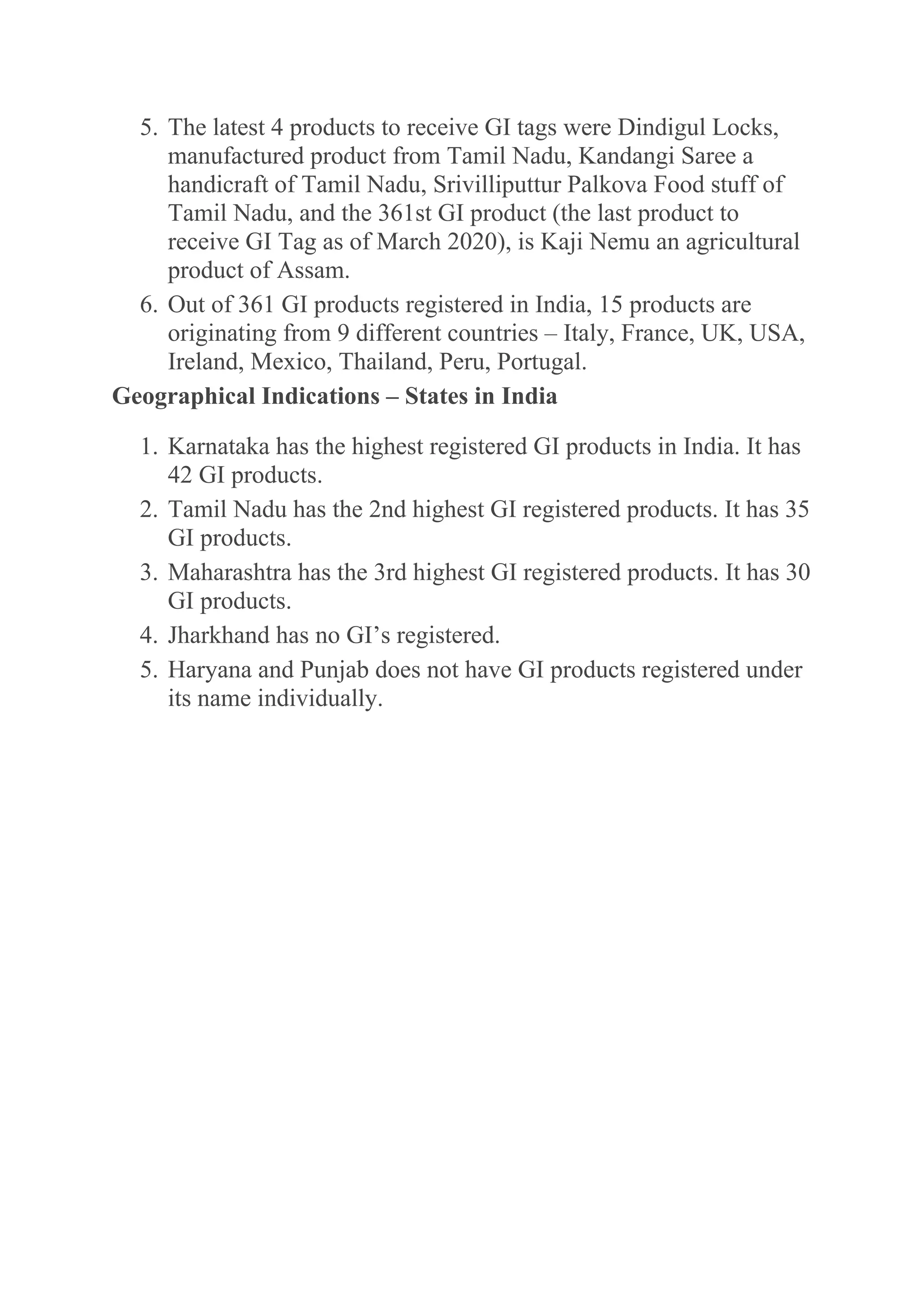
1. Karnataka has the highest registered GI products in India. It has
42 GI products.
2. Tamil Nadu has the 2nd highest GI registered products. It has 35
GI products.
3. Maharashtra has the 3rd highest GI registered products. It has 30
GI products.
4. Jharkhand has no GI’s registered.
5. Haryana and Punjab does not have GI products registered under
its name individually.

GEOGRAPHICAL INDICATION in ipr deta.docx

  • 1.
    GEOGRAPHICAL INDICATION ABOUT GI GeographicalIndication (GI) is a sign used on a product that originates from a specific geographical location. The product must possess reputation and qualities of the place of origin. GI are generally registered on products produced by rural, marginal and indigenous communities over generations that have garnered massive reputation at the international and national level due to some of its unique qualities. GI tag gives the right to only those registered users the right to use the product name, and prevents others from using the product name that does not meet the standards prescribed. Geographical Indications – Law passed in India Government of India enacted Geographical Indications of Goods (Registration and Protection) Act, 1999. This act came into force in September, 2003. Geographical Indications – Laws & Treaties There are many laws and treaties enacted by the World Intellectual Property Organisation (WIPO) and World Trade Organisation (WTO) for the protection of Geographical Indications. WIPO 3 main Treaties enacted for protection of Geographical Indications under WIPO are listed below. 1. Paris Convention 2. Madrid Agreement 3. Lisbon Agreement
  • 8.
    USPTO- united statepatent & trade mark office, after the investigation was over the patent right and gi indication has been given to india a,d the argument was dismissed. Reason for cancellation is Novelty.
  • 12.
    WTO The main Agreementunder WTO for protection of Geographical Indications is listed below. 1. Trade Related Aspects of Intellectual Property Rights (TRIPS) Agreement Geographical Indication Registered Products – India 1. As of March 2020, India had registered 361 Geographical Indication Products. 2. Registration of GI’s began in the year 2004-05 after the above mentioned law came into effect in 2003. 3. Darjeeling Tea of West Bengal was the first product to receive the GI tag in India. Both the product and the logo received the GI tag. 4. In the first year apart from Darjeeling Tea, the other products to receive GI tags were Aranmula Kannadi a Handicraft from Kerala, Pochampalli Ikat a Handicraft from Telangana.
  • 13.
    5. The latest4 products to receive GI tags were Dindigul Locks, manufactured product from Tamil Nadu, Kandangi Saree a handicraft of Tamil Nadu, Srivilliputtur Palkova Food stuff of Tamil Nadu, and the 361st GI product (the last product to receive GI Tag as of March 2020), is Kaji Nemu an agricultural product of Assam. 6. Out of 361 GI products registered in India, 15 products are originating from 9 different countries – Italy, France, UK, USA, Ireland, Mexico, Thailand, Peru, Portugal. Geographical Indications – States in India 1. Karnataka has the highest registered GI products in India. It has 42 GI products. 2. Tamil Nadu has the 2nd highest GI registered products. It has 35 GI products. 3. Maharashtra has the 3rd highest GI registered products. It has 30 GI products. 4. Jharkhand has no GI’s registered. 5. Haryana and Punjab does not have GI products registered under its name individually.