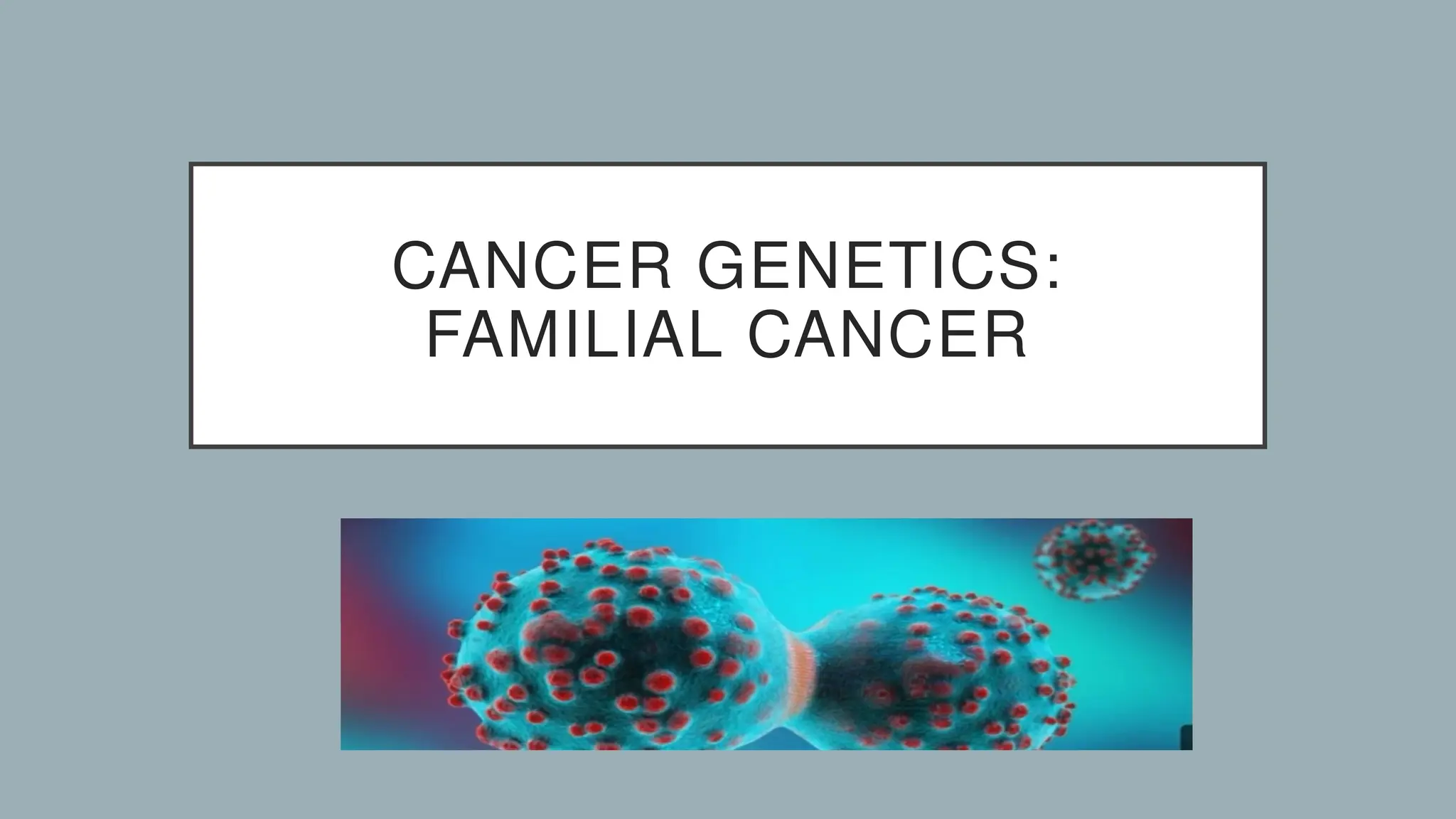
CANCER GENETICS:
FAMILIAL CANCER
CANCER GENETICS: FAMILIAL
CANCER
• Definition:
• Presence of a hereditary predisposition to cancer within
families.
• Key Concepts:
• Inherited Mutations: Specific genetic mutations passed from
one generation to the next.
• Increased Risk: Individuals with familial cancer may have a
higher likelihood of developing specific types of cancer.
COMMON FAMILIAL CANCER SYNDROMES:
• 1. Hereditary Breast and Ovarian Cancer (HBOC):
• Genes: BRCA1, BRCA2.
• Associated Cancers: Breast, ovarian, prostate, pancreatic.
• 2.Lynch Syndrome (Hereditary Nonpolyposis
• Colorectal Cancer - HNPCC):
• Genes: MLH1, MSH2, MSH6, PMS2.
• Associated Cancers: Colorectal, endometrial, ovarian, stomach
• 3. Familial Adenomatous Polyposis (FAP):
• Gene: APC (Adenomatous Polyposis Coli).
• Associated Cancers: Colorectal, thyroid, hepatoblastoma.
PREVENTIVE
MEASURES
SCREENING AND TESTING:
• Genetic Counseling: Discussion of family history, risk
assessment, and counseling on testing implications.
• Genetic Testing: Identification of specific mutations
associated with familial cancers.
• Surveillance and Prevention: Increased surveillance
or risk-reducing interventions for individuals with
identified mutations.
IMPLICATIONS FOR FAMILY MEMBERS:
• Cascade Testing: Testing other family
members if a pathogenic mutation is
identified.
• Shared Risk: Family members may share a
higher risk of developing specific cancers.
RISK-REDUCING STRATEGIES:
• Prophylactic Surgery: Removal of at-risk organs (e.g.,
mastectomy, oophorectomy).
• Increased Surveillance: More frequent screenings for
early detection.
• Chemoprevention: Use of medications to reduce
cancer risk.
MULTIDISCIPLINARY APPROACH:
• Collaboration: Involvement of oncologists,
geneticists, surgeons, and other specialists.
•
Individualized Care: Tailoring
management based on genetic and clinical factors.
ETHICAL CONSIDERATIONS:
• Privacy and Confidentiality: Protecting
individuals' genetic information.
• Informed Consent: Ensuring individuals
understand the implications of genetic testing.
PUBLIC HEALTH IMPACT:
• Education: Raising awareness about familial cancer
syndromes.
• Population Screening: Considerations for broader
genetic testing in specific populations.
INBORN ERRORS OF
METABOLISM
INBORN ERRORS OF METABOLISM
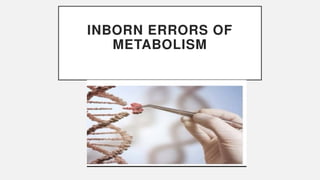
• Inborn errors of metabolism (IEM) are a group of
genetic disorders that affect the body's ability to
process and utilize specific substances, such as
carbohydrates, amino acids, and fats.
• These conditions arise from mutations in genes
responsible for producing enzymes or proteins
essential for metabolic pathways.
• Metabolism involves the conversion of nutrients from food
into energy and other essential molecules meeded for the
body's functions.
• In individuals with inborn errors of metabolism, the
absence or dysfunction of a particular enzyme disrupts
these metabolic pathways, leading to the accumulation of
harmful substances or a deficiency of necessary products.
INBORN ERRORS OF METABOLISM
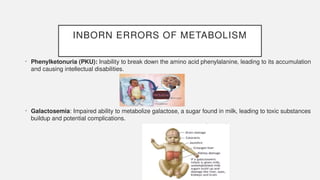
• Phenylketonuria (PKU): Inability to break down the amino acid phenylalanine, leading to its accumulation
and causing intellectual disabilities.
• Galactosemia: Impaired ability to metabolize galactose, a sugar found in milk, leading to toxic substances
buildup and potential complications.
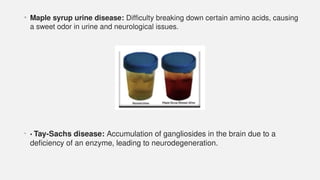
• Maple syrup urine disease: Difficulty breaking down certain amino acids, causing
a sweet odor in urine and neurological issues.
• • Tay-Sachs disease: Accumulation of gangliosides in the brain due to a
deficiency of an enzyme, leading to neurodegeneration.
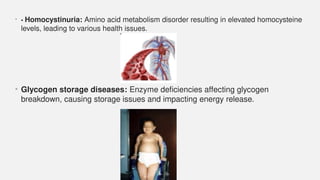
• • Homocystinuria: Amino acid metabolism disorder resulting in elevated homocysteine
levels, leading to various health issues.
• Glycogen storage diseases: Enzyme deficiencies affecting glycogen
breakdown, causing storage issues and impacting energy release.
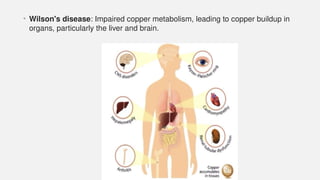
• Wilson's disease: Impaired copper metabolism, leading to copper buildup in
organs, particularly the liver and brain.
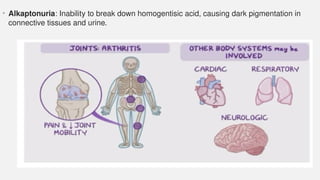
• Alkaptonuria: Inability to break down homogentisic acid, causing dark pigmentation in
connective tissues and urine.
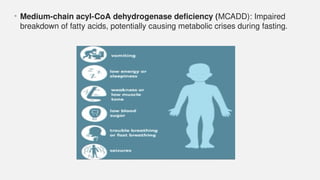
• Medium-chain acyl-CoA dehydrogenase deficiency (MCADD): Impaired
breakdown of fatty acids, potentially causing metabolic crises during fasting.
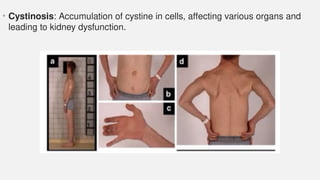
• Cystinosis: Accumulation of cystine in cells, affecting various organs and
leading to kidney dysfunction.
BLOOD GROUP ALLELES
HEMATOLOGICAL
DISORDERS
BLOOD GROUP ALLELES
• Blood Types: The ABO blood group system classifies blood into four types: A,
B, AB, and O, based on the presence or absence of antigens (A and B) on the
surface of red blood cells.
• Genetic Basis: Blood group alleles are determined by genes located on
chromosome 9. There are three main alleles involved: A, B, and O.
ALLELE COMBINATIONS:
• Type A: Individuals with the AA or AO genotype have A antigens on their red
blood cells.
• Type B: Individuals with the BB or BO
• genotype have B antigens.
• Type AB: Individuals with the AB genotype have both A and B antigens.
• Type 0: Individuals with the OO genotype have no A or B antigens.
HEMATOLOGICAL DISORDERS
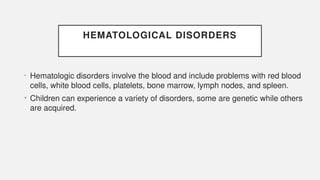
• Hematologic disorders involve the blood and include problems with red blood
cells, white blood cells, platelets, bone marrow, lymph nodes, and spleen.
• Children can experience a variety of disorders, some are genetic while others
are acquired.
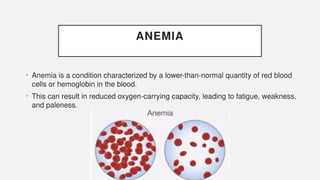
ANEMIA
• Anemia is a condition characterized by a lower-than-normal quantity of red blood
cells or hemoglobin in the blood.
• This can result in reduced oxygen-carrying capacity, leading to fatigue, weakness,
and paleness.
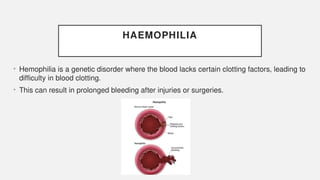
HAEMOPHILIA
• Hemophilia is a genetic disorder where the blood lacks certain clotting factors, leading to
difficulty in blood clotting.
• This can result in prolonged bleeding after injuries or surgeries.
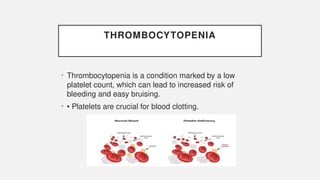
THROMBOCYTOPENIA
• Thrombocytopenia is a condition marked by a low
platelet count, which can lead to increased risk of
bleeding and easy bruising.
• • Platelets are crucial for blood clotting.
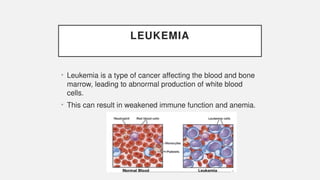
LEUKEMIA
• Leukemia is a type of cancer affecting the blood and bone
marrow, leading to abnormal production of white blood
cells.
• This can result in weakened immune function and anemia.
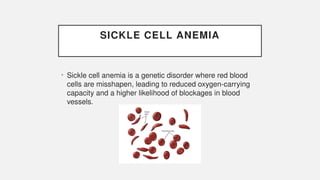
SICKLE CELL ANEMIA
• Sickle cell anemia is a genetic disorder where red blood
cells are misshapen, leading to reduced oxygen-carrying
capacity and a higher likelihood of blockages in blood
vessels.
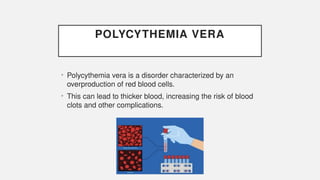
POLYCYTHEMIA VERA
• Polycythemia vera is a disorder characterized by an
overproduction of red blood cells.
• This can lead to thicker blood, increasing the risk of blood
clots and other complications.
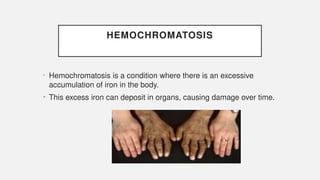
HEMOCHROMATOSIS
• Hemochromatosis is a condition where there is an excessive
accumulation of iron in the body.
• This excess iron can deposit in organs, causing damage over time.
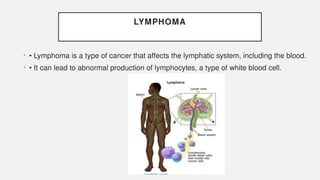
LYMPHOMA
• • Lymphoma is a type of cancer that affects the lymphatic system, including the blood.
• • It can lead to abnormal production of lymphocytes, a type of white blood cell.
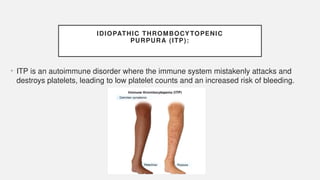
IDIOPATHIC THROMBOCYTOPENIC
PURPURA (ITP):
• ITP is an autoimmune disorder where the immune system mistakenly attacks and
destroys platelets, leading to low platelet counts and an increased risk of bleeding.
GENETIC
HEMOCHROMATOSIS
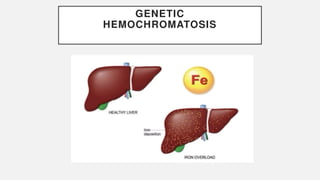
GENETIC HEMOCHROMATOSIS
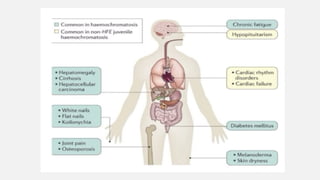
• Genetic hemochromatosis is an inherited disorder characterized by the
excessive absorption of dietary iron, leading to iron overload in various
organs.
CAUSES
• Genetics: Most commonly associated with mutations in the
HFE gene. The two main mutations are C282Y and H63D.
• Iron Absorption: Mutations in HFE lead to increased
intestinal absorption of iron, causing elevated serum iron
levels.
SYMPTOMS
• • Early Symptoms: Fatigue, joint pain, abdominal pain.
• Later Symptoms: Organ damage ncluding liver cirrhosis, diabetes, heart issues,
and skin pigmentation changes (bronze or gray).
DIAGNOSIS
• Genetic Testing: Identifying HFE gene mutations.
• Serum Iron Levels: Elevated transferrin saturation and serum ferritin.
• Treatment
• Phlebotomy: Regular removal of blood to reduce iron levels.
• Iron Chelation: In cases where phlebotomy is not feasible.
COMPLICATION
• Liver Cirrhosis: Chronic iron overload can lead to liver damage.
• Heart Problems: Increased risk of cardiomyopathy and arrhythmias.
• Diabetes: Iron accumulation in the pancreas may contribute to diabetes.
HUNTINGTON'S
DISEASE
HUNTINGTON'S DISEASE
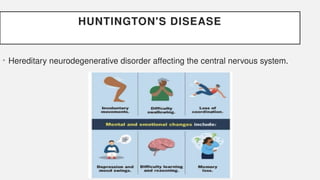
• Hereditary neurodegenerative disorder affecting the central nervous system.
CAUSES
• Mutation in the HTT gene on chromosome
4.
• Expansion of CAG repeats in the gene, ading to abnormal huntington
protein.
SIGN & SYMPTOMS
• Motor Symptoms:
• Involuntary jerking or writhing movements (chorea).
• Difficulty with coordination and balance.
• Rigidity.
• Cognitive Symptoms:
• Progressive decline in cognitive function.
• Impaired judgment and memory.
• Difficulty concentrating.
• Psychiatric Symptoms:
• Depression.
• Anxiety.
• Irritability.
DIAGNOSTIC EVALUATION
• Genetic Testing:
• • Identifying expanded CAG repeats in the
• HTT gene.
• Neuroimaging:
• • MRI or CT scans may reveal brain atrophy.
MANAGEMENT
• Symptomatic Treatment:
• • Medications to manage chorea and psychiatric symptoms.
• Therapy:
• Physical therapy for movement difficulties.
• Occupational therapy for daily activities.
• Speech therapy for communication challenges.
• Supportive Care:
• Counseling and support groups for individuals and families.
• Palliative care to enhance quality of life.
• No Cure:
• • Focus on slowing disease progression and improving quality of life.
• Early Detection:
• • Vital for timely intervention and management.
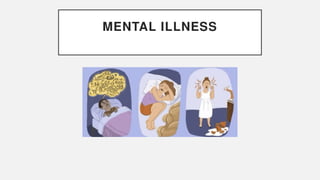
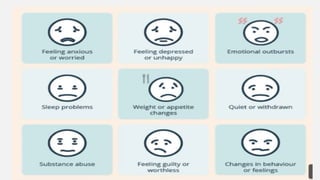
MENTAL ILLNESS
TYPES
• Depression:
• Persistent sadness.
• Loss of interest in activities.
• Fatigue and changes in sleep/appetite.
• Anxiety Disorders:
• Excessive worry or fear.
• Panic attacks.
• Obsessive-compulsive behaviors.
• Schizophrenia:
• Delusions and hallucinations.
• Disorganized thinking.
• Impaired social functioning.
• Bipolar Disorder:
• Periods of mania (elevated mood) and depression.
• Energy fluctuations.
• Impaired judgment.
CAUSES
• Biological factors (genetics, brain chemistry).
• Environmental factors (trauma, stress).
• Combination of genetics and environment.
DIAGNOSTIC TOOLS:
• Clinical interviews and psychological assessments.
• DSM-5 criteria for specific disorders.
• Collaboration between mental health professionals.
TREATMENT
• Psychotherapy:
• Cognitive-behavioral therapy (CBT).
• Psychodynamic therapy.
• Medications:
• Antidepressants.
• Antianxiety medications.
• Antipsychotics.
• Hospitalization:
• • For severe cases or crisis intervention.
• Community Support:
• Support groups.
• Rehabilitation programs.
• Social services.

Cancer caused due yo genetics and inheritance pattern

  • 1.
  • 2.
    CANCER GENETICS: FAMILIAL CANCER •Definition: • Presence of a hereditary predisposition to cancer within families. • Key Concepts: • Inherited Mutations: Specific genetic mutations passed from one generation to the next. • Increased Risk: Individuals with familial cancer may have a higher likelihood of developing specific types of cancer.
  • 3.
    COMMON FAMILIAL CANCERSYNDROMES: • 1. Hereditary Breast and Ovarian Cancer (HBOC): • Genes: BRCA1, BRCA2. • Associated Cancers: Breast, ovarian, prostate, pancreatic. • 2.Lynch Syndrome (Hereditary Nonpolyposis • Colorectal Cancer - HNPCC): • Genes: MLH1, MSH2, MSH6, PMS2. • Associated Cancers: Colorectal, endometrial, ovarian, stomach
  • 4.
    • 3. FamilialAdenomatous Polyposis (FAP): • Gene: APC (Adenomatous Polyposis Coli). • Associated Cancers: Colorectal, thyroid, hepatoblastoma.
  • 5.
  • 6.
    SCREENING AND TESTING: •Genetic Counseling: Discussion of family history, risk assessment, and counseling on testing implications. • Genetic Testing: Identification of specific mutations associated with familial cancers. • Surveillance and Prevention: Increased surveillance or risk-reducing interventions for individuals with identified mutations.
  • 7.
    IMPLICATIONS FOR FAMILYMEMBERS: • Cascade Testing: Testing other family members if a pathogenic mutation is identified. • Shared Risk: Family members may share a higher risk of developing specific cancers.
  • 8.
    RISK-REDUCING STRATEGIES: • ProphylacticSurgery: Removal of at-risk organs (e.g., mastectomy, oophorectomy). • Increased Surveillance: More frequent screenings for early detection. • Chemoprevention: Use of medications to reduce cancer risk.
  • 9.
    MULTIDISCIPLINARY APPROACH: • Collaboration:Involvement of oncologists, geneticists, surgeons, and other specialists. • Individualized Care: Tailoring management based on genetic and clinical factors.
  • 10.
    ETHICAL CONSIDERATIONS: • Privacyand Confidentiality: Protecting individuals' genetic information. • Informed Consent: Ensuring individuals understand the implications of genetic testing.
  • 11.
    PUBLIC HEALTH IMPACT: •Education: Raising awareness about familial cancer syndromes. • Population Screening: Considerations for broader genetic testing in specific populations.
  • 12.
  • 13.
    INBORN ERRORS OFMETABOLISM • Inborn errors of metabolism (IEM) are a group of genetic disorders that affect the body's ability to process and utilize specific substances, such as carbohydrates, amino acids, and fats. • These conditions arise from mutations in genes responsible for producing enzymes or proteins essential for metabolic pathways.
  • 14.
    • Metabolism involvesthe conversion of nutrients from food into energy and other essential molecules meeded for the body's functions. • In individuals with inborn errors of metabolism, the absence or dysfunction of a particular enzyme disrupts these metabolic pathways, leading to the accumulation of harmful substances or a deficiency of necessary products.
  • 15.
    INBORN ERRORS OFMETABOLISM • Phenylketonuria (PKU): Inability to break down the amino acid phenylalanine, leading to its accumulation and causing intellectual disabilities. • Galactosemia: Impaired ability to metabolize galactose, a sugar found in milk, leading to toxic substances buildup and potential complications.
  • 16.
    • Maple syrupurine disease: Difficulty breaking down certain amino acids, causing a sweet odor in urine and neurological issues. • • Tay-Sachs disease: Accumulation of gangliosides in the brain due to a deficiency of an enzyme, leading to neurodegeneration.
  • 17.
    • • Homocystinuria:Amino acid metabolism disorder resulting in elevated homocysteine levels, leading to various health issues. • Glycogen storage diseases: Enzyme deficiencies affecting glycogen breakdown, causing storage issues and impacting energy release.
  • 18.
    • Wilson's disease:Impaired copper metabolism, leading to copper buildup in organs, particularly the liver and brain.
  • 19.
    • Alkaptonuria: Inabilityto break down homogentisic acid, causing dark pigmentation in connective tissues and urine.
  • 20.
    • Medium-chain acyl-CoAdehydrogenase deficiency (MCADD): Impaired breakdown of fatty acids, potentially causing metabolic crises during fasting.
  • 21.
    • Cystinosis: Accumulationof cystine in cells, affecting various organs and leading to kidney dysfunction.
  • 22.
  • 23.
    BLOOD GROUP ALLELES •Blood Types: The ABO blood group system classifies blood into four types: A, B, AB, and O, based on the presence or absence of antigens (A and B) on the surface of red blood cells. • Genetic Basis: Blood group alleles are determined by genes located on chromosome 9. There are three main alleles involved: A, B, and O.
  • 24.
    ALLELE COMBINATIONS: • TypeA: Individuals with the AA or AO genotype have A antigens on their red blood cells. • Type B: Individuals with the BB or BO • genotype have B antigens. • Type AB: Individuals with the AB genotype have both A and B antigens. • Type 0: Individuals with the OO genotype have no A or B antigens.
  • 25.
    HEMATOLOGICAL DISORDERS • Hematologicdisorders involve the blood and include problems with red blood cells, white blood cells, platelets, bone marrow, lymph nodes, and spleen. • Children can experience a variety of disorders, some are genetic while others are acquired.
  • 26.
    ANEMIA • Anemia isa condition characterized by a lower-than-normal quantity of red blood cells or hemoglobin in the blood. • This can result in reduced oxygen-carrying capacity, leading to fatigue, weakness, and paleness.
  • 27.
    HAEMOPHILIA • Hemophilia isa genetic disorder where the blood lacks certain clotting factors, leading to difficulty in blood clotting. • This can result in prolonged bleeding after injuries or surgeries.
  • 28.
    THROMBOCYTOPENIA • Thrombocytopenia isa condition marked by a low platelet count, which can lead to increased risk of bleeding and easy bruising. • • Platelets are crucial for blood clotting.
  • 29.
    LEUKEMIA • Leukemia isa type of cancer affecting the blood and bone marrow, leading to abnormal production of white blood cells. • This can result in weakened immune function and anemia.
  • 30.
    SICKLE CELL ANEMIA •Sickle cell anemia is a genetic disorder where red blood cells are misshapen, leading to reduced oxygen-carrying capacity and a higher likelihood of blockages in blood vessels.
  • 31.
    POLYCYTHEMIA VERA • Polycythemiavera is a disorder characterized by an overproduction of red blood cells. • This can lead to thicker blood, increasing the risk of blood clots and other complications.
  • 32.
    HEMOCHROMATOSIS • Hemochromatosis isa condition where there is an excessive accumulation of iron in the body. • This excess iron can deposit in organs, causing damage over time.
  • 33.
    LYMPHOMA • • Lymphomais a type of cancer that affects the lymphatic system, including the blood. • • It can lead to abnormal production of lymphocytes, a type of white blood cell.
  • 34.
    IDIOPATHIC THROMBOCYTOPENIC PURPURA (ITP): •ITP is an autoimmune disorder where the immune system mistakenly attacks and destroys platelets, leading to low platelet counts and an increased risk of bleeding.
  • 35.
  • 36.
    GENETIC HEMOCHROMATOSIS • Genetichemochromatosis is an inherited disorder characterized by the excessive absorption of dietary iron, leading to iron overload in various organs.
  • 37.
    CAUSES • Genetics: Mostcommonly associated with mutations in the HFE gene. The two main mutations are C282Y and H63D. • Iron Absorption: Mutations in HFE lead to increased intestinal absorption of iron, causing elevated serum iron levels.
  • 38.
    SYMPTOMS • • EarlySymptoms: Fatigue, joint pain, abdominal pain. • Later Symptoms: Organ damage ncluding liver cirrhosis, diabetes, heart issues, and skin pigmentation changes (bronze or gray).
  • 40.
    DIAGNOSIS • Genetic Testing:Identifying HFE gene mutations. • Serum Iron Levels: Elevated transferrin saturation and serum ferritin. • Treatment • Phlebotomy: Regular removal of blood to reduce iron levels. • Iron Chelation: In cases where phlebotomy is not feasible.
  • 41.
    COMPLICATION • Liver Cirrhosis:Chronic iron overload can lead to liver damage. • Heart Problems: Increased risk of cardiomyopathy and arrhythmias. • Diabetes: Iron accumulation in the pancreas may contribute to diabetes.
  • 42.
  • 43.
    HUNTINGTON'S DISEASE • Hereditaryneurodegenerative disorder affecting the central nervous system.
  • 44.
    CAUSES • Mutation inthe HTT gene on chromosome 4. • Expansion of CAG repeats in the gene, ading to abnormal huntington protein.
  • 45.
    SIGN & SYMPTOMS •Motor Symptoms: • Involuntary jerking or writhing movements (chorea). • Difficulty with coordination and balance. • Rigidity. • Cognitive Symptoms: • Progressive decline in cognitive function. • Impaired judgment and memory. • Difficulty concentrating. • Psychiatric Symptoms: • Depression. • Anxiety. • Irritability.
  • 46.
    DIAGNOSTIC EVALUATION • GeneticTesting: • • Identifying expanded CAG repeats in the • HTT gene. • Neuroimaging: • • MRI or CT scans may reveal brain atrophy.
  • 47.
    MANAGEMENT • Symptomatic Treatment: •• Medications to manage chorea and psychiatric symptoms. • Therapy: • Physical therapy for movement difficulties. • Occupational therapy for daily activities. • Speech therapy for communication challenges. • Supportive Care: • Counseling and support groups for individuals and families. • Palliative care to enhance quality of life. • No Cure: • • Focus on slowing disease progression and improving quality of life. • Early Detection: • • Vital for timely intervention and management.
  • 48.
  • 49.
    TYPES • Depression: • Persistentsadness. • Loss of interest in activities. • Fatigue and changes in sleep/appetite. • Anxiety Disorders: • Excessive worry or fear. • Panic attacks. • Obsessive-compulsive behaviors. • Schizophrenia: • Delusions and hallucinations. • Disorganized thinking. • Impaired social functioning. • Bipolar Disorder: • Periods of mania (elevated mood) and depression. • Energy fluctuations. • Impaired judgment.
  • 50.
    CAUSES • Biological factors(genetics, brain chemistry). • Environmental factors (trauma, stress). • Combination of genetics and environment.
  • 52.
    DIAGNOSTIC TOOLS: • Clinicalinterviews and psychological assessments. • DSM-5 criteria for specific disorders. • Collaboration between mental health professionals.
  • 53.
    TREATMENT • Psychotherapy: • Cognitive-behavioraltherapy (CBT). • Psychodynamic therapy. • Medications: • Antidepressants. • Antianxiety medications. • Antipsychotics. • Hospitalization: • • For severe cases or crisis intervention. • Community Support: • Support groups. • Rehabilitation programs. • Social services.